
Iowa
Iowa Recording Laws (2026): One-Party Consent Rules
Independently fact-checked against primary sources (last audited August 15, 2026). · Reviewed by the RecordingLaw editorial team. · Law checked current as of August 9, 2026. · 29 primary sources cited on this page. How we verify our legal content
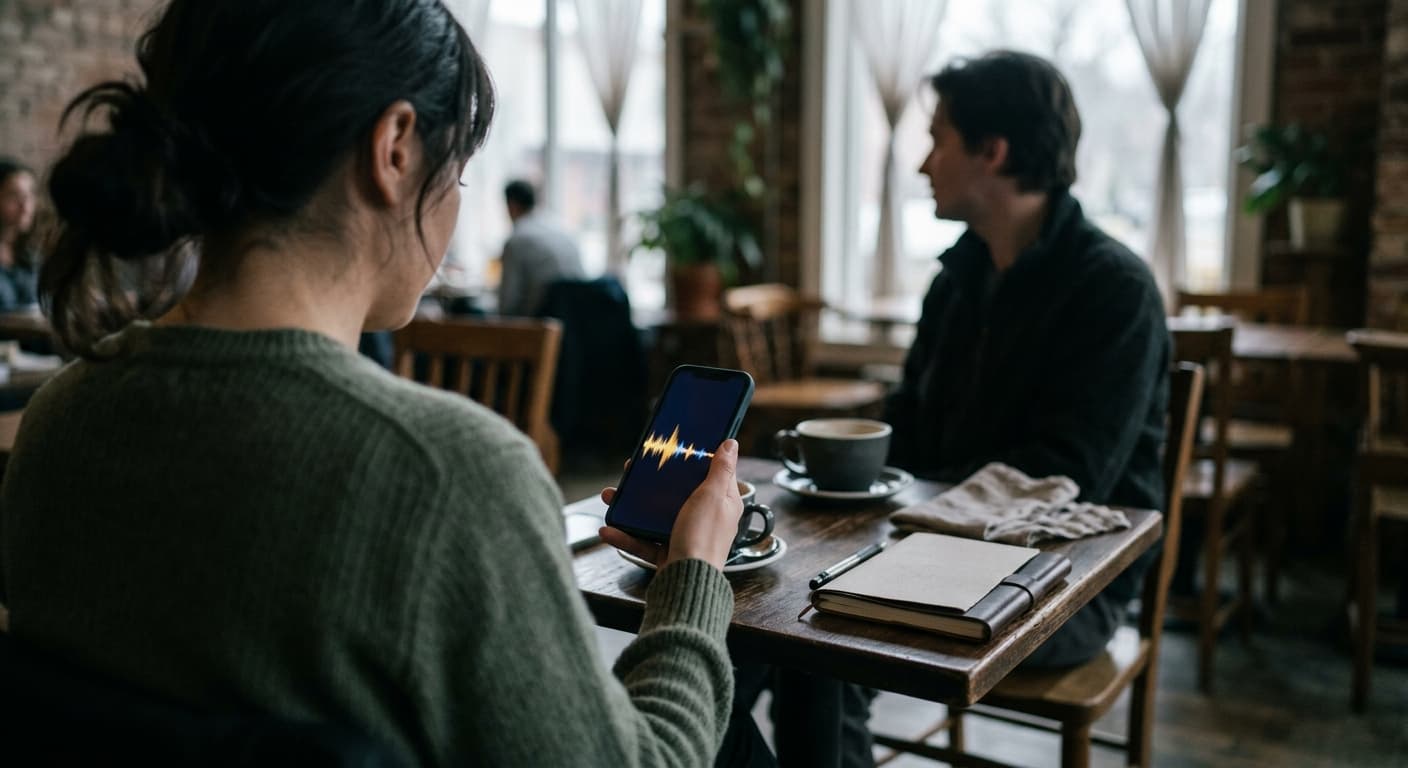
Iowa is a one-party consent state under Iowa Code § 808B.2.2.c. If you are a party to a wire, oral, or electronic communication, you may record it without notifying anyone else. Recording a conversation you are not part of, without any party's consent, is a Class D felony. Illegal recording also triggers a civil lawsuit for damages.
Iowa recording law at a glance
| Question | Answer |
|---|---|
| Consent rule | One-party consent |
| Main statute | Iowa Code § 808B.2.2.c |
| When recording is illegal | No party consents, OR participant records for a criminal, tortious, or injurious purpose |
| Criminal penalty | Class D felony (§ 808B.2.1): up to 5 years prison, $1,025 to $10,245 fine |
| Civil remedy | § 808B.8: greater of actual damages, $100/day, or $1,000 minimum; plus punitive damages and attorney fees |
| Hidden cameras | Voyeurism (§ 709.21): aggravated misdemeanor; mandatory sex-offender registration |
| Recording police | Right not clearly established in the Eighth Circuit (Robbins v. City of Des Moines) |
For deeper treatment of each topic, see the Iowa recording laws in depth section below.
Recording in-person conversations in Iowa
Iowa's one-party consent rule covers face-to-face conversations the same way it covers phone calls. As a participant, you may record without telling the other speakers, subject to the criminal/tortious/injurious-purpose limit at § 808B.2.2.c.
Both statutes only reach a conversation that qualifies as an "oral communication" in the first place. Iowa Code § 808B.1(8) defines that term as one "uttered by a person exhibiting an expectation that the communication is not subject to interception, under circumstances justifying that expectation." A conversation held in circumstances that do not support such an expectation, for example a loud exchange on a public sidewalk within easy earshot of passersby, falls outside the definition entirely. Recording that kind of conversation does not require even one-party consent, because there is no protected communication to intercept.
The older eavesdropping statute at Iowa Code § 727.8 also applies, but its participant carve-out at § 727.8.3.a exempts "the recording by a sender or recipient of a message or one who is openly present and participating in or listening to a communication." That language is broad enough to cover passive listeners who are physically present and openly listening, even if not speaking.
A non-participant who records faces felony exposure under § 808B.2.1 and misdemeanor exposure under § 727.8. Prosecutors typically charge the felony for serious violations and the misdemeanor for minor ones, giving them significant grading discretion.
The injurious-purpose limit: Iowa's departure from federal law
The consent defense at § 808B.2.2.c fails when a recording is made "for the purpose of committing a criminal or tortious act . . . or for the purpose of committing any other injurious act." The federal Electronic Communications Privacy Act at 18 U.S.C. § 2511(2)(d) reaches only criminal or tortious purpose. Iowa adds a third category: any "injurious" purpose. A recording that would be lawful under federal law may not be lawful in Iowa if its purpose causes injury without amounting to a recognized tort or crime.
How far that third category reaches is unsettled. No Iowa appellate decision has defined the scope of the "other injurious act" language, so there is no controlling authority narrowing it and no reported case applying it to a particular recording. Treat it as an open risk rather than a settled boundary. Recording to document harassment for an HR complaint, preserve evidence of a verbal agreement, or protect yourself in litigation is not criminal or tortious, but whether an Iowa court would call any of it "injurious" has not been tested. Recording to humiliate, coerce, or retaliate is the conduct most obviously exposed to the limit.
The Iowa Supreme Court interpreted § 808B.2.2.c in State v. Spencer, 737 N.W.2d 124 (Iowa 2007), holding that a parent may vicariously consent to recording a minor child's telephone conversations, subject to motive and age review. Spencer remains the leading Iowa Supreme Court decision applying § 808B.2.2.c, but it addressed vicarious parental consent only and did not construe the injurious-purpose limit.
Recording phone calls in Iowa
Iowa's one-party consent rule applies in full to phone calls: landline, cell, VoIP (Zoom, Teams, FaceTime), and conference calls. As a party to the call, you may record without notifying the other side. Iowa businesses may record customer calls for quality assurance or compliance because a business employee on the line is a participant.
Notice is not legally required in Iowa, but customer-facing businesses often include a "this call may be monitored or recorded" disclosure as a best practice, especially when calls cross into all-party-consent states.
Interstate calls: the Illinois risk
Iowa borders six states. Minnesota, Wisconsin, Missouri, Nebraska, and South Dakota are all one-party states. Illinois is the exception: it is one of the strictest all-party-consent states for private electronic communications under 720 ILCS 5/14-2. When any party to a call is in Illinois, the practical rule is to comply with the stricter state and obtain all-party consent before recording.
Other all-party-consent states an Iowa caller may reach include California, Connecticut, Delaware, Florida, Maryland, Massachusetts, Montana, New Hampshire, Oregon, Pennsylvania, and Washington. Verify the destination state's current rule before recording any interstate call.
For a deeper walkthrough, see Iowa Phone Call Recording Laws.

Hidden cameras, doorbells, and nanny cams
Visual recording in Iowa is governed differently from audio. There is no general one-party consent rule for video. Three statutes do the work.
Iowa Code § 709.21 (voyeurism). This statute, located in chapter 709 (Sexual Abuse), makes it an aggravated misdemeanor to knowingly view, photograph, or film another person for the purpose of arousing or gratifying sexual desire when the person (1) does not or cannot consent, (2) is in a state of full or partial nudity, and (3) has a reasonable expectation of privacy. Conviction triggers mandatory sex-offender registration under § 692A.102. Some older coverage cites "§ 708.2A" as Iowa's voyeurism statute; that citation is wrong. Section 709.21 is the correct provision.
Iowa Code § 727.8A (camera-while-trespassing). A person who commits a predicate trespass under § 716.7 and knowingly places or uses a camera or electronic surveillance device on the trespassed property commits an aggravated misdemeanor on a first offense and a Class D felony on a second or subsequent offense. The Eighth Circuit upheld this statute in Animal Legal Defense Fund v. Reynolds, 89 F.4th 1071 (8th Cir. 2024), discussed below.
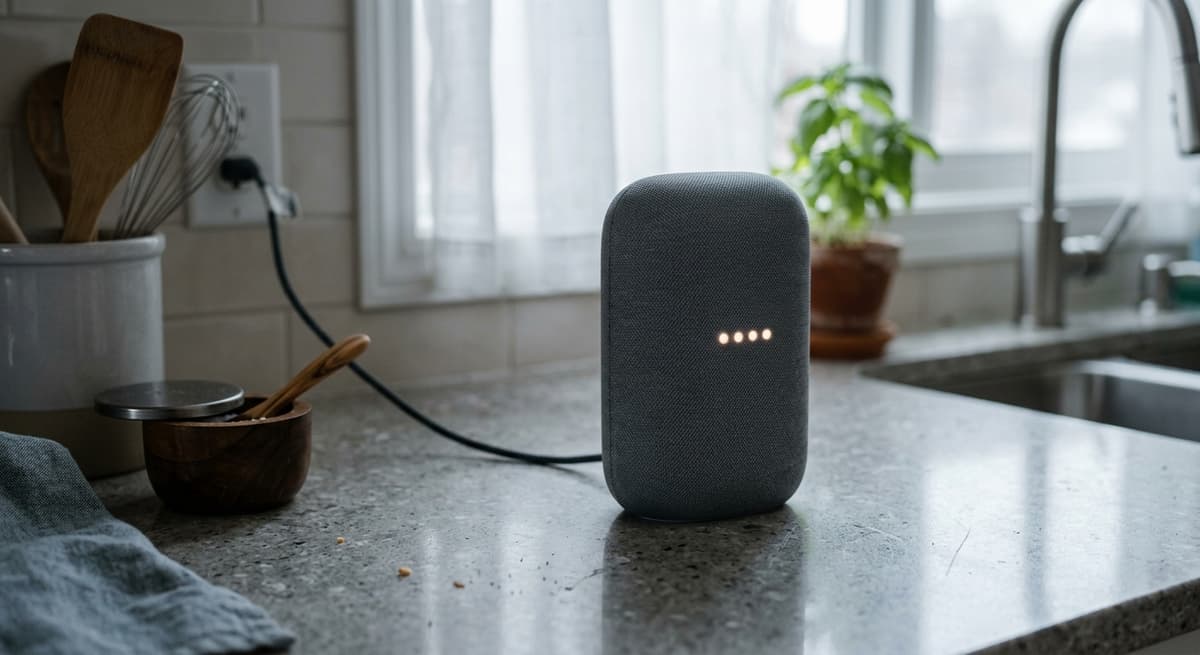
Owner/lessee carve-outs. Outdoor home-security cameras and Ring doorbells are protected under two parallel carve-outs: § 808B.2.2.d (requires all-owner-or-lessee consent and a criminal-activity-prevention purpose) and § 727.8.3.c (requires digital video or audio capability, criminal-activity purpose, placement outside a dwelling and not in a shared hallway, on real property owned or leased by the person). A camera that satisfies both is clearly lawful. Indoor cameras in common areas (living room, kitchen) with no sexual purpose do not trigger § 709.21. They can still trigger § 808B.2 audio-interception exposure if they capture conversations of guests with no party present consenting, so video-only or muted-audio configuration is the safer approach.
For detailed treatment, see Iowa Security Camera Laws and Iowa Voyeurism and Hidden Camera Laws.
Penalties for illegal recording in Iowa
Iowa's penalty structure separates criminal grading from civil remedies. The criminal side has two statutes at different grading levels; the civil side has two separate statutory regimes plus a common-law backstop.
| Statute | Offense | Class | Max Prison | Fine Range |
|---|---|---|---|---|
| Iowa Code § 808B.2.1 | Willful interception, disclosure, or use of wire/oral/electronic communication | Class D felony | 5 years | $1,025 to $10,245 |
| Iowa Code § 727.8 | Eavesdropping without right or authority | Serious misdemeanor | 1 year | $430 to $2,560 |
| Iowa Code § 727.8A (first offense) | Camera-while-trespassing | Aggravated misdemeanor | 2 years | $855 to $8,540 |
| Iowa Code § 727.8A (second or subsequent) | Camera-while-trespassing | Class D felony | 5 years | $1,025 to $10,245 |
| Iowa Code § 709.21 | Invasion of privacy by filming nudity | Aggravated misdemeanor | 2 years | $855 to $8,540 |
| Iowa Code § 708.7.1.a.5 | Harassment by dissemination of nude/sex-act imagery (including AI deepfakes) | Aggravated misdemeanor | 2 years | $855 to $8,540 |
Sharing or using an illegally intercepted recording knowing its origin is itself a Class D felony under § 808B.2.1.c and § 808B.2.1.d. The visual-privacy offenses at § 709.21 and § 708.7.1.a.5 carry mandatory § 692A sex-offender registration for actors 18 and older.
A First Amendment limit constrains disclosure liability for someone who played no role in the illegal interception. In Bartnicki v. Vopper, 532 U.S. 514 (2001), the U.S. Supreme Court held that publishing an illegally intercepted communication is constitutionally protected where the publisher played no part in the interception, obtained the recording lawfully, and the content is a matter of public concern. A journalist or other third party who receives an Iowa recording made in violation of § 808B.2 but did not participate in the interception is not automatically exposed to liability under § 808B.2.1.c or § 808B.2.1.d if those conditions are met.
Civil damages: § 808B.8
The civil cause of action for unlawful audio interception is Iowa Code § 808B.8 (not § 808B.3, which is the court-order-for-special-agents provision and is not a private right of action). A prevailing plaintiff recovers the greater of (a) actual damages, (b) $100 per day of violation, or (c) $1,000 minimum, plus punitive damages on willful, malicious, or reckless violation, plus reasonable attorney fees and litigation costs, plus injunctive relief.
Civil damages: Iowa Code chapter 659A (intimate images)
Iowa Code chapter 659A is the Uniform Civil Remedies for Unauthorized Disclosure of Intimate Images Act (enacted 2021). The remedy under § 659A.6.1 is the greater of actual economic and noneconomic damages (including emotional distress) or statutory damages not to exceed $10,000 per defendant, plus disgorgement of monetary gain, punitive damages, and attorney fees. The statute of limitations is 4 years from discovery under § 659A.7.1. The $10,000 figure is a cap on statutory damages, not a floor: a plaintiff with proven actual damages above $10,000 recovers that higher amount.
Common-law intrusion on seclusion
Iowa recognizes the tort of intrusion upon seclusion under Stessman v. American Black Hawk Broadcasting Co., 416 N.W.2d 685 (Iowa 1987). It is the backstop where § 808B.8 (audio only) and chapter 659A (intimate images only) do not reach. The limitations period is generally 2 years under § 614.1.2.
Recording the police in Iowa
Iowa sits in the Eighth Circuit, which has not clearly established a First Amendment right to record police on a public sidewalk. This posture is less favorable to citizens than in most other circuits.
Robbins v. City of Des Moines, 984 F.3d 673 (8th Cir. 2021). This is the most directly Iowa-relevant case. Daniel Robbins recorded illegally parked vehicles from a public sidewalk adjacent to the Des Moines Police Station. Officers detained, arrested, and seized his devices. The Eighth Circuit granted officers qualified immunity on his First Amendment retaliation claim because the right to record police in public was not clearly established in the circuit. The court reversed on Fourth Amendment grounds (no probable cause; unreasonable seizure), but the First Amendment outcome stands.
Molina v. Book, 59 F.4th 334 (8th Cir. 2023) reinforces Robbins, granting qualified immunity to officers who fired tear-gas at attorney-observers at a protest. Chestnut v. Wallace, 947 F.3d 1085 (8th Cir. 2020) offers the strongest citizen-side protection: passive observation of a traffic stop from 30 to 40 feet away is constitutionally protected, primarily on Fourth Amendment grounds. (The 40-to-50-foot figure belongs to Walker v. City of Pine Bluff, 414 F.3d 989 (8th Cir. 2005), a related case discussed within the Chestnut opinion.) Recording from a distance without interfering remains the safer posture even though it is not categorically guaranteed.
Practical guidance: comply with lawful time, place, and manner orders; do not interfere with police activity; record from a reasonable distance; and know that a Fourth Amendment unlawful seizure claim is stronger than a First Amendment retaliation claim in the Eighth Circuit.
For a deeper treatment, see Iowa Laws on Recording Police.
Special topics in Iowa
Iowa Code § 727.8A and the ag-gag ruling (2024)
Iowa Code § 727.8A criminalizes camera placement or use by any trespasser on the trespassed property, with a predicate trespass under § 716.7. The statute reaches journalists, investigators, and activists as much as it does agricultural facilities. The Eighth Circuit upheld it in Animal Legal Defense Fund v. Reynolds, 89 F.4th 1071 (8th Cir. 2024) as having a plainly legitimate sweep. The court assumed, without deciding, that using a camera while trespassing is First Amendment-protected activity, then applied intermediate scrutiny and held the statute's Use Provision narrowly tailored to Iowa's privacy and property interests. It separately held that plaintiffs lacked standing to challenge the statute's Place Provision, so that half of the law's constitutionality was not reached. As of June 2026 the statute is in force. Older coverage describing a "struck down" Iowa ag-gag law refers to the earlier § 717A.3A fraud statute, not § 727.8A.
Deepfake and AI intimate-image statutes (2024)
Iowa enacted two 2024 amendments. Iowa Code § 708.7.1.a.5, as amended by 2024 Acts, ch 1065, § 3, extends harassment-by-dissemination to AI-generated or altered visual depictions of identifiable adults: aggravated misdemeanor, mandatory § 692A sex-offender registration for actors 18 and older. Iowa Code § 728.12, as amended by Senate File 2243 (2024 Acts, ch 1015, effective July 1, 2024), treats synthetic AI depictions of identifiable minors equivalently to traditional child-exploitation imagery, with felony-level penalties. Section 728.12 was amended again by 2025 Acts, ch 50, § 1, which revised subsection 3.b (the rule for prosecuting a single visual depiction that shows multiple different minors, or multiple depictions of the same minor, as separate offenses); it did not change the AI-depiction definition in subsection 3.f.
Iowa victims also have a federal remedy under the TAKE IT DOWN Act, Pub. L. 119-12 (signed May 19, 2025; covered-platform 48-hour notice-and-takedown effective May 19, 2026) and a state civil remedy under chapter 659A.
Body-worn cameras and open records
Iowa has no statewide body-worn camera mandate. Chapter 80F is the peace officer bill of rights governing internal investigations, not a body-cam law. Body-cam, dash-cam, and fixed-camera footage is subject to Iowa Code chapter 22 (Examination of Public Records). The Iowa Supreme Court held in Klein v. Iowa Public Information Board (Iowa 2021) that such footage falls under the § 22.7(5) investigative-records privilege, which is qualified: disclosure requires a balancing analysis weighing public interest against law-enforcement and privacy interests.
Federal overlay
The Electronic Communications Privacy Act, 18 U.S.C. §§ 2510 to 2522, is the federal one-party-consent floor. Iowa's § 808B.2.2.c matches it for participant consent but adds the broader injurious-purpose limit. FCC Declaratory Ruling 24-17 (Feb. 2024) treats AI-generated voices as "artificial or prerecorded voice" under the TCPA; Iowa consumers have a federal TCPA cause of action ($500 per call, $1,500 for willful violations) for AI-voice robocalls received without consent. HIPAA's Privacy Rule, 45 C.F.R. Part 164, binds Iowa covered entities, not patients: a patient may record their own medical visit under § 808B.2.2.c.
Workplace recording and NLRB
An Iowa employee who is a party to a workplace conversation may record it under § 808B.2.2.c. Under NLRB Stericycle, Inc., 372 NLRB No. 113 (Aug. 2, 2023), a workplace no-recording policy is presumptively unlawful under Section 8(a)(1) of the NLRA unless narrowly tailored to a legitimate business interest. NLRB GC 25-07 (June 25, 2025) bars surreptitious recording of collective-bargaining sessions as a per se good-faith violation. Iowa is a right-to-work state under Iowa Code chapter 731, but right-to-work status does not exempt Iowa employers from NLRA exposure on recording-policy questions.
Recent legal developments
- January 8, 2024: Eighth Circuit upheld Iowa Code § 727.8A's Use Provision in Animal Legal Defense Fund v. Reynolds, 89 F.4th 1071, applying intermediate scrutiny after assuming the conduct was First Amendment-protected. The court held plaintiffs lacked standing to challenge the statute's separate Place Provision.
- July 1, 2024: Iowa Code § 728.12 amendment (Senate File 2243) took effect, treating AI-generated depictions of identifiable minors as child-exploitation imagery.
- 2025: Iowa Code § 728.12 amended again by 2025 Acts, ch 50, § 1, revising the separate-offense prosecution rule for visual depictions showing multiple minors (subsection 3.b). The AI-depiction definition in subsection 3.f was not changed.
- 2024: Iowa Code § 708.7.1.a.5 amended by 2024 Acts, ch 1065, § 3, to cover AI-generated or altered intimate imagery of identifiable adults.
- May 19, 2025: TAKE IT DOWN Act (Pub. L. 119-12) signed; 48-hour platform takedown obligation effective May 19, 2026.
- January 24, 2025: The Eleventh Circuit vacated the FCC's one-to-one consent rule, Part III.D of the FCC's 2023 Second Report and Order, 38 FCC Rcd. 12247, in Insurance Marketing Coalition Ltd. v. FCC, 127 F.4th 303; the pre-existing TCPA prior-express-written-consent regime governs.
Iowa recording laws in depth
The 12 pages below cover specific Iowa recording contexts in greater depth than this hub.
By type of recording
- Iowa Audio Recording Laws: One-Party Consent Rules and Penalties (2026)
- Iowa Video Recording Laws: Where You Can and Cannot Film (2026)
- Iowa Phone Call Recording Laws: One-Party Consent for Calls (2026)
- Iowa Voyeurism and Hidden Camera Laws: Iowa Code 709.21 Penalties (2026)
- Iowa Dashcam Laws: Recording Rules, Windshield Mounting, and Legal Limits (2026)
By place or relationship
- Iowa Laws on Recording Police: Your Rights and Legal Limits (2026)
- Iowa Laws on Recording in Public: First Amendment Rights and Limits (2026)
- Iowa Workplace Recording Laws: Employee and Employer Rights (2026)
- Iowa Security Camera Laws: Home, Business, and HOA Rules (2026)
- Iowa Landlord-Tenant Recording Laws: Surveillance and Privacy Rights (2026)
- Iowa Medical Recording Laws: Patient Rights, HIPAA, and One-Party Consent (2026)
- Iowa School Recording Laws: Student Privacy, FERPA, and Classroom Rules (2026)
More Iowa laws
- Iowa Alimony Laws
- Iowa At-Will Employment Laws
- Iowa Child Custody Laws
- Iowa Child Support Laws
- Iowa Data Privacy Laws
This article is general legal information, not legal advice. Recording laws change and apply differently to each situation. For advice about your situation, consult a licensed Iowa attorney.
More Iowa Laws
Frequently Asked Questions
Is Iowa a one-party or two-party consent state?
Iowa is a one-party consent state under Iowa Code § 808B.2.2.c. A participant in a wire, oral, or electronic communication can record without telling anyone else, as long as the recording is not made for a criminal, tortious, or other injurious purpose. Iowa adds that third 'injurious purpose' category, making its consent defense slightly narrower than the federal ECPA baseline at 18 U.S.C. § 2511(2)(d), which only bars criminal or tortious purpose.
Can I record a phone call in Iowa?
Yes, if you are a party to the call. Iowa Code § 808B.2.2.c lets you record without notifying the other side. The main risk is interstate calls: Illinois, which borders Iowa, is an all-party-consent state under 720 ILCS 5/14-2. If any party is in Illinois, comply with the stricter Illinois rule and obtain all-party consent before recording.
Is recording someone in Iowa a felony?
It can be. Willful interception of a wire, oral, or electronic communication without consent under Iowa Code § 808B.2.1 is a Class D felony: up to 5 years prison and a fine of $1,025 to $10,245. The older eavesdropping statute at § 727.8 is a serious misdemeanor (up to 1 year, $430 to $2,560). Prosecutors choose which to charge based on the severity of the conduct.
What can I sue for if someone illegally recorded me in Iowa?
Under Iowa Code § 808B.8, you can recover the greater of your actual damages, $100 per day of the violation, or $1,000 minimum, plus punitive damages if the violation was willful or reckless, plus attorney fees. If intimate images were involved, chapter 659A adds a separate claim with actual damages or up to $10,000 in statutory damages per defendant, a 4-year statute of limitations from discovery, and additional punitive damages and fees.
Are Ring doorbells and nanny cams legal in Iowa?
Outdoor cameras are expressly protected by two carve-outs: Iowa Code § 727.8.3.c (monitoring-device exemption for cameras placed outside a dwelling, not in shared hallways, on your own property for criminal-activity prevention) and § 808B.2.2.d (owner-lessee surveillance carve-out requiring all-owner consent). Nanny cams pointed at common interior areas are generally fine if no sexual purpose applies. Audio capture of guests with no participant present to consent can trigger § 808B.2 wiretap exposure.
Can I record the police in Iowa?
The right is not clearly established in the Eighth Circuit. Robbins v. City of Des Moines, 984 F.3d 673 (8th Cir. 2021), arose in Iowa and granted qualified immunity to officers who stopped a citizen recording on a public sidewalk outside the Des Moines Police Station. Recording from a reasonable distance without interfering with police activity is the safer practical approach. Officers may not seize your phone without a warrant or recognized exception.
Can I record my boss or an HR meeting in Iowa?
Generally yes for audio, because Iowa is a one-party state and an employee in the room is a party under § 808B.2.2.c. Exceptions: an employer can adopt a no-recording policy, but under NLRB Stericycle (372 NLRB No. 113, 2023) such policies must be narrowly tailored to avoid chilling Section 7 rights. Iowa's right-to-work status under chapter 731 does not exempt Iowa employers from NLRA exposure.
Does Iowa have a law against AI deepfakes?
Yes. Iowa Code § 708.7.1.a.5, amended by 2024 Acts, ch 1065, § 3, covers AI-generated or altered intimate imagery of identifiable adults as first-degree harassment: an aggravated misdemeanor with mandatory sex-offender registration. Iowa Code § 728.12, amended by Senate File 2243 (effective July 1, 2024), treats synthetic AI depictions of identifiable minors as child-exploitation imagery. Federal protection also now exists under the TAKE IT DOWN Act (Pub. L. 119-12, signed May 19, 2025).
Updates
Corrected the date of the Eleventh Circuit decision vacating the FCC one-to-one consent rule to January 24, 2025 and identified the case, and rewrote the discussion of Iowa's "other injurious act" limit to state that no Iowa appellate decision has defined its scope rather than implying courts read it narrowly.
Removed a fabricated claim that the Eighth Circuit's Animal Legal Defense Fund v. Reynolds ruling acknowledged a circuit split with the Seventh and Tenth Circuits, and replaced it with what the opinion actually held (the camera-while-trespassing statute's Use Provision was upheld under intermediate scrutiny; its Place Provision was not decided for lack of standing). Added a note that Iowa Code 728.12 was amended again in 2025 after the 2024 AI-depiction change already described. Corrected a case-citation distance figure in the police-recording section (Chestnut v. Wallace involved 30-40 feet, not 40-50 feet, which is a different case's fact pattern).
Independently fact-checked against the cited primary sources
Governing law re-checked for recent changes
Governing law re-checked for recent changes
Reviewed and approved by an editor
Restructured page for readability: condensed dual-statute audio framework into focused sections, tightened penalties table, consolidated special topics (ag-gag, deepfakes, body cameras, federal overlay, workplace NLRB) into short subsections, added in-depth index linking all 12 Iowa sub-pages, refreshed FAQ (8 plain-language questions), preserved all verified statutes and case citations from the 2026-05-10 audit. No substantive law changes found on re-verification against legis.iowa.gov and law.cornell.edu primary sources.
Refresh: Anchored Iowa's bifurcated audio-statute structure with separate H2s for Iowa Code § 808B.2 (federal-style ECPA wiretap, Class D felony, up to 5 years prison and $1,025 to $10,245 fine under § 902.9.1.e) and Iowa Code § 727.8 (older 1976-era eavesdropping prohibition, serious misdemeanor, up to 1 year jail and $430 to $2,560 fine under § 903.1.1.b). Surfaced § 808B.2.2.c 'or for the purpose of committing any other injurious act' carve-out as broader than the federal Electronic Communications Privacy Act limit at 18 U.S.C. § 2511(2)(d). Corrected civil cause of action to § 808B.8 with $1,000 or $100 per day floor (the prior baseline cited § 808B.3 and a $10,000 figure; § 808B.3 is the court-order-for-special-agents provision and the $10,000 figure is the chapter 659A intimate-image statutory damages CAP, not the § 808B.8 audio-interception floor). Corrected voyeurism statute to § 709.21 in chapter 709 Sexual Abuse (the prior baseline cited § 708.2A, which does not serve that function). Added Iowa Code § 727.8A camera-while-trespassing (aggravated misdemeanor first offense, Class D felony second or subsequent) and the controlling 8th Circuit decision in Animal Legal Defense Fund v. Reynolds, 89 F.4th 1071 (8th Cir. 2024) (No. 22-3464), decided January 8, 2024, which UPHELD § 727.8A and recognized the open circuit split with 7th and 10th Circuits. Added State v. Spencer, 737 N.W.2d 124 (Iowa 2007) as the controlling Iowa Supreme Court interpretation of § 808B.2.2.c, recognizing parental vicarious consent for minor child recordings subject to motive and age review. Added Robbins v. City of Des Moines, 984 F.3d 673 (8th Cir. 2021) (arose in Iowa at the Des Moines Police Station, qualified immunity granted because right to record police on a public sidewalk was not clearly established), Molina v. Book, 59 F.4th 334 (8th Cir. 2023) (rehearing en banc denied 65 F.4th 994; cert denied No. 23-227), and Chestnut v. Wallace, 947 F.3d 1085 (8th Cir. 2020) (passive observation protected on 4th Amendment grounds), framing the right to record police as NOT clearly established in the 8th Circuit. Added 2024 Iowa deepfake amendments: § 708.7.1.a.5 (2024 Acts, ch 1065, § 3) for adult AI-NCII as first-degree harassment with mandatory § 692A registration, and § 728.12 (Senate File 2243, 2024 Acts, ch 1015, effective July 1, 2024) for minor-victim AI exploitation. Added Iowa Code chapter 659A Uniform Civil Remedies for Unauthorized Disclosure of Intimate Images Act ($10,000 statutory damages cap per defendant, 4-year statute of limitations from discovery under § 659A.7.1). Clarified Iowa has NO statewide body-worn camera mandate; replaced any chapter 80F body-cam framing with chapter 22 plus § 22.7(5) plus Klein v. Iowa Public Information Board (Iowa 2022) plus IPIB advisory opinions 22AO:0002, 23AO:0003, and 24AO:0014. Added Stessman v. American Black Hawk Broadcasting Co., 416 N.W.2d 685 (Iowa 1987) intrusion-on-seclusion tort backstop. Added Stericycle, Inc., 372 NLRB No. 113 (Aug. 2, 2023) plus GC 25-05 (Feb. 14, 2025) plus GC 25-07 (June 26, 2025) workplace overlay, with note on Iowa's right-to-work status under chapter 731. Updated FCC One-to-One Consent Rule (FCC 24-24) status to vacated by 11th Cir. Insurance Marketing Coalition Ltd. v. FCC (mandate Apr. 30, 2025); removed reliance on stale 47 C.F.R. § 64.501 (removed effective Nov. 20, 2017). Added federal TAKE IT DOWN Act (Pub. L. 119-12, signed May 19, 2025; covered-platform 48-hour notice-and-takedown effective May 19, 2026, 9 days from publication). Replaced commercial-codifier URLs with legis.iowa.gov, iowacourts.gov, ecf.ca8.uscourts.gov, ipib.iowa.gov, and uscode.house.gov primary sources.
Refresh: Anchored Iowa's bifurcated audio-statute structure with separate H2s for Iowa Code § 808B.2 (federal-style ECPA wiretap, Class D felony, up to 5 years prison and $1,025 to $10,245 fine under § 902.9.1.e) and Iowa Code § 727.8 (older 1976-era eavesdropping prohibition, serious misdemeanor, up to 1 year jail and $430 to $2,560 fine under § 903.1.1.b). Surfaced § 808B.2.2.c 'or for the purpose of committing any other injurious act' carve-out as broader than the federal [Electronic Communications Privacy Act](/us-laws/federal-recording-laws/what-is-the-ecpa) limit at 18 U.S.C. § 2511(2)(d). Corrected civil cause of action to § 808B.8 with $1,000 or $100 per day floor (the prior baseline cited § 808B.3 and a $10,000 figure; § 808B.3 is the court-order-for-special-agents provision and the $10,000 figure is the chapter 659A intimate-image statutory damages CAP, not the § 808B.8 audio-interception floor). Corrected voyeurism statute to § 709.21 in chapter 709 Sexual Abuse (the prior baseline cited § 708.2A, which does not serve that function). Added Iowa Code § 727.8A camera-while-trespassing and the controlling 8th Circuit decision in Animal Legal Defense Fund v. Reynolds, 89 F.4th 1071 (8th Cir. 2024). Added State v. Spencer, 737 N.W.2d 124 (Iowa 2007) as controlling Iowa Supreme Court interpretation of § 808B.2.2.c. Added Robbins v. City of Des Moines, 984 F.3d 673 (8th Cir. 2021), Molina v. Book, 59 F.4th 334 (8th Cir. 2023), and Chestnut v. Wallace, 947 F.3d 1085 (8th Cir. 2020) framing the right to record police as not clearly established in the 8th Circuit. Added 2024 Iowa [deepfake](/us-laws/deepfake-laws) amendments, Iowa Code chapter 659A, body-camera access rules under chapter 22 and Klein v. Iowa Public Information Board (Iowa 2021), Stericycle workplace overlay, and the TAKE IT DOWN Act. Replaced commercial-codifier URLs with legis.iowa.gov, iowacourts.gov, ecf.ca8.uscourts.gov, media.ca8.uscourts.gov, and uscode.house.gov primary sources.
Added wearable recording device guidance covering AI voice recorders (Plaud) and smart glasses (Meta Ray-Bans) under Iowa one-party consent law.
The Law Behind This Article
This article rests on the statutory provisions below, held in our own legal record and retrieved from the official source. Tap a section to read the operative text.
Iowa Code, Chapter 808B: INTERCEPTION OF COMMUNICATIONS
§ 808B.2Unlawful acts — penalty.In forcecited in 18 of our articles
1. Except as otherwise specifically provided in this chapter, a person who does any of the following commits a class “D” felony: a. Willfully intercepts, endeavors to intercept, or procures any other person to intercept or endeavor to intercept, a wire, oral, or electronic communication. b. Willfully uses, endeavors to use, or procures any other person to use or endeavor to use an electronic, mechanical, or other device to intercept any oral communication when either of the following applies: (1) The device is affixed to, or otherwise transmits a signal through, a wire, cable, or other like connection used in wire communication. (2) The device transmits communications by radio, or interferes with the transmission of radio communications. c. Willfully discloses, or endeavors to disclose, to any other person the contents of a wire, oral, or electronic communication, knowing or having reason to know that the information was obtained through the interception of a wire, oral, or electronic communication in violation of this subsection. d.
Official text (excerpt) · last checked 2026-08-31 · Read the full text in our law library · Verify at legis.iowa.gov
Cited in 10 court opinions in our collectionLatest citing opinion in our collection: 2017
In the courts (editorial summary, independently checked):Iowa courts have applied 808B.2 to covert recordings by private parties. State v. Spencer (2007) read its one-party consent exception to include vicarious consent, but only where a parent has a good faith, objectively reasonable basis for consenting for a minor child. Papillon v. Jones (2017) applied it to a hidden home recorder.
Opinions citing this section in our collection:
- Brenda Papillon v. Bryon Jones (Supreme Court of Iowa 2017, 892 N.W.2d 763)✓A man left a hidden voice-activated recorder in his ex-girlfriend's home and captured her private phone calls, then used them in their custody case; the court affirmed liability under Section 808B.2 but held punitive damages require proof he knew he was violating the chapter.
- Amended June 6, 2017 Brenda Papillon v. Bryon Jones (Supreme Court of Iowa 2017)“…n in district court against Jones, alleging a violation of Iowa Code section 808B.2, which prohibits “willfully intercept[…”
- Iowa Beta Chapter of Phi Delta Theta Fraternity v. State, University of Iowa (Supreme Court of Iowa 2009, 763 N.W.2d 250)✓A nonmember hid a recorder in a fraternity's private meeting room and gave the tape to university officials who used it to discipline the chapter; the court held the tape was a protected oral communication and read "willfully" in Section 808B.2 to mean purposeful conduct.
Identified automatically from the court opinions citing this section — not a ranking of which case controls.
Also relied on in: Iowa Smart Glasses Recording Laws (2026), Iowa Security Camera Laws: Home, Business, and HOA Rules (2026), Iowa Video Recording Laws: Where You Can and Cannot Film (2026)
§ 808B.8Civil damages authorized — civil and criminal immunity — injunctive relief.In forcecited in 3 of our articles
1. A person whose wire, oral, or electronic communication is intercepted, disclosed, or used in violation of this chapter shall: a. Have a civil cause of action against any person who intercepts, discloses, or uses or procures any other person to intercept, disclose, or use such communications. b. Be entitled to recover from any such person all of the following: (1) Actual damages, but not less than liquidated damages computed at the rate of one hundred dollars a day for each day of violation, or one thousand dollars, whichever is higher. (2) Punitive damages upon a finding of a willful, malicious, or reckless violation of this chapter. (3) A reasonable attorney fee and other litigation costs reasonably incurred. 2. A good faith reliance on a court order shall constitute a complete defense to any civil or criminal action brought under this chapter. 3. A person whose wire, oral, or electronic communication is intercepted, disclosed, or used in violation of this chapter may seek an injunction, either temporary or permanent, against any person who violates this chapter.
Official text (excerpt) · last checked 2026-07-29 · Read the full text in our law library · Verify at legis.iowa.gov
Cited in 8 court opinions in our collectionLatest citing opinion in our collection: 2021
Opinions citing this section in our collection:
- Iowa Beta Chapter of Phi Delta Theta Fraternity v. State, University of Iowa (Supreme Court of Iowa 2009, 763 N.W.2d 250)“…of an intercepted electronic communication in violation of Iowa Code section 808B.8 (2001). Because the fraternity is the r…”
- Brenda Papillon v. Bryon Jones (Supreme Court of Iowa 2017, 892 N.W.2d 763)“…ict court awarded Papillon attorney fees of $16,008. See Iowa Code § 808B.8(1)(b)(3) (allowing award of attorney f…”
- Amended June 6, 2017 Brenda Papillon v. Bryon Jones (Supreme Court of Iowa 2017)“…ict court awarded Papillon attorney fees of $16,008. See Iowa Code § 808B.8(1)(b)(3) (allowing award of attorney f…”
Identified automatically from the court opinions citing this section — not a ranking of which case controls.
Also relied on in: Iowa Employee Monitoring Laws (2026): Workplace Surveillance Rights
§ 808B.1Definitions.In forcecited in 8 of our articles
As used in this chapter, unless the context otherwise requires: 1. “Aggrieved person” means a person who was a party to an intercepted wire, oral, or electronic communication or a person against whom the interception was directed. 2. “Contents”, when used with respect to a wire, oral, or electronic communication, includes any information concerning the identity of the parties to the communication or the existence, substance, purpose, or meaning of that communication. 3. “Court” means a district court in this state. 4. “Electronic communication” means any transfer of signals, signs, writing, images, sounds, data, or intelligence of any nature transmitted in whole or in part by a wire, radio, electromagnetic, photoelectronic or photooptical system that affects intrastate, interstate, or foreign commerce, but excludes the following: a. Wire or oral communication. b. Communication made through a tone-only paging device. c. Communication from a tracking device. d. Electronic funds transfer information stored by a financial institution in a communication system used for the electronic storage and transfer of funds. 5.
Official text (excerpt) · last checked 2026-07-29 · Read the full text in our law library · Verify at legis.iowa.gov
Cited in 3 court opinions in our collectionLatest citing opinion in our collection: 2021
Opinions citing this section in our collection:
- Iowa Beta Chapter of Phi Delta Theta Fraternity v. State, University of Iowa (Supreme Court of Iowa 2009, 763 N.W.2d 250)“…rception, under circumstances justifying that expectation.” Iowa Code § 808B.1(8). To decide whether the recording was…”
- Marcus Darrell Eugene Luthi v. Client Neis, in his official and individual capacities, and Wapello County, Iowa (Court of Appeals of Iowa 2021)“…ception, under circumstances justifying that expectation.” Iowa Code § 808B.1(8). To determine whether Luthi’s phone…”
- Iowa Beta Chapter Of Phi Delta Theta Fraternity Vs. State Of Iowa, University Of Iowa, And Phillip E. Jones (Supreme Court of Iowa 2009)“…tat. at 212 (current version at 18 U.S.C. § 2510(2)), with Iowa Code § 808B.1(8). The legislative history concerning…”
Identified automatically from the court opinions citing this section — not a ranking of which case controls.
Also relied on in: Iowa Phone Call Recording Laws: One-Party Consent for Calls (2026), Iowa Voyeurism and Hidden Camera Laws: Iowa Code 709.21 Penalties (2026), Iowa AI Meeting Recording Laws (2026)
Iowa Code, Chapter 727: HEALTH, SAFETY, AND WELFARE
§ 727.8Electronic and mechanical eavesdropping.In forcecited in 15 of our articles
1. “Monitoring device” means a digital video or audio streaming or recording device that records, listens to, or otherwise intercepts video or audio communications in order to provide proof of or prevent criminal activity that is placed outside of a person’s dwelling or other structure that is not in a shared hallway and is on real property owned or leased by the person. 2. Any person, having no right or authority to do so, who taps into or connects a listening or recording device to any telephone or other communication wire, or who by any electronic or mechanical means listens to, records, or otherwise intercepts a conversation or communication of any kind, commits a serious misdemeanor. 3. This section does not apply to any of the following: a. The recording by a sender or recipient of a message or one who is openly present and participating in or listening to a communication from recording such message or communication. b. The use of any radio or television receiver to receive any communication transmitted by radio or wireless signal. c. The use of a monitoring device.
Official text (excerpt) · last checked 2026-07-29 · Read the full text in our law library · Verify at legis.iowa.gov
Cited in 8 court opinions in our collectionLatest citing opinion in our collection: 2024
In the courts (editorial summary, independently checked):State v. Reid (1986) read the section's exception to let a sender, recipient, or person openly present and participating record a conversation without all-party consent or a court order. State v. Philpott (2005) affirmed a conviction for leaving a voice-activated recorder running in an office during the defendant's absence.
Opinions citing this section in our collection:
- State v. Philpott (Supreme Court of Iowa 2005, 702 N.W.2d 500)✓A court clerk left a voice-activated recorder running on her desk while at lunch, capturing coworkers; the court affirmed her section 727.8 conviction, holding a jury could find she intended to record conversations that took place during her absence.
- State v. Reid (Supreme Court of Iowa 1986, 394 N.W.2d 399)✓Police had a ten-year-old girl call the defendant and taped the call, then videotaped his station interview without telling him; the court held both recordings fell within section 727.8's exception for a participant, so no court order or all-party consent was needed.
- State v. Fox (Supreme Court of Iowa 1992, 493 N.W.2d 829)✓A deputy monitored a county jail inmate's outgoing phone call, and what she said led to a cell search that turned up marijuana; the court held the right or authority to monitor under section 727.8 comes from chapter 808B, whose law-enforcement exception covered him.
Identified automatically from the court opinions citing this section — not a ranking of which case controls.
Also relied on in: Iowa Audio Recording Laws: One-Party Consent Rules and Penalties (2026), Iowa Dashcam Laws: Recording Rules, Windshield Mounting, and Legal Limits (2026), Iowa Landlord-Tenant Recording Laws: Surveillance and Privacy Rights (2026)
§ 727.8ACameras or electronic surveillance devices — trespass.In forcecited in 9 of our articles
A person committing a trespass as defined in section 716.7 who knowingly places or uses a camera or electronic surveillance device that transmits or records images or data while the device is on the trespassed property commits an aggravated misdemeanor for a first offense and a class “D” felony for a second or subsequent offense.
Official text (excerpt) · last checked 2026-07-29 · Read the full text in our law library · Verify at legis.iowa.gov
Cited in 2 court opinions in our collectionLatest citing opinion in our collection: 2026
Opinions citing this section in our collection:
- Animal Legal Defense Fund v. Kimberly Reynolds (Court of Appeals for the Eighth Circuit 2024, 89 F.4th 1071)“…or data while the device is on the trespassed property[.]” Iowa Code § 727.8A (“the Act”). Five animal-welfare groups…”
- Iowa Citizens for Community Improvement v. Kimberly Reynolds (Court of Appeals for the Eighth Circuit 2026)“…animal-welfare groups sued several Iowa officials, alleging Iowa Code § 727.8A violates their members’ First Amendment…”
Identified automatically from the court opinions citing this section — not a ranking of which case controls.
Also relied on in: Iowa Ring Doorbell Laws: What You Need to Know in 2026, Iowa Surveillance Camera Laws (2026 Guide), Iowa Laws on Recording in Public: First Amendment Rights and Limits (2026)
Iowa Code, Chapter 709: SEXUAL ABUSE
§ 709.21Invasion of privacy — nudity.In forcecited in 12 of our articles
1. A person who knowingly views, photographs, or films another person, for the purpose of arousing or gratifying the sexual desire of any person, commits invasion of privacy if all of the following apply: a. The other person does not consent or is unable to consent to being viewed, photographed, or filmed. b. The other person is in a state of full or partial nudity. c. The other person has a reasonable expectation of privacy while in a state of full or partial nudity. 2. As used in this section: a. “Full or partial nudity” means the showing of any part of the human genitals or pubic area or buttocks, or any part of the nipple of the breast of a female, with less than fully opaque covering. b. “Photographs or films” means the making of any photograph, motion picture film, videotape, or any other recording or transmission of the image of a person. 3. A person who violates this section commits an aggravated misdemeanor.
Official text (excerpt) · last checked 2026-08-31 · Read the full text in our law library · Verify at legis.iowa.gov
Cited in 19 court opinions in our collectionLatest citing opinion in our collection: 2026
In the courts (editorial summary, independently checked):Iowa courts apply section 709.21 element by element. State of Iowa v. Nathaniel Wade Marchant affirmed a conviction on circumstantial proof of hidden bedroom cameras; State of Iowa v. Paul Andrew Monahan reversed, finding no objectively reasonable expectation of privacy at open public restroom urinals.
Opinions citing this section in our collection:
- State of Iowa v. Paul Andrew Monahan (Court of Appeals of Iowa 2018, 919 N.W.2d 635)✓A man was convicted under section 709.21 for allegedly looking at teenage boys at urinals in a public restroom at a track meet; the court reversed, finding no objectively reasonable expectation of privacy at those open urinals and insufficient evidence of a sexual purpose.
- Iowa Supreme Court Attorney Disciplinary Board v. Templeton (Supreme Court of Iowa 2010, 784 N.W.2d 761)✓A lawyer repeatedly peered into women's bedroom and bathroom windows and pleaded guilty to six counts of invasion of privacy under section 709.21; the court did not interpret the statute but held those convictions reflected adversely on his fitness to practice law.
- State of Iowa v. Nathaniel Wade Marchant (Court of Appeals of Iowa 2026)✓The mother's live-in partner hid a camera in her 13-year-old daughter's bedroom, and over 1,000 nude images were found on his phones; the court held the circumstantial evidence sufficed to sustain his invasion-of-privacy conviction under section 709.21(1).
Identified automatically from the court opinions citing this section — not a ranking of which case controls.
Also relied on in: Iowa Workplace Recording Laws: Employee and Employer Rights (2026), Iowa Deepfake Laws: AI Images, Voice Cloning & Penalties (2026), Iowa Sexting Laws: Legal Consequences and Penalties
Iowa Code, Chapter 716: DAMAGE AND TRESPASS TO PROPERTY
§ 716.7Trespass defined.In forcecited in 3 of our articles
1. For purposes of this section: a. “Property” shall include any land, dwelling, building, conveyance, vehicle, or other temporary or permanent structure whether publicly or privately owned. b. “Public utility” is a public utility as defined in section 476.1 or an electric transmission line as provided in chapter 478. c. “Public utility property” means any land, dwelling, building, conveyance, vehicle, or other temporary or permanent structure owned, leased, or operated by a public utility and that is completely enclosed by a physical barrier of any kind. d. “Railway corporation” means a corporation, company, or person owning, leasing, or operating any railroad in whole or in part within this state. e. “Railway property” means all tangible real and personal property owned, leased, or operated by a railway corporation with the exception of any administrative building or offices of the railway corporation. f.
Official text (excerpt) · last checked 2026-07-29 · Read the full text in our law library · Verify at legis.iowa.gov
Cited in 45 court opinions in our collectionLatest citing opinion in our collection: 2026
Opinions citing this section in our collection:
- State v. Lewis (Supreme Court of Iowa 2004, 675 N.W.2d 516)“…e of criminal trespass was being committed as defined under Iowa Code section 716.7(2)( a ). As they arrived on the scene t…”
- State v. Hutchison (Supreme Court of Iowa 2006, 721 N.W.2d 776)“…rrested and charged with criminal trespass, in violation of Iowa Code section 716.7(2)(6) (2003), a simple misdemeanor.…”
- State v. Wales (Supreme Court of Iowa 1982, 325 N.W.2d 87)“…Code section 713.1, defines burglary and, as relevant here, Iowa Code section 716.7(2)(a), defines criminal trespass. Thus,…”
Identified automatically from the court opinions citing this section — not a ranking of which case controls.
Also relied on in: Iowa Squatters Rights and Adverse Possession Laws (2026)
Iowa Code, Chapter 708: ASSAULT
§ 708.7Harassment.In forcecited in 7 of our articles
1. a. A person commits harassment when, with intent to intimidate, annoy, or alarm another person, the person does any of the following: (1) Communicates with another by telephone, telegraph, writing, or via electronic communication without legitimate purpose and in a manner likely to cause the other person annoyance or harm. (2) Places a simulated explosive or simulated incendiary device in or near a building, vehicle, airplane, railroad engine or railroad car, or boat occupied by another person. (3) Orders merchandise or services in the name of another, or to be delivered to another, without the other person’s knowledge or consent. (4) Reports or causes to be reported false information to a law enforcement authority implicating another in some criminal activity, knowing that the information is false, or reports the alleged occurrence of a criminal act, knowing the act did not occur.
Official text (excerpt) · last checked 2026-09-03 · Read the full text in our law library · Verify at legis.iowa.gov
Cited in 100 court opinions in our collectionLatest citing opinion in our collection: 2026
In the courts (editorial summary, independently checked):State v. Button (2001) held that section 708.7 does not require present ability to carry out a threat and that its "without legitimate purpose" clause is the constitutional safety valve. State v. Evans (2003) held a threat is not a necessary element, since the statute reads threaten, intimidate, or alarm disjunctively.
Opinions citing this section in our collection:
- State of Iowa v. Kelvin Plain Sr. (Supreme Court of Iowa 2017, 898 N.W.2d 801)“…sment in the first degree, an aggravated misdemeanor under Iowa Code section 708.7(1)(b) (2015). On appeal, the de…”
- State of Iowa v. Tina Lynn Thacker (Supreme Court of Iowa 2015, 862 N.W.2d 402)“…eanor, and disorderly conduct, a simple misdemeanor. See Iowa Code § 708.7 (2) (2013); id. § 723.4(2). On Febr…”
- State v. Wiederien (Supreme Court of Iowa 2006, 709 N.W.2d 538)✓Wiederien was charged under section 708.7(4) over mail, faxes and following aimed at her physician, then acquitted because the State failed to prove intent to harass. The court held section 708.12(2) gave no authority to continue the no-contact order after that acquittal.
Identified automatically from the court opinions citing this section — not a ranking of which case controls.
Also relied on in: Iowa AI Laws and Regulation (2026), Iowa Pornography Laws (2026): Obscenity and Age Verification
Iowa Code, Chapter 728: OBSCENITY
§ 728.12Sexual exploitation of a minor.In forcecited in 5 of our articles
1. It shall be unlawful to employ, use, persuade, induce, entice, coerce, solicit, knowingly permit, or otherwise cause or attempt to cause a minor or a law enforcement officer or agent posing as a minor to engage in a prohibited sexual act or in the simulation of a prohibited sexual act. A person must know, or have reason to know, or intend that the act or simulated act may be photographed, filmed, or otherwise preserved in a visual depiction. A person who commits a violation of this subsection commits a class “B” felony. Notwithstanding section 902.9, the court may assess a fine of not more than fifty thousand dollars for each offense under this subsection in addition to imposing any other authorized sentence. 2. It shall be unlawful to knowingly promote any material visually depicting a live performance of a minor engaging in a prohibited sexual act or in the simulation of a prohibited sexual act. A person who commits a violation of this subsection commits a class “C” felony. Notwithstanding section 902.9, the court may assess a fine of not more than twenty-five thousand dollars for each offense under this subsection in addition to imposing any other authorized sentence. 3.
Official text (excerpt) · last checked 2026-08-31 · Read the full text in our law library · Verify at legis.iowa.gov
Cited in 61 court opinions in our collectionLatest citing opinion in our collection: 2026
In the courts (editorial summary, independently checked):State v. Hunter (1996) affirmed a 728.12(1) conviction and rejected a vagueness challenge to the nudity definition of a prohibited sexual act, holding the conduct fell squarely within it. State v. Gilmour (1994) held knowledge of the minor's age is not an element of 728.12(1) and that mistake of age is no defense.
Opinions citing this section in our collection:
- State of Iowa v. Brent Michael Romer (Supreme Court of Iowa 2013, 832 N.W.2d 169)✓A teacher posed and photographed teenage students in sexual acts and was convicted on five counts under this statute, unchallenged on appeal; affirming, the court described the statute as aimed at the creation of child pornography rather than merely obscene material.
- State v. Robinson (Supreme Court of Iowa 2000, 618 N.W.2d 306)✓A student downloaded images of minors in sex acts to his dorm computer, saying they were research for a class paper; the court held chapter 728's educational use exemption never permits possessing child pornography, so it was not vague as applied to him, and affirmed.
- State v. Hunter (Supreme Court of Iowa 1996, 550 N.W.2d 460)✓A father photographed his partially clothed twelve-year-old daughter in provocative poses exposing her breasts, pubic area and buttocks; the court held nudity does not require total nakedness, so the statute was not vague as applied to him, and affirmed.
Identified automatically from the court opinions citing this section — not a ranking of which case controls.
Iowa Code, Chapter 902: FELONIES
§ 902.9Maximum sentence for felons.In forcecited in 7 of our articles
1. The maximum sentence for any person convicted of a felony shall be that prescribed by statute or, if not prescribed by statute, if other than a class “A” felony shall be determined as follows: a. Reserved. b. A class “B” felon shall be confined for no more than twenty-five years. c. An habitual offender shall be confined for no more than fifteen years. d. A class “C” felon, not an habitual offender, shall be confined for no more than ten years, and in addition shall be sentenced to a fine of at least one thousand three hundred seventy dollars but not more than thirteen thousand six hundred sixty dollars. e. A class “D” felon, not an habitual offender, shall be confined for no more than five years, and in addition shall be sentenced to a fine of at least one thousand twenty-five dollars but not more than ten thousand two hundred forty-five dollars. 2. The surcharges required by sections 911.1, 911.2A, and 911.5 shall be added to a fine imposed on a class “C” or class “D” felon, as provided by those sections, and are not a part of or subject to the maximums set in this section.
Official text (excerpt) · last checked 2026-07-29 · Read the full text in our law library · Verify at legis.iowa.gov
Cited in 166 court opinions in our collectionLatest citing opinion in our collection: 2026
Opinions citing this section in our collection:
- State of Iowa v. Andre Letroy Antwan Harrington (Supreme Court of Iowa 2017)“…a sentence of incarceration greater than one year. See Iowa Code § 902.9(1)(a)–(e). Thus, any immigrati…”
- State v. Ayers (Supreme Court of Iowa 1999, 590 N.W.2d 25)“…imposed a $500 fine for each conviction. See Iowa Code §§ 902.9 (3), 903.1(2). Ayers appeals onl…”
- State v. Iowa District Court for Black Hawk County (Supreme Court of Iowa 2000, 616 N.W.2d 575)“…of incarceration not to exceed ten years. See Iowa Code § 902.9 (setting forth a maximum sentence of t…”
Identified automatically from the court opinions citing this section — not a ranking of which case controls.
Also relied on in: Iowa GPS Tracking Laws: Is It Legal to Put a Tracker on a Car? (2026)
Iowa Code, Chapter 903: MISDEMEANORS
§ 903.1Maximum sentence for misdemeanants.In forcecited in 4 of our articles
1. If a person eighteen years of age or older is convicted of a simple or serious misdemeanor and a specific penalty is not provided for or if a person under eighteen years of age has been waived to adult court pursuant to section 232.45 on a felony charge and is subsequently convicted of a simple, serious, or aggravated misdemeanor, the court shall determine the sentence, and shall fix the period of confinement or the amount of fine, which fine shall not be suspended by the court, within the following limits: a. For a simple misdemeanor, there shall be a fine of at least one hundred five dollars but not to exceed eight hundred fifty-five dollars. The court may order imprisonment not to exceed thirty days in lieu of a fine or in addition to a fine. b. For a serious misdemeanor, there shall be a fine of at least four hundred thirty dollars but not to exceed two thousand five hundred sixty dollars. In addition, the court may also order imprisonment not to exceed one year. 2. When a person is convicted of an aggravated misdemeanor, and a specific penalty is not provided for, the maximum penalty shall be imprisonment not to exceed two years.
Official text (excerpt) · last checked 2026-07-29 · Read the full text in our law library · Verify at legis.iowa.gov
Cited in 148 court opinions in our collectionLatest citing opinion in our collection: 2026
Opinions citing this section in our collection:
- Nicole Lara Shumate v. Drake University A/K/A Drake University Law School (Supreme Court of Iowa 2014, 846 N.W.2d 503)“…carceration, a fine of $625, and a criminal record. See Iowa Code § 903.1(1)(a). The legislature could reaso…”
- State v. Ayers (Supreme Court of Iowa 1999, 590 N.W.2d 25)“…ggravated misdemeanors, the general sentencing provision is Iowa Code section 903.1(2), which provides: When a perso…”
- State v. Kirchoff (Supreme Court of Iowa 1990, 452 N.W.2d 801)“…Kirchoff. See Iowa Code ch. 901 (sentencing procedures); Iowa Code §§ 903.1 (maximum sentence for misdemeanants),…”
Identified automatically from the court opinions citing this section — not a ranking of which case controls.
Iowa Code, Chapter 22: EXAMINATION OF PUBLIC RECORDS
§ 22.7Confidential records.In forcecited in 5 of our articles
The following public records shall be kept confidential, unless otherwise ordered by a court, by the lawful custodian of the records, or by another person duly authorized to release such information: 1. Personal information in records regarding a student, prospective student, or former student maintained, created, collected or assembled by or for a school corporation or educational institution maintaining such records. This subsection shall not be construed to prohibit a postsecondary education institution from disclosing to a parent or guardian information regarding a violation of a federal, state, or local law, or institutional rule or policy governing the use or possession of alcohol or a controlled substance if the child is under the age of twenty-one years and the institution determines that the student committed a disciplinary violation with respect to the use or possession of alcohol or a controlled substance regardless of whether that information is contained in the student’s education records.
Official text (excerpt) · last checked 2026-09-03 · Read the full text in our law library · Verify at legis.iowa.gov
Cited in 72 court opinions in our collectionLatest citing opinion in our collection: 2026
In the courts (editorial summary, independently checked):Iowa courts have marked the limits of section 22.7. Marcus v. Young (1995) held it creates no private cause of action for negligently releasing student records; Burton v. University of Iowa Hospitals & Clinics (1997) held its exemption list is not the only source of confidentiality, so another statute can still permit withholding.
Opinions citing this section in our collection:
- Marcus v. Young (Supreme Court of Iowa 1995, 538 N.W.2d 285)✓A former medical student sued after the University of Iowa released his academic records under a subpoena; the court held section 22.7 creates no private cause of action for negligent release, leaving the chapter 22 injunction as the remedy.
- Burton v. University of Iowa Hospitals & Clinics (Supreme Court of Iowa 1997, 566 N.W.2d 182)✓A requester sought a state hospital's hospital-acquired infection summaries; the court held section 135.41 gave the hospital discretion to withhold them notwithstanding chapter 22, so the section 22.7 exemption list is not the only source of confidentiality.
- Des Moines Register & Tribune Co. v. Dwyer (Supreme Court of Iowa 1996, 542 N.W.2d 491)“…hered in investigations of General Assembly members. See Iowa Code § 22.7 (30). The legislature thereby acknowled…”
Identified automatically from the court opinions citing this section — not a ranking of which case controls.
United States Code Title 18
§ 2511Interception and disclosure of wire, oral, or electronic communications prohibitedIn forcecited in 422 of our articles
Except as otherwise specifically provided in this chapter any person who— intentionally intercepts, endeavors to intercept, or procures any other person to intercept or endeavor to intercept, any wire, oral, or electronic communication; intentionally uses, endeavors to use, or procures any other person to use or endeavor to use any electronic, mechanical, or other device to intercept any oral communication when— such device is affixed to, or otherwise transmits a signal through, a wire, cable, or other like connection used in wire communication; or such device transmits communications by radio, or interferes with the transmission of such communication; or such person knows, or has reason to know, that such device or any component thereof has been sent through the mail or transported in interstate or foreign commerce; or such use or endeavor to use (A) takes place on the premises of any business or other commercial establishment the operations of which affect interstate or foreign commerce; or (B) obtains or is for the purpose of obtaining information relating to the operations of any business or other commercial establishment the operations of which affect interstate or foreign…
Official text (excerpt) · last checked 2026-08-28 · Read the full text in our law library · Verify at uscode.house.gov
Cited in 2,045 court opinions in our collectionLatest citing opinion in our collection: 2026
In the courts (editorial summary, independently checked):Griggs-Ryan v. Smith (1990) applied the Section 2511(2)(d) prior-consent exception, treating a tenant repeatedly told that all incoming calls were taped as having impliedly consented. United States v. United States District Court (1972) read the then-current Section 2511(3) as conferring no presidential surveillance power.
Opinions citing this section in our collection:
- Mitchell v. Forsyth (Supreme Court of the United States 1985, 472 U.S. 511)✓The Attorney General authorized a warrantless 1970 national security wiretap that caught the plaintiff's calls; the Court held the since-repealed Section 2511(3) disclaimer left the tap lawful under Title III, and that Mitchell had qualified immunity.
- United States v. United States District Court for the Eastern District of Michigan (Supreme Court of the United States 1972, 407 U.S. 297)✓The Attorney General approved warrantless wiretaps on members of a domestic group accused of bombing a CIA office; the Court read Section 2511(3) as a congressional disclaimer conferring no surveillance power, then held the Fourth Amendment required prior judicial approval.
- Forsyth v. Barr (Court of Appeals for the Fifth Circuit 1994, 19 F.3d 1527)✓Dallas police used, in an internal affairs probe of an officer, calls private parties allegedly intercepted illegally; assuming that was unlawful, the Fifth Circuit held Section 2517(1) and (2) allowed the disclosure and use, defeating the Section 2511(1)(c) and (d) claims.
Identified automatically from the court opinions citing this section — not a ranking of which case controls.
Also relied on in: Connecticut Recording Laws (2026): Hybrid Consent Rules Explained, Oregon Recording Laws (2026): Hybrid One-Party and All-Party Rules, US Recording Laws by State (2026): All 50 States Explained
§ 2510DefinitionsIn forcecited in 126 of our articles
As used in this chapter— “wire communication” means any aural transfer made in whole or in part through the use of facilities for the transmission of communications by the aid of wire, cable, or other like connection between the point of origin and the point of reception (including the use of such connection in a switching station) furnished or operated by any person engaged in providing or operating such facilities for the transmission of interstate or foreign communications or communications affecting interstate or foreign commerce; “oral communication” means any oral communication uttered by a person exhibiting an expectation that such communication is not subject to interception under circumstances justifying such expectation, but such term does not include any electronic communication; “State” means any State of the United States, the District of Columbia, the Commonwealth of Puerto Rico, and any territory or possession of the United States; “intercept” means the aural or other acquisition of the contents of any wire, electronic, or oral communication through the use of any electronic, mechanical, or other device.1 So in original. The period probably should be a semicolon.
Official text (excerpt) · last checked 2026-07-28 · Read the full text in our law library · Verify at uscode.house.gov
Cited in 2,382 court opinions in our collectionLatest citing opinion in our collection: 2026
In the courts (editorial summary, independently checked):United States v. New York Telephone Co. (1977) held that pen registers fall outside Title III because they do not acquire the contents of a communication as Section 2510(4) and (8) define interception. Forsyth v. Barr (1994) applied the same definitions, treating the defendant officers as law enforcement officers under Section 2510(7).
Opinions citing this section in our collection:
- Forsyth v. Barr (Court of Appeals for the Fifth Circuit 1994, 19 F.3d 1527)✓Neighbors tapped an informant's home line and the overheard charges reached Dallas internal affairs; the Fifth Circuit saw no evidence the police defendants intercepted anything and held they were 2510(7) law enforcement officers, so 2517(1) and (2) allowed their use of it.
- Nixon v. Administrator of General Services (Supreme Court of the United States 1977, 433 U.S. 425)“…of the Omnibus Crime Control and Safe Streets Act of 1968, 18 U. S. C. §§ 2510 et seq. 408 F. Supp., at 363 . We…”
- Gannett Co. v. DePasquale (Supreme Court of the United States 1979, 443 U.S. 368)“…of the Omnibus Crime Control and Safe Streets Act of 1968, 18 U. S. C. § 2510 et seq., be preserved prior to the d…”
Identified automatically from the court opinions citing this section — not a ranking of which case controls.
Also relied on in: Surveillance Camera Laws by State (2026 Guide), Georgia Recording Laws (2026): One-Party Audio, All-Party Video, District of Columbia Recording Laws (2026): One-Party Consent Rules
Search our full record of US law — 2.1 million sections, every state + federal →
Sources and References
- legis.iowa.gov.gov
- legis.iowa.gov.gov
- legis.iowa.gov.gov
- legis.iowa.gov.gov
- legis.iowa.gov.gov
- iowacourts.gov.gov
- legis.iowa.gov.gov
- legis.iowa.gov.gov
- ecf.ca8.uscourts.gov.gov
- legis.iowa.gov.gov
- uscode.house.gov.gov
- legis.iowa.gov.gov
- congress.gov.gov
- Animal Legal Defense Fund v. Reynolds, 89 F.4th 1071 (8th Cir. 2024)(ecf.ca8.uscourts.gov).gov
- ecf.ca8.uscourts.gov.gov
- ecf.ca8.uscourts.gov.gov
- legis.iowa.gov.gov
- legis.iowa.gov.gov
- legis.iowa.gov.gov
- iowacourts.gov.gov
- ipib.iowa.gov.gov
- legis.iowa.gov.gov
- legis.iowa.gov.gov
- legis.iowa.gov.gov
- docs.fcc.gov.gov
- nlrb.gov.gov
- nlrb.gov.gov
- legis.iowa.gov.gov
- ecfr.gov.gov
- Insurance Marketing Coalition Ltd. v. FCC, No. 24-10277, 127 F.4th 303 (11th Cir. Jan. 24, 2025)(media.ca11.uscourts.gov)