
Iowa
Iowa Police Body Camera Laws: Access & Public Records
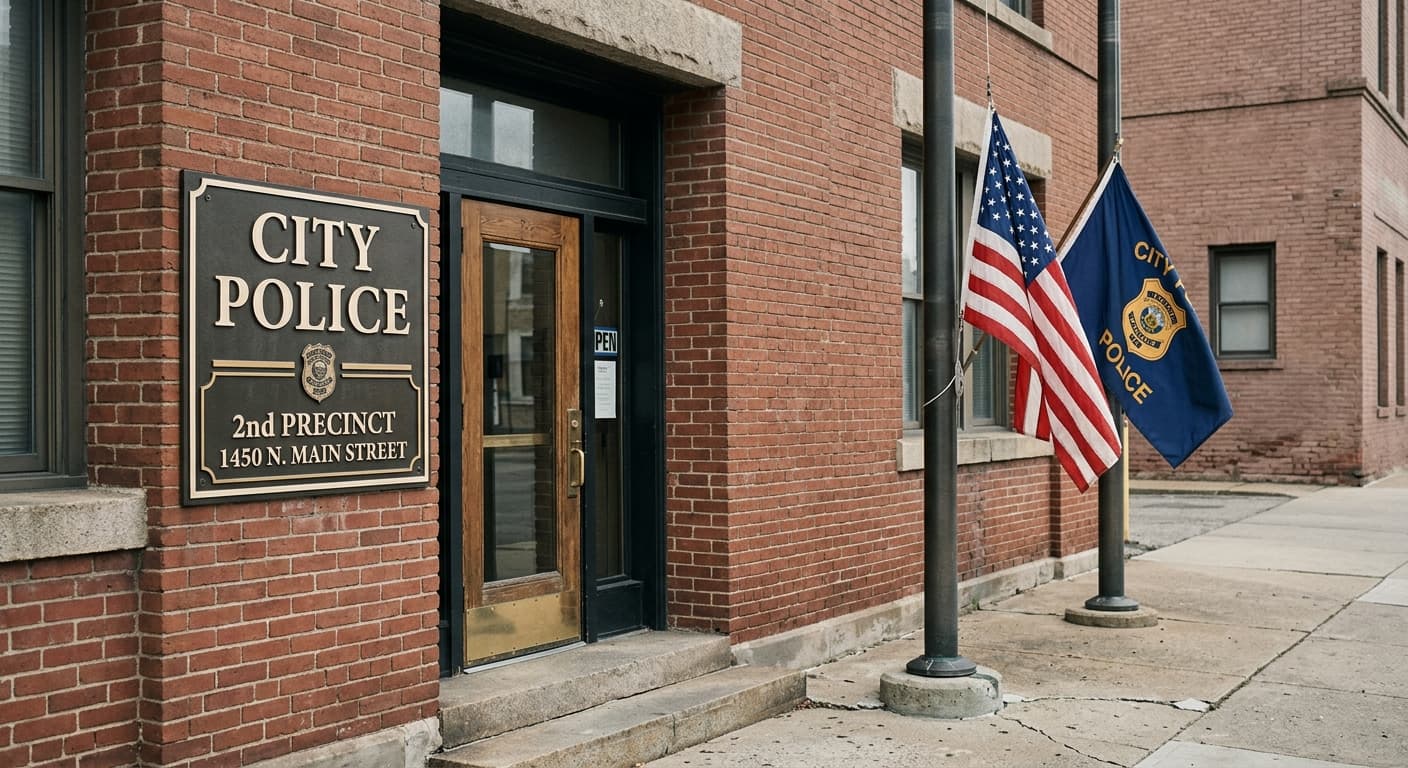
Iowa has no statute dedicated to police body cameras. Whether an agency uses them, and whether the public can see the footage, is set locally and by (5), the general investigative-records exemption that state courts have applied to bodycam video inconsistently since 2011.
This guide is part of our Police Bodycam Laws by State series.
Jurisdiction scope: This article addresses Iowa law governing police body cameras: the absence of a dedicated statute, the (5) investigative-records exemption as applied to bodycam footage, and the Chapter 22 request and appeal process. It does not address a civilian's right to record law enforcement, which is covered separately in our guide to recording laws.
Does Iowa require police to wear body cameras?
No. Iowa has never enacted a statewide law requiring any law enforcement agency to buy, issue, or activate body cameras. Bills that would have created a dedicated body-camera chapter of the Iowa Code, including House File 77 and House Study Bill 141, have been introduced across multiple General Assemblies without passing, and advocacy groups such as the ACLU of Iowa have pushed for a statewide statute since at least 2017 without success.
Because there is no state mandate, adoption and policy are entirely local. Larger city departments generally equip patrol officers with body cameras as a matter of internal policy, while smaller and rural agencies vary widely in whether they use them at all, and in how long footage is kept once recorded. A department's activation rules, retention schedule, and internal discipline for a missed activation come from its own policy manual, not from state law.

Is Iowa police bodycam footage a public record?
It depends, and Iowa's own oversight board says so explicitly. Iowa Code Chapter 22 makes government records generally open, but § 22.7(5) exempts "peace officers' investigative reports" and related law enforcement records that are part of an ongoing investigation. The exemption is not absolute: the date, time, specific location, and immediate facts and circumstances surrounding a crime or incident must still be disclosed, unless doing so would plainly and seriously jeopardize an investigation or endanger someone's safety.
The unresolved question is whether bodycam video itself falls inside "investigative reports." The Iowa Public Information Board's own guidance concedes it "is not able to uniformly state whether or not body camera footage is a part of a peace officer's investigative report," which means the answer can turn on the facts of the specific recording, the agency's position, and whatever court eventually reviews it.
Iowa courts are split on whether bodycam footage is exempt
Two decisions illustrate the split directly. In the unpublished 2011 decision Neer v. State (Iowa Court of Appeals, No. 0-985/10-0966), the court treated video, use-of-force reports, and pursuit reports tied to an arrest encounter as part of a confidential investigative report, unavailable to the public. The Iowa Public Information Board relied on that reasoning in later cases denying bodycam requests.
In October 2020, a state district court judge in Iowa's Fifth Judicial District reached the opposite result in Harrison v. Parizek, holding that bodycam footage was not automatically exempt under § 22.7(5) and that the unpublished Neer decision was not binding precedent. The Iowa Supreme Court's 2021 decision in Klein v. Iowa Public Information Board, which grew out of a fatal 2015 Burlington police shooting, addressed the requester's standing to seek judicial review but stopped short of resolving the underlying question of whether bodycam footage is categorically an investigative report, sending that issue back to district court.
| Case | Court | Year | Result |
|---|---|---|---|
| Neer v. State | Iowa Court of Appeals (unpublished) | 2011 | Bodycam-type video treated as exempt investigative report |
| Harrison v. Parizek | Iowa District Court, Fifth Judicial District | 2020 | Bodycam footage not automatically exempt; Neer found non-binding |
| Klein v. Iowa Public Information Board | Iowa Supreme Court | 2021 | Requester had standing on some claims; merits question remanded |
How do you request bodycam footage in Iowa?
Iowa Code Chapter 22 does not set a fixed number of days for a custodian to respond, unlike the specific deadlines used in many other states. Instead, unreasonable delay can itself function as a denial that a requester can appeal, which gives agencies less of a hard deadline and requesters a slower, less predictable process than in states with a numeric response clock.
On fees, a custodian must make every reasonable effort to provide a record at no cost beyond copying if producing it takes less than thirty minutes, and any charge for supervision or copying is capped at the agency's actual cost, excluding overhead items like employee benefits or depreciation. A custodian can require payment in advance for larger requests.
What can you do if a request is denied?
A person who is refused bodycam footage has two paths. The first is to file a complaint with the Iowa Public Information Board (IPIB), the state agency created to interpret and enforce Chapter 22, which can investigate and issue a decision, as it did in the Jenkins case discussed below. The second is to sue the custodian directly in district court under .
To win in court, the requester must show the defendant is subject to Chapter 22, that the records sought are government records, and that the defendant refused to make them available. If a court finds any violation by a preponderance of the evidence, the law directs the court to order the records released, impose damages, and require the agency to pay the requester's attorney fees; a knowing violation raises the damages range from $100-500 up to $1,000-2,500, a real financial consequence for an agency that withholds records without a solid legal basis.
A real example: the Trevontay Jenkins case
On December 26, 2022, Des Moines police officers shot and killed 16-year-old Trevontay Jenkins during a call to an apartment. Television station KCCI sought the release of the officers' bodycam footage and filed a complaint with the Iowa Public Information Board when the department declined.
On May 18, 2023, the Board ruled that the footage could remain confidential and dismissed KCCI's complaint. The case shows how the § 22.7(5) exemption, and the Board's own acknowledged inability to take a uniform position on bodycam footage, plays out for a real, recent, high-profile shooting rather than only in the abstract.
Is it illegal to record police in Iowa?
That is a different question from the one this page answers. Iowa generally recognizes a person's right to record an on-duty officer performing public duties in a public place. For a full explanation of that right and how it differs from the rules on police-generated bodycam footage discussed here, see Is It Illegal to Record Someone?
More Iowa Laws
Frequently Asked Questions
Does Iowa require police departments to use body cameras?
No. Iowa has no statewide statute requiring any agency to purchase, issue, or activate body cameras. Bills to create one, such as House File 77, have not passed, so adoption and policy are set by each department.
Is police bodycam footage a public record in Iowa?
It depends. Iowa Code § 22.7(5) exempts a peace officer's confidential investigative report, and Iowa courts disagree on whether bodycam video falls within that exemption, so the outcome can vary by case and by agency.
What did the court decide in Neer v. State?
In this unpublished 2011 decision, the Iowa Court of Appeals treated bodycam-type video, use-of-force reports, and pursuit reports tied to an arrest as part of a confidential investigative report not subject to public disclosure.
Can I get bodycam footage of my own arrest in Iowa?
Iowa's general public records law does not give the person shown in a recording special access rights the way some other states' bodycam statutes do. The same § 22.7(5) investigative-report exemption analysis applies regardless of who is asking.
How long does an Iowa agency have to respond to a bodycam records request?
Chapter 22 does not set a fixed number of days. Unreasonable delay can itself be treated as a denial that a requester may appeal to the Iowa Public Information Board or challenge in district court.
What can I do if a police department denies my bodycam request in Iowa?
You can file a complaint with the Iowa Public Information Board or sue the custodian directly in district court under Iowa Code § 22.10. A court that finds any violation by a preponderance of the evidence must order release, award damages, and award attorney fees; a knowing violation raises the damages range up to $1,000-2,500.
Is it illegal to record on-duty police in Iowa?
No, recording an on-duty officer performing public duties in a public place is generally protected. That is a separate question from public access to police-recorded bodycam footage covered on this page.
Updates
Independently fact-checked against the cited primary sources; governing law re-checked for recent changes
Corrected 3 statute-attribution/legal-fact errors verified against primary sources.
Governing law re-checked for recent changes
Governing law re-checked for recent changes
Reviewed and approved by an editor
The Law Behind This Article
This article rests on 2 statutory provisions held in our own legal record, each retrieved from the official source. Tap a section to read the operative text.
Iowa Code, Chapter 22: EXAMINATION OF PUBLIC RECORDS
§ 22.10Civil enforcement.In forcecited in 2 of our articles
1. The rights and remedies provided by this section are in addition to any rights and remedies provided by section 17A.19. Any aggrieved person, any taxpayer to or citizen of the state of Iowa, or the attorney general or any county attorney, may seek judicial enforcement of the requirements of this chapter in an action brought against the lawful custodian and any other persons who would be appropriate defendants under the circumstances. Suits to enforce this chapter shall be brought in the district court for the county in which the lawful custodian has its principal place of business. 2. Once a party seeking judicial enforcement of this chapter demonstrates to the court that the defendant is subject to the requirements of this chapter, that the records in question are government records, and that the defendant refused to make those government records available for examination and copying by the plaintiff, the burden of going forward shall be on the defendant to demonstrate compliance with the requirements of this chapter. 3. Upon a finding by a preponderance of the evidence that a lawful custodian has violated any provision of this chapter, a court: a.
Official text (excerpt) · as of 2026-07-29 · Read the full section at legis.iowa.gov
Cited in 27 court opinionsMost recently applied by a court: 2026
Leading cases: City of Riverdale, Iowa v. Allen Diercks, Marie Randol, and Tammie Picton (Supreme Court of Iowa 2011, 806 N.W.2d 643) · City of Dubuque v. Dubuque Racing Ass'n (Supreme Court of Iowa 1988, 420 N.W.2d 450) · Dr. Allen Diercks and Patricia Lane v. Craig Malin, Davenport City Administrator, City of Davenport, Iowa, an Iowa Municipal Corporation, and Jackie E. Holecek, Davenport City Deputy Clerk (Court of Appeals of Iowa 2016, 894 N.W.2d 12)
Identified automatically from the court opinions citing this section — not a ranking of which case controls.
Also relied on in: Iowa Public Records Laws: Iowa Code Chapter 22 Explained
§ 22.7Confidential records.In forcecited in 4 of our articles
The following public records shall be kept confidential, unless otherwise ordered by a court, by the lawful custodian of the records, or by another person duly authorized to release such information: 1. Personal information in records regarding a student, prospective student, or former student maintained, created, collected or assembled by or for a school corporation or educational institution maintaining such records. This subsection shall not be construed to prohibit a postsecondary education institution from disclosing to a parent or guardian information regarding a violation of a federal, state, or local law, or institutional rule or policy governing the use or possession of alcohol or a controlled substance if the child is under the age of twenty-one years and the institution determines that the student committed a disciplinary violation with respect to the use or possession of alcohol or a controlled substance regardless of whether that information is contained in the student’s education records.
Official text (excerpt) · as of 2026-07-29 · Read the full section at legis.iowa.gov
Cited in 72 court opinionsMost recently applied by a court: 2026
Leading cases: Marcus v. Young (Supreme Court of Iowa 1995, 538 N.W.2d 285) · Burton v. University of Iowa Hospitals & Clinics (Supreme Court of Iowa 1997, 566 N.W.2d 182) · Des Moines Register & Tribune Co. v. Dwyer (Supreme Court of Iowa 1996, 542 N.W.2d 491)
Identified automatically from the court opinions citing this section — not a ranking of which case controls.
Also relied on in: Iowa Recording Laws (2026): One-Party Consent Rules, Iowa Police Reports: Crash Reports, Incident Reports, and Bodycam Rules
Search our full record of US law — 2.1 million sections, every state + federal →
Sources and References
- Iowa Code § 22.7(5), confidential records, peace officers' investigative reports exemption(legis.iowa.gov).gov
- Iowa Public Information Board, advisory opinion 22AO:0002, Body Camera Footage and Investigative Reports(ipib.iowa.gov).gov
- Iowa Public Information Board, Police Investigative Files guidance(ipib.iowa.gov).gov
- Reporters Committee for Freedom of the Press, Open Government Guide, Iowa (Chapter 22 procedure, fees, and § 22.10 judicial enforcement)(rcfp.org)
- Times Republican, Iowa police footage in teen's fatal shooting won't be public, panel rules (Trevontay Jenkins case)(timesrepublican.com)
- Iowa Public Information Board, advisory opinion 24AO:0014, bodycam video and public record requests(ipib.iowa.gov).gov