
Indiana
Indiana Recording Laws (2026): One-Party Consent Rules
Independently fact-checked against primary sources (last audited August 15, 2026). · Reviewed by the RecordingLaw editorial team. · Law checked current as of August 7, 2026. · 23 primary sources cited on this page. How we verify our legal content
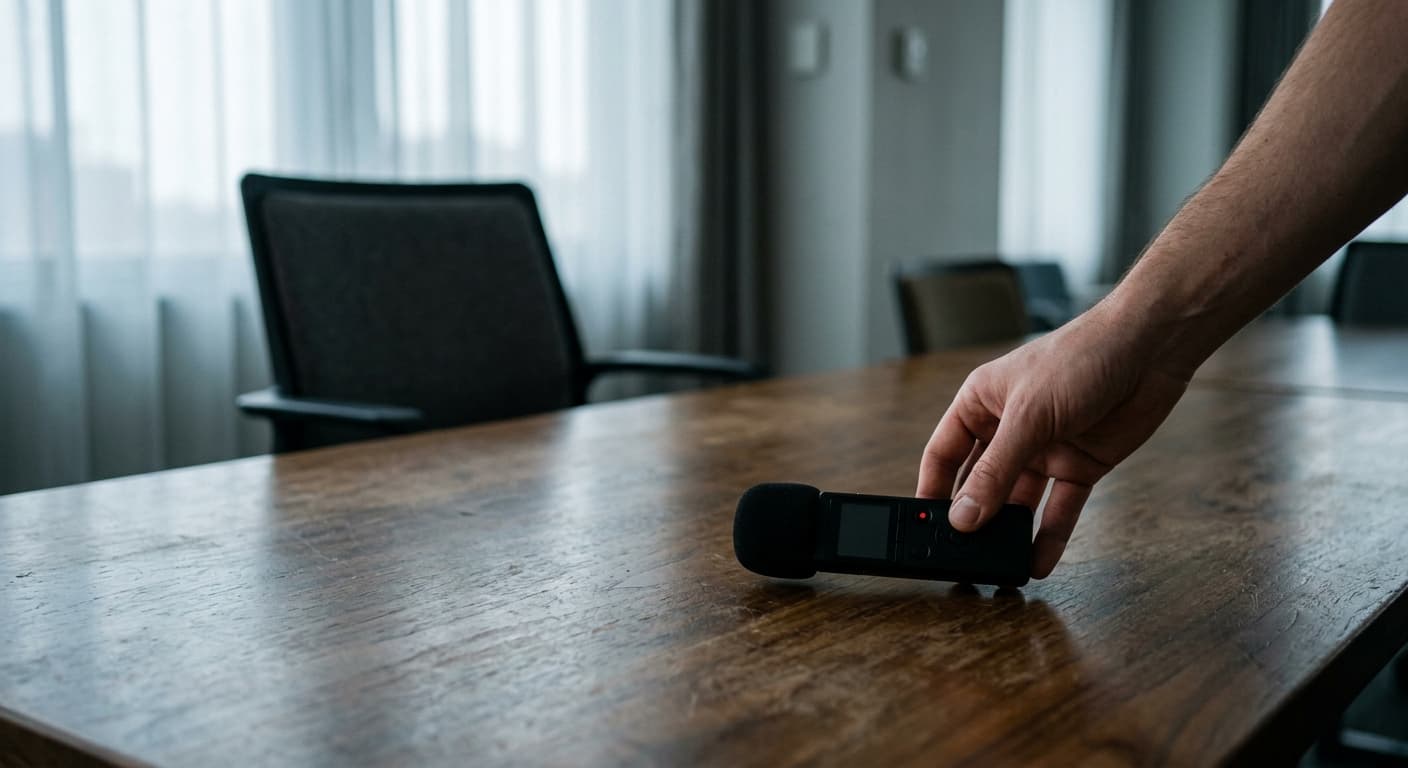
Indiana is a one-party consent state under Ind. Code 35-33.5-5-5. Any participant in a phone call or transmitted electronic communication may record it without notifying the other parties. Recording a conversation without any party's consent is a Level 5 felony and also triggers a private civil cause of action under Ind. Code 35-33.5-5-4.
Indiana recording law at a glance
| Question | Answer |
|---|---|
| Consent rule | One-party (any participant may record) |
| Main statute | Ind. Code 35-33.5-5-5; definition at Ind. Code 35-31.5-2-176 |
| When illegal | Recording a transmitted communication you are not part of, without any party's consent |
| Criminal penalty | Level 5 felony: 1-6 years, advisory 3 years, up to $10,000 fine |
| Civil penalty | Greater of actual damages, $100/day, or $1,000 minimum; plus punitives and attorney fees; 2-year SOL |
| Hidden cameras | Ind. Code 35-45-4-5 (voyeurism); camera-based peeping is a Level 6 felony; public and aerial voyeurism are Class A misdemeanor base, and each rises to a Level 6 felony on a prior unrelated conviction under this section or if the image is published, made available on the Internet, or transmitted to another person |
| Recording police | First Amendment right confirmed by the Seventh Circuit in ACLU of Illinois v. Alvarez, 679 F.3d 583 (2012); but Ind. Code 35-44.1-2-14 and Ind. Code 35-44.1-2-15 make it a Class C misdemeanor to approach within 25 feet of an officer after being ordered to stop approaching |
For a deeper treatment of any of these rules, see the in-depth guides below.

Recording in-person conversations in Indiana
Indiana's wiretap chapter at Ind. Code Article 33.5 governs transmitted electronic communications, not face-to-face conversation. The statute defining "electronic communication" at Ind. Code 35-31.5-2-110 actually lists oral communication as covered content, but only when it is "transmitted in whole or in part by a wire, a radio, or an electromagnetic, a photoelectronic, or a photo-optical system." That means a spoken exchange between two people in the same room, with no wire or wireless transmission, is simply outside the wiretap chapter.
This is not a loophole for covert in-person recording. Three other Indiana statutes regularly reach in-person video or audio capture: voyeurism under Ind. Code 35-45-4-5 (private places, restrooms, dressing rooms), distribution of intimate images under Ind. Code 35-45-4-8 (expanded in 2024 to cover AI-generated imagery), and common-law civil torts for intrusion upon seclusion or public disclosure of private facts. For in-person recordings in sensitive settings such as medical visits, legal meetings, or family disputes, the safest practice is to get express consent even though the wiretap chapter does not require it.
The Indiana Supreme Court construed the wiretap chapter for the first time in State v. Lombardo, 738 N.E.2d 653 (Ind. 2000). The State alleged that Lombardo had wired a hidden recorder at his estranged wife's home to capture her calls with a third person without either party's consent. The trial court dismissed the charge as unconstitutionally vague. The Supreme Court reversed, holding that Indiana's Wiretap Act is constitutional and that nothing barred its application to that case, and that the Act is clear enough to warn an ordinary person that secretly wiring a recorder to capture a spouse's private telephone conversations is prohibited. Read the disposition carefully: that is a ruling on the statute's validity, not a finding that Lombardo was guilty. The case was remanded for further proceedings, and the court expressly declined to decide whether Indiana's Act contains a marital-home exception. What the case does confirm is the structure of the offense: being a non-participant is the fact that exposes a recorder to criminal liability.
Recording phone calls in Indiana
Phone calls are the core application of Ind. Code 35-33.5-5-5. Landline calls, cell calls, VoIP (Zoom, Teams, FaceTime, Google Meet), and SMS are all transmitted electronic communications under Ind. Code 35-31.5-2-110. As a participant you are a "sender or receiver" under Ind. Code 35-31.5-2-176, so your consent alone satisfies the statute.
Practical points: you may record any call you are on without telling the other party; a non-participant who records your call without any party's consent commits a Level 5 felony; employers recording their own customer-service lines are participants and fall within the exception.
The interstate wrinkle matters. Indiana's neighbor Illinois requires all-party consent under 720 ILCS 5/14. If any party to a call is in Illinois, treat the call as all-party and either announce the recording or get consent from everyone. The conservative rule for any multi-state call is to follow the strictest state involved. No Indiana court has ruled on which state's law controls an interstate call, but the California Supreme Court addressed the same question in Kearney v. Salomon Smith Barney, Inc., 39 Cal.4th 95, 137 P.3d 914 (Cal. 2006), applying California's stricter all-party consent rule to a broker's calls recorded from a one-party consent state because California's privacy interest was more strongly impaired by the weaker rule. That reasoning is persuasive rather than binding in Indiana, but it supports treating the stricter state's law as controlling. See our Indiana phone call recording laws guide for more on cross-border calls.
Hidden cameras, doorbells, and nanny cams
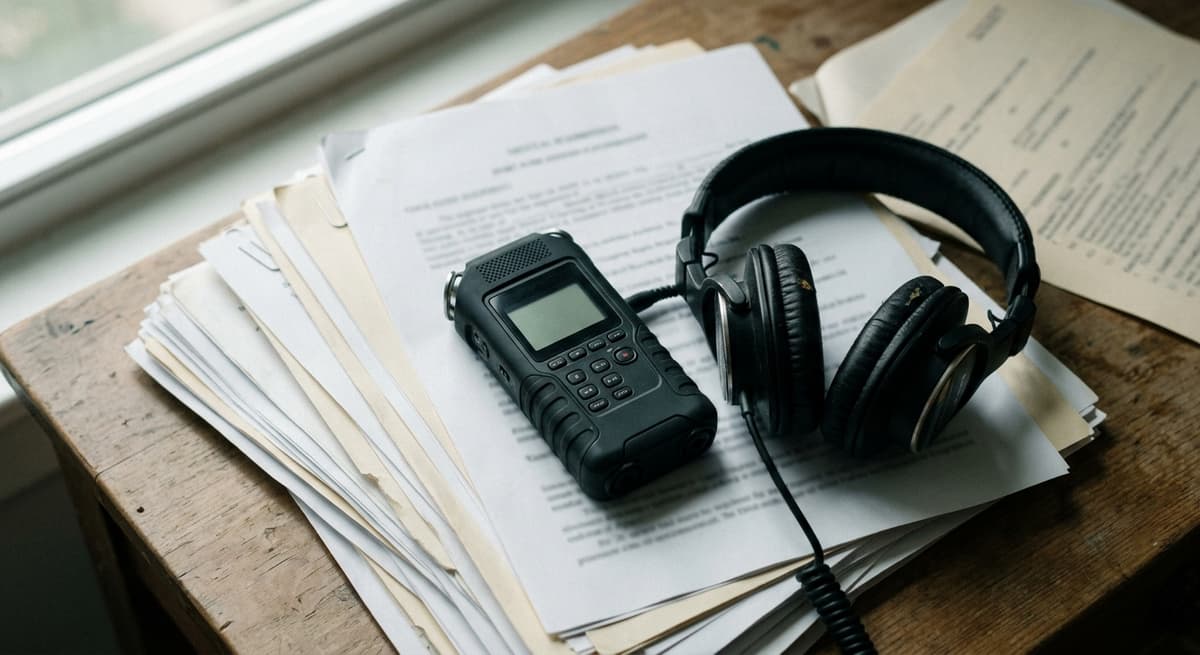
Because the wiretap chapter covers only transmitted communications, Indiana uses Ind. Code 35-45-4-5 to reach covert video recording in private places. The voyeurism statute covers peeping into dwellings or disrobing areas, public voyeurism (recording another's private area in a public place), and remote aerial voyeurism (drone-based peeping). The penalty structure:
| Conduct | Penalty |
|---|---|
| Peeping without a device | Class B misdemeanor; Level 6 felony with a prior unrelated conviction under this section |
| Camera-based peeping | Level 6 felony (base) |
| Public voyeurism | Class A misdemeanor; Level 6 felony with a prior unrelated conviction under this section, or if the person publishes the image, makes it available on the Internet, or transmits or disseminates it to another person |
| Remote aerial voyeurism | Class A misdemeanor; Level 6 felony with a prior unrelated conviction under this section, or if the person publishes the images, makes them available on the Internet, or transmits or disseminates them to another person |
A nanny cam or Ring camera mounted in a common area of your home is generally lawful. Pointing audio-capable cameras at spaces where guests have a reasonable expectation of private conversation can produce unlawful interceptions under Ind. Code 35-33.5 if no party consents. Pointing any camera into bathrooms, guest bedrooms, or showers can trigger voyeurism liability. The 2023 FTC v. Ring settlement (No. 1:23-cv-01549, D.D.C.; $5.8 million consumer redress) is a reminder of the federal privacy overlay that applies to connected-camera operators.
Ind. Code 35-45-4-8 covers distribution of intimate images without consent (Class A misdemeanor base; Level 6 felony with a prior). House Enrolled Act 1047 of 2024 (Pub. L. 79-2024, effective July 1, 2024) expanded the statute to cover AI-generated and digitally altered intimate imagery, and amended Ind. Code 35-45-4-5 to reach hidden-camera capture intended to produce intimate images. See our guides on Indiana video recording laws and Indiana voyeurism laws.
Penalties for illegal recording in Indiana
A single unlawful recording can trigger both criminal prosecution and a private civil lawsuit under two separate statutes.
Criminal (Ind. Code 35-33.5-5-5): Unlawful interception is a Level 5 felony. Under Ind. Code 35-50-2-6(b), the sentencing range is 1 to 6 years in prison with a 3-year advisory sentence and a fine up to $10,000. Using or disclosing an unlawfully intercepted communication (by criminal-justice personnel) is also a Level 5 felony under subsection (c). Older sources using "Class D felony" are stale; Indiana replaced the Class A-D felony system with the Level 1-6 system on July 1, 2014.
Civil (Ind. Code 35-33.5-5-4): A victim may sue for:
| Civil remedy | Amount |
|---|---|
| Actual damages | Plaintiff's full actual loss |
| Liquidated damages floor | Greater of $100/day of violation or $1,000 minimum |
| Punitive damages | Available |
| Attorney fees | Reasonable fees and litigation costs |
| Statute of limitations | 2 years from the initial violation |
Good-faith reliance on a valid warrant is a complete defense. Lack of knowledge that the communication was unlawfully intercepted is an affirmative defense to the disclosure and use claims.
Recording the police in Indiana
Indiana is in the Seventh Circuit, which recognized a First Amendment right to audio-record on-duty police officers in public in ACLU of Illinois v. Alvarez, 679 F.3d 583 (7th Cir. 2012). Judge Sykes held that openly recording officers in public triggers heightened First Amendment scrutiny and that a blanket audio-recording prohibition as applied to that activity was not narrowly tailored. Alvarez is binding on Indiana federal courts.
Indiana has no state statute affirmatively protecting a right to record, and it has two that cut the other way. Ind. Code 35-44.1-2-14 (unlawful encroachment on an investigation, added by P.L.67-2023) makes it a Class C misdemeanor to knowingly or intentionally approach within 25 feet of a law enforcement officer who is lawfully engaged in the officer's duties after the officer has ordered you to stop approaching. A second, nearly identical offense at Ind. Code 35-44.1-2-15 (unlawful encroachment on a law enforcement officer, added by P.L.4-2025) carries the same 25-foot trigger and the same Class C misdemeanor penalty, and spells out that an officer may give the order when the officer reasonably believes your presence within 25 feet will interfere with the officer's duties. Neither statute bans recording and neither requires you to stop recording; each is triggered by closing distance after an order to stop approaching. This is the charge a person recording Indiana police is most likely to face.
In practice: you may openly record police performing public duties; do not interfere with police activity; treat 25 feet as the working buffer the moment an officer orders you to stop approaching; comply with lawful orders to step back (moving back is not the same as stopping the recording).
Law-enforcement body-cam, dash-cam, and fixed-camera recordings are governed by the Access to Public Records Act framework at Ind. Code 5-14-3-5.1 (release rules) and Ind. Code 5-14-3-5.3 (minimum retention: 190 days for local and other non-state agencies, 280 days for state agencies). The retention period extends to 2 years if a requestor gives written notice or files a formal or informal complaint within the initial window. Citizens requesting footage of their own arrest should file an APRA request with the relevant agency. For more, see the Indiana police recording laws guide.

Special topics in Indiana
Workplace recording and NLRB rules
Indiana's one-party rule covers ordinary workplace conversations a participant records: HR meetings, performance reviews, disciplinary calls. An employer can prohibit recording by policy, and discipline for violating a properly drawn policy may be lawful even though the underlying recording was legal. Under NLRB Stericycle, Inc., 372 NLRB No. 113 (Aug. 2, 2023), a workplace no-recording rule is presumptively unlawful if a reasonable employee could read it to chill protected Section 7 activity; narrow tailoring to a legitimate business interest is required. NLRB GC 25-05 (Feb. 2025) narrowed enforcement posture without overruling Stericycle. NLRB GC 25-07 (June 25, 2025) treats surreptitious recording of NLRA collective-bargaining sessions as a per se unfair labor practice under Sections 8(a)(5) and 8(b)(3). See the Indiana workplace recording laws guide.
Parental vicarious consent
Indiana courts have recognized that a parent may record a minor child's phone conversations when acting in good faith concern for the child's welfare. The doctrine draws on the general guardianship framework at Ind. Code 29-3-3-3 and on federal-court applications of the participant-consent rule to family settings. The Indiana Parenting Time Guidelines (effective January 1, 2022) discourage parents from recording communications with the other co-parent, and family courts may weigh such recordings unfavorably when assessing parental fitness.
AI deepfake statutes (2024)
Indiana enacted two AI statutes effective July 1, 2024. HEA 1133 (Pub. L. 81-2024) creates a civil cause of action against anyone who pays for or sponsors election-campaign media containing AI-generated depictions of a candidate without a disclaimer that the content was "digitally altered or artificially generated." The remedy is civil only; there is no criminal penalty. HEA 1047 (Pub. L. 79-2024) expanded Ind. Code 35-45-4-8 and 35-45-4-5 to cover AI-generated and digitally altered intimate imagery with the same Class A misdemeanor / Level 6 felony structure as unaltered intimate images.
Federal TAKE IT DOWN Act
The federal TAKE IT DOWN Act (Pub. L. 119-12, signed May 19, 2025) criminalizes knowing publication of nonconsensual intimate imagery including AI deepfakes, and imposes a 48-hour platform notice-and-takedown obligation effective May 19, 2026. Indiana victims may pursue federal remedies alongside state claims under Ind. Code 35-45-4-8 and the voyeurism statute.
Federal overlay (ECPA, FCC, HIPAA)
Indiana's one-party rule matches the federal floor at 18 U.S.C. 2511(2)(d). FCC Declaratory Ruling 24-17 (Feb. 2024) classifies AI-generated voices in robocalls as artificial or prerecorded under the TCPA; prior express written consent is required for such calls to Indiana numbers. FCC 24-24 (One-to-One Consent) was vacated by the Eleventh Circuit in Insurance Marketing Coalition Ltd. v. FCC, 127 F.4th 303 (2025), and is no longer in force. Under HIPAA's Privacy Rule (45 C.F.R. Part 164), a patient may record their own medical visit under Indiana's one-party rule; a covered entity recording the patient needs a treatment, payment, or operations exception or HIPAA-compliant authorization. The legacy carrier beep-tone rule at 47 C.F.R. 64.501 was removed effective November 20, 2017; do not cite it.
Recent legal developments
- P.L.4-2025: Indiana adds Ind. Code 35-44.1-2-15 (unlawful encroachment on a law enforcement officer), a second 25-foot Class C misdemeanor offense that sits alongside the 2023 statute.
- P.L.67-2023: Indiana adds Ind. Code 35-44.1-2-14 (unlawful encroachment on an investigation), making it a Class C misdemeanor to approach within 25 feet of an officer after being ordered to stop approaching.
- July 1, 2024: HEA 1047 (Pub. L. 79-2024) expands Ind. Code 35-45-4-8 to cover AI-generated and digitally altered intimate imagery; same penalty structure (Class A misdemeanor; Level 6 felony with a prior).
- July 1, 2024: HEA 1133 (Pub. L. 81-2024) creates a civil cause of action for undisclaimed AI-generated political-campaign media depicting a candidate.
- May 19, 2025: Federal TAKE IT DOWN Act (Pub. L. 119-12) signed; platform notice-and-takedown obligation effective May 19, 2026.
- April 30, 2025: Eleventh Circuit vacates FCC 24-24 One-to-One Consent Rule in Insurance Marketing Coalition Ltd. v. FCC, 127 F.4th 303.
- August 2, 2023: NLRB Stericycle, Inc., 372 NLRB No. 113 replaces Boeing framework for workplace no-recording rules; GC 25-05 (Feb. 2025) and GC 25-07 (June 25, 2025) modify enforcement posture.
Indiana recording laws in depth
Want to know more? The guides below cover specific Indiana recording contexts in depth.
By type of recording
- Indiana Audio Recording Laws: One-Party Consent Rules and Penalties
- Indiana Video Recording Laws: Surveillance Rules and Privacy Limits
- Indiana Phone Call Recording Laws: One-Party Consent Rules Explained
- Indiana Voyeurism and Hidden Camera Laws: Statutes and Penalties
- Indiana Dashcam Laws: Mounting Rules, Audio Recording, and Legal Use
By place or relationship
- Indiana Workplace Recording Laws: Employee Rights and Employer Rules
- Indiana Laws on Recording Police: Your Rights and the 25-Foot Buffer Law
- Indiana Laws on Recording in Public: Rights, Limits, and Practical Rules
- Indiana Security Camera Laws: Residential, Business, and Rental Rules
- Indiana Medical Recording Laws: Patient Rights, HIPAA, and Provider Rules
- Indiana Landlord-Tenant Recording Laws: Rights for Renters and Property Owners
- Indiana School Recording Laws: Student Privacy, FERPA, and Parent Rights
More Indiana laws
- Indiana Alimony Laws
- Indiana At-Will Employment Laws
- Indiana Child Custody Laws
- Indiana Child Support Laws
- Indiana Data Privacy Laws
- Indiana Landlord-Tenant Laws
This article is general legal information, not legal advice. Recording laws change and apply differently to each situation. For advice about your situation, consult a licensed Indiana attorney.
More Indiana Laws
Frequently Asked Questions
Is Indiana a one-party or two-party consent state?
Indiana is a one-party consent state. Under Ind. Code 35-33.5-5-5, read with the interception definition at Ind. Code 35-31.5-2-176, a participant in a phone call or transmitted electronic communication may record it without telling the other party. The criminal offense only applies when no party to the communication consents.
Can I record a phone call in Indiana without telling the other person?
Yes, if you are a party to the call. Ind. Code 35-31.5-2-176 defines you as a sender or receiver, so your participation satisfies the consent requirement and the offense at Ind. Code 35-33.5-5-5 is not triggered. The same rule applies to landline calls, cell calls, VoIP, and video meetings.
Can I record someone in person in Indiana?
The wiretap statute does not reach face-to-face oral conversation at all: Ind. Code 35-31.5-2-110 only covers communication transmitted by wire, radio, or an electromagnetic, photoelectronic, or photo-optical system, and unmediated in-person speech is not transmitted that way. However, in-person covert recording can still violate the voyeurism statute at Ind. Code 35-45-4-5 (private places), the intimate-image statute at Ind. Code 35-45-4-8, or civil invasion-of-privacy torts. Best practice for sensitive in-person recordings is to get express consent.
What is the penalty for illegal recording in Indiana?
Criminal: Level 5 felony, 1 to 6 years in prison (advisory 3 years), up to a $10,000 fine under Ind. Code 35-50-2-6(b). Civil: the greater of actual damages, $100 per day of violation, or $1,000 minimum, plus punitive damages and attorney fees, under Ind. Code 35-33.5-5-4. Civil claims must be filed within two years of the initial violation.
Is illegal recording a felony in Indiana?
Yes. Unlawful interception under Ind. Code 35-33.5-5-5 is a Level 5 felony, carrying 1 to 6 years in prison with a 3-year advisory sentence and a fine up to $10,000. Older sources calling it a 'Class D felony' are stale; Indiana replaced the Class A-D felony system with the Level 1-6 system on July 1, 2014.
Can I record the police in Indiana?
Yes. The Seventh Circuit recognized a First Amendment right to audio-record on-duty police in public in ACLU of Illinois v. Alvarez, 679 F.3d 583 (7th Cir. 2012), and that decision binds Indiana federal courts. Indiana has no separate state Right-to-Record statute, but it does have two encroachment statutes that work against you: Ind. Code 35-44.1-2-14 and Ind. Code 35-44.1-2-15 each make it a Class C misdemeanor to approach within 25 feet of an officer lawfully engaged in the officer's duties after the officer orders you to stop approaching. Neither one requires you to stop recording. Do not interfere with police activity, hold your distance once you are told to stop approaching, and comply with lawful orders to step back while continuing to record.
Are Ring cameras and nanny cams legal in Indiana?
Video-only cameras in common areas of your own property are generally lawful. Audio capture requires at least one party's consent if conversations occur where speakers have a reasonable expectation of privacy under Ind. Code 35-33.5. Pointing any camera into bathrooms, bedrooms, or showers can trigger voyeurism liability under Ind. Code 35-45-4-5 regardless of audio.
Can my employer fire me for recording in Indiana?
Yes. Indiana is an at-will employment state, and employers may prohibit workplace recording by policy even though one-party recording is legal under state law. Under NLRB Stericycle, Inc., 372 NLRB No. 113 (2023), a no-recording policy must be narrowly tailored to a legitimate business interest. Recording that is tied to protected concerted activity under NLRA Section 7 may be protected from discipline.
Updates
Corrected four legal errors verified against the official Indiana Code and the full text of State v. Lombardo: device-free peeping does escalate to a Level 6 felony on a prior unrelated conviction under Ind. Code 35-45-4-5(c), public and aerial voyeurism also escalate when the image is published, posted online, or transmitted to another person under subsections (e) and (h), the Lombardo decision is a ruling that the Wiretap Act is constitutional that reversed a dismissal and remanded rather than a finding that the defendant violated the Act, and the page now names Ind. Code 35-44.1-2-14 and 35-44.1-2-15, the 25-foot encroachment offenses a person recording Indiana police can actually be charged under.
Corrected two statutory inaccuracies: Indiana's electronic-communication definition (Ind. Code 35-31.5-2-110) lists oral communication as covered content and excludes in-person speech only because it is not transmitted by wire, radio, or an electromagnetic/photo-optical system, not because of a nonexistent 'oral communication' exclusion clause; and law-enforcement body-cam/dash-cam retention under Ind. Code 5-14-3-5.3 is 190 days for local agencies and 280 days for state agencies, extending to 2 years on a requestor's notice or complaint, not automatically for death, injury, or deadly-force incidents.
Independently fact-checked against the cited primary sources
Governing law re-checked for recent changes
Competitive gap-check audit against top-ranking competitor content: corrected two wrong Indiana Public Law citations verified against the Indiana General Assembly's own bill-tracking records. HEA 1047 of 2024 is Pub. L. 79-2024, not the previously stated Pub. L. 117-2024. HEA 1133 of 2024 is Pub. L. 81-2024, not the previously stated Pub. L. 83-2024. Both bill numbers, subject matter, and July 1, 2024 effective dates were already correct; only the Public Law numbers were wrong. Added Kearney v. Salomon Smith Barney, Inc., 39 Cal.4th 95, 137 P.3d 914 (Cal. 2006) to the interstate call section as persuasive (not binding) authority for the existing 'follow the strictest state' guidance, since no Indiana court has ruled on the choice-of-law question for interstate call recording. All other facts on the page independently confirmed accurate.
Reviewed and approved by an editor
Audit fix: corrected voyeurism penalty table (IC 35-45-4-5). Camera-based peeping under subsection (b) is a Level 6 felony as the base offense, not a Class A misdemeanor. Class A misdemeanor base applies to public voyeurism (subsection d) and aerial voyeurism (subsection g), which escalate to Level 6 only with a prior unrelated conviction under this section (or dissemination for aerial). At-a-glance table updated to match. Restructured for readability: added AEO lede, condensed at-a-glance table, reorganized core sections (in-person, phone, hidden cameras, penalties, police), compressed special topics to single tight paragraphs each, added in-depth guide index, refreshed FAQ to 8 plain-language questions. All other facts confirmed: Level 5 felony, 1-6 years, 3-year advisory, $10,000 fine, $100/day or $1,000 civil floor, plus punitives and fees, 2-year SOL, HEA 1047 and HEA 1133 effective dates (July 1, 2024).
Refresh: Replaced broken KeyTakeaways block (was rendering H2 section titles instead of fact statements) with seven fact-statement takeaways anchored to verified primary law. Corrected criminal interception cite to Ind. Code 35-33.5-5-5 (Level 5 felony, 1 to 6 years, up to $10,000 fine under Ind. Code 35-50-2-6(b)); pre-refresh draft used the wrong section and the wrong felony level. Corrected civil cause of action cite to Ind. Code 35-33.5-5-4 with the correct $100 per day or $1,000 minimum (whichever is greater) liquidated-damages floor and 2-year statute of limitations. Reframed wiretap-chapter scope as transmitted-only under Ind. Code 35-31.5-2-110, with face-to-face oral communication expressly excluded from the 'electronic communication' definition. Added Indiana HEA 1133 of 2024 (Pub. L. 83-2024, effective July 1, 2024) deepfake elections civil cause of action and Indiana HEA 1047 of 2024 (Pub. L. 117-2024, effective July 1, 2024) AI intimate-image expansion of Ind. Code 35-45-4-8. Added ACLU of Illinois v. Alvarez, 679 F.3d 583 (7th Cir. 2012) as the controlling First Amendment record-the-police authority for the Seventh Circuit (Indiana, Illinois, Wisconsin). Updated FCC One-to-One Consent Rule (FCC 24-24) status to vacated by 11th Circuit Insurance Marketing Coalition Ltd. v. FCC (mandate Apr. 30, 2025); removed any reliance on stale 47 C.F.R. 64.501 (which was removed effective Nov. 20, 2017). Added NLRB Stericycle 372 NLRB No. 113 (Aug. 2, 2023) plus GC 25-05 (Feb. 2025) plus GC 25-07 (June 26, 2025) workplace overlay. Added federal TAKE IT DOWN Act (Pub. L. 119-12, signed May 19, 2025; covered-platform notice-and-takedown obligation effective May 19, 2026). Noted Indiana's 2014 transition from Class A/B/C/D to Level 1 to 6 felony classification (HEA 1006-2013) so readers understand stale 'Class D felony' citations elsewhere.
Refresh: Replaced broken KeyTakeaways block (was rendering H2 section titles instead of fact statements) with seven fact-statement takeaways anchored to verified primary law. Corrected criminal interception cite to Ind. Code 35-33.5-5-5 (Level 5 felony, 1 to 6 years, up to $10,000 fine under Ind. Code 35-50-2-6(b)); pre-refresh draft used the wrong section and the wrong felony level. Corrected civil cause of action cite to Ind. Code 35-33.5-5-4 with the correct $100 per day or $1,000 minimum (whichever is greater) liquidated-damages floor and 2-year statute of limitations. Reframed wiretap-chapter scope as transmitted-only under Ind. Code 35-31.5-2-110, which covers oral communication only when it is transmitted by wire, radio, or an electromagnetic, photoelectronic, or photo-optical system, so unmediated face-to-face speech falls outside the definition. Added Indiana HEA 1133 of 2024 (Pub. L. 81-2024, effective July 1, 2024) [deepfake](/us-laws/deepfake-laws) elections civil cause of action and Indiana HEA 1047 of 2024 (Pub. L. 79-2024, effective July 1, 2024) AI intimate-image expansion of Ind. Code 35-45-4-8. Added ACLU of Illinois v. Alvarez, 679 F.3d 583 (7th Cir. 2012) as the controlling First Amendment record-the-police authority for the Seventh Circuit (Indiana, Illinois, Wisconsin). Updated FCC One-to-One Consent Rule (FCC 24-24) status to vacated by 11th Circuit Insurance Marketing Coalition Ltd. v. FCC (mandate Apr. 30, 2025); removed any reliance on stale 47 C.F.R. 64.501 (which was removed effective Nov. 20, 2017). Added NLRB Stericycle 372 NLRB No. 113 (Aug. 2, 2023) plus GC 25-05 (Feb. 2025) plus GC 25-07 (June 25, 2025) workplace overlay. Added federal TAKE IT DOWN Act (Pub. L. 119-12, signed May 19, 2025; covered-platform notice-and-takedown obligation effective May 19, 2026). Noted Indiana's 2014 transition from Class A/B/C/D to Level 1 to 6 felony classification (HEA 1006-2013) so readers understand stale 'Class D felony' citations elsewhere.
Added wearable recording device guidance covering AI voice recorders (Plaud) and smart glasses (Meta Ray-Bans) under Indiana one-party consent law.
The Law Behind This Article
This article rests on the statutory provisions below, held in our own legal record and retrieved from the official source. Tap a section to read the operative text.
Indiana Code, TITLE 35. CRIMINAL LAW AND PROCEDURE
§ 35-33.5-5-5Nonapplicability to interceptions authorized under federal law; classification of offensesIn forcecited in 13 of our articles
Sec. 5. (a) This section does not apply to a person who makes an interception authorized under federal law. (b) A person who knowingly or intentionally intercepts a communication in violation of this article commits unlawful interception, a Level 5 felony. (c) A person who, by virtue of the person's employment or official capacity in the criminal justice system, knowingly or intentionally uses or discloses the contents of an interception in violation of this article commits unlawful use or disclosure of an interception, a Level 5 felony.
Official text (excerpt) · last checked 2026-08-28 · Read the full text in our law library · Verify at iga.in.gov
Cited in 2 court opinions in our collectionLatest citing opinion in our collection: 2007
Opinions citing this section in our collection:
- Edwards v. State (Indiana Court of Appeals 2007, 862 N.E.2d 1254)“…or disclosure of an interception, a Class C felony. I.C. § 35-33.5-5-5. The Indiana Wiretap Act defines interc…”
- State of Indiana v. John Lombardo (Indiana Supreme Court 2000)“…disclosure of an interception, a Class C felony. Ind. Code § 35-33.5-5-5 (1993) (emphases added). The statute…”
Identified automatically from the court opinions citing this section — not a ranking of which case controls.
Also relied on in: Indiana Audio Recording Laws: One-Party Consent Rules and Penalties, Indiana Dashcam Laws: Mounting Rules, Audio Recording, and Legal Use, Indiana Phone Call Recording Laws: One-Party Consent Rules Explained
United States Code Title 18
§ 2511Interception and disclosure of wire, oral, or electronic communications prohibitedIn forcecited in 422 of our articles
Except as otherwise specifically provided in this chapter any person who— intentionally intercepts, endeavors to intercept, or procures any other person to intercept or endeavor to intercept, any wire, oral, or electronic communication; intentionally uses, endeavors to use, or procures any other person to use or endeavor to use any electronic, mechanical, or other device to intercept any oral communication when— such device is affixed to, or otherwise transmits a signal through, a wire, cable, or other like connection used in wire communication; or such device transmits communications by radio, or interferes with the transmission of such communication; or such person knows, or has reason to know, that such device or any component thereof has been sent through the mail or transported in interstate or foreign commerce; or such use or endeavor to use (A) takes place on the premises of any business or other commercial establishment the operations of which affect interstate or foreign commerce; or (B) obtains or is for the purpose of obtaining information relating to the operations of any business or other commercial establishment the operations of which affect interstate or foreign…
Official text (excerpt) · last checked 2026-08-28 · Read the full text in our law library · Verify at uscode.house.gov
Cited in 2,045 court opinions in our collectionLatest citing opinion in our collection: 2026
In the courts (editorial summary, independently checked):Griggs-Ryan v. Smith (1990) applied the Section 2511(2)(d) prior-consent exception, treating a tenant repeatedly told that all incoming calls were taped as having impliedly consented. United States v. United States District Court (1972) read the then-current Section 2511(3) as conferring no presidential surveillance power.
Opinions citing this section in our collection:
- Mitchell v. Forsyth (Supreme Court of the United States 1985, 472 U.S. 511)✓The Attorney General authorized a warrantless 1970 national security wiretap that caught the plaintiff's calls; the Court held the since-repealed Section 2511(3) disclaimer left the tap lawful under Title III, and that Mitchell had qualified immunity.
- United States v. United States District Court for the Eastern District of Michigan (Supreme Court of the United States 1972, 407 U.S. 297)✓The Attorney General approved warrantless wiretaps on members of a domestic group accused of bombing a CIA office; the Court read Section 2511(3) as a congressional disclaimer conferring no surveillance power, then held the Fourth Amendment required prior judicial approval.
- Forsyth v. Barr (Court of Appeals for the Fifth Circuit 1994, 19 F.3d 1527)✓Dallas police used, in an internal affairs probe of an officer, calls private parties allegedly intercepted illegally; assuming that was unlawful, the Fifth Circuit held Section 2517(1) and (2) allowed the disclosure and use, defeating the Section 2511(1)(c) and (d) claims.
Identified automatically from the court opinions citing this section — not a ranking of which case controls.
Also relied on in: Connecticut Recording Laws (2026): Hybrid Consent Rules Explained, Oregon Recording Laws (2026): Hybrid One-Party and All-Party Rules, US Recording Laws by State (2026): All 50 States Explained
Search our full record of US law — 2.1 million sections, every state + federal →
Sources and References
- iga.in.gov.gov
- iga.in.gov.gov
- iga.in.gov.gov
- iga.in.gov.gov
- in.gov.gov
- iga.in.gov.gov
- media.ca7.uscourts.gov.gov
- iga.in.gov.gov
- iga.in.gov.gov
- in.gov.gov
- iga.in.gov.gov
- in.gov.gov
- iga.in.gov.gov
- uscode.house.gov.gov
- justice.gov.gov
- nlrb.gov.gov
- nlrb.gov.gov
- ftc.gov.gov
- congress.gov.gov
- docs.fcc.gov.gov
- fcc.gov.gov
- federalregister.gov.gov
- ecfr.gov.gov
- Ind. Code 35-44.1-2-14, Unlawful encroachment on an investigation (25-foot buffer, Class C misdemeanor; added by P.L.67-2023)(iga.in.gov)
- Ind. Code 35-44.1-2-15, Unlawful encroachment on a law enforcement officer (25-foot buffer, Class C misdemeanor; added by P.L.4-2025)(iga.in.gov)
- State v. Lombardo, 738 N.E.2d 653 (Ind. 2000) (full opinion: Wiretap Act held constitutional, trial court dismissal reversed and remanded)(courtlistener.com)