
United Kingdom
UK Dog Laws: Microchipping, Fouling, Licensing and Control Notices
Independently fact-checked against primary sources (last audited September 29, 2026). · Law checked current as of September 29, 2026. · 14 primary sources cited on this page. How we verify our legal content
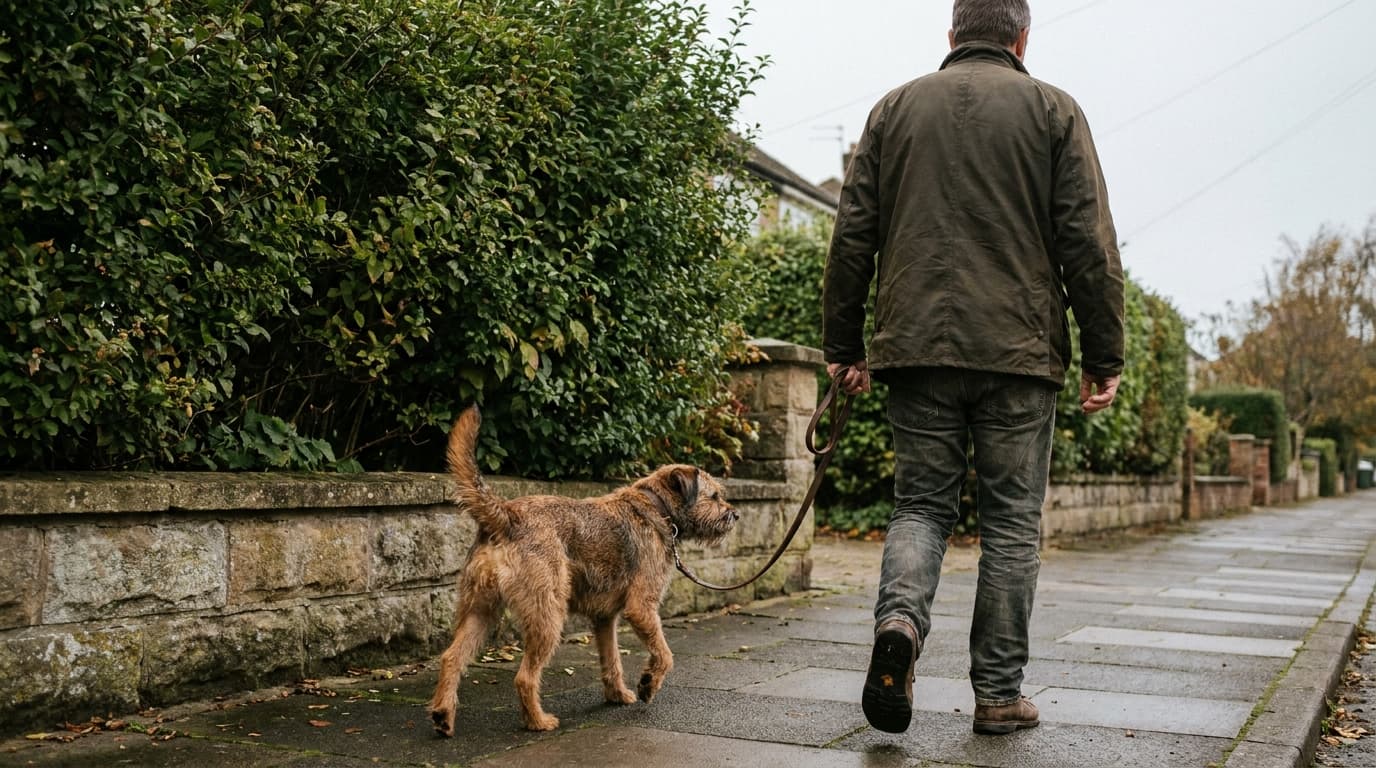
Owning a dog in the UK comes with a set of everyday legal duties that have little to do with dangerous or prohibited breeds: microchipping, cleaning up after your dog, keeping it under control in public, and, in Northern Ireland only, holding a licence. The detail differs by nation more than most owners expect.
Microchipping Is Compulsory
Microchipping a dog has been a legal requirement, not just good practice, for some years, though the starting date differs by nation. England, Scotland and Wales made it compulsory from 6 April 2016. Northern Ireland went further and earlier: microchipping has been required there since 2012, and it is directly tied to Northern Ireland's dog licensing system, since a dog must be microchipped before an owner can get a licence at all.
England's current microchipping rules sit in the Microchipping of Cats and Dogs (England) Regulations 2023. As the name suggests, this instrument also extended compulsory microchipping to cats, with that part of the scheme starting on 10 June 2024. Under the regulations, keepers must keep their contact details up to date on a compliant database, and failing to have a dog microchipped, or failing to update the database after a formal notice, can lead to a fine of up to £500, with 21 days given to comply once notified.
Dog Fouling: A Three-Step History
Dog fouling law in England and Wales is one of the more commonly misdescribed areas of everyday UK law, because it did not arrive in one step. The chain runs like this:
- The Dogs (Fouling of Land) Act 1996 first created a fouling offence that councils could apply to designated land.
- That Act was repealed by the Clean Neighbourhoods and Environment Act 2005, which replaced it with a system of local Dog Control Orders, covering fouling as well as other matters such as dogs on leads and dog exclusion from certain areas.
- Those Dog Control Orders were, in turn, replaced by Public Spaces Protection Orders (PSPOs), introduced by sections 59 to 75 of the Anti-social Behaviour, Crime and Policing Act 2014.
It is a common mistake to say that PSPOs directly replaced the 1996 Act. They did not; the 2005 Act's Dog Control Orders sat in between. Today, PSPOs are the live legal basis for local rules requiring dog fouling to be cleared up, dogs to be kept on leads in specified areas, or dogs to be excluded from places such as children's play areas, and they are enforced through fixed penalty notices issued by the local council.
PSPOs apply in England and Wales only. Scotland has its own offence of failing to clear up after a dog under the Dog Fouling (Scotland) Act 2003, and in Northern Ireland district councils make dog control orders under the Clean Neighbourhoods and Environment Act (Northern Ireland) 2011.
Northern Ireland: The Dog Licence Great Britain Abolished
Great Britain abolished dog licensing decades ago, but Northern Ireland still requires one. An annual dog licence currently costs £12.50, with concessions for certain owners: an owner aged 65 or over pays no fee at all for their first dog, while a reduced rate of £5 applies to additional dogs for that group, and to owners on qualifying benefits or with a neutered dog. Applying requires the dog to be microchipped first. Keeping a dog over six months old without a valid licence can lead to a warning, a formal caution, a fixed penalty (the amount is set by the district council) or, if the matter is prosecuted in court instead, a fine of up to £1,000. This is a genuine, practical difference from the rest of the UK that catches owners moving to or from Northern Ireland off guard.
Scotland: Dog Control Notices
Scotland runs a distinct civil tool under the Control of Dogs (Scotland) Act 2010: the Dog Control Notice. A local authority can issue one where a dog is considered "out of control," which is a lower threshold than the "dangerously out of control" test under the Dangerous Dogs Act 1991. A Dog Control Notice can require steps such as keeping the dog on a lead in public, attending training, or other measures the authority considers necessary, and failing to comply with a notice is itself an offence. The Act's underlying focus is on the owner's behaviour rather than the dog's breed.
Keeping a Dog Under Control Away From Home
Beyond fouling specifically, the same PSPO framework is the tool most councils in England and Wales use for the everyday rules people notice on a daily dog walk: requiring dogs to be on a lead in a particular park, banning dogs from a children's play area or a marked section of beach, or capping how many dogs one person can walk at once. Because a PSPO is made locally rather than nationally, the exact rules genuinely vary from one council area to the next, and the practical way to check the current position for a specific park or beach is the local council's own published order, not a single national rulebook. Breaching a PSPO condition is usually enforced through a fixed penalty notice, with prosecution reserved for more serious or repeated non-compliance.

Livestock Worrying
Separately from the fouling and control rules, the Dogs (Protection of Livestock) Act 1953 makes it an offence for a dog to worry livestock, or to be at large (not on a lead or otherwise under close control) in a field or enclosure containing sheep. The 1953 Act applies in England, Wales and Scotland only. In Northern Ireland, the keeper of a dog that worries livestock commits an offence under Article 28 of the Dogs (Northern Ireland) Order 1983, punishable by a fine of up to level 3 on the standard scale. There are defences for the occupier's own dog in certain circumstances, and for police dogs, guide dogs, and working sheepdogs. The penalties now differ between the nations. In England and Wales, the Dogs (Protection of Livestock) (Amendment) Act 2025, in force since 18 March 2026, made the fine unlimited, extended the offence to roads and paths, brought camelids within the definition of livestock, dealt with attacking livestock separately from worrying it, and gave the police new powers to seize dogs, collect samples and enter premises.
Scotland is the only nation where livestock worrying can lead to imprisonment. The 1953 Act was amended for Scotland by the Dogs (Protection of Livestock) (Amendment) (Scotland) Act 2021, which set the maximum at 12 months' imprisonment and/or a fine of up to £40,000. These figures come from the amending Acts, not from the original 1953 Act, so check the amended text rather than the 1953 Act as first passed.
Four Nations, One Dog: A Quick Summary
If you own a dog and move between UK nations, or simply want to know which rules genuinely apply to you, the practical differences worth remembering are: Northern Ireland is the only nation with a dog licence, and the only one where microchipping has been compulsory since 2012 rather than 2016; Scotland is the only nation with Dog Control Notices as a distinct, lower-threshold civil tool; and England and Wales's fouling and lead rules run through PSPOs made locally by each council under the 2014 Act. None of this replaces the nation-specific detail above, but it is a useful starting checklist before assuming a rule you have read about applies where you live.
This guide provides general information about everyday UK dog ownership law and is not legal advice for a specific situation. Rules and fees can change; check the current position with your local council or, in Northern Ireland, with nidirect. See also our guides to the XL Bully ban and the Dangerous Dogs Act 1991, or the wider UK Everyday Law hub.
Frequently Asked Questions
Is it a legal requirement to microchip my dog?
Yes, everywhere in the UK. England, Scotland and Wales have required it since 6 April 2016, and Northern Ireland since 2012, where microchipping must happen before a dog licence can be issued.
What law covers dog fouling today?
In England and Wales, Public Spaces Protection Orders, made under sections 59 to 75 of the Anti-social Behaviour, Crime and Policing Act 2014, are the current basis for local fouling and dog-control rules. The older Dogs (Fouling of Land) Act 1996 was repealed by the Clean Neighbourhoods and Environment Act 2005 before PSPOs took over. Scotland uses the Dog Fouling (Scotland) Act 2003, and Northern Ireland councils use dog control orders under the Clean Neighbourhoods and Environment Act (Northern Ireland) 2011.
Do I need a licence to own a dog in the UK?
Only in Northern Ireland. Great Britain abolished dog licensing decades ago, but Northern Ireland still requires an annual licence, currently £12.50 (£5 reduced), and the dog must be microchipped first.
What is a Dog Control Notice in Scotland?
A Dog Control Notice is a civil notice a Scottish local authority can issue under the Control of Dogs (Scotland) Act 2010 when a dog is considered out of control. It sits at a lower threshold than the Dangerous Dogs Act 1991's dangerously out of control test, and failing to comply with the notice is an offence.
What happens if my dog worries sheep?
In England, Wales and Scotland it is an offence under the Dogs (Protection of Livestock) Act 1953 to let a dog worry livestock or be at large in a field with sheep. In England and Wales the fine has been unlimited since 18 March 2026, and Scotland allows up to 12 months' imprisonment and/or a £40,000 fine. In Northern Ireland, livestock worrying is an offence under Article 28 of the Dogs (Northern Ireland) Order 1983.
Can I be fined for not updating my dog's microchip details?
Yes, under England's current microchipping regulations, a keeper who fails to update the microchip database after a formal notice can face a fine of up to £500, with 21 days to comply once notified.
Updates
We updated the livestock worrying section for the Dogs (Protection of Livestock) (Amendment) Act 2025, in force in England and Wales since 18 March 2026, noted that the 1953 Act does not apply in Northern Ireland, limited the PSPO fouling rules to England and Wales with the Scottish and Northern Ireland equivalents, and removed an unsourced £80 figure for Northern Ireland dog licence fixed penalties.
Independently fact-checked against the cited primary sources; governing law re-checked for recent changes
The Law Behind This Article
This article rests on the statutory provisions below, held in our own legal record and retrieved from the official source. Tap a section to read the operative text.
Anti-social Behaviour, Crime and Policing Act 2014
s. 59Power to make public spaces protection ordersIn force
(1) A local authority may make a public spaces protection order if satisfied on reasonable grounds that two conditions are met. (2) The first condition is that— (a) activities carried on in a public place within the authority's area have had a detrimental effect on the quality of life of those in the locality, or (b) it is likely that activities will be carried on in a public place within that area and that they will have such an effect. (3) The second condition is that the effect, or likely effect, of the activities— (a) is, or is likely to be, of a persistent or continuing nature, (b) is, or is likely to be, such as to make the activities unreasonable, and (c) justifies the restrictions imposed by the notice. (4) A public spaces protection order is an order that identifies the public place referred to in subsection (2) (“the restricted area”) and— (a) prohibits specified things being done in the restricted area, (b) requires specified things to be done by persons carrying on specified activities in that area, or (c) does both of those things.
Official text (excerpt) · last checked 2026-08-14 · Read the full text in our law library · Verify at legislation.gov.uk
Search our record of UK legislation — retrieved from legislation.gov.uk →
Sources and References
- The Microchipping of Cats and Dogs (England) Regulations 2023 (SI 2023/468)(legislation.gov.uk).gov
- Anti-social Behaviour, Crime and Policing Act 2014, section 59 (Public Spaces Protection Orders)(legislation.gov.uk).gov
- Clean Neighbourhoods and Environment Act 2005 (Dog Control Orders)(legislation.gov.uk).gov
- Dogs (Fouling of Land) Act 1996 (repealed; historical text)(legislation.gov.uk).gov
- Dogs (Protection of Livestock) Act 1953 (full text)(legislation.gov.uk).gov
- nidirect: Dog licensing and microchipping (Northern Ireland)(nidirect.gov.uk).gov
- mygov.scot: Dog Control Notice(mygov.scot).gov
- Dogs (Protection of Livestock) (Amendment) (Scotland) Act 2021 (raised Scottish penalties)(legislation.gov.uk).gov
- Dogs (Protection of Livestock) (Amendment) Act 2025 (England and Wales; in force 18 March 2026)(legislation.gov.uk).gov
- Dogs (Protection of Livestock) Act 1953, section 4 (does not extend to Northern Ireland)(legislation.gov.uk).gov
- Dogs (Northern Ireland) Order 1983, Article 28 (attacks on livestock)(legislation.gov.uk).gov
- Dogs (Northern Ireland) Order 1983, Article 38 (amount of fixed penalty)(legislation.gov.uk).gov
- Dog Fouling (Scotland) Act 2003(legislation.gov.uk).gov
- Clean Neighbourhoods and Environment Act (Northern Ireland) 2011, section 40 (dog control orders)(legislation.gov.uk).gov