
United Kingdom
Dangerous Dogs Act 1991 Explained: Banned Types, s.3 & Destruction Orders
Independently fact-checked against primary sources (last audited September 29, 2026). · Law checked current as of September 29, 2026. · 9 primary sources cited on this page. How we verify our legal content
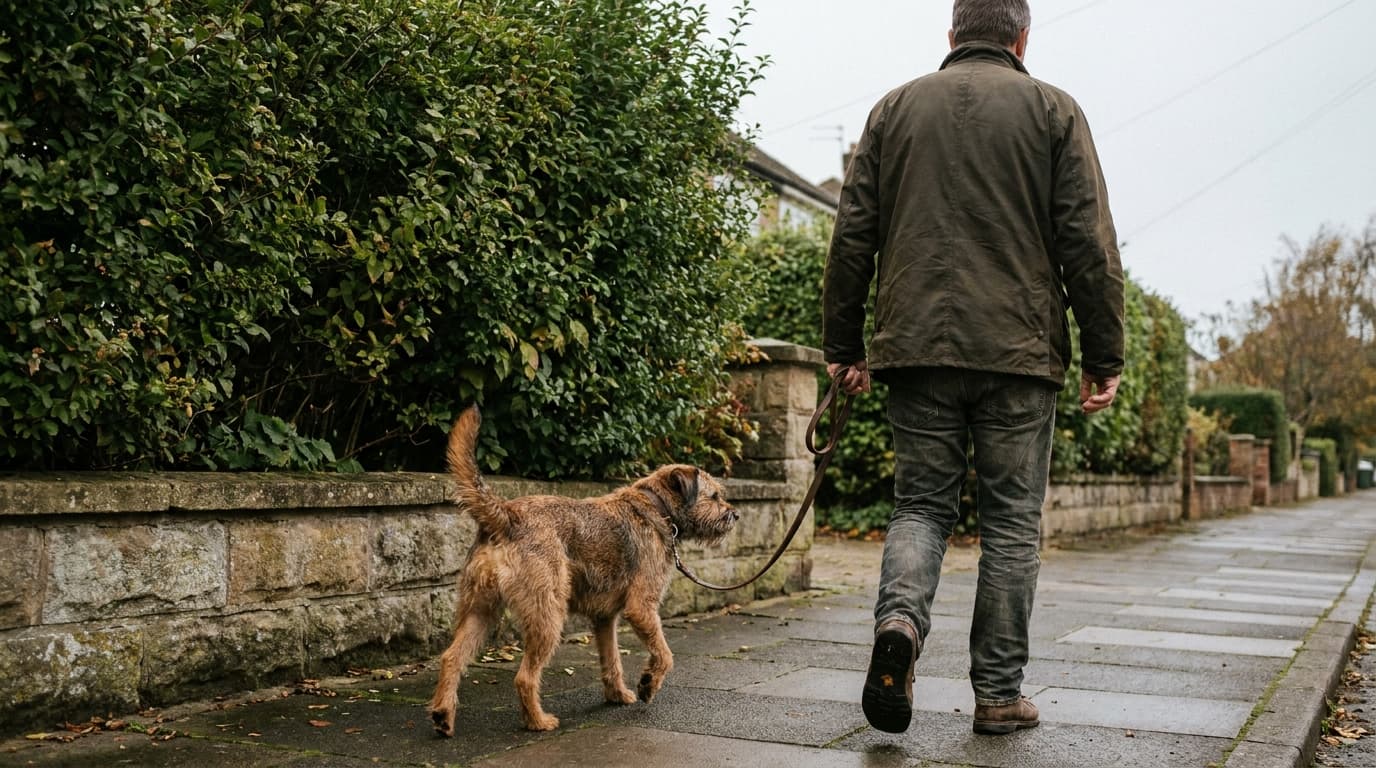
The Dangerous Dogs Act 1991 is the core UK statute on dangerous and prohibited dogs, but it is often summarised loosely. It bans owning certain types of dog outright, creates a separate offence for letting any dog become dangerously out of control, and gives courts the power to order a dog's destruction. Each of those three things works differently, and the Act does not cover every situation people assume it does.
Section 1: The Prohibited Types
Section 1 of the Dangerous Dogs Act 1991 does not ban individual dogs; it bans types of dog, defined by their physical characteristics rather than a breed pedigree, which is why a dog does not need registration papers to be caught by it. Five types are prohibited in Great Britain:
- the Pit Bull Terrier;
- the Japanese Tosa;
- the Dogo Argentino and the Fila Brasileiro, both designated on 12 August 1991; and
- the XL Bully, designated under section 1 separately for England and Wales and for Scotland (Northern Ireland banned it under its own Dogs (Northern Ireland) Order 1983), on the dates covered in our XL Bully ban guide.
Owning, breeding, selling, exchanging, or abandoning a dog of a prohibited type is an offence unless the dog is covered by a valid certificate of exemption. The section 1 possession offence carries a penalty of up to 6 months' imprisonment and/or a fine. The Act's text still sets that fine at "level 5 on the standard scale", but section 85 of the Legal Aid, Sentencing and Punishment of Offenders Act 2012 removed that cap in England and Wales for offences committed on or after 12 March 2015, so the fine is unlimited there.
Section 3: Dangerously Out of Control
Section 3 is a different, and much more commonly used, offence. It applies to any dog of any type or breed, not just the prohibited ones, and makes it an offence to allow a dog to be "dangerously out of control." A dog is treated as dangerously out of control if it injures someone, or if there are grounds for reasonable apprehension that it will.
For years, section 3 only applied in public places. That has changed, but on different dates in different nations, which is easy to get wrong.
In England and Wales, the extension took effect on 13 May 2014, when an amendment made by the Anti-social Behaviour, Crime and Policing Act 2014 applied section 3 to "any place in England or Wales, whether or not a public place". In Scotland, the equivalent extension came earlier, on 26 February 2011, under section 10 of the Control of Dogs (Scotland) Act 2010.
The practical effect is the same in both: an owner can be prosecuted if their dog is dangerously out of control inside their own home or garden, not only in the street. England and Wales keep one exception, the householder case: no offence is committed where the dog is dangerously out of control inside a dwelling towards someone who is, or is believed by the owner or handler to be, a trespasser there (section 3(1A) and (1B)). It removed what had previously been a meaningful private-property exemption. The dates differ, though, so a Scottish reader should not be given the 2014 date.
Aggravated Offences and Penalties
Section 3 becomes an "aggravated" offence where a dog injures a person while dangerously out of control; in England and Wales, injuring an assistance dog also makes it aggravated. The maximum penalties below apply in England and Wales:
- up to 14 years' imprisonment where a person dies as a result;
- up to 5 years' imprisonment for other injury to a person; and
- up to 3 years' imprisonment for injury to an assistance dog (such as a guide dog).
Scotland did not take the same penalty uplift. The maximum for an aggravated section 3 offence in Scotland is 2 years' imprisonment. That is a very large difference from the England and Wales figure, so the 14-year maximum should never be quoted to a Scottish reader.
A non-aggravated section 3 offence, where the dog was dangerously out of control but caused no injury, carries a lower maximum penalty, and a conviction can also lead to disqualification from keeping dogs.
What Section 3 Does Not Cover
Section 3 is about danger to people and, in England and Wales, to assistance dogs where an animal is the victim. It does not cover a dog attacking an ordinary, non-assistance dog. If your dog is attacked by another dog and no person or assistance dog was injured, section 3 of the 1991 Act is generally not the right route, and a criminal prosecution under it is unlikely to apply.
The Dog-on-Dog Route Differs by Nation
In England and Wales, the practical route for a dog-on-dog incident is much older: section 2 of the Dogs Act 1871, which remains in force there. Under section 2, any person can make a complaint to a magistrates' court that a dog is dangerous and not kept under proper control. Critically, this does not require a criminal conviction first; it is a civil complaint process. If the court is satisfied the dog is dangerous, it can order the owner to keep the dog under proper control (for example, muzzled, kept on a lead, or excluded from certain places), or, in a serious case, order the dog's destruction. This is the route most people use after their dog, or they, have been attacked by another dog with no person or assistance dog injured.
This route does not exist in Scotland or Northern Ireland. The Dogs Act 1871 was repealed for Scotland on 26 February 2011 by the Control of Dogs (Scotland) Act 2010, and for Northern Ireland by the Dogs (Northern Ireland) Order 1983. In Scotland the equivalent is the Dog Control Notice, issued by a local authority under the Control of Dogs (Scotland) Act 2010, which is covered in our dog laws guide. Northern Ireland handles dog control under its own 1983 Order.
Section 4 and 4A: Destruction Orders
Where a person is convicted under section 1 (a prohibited type) or of an aggravated section 3 offence, section 4 requires the court to order the dog's destruction, unless the court is satisfied that the dog would not constitute a danger to public safety. For a non-aggravated section 3 conviction, a destruction order is discretionary rather than mandatory. The court can also disqualify the convicted person from owning or keeping a dog.

Section 4A provides a middle path: a contingent destruction order. Instead of ordering destruction outright, the court can order that the dog be destroyed unless it is made, or kept, exempt within a set period, commonly around two months, extendable by the court. A contingent order typically comes with conditions such as compulsory neutering, muzzling, being kept on a lead, and exclusion from certain places, giving the dog a route to survive the conviction if the owner complies.
How a Court Decides Whether a Dog Is a Danger
When a court considers whether to spare a dog under section 4 or attach conditions under a section 4A contingent order, it looks at the specific dog and the specific circumstances, not just the offence category. Relevant factors typically include the dog's temperament and history, the nature of any injury caused, whether the owner is a fit and proper person to be entrusted with the dog going forward, and whether conditions such as neutering, permanent muzzling, or a secure enclosure would realistically prevent future harm. This is why two dogs convicted under the same section can end up with very different outcomes: one destroyed, another released back to its owner under a strict contingent order.
A disqualification order, available alongside a conviction under either section 1 or section 3, bans the convicted person from owning or keeping a dog, and can extend to living in a household where a dog is kept, depending on the order's terms. Breaching a disqualification order is itself an offence.
How This Interacts With the XL Bully Ban
In Great Britain, the XL Bully's addition to the section 1 prohibited-type list is what makes the destruction-order machinery in this Act relevant to XL Bully owners specifically. A dog kept without a valid exemption certificate, or in breach of an exemption's conditions, is effectively unlawfully possessed under section 1, which brings the section 4 destruction-order process into play. See our XL Bully ban guide for the current exemption conditions nation by nation, including the recent removal of the insurance requirement and the child-supervision condition that applies from 1 November 2026.

This guide explains the Dangerous Dogs Act 1991 in general terms and is not legal advice for a specific incident or prosecution. Anyone facing a seizure, a destruction order, or a criminal charge under this Act should get advice from a solicitor. See also our guides to dog laws in the UK and the XL Bully ban, or the wider UK Everyday Law hub.
Frequently Asked Questions
What dogs are banned under the Dangerous Dogs Act 1991?
Section 1 bans five types in Great Britain: the Pit Bull Terrier, the Japanese Tosa, the Dogo Argentino, the Fila Brasileiro, and the XL Bully, which was added in England and Wales from late 2023 and in Scotland in 2024. Northern Ireland banned the XL Bully separately under its own 1983 Order. These are defined by physical type, not breed registration.
Can I be prosecuted if my dog attacks someone in my own home?
Generally, yes. Section 3 of the Dangerous Dogs Act 1991 covers any place, whether or not it is a public place, including the owner's own home or garden. The extension took effect on 13 May 2014 in England and Wales, and earlier, on 26 February 2011, in Scotland under the Control of Dogs (Scotland) Act 2010. In England and Wales there is an exception where the person the dog is out of control towards is, or is believed to be, a trespasser in the home.
What happens if my dog attacks another dog?
Section 3 of the 1991 Act generally does not apply where the victim is an ordinary, non-assistance dog. In England and Wales the usual route is a civil complaint under section 2 of the Dogs Act 1871, which any person can bring to a magistrates' court and which does not require a criminal conviction. That Act has been repealed in Scotland and Northern Ireland, so Scotland uses local-authority Dog Control Notices instead.
Will my dog automatically be destroyed if I'm convicted?
Not automatically in every case. Destruction is mandatory under section 4 following a section 1 conviction or an aggravated section 3 conviction, unless the court is satisfied the dog is not a danger to public safety. For other cases, and where the court allows it, a contingent destruction order under section 4A can let the dog live under strict conditions instead.
What is the maximum sentence if a dog kills someone?
In England and Wales, up to 14 years' imprisonment under the aggravated section 3 offence where a person dies as a result of a dog that was dangerously out of control. Scotland did not take that uplift and caps the aggravated offence at 2 years.
Does the Dangerous Dogs Act 1991 apply in Northern Ireland?
No. The 1991 Act does not extend to Northern Ireland. Northern Ireland runs its own, broadly similar dangerous-dogs regime under the Dogs (Northern Ireland) Order 1983.
Updates
Corrected the count of prohibited dog types to five, added the England and Wales householder (trespasser) exception to section 3, limited assistance-dog aggravation to England and Wales, noted that Northern Ireland banned the XL Bully under its own 1983 Order, and dated the child-supervision condition (1 November 2026).
Independently fact-checked against the cited primary sources; governing law re-checked for recent changes
The Law Behind This Article
This article rests on the statutory provisions below, held in our own legal record and retrieved from the official source. Tap a section to read the operative text.
Dogs Act 1871
s. 2Dangerous dogs may be destroyed.In force
Any court of summary jurisdiction may take cognizance of a complaint that a dog is dangerous, and not kept under proper control, and if it appears to the court having cognizance of such complaint that such dog is dangerous, the court may make an order in a summary way directing the dog to be kept by the owner under proper control or destroyed, . . .
Official text (excerpt) · last checked 2026-08-14 · Read the full text in our law library · Verify at legislation.gov.uk
Dangerous Dogs Act 1991
s. 1Dogs bred for fighting.In force
(1) This section applies to— (a) any dog of the type known as the pit bull terrier; (b) any dog of the type known as the Japanese tosa; and (c) any dog of any type designated for the purposes of this section by an order of the Secretary of State, being a type appearing to him to be bred for fighting or to have the characteristics of a type bred for that purpose. (2) No person shall— (a) breed, or breed from, a dog to which this section applies; (b) sell or exchange such a dog or offer, advertise or expose such a dog for sale or exchange; (c) make or offer to make a gift of such a dog or advertise or expose such a dog as a gift; (d) allow such a dog of which he is the owner or of which he is for the time being in charge to be in a public place without being muzzled and kept on a lead; or (e) abandon such a dog of which he is the owner or, being the owner or for the time being in charge of such a dog, allow it to stray.
Official text (excerpt) · last checked 2026-08-14 · Read the full text in our law library · Verify at legislation.gov.uk
s. 3Keeping dogs under proper control.In force
(1) If a dog is dangerously out of control in any place in England or Wales (whether or not a public place) — (a) the owner; and (b) if different, the person for the time being in charge of the dog, is guilty of an offence, or, if the dog while so out of control injures any person or assistance dog , an aggravated offence, under this subsection. (1A) A person (“D”) is not guilty of an offence under subsection (1) in a case which is a householder case. (1B) For the purposes of subsection (1A) “a householder case” is a case where— (a) the dog is dangerously out of control while in or partly in a building, or part of a building, that is a dwelling or is forces accommodation (or is both), and (b) at that time— (i) the person in relation to whom the dog is dangerously out of control (“V”) is in, or is entering, the building or part as a trespasser, or (ii) D (if present at that time) believed V to be in, or entering, the building or part as a trespasser.
Official text (excerpt) · last checked 2026-08-14 · Read the full text in our law library · Verify at legislation.gov.uk
s. 4Destruction and disqualification orders.In force
(1) Where a person is convicted of an offence under section 1 or 3(1) ... above or of an offence under an order made under section 2 above the court— (a) may order the destruction of any dog in respect of which the offence was committed and , subject to subsection (1A) below, shall do so in the case of an offence under section 1 or an aggravated offence under section 3(1) ... above; and (b) may order the offender to be disqualified, for such period as the court thinks fit, for having custody of a dog. (1A) Nothing in subsection (1)(a) above shall require the court to order the destruction of a dog if the court is satisfied— (a) that the dog would not constitute a danger to public safety; and (b) where the dog was born before 30th November 1991 and is subject to the prohibition in section 1(3) above, that there is a good reason why the dog has not been exempted from that prohibition.
Official text (excerpt) · last checked 2026-08-14 · Read the full text in our law library · Verify at legislation.gov.uk
Search our record of UK legislation — retrieved from legislation.gov.uk →
Sources and References
- Dangerous Dogs Act 1991 (full text)(legislation.gov.uk).gov
- Dangerous Dogs Act 1991, section 1 (prohibited types)(legislation.gov.uk).gov
- Dangerous Dogs Act 1991, section 3 (dangerously out of control)(legislation.gov.uk).gov
- Dangerous Dogs Act 1991, section 4 (destruction and disqualification orders)(legislation.gov.uk).gov
- Anti-social Behaviour, Crime and Policing Act 2014 (full text; extended s.3 to private property from 13 May 2014)(legislation.gov.uk).gov
- Dogs Act 1871, section 2 (dangerous dogs may be ordered controlled or destroyed)(legislation.gov.uk).gov
- GOV.UK: Controlling your dog in public, banned dogs(gov.uk).gov
- Dangerous Dogs (Designated Types) Order (Northern Ireland) 2024 (SR 2024/133), made under the Dogs (Northern Ireland) Order 1983(legislation.gov.uk).gov
- GOV.UK: Ban on XL Bully dogs (exemption conditions, including the 1 November 2026 child-supervision condition)(gov.uk).gov