
United Kingdom
Council Tax Liability: Who Actually Has to Pay (and NI Rates)
Independently fact-checked against primary sources (last audited September 29, 2026). · Law checked current as of September 29, 2026. · 11 primary sources cited on this page. How we verify our legal content
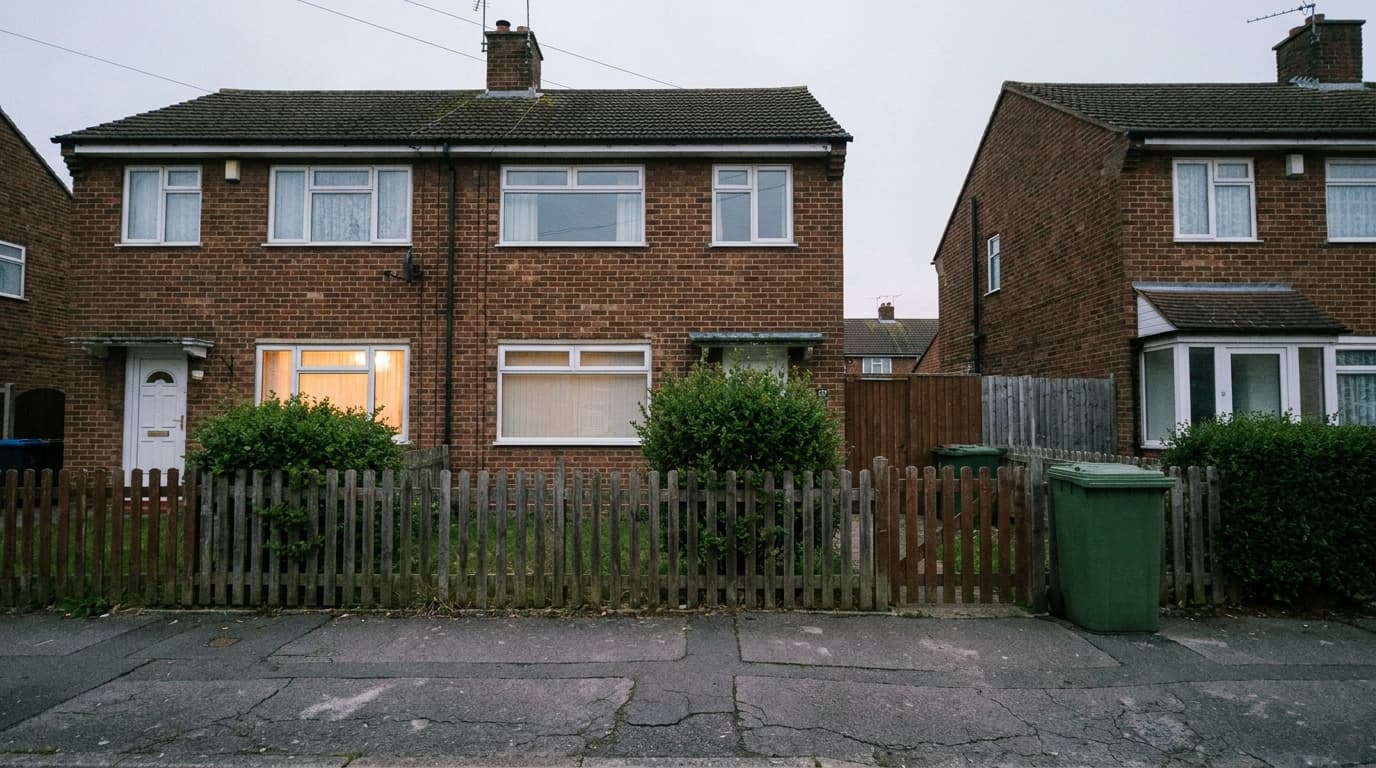
Council tax liability in England, Scotland and Wales follows a fixed legal pecking order, not simply "whoever lives there." Northern Ireland does not have council tax at all: it runs a separate rates system, and using council tax terminology there is a common and genuine mistake. This guide sets out who actually has to pay, how joint liability works, and how the Northern Ireland system differs.
The Basic Rule: A Fixed Hierarchy, Not a Free-for-All
In England and Wales, council tax liability is set by section 6 of the Local Government Finance Act 1992; Scotland has its own hierarchy in section 75 of the same Act, set out below. The Act does not ask "who lives there" in a general sense. It works down a fixed list of categories, and whoever falls into the first category that applies to the property is liable for the tax on that dwelling.
The England and Wales hierarchy runs, in order:
- A resident freeholder (someone who lives in the property and owns the freehold).
- A resident leaseholder.
- A resident statutory, secure or introductory tenant (in Wales, this also includes a resident secure or introductory standard contract-holder under Welsh renting law).
- A resident with a contractual licence to occupy.
- Any other resident.
- The owner, if the property has no resident at all.
"Resident" for this purpose generally means an adult who has their sole or main residence at the property. Once someone in a higher category is identified, people further down the list are not liable, even if they also live there.
In Scotland, section 75 sets a different order, with no freeholder, leaseholder or contractual-licence tiers:
- A resident owner.
- A resident tenant.
- A resident statutory tenant, statutory assured tenant or Scottish secure tenant.
- A resident sub-tenant.
- Any other resident.
- Otherwise, a sub-tenant or tenant holding under a lease of 6 months or more, or the owner.
Joint and Several Liability
Where more than one person falls into the same tier of the hierarchy, such as two joint tenants or two co-owners who both live at the property, they are jointly and severally liable. In practice this means the council can pursue either person, or both, for the full amount, and it is left to the household to sort out the split between themselves.

Section 9 of the 1992 Act (section 77 in Scotland) adds a separate rule: spouses, civil partners and unmarried couples living together are jointly and severally liable for council tax on their home even if only one of them is named on the tenancy or the deeds, and even if one partner would not otherwise fall into the same tier as the other. The rule does not apply on any day the partner falls to be disregarded under the Act; in England and Scotland that covers a partner who is severely mentally impaired or a student.
When the Owner Pays Instead of the Resident
For most homes, a resident pays. But for certain prescribed classes of property, the owner is liable regardless of who lives there. Houses in multiple occupation and some categories of care home fall into this owner-liable group, among other prescribed classes set out in secondary legislation. If you are unsure whether a property you own or live in falls into one of these classes, your local council's council tax team can confirm it, since the detailed list is set by regulations rather than the Act itself.
Council Tax Bands
Every dwelling in England, Scotland and Wales is placed in a council tax band, and the band (not the exact market value of your home) sets how much you pay.

- England and Scotland: bands A to H, based on the property's estimated value as at 1 April 1991.
- Wales: bands A to I (Wales has an extra top band), based on a 2003 revaluation.
Because the valuations are decades old, a property's band reflects what it would have sold for at that historical date, not its current market value. In England and Wales you can look up a property's band using the official GOV.UK Valuation Office Agency service, and challenge a band you believe is wrong through the same route rather than simply paying less. In Scotland, bands are published by the Scottish Assessors, and a challenge is made by lodging a proposal with your local assessor.
Northern Ireland: No Council Tax, a Different System Entirely
This is the point in the UK where "council tax" language breaks down completely. Northern Ireland has never had council tax. Instead, it uses domestic rates, a rates system with its own legal basis, valuation method and billing structure.

The legal basis
NI rates are set under the Rates (Northern Ireland) Order 1977, with the current capital-value approach for domestic property introduced by a later amending Order. Properties are valued on their capital value as at 1 January 2005, not banded against a historical sale-price range the way English, Scottish and Welsh council tax is.
How the bill is worked out
A domestic rates bill combines two elements applied to that capital value:
- A regional rate, set centrally and applied across Northern Ireland.
- A district rate, set by the individual local council.
The valuation used to calculate the bill is capped at £400,000: any value above that is ignored for billing purposes, so higher-value homes do not keep paying proportionally more indefinitely. Bills are issued and collected by Land & Property Services (LPS), the NI government's valuation and rate-collection agency, not by individual district councils acting alone.
NI-specific reliefs
Northern Ireland has its own set of reliefs, distinct from any council tax discount available in Great Britain:
- Lone Pensioner Allowance: a 20% reduction, available to a homeowner or tenant aged 70 or over who lives alone. It is not means-tested.
- Disabled Person's Allowance: a 25% reduction for a property that has been adapted to meet the needs of a disabled occupant.
- Housing Benefit / Rate Rebate: means-tested help toward rates for people on a low income. Northern Ireland has been moving support for working-age claimants from the older Housing Benefit route toward a Rate Rebate model as part of the wider transition to Universal Credit, and that transition is still in progress, so which route applies can depend on individual circumstances.
A ratepayer can potentially receive more than one of these reliefs at once, for example the Lone Pensioner Allowance alongside means-tested rate support, so it is worth checking eligibility for each separately rather than assuming only one applies.
Never mix the two systems
Because domestic rates and council tax are structurally different (capital value versus historical band, regional-plus-district rate versus a single council tax charge, LPS versus a local council billing team) it is inaccurate to describe an NI ratepayer as paying "council tax," and inaccurate to describe a homeowner in England, Scotland or Wales as paying "rates" in the NI sense.
This guide explains the general liability rules and is not a substitute for advice on an individual bill or dispute. Band and valuation queries, discount and exemption claims, and rates queries in Northern Ireland should go to the relevant local council, the Valuation Office Agency (England and Wales), your local assessor (Scotland), or Land & Property Services. For related reading, see our guide to single person discount or the wider UK Everyday Law hub.
Frequently Asked Questions
Who is legally responsible for paying council tax on a rented property?
In England and Wales, under the section 6 hierarchy, a resident tenant with a statutory, secure or introductory tenancy is normally liable ahead of the landlord, provided nobody higher up the list, such as a resident leaseholder, applies. The landlord only becomes liable if the property has no resident, or if it falls into a specific owner-liable class such as a house in multiple occupation. In Scotland, section 75 likewise puts a resident tenant ahead of a non-resident landlord.
Can a council make my partner pay council tax even though the tenancy is only in my name?
Usually, yes. Section 9 of the Local Government Finance Act 1992 (section 77 in Scotland) makes spouses, civil partners and cohabitants jointly and severally liable for council tax on their shared home, regardless of whose name is on the tenancy agreement or the property deeds. The exception is a partner who falls to be disregarded, such as someone severely mentally impaired.
Does Northern Ireland have council tax?
No. Northern Ireland has never had council tax. It uses a separate domestic rates system under the Rates (Northern Ireland) Order 1977, based on the capital value of the property rather than a council tax band.
How is a Northern Ireland rates bill calculated?
It is based on the property's capital value as at 1 January 2005, capped at £400,000, multiplied by a combined regional rate and district rate. Bills are issued by Land & Property Services.
What council tax bands exist in England, Scotland and Wales?
England and Scotland use bands A to H based on 1991 property values. Wales uses bands A to I, an extra band, based on a 2003 revaluation.
What reliefs are available on Northern Ireland rates for older or disabled people?
The Lone Pensioner Allowance gives a 20% reduction for a homeowner or tenant aged 70 or over living alone, and it is not means-tested. The Disabled Person's Allowance gives a 25% reduction where a property has been adapted for a disabled occupant. Means-tested Housing Benefit or Rate Rebate support may also be available.
If two people jointly own a home, can the council chase just one of them for the full council tax bill?
Yes. Where two or more people fall into the same tier of the liability hierarchy (section 6 in England and Wales, section 75 in Scotland), such as joint owners who both live there, they are jointly and severally liable, meaning the council can pursue any one of them, or all of them, for the full amount owed.
Updates
Corrected the page to show that the s.6 liability hierarchy and s.9 partner rule apply in England and Wales, added Scotland's separate s.75 order and s.77 rule, added the disregarded-partner exception, and pointed Scottish band lookups and challenges to the Scottish Assessors.
Independently fact-checked against the cited primary sources; governing law re-checked for recent changes
The Law Behind This Article
This article rests on the statutory provisions below, held in our own legal record and retrieved from the official source. Tap a section to read the operative text.
Local Government Finance Act 1992
s. 6Persons liable to pay council tax.In force
(1) The person who is liable to pay council tax in respect of any chargeable dwelling and any day is the person who falls within the first paragraph of subsection (2) below to apply, taking paragraph (a) of that subsection first, paragraph (b) next, and so on. (2) A person falls within this subsection in relation to any chargeable dwelling and any day if, on that day— (a) he is a resident of the dwelling and has a freehold interest in the whole or any part of it; (b) he is such a resident and has a leasehold interest in the whole or any part of the dwelling which is not inferior to another such interest held by another such resident; (c) he is both such a resident and a statutory , secure or introductory tenant of the whole or any part of the dwelling; (ca) in the case of a dwelling in Wales, the person is both such a resident and has a tenancy of the whole or any part of the dwelling which is a secure contract or an introductory standard contract; (d) he is such a resident and has a contractual licence to occupy the whole or any part of the dwelling; (e) he is such a resident; or (f) he is the owner of the dwelling.
Official text (excerpt) · last checked 2026-08-14 · Read the full text in our law library · Verify at legislation.gov.uk
s. 9Liability of spouses.In force
(1) Where— (a) a person who is liable to pay council tax in respect of any chargeable dwelling of which he is a resident and any day is married to , or is the civil partner of, another person; and (b) that other person is also a resident of the dwelling on that day but would not, apart from this section, be so liable, those persons shall each be jointly and severally liable to pay the council tax in respect of the dwelling and that day. (2) Subsection (1) above shall not apply as respects any day on which the other person there mentioned falls to be disregarded in accordance with subsection (2A) . (2A) For the purposes of subsection (2), a person mentioned in subsection (1) falls to be disregarded if— (a) in relation to a chargeable dwelling in England, the person falls to be disregarded for the purposes of discount by virtue of paragraph 2 (severely mentally impaired) or 4 (students etc.) of Schedule 1 to this Act; (b) in relation to a chargeable dwelling in Wales, the person falls to be disregarded for the purposes of section 6(4) (see subsection (4C) of that section).
Official text (excerpt) · last checked 2026-08-14 · Read the full text in our law library · Verify at legislation.gov.uk
Search our record of UK legislation — retrieved from legislation.gov.uk →
Sources and References
- Local Government Finance Act 1992, s.6 (persons liable to pay council tax, England and Wales)(legislation.gov.uk).gov
- Local Government Finance Act 1992, s.9 (liability of spouses and partners, England and Wales)(legislation.gov.uk).gov
- GOV.UK: Council Tax, who has to pay(gov.uk).gov
- GOV.UK: Council Tax bands(gov.uk).gov
- Rates (Northern Ireland) Order 1977(legislation.gov.uk).gov
- nidirect: How rate bills are calculated(nidirect.gov.uk).gov
- nidirect: Lone Pensioner Allowance(nidirect.gov.uk).gov
- nidirect: Disabled Persons Allowance(nidirect.gov.uk).gov
- Local Government Finance Act 1992, s.75 (persons liable to pay council tax, Scotland)(legislation.gov.uk).gov
- Local Government Finance Act 1992, s.77 (liability of spouses and partners, Scotland)(legislation.gov.uk).gov
- Scottish Assessors: Council Tax (bands and proposals to alter a band)(saa.gov.uk).gov