AccessNI Check Explained: Levels, Fees and Eligibility
AccessNI, not the DBS, runs Northern Ireland's criminal record checks. Compare Basic, Standard and Enhanced levels, fees, eligibility and filtering rules.
7 min read
205 articles · page 1 of 4
AccessNI, not the DBS, runs Northern Ireland's criminal record checks. Compare Basic, Standard and Enhanced levels, fees, eligibility and filtering rules.

How adverse possession works in the UK: the 10-year notify-and-object rule for registered land, the 12-year rule for unregistered land, and Scotland's different system.

What an assured shorthold tenancy (AST) was, and how the Renters' Rights Act 2025 converted every AST into a periodic assured tenancy from 1 May 2026.

Wage garnishment is a US term. UK equivalents: attachment of earnings orders (England & Wales), earnings arrestment (Scotland), and EJO orders (NI).
Bailiffs' rights explained per nation: England and Wales's new 14-day enforcement notice, Scotland's sheriff officers, and Northern Ireland's EJO.

Basic DBS check explained: £21.50 fee, self-apply vs employer routes, turnaround times, what it shows, and Scotland/NI equivalents, as of August 2026.
Your rights if arrested in the UK: free legal advice, having someone informed, and the detention time limits in England and Wales, Scotland, and NI.
Why your UK title plan is only a general boundary, how to apply for a determined boundary, and how the First-tier Tribunal resolves a genuine objection.
How to remove a CCJ in England and Wales: pay within a month to cancel it, or apply to set it aside. Beware firms charging fees for guaranteed CCJ removal.

When home CCTV or a Ring doorbell captures a neighbour's garden or the street, UK GDPR applies. What Fairhurst v Woodard decided and how to stay compliant.

How to update your name on a UK passport, driving licence, HMRC record, electoral register, DWP benefits and DBS certificate after a deed poll, marriage or divorce.

Do you need a deed poll after marriage or divorce? What HMPO and DVLA actually ask for, passport fees, the PD2 post-dated passport, and the Scotland difference.
Chargeback lets you ask your bank to reverse a card payment gone wrong, debit or credit. How it works, the 120-day limit, and how it differs from s.75.
Check your driving licence points free via DVLA (Great Britain) or DVA/nidirect (Northern Ireland), and how to share a check code with someone else.

What a child arrangements order covers, the welfare checklist, the MIAM mediation requirement, and how Scotland's residence and contact orders differ.

How the Child Maintenance Service works out child maintenance: gross income, the five rate bands, Direct Pay vs Collect and Pay, shared care and fees.
Citizen's arrest under PACE 1984, s.24A in England and Wales, Article 26A in Northern Ireland, and Scotland's common law rule, plus the risk of getting it wrong.

How UK cohabitation agreements work: England and Wales contract law and TOLATA s.14, the 2026 reform proposal, and Scotland's stricter statutory deadlines.

Cohabiting couples have very limited rights in England, Wales and Northern Ireland; Scotland is different. What unmarried partners can and cannot claim.

There is no such thing as common law marriage in the UK. Learn what rights unmarried partners actually have, and why Scotland is different.

How Confirmation works in Scotland: executor-nominate vs executor-dative, the £36,000 small estate procedure, and what it lets you do.

Constructive dismissal explained: the fundamental breach test, resign-and-claim risks, qualifying period, and UK employment tribunal time limits.
Your rights under the Consumer Rights Act 2015: satisfactory quality, the 30-day right to reject, repair or replace, and the 6-month proof rule explained.

How to contest a will in England and Wales: validity grounds, the Inheritance (Provision for Family and Dependants) Act 1975, and the six-month time limit.
Who is legally liable for council tax under the s.6 hierarchy, joint and several liability rules, council tax bands, and why Northern Ireland uses domestic rates instead.

In Blake v Fox [2025] EWCA Civ 1321, England's Court of Appeal revived Laurence Fox's libel counterclaim, finding the trial judge misapplied the serious harm test.

England's High Court ordered indemnity costs against Prince Harry and six co-claimants who lost their Associated Newspapers case, plus a £9.5m interim payment.

Making a private recording in the UK is usually lawful, but using a covert recording as evidence is at the court's discretion in family and civil cases.

How the interests-of-justice (Widgery) test and the means test decide criminal legal aid eligibility in England and Wales, plus the separate Scotland and Northern Ireland systems.

UK criminal record checks depend on nation: DBS (England & Wales), Disclosure Scotland/PVG, or AccessNI (Northern Ireland). Compare all three systems here.

The Dangerous Dogs Act 1991: prohibited types, the dangerously-out-of-control offence, aggravated penalties, destruction orders, and the dog-on-dog route.
How the Dart Charge works, what a car costs to cross the Dartford Crossing, and the PCN fines (£35 to £105) if you miss the payment deadline.
Are dash cams legal in the UK? Yes. How footage becomes police evidence via Operation Snap, when UK GDPR applies, and the rules for mounting one.

Data breach compensation in the UK is claimed through the courts under Article 82 UK GDPR, not paid by the ICO. What Lloyd v Google means for your claim.

DBS check explained: Basic, Standard, Enhanced and barred-list levels, current fees, who can apply, and what filtering means for your record.
The DBS Update Service costs £16 a year, free for volunteers. Covers the two join deadlines, renewal rules, employer status checks and refunds.
Your rights under UK debt collection law: FCA rules, harassment offences, proving the debt under the CCA 1974, and what collectors cannot do.

How a deed of variation lets a beneficiary redirect an inheritance within 2 years of death, meeting the Inheritance Tax and Capital Gains Tax conditions.

How a deed poll works in England and Wales: the free unenrolled route, the £53.05 enrolled route, Gazette publication, and rules for changing a child's name.
Libel vs slander, what a claimant must prove, the s.1 serious harm threshold, Lachaux v Independent Print, and how Northern Ireland diverges in three ways.

How deputyship works when there is no LPA: property and welfare deputies, Court of Protection fees, OPG supervision, and Scotland/NI alternatives.

How Disclosure Scotland's Level 1 and Level 2 checks and the PVG Scheme work, including fees, eligibility and the move to 5-year PVG membership.

How divorce works in Scotland: the four grounds for breakdown, the simplified DIY procedure, which court to use, and fair sharing of matrimonial property.

How the no-fault divorce process works in England and Wales: application, the 20-week and 6-week waits, conditional order, final order, and costs.

Do you need a TV licence? The rules for live TV, BBC iPlayer and streaming services, the 2026 fee of £180, household rules and who gets a discount.

The UK drink drive limit is 80mg per 100ml blood in England, Wales and Northern Ireland, but only 50mg in Scotland. Breath and urine limits explained.

Driving without insurance in the UK: the £300/6-point fixed penalty, unlimited court fines, vehicle seizure, Continuous Insurance Enforcement and SORN.
How intestacy works in Scotland: prior rights, forced-heirship legal rights over the moveable estate, and the free estate, with the exact figures.

England is the only UK nation running live rental e-scooter trials. What SI 2020/663 actually allows, who can ride, where, and the penalties for private use.

London's e-scooter rules explained: the 11 TfL trial boroughs, the 12.5 mph speed cap and 18+ age rule, the Tube carriage ban, and penalties for private use.
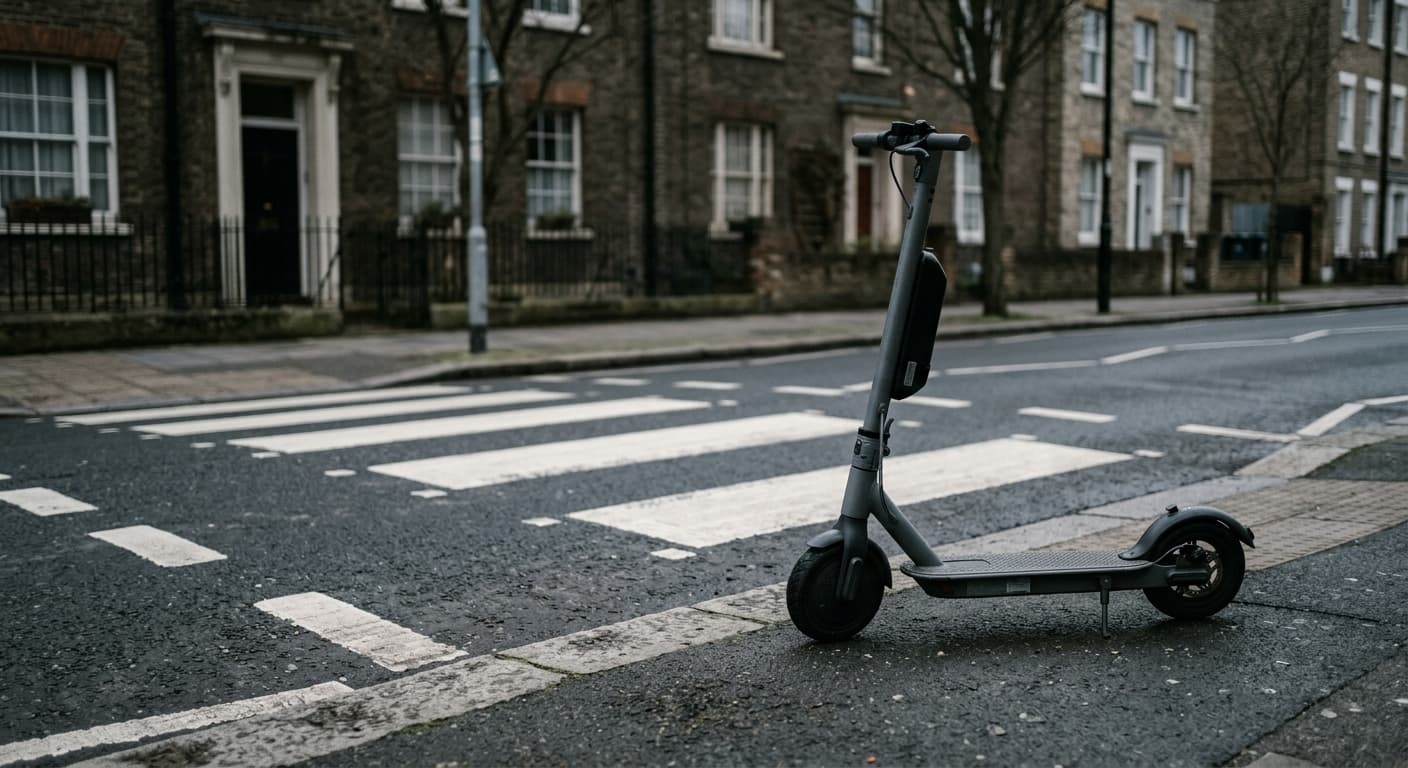
Private e-scooters are illegal on Scottish public land and no rental trial has ever launched. See the legal position, Police Scotland enforcement data, and penalties.

UK employment tribunal time limits: 3 months less a day for most claims, 6 months for redundancy and equal pay, and how ACAS pauses the clock.

How the UK employment tribunal works: ACAS early conciliation, the 3-months-less-a-day time limit, no fees, and possible outcomes.
Ofgem's back-billing rule stops energy suppliers charging you for gas or electricity used over 12 months ago due to their own billing error.

Every area where England runs a live rental e-scooter trial, per the Department for Transport's own guidance, with confirmed operators where verified and the 2028 end date.

Enhanced DBS checks cost £49.50, add police information and barred-list checks, and are role-gated. Covers the 21 January 2026 self-employed route in full.

How Notice to Quit works for private tenants in Northern Ireland: current notice periods, what is proposed but not yet in force, and the court process.
How eviction works in Scotland: the Notice to Leave, discretionary grounds, First-tier Tribunal process, and notice periods under the 2016 and 2025 Acts.
How eviction works in Wales: the Section 173 no-fault notice, six-month notice period, occupation contracts, and contract-holder protections.
How eviction works in England since Section 21's abolition: the Section 8 notice, County Court possession order, and bailiff enforcement.