
United Kingdom
Car Tax and SORN: Penalties for an Untaxed Vehicle in the UK
Independently fact-checked against primary sources (last audited September 28, 2026). · 8 primary sources cited on this page. How we verify our legal content
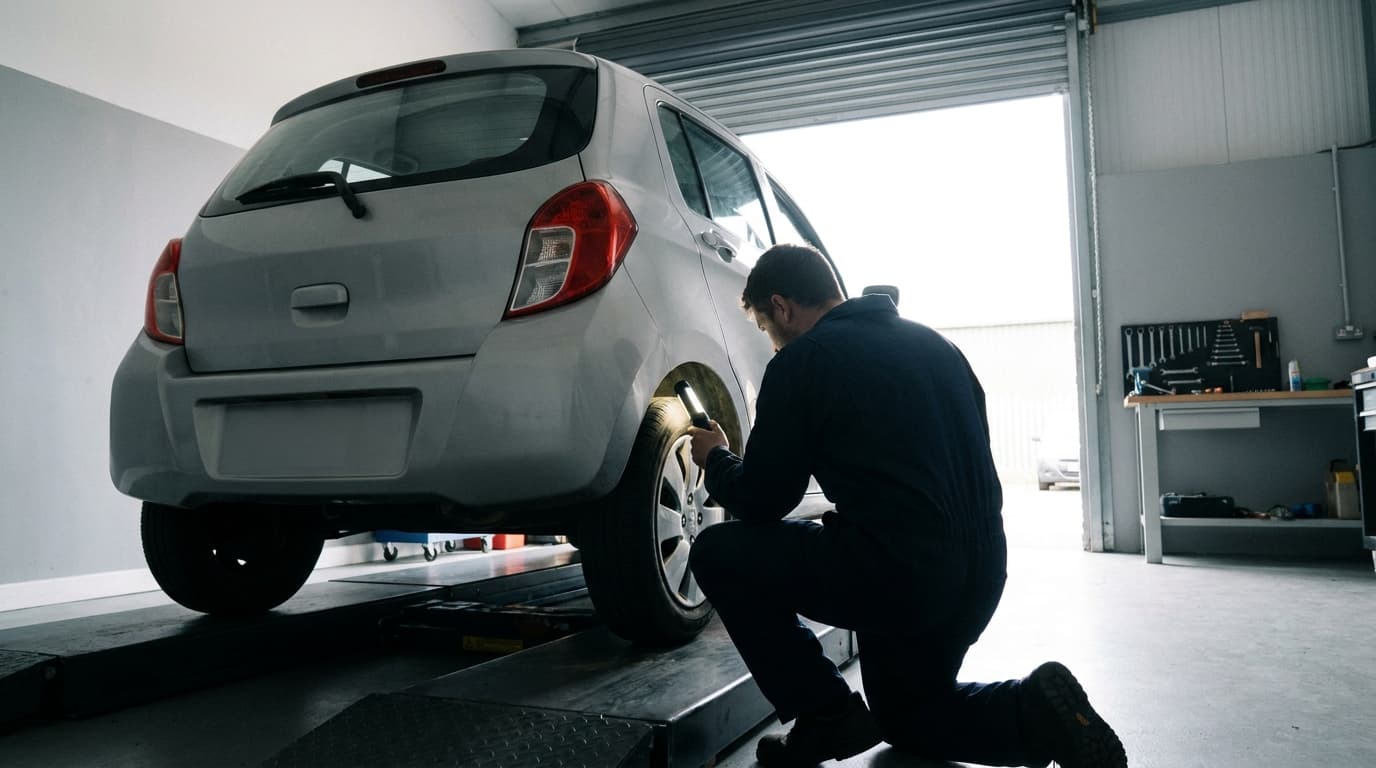
Driving or keeping a vehicle on a public road without current vehicle tax and without a Statutory Off Road Notification (SORN) is a criminal offence under the Vehicle Excise and Registration Act 1994, and DVLA can clamp, impound or prosecute you for it, sometimes within days of your tax lapsing.
You must tax it or SORN it: there is no middle option
Every vehicle kept on a public road in the UK must be taxed. If a vehicle will not be driven or parked on a public road, its keeper must declare it off the road with a Statutory Off Road Notification (SORN) instead (gov.uk: register your vehicle as off the road (SORN)). Apart from exempt vehicles (legislation.gov.uk: VERA 1994 s.29), there is no lawful way to keep an untaxed, non-SORN'd vehicle on a public road, even briefly or while you arrange payment. Off the road, a motor trader or vehicle tester may keep an untaxed vehicle at business premises without a SORN. The one road use a SORN allows is driving to or from a pre-booked MOT or other testing appointment (gov.uk: when you need to make a SORN).
The underlying offence: sections 29 and 31A of VERA 1994
Using or keeping an unlicensed vehicle on a public road is a criminal offence under section 29 of the Vehicle Excise and Registration Act 1994, triable summarily, with a maximum fine of level 3 on the standard scale (currently up to £1,000) or five times the annual vehicle tax chargeable, whichever is greater (legislation.gov.uk: VERA 1994 s.29). If you use or keep the vehicle on a public road while a SORN is in force, the level 3 figure rises to level 4 (currently up to £2,500) under section 29(3A).

VERA 1994 also creates a separate, strict registered-keeper offence at section 31A: the registered keeper of a vehicle is liable simply because the vehicle is unlicensed, without DVLA having to prove the vehicle was actually used or kept on a road (legislation.gov.uk: VERA 1994 s.31A). Section 31C sets the penalty for this offence at the same level-3-or-5x-VED formula, with an additional penalty of up to ten times the annual vehicle tax where the person was still the registered keeper when proceedings began and the vehicle stayed unlicensed from the offence until then (legislation.gov.uk: VERA 1994 s.31C).
How DVLA actually enforces this: two different administrative routes
In practice DVLA rarely goes straight to prosecution. Its published enforcement policy sets out two separate administrative penalties that apply before, or instead of, a court case (gov.uk: DVLA enforcement of vehicle tax, registration and insurance offences):
Late Licensing Penalty (LLP). This applies when a vehicle's tax or SORN has simply lapsed, rather than being a step toward prosecution. It is £80, reduced to £40 if paid within 33 days.
Out-of-court settlement (OCS). This is offered instead of prosecuting under sections 29 or 31A, and the amount depends on the offence:
| Offence | Out-of-court settlement |
|---|---|
| Using an untaxed vehicle with no SORN in place | £30 plus 1.5 times the outstanding vehicle tax |
| Using an untaxed vehicle despite an active SORN | £30 plus 2 times the outstanding vehicle tax |
| Keeping an untaxed vehicle (identified from the vehicle record) | £30 plus 1.5 times the outstanding vehicle tax |
| Failing to tell DVLA about a change of keeper (registration offence) | £55, reduced to £35 if paid within 17 days |
Separately, DVLA issues a fixed penalty notice of £100, reduced to £50 if paid within 33 days, to the registered keeper of an uninsured vehicle under sections 144A to 144D of the Road Traffic Act 1988. This is not an out-of-court settlement, and it does not apply in Northern Ireland.
These figures come from DVLA's own published enforcement policy, which is reviewed periodically, so check gov.uk for the current amount before paying anything. An out-of-court settlement is offered at DVLA's discretion. It is not a right, and DVLA can choose to prosecute under sections 29 or 31A instead.
Clamping and impounding
DVLA can clamp or immediately impound an untaxed vehicle whether it is on a public road, even with a SORN in place, or kept off-road without a SORN (gov.uk: get a clamped or impounded vehicle released). This is where the common assumption that a SORN protects a vehicle breaks down: a SORN only exempts a vehicle genuinely kept off the public road. Park that same SORN'd vehicle on the street and it can still be clamped.
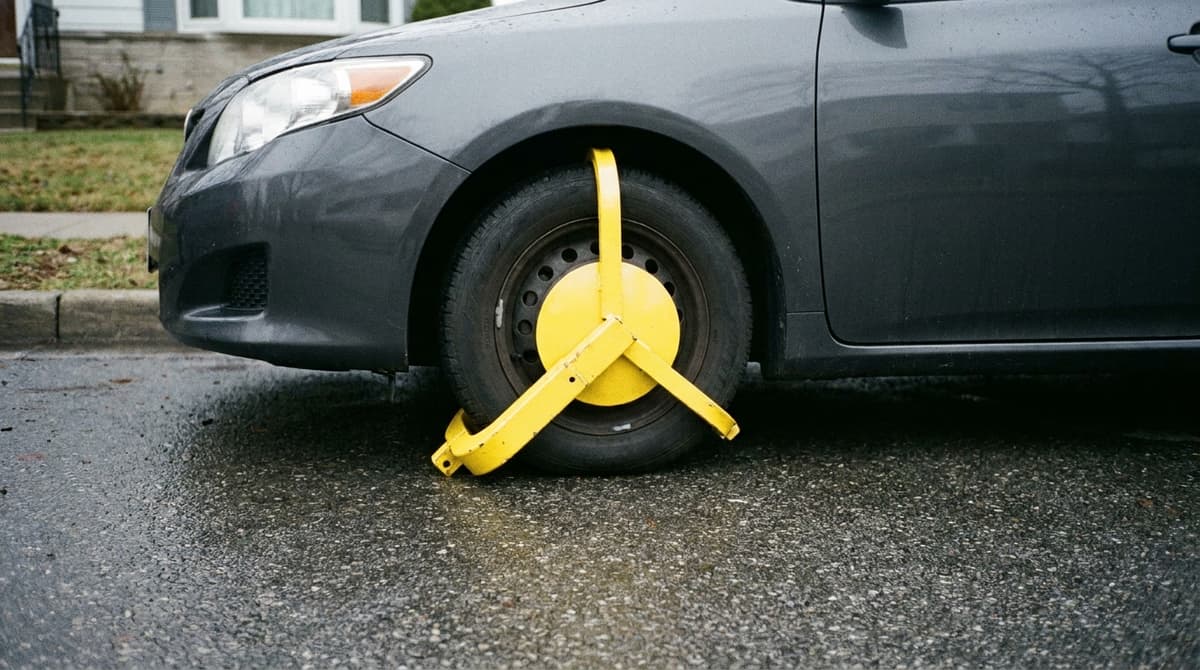
To get a clamped or impounded vehicle back without taxing it, you pay a surety (refundable deposit) plus a release fee:
| Vehicle type | Surety |
|---|---|
| Motorcycles, light passenger vehicles and light goods vehicles | £160 |
| Buses, recovery vehicles, haulage vehicles and goods vehicles | £330 |
| Exceptional loads and heavy goods vehicles | £700 |
Fees are set by DVLA's enforcement policy: a £100 clamp release fee if paid within the first 24 hours, or a £200 impound release fee once the vehicle has been taken to a pound, plus £21 a day storage from removal. The surety is refunded if you show proof of vehicle tax within 14 days of paying it. An unclaimed vehicle is held for 7 to 14 days and can then be auctioned, broken up or crushed.
What happens if you ignore DVLA
Ignoring a penalty letter does not make it go away. DVLA's guidance on paying a fine warns that unpaid tax, insurance and registration penalties can be escalated to debt collection, and that a vehicle can be clamped or crushed for continued non-payment (gov.uk: pay a DVLA fine). Where DVLA decides to prosecute rather than offer a settlement, the case proceeds through the criminal courts under sections 29 or 31A/31C above, with the higher penalty exposure that carries.
Related reading
For the wider picture of DVLA and police enforcement on UK roads, see the UK driving laws hub and driving without insurance, which covers a related DVLA and police enforcement route. If you want to challenge a penalty notice you believe was issued in error, see appealing a penalty charge notice.

Frequently Asked Questions
What is the DVLA out-of-court settlement for an untaxed car?
It depends on the offence. DVLA's published enforcement policy sets it at £30 plus 1.5 times the outstanding vehicle tax for using or keeping an untaxed vehicle with no SORN in place, £30 plus 2 times the outstanding tax for using a vehicle despite an active SORN, and £55 (reduced to £35 within 17 days) for a registration offence. Separately, DVLA issues a £100 fixed penalty (not an OCS), reduced to £50 within 33 days, to the registered keeper of an uninsured vehicle; this does not apply in Northern Ireland. Check gov.uk for the current figures before paying, since DVLA reviews this policy periodically.
Can DVLA clamp my car if I have SORN'd it?
Yes, if the vehicle is on a public road. A SORN only exempts a vehicle that is genuinely kept off the public road; it does not protect a vehicle parked on the street.
How much is the DVLA late licensing penalty?
£80, reduced to £40 if paid within 33 days. This applies when a vehicle's tax or SORN has simply lapsed, separately from the out-of-court settlement offered instead of prosecution.
How much does it cost to get a clamped car back without taxing it?
You pay a surety deposit of £160 for motorcycles, light passenger vehicles and light goods vehicles, £330 for buses, recovery and haulage vehicles, or £700 for exceptional loads and heavy goods vehicles, plus a £100 clamp release fee if paid within the first 24 hours, or a £200 impound release fee and £21 a day storage once the vehicle is in a pound. The surety is refunded if you show proof of vehicle tax within 14 days.
Is driving an untaxed car a criminal offence in the UK?
Yes. Using or keeping an unlicensed vehicle on a public road is an offence under section 29 of the Vehicle Excise and Registration Act 1994, with a maximum fine of the greater of level 3 on the standard scale (currently up to £1,000) or five times the annual vehicle tax. If a SORN was in force when the vehicle was used on the road, the maximum rises to £2,500 or five times the annual tax. DVLA more commonly enforces this through administrative penalties first.
Updates
Independently fact-checked against the cited primary sources
The Law Behind This Article
This article rests on the statutory provisions below, held in our own legal record and retrieved from the official source. Tap a section to read the operative text.
Vehicle Excise and Registration Act 1994
s. 29Penalty for using or keeping unlicensed vehicle.In force
(1) If a person uses, or keeps, a vehicle which is unlicensed he is guilty of an offence. (2) For the purposes of subsection (1) a vehicle is unlicensed if no vehicle licence or trade licence is in force for or in respect of the vehicle. (2A) Subsection (1) does not apply to a vehicle if— (a) it is an exempt vehicle in respect of which regulations under this Act require a nil licence to be in force and a nil licence is in force in respect of the vehicle, or (b) it is an exempt vehicle that is not one in respect of which regulations under this Act require a nil licence to be in force. (2B) Subsection (1) does not apply to a vehicle if— (a) the vehicle is being neither used nor kept on a public road, and (b) the particulars and declaration required to be furnished and made by regulations under section 22(1D) have been furnished and made in accordance with the regulations and the terms of the declaration have at no time been breached. (2C) Subsection (1) does not apply to a vehicle if the vehicle is kept by a motor trader or vehicle tester at business premises.
Official text (excerpt) · last checked 2026-08-14 · Read the full text in our law library · Verify at legislation.gov.uk
s. 31aOffence by registered keeper where vehicle unlicensedIn force
(1) If a vehicle registered under this Act is unlicensed, the person in whose name the vehicle is registered is guilty of an offence. (2) For the purposes of this section a vehicle is unlicensed if no vehicle licence or trade licence is in force for or in respect of the vehicle. (3) Subsection (1) does not apply to a vehicle if— (a) it is an exempt vehicle in respect of which regulations under this Act require a nil licence to be in force and a nil licence is in force in respect of the vehicle, or (b) it is an exempt vehicle that is not one in respect of which regulations under this Act require a nil licence to be in force. (4) Where a vehicle for which a vehicle licence is in force is transferred by the holder of the licence to another person, the licence is to be treated for the purposes of subsection (2) as no longer in force ... . (5) . . . . . . . . . . . . . . . . . . . . . . . . . . . . . . . .
Official text (excerpt) · last checked 2026-08-14 · Read the full text in our law library · Verify at legislation.gov.uk
s. 31cPenalties for offences under section 31AIn force
(1) A person guilty of an offence under section 31A(1) is liable on summary conviction to— (a) an excise penalty of— (i) level 3 on the standard scale, or (ii) five times the amount of vehicle excise duty chargeable in respect of the vehicle concerned, whichever is the greater; and (b) if subsection (3) applies to him, an excise penalty (in addition to any under paragraph (a)) of an amount that complies with subsection (2). (2) An amount complies with this subsection if it— (a) is not less than the greater of— (i) the maximum of the penalty to which the person is liable under subsection (1)(a), and (ii) the amount of the supplement (if any) that became payable by him by reason of non-renewal of the vehicle licence for the vehicle that last expired before the commission of the offence; and (b) is not more than the greatest of— (i) the maximum of the penalty to which the person is liable under subsection (1)(a), (ii) the amount mentioned in paragraph (a)(ii), and (iii) ten times the amount of vehicle excise duty chargeable in respect of the vehicle.
Official text (excerpt) · last checked 2026-08-14 · Read the full text in our law library · Verify at legislation.gov.uk
Search our record of UK legislation — retrieved from legislation.gov.uk →
Sources and References
- Register your vehicle as off the road (SORN)(gov.uk).gov
- Vehicle Excise and Registration Act 1994, section 29(legislation.gov.uk).gov
- Vehicle Excise and Registration Act 1994, section 31A(legislation.gov.uk).gov
- Vehicle Excise and Registration Act 1994, section 31C(legislation.gov.uk).gov
- DVLA enforcement of vehicle tax, registration and insurance offences(gov.uk).gov
- Get a clamped or impounded vehicle released(gov.uk).gov
- Pay a DVLA fine(gov.uk).gov
- When you need to make a SORN(gov.uk).gov