
United Kingdom
PCN Appeal UK: How to Challenge a Council Parking Ticket
Independently fact-checked against primary sources (last audited September 29, 2026). · Law checked current as of September 29, 2026. · 16 primary sources cited on this page. How we verify our legal content
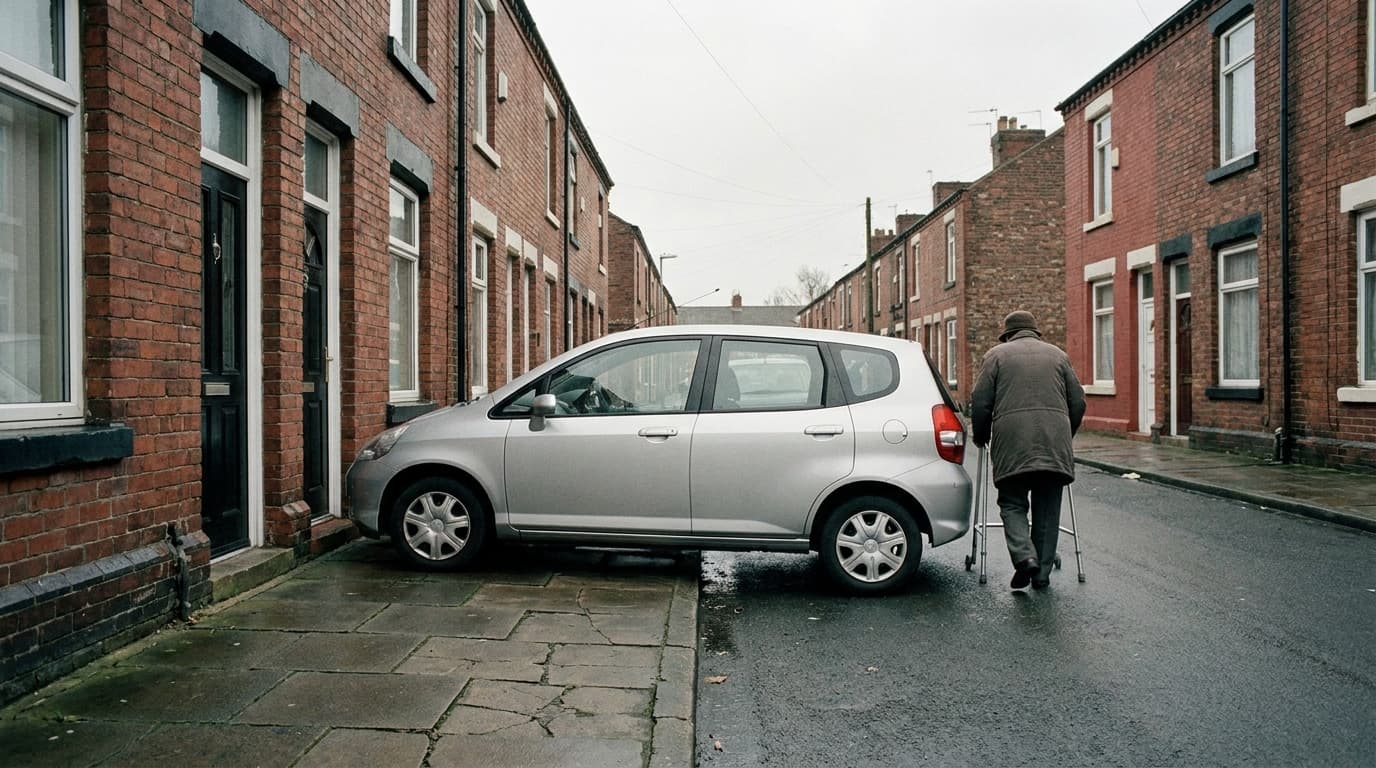
A council Penalty Charge Notice (PCN) is a civil, statutory parking penalty, not a criminal fine and not the same as a private parking charge on a supermarket or retail car park. This is how to challenge one, in the right order, and within the time limits that matter. The steps and amounts below are for England and Wales; Scotland and Northern Ireland have their own routes, set out further down.
What a council PCN actually is
A council PCN is issued by a local authority (or, in London, Transport for London or a London borough) under civil parking enforcement powers created by the Traffic Management Act 2004. It is enforced as a civil debt, not a criminal conviction, and it does not add penalty points to a driving licence. That makes it legally different from a private parking charge, which is a contractual charge issued by a private parking operator on land such as a retail car park or private estate and is appealed through a completely different route. If the ticket was issued by a parking company rather than the council, see the private parking fine appeal page instead of this one.
How to appeal a council PCN, step by step
- Informal challenge. As soon as the PCN arrives, write to the issuing council (most have an online form) explaining why it should not stand and attaching any evidence, such as photos, a valid pay-and-display ticket, or a blue badge. This step is free and does not require waiting for a later notice.
- Notice to Owner. If the informal challenge is rejected, or if nobody pays or challenges within the initial window, the council issues a Notice to Owner to the registered keeper. This stage applies to a PCN fixed to the vehicle or handed to the driver by a civil enforcement officer. In England, a PCN sent by post, for example because it is based on camera evidence, is not followed by a Notice to Owner: formal representations are made against the PCN itself, within 28 days of it being served.
- Formal representations. From the date of the Notice to Owner, there is a 28-day window to submit formal written representations, setting out the grounds in detail and including supporting evidence. This is the key statutory stage; missing the 28 days can close off some of the strongest grounds for a later tribunal appeal.
- Notice of Rejection or acceptance. If the council accepts the representations, the PCN is cancelled. If it rejects them, it issues a Notice of Rejection.
- Pay or appeal to the tribunal. The Notice of Rejection gives 28 days to either pay the PCN or appeal to the independent tribunal. Appealing is free, and an unsuccessful appeal does not increase the amount owed.
- Tribunal decision. An independent adjudicator considers the evidence from both sides and issues a binding decision. If the appeal succeeds, the PCN is cancelled; if it fails, the standard payment terms apply from that point.
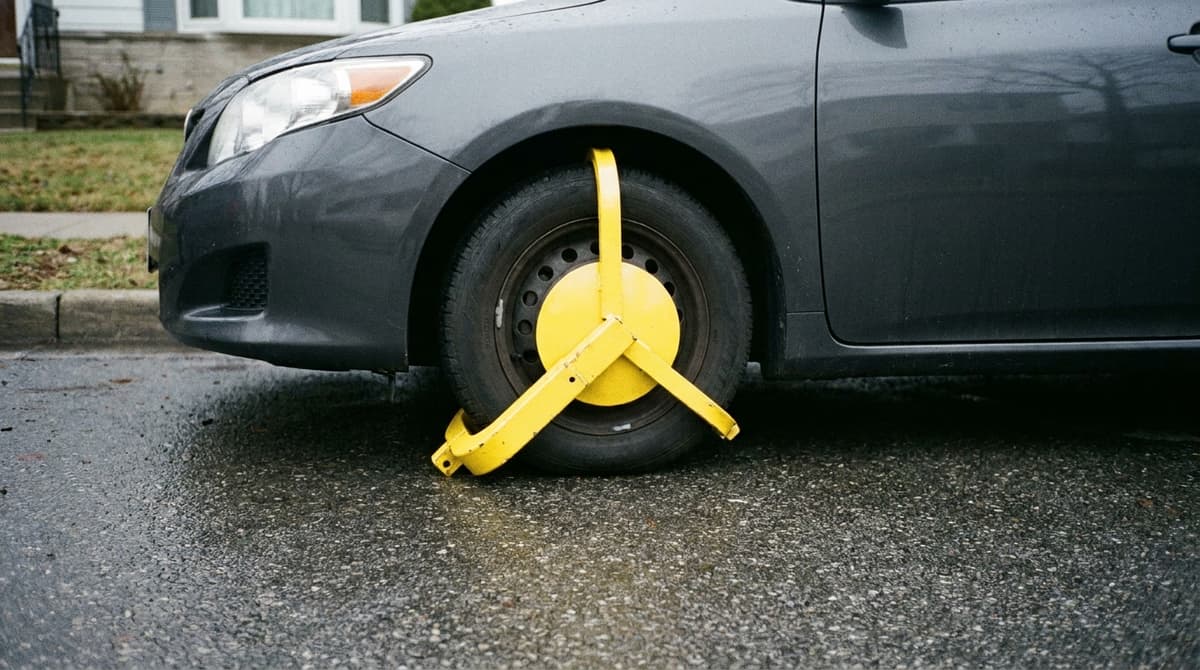
Which tribunal hears the appeal
Which body hears a tribunal appeal depends on where the PCN was issued, not where the driver lives.
- Traffic Penalty Tribunal: covers council PCNs issued in England outside London, and all of Wales.
- London Tribunals (Environment and Traffic Adjudicators): covers PCNs issued by London borough councils and Transport for London, including parking, bus lane, and moving traffic contraventions in London.
Both are independent of the council that issued the ticket and free to use. Appeals are usually made online, with the option to add documents and, in some cases, request an in-person or telephone hearing.
Scotland and Northern Ireland
The English bands, the Notice to Owner steps and the two tribunals above do not cover the whole UK.
Scotland. Challenge the council that issued the PCN first. If it rejects the challenge, you get a Notice of Rejection and must then pay or appeal to the First-tier Tribunal for Scotland (General Regulatory Chamber). You can only appeal to the tribunal once you have that Notice of Rejection.
Northern Ireland. Parking PCNs are issued by the Department for Infrastructure (DfI) and processed by its Parking Enforcement Processing Unit. The PCN is £90, reduced to £45 if paid within 14 days. If it is not paid within 28 days, a Notice to Owner follows, and if that is not paid within 28 days a charge certificate raises the amount to £135.
If DfI rejects a representation, you can pay or appeal to an independent adjudicator. The Traffic Penalty Tribunal does not hear Northern Ireland appeals.
Bus lane PCNs
In England and Wales, bus lane PCNs are civil penalties appealed to the same tribunals: the Traffic Penalty Tribunal outside London and London Tribunals in London. They are usually detected by camera, and the PCN is posted to the registered keeper using DVLA records rather than handed out at the roadside. In England outside London, a posted PCN of this kind is not followed by a separate Notice to Owner, so formal representations are made against the PCN itself, within the time limit it states. If the council rejects them, you can appeal to the tribunal. In England outside London a bus lane contravention is charged at the council's higher-level rate, £60 or £70 depending on its band, halved if paid within the discount period. In Wales and London the amount is set separately, so check the notice.
Common grounds for appeal
A tribunal appeal (or the formal representations stage before it) needs to fit one of the recognised grounds, not simply that the penalty feels unfair. Common grounds include:
- The contravention did not occur, for example the vehicle was validly displaying a permit or ticket.
- The person appealing was not the owner of the vehicle at the time.
- The penalty exceeds the amount that applies to the contravention.
- There was a procedural error by the council, such as a defective notice or incorrect signage.
- The signs or road markings were missing, obscured, or unclear at the time.
- Mitigating circumstances existed, such as a genuine emergency, though this ground is considered but is not automatically accepted.
Paying a PCN and the discount
Once a PCN is issued, there is normally 28 days to pay, with a 50% discount if paid within 14 days. Where the PCN was issued on the basis of evidence from an approved device, such as a CCTV camera or an ANPR camera car, that discount period is 21 days instead of 14. If a PCN fixed to the vehicle or handed to the driver is not paid within 28 days, the council can send a Notice to Owner. If that is not paid or challenged within a further 28 days (or, for a postal PCN, if the PCN itself is not paid or challenged within 28 days of service), the council can issue a charge certificate, which adds 50% to the original amount. Choosing to challenge or appeal pauses the payment clock; a rejected challenge restarts a fresh payment window rather than penalising the appeal itself.

PCN bands: England outside London vs London
PCN amounts are not the same across England, and London uses an entirely separate band structure.
- England outside London: each council selects either Band 1 (£60 for a higher-level contravention, discounted to £30 within 14 days, or £40 for a lower-level contravention, discounted to £20) or Band 2 (£70 for a higher-level contravention, discounted to £35, or £50 for a lower-level contravention, discounted to £25) for its area, under the regulations governing civil parking enforcement charge levels.
- Wales: set under its own equivalent civil enforcement framework; check the specific council's notice for the exact amount.
- London: a separate regime applies, with Band A (£160 for a higher-level contravention, discounted to £80 within 14 days, or £110 for a lower-level contravention, discounted to £55) or Band B (£140 for a higher-level contravention, discounted to £70, or £90 for a lower-level contravention, discounted to £45) depending on the borough or road.
The "higher" and "lower" rate within a band are not a discount pair. They reflect two different contravention severities, a higher-level rate for more serious contraventions such as parking on yellow lines or causing an obstruction, and a lower-level rate for less serious ones such as overstaying in a pay-and-display bay. Each of those two amounts then gets its own separate 50% discount for paying within 14 days.
Related pages
For the wider penalty points and licence consequences of driving offences generally, see penalty points. If the charge was issued by a private operator rather than a council, use the private parking fine appeal page. For Dart Charge non-payment notices specifically, which are a separate PCN regime for the Dartford Crossing, see Dartford Crossing fine.

This article is for general information only and is not legal advice. Individual PCNs turn on their own facts and evidence, and anyone with a specific dispute should check the notice itself and, if needed, take independent advice. For the full picture of UK driving law, see the UK Driving Laws hub and the United Kingdom hub.
Frequently Asked Questions
What is the difference between a council PCN and a private parking charge?
A council PCN is a civil, statutory penalty issued by a local authority (or Transport for London) under the Traffic Management Act 2004, enforced as a civil debt. A private parking charge is a contractual charge issued by a private operator on private land, such as a retail car park, and is a completely separate legal process with its own appeal route through POPLA or the IAS.
How long do I have to appeal a council PCN?
There is no fixed single deadline for every stage. An informal challenge can be made as soon as the PCN arrives. Once a Notice to Owner is issued, formal representations must be submitted within 28 days; a PCN sent by post, such as a camera PCN, has no Notice to Owner, and the 28 days run from service of the PCN itself. If those are rejected, the Notice of Rejection gives a further 28 days to pay or appeal to the independent tribunal.
Which tribunal do I appeal a council PCN to?
It depends on where the PCN was issued. The Traffic Penalty Tribunal covers England outside London and all of Wales. London Tribunals, through its Environment and Traffic Adjudicators, covers PCNs issued by London boroughs and Transport for London. In Scotland, appeals go to the First-tier Tribunal for Scotland (General Regulatory Chamber) once the council has issued a Notice of Rejection. In Northern Ireland, PCNs are issued by the Department for Infrastructure and appeals go to an independent adjudicator.
Does it cost anything to appeal to the tribunal?
No. Appealing to the Traffic Penalty Tribunal or London Tribunals is free, and losing an appeal does not increase the amount owed. The standard payment terms simply apply from the point the decision is issued.
What discount do I get for paying a PCN early?
Most councils offer a 50% discount if the PCN is paid within 14 days of issue. The full amount is due if paid between day 15 and day 28. If it is still unpaid and unchallenged 28 days after the Notice to Owner (or 28 days after a postal PCN was served), a charge certificate can add 50% to the original amount.
What are common valid grounds to appeal a council PCN?
Recognised grounds include that the contravention did not occur, the appellant was not the vehicle's owner at the time, the penalty amount was wrong for the contravention, there was a procedural error by the council, or the signs or road markings were missing or unclear.
Do PCN amounts differ between London and the rest of England?
Yes. England outside London uses Band 1 (£60 for a higher-level contravention or £40 for a lower-level one) or Band 2 (£70 or £50), chosen by the local council, with each amount cut in half if paid within 14 days. London uses a separate structure, Band A (£160 or £110) or Band B (£140 or £90), on the same higher-level versus lower-level pattern and 14-day discount.
Can I still be pursued for payment while my appeal is being decided?
No. Submitting formal representations or a tribunal appeal within the relevant time limit pauses enforcement action on that PCN until a decision is made. If the challenge fails, the standard payment window and discount terms then apply from that outcome.
Updates
Added the Scotland (First-tier Tribunal for Scotland) and Northern Ireland (DfI, £90 or £45 early, £135 after a charge certificate, independent adjudicator) routes, corrected when a charge certificate can be issued, and pointed a regulation citation to the right provision.
Independently fact-checked against the cited primary sources; governing law re-checked for recent changes
Added a section on bus lane PCNs and clarified that a PCN sent by post, such as a camera PCN, has no Notice to Owner stage: formal representations are made against the PCN itself.
The Law Behind This Article
This article rests on the statutory provisions below, held in our own legal record and retrieved from the official source. Tap a section to read the operative text.
The Civil Enforcement of Road Traffic Contraventions (Approved Devices, Charging Guidelines and General Provisions) (England) Regulations 2022
reg. 10Penalty charge notices for relevant road traffic contraventions: enforcement authorityIn force
(1) This regulation applies in relation to the notification, by an enforcement authority, of a penalty charge payable in respect of a relevant road traffic contravention. (2) An enforcement authority may give notification of the penalty charge by serving a penalty charge notice by post where— (a) on the basis of a record produced by an approved device, the authority has reason to believe that a penalty charge is payable with respect to— (i) a regulation 11 parking contravention, (ii) an OGL bus lane contravention, or (iii) an OGL moving traffic contravention; (b) a civil enforcement officer attempted to give a penalty charge notice in accordance with regulation 9 , but was prevented from doing so by any person; (c) a civil enforcement officer had begun to prepare a penalty charge notice to be given in accordance with regulation 9 , but the vehicle concerned was driven away from the place in which it was stationary before the civil enforcement officer had finished preparing the penalty charge notice or had given it in accordance with regulation 9 .
Official text (excerpt) · last checked 2026-08-12 · Read the full text in our law library · Verify at legislation.gov.uk
reg. 20Notice to ownerIn force
(1) Where— (a) a penalty charge notice has been given with respect to a vehicle under regulation 9 , and (b) the period of 28 days specified in the penalty charge notice as the period within which the penalty charge is to be paid has expired without that charge being paid, the enforcement authority concerned may serve a notice (a “notice to owner”) on the person who appears to it to have been the owner of the vehicle when the alleged contravention occurred. (2) A notice to owner may not be served after the expiry of the period of 6 months beginning with the relevant date. (3) A notice to owner must, in addition to the matters required to be included in it under regulation 3(2) of the 2022 Appeals Regulations, state— (a) the date of the notice, which must be the date on which the notice is posted, (b) the name of the enforcement authority serving the notice, (c) the amount of the penalty charge payable, (d) the date on which the penalty charge notice was served, (e) the grounds on which the civil enforcement officer who served the penalty charge notice under regulation 9 believed that a penalty charge was payable with respect to the vehicle, (f) that the penalty charge, if not alrea
Official text (excerpt) · last checked 2026-08-12 · Read the full text in our law library · Verify at legislation.gov.uk
Search our record of UK legislation — retrieved from legislation.gov.uk →
Sources and References
- gov.uk: Parking tickets, paying a penalty charge notice (28 days, 14-day discount, charge certificate)(gov.uk).gov
- gov.uk: Challenging a parking ticket (informal challenge, Notice to Owner, representations, tribunal appeal)(gov.uk).gov
- Traffic Penalty Tribunal: appeals for England outside London and all of Wales(trafficpenaltytribunal.gov.uk).gov
- London Tribunals: Environment and Traffic Adjudicators (London PCN appeals)(londontribunals.gov.uk).gov
- The Civil Enforcement of Road Traffic Contraventions (Approved Devices, Charging Guidelines and General Provisions) (England) Regulations 2022 (SI 2022/71)(legislation.gov.uk).gov
- Traffic Management Act 2004 (civil enforcement of parking contraventions)(legislation.gov.uk).gov
- London Borough of Richmond upon Thames: Bus lane penalty charge notices(richmond.gov.uk).gov
- Civil Enforcement of Road Traffic Contraventions (Approved Devices, Charging Guidelines and General Provisions) (England) Regulations 2022, Schedule 3(legislation.gov.uk).gov
- SI 2022/71, regulation 20 (notice to owner only after an officer-served PCN)(legislation.gov.uk).gov
- Civil Enforcement of Road Traffic Contraventions (Representations and Appeals) (England) Regulations 2022, regulation 4(legislation.gov.uk).gov
- Civil Enforcement of Road Traffic Contraventions (Representations and Appeals) (England) Regulations 2022, regulation 6 (representations may be disregarded after 28 days from service; 28 days after a decision notice to pay or appeal)(legislation.gov.uk).gov
- SI 2022/71, regulation 10 (PCN served by post, including on camera evidence)(legislation.gov.uk).gov
- mygov.scot: Penalty charge notices from the council (appeal to the First-tier Tribunal for Scotland, General Regulatory Chamber)(www.mygov.scot).gov
- nidirect: Parking tickets (Penalty Charge Notices) in Northern Ireland (£90, £45 within 14 days, £135 charge certificate, adjudicator appeals)(www.nidirect.gov.uk).gov
- SI 2022/71, regulation 21 (charge certificate after the enforcement notice period)(www.legislation.gov.uk).gov
- Traffic Penalty Tribunal: PCNs from Northern Ireland (the tribunal decides only England outside London and Wales appeals)(www.trafficpenaltytribunal.gov.uk).gov