
United Kingdom
How Speed Cameras Work in the UK: The Notice of Intended Prosecution Explained
Independently fact-checked against primary sources (last audited September 28, 2026). · 8 primary sources cited on this page. How we verify our legal content
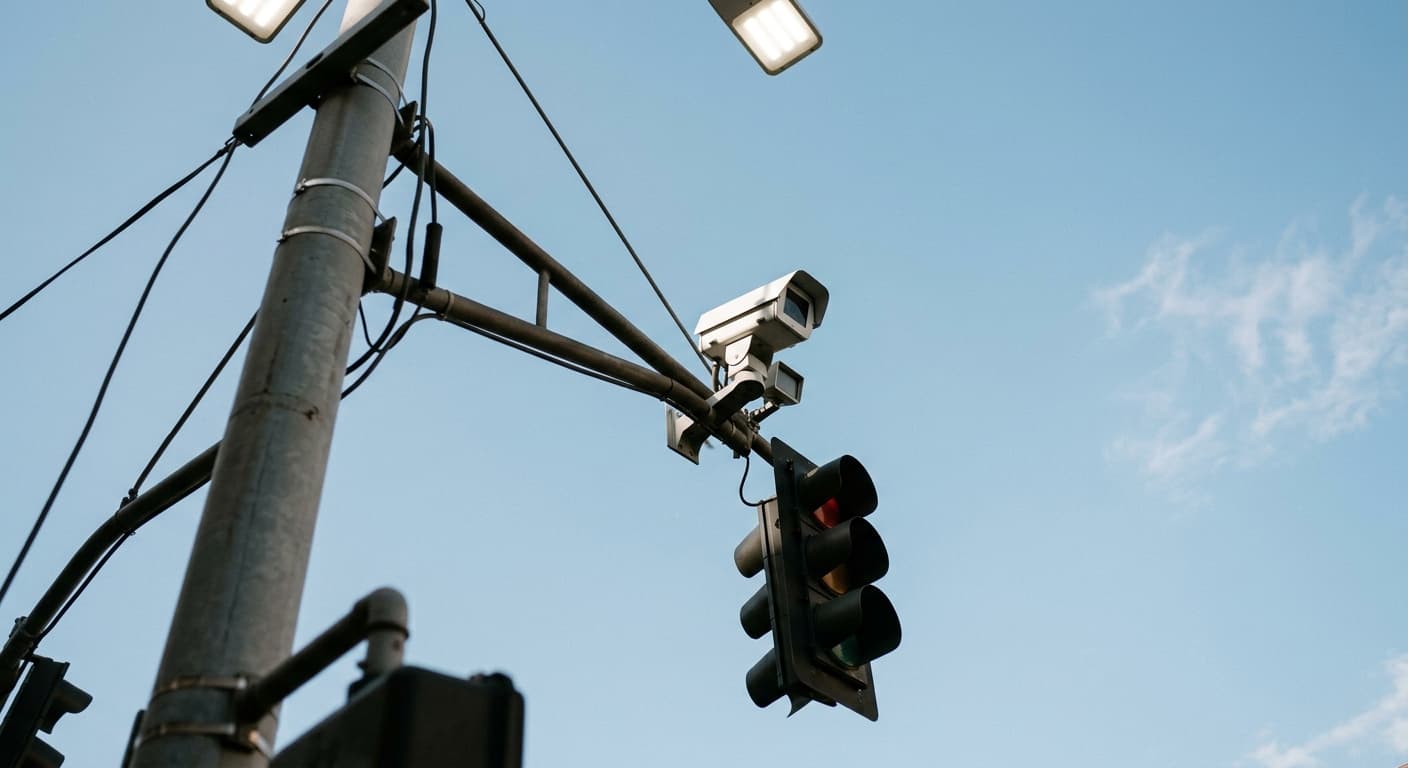
A UK speed camera detection cannot normally lead to a prosecution unless the driver was warned at the roadside or served a Notice of Intended Prosecution within 14 days of the offence, and the widely quoted '10% plus 2mph' tolerance is police operational guidance, not a legal entitlement.
The Notice of Intended Prosecution: the 14-day rule
Speeding is one of the offences covered by section 1 of the Road Traffic Offenders Act 1988, which applies in England, Wales and Scotland. Under that section, a driver cannot be convicted of a listed offence unless one of three things happened: they were warned about it at the time by a police officer, they were served with a summons within 14 days, or they were served with a Notice of Intended Prosecution (NIP) within 14 days of the offence, setting out the alleged offence and the time and place it happened.
Section 2 of the same Act sets out exceptions: the 14-day rule does not apply if an accident happened at the time owing to the vehicle's presence on the road, or if a fixed penalty notice was given, and a late notice does not stop a conviction if neither the driver's nor the registered keeper's name and address could with reasonable diligence have been found in time, or if the driver's own conduct contributed to the delay.
In England and Wales a NIP may be served in any way the Criminal Procedure Rules allow; elsewhere it may be served by delivery, by being left at the last known address, or by registered, recorded or first class post, and one sent by registered post or recorded delivery counts as served even if it never arrives. The law presumes the 14-day requirement was met unless the contrary is proved, so a driver who says a NIP never arrived must prove it. Get advice before treating a late or missing NIP as a defence on its own.
Who the NIP goes to
A NIP does not have to name the person who was actually driving. For most offences other than cycling offences, it can instead be served on whoever was the registered keeper of the vehicle at the time of the alleged offence. This is a common source of confusion for anyone who has sold, lent or otherwise was not driving their own vehicle when it was caught speeding: the NIP still goes to the keeper on record, not to whoever happened to be behind the wheel.

Separately, a section 172 notice requires the registered keeper, or another person who may know, to tell the police who was driving within 28 days of being asked. Failing to respond is itself an offence, distinct from the speeding offence the notice relates to, unless you show you did not know, and could not with reasonable diligence have found out, who was driving, or that it was not reasonably practicable to reply in time and you did so as soon as it was.
How speed cameras are approved and used
Speed enforcement equipment used in England, Wales and Scotland can be used in court without corroboration only if the device is of a Home Office approved type, and approved devices should be calibrated annually. Approved systems include hand-held or vehicle-mounted radar devices operated by officers at the roadside, and automatic systems that use automatic number-plate recognition (ANPR) to record a vehicle passing two fixed points and calculate its average speed over that stretch of road, rather than its speed at a single moment.
The "10% + 2mph" rule: guidance, not law
Many drivers have heard that speed cameras allow a margin of 10% of the limit plus 2mph before enforcement kicks in. At least one police force has confirmed this is real, current guidance: it describes following "national operational guidance that sets enforcement thresholds starting at 10% + 2mph of the posted speed limit," while being explicit that "this is not an official allowance or 'safe margin', it's a technical threshold used to ensure consistency and account for equipment calibration."

That distinction matters. Exceeding the speed limit by any amount is still an offence in law, the threshold is not written into the Road Traffic Act, and the guidance describes thresholds 'starting at' 10% + 2mph rather than a fixed allowance. Treat it as a description of common current practice, not a right you can rely on if a specific force enforces differently.
Northern Ireland
The 14-day NIP rule described above applies in England, Wales and Scotland. Northern Ireland has an equivalent 14-day rule in Article 5 of the Road Traffic Offenders (Northern Ireland) Order 1996, with two differences: a roadside warning can be given up to 24 hours after the offence, and under Article 6 a late notice does not prevent a conviction if the driver was not prejudiced in their defence by the delay.
Related reading
This page covers how a speeding prosecution is triggered and served, not the fine bands or penalty points themselves. For those, see our guides to speeding fines and penalty points and totting-up, and for the option offered instead of prosecution in many cases, see the speed awareness course. To estimate a likely fine and points for a specific speed, use our UK speeding fine calculator. For other UK motoring rules, see the UK driving laws hub.
Frequently Asked Questions
What is a Notice of Intended Prosecution?
It is a formal notice, required under section 1 of the Road Traffic Offenders Act 1988 for certain offences including speeding, telling the recipient that they may be prosecuted. Without one, being warned at the time, or being served a summons within 14 days, a prosecution for a listed offence generally cannot proceed.
How long do police have to send a Notice of Intended Prosecution?
Within 14 days of the offence. If none of the three routes, an at-the-time warning, a summons within 14 days, or a NIP within 14 days, happened, a prosecution for a section 1 offence like speeding cannot normally proceed. Exceptions apply, including where there was an accident at the time, or where the details of the driver and the registered keeper could not reasonably be found in time.
Can a Notice of Intended Prosecution be sent to someone who wasn't driving?
Yes. For most offences other than cycling offences, the NIP can be served on the registered keeper of the vehicle at the time of the offence, rather than on the actual driver, if the two are different people.
Is the 10% + 2mph speed camera tolerance a legal right?
No. It reflects national police operational guidance, confirmed by at least one force as real and current, but exceeding the speed limit by any amount remains an offence in law, and the guidance sets thresholds starting at that figure rather than a fixed allowance.
What happens if I don't respond to a section 172 notice?
Failing to name the driver within 28 days of being asked is itself a separate offence from whatever driving offence prompted the request, unless you show you did not know, and could not with reasonable diligence have found out, who was driving, or that it was not reasonably practicable to reply in time and you did so as soon as it was.
Do all UK speed cameras work the same way?
No. Some measure your speed at a single point using radar, while average-speed systems use automatic number-plate recognition to calculate your average speed between two fixed points over a stretch of road. Camera evidence can be used in court without corroboration only if the device is of a Home Office approved type, and approved devices should be calibrated annually.
Updates
Independently fact-checked against the cited primary sources
The Law Behind This Article
This article rests on the statutory provisions below, held in our own legal record and retrieved from the official source. Tap a section to read the operative text.
Road Traffic Act 1988
s. 172Duty to give information as to identity of driver etc in certain circumstances.In force
(1) This section applies— (a) to any offence under the preceding provisions of this Act except— (i) an offence under Part V, or (ii) an offence under section 13, 16, 51(2), 61(4), 67(9), 68(4), 96 or 120, and to an offence under section 178 of this Act, (b) to any offence under sections 25, 26 or 27 of the Road Traffic Offenders Act 1988, (c) to any offence against any other enactment relating to the use of vehicles on roads, . . . and (d) to manslaughter, or in Scotland culpable homicide, by the driver of a motor vehicle. (2) Where the driver of a vehicle is alleged to be guilty of an offence to which this section applies— (a) the person keeping the vehicle shall give such information as to the identity of the driver as he may be required to give by or on behalf of a chief officer of police or the Chief Constable of the British Transport Police Force , and (b) any other person shall if required as stated above give any information which it is in his power to give and may lead to identification of the driver. (3) Subject to the following provisions, a person who fails to comply with a requirement under subsection (2) above shall be guilty of an offence.
Official text (excerpt) · last checked 2026-08-14 · Read the full text in our law library · Verify at legislation.gov.uk
Road Traffic Offenders Act 1988
s. 1Requirement of warning etc. of prosecutions for certain offences.In force
(1) Subject to section 2 of this Act, a person shall not be convicted of an offence to which this section applies unless — (a) he was warned at the time the offence was committed that the question of prosecuting him for some one or other of the offences to which this section applies would be taken into consideration, or (b) within fourteen days of the commission of the offence a summons (or, in Scotland, a complaint) for the offence was served on him, or (c) within fourteen days of the commission of the offence a notice of the intended prosecution specifying the nature of the alleged offence and the time and place where it is alleged to have been committed, was— (i) in the case of an offence under section 28 or 29 of the Road Traffic Act 1988 (cycling offences), served on him, (ii) in the case of any other offence, served on him or on the person, if any, registered as the keeper of the vehicle at the time of the commission of the offence. (1ZA) In the case of an offence to be prosecuted in England and Wales, a notice required by this section to be served on any person may be served on that person in accordance with Criminal Procedure Rules.
Official text (excerpt) · last checked 2026-08-14 · Read the full text in our law library · Verify at legislation.gov.uk
s. 2Requirement of warning etc : supplementary.In force
(1) The requirement of section 1(1) of this Act does not apply in relation to an offence if, at the time of the offence or immediately after it, an accident occurs owing to the presence on a road of the vehicle in respect of which the offence was committed. (2) The requirement of section 1(1) of this Act does not apply in relation to an offence in respect of which— (a) a fixed penalty notice (within the meaning of Part III of this Act) has been given or fixed under any provision of that Part, ... (b) . . . . . . . . . . . . . . . . . . . . . . . . . . . . . . . . (3) Failure to comply with the requirement of section 1(1) of this Act is not a bar to the conviction of the accused in a case where the court is satisfied— (a) that neither the name and address of the accused nor the name and address of the registered keeper, if any, could with reasonable diligence have been ascertained in time for a summons or, as the case may be, a complaint to be served or for a notice to be served or sent in compliance with the requirement, or (b) that the accused by his own conduct contributed to the failure.
Official text (excerpt) · last checked 2026-08-14 · Read the full text in our law library · Verify at legislation.gov.uk
Search our record of UK legislation — retrieved from legislation.gov.uk →
Sources and References
- Road Traffic Offenders Act 1988, section 1, requirement of warning etc. of prosecutions for certain offences(legislation.gov.uk).gov
- Road Traffic Act 1988, section 172, duty to give information as to identity of driver(legislation.gov.uk).gov
- gov.uk, Speeding penalties(gov.uk).gov
- gov.uk, Speedmeter, traffic light and prohibited lane enforcement camera handbook(gov.uk).gov
- Avon and Somerset Police, Speed Enforcement: Your Questions Answered(avonandsomerset.police.uk).gov
- Road Traffic Offenders Act 1988, section 2, requirement of warning etc: supplementary(legislation.gov.uk).gov
- The Road Traffic Offenders (Northern Ireland) Order 1996, Article 5(legislation.gov.uk).gov
- The Road Traffic Offenders (Northern Ireland) Order 1996, Article 6(legislation.gov.uk).gov