
United Kingdom
UK Drink Driving Ban: Penalties, DR10 & Course
Independently fact-checked against primary sources (last audited September 29, 2026). · Law checked current as of September 29, 2026. · 10 primary sources cited on this page. How we verify our legal content
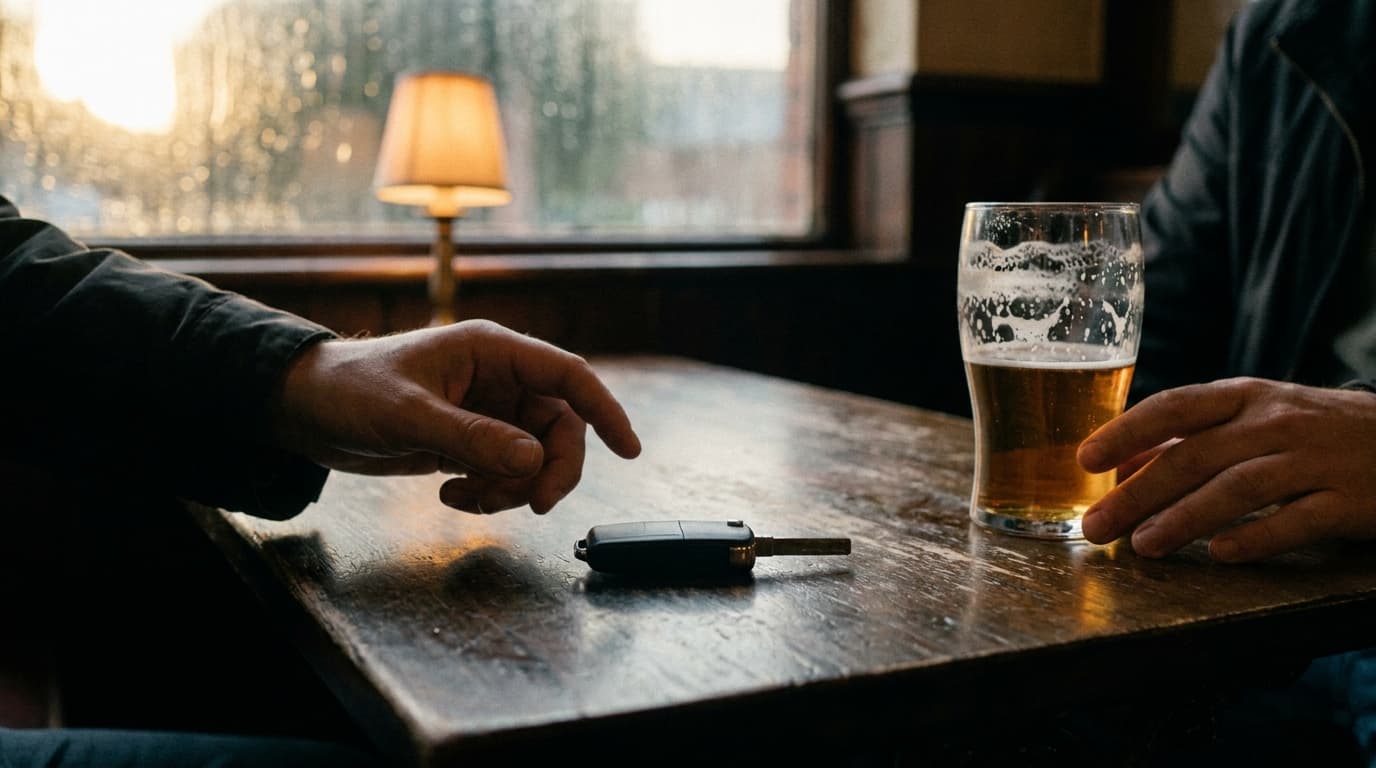
A drink-driving conviction in the UK carries a minimum 12-month disqualification and up to 6 months in prison, plus a fine that is unlimited in England and Wales and up to £5,000 in Scotland and Northern Ireland. Here is how the ban, the endorsement and the rehabilitation course actually work.
What counts as a drink-driving offence
The core offence is driving or attempting to drive a motor vehicle on a road or other public place while over the prescribed alcohol limit, or while unfit to drive through drink. It also covers being in charge of a vehicle while over the limit, and refusing to give a breath, blood or urine specimen when required by police.
These are separate offences from the limit itself. The limit that decides whether someone is "over" varies by nation, England, Wales and Northern Ireland set it at 80mg of alcohol per 100ml of blood, while Scotland's limit is lower at 50mg. See our drink-driving limit page for the full breath, blood and urine figures in each nation. The minimum ban lengths and prison maximums below apply across the UK, regardless of which limit someone exceeded. The fine differs by nation, and Northern Ireland runs its own rehabilitation course and licence return process, as set out below.
Penalties for driving or attempting to drive over the limit
A conviction for driving, or attempting to drive, while over the limit carries:
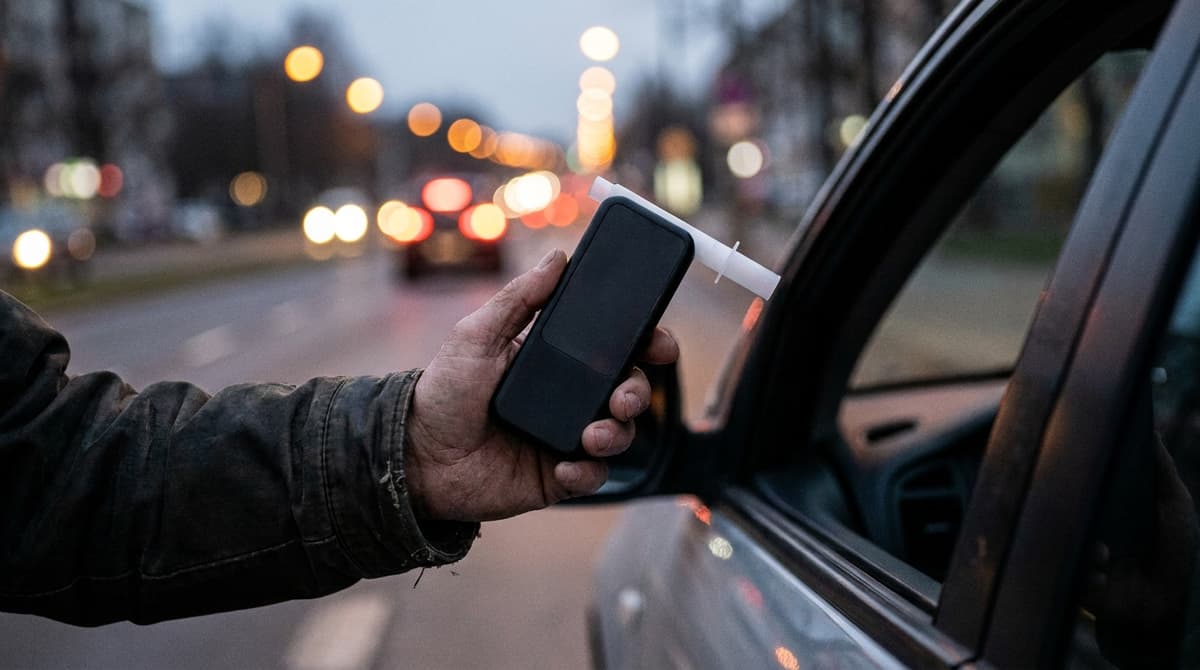
- A minimum 12-month disqualification from driving.
- A fine: unlimited in England and Wales, up to £5,000 in Scotland and Northern Ireland.
- Up to 6 months' imprisonment.
- In Northern Ireland, a driving test before the licence is returned.
The endorsement recorded against the licence is DR10 (drug-driving convictions use the equivalent DG10 code). These are minimums, not typical outcomes, a court can and often does impose a longer ban or a higher fine depending on the circumstances, including how far over the limit the reading was and whether the driving itself was dangerous.
Penalty summary table
| Offence | Minimum ban | Fine | Prison | Endorsement | Retention |
|---|---|---|---|---|---|
| Driving/attempting to drive over the limit (first offence) | 12 months | Unlimited (England and Wales); up to £5,000 (Scotland, NI) | Up to 6 months | DR10 | 11 years |
| Second conviction within 10 years | 3 years | Unlimited (England and Wales); up to £5,000 (Scotland, NI) | Up to 6 months | DR10 | 11 years |
| In charge of a vehicle while over the limit | 10 points or discretionary disqualification | Up to £2,500 | Up to 3 months | DR40 | 4 years |
| Refusing to provide a specimen (after driving or attempting to drive) | 12 months | Unlimited (England and Wales); up to £5,000 (Scotland, NI) | Up to 6 months | DR30 | 11 years |
| Failing a preliminary roadside breath test | No automatic ban | Up to £1,000 | None | DR70 | 4 years |
A second conviction within 10 years
If someone is convicted of a drink-driving offence again within 10 years of a previous conviction, the minimum disqualification rises to 3 years. This is a fixed statutory minimum under the Road Traffic Offenders Act 1988 (Northern Ireland applies the same 3-year minimum under its own legislation), courts routinely go beyond it depending on the reading and any aggravating factors, such as a very high level of alcohol or the driving itself putting others at risk.
The drink-drive rehabilitation course (DDRS)
In England, Wales and Scotland, where a court imposes a ban of 12 months or more, it can offer the driver a place on an approved drink-drive rehabilitation course. Completing the course cuts the length of the ban by up to a quarter. For example, a 12-month ban can be reduced to 9 months.
A few points worth knowing about the course:
- It is offered by the court, not something a driver can demand.
- The driver pays for it, and the cost is up to £250.
- The reduced ban only takes effect once the course is completed, so someone who signs up but does not finish it serves the full original ban.
- It is separate from the speed awareness course used for some speeding offences, this one is specific to drink-driving.
Northern Ireland runs a different scheme. There, referral onto the course is automatic unless the court decides, for special reasons, that attendance would be inappropriate, and completing it can reduce the ban by up to 25 per cent. The course fee is £170, or £110 for people on benefits, in full-time education or receiving a pension.
High risk offenders
Some drink-drivers are classed as High Risk Offenders (HROs). In Great Britain this covers anyone convicted of 2 drink-driving offences within 10 years, anyone driving with a reading of at least 87.5 microgrammes of alcohol per 100ml of breath, 200mg per 100ml of blood or 267.5mg per 100ml of urine, and anyone who refused to give a sample or refused to allow a blood sample to be tested. An HRO must pass a medical examination with one of DVLA's appointed doctors before their licence is returned at the end of the ban. The licence is not simply reissued once the disqualification period ends, the medical has to be completed and passed first, which can add time beyond the ban itself. Northern Ireland has its own high risk offender scheme, with a medical examination required before the licence is returned.

"In charge" of a vehicle while over the limit
Being in charge of a vehicle, rather than actually driving it, while over the limit is a separate and generally less serious offence. It can still lead to a fine, points or a discretionary disqualification, but it does not carry the same automatic minimum 12-month ban that applies to driving or attempting to drive over the limit. Whether someone was "in charge" depends on factors such as where they were in relation to the vehicle, whether the engine was running, and whether they had the keys.
How long the conviction stays on your licence
A drink-driving conviction (DR10) stays on the licence record for 11 years from the date of conviction. This is longer than most other endorsements, for comparison, a standard speeding endorsement (SP30) is removed after 4 years. The extended retention period reflects how drink-driving is treated as a more serious road safety risk, and it can affect insurance premiums for the full 11 years even after the ban itself has ended.
Getting your licence back
Once the disqualification period ends, most drivers need to apply to the DVLA (the DVA in Northern Ireland) for a new licence, it is not reissued automatically. In Northern Ireland, a drink-driving conviction also means passing a driving test before the licence is returned. High Risk Offenders must also pass the medical described above before DVLA will issue it. Anyone unsure whether they fall into the HRO category, or what a specific court has ordered, should check the paperwork from the court or contact the DVLA directly rather than assume.

This page is general information about drink-driving penalties across the UK, not legal advice for a specific case. Anyone facing a drink-driving charge, or a decision about the rehabilitation course or an HRO medical, should get advice from a solicitor, as the outcome depends on the individual circumstances and the court's discretion.
This article is for general information about UK driving law and does not constitute legal advice. If you are facing a drink-driving charge or a court decision about a ban, course or licence, consult a solicitor about your specific circumstances.
Related reading: UK Driving Laws hub, United Kingdom law hub, drink-driving limit by nation, penalty points and totting-up, driving without insurance.
Frequently Asked Questions
What is the minimum ban for drink-driving in the UK?
A conviction for driving or attempting to drive while over the limit carries a minimum 12-month disqualification and up to 6 months in prison. The fine is unlimited in England and Wales and up to £5,000 in Scotland and Northern Ireland.
What is the DR10 code?
DR10 is the endorsement code used for a conviction of driving or attempting to drive while over the prescribed alcohol limit. It stays on the licence for 11 years.
How much shorter is the ban if I do the drink-drive rehabilitation course?
Completing the course, when offered by the court on a ban of 12 months or more, cuts the disqualification by up to a quarter, for example a 12-month ban can become 9 months. In Northern Ireland, referral onto the course is automatic unless the court decides otherwise.
How much does the drink-drive rehabilitation course cost?
The driver pays for the course. In Great Britain it costs up to £250. In Northern Ireland the fee is £170, or £110 for people on benefits, in full-time education or receiving a pension.
What happens if I am convicted of drink-driving twice within 10 years?
A second conviction within 10 years carries a minimum 3-year disqualification, rather than the standard 12-month minimum for a first offence.
What is a High Risk Offender?
In Great Britain, a High Risk Offender is someone convicted of 2 drink-driving offences within 10 years, someone driving with a reading of at least 87.5 microgrammes per 100ml of breath, 200mg per 100ml of blood or 267.5mg per 100ml of urine, or someone who refused to give a sample or to allow a blood sample to be tested. They must pass a medical examination before their licence is returned at the end of the ban.
Is being 'in charge' of a car while over the limit the same as drink-driving?
No. Being in charge of a vehicle while over the limit, without driving it, is a separate and generally less serious offence, carrying points or a discretionary ban rather than the automatic minimum 12-month disqualification.
Is the drink-drive limit the same across the UK?
No. England, Wales and Northern Ireland set the limit at 80mg of alcohol per 100ml of blood, while Scotland's limit is lower, at 50mg.
Updates
We corrected the fine to show it is unlimited only in England and Wales (up to £5,000 in Scotland and Northern Ireland), added Northern Ireland's separate drink-drive course (automatic referral, £170 fee) and retest requirement, listed all four high risk offender triggers, and replaced three dead GOV.UK links.
Independently fact-checked against the cited primary sources; governing law re-checked for recent changes
The Law Behind This Article
This article rests on the statutory provisions below, held in our own legal record and retrieved from the official source. Tap a section to read the operative text.
Road Traffic Act 1988
s. 5Driving or being in charge of a motor vehicle with alcohol concentration above prescribed limit.In forcecited in 2 of our articles
(1) If a person— (a) drives or attempts to drive a motor vehicle on a road or other public place, or (b) is in charge of a motor vehicle on a road or other public place, after consuming so much alcohol that the proportion of it in his breath, blood or urine exceeds the prescribed limit he is guilty of an offence. (2) It is a defence for a person charged with an offence under subsection (1)(b) above to prove that at the time he is alleged to have committed the offence the circumstances were such that there was no likelihood of his driving the vehicle whilst the proportion of alcohol in his breath, blood or urine remained likely to exceed the prescribed limit. (3) The court may, in determining whether there was such a likelihood as is mentioned in subsection (2) above, disregard any injury to him and any damage to the vehicle.
Official text (excerpt) · last checked 2026-08-14 · Read the full text in our law library · Verify at legislation.gov.uk
Also relied on in: Drink Driving Limit UK: England, Wales, Scotland, NI
Road Traffic Offenders Act 1988
s. 34Disqualification for certain offences.In force
(1) Where a person is convicted of an offence involving obligatory disqualification, the court must order him to be disqualified for such period not less than twelve months as the court thinks fit unless the court for special reasons thinks fit to order him to be disqualified for a shorter period or not to order him to be disqualified. (1A) Where a person is convicted of an offence under section 12A of the Theft Act 1968 (aggravated vehicle-taking), the fact that he did not drive the vehicle in question at any particular time or at all shall not be regarded as a special reason for the purposes of subsection (1) above. (2) Where a person is convicted of an offence involving discretionary disqualification, and either— (a) the penalty points to be taken into account on that occasion number fewer than twelve, or (b) the offence is not one involving obligatory endorsement, the court may order him to be disqualified for such period as the court thinks fit.
Official text (excerpt) · last checked 2026-08-14 · Read the full text in our law library · Verify at legislation.gov.uk
Search our record of UK legislation — retrieved from legislation.gov.uk →
Sources and References
- GOV.UK: Drink-driving penalties(gov.uk).gov
- GOV.UK: Drink-drive rehabilitation course(gov.uk).gov
- Road Traffic Offenders Act 1988, Section 34: Disqualification for certain offences(legislation.gov.uk).gov
- Road Traffic Act 1988, Section 5: Driving or being in charge of a vehicle with alcohol level above limit(legislation.gov.uk).gov
- GOV.UK: Disqualification for drink-driving (high risk offenders)(gov.uk).gov
- nidirect: Drink driving penalties (Northern Ireland)(nidirect.gov.uk).gov
- nidirect: Courses for drink drive offenders (Northern Ireland)(nidirect.gov.uk).gov
- Legal Aid, Sentencing and Punishment of Offenders Act 2012, s.85 (unlimited magistrates' fines, England and Wales only)(legislation.gov.uk).gov
- Criminal Procedure (Scotland) Act 1995, s.225 (standard scale: level 5 is £5,000)(legislation.gov.uk).gov
- Road Traffic Offenders Act 1988, Schedule 2 (drink-driving penalties)(legislation.gov.uk).gov