
United Kingdom
Speeding Fines UK: Fixed Penalty & Court Bands Explained
Independently fact-checked against primary sources (last audited September 29, 2026). · Law checked current as of September 29, 2026. · 7 primary sources cited on this page. How we verify our legal content
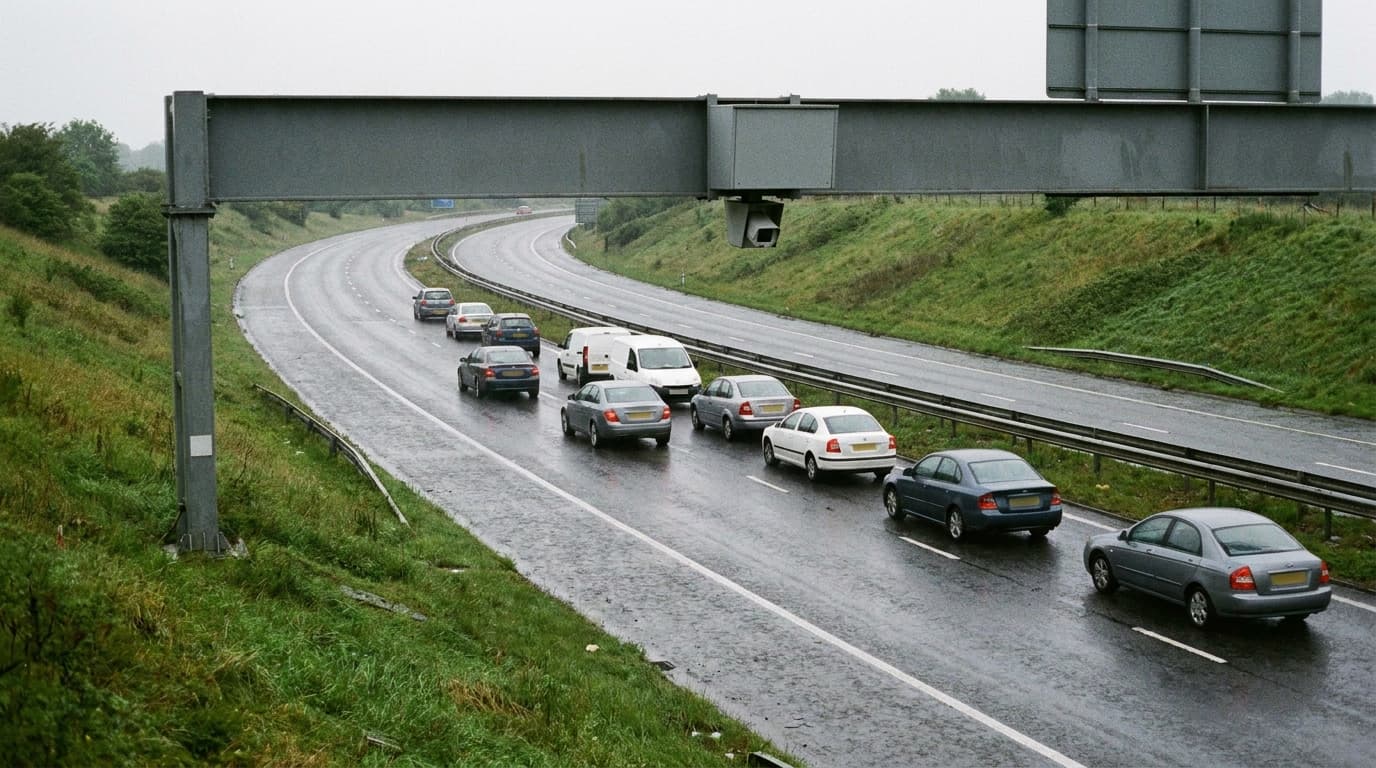
Most speeding offences in England and Wales end with a £100 fixed penalty and 3 points, or a speed awareness course instead of points. Higher speeds go before magistrates, who fine you a percentage of your weekly income under the Sentencing Council's banded guideline.
The Fixed Penalty Notice: The Most Common Outcome
For speeding that is only just over the limit, the usual outcome is a Fixed Penalty Notice: a £100 fine plus 3 penalty points on your licence. That £100 figure applies in England, Wales and Scotland. In Northern Ireland, the equivalent Conditional Offer of Fixed Penalty is £60 plus a £5 offender levy for drivers aged 18 and over (£65 in total), and 3 points. Instead of the fixed penalty, the police may offer a speed awareness course as an alternative, at their discretion. Completing the course means no points and no fine beyond the course fee, but it is not available to everyone, and is generally only offered once every three years. Speed awareness courses are offered in England, Wales and Northern Ireland; Police Scotland does not currently offer a diversionary course as an alternative to a speeding fixed penalty. The speed awareness course page covers eligibility and cost in full.
Faster speeds, repeat offences, or other aggravating factors take the case out of the fixed penalty system altogether and send it to a magistrates' court instead.
Court Fines: The Sentencing Council's Speeding Bands
When a speeding case reaches a magistrates' court in England and Wales, the fine is not a flat amount. The Sentencing Council's speeding guideline calculates it as a percentage of your relevant weekly income, within one of three bands, depending on how far over the speed limit you were driving.

| Band | How far over the limit | Fine (% of weekly income) | Points or disqualification |
|---|---|---|---|
| Band A | Just over the limit | 25-75% (starting point 50%) | 3 points |
| Band B | Clearly over the limit | 75-125% (starting point 100%) | 4-6 points, or 7-28 day disqualification |
| Band C | Well over the limit | 125-175% (starting point 150%) | 6 points, or 7-56 day disqualification |
The court starts at the "starting point" percentage for the band and then adjusts up or down for aggravating or mitigating factors, such as your driving history, the road conditions, or whether you were driving for work at the time. In every band, the final fine is still capped: £1,000 for an ordinary road, or £2,500 if the offence happened on a motorway.
How the Band Is Decided: Speed Against the Limit
The band is set by how far the recorded speed was above the posted limit, not by a fixed number of miles per hour across every road. The guideline's speed table scales with the limit itself. As a worked example, in a 30mph zone:
- Band A: 31-40mph
- Band B: 41-50mph
- Band C: 51mph and above
The same structure applies at higher limits, such as 40mph, 50mph, 60mph and 70mph zones, with the qualifying speed for each band rising accordingly. A 20mph-over offence in a 70mph motorway limit, for example, sits in a different band than the same 20mph margin in a 30mph residential street.
What Counts as "Weekly Income"
The percentage bands apply to your relevant weekly income, generally your net income, as declared to the court or, if you do not provide the information, as the court reasonably assumes. This is why two drivers caught at the same speed in the same band can receive very different fine amounts. It also means the headline percentages (25-75%, 75-125%, 125-175%) only tell you the proportion, not the final figure, until your income is factored in.
Points, Endorsements and Repeat Offences
A speeding conviction is recorded on your licence as an endorsement (commonly code SP30 for speeding on a public road, or SP50 for a motorway), and stays on your record for 4 years from the date of the offence. Building up 12 or more points within 3 years triggers a "totting-up" disqualification separately from any ban attached to a single Band B or C offence. The penalty points page explains endorsement codes, retention periods and the totting-up rules in full.

England & Wales Only: Scotland and Northern Ireland Differ
The band structure and percentages set out above come from the Sentencing Council's guideline, which applies to courts in England and Wales only. Scotland and Northern Ireland have their own sentencing frameworks for speeding offences, and their courts do not apply the Band A/B/C percentage-of-income model described here. If you were caught speeding in Scotland or Northern Ireland, treat this page as background only and check the position with a solicitor qualified in that jurisdiction.
Estimate Your Likely Fine
The Speeding Fine Estimator applies the England & Wales bands above to your own speed, limit and weekly income, and shows the likely band, the percentage range and the points or disqualification exposure. It is an estimate of how the guideline works, not a prediction of what any particular court will decide, and it does not apply to Scotland or Northern Ireland.

Speeding fines are one part of a wider set of motoring penalties. For the mechanics of endorsements and how points accumulate toward a ban, see penalty points. For the drink-drive limits that differ between nations in the same way speeding sentencing does, see drink driving limit. For the full picture of UK motoring law, visit the UK Driving Laws hub and the United Kingdom hub.
This page explains how the Sentencing Council's speeding guideline generally works in England and Wales; it is general information, not legal advice, and does not cover every aggravating or mitigating factor a court may consider in an individual case. If you are facing a speeding charge, particularly one that could result in disqualification, seek advice from a solicitor. For related topics, see the UK Driving Laws hub and the United Kingdom hub.
Frequently Asked Questions
What is the fixed penalty for speeding in the UK?
In England, Wales and Scotland, the usual fixed penalty for lower-level speeding is £100 plus 3 points on your licence. In Northern Ireland it is a £60 Conditional Offer of Fixed Penalty plus a £5 offender levy for drivers aged 18 and over, and 3 points. Outside Scotland, the police may offer a speed awareness course instead, at their discretion, which avoids points if you complete it.
How much is a speeding fine if my case goes to court?
In England and Wales, a court fine is calculated as a percentage of your relevant weekly income under the Sentencing Council's guideline: Band A is 25-75%, Band B is 75-125%, and Band C is 125-175%, each with a starting point within that range. The final fine is capped at £1,000, or £2,500 for a motorway offence.
What decides which band my speeding offence falls into?
The band depends on how far your recorded speed was above the posted limit. For example, in a 30mph zone, Band A covers 31-40mph, Band B covers 41-50mph, and Band C covers 51mph and above. The qualifying speeds scale upward for higher speed limits.
What is Band B and what penalty does it carry?
Band B applies to speeds clearly over the limit. The fine starting point is 100% of relevant weekly income, within a 75-125% range, and the court can impose either 4-6 penalty points or a disqualification of 7 to 28 days.
What is Band C and what penalty does it carry?
Band C applies to speeds well over the limit. The fine starting point is 150% of relevant weekly income, within a 125-175% range, and the court can impose either 6 penalty points or a disqualification of 7 to 56 days.
Is there a maximum speeding fine?
Yes. Court fines for speeding are capped at £1,000 on an ordinary road, or £2,500 if the offence took place on a motorway, regardless of the percentage the band calculation would otherwise produce.
Do these fine bands apply in Scotland or Northern Ireland?
No. The Sentencing Council's speeding guideline and its Band A/B/C structure apply to courts in England and Wales only. Scotland and Northern Ireland have their own sentencing frameworks for speeding offences.
Can I estimate my own speeding fine before going to court?
The Speeding Fine Estimator applies the England & Wales bands to your speed, the limit and your weekly income to show a likely range. It is an estimate of how the guideline works, not a guarantee of what a court will actually impose.
Is a speed awareness course available in Scotland?
No. Speed awareness courses are offered in England, Wales and Northern Ireland. Police Scotland does not currently offer any diversionary course as an alternative to a speeding fixed penalty.
Updates
Scoped the £100 speeding fixed penalty to England, Wales and Scotland, added the Northern Ireland amount (£60 plus a £5 offender levy, and 3 points), and replaced a dead Sentencing Council link.
Independently fact-checked against the cited primary sources; governing law re-checked for recent changes
Sources and References
- Sentencing Council: Speeding (revised 2017) definitive guideline(sentencingcouncil.org.uk).gov
- Sentencing Council: Approach to fines, fine bands A to C (percentage of relevant weekly income)(sentencingcouncil.org.uk).gov
- GOV.UK: Speeding penalties(gov.uk).gov
- GOV.UK: Penalty points and disqualification(gov.uk).gov
- Road Traffic Offenders Act 1988 (c. 53)(legislation.gov.uk).gov
- PSNI / NI Road Safety Partnership: Caught on camera (£60 Conditional Offer of Fixed Penalty plus £5 offender levy, 3 points)(www.psni.police.uk).gov
- Fixed Penalty Order 2000 (SI 2000/2792), Schedule (£100 for endorsable fixed penalty offences; extends to England, Wales and Scotland)(www.legislation.gov.uk).gov