
United Kingdom
ULEZ and Clean Air Zone Charges: Rules, Costs and PCNs Explained
Independently fact-checked against primary sources (last audited September 28, 2026). · 11 primary sources cited on this page. How we verify our legal content
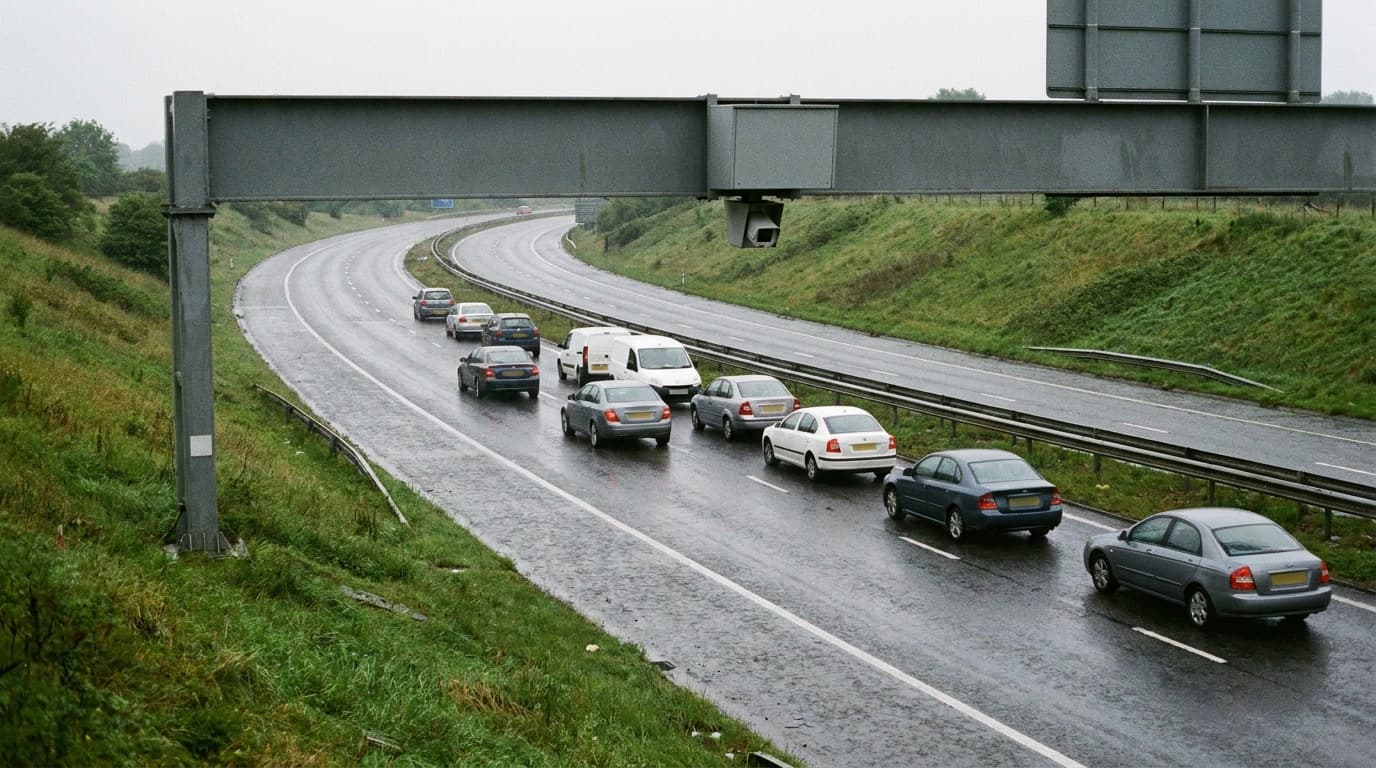
Driving a non-compliant vehicle into London's Ultra Low Emission Zone (ULEZ) or one of England's regional Clean Air Zones (CAZ) means paying a daily charge, and missing that charge brings a separate penalty charge notice (PCN), but ULEZ and the regional zones run under different laws, with different charges and different rules from each other.
Two different legal schemes, not one
It is tempting to treat every UK low-emission charging zone as one system, but London's ULEZ and England's regional Clean Air Zones sit on different legal foundations. London's charge is made under section 295 of the Greater London Authority Act 1999, which lets Transport for London and London borough councils establish road user charging schemes (legislation.gov.uk: GLA Act 1999 s.295). Regional Clean Air Zones outside London are made under Part III of the Transport Act 2000, which empowers local authorities, as charging authorities, to make a local charging scheme for the use or keeping of motor vehicles on roads in their area. Government's own clean air zone framework document states that any surplus revenue must be reinvested in local transport or air quality measures, not used as general income (gov.uk: Clean Air Zone framework). Scotland's Low Emission Zones sit on a third, entirely separate legal basis; see Scotland's Low Emission Zones for that scheme.
London's Ultra Low Emission Zone (ULEZ)
ULEZ charges £12.50 a day for non-compliant cars, vans and motorcycles up to 3.5 tonnes, and non-compliant minibuses up to 5 tonnes, driven anywhere within the zone (tfl.gov.uk: Ultra Low Emission Zone). Compliance is judged against Euro emissions standards, not a vehicle's age alone; TfL's own vehicle checker confirms whether a specific registration is compliant.

If the daily charge is not paid by midnight on the third day after driving in the zone, TfL issues a penalty charge notice of £180, reduced to £90 if paid within 14 days (tfl.gov.uk: penalty charges for ULEZ). Paying the daily charge on time is not a penalty at all; it only becomes one once the payment window has closed.
Regional Clean Air Zones (CAZ) in England
Outside London, gov.uk's own guidance confirms seven English cities currently run a Clean Air Zone: Bath, Birmingham, Bradford, Bristol, Portsmouth, Sheffield and Tyneside (Newcastle and Gateshead together) (gov.uk: driving in a Clean Air Zone). Oxford also runs a separate Zero Emission Zone in its city centre, with its own daily charge and penalty charge notices; it is not one of the Clean Air Zones, so check Oxfordshire County Council's ZEZ pages before driving in (Oxfordshire County Council: Oxford ZEZ). Zones are classed A to D by which vehicles pay: Class A covers buses, coaches, taxis and private hire vehicles; Class B adds HGVs; Class C adds vans and minibuses; Class D adds cars, and optionally motorcycles. Minimum emissions standards are Euro VI for buses, coaches and HGVs, Euro 6 diesel or Euro 4 petrol for vans, minibuses, taxis, private hire vehicles and cars, and Euro 3 for motorcycles. The charge must be paid by 11:59pm on the sixth day after driving into a regional CAZ, and can be paid up to six days ahead; the maximum single transaction for a business account is £5,000.
Each council sets its own PCN amount for its own zone, so there is no single national CAZ penalty figure. In Bradford, for example, the PCN is £120, reduced to £60 if paid within 14 days, plus the unpaid daily charge (Bradford Council: how to pay the CAZ penalty charge). Two exceptions worth knowing before you assume every CAZ works the same way:
- Only Birmingham and Bristol charge ordinary private cars. Both are Class D zones; Bath, Bradford, Sheffield and Tyneside are Class C (buses, coaches, taxis, private hire vehicles, HGVs, vans and minibuses) and Portsmouth is Class B (buses, coaches, taxis, private hire vehicles and HGVs), so a private car is not charged in any of those five, however old or polluting it is (gov.uk: driving in a Clean Air Zone). Bradford Council confirms that cars and motorbikes do not pay there (Bradford Council: how the Clean Air Zone works). A page listing "the seven CAZ cities" should not be read as meaning an ordinary car driver risks a charge in all seven; outside Birmingham and Bristol, a private car is not charged.
- Greater Manchester does not have a Clean Air Zone. Its combined authorities put forward an alternative proposal, and the government agreed on 23 January 2025 that a Clean Air Zone was not necessary for Greater Manchester, directing funding toward zero- and low-emission buses instead (gov.uk: Government backs local plans for clean air in Greater Manchester). Anyone quoting an older article that describes a pending Greater Manchester CAZ is reading an out-of-date plan.
Sheffield's zone has been operational, enforced 24 hours a day, since February 2023. Exact PCN figures for Birmingham and Bristol vary and are best checked directly on that council's own Clean Air Zone page before you rely on a specific number quoted elsewhere.
Northern Ireland
Northern Ireland has no ULEZ, no Clean Air Zone and no equivalent low-emission charging scheme in place.
Challenging a PCN
A ULEZ PCN can be challenged first through TfL's own formal representations process, and if that is rejected, escalated to the independent London Tribunals service. A regional CAZ PCN is challenged first by written representations to the council that issued it; if the council rejects them, you can appeal to an independent adjudicator at the Traffic Penalty Tribunal within 28 days of the rejection notice, under the same 2013 regulations for every English CAZ (legislation.gov.uk: SI 2013/1783 reg 11).
Related reading
See the UK driving laws hub for the full topic list, appealing a penalty charge notice for the general PCN challenge process, and the Dartford Crossing charge for a comparable road user charge with its own penalty structure. For Scotland's separate scheme, see Scotland's Low Emission Zones.

Frequently Asked Questions
What is the difference between ULEZ and a Clean Air Zone?
ULEZ is London's own scheme, made under the Greater London Authority Act 1999 and run by Transport for London. Regional Clean Air Zones are made by individual English councils under the Transport Act 2000. They are legally separate schemes with separate charges, classes and PCN processes, not one national system.
How much is the ULEZ daily charge and penalty?
The daily charge is £12.50 for a non-compliant car, van or motorcycle. If it is not paid by midnight on the third day after driving in the zone, a penalty charge notice of £180 follows, reduced to £90 if paid within 14 days.
Which UK cities have a Clean Air Zone?
Seven English cities currently run a regional Clean Air Zone: Bath, Birmingham, Bradford, Bristol, Portsmouth, Sheffield and Tyneside (Newcastle and Gateshead). London runs its own separate ULEZ, and Scotland runs its own separate Low Emission Zones in Aberdeen, Dundee, Edinburgh and Glasgow. Only Birmingham and Bristol charge ordinary private cars. Oxford runs a separate Zero Emission Zone.
Does Bradford's Clean Air Zone charge ordinary cars?
No. Bradford's zone is Class C, which excludes private cars and motorcycles entirely. Only taxis, private hire vehicles, vans, minibuses, HGVs, buses and coaches are charged there.
Is there a Clean Air Zone in Manchester?
No. Greater Manchester's planned Clean Air Zone was scrapped after the government agreed on 23 January 2025 that it was not necessary, and funding was redirected to zero- and low-emission buses instead.
Updates
Independently fact-checked against the cited primary sources
The Law Behind This Article
This article rests on the statutory provisions below, held in our own legal record and retrieved from the official source. Tap a section to read the operative text.
Greater London Authority Act 1999
s. 295Road user charging.In force
(1) Each of the following bodies, namely— (a) Transport for London, (b) any London borough council, or (c) the Common Council, may establish and operate schemes for imposing charges in respect of the keeping or use of motor vehicles on roads in its area. (2) Schedule 23 to this Act (which makes provision supplementing this section) shall have effect. (3) For the purposes of this section and that Schedule motor vehicle has the meaning given in section 185(1) of the Road Traffic Act 1988, except that section 189 of that Act (exception for certain pedestrian controlled vehicles and electrically assisted pedal cycles) shall apply for those purposes as it applies for the purposes of the Road Traffic Acts.
Official text (excerpt) · last checked 2026-08-14 · Read the full text in our law library · Verify at legislation.gov.uk
Search our record of UK legislation — retrieved from legislation.gov.uk →
Sources and References
- Greater London Authority Act 1999, section 295(legislation.gov.uk).gov
- Clean Air Zone framework for England(gov.uk).gov
- Ultra Low Emission Zone (ULEZ)(tfl.gov.uk).gov
- Penalty charges for ULEZ(tfl.gov.uk).gov
- Driving in a Clean Air Zone(gov.uk).gov
- Check a clean air zone or ULEZ before you drive(gov.uk).gov
- Government backs local plans for clean air in Greater Manchester (23 January 2025)(gov.uk).gov
- The Road User Charging Schemes (Penalty Charges, Adjudication and Enforcement) (England) Regulations 2013, regulation 11(legislation.gov.uk).gov
- Oxfordshire County Council: Oxford zero emission zone (ZEZ)(oxfordshire.gov.uk).gov
- Bradford Council: how to pay the Clean Air Zone penalty charge(bradford.gov.uk).gov
- Bradford Council: what is the Clean Air Zone and how does it work(bradford.gov.uk).gov