
United Kingdom
Dash Cam Laws UK: Are They Legal? Evidence & GDPR
Independently fact-checked against primary sources (last audited September 29, 2026). · Law checked current as of September 29, 2026. · 9 primary sources cited on this page. How we verify our legal content
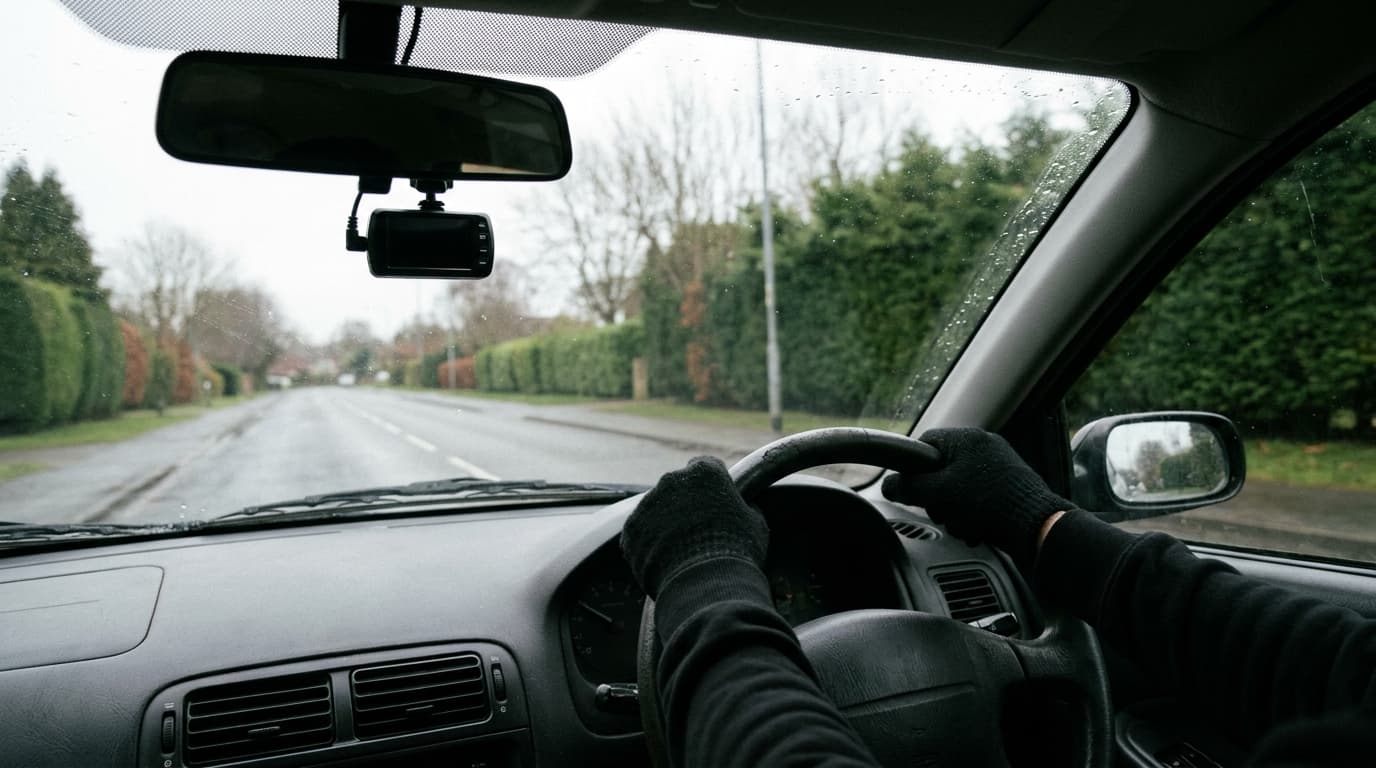
Dash cams are legal to use in the UK, and police forces actively want your footage. This page covers when a recording becomes evidence, how UK GDPR applies once you share or publish clips, and the mounting rules that keep the camera itself lawful.
Are dash cams legal in the UK?
Yes. There is no dash cam specific law in the UK, and no licence, registration or permission is needed to fit or use one, in your own car or someone else's. General road traffic law and data protection law apply to how you use the footage, in the same way they already apply to a home CCTV camera or a video doorbell.
That also means dash cam footage is admissible as evidence. Far from discouraging it, UK police forces actively invite the public to submit clips of other drivers' offences, and doing so regularly leads to real enforcement action, from a warning letter through to a fixed penalty or a court prosecution for careless or dangerous driving.
Submitting footage to the police
Most UK police forces run an online portal for the public to submit dash cam, helmet cam or mobile phone footage of a suspected driving offence. Many of these schemes are branded Operation Snap (or a local variant, such as Operation SNAP in Wales), and there is also an independently run National Dash Cam Safety Portal that routes uploaded footage to the relevant force. Both exist to cut down the time officers spend chasing down witnesses and physical copies of footage.

The detail varies by force, but the process is broadly the same everywhere:
- Report promptly. Forces set their own submission window, often measured in days after the incident, so do not sit on footage.
- Provide video, not still photos. A single frame is rarely enough on its own; the portals want the moving footage, ideally with some time either side of the incident.
- Make sure the number plate is visible. Without a readable registration, a force usually cannot act.
- Submit it unedited. Trimmed or altered clips undermine their value as evidence and can be rejected outright.
- Be prepared to give a witness statement, and, in a minority of cases that proceed to court, to attend as a witness.
These portals cover the everyday range of road traffic offences, including careless and dangerous driving, handheld mobile phone use, tailgating, running red lights and failing to stop at a junction. They are not the right channel for a road traffic collision or a non-driving crime, which should still go through 999 (only where there is an ongoing danger to life) or the non-emergency 101 line.
Outcomes from a submission can include no action if the evidence does not support it, a warning letter, an offer of a driver awareness course where one is available (speed awareness courses are not offered for offences committed in Scotland), a fixed penalty notice, or, for more serious cases, a court prosecution using the same penalty points and speeding fine frameworks that apply to offences detected by an officer or a camera.
Privacy and data protection
Using a dash cam just to record your own driving, and keeping that footage for yourself, sits close to the same "personal or household activity" position as a home CCTV camera or a video doorbell pointed at your own drive: UK GDPR and the Data Protection Act 2018 are not generally engaged. Our CCTV and doorbell cameras and your neighbours guide sets out how this same exemption works, and where it stops applying, for stationary home cameras.
That position can change once you go beyond simply keeping the footage for yourself:
- Publishing footage. Footage that identifies another person's vehicle, number plate or face is their personal data. The ICO says that if you post it online so it is publicly available, beyond your friends and family, that is no longer purely personal use and UK GDPR applies, so you act as a data controller for that processing and need a lawful basis for it. Handing footage to the police through their reporting portals, covered above, is the route forces themselves invite.
- Work use. If you use a dash cam for work, on a vehicle you use for work, the ICO says UK GDPR applies to that processing and you will need to pay a data protection fee, even if you own the vehicle. Self-employed taxi drivers with a dash cam are generally expected to pay it too.
- Audio recording. Many dash cams record audio as well as video. A recording that captures what someone said, whether a passenger, another driver at a window, or someone outside the car, is personal data in its own right, separate from the video image. Our is it illegal to record someone guide covers how UK law treats recorded conversations more broadly.
- Ongoing cases. Where footage may be used as evidence, publishing it while a police investigation or court case is still live can undermine that process, so it is generally safer to hand it directly to the police first and hold off posting it publicly until any proceedings have concluded.
For the wider UK legal picture on recording people and vehicles, see the UK recording laws hub and its dedicated page on CCTV and doorbell cameras, which cover the same personal-use exemption from the recording law side rather than the driving law side.
Mounting and obstruction
A dash cam has to be fitted so that it does not obstruct your view of the road. This is not a dash cam specific rule. In Great Britain, Regulation 30 of the Road Vehicles (Construction and Use) Regulations 1986 requires a driver to have a full view of the road and traffic ahead, and the same MOT windscreen standard that already applies to stickers, decorations and sat nav mounts applies to a dash cam. An MOT tester checks Zone A, a 290mm-wide strip of the windscreen centred on the steering wheel, where stickers or other obstructions may not encroach more than 10mm, and a poorly placed dash cam can fail the test or, on the road, itself amount to an offence.

In practice, that means mounting it small, high and central, typically just behind the rear-view mirror, so it sits outside your main line of sight and does not encroach into the swept area the wipers clear. Avoid anywhere lower down or off to the side that blocks a meaningful part of your forward view, and check it has not slipped after fitting.
Beyond the legal minimum, using a dash cam can carry a practical upside too: some UK insurers offer a discount or other benefit for having one fitted, on the basis that footage can help resolve a disputed claim faster. This varies a great deal by insurer and is never guaranteed, so check with your own provider rather than assuming it.
Related pages
For the offences that dash cam footage most often supports a prosecution for, see our guides to speeding fines and penalty points and totting-up. Two other UK driving rules worth knowing alongside this one are mobile phone driving law and window tint law. For the privacy side of recording people and vehicles, see is it illegal to record someone in the UK and CCTV and doorbell cameras and your neighbours, plus the wider UK recording laws hub. For the full picture of UK motoring law, visit the UK Driving Laws hub or the United Kingdom hub.
This page is for general information only and does not constitute legal advice. If you are involved in a dispute over dash cam footage, a data protection complaint, or a driving prosecution, get advice from a qualified solicitor about your specific circumstances.
Frequently Asked Questions
Are dash cams legal in the UK?
Yes. There is no licence or registration requirement to fit or use a dash cam in the UK. Ordinary road traffic law and data protection law apply to how you use the footage, much as they already do for a home CCTV camera or video doorbell.
How do I submit dash cam footage to the police?
Most forces run an online portal, often branded Operation Snap, or you can use the independently run National Dash Cam Safety Portal, which routes your upload to the relevant force. You will usually need clear video with the number plate visible, submitted promptly and unedited, and you should be prepared to give a witness statement.
Does UK GDPR apply to my dash cam?
Generally not while it simply records your own driving for your own use, in the same way the household exemption applies to home CCTV. It can apply once you share or publish footage that identifies other people or vehicles, or if your dash cam records audio capturing what someone said, since at that point you are processing personal data.
Can I post dash cam footage of someone else's driving on social media?
You can, but once the footage identifies another person's face or number plate and goes beyond your own personal use, UK GDPR considerations can apply. If the clip may be used as evidence, publishing it while a police or court case is still ongoing can also cause problems, so it is usually safer to submit it to the police first.
Where can I legally mount a dash cam on my windscreen?
Behind the rear-view mirror is the usual position, so it sits outside your main forward view and does not encroach on the area the wipers sweep. In Great Britain the underlying rule is Regulation 30 of the Road Vehicles (Construction and Use) Regulations 1986, which requires drivers to have a full view of the road ahead, and the MOT test checks a 290mm Zone A in front of the driver; a badly placed dash cam can be an offence and an MOT failure.
Will a dash cam lower my car insurance?
Some insurers offer a discount or other benefit for having one fitted, since footage can help resolve a disputed claim. This is set by individual insurers, varies a great deal, and is never guaranteed, so check with your own provider.
Can dash cam footage of another driver actually get them prosecuted?
Yes. Police forces regularly act on footage submitted by the public, and outcomes range from no action, to a warning letter or, where available, a driver awareness course offer, to a fixed penalty notice or a full court prosecution for careless or dangerous driving.
Updates
Clarified, in line with ICO guidance, that posting dash cam footage publicly beyond friends and family or using a dash cam for work brings it within UK GDPR (with a data protection fee for work use), separated the Regulation 30 full-view rule from the MOT Zone A test, and noted that speed awareness courses are not available for offences in Scotland.
Independently fact-checked against the cited primary sources; governing law re-checked for recent changes
Sources and References
- Bradford Council: Op Snap, dash cam submissions(bradford.gov.uk).gov
- GOV.UK: View to the front and windscreen obscuration(gov.uk).gov
- Operation SNAP Wales (GoSafe): submit dash cam and video evidence of a driving offence(gosafesnap.wales)
- ICO: Guidance for people using CCTV or a video doorbell at home(ico.org.uk).gov
- Data Protection Act 2018 (c. 12)(legislation.gov.uk).gov
- UK GDPR, Article 2(2): material scope and the personal/household activity exemption(legislation.gov.uk).gov
- RAC: Reporting dangerous driving, how to recognise and report reckless driving(rac.co.uk)
- ICO: innovation advice, previously asked questions (when a dashcam user becomes a controller)(ico.org.uk).gov
- ICO: data protection fee, transport and storage (dashcams used for work)(ico.org.uk).gov
- Road Vehicles (Construction and Use) Regulations 1986, reg. 30 (view to the front; England, Wales and Scotland)(legislation.gov.uk).gov
- Scottish Safety Camera Programme: questions and answers (no speed awareness courses in Scotland)(safetycameras.gov.scot).gov