
United Kingdom
Pavement Parking Laws in the UK: What's Banned Where
Independently fact-checked against primary sources (last audited September 28, 2026). · 9 primary sources cited on this page. How we verify our legal content
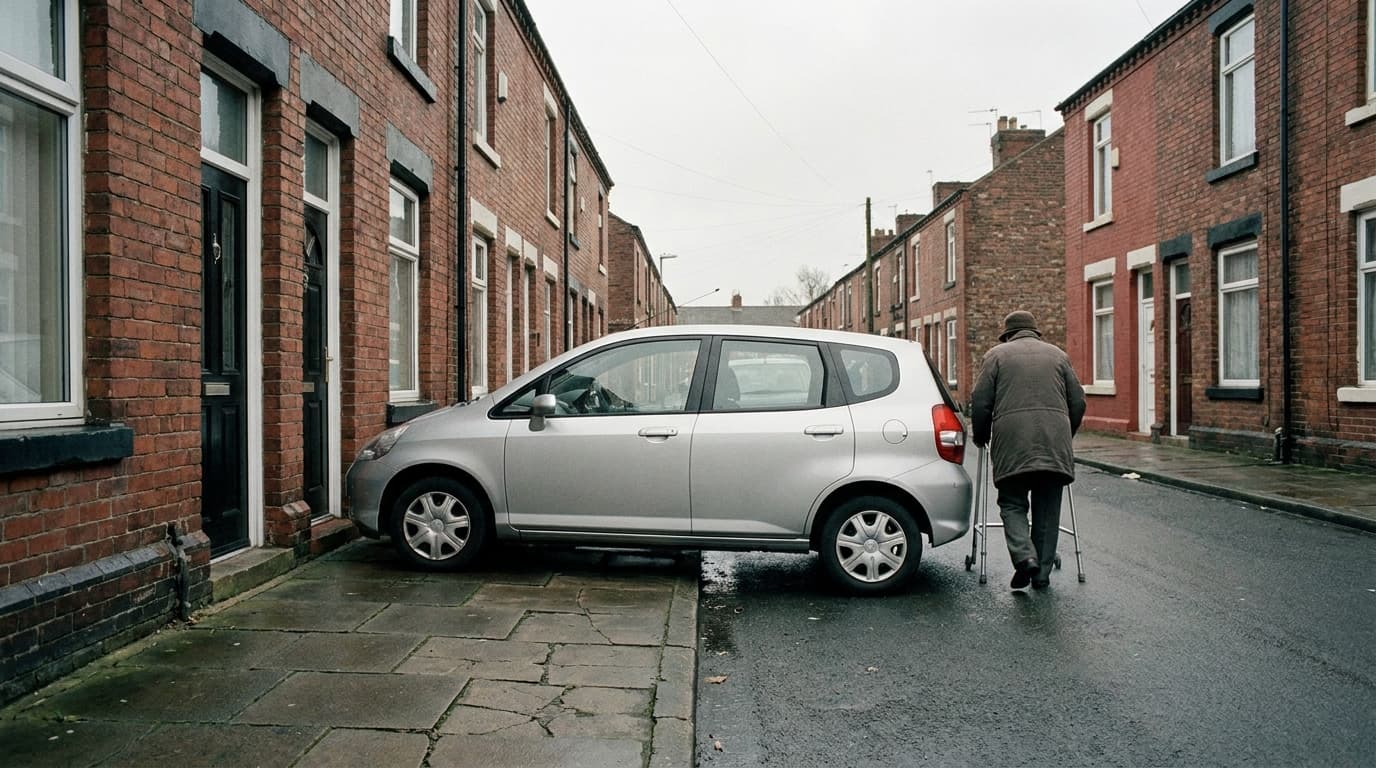
Whether parking on the pavement is illegal in the UK depends entirely on where you are: London has banned it since 1974, Scotland introduced a national ban in December 2023, and England and Wales currently have no pavement parking ban in force at all.
Is it illegal to park on the pavement in the UK?
There is no single UK-wide answer. Across Great Britain, pavement parking is a four-way split: London has had its own ban since 1974, Scotland introduced a national ban at the end of 2023, and England and Wales currently have no pavement parking ban in force, only more limited local powers. This page does not cover Northern Ireland.
London: banned since 1974
Under section 15 of the Greater London Council (General Powers) Act 1974, it is an offence to park a vehicle with one or more wheels on a footway, footpath or any part of a road other than the carriageway anywhere in Greater London. The section still sets a criminal fine of up to level 1 (£200), but in practice London boroughs enforce it as a civil parking contravention under the Traffic Management Act 2004, by issuing a penalty charge notice (PCN).

There are exceptions: a constable's permission, a life-saving or emergency response, roadside assistance or breakdown recovery, and loading or unloading goods for up to 20 minutes (or longer if the council permits), where it could not be done otherwise and the vehicle is never left unattended. A highway authority, or the Secretary of State, can also separately authorise pavement parking at specific locations by resolution or notice, which is why some London streets have marked bays that appear to break the general rule.
Scotland: a national ban since December 2023
Scotland's ban came into force across the whole country on 11 December 2023, under the Transport (Scotland) Act 2019. The Act prohibits pavement parking, bans double parking (leaving no part of the vehicle within 50cm of the carriageway edge), and bans parking across a dropped kerb crossing point, all enforced through the same penalty charge scheme.
The penalty charge is £100, reduced by 50% to £50 if paid within 14 days, or increased by 50% to £150 if it escalates to a charge certificate after non-payment. This is the most comprehensively documented pavement parking regime of the four covered here, with a clear commencement date and a clear penalty table.
England: an enabling law has passed, but the ban has not started
England outside London has repeatedly been reported as moving toward a ban, but as of this page, no pavement parking prohibition is actually in force for ordinary drivers. In a written statement to the House of Commons on 8 January 2026, the government rejected a single, one-size-fits-all national prohibition in favour of a devolved approach, under which local transport authorities would eventually gain the power to prohibit pavement parking area-wide.

That power has since moved from proposal to primary legislation. The English Devolution and Community Empowerment Act 2026 received Royal Assent on 29 April 2026, and Schedule 32 of the Act lets the Secretary of State make regulations giving each English local transport authority the power to prohibit pavement parking in the parts of its area where it runs civil parking enforcement, enforced as a civil matter rather than a criminal offence once switched on. Passing the Act is not the same as the power being live: it is an enabling provision, and the further regulations needed to actually switch it on for any council, along with any penalty amount, had not been made as of this research. Do not assume pavement parking has been banned in England; check for the commencement regulations before relying on a specific date.
Wales: no ban, a stalled 2023 proposal
Wales has no pavement parking ban in force. In a written statement dated 3 April 2023, the Welsh Government set out plans to legislate against "unnecessary obstruction of the road," following a 2020 taskforce recommendation to give councils civil enforcement powers rather than copy the outright ban pursued in Scotland; the police can already enforce the existing criminal offence of unnecessary obstruction of the highway. The same statement confirmed the planned consultation had been delayed to focus on other transport priorities. Whether that consultation has since run, or Wales has enacted anything further, could not be confirmed for this page; check the current position on gov.wales before relying on a specific Wales rule.
What you can do about an obstructively parked car
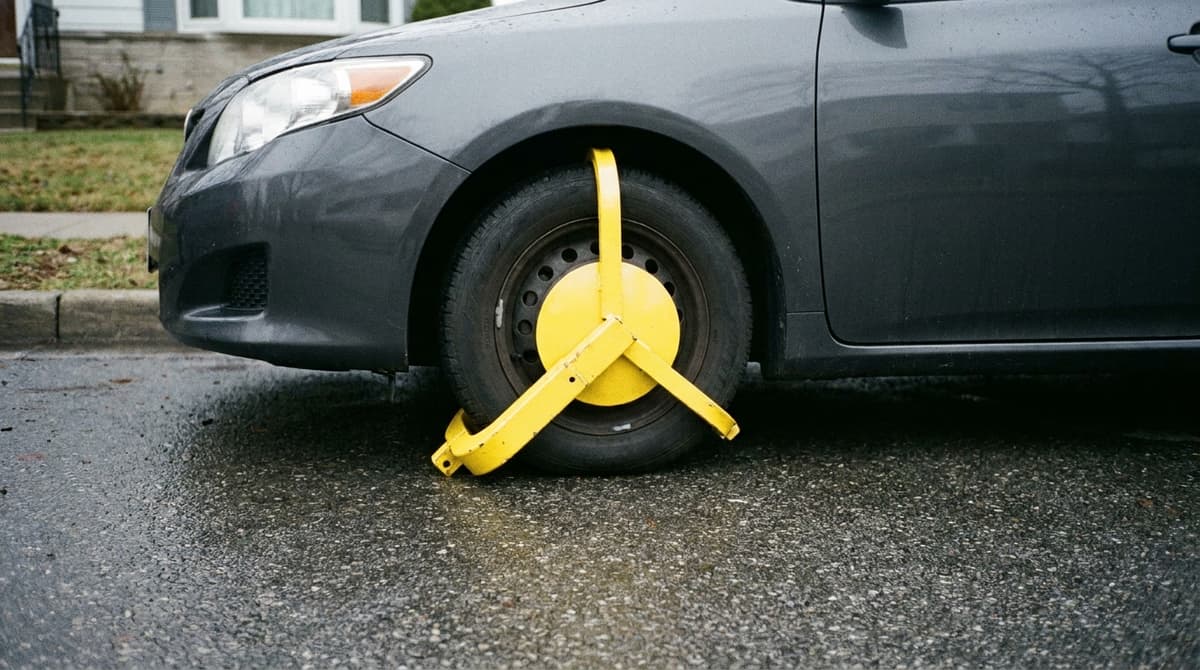
Outside London and Scotland, there is no dedicated pavement parking offence to report. A council can still use a local Traffic Regulation Order to restrict parking on a specific street, and a penalty charge notice issued for breaching one can be disputed through the normal PCN appeal process; separately, the police can act against a vehicle causing an unnecessary obstruction, which is a criminal offence. In England the government said in January 2026 that it would also give councils a civil power against unnecessary obstruction of the pavement during 2026.
For other UK motoring rules, see the UK driving laws hub.
Frequently Asked Questions
Is pavement parking illegal in England?
Not yet as a national rule. Parliament passed an enabling law in April 2026 that will let local authorities switch on a pavement parking ban in their area, but that power had not been switched on for any council as of this page, and there is no England-wide ban in force.
What is the fine for pavement parking in Scotland?
The penalty charge is £100, reduced to £50 if paid within 14 days, or increased to £150 if it escalates to a charge certificate after non-payment.
When did Scotland ban pavement parking?
Scotland's national ban came into force on 11 December 2023, under the Transport (Scotland) Act 2019.
Has London always banned pavement parking?
London's ban dates back to 1974, under section 15 of the Greater London Council (General Powers) Act 1974, with exceptions for emergencies, breakdown recovery and short loading or unloading stops.
Does Wales have a pavement parking ban?
No. The Welsh Government has planned since 2020 to give councils civil enforcement powers against unnecessary obstruction of the road, but in April 2023 it delayed the consultation, and no ban has been confirmed as having come into force since.
Updates
Independently fact-checked against the cited primary sources
The Law Behind This Article
This article rests on the statutory provisions below, held in our own legal record and retrieved from the official source. Tap a section to read the operative text.
The Road Vehicles (Construction and Use) Regulations 1986
reg. 103ObstructionIn force
No person in charge of a motor vehicle or trailer shall cause or permit the vehicle to stand on a road so as to cause any unnecessary obstruction of the road.
Official text (excerpt) · last checked 2026-08-12 · Read the full text in our law library · Verify at legislation.gov.uk
Search our record of UK legislation — retrieved from legislation.gov.uk →
Sources and References
- Greater London Council (General Powers) Act 1974, section 15(legislation.gov.uk).gov
- The Transport (Scotland) Act 2019 (Commencement No. 7) Regulations 2023 (SSI 2023/250)(legislation.gov.uk).gov
- The Parking Prohibitions (Enforcement and Accounts) (Scotland) Regulations 2023 (SSI 2023/373)(legislation.gov.uk).gov
- gov.uk, Pavement parking consultation: government response (written statement, 8 January 2026)(gov.uk).gov
- English Devolution and Community Empowerment Act 2026, Schedule 32(legislation.gov.uk).gov
- Welsh Government, written statement: Pavement Parking, Proposed Legislation for Unnecessary Obstruction of the Road(gov.wales).gov
- Traffic Management Act 2004, Schedule 7, paragraph 3 (parking contraventions in Greater London)(legislation.gov.uk).gov
- The Road Vehicles (Construction and Use) Regulations 1986, regulation 103 (obstruction)(legislation.gov.uk).gov
- Welsh Government, Welsh Government to give councils powers to crack down on pavement parking (13 October 2020)(gov.wales).gov