
United Kingdom
Adverse Possession UK: Squatters' Rights Explained
Independently fact-checked against primary sources (last audited September 29, 2026). · Law checked current as of September 29, 2026. · 10 primary sources cited on this page. How we verify our legal content
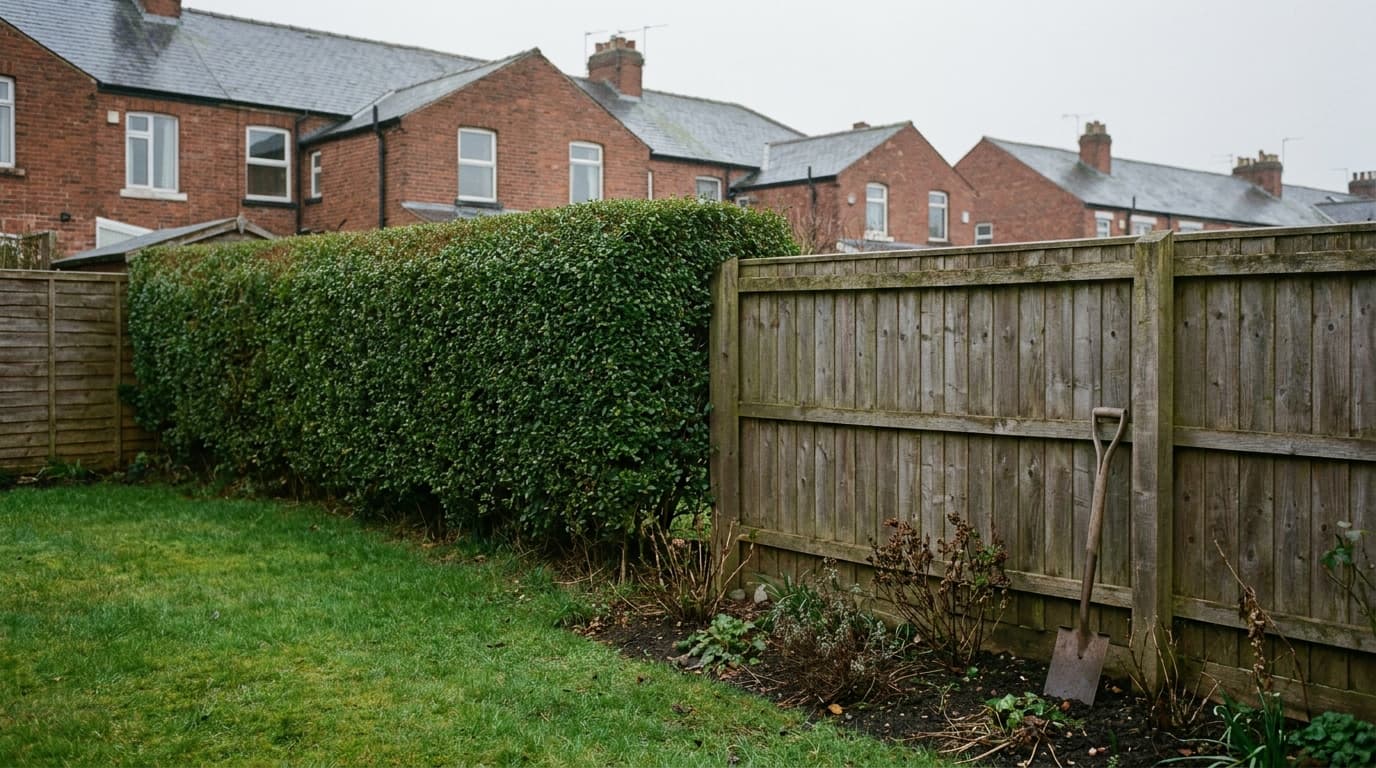
Adverse possession, often called "squatters' rights," is the process by which someone who has occupied land as their own for a long period can end up with legal title to it. The popular idea that you can simply squat on land for a few years and take it is out of date. Since 2003 the law for most registered land in England and Wales has made this far harder, while Scotland runs on an entirely different concept that generally requires a deed, not just occupation.
What Adverse Possession Actually Means
Adverse possession is a doctrine of property law, not a criminal offence. It allows someone who is not the legal owner, but who has possessed land openly and continuously as if they owned it, to apply to become the registered or legal owner after a set period of time. It applies to disputes such as a neighbour who has fenced in and used a strip of a neighbouring garden for decades, or someone occupying a long-abandoned plot.
It is worth separating this from a different, unrelated area of law: squatting in a residential building is a criminal offence in England and Wales under section 144 of the Legal Aid, Sentencing and Punishment of Offenders Act 2012. That offence is about occupying someone's home as a trespasser and can lead to arrest. Adverse possession, by contrast, is a civil property claim about who legally owns land, and it typically arises after many years of open, settled use, not a recent break-in.
Registered Land in England and Wales: The Law Since 2003
Most land in England and Wales is now registered at HM Land Registry, and Schedule 6 of the Land Registration Act 2002 sets out a specific procedure for it. An adverse possessor can apply to be registered as proprietor after 10 years of adverse possession of the estate.

That application does not succeed automatically. Land Registry must notify the registered proprietor (and certain other interested parties, such as a mortgage lender) that the application has been made. The registered proprietor then has the opportunity to respond, within the period stated in the notice (65 working days).
How the Notify-and-Object Procedure Works
There are two different responses, and an owner can use both. An objection disputes the application itself, for example by denying that there were 10 years of adverse possession. A counter-notice, which must be given on HM Land Registry form NAP, requires the application to be dealt with under paragraph 5 of Schedule 6. If no one serves a counter-notice, and any objection fails, the applicant is entitled to be registered as the new proprietor. In practice, most registered proprietors who receive the notice do respond, since they are, by definition, still the legal owner on paper and have just been alerted that someone is trying to take their land.
Once a counter-notice is served, the application will fail unless the applicant can bring themselves within one of three narrow exceptions set out in paragraph 5 of Schedule 6. This is the central change made in 2003: 10 years of possession is no longer enough on its own, unless one of those exceptions applies.
A rejection is not always the end of it. If the applicant stays in adverse possession for a further two years after the rejection, they can apply again, and on that second application they are entitled to be registered, with no counter-notice or exceptions stage. That second application is blocked only if, by then, the owner has started possession proceedings against them, obtained a judgment for possession, or had them evicted under one. An owner who defeats a first application but leaves the occupier in place should therefore act to recover the land, usually through possession proceedings, within two years.
The Three Narrow Exceptions
The applicant can still succeed after a counter-notice if one of these applies:
- Estoppel: it would be unconscionable for the registered proprietor to dispute the applicant's title, because of some assurance the proprietor gave and the applicant's reasonable reliance on it.
- Some other entitlement: the applicant is for some other reason entitled to be registered as the proprietor, for example under a will or on intestacy.
- The reasonable-boundary-mistake condition: the land in question is adjacent to land already owned by the applicant, the exact line of the boundary has not been determined, the applicant (or a predecessor) reasonably believed the land belonged to them for at least 10 years ending on the date of the application, and the estate to which the application relates was registered more than one year before that date.
That third exception is the one that comes up most often in ordinary neighbour disputes, since it is aimed squarely at situations where a fence or hedge was put up in the wrong place decades ago and both sides genuinely believed it marked the true boundary.
If the registered proprietor's objection is not groundless and the dispute cannot be resolved by agreement, HM Land Registry refers the case to the First-tier Tribunal (Property Chamber), Land Registration division, which decides the application.
Unregistered Land: The Older, Harder-Edged Rule
A smaller amount of land in England and Wales remains unregistered, and adverse possession of it still runs on the older rule under the Limitation Act 1980. Section 15 bars the paper owner from bringing an action to recover the land after 12 years of adverse possession. Section 17 then goes further and extinguishes the paper owner's title outright once that period has run.
There is no notify-and-object stage for unregistered land. Once the 12 years have passed, the previous owner's right to recover the land is simply gone, and with it, their title. (Longer periods apply in some special cases, such as 30 years against the Crown and 60 years for foreshore.) This is why unregistered land is sometimes described as the "old law": it is much closer to the traditional idea of squatters' rights than the registered-land regime is.
The Legal Test: Factual Possession and Intention to Possess
Whichever regime applies, an applicant still has to prove that they were genuinely in adverse possession, and the leading modern authority on what that means is the House of Lords decision in JA Pye (Oxford) Ltd v Graham [2002] UKHL 30. The House of Lords set out two things a claimant must show:
- Factual possession: exclusive physical control of the land, appropriate to its nature, such as fencing it, farming it, or otherwise using it in a way that excludes the world at large, including the paper owner.
- Intention to possess: an intention to possess the land as one's own, to the exclusion of all others, including the true owner, for the time being. This does not require an intention to own the land forever, only to control it as an owner would in the meantime.
The Pye case itself involved a farmer who continued grazing land after his grazing licence ended, without the paper owner's permission or any fresh agreement. The House of Lords held that his continued, exclusive use of the land met both parts of the test, even though he privately hoped to negotiate a new licence rather than intending to take the land outright.
Scotland Is Genuinely Different: Positive Prescription
Scotland does not have an equivalent to English-style squatters' rights, and it is a mistake to assume the Scottish rule simply mirrors England's. The relevant concept is positive prescription, set out in section 1 of the Prescription and Limitation (Scotland) Act 1973.

Under section 1, a person can acquire a real right to land after 10 years of open, peaceable possession, without judicial interruption, provided that possession follows on and is founded on a recorded or registered deed that is ex facie valid, meaning valid on its face. The classic example is an a non domino disposition: a deed granted by someone who was not, in fact, the true owner of the land, but which looks like a genuine title deed and gets recorded or registered. Since 2014, under the Land Registration etc. (Scotland) Act 2012, a person relying on this route to register in the Land Register must show that the land has been possessed openly and peaceably for 1 year immediately before the application, and that the owner has been notified. The Keeper must also notify the owner, and if the owner objects in writing within 60 days of that notice, the Keeper must reject the application. Only once the deed is registered can the 10-year prescriptive period begin to run.
This means Scottish positive prescription is generally not "squatting that ripens into title." A person normally needs a recorded or registered deed to start the clock, and section 1(2) excludes a recorded deed that is forged or invalid on its face, and a Land Register title based on a forged deed where the person registered knew of the forgery. Simply occupying land without any deed at all is much harder to convert into ownership in Scotland than the popular idea of squatters' rights suggests.
Northern Ireland
Northern Ireland applies its own limitation regime, under the Limitation (Northern Ireland) Order 1989, to both registered and unregistered land. Section 53(1) of the Land Registration Act (Northern Ireland) 1970 provides that this Order applies to registered land exactly as it applies to unregistered land, so the period is 12 years, the same as for unregistered land in England and Wales. Once 12 years of adverse possession is established, the previous owner's title is barred under the general limitation rule.
Northern Ireland does allow an interested party to lodge an objection to an application, which under section 53(3) can be referred to the Registrar or the court. But this is not the same as Schedule 6 in England and Wales. Under Schedule 6, a counter-notice defeats a first application unless one of three narrow exceptions applies, even after 10 years of possession, although the occupier can reapply if left in possession for two more years. In Northern Ireland the objection stage is about deciding whether the 12 years of adverse possession actually happened, not a separate right to defeat a claim that has already run its course. Anyone dealing with a Northern Ireland adverse possession question should still check current Land Registry of Northern Ireland guidance or take local legal advice.
What This Means If You Own Land, or If You Are Occupying Someone Else's
If you own registered land in England or Wales and you receive a notice that someone has applied for adverse possession, responding promptly is usually the single most effective step: serve a counter-notice on form NAP within the time allowed, and object as well if you dispute the facts. A counter-notice defeats the claim unless one of the three narrow exceptions applies. Ignoring the notice is the main way these claims succeed.
Winning the first round is not the end of it. If the occupier stays in adverse possession for two more years after the application is rejected, they can apply again and must then be registered. If they are still on the land, you need to act within those two years, usually by starting possession proceedings, or you risk losing the land.

If you are occupying land that is not legally yours and are considering an adverse possession application, the registered-land regime means you should expect the paper owner to be notified and to serve a counter-notice in most cases. Success generally depends on fitting within the boundary-mistake exception or one of the other two grounds, not on the passage of time alone. A solicitor experienced in property disputes, or HM Land Registry's own published practice guides, is the right starting point before applying.
This article is general information about adverse possession law in the United Kingdom, not legal advice, and boundary and title disputes often turn on detailed facts and evidence. For a dispute over where a boundary actually lies, see boundary disputes. For the wider picture, see the UK Property Law hub and the United Kingdom hub.
Frequently Asked Questions
How many years of occupation do you need to claim adverse possession in England and Wales?
For registered land, an application can be made after 10 years of adverse possession, but the registered proprietor is notified and can serve a counter-notice, which defeats the claim unless a narrow exception applies, although the applicant can reapply if left in possession for a further two years. For unregistered land, the older rule under the Limitation Act 1980 requires 12 years, after which the previous owner's title is extinguished outright.
Can a registered landowner stop an adverse possession claim just by objecting?
Usually, but not permanently on its own. What limits the applicant is a counter-notice on HM Land Registry form NAP, which the owner should serve within the time allowed, alongside any objection. The application then fails unless the applicant can bring themselves within one of three narrow exceptions in Schedule 6 of the Land Registration Act 2002, such as the reasonable-boundary-mistake condition. But if the applicant stays in adverse possession for two more years after the rejection, they can apply again and must be registered, unless the owner has by then started possession proceedings, obtained a possession judgment or had them evicted. An owner who objects must then act to recover the land within those two years.
What is the reasonable-boundary-mistake exception?
It applies where the applicant's land adjoins the disputed land, the exact boundary line has not been determined, the applicant reasonably believed the land was theirs for at least 10 years, and the relevant title was registered more than a year before the application. It is the exception most often relevant to ordinary neighbour boundary disputes.
Is squatting in a house the same thing as adverse possession?
No. Squatting in a residential building is a criminal offence in England and Wales under section 144 of the Legal Aid, Sentencing and Punishment of Offenders Act 2012. Adverse possession is a separate, civil property law doctrine about acquiring legal title after many years of open, settled possession, and it is not a criminal matter.
Does Scotland have squatters' rights like England?
No. Scotland uses positive prescription under the Prescription and Limitation (Scotland) Act 1973, which generally requires 10 years of open, peaceable possession following a recorded or registered deed that is valid on its face, such as an a non domino disposition. Simply occupying land without any deed is much harder to turn into ownership than in the old English model.
What is the legal test for proving adverse possession?
The House of Lords in JA Pye (Oxford) Ltd v Graham set out two requirements: factual possession, meaning exclusive physical control of the land appropriate to its nature, and an intention to possess it as one's own to the exclusion of others, including the true owner, for the time being.
Is adverse possession the same in Northern Ireland as in England and Wales?
No. Northern Ireland applies the Limitation (Northern Ireland) Order 1989 to registered land the same way as to unregistered land, so the period is 12 years, and once that runs the previous owner's title is barred. Northern Ireland allows an objection to an application, but it does not have the Schedule 6 counter-notice that lets a registered owner in England and Wales defeat a first application despite 10 years of possession.
Updates
We added that a rejected adverse possession applicant can reapply and be registered after two more years in possession unless the owner acts to recover the land, explained that the form NAP counter-notice (not an objection alone) triggers the three exceptions, and added Scotland's 1-year possession and 60-day owner objection rules.
Independently fact-checked against the cited primary sources; governing law re-checked for recent changes
The Law Behind This Article
This article rests on the statutory provisions below, held in our own legal record and retrieved from the official source. Tap a section to read the operative text.
Land Registration Act (Northern Ireland) 1970
s. 53Acquisition of title by possession.In force
(1) Subject to the provisions of this section, the Limitation (Northern Ireland) Order 1989 shall apply to registered land as it applies to unregistered land. (2) Where there has been a defeasance of an estate in any registered land in consequence of any of the provisions of the said Statute and— (a) a person claims to have acquired a right by possession to be registered as owner of an estate in that land; or (b) the personal representatives of a deceased person claim that the deceased or such representatives in right of the estate of the deceased had acquired such a right; the person so claiming or, as the case may be, the personal representatives may apply to the Registrar, in such manner as may be prescribed, for registration of the title to that estate. (3) Without prejudice to section 6(2), the Registrar may, and shall if requested to do so by the applicant or by any other person who has lodged an objection to the application, refer the application for decision to the court.
Official text (excerpt) · last checked 2026-08-14 · Read the full text in our law library · Verify at legislation.gov.uk
Prescription and Limitation (Scotland) Act 1973
s. 1Validity of rightIn force
(1) If land has been possessed by any person, or by any person and his successors, for a continuous period of ten years openly, peaceably and without any judicial interruption and the possession was founded on, and followed— (a) the recording of a deed which is sufficient in respect of its terms to constitute in favour of that person a real right in— (i) that land; or (ii) land of a description habile to include that land; or (b) the registration of a deed which is sufficient in respect of its terms to constitute in favour of that person a real right in— (i) that land; or (ii) land of a description habile to include that land, then, as from the expiry of that period, the real right so far as relating to that land shall be exempt from challenge. (2) Subsection (1) above shall not apply where— (a) possession was founded on the recording of a deed which is invalid ex facie or was forged; or (b) possession was founded on registration in the Land Register of Scotland proceeding on a forged deed and the person appearing from the Register to have the real right in question was aware of the forgery at the time of registration in his favour.
Official text (excerpt) · last checked 2026-08-14 · Read the full text in our law library · Verify at legislation.gov.uk
Limitation Act 1980
s. 15Time limit for actions to recover land.In force
(1) No action shall be brought by any person to recover any land after the expiration of twelve years from the date on which the right of action accrued to him or, if it first accrued to some person through whom he claims, to that person. (2) Subject to the following provisions of this section, where— (a) the estate or interest claimed was an estate or interest in reversion or remainder or any other future estate or interest and the right of action to recover the land accrued on the date on which the estate or interest fell into possession by the determination of the preceding estate or interest; and (b) the person entitled to the preceding estate or interest (not being a term of years absolute) was not in possession of the land on that date; no action shall be brought by the person entitled to the succeeding estate or interest after the expiration of twelve years from the date on which the right of action accrued to the person entitled to the preceding estate or interest or six years from the date on which the right of action accrued to the person entitled to the succeeding estate or interest, whichever period last expires.
Official text (excerpt) · last checked 2026-08-14 · Read the full text in our law library · Verify at legislation.gov.uk
Legal Aid, Sentencing and Punishment of Offenders Act 2012
s. 144Offence of squatting in a residential buildingIn forcecited in 2 of our articles
(1) A person commits an offence if— (a) the person is in a residential building as a trespasser having entered it as a trespasser, (b) the person knows or ought to know that he or she is a trespasser, and (c) the person is living in the building or intends to live there for any period. (2) The offence is not committed by a person holding over after the end of a lease or licence (even if the person leaves and re-enters the building). (3) For the purposes of this section— (a) “ building ” includes any structure or part of a structure (including a temporary or moveable structure), and (b) a building is “residential” if it is designed or adapted, before the time of entry, for use as a place to live. (4) For the purposes of this section the fact that a person derives title from a trespasser, or has the permission of a trespasser, does not prevent the person from being a trespasser. (5) A person convicted of an offence under this section is liable on summary conviction to imprisonment for a term not exceeding 51 weeks or a fine not exceeding level 5 on the standard scale (or both).
Official text (excerpt) · last checked 2026-08-14 · Read the full text in our law library · Verify at legislation.gov.uk
Also relied on in: Squatters' Rights in the UK: England, Wales and Scotland Explained
Search our record of UK legislation — retrieved from legislation.gov.uk →
Sources and References
- Land Registration Act 2002, Schedule 6 (registration of adverse possessor)(legislation.gov.uk).gov
- Limitation Act 1980, section 15 (actions to recover land) and section 17 (extinction of title)(legislation.gov.uk).gov
- Prescription and Limitation (Scotland) Act 1973, section 1 (positive prescription)(legislation.gov.uk).gov
- HM Land Registry: Practice guide 4 - adverse possession of registered land(gov.uk).gov
- HM Land Registry: Practice guide 37 - objections and disputes(gov.uk).gov
- Legal Aid, Sentencing and Punishment of Offenders Act 2012, section 144 (offence of squatting in a residential building)(legislation.gov.uk).gov
- Land Registration Act (Northern Ireland) 1970, section 53 (application of limitation to registered land)(legislation.gov.uk).gov
- Land Registration Act 2002, Schedule 6, paragraph 6: Right to make further application for registration(legislation.gov.uk).gov
- Land Registration etc. (Scotland) Act 2012, section 43: Prescriptive claimants(legislation.gov.uk).gov
- Land Registration etc. (Scotland) Act 2012, section 45: Notification of prescriptive applications(legislation.gov.uk).gov