
United Kingdom
UK Property & Neighbour Disputes: The Complete Guide
Independently fact-checked against primary sources (last audited September 29, 2026). · Law checked current as of September 29, 2026. · 8 primary sources cited on this page. How we verify our legal content
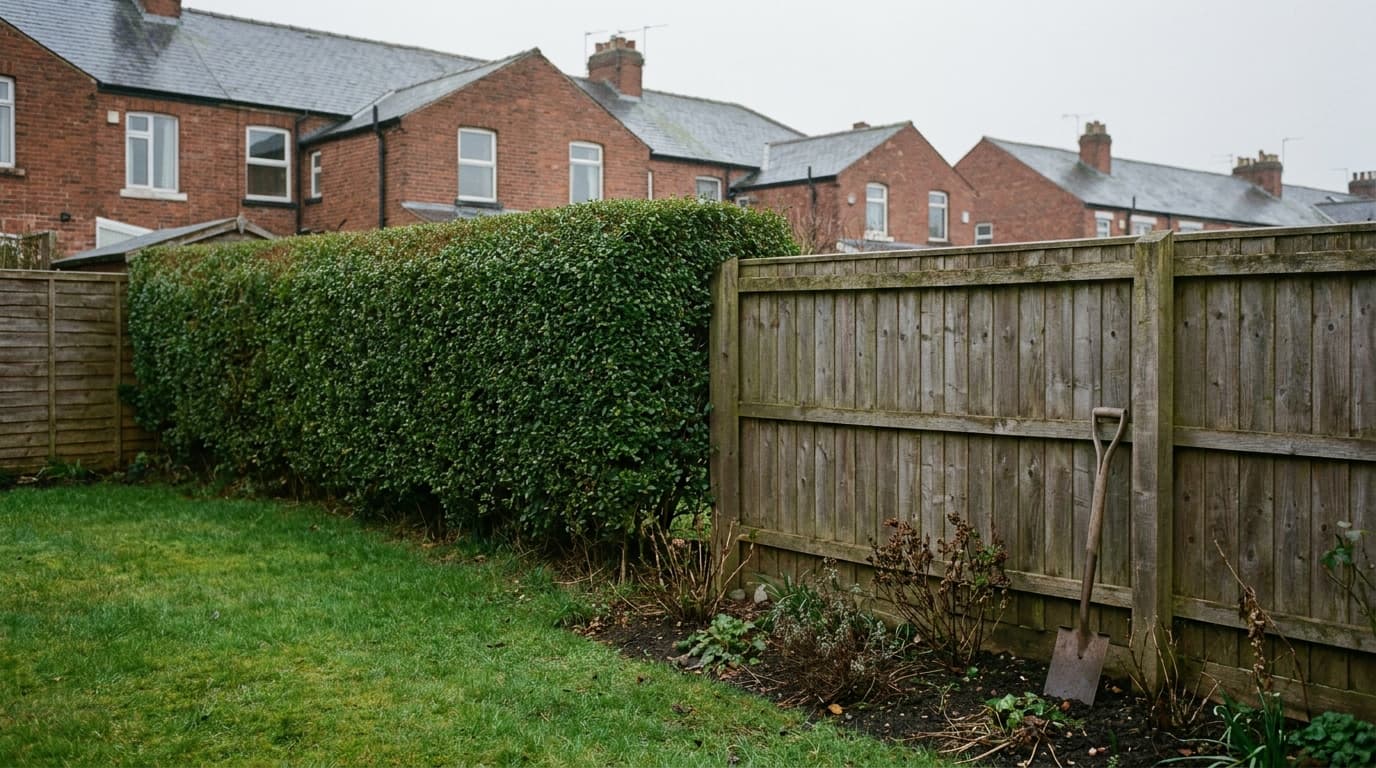
Property and neighbour disputes in the United Kingdom sit inside four different legal systems, not one. England and Wales share most of the core rules on party walls, boundaries and fences, but Scotland and Northern Ireland frequently run on entirely separate footing, from whether a party wall process exists at all to how a boundary is registered in the first place. This hub explains the shared England & Wales framework and flags every point where the other nations diverge.
England & Wales Is the Default, Not the Whole Picture
Most of the property law that comes up between neighbours in the UK, party walls, general boundaries on the land register, fence ownership, and easements, was built for England and Wales and applies there as a single system. Because England and Wales share a land registration system (HM Land Registry) and a large body of common law, guides on this topic can usually treat the two together.
Scotland and Northern Ireland are different legal jurisdictions with their own courts, their own land registers, and often their own Acts covering the same subject. Some of the differences are small drafting variations. Others, like the absence of any party wall process, or Scotland's lack of residential leasehold, are fundamental. Treat every claim on this hub as "England & Wales, unless stated otherwise."
Party Walls, Boundaries and Fences in England & Wales
Work on a shared wall between two properties in England or Wales is governed by the Party Wall etc. Act 1996, which sets notice periods, a dispute-resolution process using surveyors, and a formal "party wall award" when neighbours cannot agree. It runs entirely separately from planning permission and building regulations.

Boundaries on registered land follow the general boundaries rule in section 60 of the Land Registration Act 2002: the title plan shows an approximate line, not a legally exact one, unless a proprietor has gone through the additional step of applying for a "determined boundary." Ownership of an actual fence or wall, meanwhile, is not decided by which way it faces or which side the posts are on; it comes down to the title deeds, and HM Land Registry has said plainly that the popular "your fence is on your left" rule of thumb has no legal foundation.
Where Scotland Is Genuinely Different
Scotland is not simply "England and Wales with different section numbers." Three differences matter enough that they change the advice entirely:

- No party wall process. There is no Scottish equivalent of the Party Wall etc. Act 1996. Shared or mutual walls are governed by common law (sometimes called the law of "common interest"), and flats are additionally covered by the Tenements (Scotland) Act 2004.
- No residential leasehold. Since the Land Tenure Reform (Scotland) Act 1974, it is a condition of every new lease of more than 20 years that the property is not used as a private home (with narrow exceptions, such as private residential tenancies and leases to social landlords), and the Long Leases (Scotland) Act 2012 converted most remaining ultra-long leases into ownership on 28 November 2015. Separately, feudal tenure was abolished on 28 November 2004 under the Abolition of Feudal Tenure etc. (Scotland) Act 2000. Scottish flats are owned outright rather than held on a lease, so the leasehold reform, ground rent and service charge topics on this hub simply do not apply north of the border.
- A cadastral land register, not a general boundaries register. Scotland's Land Register, under the Land Registration etc. (Scotland) Act 2012, is a true cadastral map: registered plots are not allowed to overlap. This is a different design from the general boundaries approach used in England and Wales, not just a stricter version of it.
Scotland also runs its own separate Acts for high hedges (the High Hedges (Scotland) Act 2013) and for gaining or losing land through long possession (positive prescription, which requires a recorded deed, unlike English-style adverse possession).
Where Northern Ireland Is Genuinely Different
Northern Ireland also has no Party Wall Act; the Access to Neighbouring Land Act 1992 does not extend there and Northern Ireland has no equivalent statute, so access to a neighbour's land to carry out repairs depends on agreement, easements or the general law. High hedges in Northern Ireland are governed by the High Hedges Act (Northern Ireland) 2011, and protected trees fall under the Planning Act (Northern Ireland) 2011, both entirely separate from the England & Wales regimes covering the same ground.
Guides in This Cluster
Party walls and structural work

- Party wall agreements explained: the three notice types, the 3-metre and 6-metre excavation rules, and how a party wall award is made.
Boundaries and land registration
- Boundary disputes: general boundaries and determined boundaries: why your title plan is not an exact map, and how to fix the exact line if you need to.
- Fence and boundary law: who actually owns which fence: debunking the "your fence is on your left" myth, and what the height limits are.
- Adverse possession: claiming land after long use: the harder, notify-and-object process for registered land in England and Wales, and Scotland's very different deed-based positive prescription.
- Squatters' rights and removing squatters: the residential squatting offence, interim possession orders for commercial premises, and Scotland's fine-only regime.
- Right of way and easements: prescriptive rights, implied easements, and public rights of way.
Neighbour nuisance
- Japanese knotweed and the law: when knotweed encroachment is a private nuisance, and what the Supreme Court actually decided in the Davies v Bridgend case.
- High hedges and protected trees: the council complaint process for hedges over 2 metres, cutting back overhanging branches, and Tree Preservation Orders.
- Noise complaints and statutory nuisance: council abatement notices, and how to go directly to the magistrates' court.
Leasehold and flats (England & Wales only)
- Leasehold reform: what has actually come into force under the Leasehold and Freehold Reform Act 2024, and what is still just a proposal.
- Ground rent: the peppercorn rent rule on new leases, and the proposed cap on existing ones.
- Service charges: when a charge must be reasonable, the consultation thresholds, and challenging a charge at the tribunal.
Frequently Asked Questions
More UK property and housing guides
- Building Regulations UK: Approval, Completion Certificates and Enforcement by Nation
- Council Housing Rules UK: How Allocation and Waiting Lists Work
- HMO Licence UK: Mandatory Licensing Rules, Penalties and Selective Licensing by Nation
- Planning Permission UK: When You Need It and Permitted Development Rules by Nation
- Right to Buy UK: England Rules, Discount Caps, Scotland and Wales Abolition
- Shared Ownership Rules UK: Leases, Repairs and Staircasing Explained
- Stamp Duty UK: SDLT, LBTT and LTT Rates Explained by Nation
This hub is general legal information about property and neighbour law across the United Kingdom, not legal advice, and the position depends heavily on which nation the property is in. For a specific dispute, contact a solicitor, a licensed conveyancer, or a RICS chartered surveyor. For the wider picture, see the United Kingdom hub.
Frequently Asked Questions
Does the Party Wall etc. Act 1996 apply in Scotland or Northern Ireland?
No. Section 22(4) of the Act states that it extends to England and Wales only. Scotland has no equivalent statute and relies on common law rules about shared walls, while Northern Ireland also has no direct equivalent.
Can I get an exact, legally certain boundary line from HM Land Registry?
Only if you apply for a 'determined boundary' using Form DB. Most registered titles in England and Wales show only a general boundary under section 60 of the Land Registration Act 2002, which is approximate rather than exact.
Is it true that you always own the fence on the left of your garden?
No, this is a myth. HM Land Registry has confirmed there is no legal foundation for rules like 'you own the left-hand fence' or 'the side the posts face belongs to the owner'. Ownership comes from the title deeds.
Does Scotland have leasehold flats like England?
No. The Land Tenure Reform (Scotland) Act 1974 bars using property held on a new lease of more than 20 years as a private home, and the Long Leases (Scotland) Act 2012 converted most remaining ultra-long leases into ownership, so Scottish flats are owned outright rather than held on a lease. The leasehold reform, ground rent and service charge rules covered elsewhere on this hub are England & Wales concepts.
What should I do first if I disagree with a neighbour about a boundary or a tree?
Try to resolve it directly and in writing first. If that fails, mediation, HM Land Registry's boundary process, or your local council (for hedges and noise) are usually faster and cheaper than court, and some processes, like a high hedges complaint, require you to show you tried to resolve it directly first.
Does this site handle boundary disputes or party wall disagreements directly?
No. These guides are general legal information, not a dispute-resolution or conveyancing service. For a specific dispute, contact a solicitor, a RICS chartered surveyor, or the relevant free official service, such as HM Land Registry or the First-tier Tribunal (Property Chamber).
Updates
We corrected why Scotland has no residential leasehold (the Land Tenure Reform (Scotland) Act 1974 and the Long Leases (Scotland) Act 2012, not feudal abolition) and clarified that Northern Ireland has no statute giving access to neighbouring land for repairs.
Independently fact-checked against the cited primary sources; governing law re-checked for recent changes
Sources and References
- Party Wall etc. Act 1996(legislation.gov.uk).gov
- Land Registration Act 2002(legislation.gov.uk).gov
- Land Registration etc. (Scotland) Act 2012(legislation.gov.uk).gov
- GOV.UK: Preventing and resolving disputes in relation to party walls(gov.uk).gov
- GOV.UK: HM Land Registry plans (Practice Guide 40 overview)(gov.uk).gov
- Land Tenure Reform (Scotland) Act 1974, section 8: Prohibition of use as private dwelling-house of land held on long lease(legislation.gov.uk).gov
- Long Leases (Scotland) Act 2012, section 4: Conversion of right of lease to right of ownership(legislation.gov.uk).gov
- Access to Neighbouring Land Act 1992, section 9: Short title, commencement and extent(legislation.gov.uk).gov