
United Kingdom
Fence and Boundary Law: Who Really Owns It in the UK?
Independently fact-checked against primary sources (last audited September 29, 2026). · Law checked current as of September 29, 2026. · 5 primary sources cited on this page. How we verify our legal content
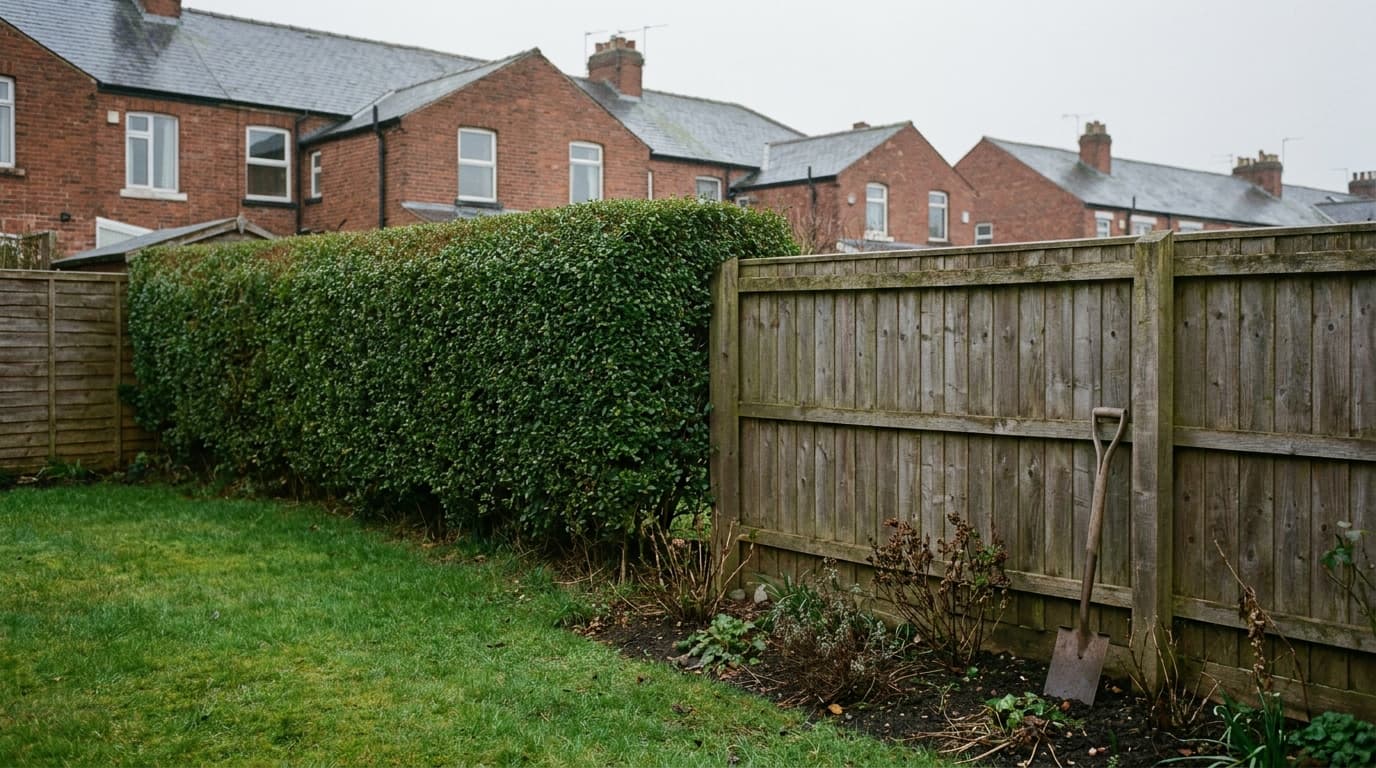
Ask most people who owns the fence between their garden and their neighbour's, and they will confidently tell you it is whichever one has the posts facing away from them, or the one on their left. HM Land Registry says there is no legal foundation for the idea that the way a fence is built shows who owns it, and there is no left-or-right rule in law either.
The Fence Ownership Myth, Debunked
The idea that you can tell who owns a boundary fence just by looking at it, "you own the left-hand fence," "whoever has the rails facing them owns it," "the good side always faces the neighbour who owns it," is one of the most widely repeated pieces of amateur property law in the country. It is also wrong.
HM Land Registry's own guidance, Practice Guide 40 Supplement 3, addresses the idea that construction shows ownership, such as the belief that the posts and rails of a fence are on the owner's side, and states that "there is, however, no legal foundation for such beliefs." The left-hand or right-hand fence idea has no basis in law either. Construction style, which way a panel faces, and which side a rail sits on tell you how a fence was built, not who owns it or is responsible for it.
So Who Actually Owns a Boundary Fence?
Ownership of a boundary fence, wall or hedge in England and Wales comes down to the title deeds, the conveyance, or the register, not the physical feature itself. If a deed expressly states who owns a boundary feature, that wording controls, not the fence's appearance. A covenant to maintain a fence or wall is not the same thing: HM Land Registry's guidance says that "on their own, such covenants do not confer ownership," although a covenant may create an obligation to repair.

Older deeds sometimes show a "T mark" on the boundary plan, a small T-shaped symbol pointing towards one property. This is another area where a popular assumption outruns the actual law: a T mark only has legal force if the text of the deed itself refers to it. HM Land Registry's guidance is explicit that a T mark shown on a plan with no supporting wording in the deed's text "has no special force or meaning in law." Where a T mark is properly referred to in the deed, HM Land Registry will generally reflect it on the title plan or describe the affected boundary in the register; where it is not, it is essentially decorative.
If the deeds are silent on ownership and there is no T mark backed by deed wording, ownership of a shared boundary feature can genuinely be unclear. HM Land Registry's guidance says that where ownership or responsibility for maintenance cannot be determined, the feature is "generally best regarded as a party boundary," and it should only be altered or replaced with the agreement of both neighbours.
Do You Have to Maintain a Boundary Fence?
There is generally no standalone legal duty to erect or maintain a boundary fence at all in England and Wales. This surprises a lot of people who assume every garden boundary must be fenced by someone. In most cases, a duty to put up or repair a fence only exists where something specific creates it:
- A deed or restrictive covenant requiring a particular boundary to be fenced or maintained.
- A tenancy agreement placing a fencing obligation on a landlord or tenant.
- A practical incentive connected to keeping livestock: section 4 of the Animals Act 1971 makes a livestock owner strictly liable for damage if their animals stray onto a neighbour's land, though the Act itself does not impose a standalone duty to fence.
Absent one of these, a neighbour generally cannot force you to put up a fence simply because they would prefer a boundary marked, though most people choose to do so for privacy, security or a garden's appearance rather than because the law requires it.
How Tall Can My Fence Be Without Planning Permission?
In England, the height rules for a new fence, wall or gate come from the Town and Country Planning (General Permitted Development) (England) Order 2015, Schedule 2, Part 2, Class A. Under these rules, planning permission is generally not required if:
- The fence, wall or gate is no more than 2 metres high, in most locations, or
- It is no more than 1 metre high where it is adjacent to a highway used by vehicular traffic.
Both limits are measured above ground level. Go above either limit in the relevant location and planning permission is normally required. Repairing or altering an existing fence or wall does not need permission as long as it ends up no higher than its former height or the limit above, whichever is greater. These rights do not apply within the curtilage of a listed building, or to a fence, wall or gate surrounding one, and they can be removed by an Article 4 direction or by a condition on the planning permission for the property (common on newer estates), so check with your local planning authority before building.
Wales did not adopt a new 2015 Order. Permitted development in Wales still runs under the Town and Country Planning (General Permitted Development) Order 1995, as amended by a series of Wales-specific orders. Its detailed thresholds should not be assumed to be identical to the England Order described above, so anyone building a boundary fence or wall in Wales should check the applicable Welsh rules directly rather than relying on the England figures. Scotland and Northern Ireland run their own separate permitted development regimes as well.
What To Do If You Disagree With a Neighbour About a Fence
Start with the title deeds and the HM Land Registry title plan for both properties; this resolves a large share of disagreements before they go any further, since the fence's appearance is not evidence of ownership. If the deeds do not settle it, a written boundary agreement between neighbours, or mediation, is generally a faster and cheaper route than a formal HM Land Registry determined boundary application or court proceedings; see boundary disputes for how that formal process works.

This guide explains fence and boundary ownership rules in England and Wales in general terms; it is not legal advice, and the position always depends on the specific deeds and history of a property. For the broader boundary registration system, see boundary disputes. For shared or structural walls rather than garden fences, see party wall agreements. For the wider picture, see the UK Property & Neighbour Disputes hub.
Frequently Asked Questions
Is it true that I own the fence on the left of my garden?
No. This is a widely believed myth with no legal basis. HM Land Registry says there is no legal foundation for the belief that the way a fence is built, such as which side the posts are on, shows who owns it, and there is no left-hand fence rule either. Ownership comes from the title deeds.
How can I actually find out who owns a boundary fence?
Check your title deeds, the conveyance, and the HM Land Registry title plan and register. If a T mark appears on an old plan, it only has legal force if the deed's own text refers to it, not simply because it is drawn on the plan.
Am I legally required to put up a fence around my garden?
Generally no. There is usually no standalone legal duty to erect or maintain a boundary fence in England and Wales, unless a deed, restrictive covenant, tenancy agreement, or a livestock-related duty specifically requires it.
How tall can I build a garden fence without planning permission in England?
Generally up to 2 metres high. This drops to 1 metre if the fence, wall or gate is adjacent to a highway used by vehicular traffic, under the Town and Country Planning (General Permitted Development) (England) Order 2015.
Do the same fence height rules apply in Wales, Scotland and Northern Ireland?
No. Wales still uses the Town and Country Planning (General Permitted Development) Order 1995 as amended for Wales, not a 2015 Order, and its exact thresholds should not be assumed to match England's. Scotland and Northern Ireland each run their own separate permitted development rules for fences, walls and gates.
What is a T mark on a boundary plan and does it prove ownership?
A T mark is a symbol on some older deed plans pointing towards a property. It only has legal force if the text of the deed itself refers to it. A T mark shown on a plan with no supporting wording in the deed has no special meaning in law.
Updates
We corrected the example of a deed that decides fence ownership (HM Land Registry says a covenant to maintain a fence does not on its own confer ownership), attributed HM Land Registry's 'no legal foundation' statement to the construction-based beliefs it addresses, and aligned the fence height rules with the wording of the 2015 Order.
Independently fact-checked against the cited primary sources; governing law re-checked for recent changes
The Law Behind This Article
This article rests on the statutory provisions below, held in our own legal record and retrieved from the official source. Tap a section to read the operative text.
Animals Act 1971
s. 4Liability for damage and expenses due to trespassing livestock.In force
(1) Where livestock belonging to any person strays on to land in the ownership or occupation of another and— (a) damage is done by the livestock to the land or to any property on it which is in the ownership or possession of the other person; or (b) any expenses are reasonably incurred by that other person in keeping the livestock while it cannot be restored to the person to whom it belongs or while it is detained in pursuance of section 7 of this Act, or in ascertaining to whom it belongs; the person to whom the livestock belongs is liable for the damage or expenses, except as otherwise provided by this Act. (2) For the purposes of this section any livestock belongs to the person in whose possession it is. (3) This section does not apply in relation to horses on land in England (as to which, see section 4A).
Official text (excerpt) · last checked 2026-08-14 · Read the full text in our law library · Verify at legislation.gov.uk
Search our record of UK legislation — retrieved from legislation.gov.uk →
Sources and References
- HM Land Registry Practice Guide 40, Supplement 3: boundaries(gov.uk).gov
- Town and Country Planning (General Permitted Development) (England) Order 2015, Schedule 2, Part 2, Class A (gates, fences, walls etc)(legislation.gov.uk).gov
- Animals Act 1971, s.4 (liability for straying livestock)(legislation.gov.uk).gov
- GOV.UK: HM Land Registry plans (Practice Guide 40 overview)(gov.uk).gov
- Town and Country Planning (General Permitted Development) (England) Order 2015, article 4: Directions restricting permitted development(legislation.gov.uk).gov