
Washington
Washington Smart Glasses Recording Laws (2026)
Independently fact-checked against primary sources (last audited August 24, 2026). · Reviewed by the RecordingLaw editorial team. · Law checked current as of August 24, 2026. · 11 primary sources cited on this page. How we verify our legal content
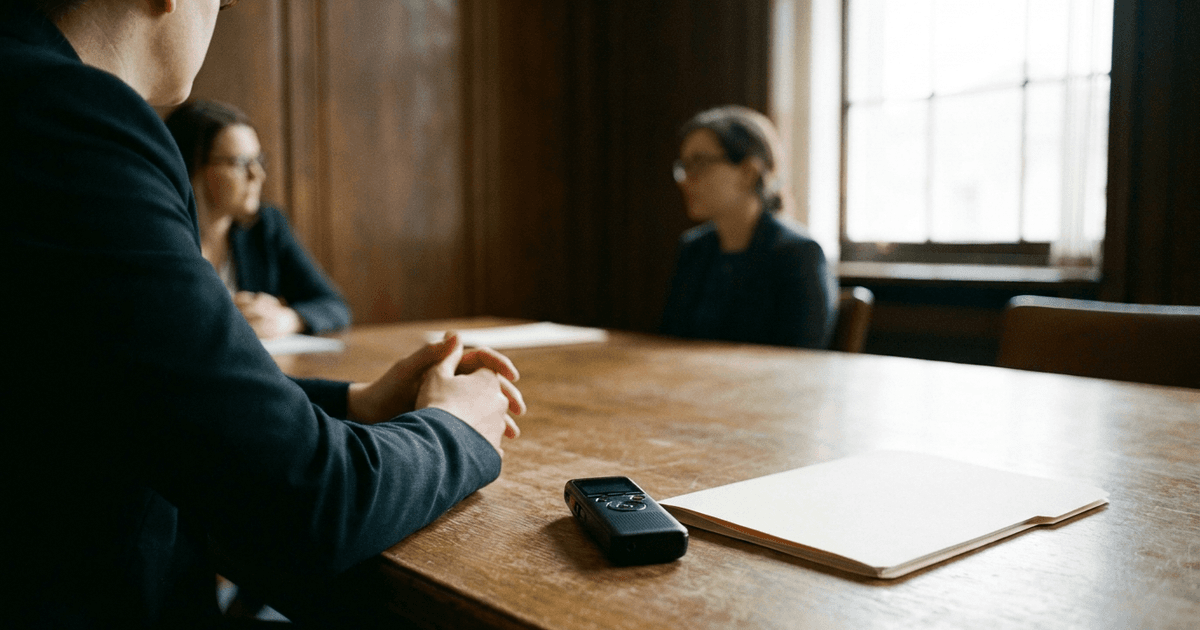
Smart glasses are legal to own and wear in Washington, but the state's all-party consent law (RCW 9.73.030) makes covert audio recording a crime. You can film video in public spaces freely. The moment your glasses capture the audio of a private conversation, every participant must have consented. Washington also has a dedicated biometric identifiers law (RCW Chapter 19.375) that adds a separate layer of compliance risk if your glasses use facial recognition.
Are smart glasses legal to own and wear in Washington?
Yes. There is no Washington law that prohibits owning, wearing, or purchasing smart glasses such as the Meta Ray-Ban. The device itself is lawful consumer electronics. The legal analysis begins only when you start using the recording functions.
Washington has three separate bodies of law that smart glasses wearers must understand: the Washington Privacy Act (Chapter 9.73 RCW) governing audio capture, the voyeurism statute (RCW 9A.44.115) governing intimate-area visual recording, and the Biometric Identifiers Law (Chapter 19.375 RCW) governing facial recognition and face-geometry data. Each statute is independent, and a single recording session could implicate all three.
No Washington statute specifically names smart glasses or digital eyewear. The laws apply based on what the device does, not what it is called.
Recording video in public vs. private spaces
Video-only recording in a public space is generally lawful in Washington. Streets, parks, public sidewalks, government buildings, and other spaces where people have no reasonable expectation of privacy from being seen may be filmed. This aligns with the federal principle established in Katz v. United States, 389 U.S. 347 (1967): a person visible in public cannot claim a reasonable expectation of privacy from being observed.
Smart glasses that capture only silent video in public spaces do not trigger RCW 9.73.030. The Washington Privacy Act reaches only the interception or recording of private communications, which requires an audio component. The federal Wiretap Act similarly exempts video-only recording because 18 U.S.C. 2510(18) defines an interception as capturing an "aural transfer," meaning the human voice.
Private spaces are a different matter. Recording video inside a home, hotel room, medical office, or anywhere a person has a reasonable expectation of privacy from being observed can constitute intrusion upon seclusion under Restatement (Second) of Torts Section 652B, even without audio. The covert nature of smart glasses (which appear to be ordinary eyewear) is directly relevant to the "highly offensive to a reasonable person" element of that tort claim.
Recording audio and Washington's all-party consent rule
Washington's all-party consent standard under RCW 9.73.030 is the central legal constraint for smart glasses wearers. The statute makes it unlawful to intercept or record any private communication without the consent of every participant. Washington courts have addressed the boundaries of this rule in several cases. State v. Townsend, 147 Wn.2d 666, 57 P.3d 255 (2002), held that a defendant impliedly consented to the recording of his own e-mail and ICQ chat messages, because it was reasonable to infer he knew such electronic messages could be logged -- it is not a case about in-person conversations or telephone calls. RCW 9.73.030's own text, not a single case, is what extends the all-party requirement to any private communication, whether spoken in person, by telephone, or transmitted electronically.
The "private" qualifier matters. Washington courts apply a multi-factor test drawn from State v. Christensen, 153 Wn.2d 186, 102 P.3d 789 (2004): the parties' subjective expectation of privacy, the subject matter, the location, the presence of potential third-party listeners, and the relationship between the parties. A loud exchange on a crowded street corner is unlikely to be a "private" communication. A one-on-one business meeting in a conference room, a quiet conversation at a restaurant table between colleagues, or a discussion in a parked car almost certainly is.
Smart glasses present a unique compliance risk because they are indistinguishable from ordinary eyewear. A person at a business lunch has no visible signal that audio recording has begun. That invisibility is precisely what makes unannounced smart-glasses audio recording dangerous in Washington: it is covert by default, and covert recording of a private conversation is a crime.
How to comply. RCW 9.73.030(3) provides a specific mechanism for obtaining consent by announcement: one party may announce to all others, in any reasonably effective manner, that recording is about to begin, and that announcement must itself be captured on the recording. Telling everyone at a meeting "I'm recording this conversation with my glasses" before the device captures any audio satisfies the statute. Continuing to stay in the conversation after that announcement constitutes implied consent under Washington law.
Interstate note. When a conversation involves parties in different states, the stricter state's law controls. Washington's all-party rule is stricter than the federal one-party consent baseline under 18 U.S.C. 2511(2)(d). A Washington resident recording a call with someone in a one-party consent state must still comply with RCW 9.73.030.
For a full treatment of Washington's consent rules, penalties, and exceptions, see the Washington Recording Laws parent page.
Where you cannot record: voyeurism and private spaces
RCW 9A.44.115 prohibits recording or viewing another person's intimate areas without consent in locations where they have a reasonable expectation of privacy from visual observation. Smart glasses wearers are subject to this statute exactly as they would be for any other recording device.
First-degree voyeurism (Class C felony): Knowingly viewing, photographing, or filming another person without knowledge and consent in a place where they have a reasonable expectation of privacy, for purposes of sexual arousal or gratification. A Class C felony in Washington carries up to 5 years in prison and a $10,000 fine under RCW 9A.20.021.
Second-degree voyeurism (gross misdemeanor): Intentionally photographing or filming intimate areas without consent and with intent to distribute, where the person has a reasonable expectation of privacy. A gross misdemeanor carries up to 364 days in county jail and a $5,000 fine.
The absolute no-recording zones are: restrooms, locker rooms, gym changing areas, fitting rooms, private residences, hotel rooms, and medical examination rooms. Both degrees of voyeurism under RCW 9A.44.115 apply only to viewing, photographing, or filming done without the person's knowledge and consent. Consent to audio recording under RCW 9.73.030 is not consent to being filmed, so a person who agreed to have a conversation recorded has not agreed to have intimate areas captured by the wearer's glasses.
The covert design of smart glasses aggravates the exposure here. Courts assessing the "intent to record" element will look at whether the wearer made any effort to notify others. Glasses that look identical to ordinary eyewear with no visible recording indicator strengthen evidence of knowing covert surveillance.
For the full Washington voyeurism statute and hidden camera analysis, see Washington Voyeurism and Hidden Camera Laws.
Facial recognition and Washington's Biometric Identifiers Law
Washington is one of three states (alongside Illinois and Texas) with a dedicated biometric privacy statute. RCW Chapter 19.375 governs the enrollment, disclosure, and retention of biometric identifiers, and it adds a significant compliance layer for any smart glasses use that involves facial recognition.
What the statute covers
RCW 19.375.010 defines a "biometric identifier" as data generated by automatic measurements of an individual's biological characteristics, such as a fingerprint, voiceprint, eye retinas, irises, or other unique biological patterns or characteristics that is used to identify a specific individual. This definition reaches face-geometry scans, the data type that facial-recognition software generates when it maps the geometric structure of a face from a photograph or video frame.
To "enroll" means capturing a biometric identifier, converting it into a reference template, and storing it in a database linked to that individual. The enrollment definition is important: casual, one-time capture of a person's image without database storage does not trigger RCW 19.375 on its own. The statute's hook is database enrollment for commercial purposes.
The notice and consent requirement
Under RCW 19.375.020, a person may not enroll a biometric identifier for a commercial purpose without first:
- Providing notice in a manner reasonably designed to be readily available to affected individuals, and
- Obtaining consent, or providing a mechanism to prevent the subsequent use of the biometric identifier for a commercial purpose.
Washington's statute differs from Illinois BIPA in one important respect: it accepts an opt-out mechanism as an alternative to affirmative consent. A business that provides a clear, accessible way for individuals to prevent their biometric data from being used commercially can satisfy RCW 19.375.020 without obtaining a written "yes" from each person. This makes Washington's law somewhat less stringent than BIPA in the consent architecture, though the notice obligation remains firm.
The statute also restricts disclosure: entities holding enrolled biometric data may not sell, lease, or disclose identifiers to third parties for commercial purposes outside a set of defined exceptions (legal requirements, court orders, contractually bound service providers, and the like).
Retention must be limited to what is reasonably necessary to comply with legal requirements, prevent fraud, or deliver the enrolled service.
Smart glasses and the I-XRAY risk
The practical danger for smart glasses wearers in Washington became concrete in October 2024, when Harvard students AnhPhu Nguyen and Caine Ardayfio demonstrated a system they called "I-XRAY": Meta Ray-Ban glasses connected to a third-party facial-recognition engine and AI tools that could identify strangers on the street in real time and retrieve names, home addresses, and partial Social Security numbers within minutes of capturing a face. The project was not released publicly, but it proved the feasibility of passive, covert biometric identification via consumer eyewear.
Any comparable application (smart glasses paired with a facial-recognition service that enrolls the resulting face-geometry templates in a database for commercial use) would require compliance with RCW 19.375.020 before enrollment begins. Running such a system in Washington without the required notice and opt-out mechanism exposes the operator to Washington Consumer Protection Act enforcement by the state Attorney General under RCW 19.86.
Note that RCW 19.375.010 explicitly excludes from its definition of biometric identifier mere digital photographs or video recordings. The statute activates when an application converts visual data into a geometric template stored in a database. Using smart glasses as a camera without any facial-recognition backend does not trigger RCW 19.375 on that basis alone.
Enforcement: no private right of action
Unlike Illinois BIPA, which grants individuals a private right of action with statutory damages of up to $5,000 per intentional violation, RCW Chapter 19.375 is enforced exclusively by the Washington Attorney General through the Consumer Protection Act. There is no individual lawsuit right under the biometric statute itself. This means the enforcement risk is regulatory (AG investigation, CPA civil penalty) rather than a wave of class-action suits, but it does not mean the law can be disregarded.
Comparison: Washington vs. Illinois vs. Texas
| Feature | Washington (RCW 19.375) | Illinois (BIPA, 740 ILCS 14) | Texas (CUBI, Tex. Bus. & Com. Code 503) |
|---|---|---|---|
| Consent model | Notice + consent or opt-out | Written release required | Notice + consent required |
| Private right of action | No | Yes | No |
| Damages per violation | AG CPA enforcement | $1,000 (negligent) / $5,000 (intentional) | Up to $25,000 (AG only) |
| Opt-out as alternative | Yes | No | No |
| Applies to | Commercial enrollment in database | Collect, capture, or store | Capture for commercial purpose |
For Washington smart glasses users, the absence of a private right of action reduces the litigation exposure compared to Illinois, but the AG's CPA authority provides real enforcement teeth, and businesses that fail to provide adequate notice and opt-out mechanisms can face injunctions and civil penalties.
Penalties for illegal recording in Washington
Criminal penalties (WPA violations)
Under RCW 9.73.080, any violation of the all-party consent requirement is a gross misdemeanor. RCW 9.92.020 sets the maximum at 364 days in county jail and a $5,000 fine.
Washington classifies this conduct as a gross misdemeanor rather than a felony, which distinguishes it from California (Penal Code Section 632, which can reach felony status) and Illinois (720 ILCS 5/14-4, which is a Class 4 felony for first offense). Washington's gross misdemeanor classification still produces a criminal record affecting employment and professional licensing, but it does not trigger the firearm restrictions and collateral consequences of a felony.
Any illegally obtained recording is inadmissible in any Washington civil or criminal proceeding under RCW 9.73.050. The exclusion is near-absolute: the two exceptions are use by the victim in their own damages action, and admission in a national-security criminal case.
Civil remedies (WPA violations)
Under RCW 9.73.060, any person whose communications were illegally recorded may bring a civil action and recover:
- Actual damages, including mental pain and suffering
- Liquidated damages of $100 per day of violation, capped at $1,000 per violation
- Reasonable attorney fees and court costs
The injured party elects whichever measure is more favorable. Because quantifying harm from an undisclosed recording is difficult, the $1,000 liquidated damages ceiling plus attorney fees provides a practical floor for recovery.
Civil tort liability (independent of statute)
Smart glasses wearers face civil exposure beyond the WPA civil remedy. Under Restatement (Second) of Torts Section 652B, a person who intentionally intrudes upon the solitude or seclusion of another is liable for invasion of privacy if the intrusion would be highly offensive to a reasonable person. The intrusion itself creates liability; there is no requirement that the recording be published or shared. The covert nature of smart-glasses recording, indistinguishable from wearing ordinary glasses, satisfies the "highly offensive" element in most private-conversation contexts.
If recorded footage is subsequently shared, a second tort claim arises under Restatement Section 652D (public disclosure of private facts) when: private facts are publicized, the disclosure would be highly offensive to a reasonable person, and the matter is not of legitimate public concern.
Practical tips for Washington smart glasses users
Always announce recording in private conversations. Before your glasses begin capturing audio in any context where participants have a reasonable expectation of privacy (a meeting, a phone call on speaker, a dinner conversation), tell everyone present that recording is starting and let that announcement be captured. That satisfies RCW 9.73.030(3) and avoids criminal exposure.
Let the LED light shine. Meta Ray-Ban glasses include a white capture LED near the right frame that illuminates whenever the camera is actively recording, streaming, or taking photos. Washington's covert-recording analysis turns on reasonable expectations: a visible LED provides notice that recording is occurring, which supports consent by announcement and reduces intrusion claims.
Never record in private spaces. Do not wear recording-enabled glasses in restrooms, locker rooms, changing rooms, hotel rooms, or other spaces where people are entitled to privacy from visual observation. RCW 9A.44.115 applies regardless of audio consent, and a Class C felony conviction carries serious consequences.
Understand the biometric threshold. Using smart glasses as a camera does not by itself trigger RCW 19.375. The statute activates when a facial-recognition application converts visual data into a stored template in a database for commercial purposes. If you use or develop an application that does this, you need a compliant notice-and-opt-out mechanism before any enrollment occurs.
Business use requires written policies. If your organization deploys smart glasses for recordings that include audio (sales calls, field inspections, customer service encounters), you need an all-party consent protocol that satisfies RCW 9.73.030(3) and a biometric data handling policy if any facial-recognition feature is enabled.
Driving. No Washington statute specifically restricts wearing smart glasses while driving. Washington's distracted-driving law (RCW 46.61.672) targets handheld devices, and smart glasses are not handheld. Navigation use via a heads-up display is analogous to a mounted GPS and is legally distinguishable from streaming video or engaging in social media while driving, though the legal status of specific glass-based activities while driving is not explicitly resolved in Washington as of 2026.
- Washington AI Meeting Recording Laws
- Washington Alimony Laws
- Washington At-Will Employment Laws
- Washington Car Accident Laws
- Washington Car Seat Laws
- Washington Child Custody Laws
- Washington Child Support Laws
- Washington Common Law Marriage Laws
- Washington Dashcam Laws
- Washington Data Privacy Laws
- Washington Deepfake Laws
- Washington Divorce Laws
- Washington Dog Bite Laws
- Washington Drone Laws
- Washington Emancipation Laws
- Washington Employee Monitoring Laws
More Washington Laws
- Washington Data Privacy Laws
- Washington Deepfake Laws
- Washington Drone Laws
- Washington Recording Laws
Frequently Asked Questions
Is it illegal to record someone with smart glasses in Washington?
Recording video only in a public space is generally lawful. Recording the audio of a private conversation without all participants' consent is a crime under RCW 9.73.030, punishable as a gross misdemeanor with up to 364 days in jail and a $5,000 fine. Filming someone in a restroom or locker room with any device, including smart glasses, without their knowledge and consent and for the purpose of sexual arousal or gratification is first-degree voyeurism, a separate Class C felony under RCW 9A.44.115.
Does Washington require two-party or all-party consent for recording?
All-party consent. RCW 9.73.030 requires every participant in a private conversation to consent before anyone may record it. On a five-person call, all five must consent. The term 'two-party consent' is shorthand that works only for one-on-one conversations; all-party is the accurate description required by the text of RCW 9.73.030 itself.
How do I legally record audio with smart glasses in Washington?
Before recording begins, announce to all participants that you are recording. The announcement must itself be captured on the recording file (RCW 9.73.030(3)). A verbal statement like 'I am recording this conversation' made audibly before audio capture starts satisfies the statute. Staying in the conversation after a clear announcement constitutes implied consent under Washington law.
Is the recording LED on Meta Ray-Ban glasses required by law in Washington?
Washington has no law specifically requiring a recording indicator light on smart glasses. However, the visible LED supports a consent-by-announcement argument and undercuts any claim that recording was covert. Covering or disabling the LED while recording strengthens evidence of non-consensual intent.
Can I use facial recognition with my smart glasses in Washington?
Using smart glasses as a camera does not trigger RCW 19.375 on its own. If you pair the glasses with an application that converts face images into geometric templates stored in a database for commercial purposes, that enrollment requires prior notice and either consent or an opt-out mechanism under RCW 19.375.020. Violations are enforced by the Washington Attorney General through the Consumer Protection Act; there is no private right of action.
What is the penalty for illegally recording someone in Washington?
A gross misdemeanor under RCW 9.73.080: up to 364 days in county jail and a $5,000 fine. Civil remedies under RCW 9.73.060 include actual damages plus attorney fees, or $100 per day of violation capped at $1,000. Illegally obtained recordings are inadmissible in any Washington proceeding under RCW 9.73.050.
Can I be sued for secretly recording someone with smart glasses in Washington?
Yes. RCW 9.73.060 provides a civil cause of action with statutory damages and attorney fees. Additionally, Restatement Section 652B (intrusion upon seclusion) applies to the act of covert recording itself with no publication required. The covert appearance of smart glasses, which are indistinguishable from ordinary eyewear, is directly relevant to the highly-offensive element of that tort.
How does Washington's biometric law compare to Illinois BIPA?
Washington's RCW 19.375 accepts an opt-out mechanism as an alternative to affirmative consent, making it somewhat less stringent than Illinois BIPA, which requires a written release before collection. More importantly, Washington provides no private right of action: only the Attorney General can enforce the statute. Illinois BIPA allows individual lawsuits with $1,000 to $5,000 per-violation damages. For a business deploying smart glasses with facial recognition, Washington carries lower litigation exposure than Illinois but real regulatory risk.
Updates
Clarified that filming in a restroom or locker room is a felony under RCW 9A.44.115 only when it meets the elements of first-degree voyeurism: done without the person's knowledge and consent and for a sexual purpose.
Corrected the voyeurism section to state that Washington's voyeurism statute applies to filming done without the person's knowledge and consent, and that consent to audio recording is not consent to being filmed.
Corrected the fabricated State v. Townsend holding attribution across the body, an FAQ answer, and the citations column: Townsend is a 2002 case about implied consent to recording one's own email/ICQ messages, not a general ruling that all-party consent applies to in-person and phone conversations alike, and reattributed the multi-factor 'private communication' test to its real source, State v. Christensen (2004).
Independently fact-checked against the cited primary sources; governing law re-checked for recent changes
Governing law re-checked for recent changes
Reviewed and approved by an editor
The Law Behind This Article
This article rests on the statutory provisions below, held in our own legal record and retrieved from the official source. Tap a section to read the operative text.
Revised Code of Washington
§ 9.73.030Intercepting, recording, or divulging private communication—Consent required—Exceptions.In forcecited in 46 of our articles
(1) Except as otherwise provided in this chapter, it shall be unlawful for any individual, partnership, corporation, association, or the state of Washington, its agencies, and political subdivisions to intercept, or record any: (a) Private communication transmitted by telephone, telegraph, radio, or other device between two or more individuals between points within or without the state by any device electronic or otherwise designed to record and/or transmit said communication regardless how such device is powered or actuated, without first obtaining the consent of all the participants in the communication; (b) Private conversation, by any device electronic or otherwise designed to record or transmit such conversation regardless how the device is powered or actuated without first obtaining the consent of all the persons engaged in the conversation.
Official text (excerpt) · last checked 2026-09-24 · Read the full text in our law library · Verify at app.leg.wa.gov
Cited in 221 court opinions in our collectionLatest citing opinion in our collection: 2026
In the courts (editorial summary, independently checked):Washington courts have policed what counts as a private communication under Sec. 9.73.030: State v. Gunwall (1986) concluded a pen register intercept comes within a private communication transmitted by telephone, while State v. Riley (1993) held a line trap that reveals only the calling number does not record one.
Opinions citing this section in our collection:
- State v. Salinas (Washington Supreme Court 1992, 119 Wash. 2d 192)“…alties for divulging a telegram or opening a sealed letter. RCW 9.73.030-.070, making it unlawful to intercept,…”
- State v. Gunwall (Washington Supreme Court 1986, 106 Wash. 2d 54)✓Everett police pulled a suspected cocaine dealer's toll records and put a pen register on her line without valid legal process; the court held a pen register intercept is a private communication transmitted by telephone, installable only under the eavesdropping statutes.
- State v. Brown (Washington Supreme Court 1997, 132 Wash. 2d 529)✓Palm Springs officers secretly recorded a Washington murder suspect's statements after his arrest; the court treated RCW 9.73.090, not 9.73.030, as the provision reaching recordings of arrested persons, and held the Privacy Act did not require suppressing that recording.
Identified automatically from the court opinions citing this section — not a ranking of which case controls.
Also relied on in: US Recording Laws by State (2026): All 50 States Explained, Washington Recording Laws (2026): All-Party Consent Rules, Federal Wiretap Act and ECPA: The Complete Guide (2026)
§ 9.73.080Penalties.In forcecited in 17 of our articles
(1) Except as otherwise provided in this chapter, any person who violates RCW 9.73.030 is guilty of a gross misdemeanor. (2) Any person who knowingly alters, erases, or wrongfully discloses any recording in violation of RCW 9.73.090(1)(c) is guilty of a gross misdemeanor.
Official text (excerpt) · last checked 2026-07-29 · Read the full text in our law library · Verify at app.leg.wa.gov
Cited in 13 court opinions in our collectionLatest citing opinion in our collection: 2023
Opinions citing this section in our collection:
- State v. Wanrow (Washington Supreme Court 1977, 88 Wash. 2d 221)“…9.73.090, which opens with a waiver of RCW 9.73.030 through RCW 9.73.080, [9] i.e., the recording is not unlaw…”
- State v. Williams (Washington Supreme Court 1980, 94 Wash. 2d 531)✓ATF agents recorded a suspect's conversations with an informant and undercover agents with only one party's consent. The court assumed without deciding that the RCW 9.73.080 criminal penalty may not reach federal agents, but held the tapes were still inadmissible in state court.
- State v. Clark (Washington Supreme Court 2007, 916 P.2d 384)“…Violation of RCW 9.73.030 constitutes a gross misdemeanor, RCW 9.73.080, and may also result in civil liability…”
Identified automatically from the court opinions citing this section — not a ranking of which case controls.
Also relied on in: Washington Audio Recording Laws: Two-Party Consent Rules and Penalties (2026), Washington Dashcam Laws: Mounting Rules, Audio Recording, and Evidence (2026), Washington Phone Call Recording Laws: Consent Rules and Exceptions (2026)
§ 9.73.060Violating right of privacy—Civil action—Liability for damages.In forcecited in 14 of our articles
Any person who, directly or by means of a detective agency or any other agent, violates the provisions of this chapter shall be subject to legal action for damages, to be brought by any other person claiming that a violation of this statute has injured his or her business, his or her person, or his or her reputation. A person so injured shall be entitled to actual damages, including mental pain and suffering endured by him or her on account of violation of the provisions of this chapter, or liquidated damages computed at the rate of one hundred dollars a day for each day of violation, not to exceed one thousand dollars, and a reasonable attorney's fee and other costs of litigation.
Official text (excerpt) · last checked 2026-07-29 · Read the full text in our law library · Verify at app.leg.wa.gov
Cited in 36 court opinions in our collectionLatest citing opinion in our collection: 2025
In the courts (editorial summary, independently checked):Washington courts read RCW 9.73.060 as supplying civil damages only for conduct chapter 9.73 prohibits. Kearney v. Kearney (1999) held RCW 9.73.050 creates no civil liability for filing illegally recorded material. Dillon v. Seattle Deposition Reporters, LLC (2014) reversed summary judgment on secretly transcribed calls.
Opinions citing this section in our collection:
- State v. Wanrow (Washington Supreme Court 1977, 88 Wash. 2d 221)“…case under RCW 9.73.050; there is no civil liability under RCW 9.73.060; and, there is no criminal liability un…”
- Kearney v. Kearney (Court of Appeals of Washington 1999, 95 Wash. App. 405)✓A father sued a guardian ad litem, an evaluator and an attorney under RCW 9.73.060 for filing transcripts of calls with his children that his estranged wife taped; the court held the act creates liability only for recording or intercepting, not filing, and affirmed dismissal.
- Dillon v. Seattle Deposition Reporters, LLC (Court of Appeals of Washington 2014, 179 Wash. App. 41)“…act is a gross misdemeanor and is also actionable in tort. RCW 9.73.060, .080. “We engage in a four-pronged ana…”
Identified automatically from the court opinions citing this section — not a ranking of which case controls.
Also relied on in: Washington Landlord-Tenant Recording and Surveillance Laws (2026), Washington Medical Recording Laws: Recording Doctors, Hospitals, and Telehealth (2026), Washington Laws on Recording in Public: What Is Legal and What Is Not (2026)
§ 9.73.050Admissibility of intercepted communication in evidence.In forcecited in 13 of our articles
Any information obtained in violation of RCW 9.73.030 or pursuant to any order issued under the provisions of RCW 9.73.040 shall be inadmissible in any civil or criminal case in all courts of general or limited jurisdiction in this state, except with the permission of the person whose rights have been violated in an action brought for damages under the provisions of RCW 9.73.030 through 9.73.080, or in a criminal action in which the defendant is charged with a crime, the commission of which would jeopardize national security.
Official text (excerpt) · last checked 2026-07-29 · Read the full text in our law library · Verify at app.leg.wa.gov
Cited in 116 court opinions in our collectionLatest citing opinion in our collection: 2025
Opinions citing this section in our collection:
- State v. Wanrow (Washington Supreme Court 1977, 88 Wash. 2d 221)“…epartment of an emergency telephone call, on the basis that RCW 9.73.050 and RCW 9.73.090 which authorize the re…”
- State v. Rupe (Washington Supreme Court 1984, 101 Wash. 2d 664)“…find that this statement violated the terms of the statute. RCW 9.73.050 provides that information obtained in v…”
- State v. Fjermestad (Washington Supreme Court 1990, 114 Wash. 2d 828)“…At the time RCW 9.73.040 was enacted, the Legislature added RCW 9.73.050 4 which deals with admissibility of *…”
Identified automatically from the court opinions citing this section — not a ranking of which case controls.
Also relied on in: Washington Workplace Recording Laws: Employee Rights and Employer Rules (2026), Washington Ring Doorbell Laws: What You Need to Know in 2026, Washington Surveillance Camera Laws (2026 Guide)
§ 9.92.020Punishment of gross misdemeanor when not fixed by statute.In forcecited in 7 of our articles
Every person convicted of a gross misdemeanor for which no punishment is prescribed in any statute in force at the time of conviction and sentence, shall be punished by imprisonment in the county jail for a maximum term fixed by the court of up to three hundred sixty-four days, or by a fine in an amount fixed by the court of not more than five thousand dollars, or by both such imprisonment and fine.
Official text (excerpt) · last checked 2026-07-29 · Read the full text in our law library · Verify at app.leg.wa.gov
Cited in 37 court opinions in our collectionLatest citing opinion in our collection: 2023
Opinions citing this section in our collection:
- State v. Lewis (Court of Appeals of Washington 1976, 15 Wash. App. 172)“…eached after an examination of RCW 9.01.020, 4 RCW 9.92.020, 5 and RCW 9.95.010, the c…”
- Robinson v. Peterson (Washington Supreme Court 1976, 87 Wash. 2d 665)“…ls in which the maximum sentence is for a period of 1 year (RCW 9.92.020), most occupancies being of much briefe…”
- Mortell v. State (Court of Appeals of Washington 2003, 118 Wash. App. 846)“…heme. Several provisions comprise this sentencing scheme. RCW 9.92.020 reads, in part, “Every person convicted…”
Identified automatically from the court opinions citing this section — not a ranking of which case controls.
Also relied on in: Washington AI Meeting Recording Laws (2026), Washington Fireworks Laws (2026): Sale and Discharge Windows
§ 9A.44.115Voyeurism.In forcecited in 6 of our articles
(1) As used in this section: (a) "Intimate areas" means any portion of a person's body or undergarments that is covered by clothing and intended to be protected from public view; (b) "Photographs" or "films" means the making of a photograph, motion picture film, videotape, digital image, or any other recording or transmission of the image of a person; (c) "Place where he or she would have a reasonable expectation of privacy" means: (i) A place where a reasonable person would believe that he or she could disrobe in privacy, without being concerned that his or her undressing was being photographed or filmed by another; or (ii) A place where one may reasonably expect to be safe from casual or hostile intrusion or surveillance; (d) "Surveillance" means secret observation of the activities of another person for the purpose of spying upon and invading the privacy of the person; (e) "Views" means the intentional looking upon of another person for more than a brief period of time, in other than a casual or cursory manner, with the unaided eye or with a device designed or intended to improve visual acuity.
Official text (excerpt) · last checked 2026-08-31 · Read the full text in our law library · Verify at app.leg.wa.gov
Cited in 33 court opinions in our collectionLatest citing opinion in our collection: 2026
Opinions citing this section in our collection:
- State v. Stevenson (Court of Appeals of Washington 2005, 128 Wash. App. 179)“…of voyeurism (domestic violence). On appeal, he challenges RCW 9A.44.115 as unconstitutionally vague and overbro…”
- State v. Glas (Washington Supreme Court 2002, 147 Wash. 2d 410)“…Sorrells each contend that Washington's voyeurism statute, RCW 9A.44.115, does not apply to their actions becaus…”
- State v. Boyd (Court of Appeals of Washington 2007, 137 Wash. App. 910)“…where a person has a reasonable expectation of privacy. 1 RCW 9A.44.115(2)(b) provides, A person commits the…”
Identified automatically from the court opinions citing this section — not a ranking of which case controls.
Also relied on in: Washington Voyeurism and Hidden Camera Laws: Penalties and Protections (2026), Washington Employee Monitoring Laws: Biometric Privacy, Social Media, and Surveillance (2026)
§ 9A.20.021Maximum sentences for crimes committed July 1, 1984, and after.In forcecited in 12 of our articles
(1) Felony. Unless a different maximum sentence for a classified felony is specifically established by a statute of this state, no person convicted of a classified felony shall be punished by confinement or fine exceeding the following: (a) For a class A felony, by confinement in a state correctional institution for a term of life imprisonment, or by a fine in an amount fixed by the court of fifty thousand dollars, or by both such confinement and fine; (b) For a class B felony, by confinement in a state correctional institution for a term of ten years, or by a fine in an amount fixed by the court of twenty thousand dollars, or by both such confinement and fine; (c) For a class C felony, by confinement in a state correctional institution for five years, or by a fine in an amount fixed by the court of ten thousand dollars, or by both such confinement and fine. (2) Gross misdemeanor.
Official text (excerpt) · last checked 2026-07-29 · Read the full text in our law library · Verify at app.leg.wa.gov
Cited in 505 court opinions in our collectionLatest citing opinion in our collection: 2026
Opinions citing this section in our collection:
- State v. Manussier (Washington Supreme Court 1996, 129 Wash. 2d 652)“…93 violates this constitutional provision because it amends RCW 9A.20.021, the section of the criminal code provi…”
- State v. Ritchie (Washington Supreme Court 1995, 126 Wash. 2d 388)“…tence for this class A felony offense is life imprisonment. RCW 9A.20.021(1)(a). The trial court imposed an excep…”
- State v. Anderson (Washington Supreme Court 2000, 141 Wash. 2d 357)“…t a *1252 maximum term of five years' imprisonment ( see RCW 9A.20.021) is clearly a factor that weighs in fav…”
Identified automatically from the court opinions citing this section — not a ranking of which case controls.
Also relied on in: Washington Hit and Run Laws: Penalties and What to Do, Washington Dog Bite Laws: Liability and Victim Rights, Washington GPS Tracking Laws: Is It Legal to Put a Tracker on a Car? (2026)
§ 19.375.020Enrollment, disclosure, and retention of biometric identifiers.In forcecited in 10 of our articles
(1) A person may not enroll a biometric identifier in a database for a commercial purpose, without first providing notice, obtaining consent, or providing a mechanism to prevent the subsequent use of a biometric identifier for a commercial purpose. (2) Notice is a disclosure, that is not considered affirmative consent, that is given through a procedure reasonably designed to be readily available to affected individuals. The exact notice and type of consent required to achieve compliance with subsection (1) of this section is context-dependent.
Official text (excerpt) · last checked 2026-08-28 · Read the full text in our law library · Verify at app.leg.wa.gov
Also relied on in: Washington Data Privacy Laws: My Health My Data Act & More (2026), Washington Biometric Privacy Laws: Collection, Consent & Penalties (2026), Alabama Smart Glasses Recording Laws
§ 19.375.010Definitions.In forcecited in 5 of our articles
The definitions in this section apply throughout this chapter , unless the context clearly requires otherwise. (1) "Biometric identifier" means data generated by automatic measurements of an individual's biological characteristics, such as a fingerprint, voiceprint, eye retinas, irises, or other unique biological patterns or characteristics that is used to identify a specific individual. "Biometric identifier" does not include a physical or digital photograph, video or audio recording or data generated therefrom, or information collected, used, or stored for health care treatment, payment, or operations under the federal health insurance portability and accountability act of 1996. (2) "Biometric system" means an automated identification system capable of capturing, processing, and storing a biometric identifier, comparing the biometric identifier to one or more references, and matching the biometric identifier to a specific individual. (3) "Capture" means the process of collecting a biometric identifier from an individual.
Official text (excerpt) · last checked 2026-07-29 · Read the full text in our law library · Verify at app.leg.wa.gov
Also relied on in: Employee Data Privacy: Employer Obligations by State (2026)
§ 46.61.672Using a personal electronic device while driving.In forcecited in 2 of our articles
(1) A person who uses a personal electronic device while driving a motor vehicle on a public highway is guilty of a traffic infraction and must pay a fine as provided in RCW 46.63.110(3). (2) Subsection (1) of this section does not apply to: (a) A driver who is using a personal electronic device to contact emergency services; (b) The use of a system by a transit system employee for time-sensitive relay communication between the transit system employee and the transit system's dispatch services; (c) An individual employed as a commercial motor vehicle driver who uses a personal electronic device within the scope of such individual's employment if such use is permitted under 49 U.S.C. Sec. 31136 as it existed on July 23, 2017; and (d) A person operating an authorized emergency vehicle. (3) The state preempts the field of regulating the use of personal electronic devices in motor vehicles while driving, and this section supersedes any local laws, ordinances, orders, rules, or regulations enacted by any political subdivision or municipality to regulate the use of a personal electronic device by the operator of a motor vehicle.
Official text (excerpt) · last checked 2026-07-29 · Read the full text in our law library · Verify at app.leg.wa.gov
Cited in 1 court opinions in our collectionLatest citing opinion in our collection: 2025
Opinions citing this section in our collection:
- Chase L. McClurg v. Paul David Winters, et ux (Court of Appeals of Washington 2025)“…3 No. 40153-7-III McClurg v. Winters RCW 46.61.672; h. Failing to keep proper…”
Identified automatically from the court opinions citing this section — not a ranking of which case controls.
Also relied on in: Washington Windshield Mounting Laws (2026 Guide)
United States Code Title 18
§ 2510DefinitionsIn forcecited in 137 of our articles
As used in this chapter— “wire communication” means any aural transfer made in whole or in part through the use of facilities for the transmission of communications by the aid of wire, cable, or other like connection between the point of origin and the point of reception (including the use of such connection in a switching station) furnished or operated by any person engaged in providing or operating such facilities for the transmission of interstate or foreign communications or communications affecting interstate or foreign commerce; “oral communication” means any oral communication uttered by a person exhibiting an expectation that such communication is not subject to interception under circumstances justifying such expectation, but such term does not include any electronic communication; “State” means any State of the United States, the District of Columbia, the Commonwealth of Puerto Rico, and any territory or possession of the United States; “intercept” means the aural or other acquisition of the contents of any wire, electronic, or oral communication through the use of any electronic, mechanical, or other device.1 So in original. The period probably should be a semicolon.
Official text (excerpt) · last checked 2026-07-28 · Read the full text in our law library · Verify at uscode.house.gov
Cited in 2,382 court opinions in our collectionLatest citing opinion in our collection: 2026
In the courts (editorial summary, independently checked):United States v. New York Telephone Co. (1977) held that pen registers fall outside Title III because they do not acquire the contents of a communication as Section 2510(4) and (8) define interception. Forsyth v. Barr (1994) applied the same definitions, treating the defendant officers as law enforcement officers under Section 2510(7).
Opinions citing this section in our collection:
- Forsyth v. Barr (Court of Appeals for the Fifth Circuit 1994, 19 F.3d 1527)✓Neighbors tapped an informant's home line and the overheard charges reached Dallas internal affairs; the Fifth Circuit saw no evidence the police defendants intercepted anything and held they were 2510(7) law enforcement officers, so 2517(1) and (2) allowed their use of it.
- Nixon v. Administrator of General Services (Supreme Court of the United States 1977, 433 U.S. 425)“…of the Omnibus Crime Control and Safe Streets Act of 1968, 18 U. S. C. §§ 2510 et seq. 408 F. Supp., at 363 . We…”
- Gannett Co. v. DePasquale (Supreme Court of the United States 1979, 443 U.S. 368)“…of the Omnibus Crime Control and Safe Streets Act of 1968, 18 U. S. C. § 2510 et seq., be preserved prior to the d…”
Identified automatically from the court opinions citing this section — not a ranking of which case controls.
Also relied on in: Surveillance Camera Laws by State (2026 Guide), Georgia Recording Laws (2026): One-Party Audio, All-Party Video, District of Columbia Recording Laws (2026): One-Party Consent Rules
§ 2511Interception and disclosure of wire, oral, or electronic communications prohibitedIn forcecited in 441 of our articles
Except as otherwise specifically provided in this chapter any person who— intentionally intercepts, endeavors to intercept, or procures any other person to intercept or endeavor to intercept, any wire, oral, or electronic communication; intentionally uses, endeavors to use, or procures any other person to use or endeavor to use any electronic, mechanical, or other device to intercept any oral communication when— such device is affixed to, or otherwise transmits a signal through, a wire, cable, or other like connection used in wire communication; or such device transmits communications by radio, or interferes with the transmission of such communication; or such person knows, or has reason to know, that such device or any component thereof has been sent through the mail or transported in interstate or foreign commerce; or such use or endeavor to use (A) takes place on the premises of any business or other commercial establishment the operations of which affect interstate or foreign commerce; or (B) obtains or is for the purpose of obtaining information relating to the operations of any business or other commercial establishment the operations of which affect interstate or foreign…
Official text (excerpt) · last checked 2026-09-17 · Read the full text in our law library · Verify at uscode.house.gov
Cited in 2,045 court opinions in our collectionLatest citing opinion in our collection: 2026
In the courts (editorial summary, independently checked):Griggs-Ryan v. Smith (1990) applied the Section 2511(2)(d) prior-consent exception, treating a tenant repeatedly told that all incoming calls were taped as having impliedly consented. United States v. United States District Court (1972) read the then-current Section 2511(3) as conferring no presidential surveillance power.
Opinions citing this section in our collection:
- Mitchell v. Forsyth (Supreme Court of the United States 1985, 472 U.S. 511)✓The Attorney General authorized a warrantless 1970 national security wiretap that caught the plaintiff's calls; the Court held the since-repealed Section 2511(3) disclaimer left the tap lawful under Title III, and that Mitchell had qualified immunity.
- United States v. United States District Court for the Eastern District of Michigan (Supreme Court of the United States 1972, 407 U.S. 297)✓The Attorney General approved warrantless wiretaps on members of a domestic group accused of bombing a CIA office; the Court read Section 2511(3) as a congressional disclaimer conferring no surveillance power, then held the Fourth Amendment required prior judicial approval.
- Forsyth v. Barr (Court of Appeals for the Fifth Circuit 1994, 19 F.3d 1527)✓Dallas police used, in an internal affairs probe of an officer, calls private parties allegedly intercepted illegally; assuming that was unlawful, the Fifth Circuit held Section 2517(1) and (2) allowed the disclosure and use, defeating the Section 2511(1)(c) and (d) claims.
Identified automatically from the court opinions citing this section — not a ranking of which case controls.
Also relied on in: Connecticut Recording Laws (2026): Hybrid Consent Rules Explained, Oregon Recording Laws (2026): Hybrid One-Party and All-Party Rules, Hawaii Recording Laws (2026): Hybrid Consent State Rules
§ 1801Video voyeurismIn forcecited in 81 of our articles
Whoever, in the special maritime and territorial jurisdiction of the United States, has the intent to capture an image of a private area of an individual without their consent, and knowingly does so under circumstances in which the individual has a reasonable expectation of privacy, shall be fined under this title or imprisoned not more than one year, or both. In this section— the term “capture”, with respect to an image, means to videotape, photograph, film, record by any means, or broadcast; the term “broadcast” means to electronically transmit a visual image with the intent that it be viewed by a person or persons; the term “a private area of the individual” means the naked or undergarment clad genitals, pubic area, buttocks, or female breast of that individual; the term “female breast” means any portion of the female breast below the top of the areola; and the term “under circumstances in which that individual has a reasonable expectation of privacy” means— circumstances in which a reasonable person would believe that he or she could disrobe in privacy, without being concerned that an image of a private area of the individual was being captured; or circumstances in which a…
Official text (excerpt) · last checked 2026-07-28 · Read the full text in our law library · Verify at uscode.house.gov
Cited in 53 court opinions in our collectionLatest citing opinion in our collection: 2026
In the courts (editorial summary, independently checked):Courts have applied 18 U.S.C. 1801 mainly at its edges. United States v. Johnson (2010) read it as Congress's answer to secretly filming nudity on federal property, acquitting on a child exploitation charge instead. EPIC v. Department of Homeland Security (2011) applied the Section 1801(c) law enforcement exception to a TSA scanner claim.
Opinions citing this section in our collection:
- United States v. Anthony Helton (Court of Appeals for the Fourth Circuit 2019, 944 F.3d 198)“…from this list of federal offenses is video voyeurism under 18 U.S.C. § 1801. Rather than list this statute as an enu…”
- United States v. Johnson (District Court, W.D. Missouri 2010, 719 F. Supp. 2d 1059)✓A weightlifting coach hid a camera to film minors weighing in nude; acquitting him under the child exploitation statute, the court called that conduct plain video voyeurism under section 1801, but noted the section reaches only federal maritime and territorial jurisdiction.
- Electronic Privacy Information Center v. United States Department of Homeland Security (Court of Appeals for the D.C. Circuit 2011, 653 F.3d 1)✓Privacy groups challenged TSA body scanners under the Video Voyeurism Prevention Act; the D.C. Circuit held the statute's exception for lawful law enforcement, correctional, or intelligence activity applied to airport screening, so the section 1801 claim failed.
Identified automatically from the court opinions citing this section — not a ranking of which case controls.
Also relied on in: South Dakota Voyeurism Laws, Is It Illegal to Video Record Someone Without Their Consent? (2026), California Smart Glasses Recording Laws (2026)
Illinois Compiled Statutes Chapter 720, Act 5 (Criminal Code of 2012)
§ 14-4SentenceIn forcecited in 9 of our articles
(a) Eavesdropping, for a first offense, is a Class 4 felony and, for a second or subsequent offense, is a Class 3 felony. (b) The eavesdropping of an oral conversation or an electronic communication of any law enforcement officer, State's Attorney, Assistant State's Attorney, the Attorney General, Assistant Attorney General, or a judge, while in the performance of his or her official duties, if not authorized by this Article or proper court order, is a Class 3 felony, and for a second or subsequent offense, is a Class 2 felony.
Official text (excerpt) · last checked 2026-07-29 · Read the full text in our law library · Verify at ilga.gov
Cited in 5 court opinions in our collectionLatest citing opinion in our collection: 2025
Opinions citing this section in our collection:
- People v. Jenkins (Appellate Court of Illinois 2012, 2012 IL App (2d) 91168)“…y if the officer was engaged in his or her official duties. 720 ILCS 5/14-4(b) (West 2008). A person commits eavesd…”
- Morris v. Ameritech Illinois (Appellate Court of Illinois 2003)“…acts of high managerial agents. Eavesdropping is a felony. 720 ILCS 5/14-4 (West 1994). Therefore, Ameritech can…”
- Acuff v. IBP, Inc. (District Court, C.D. Illinois 1999, 65 F. Supp. 2d 866)“…4. Illinois’ Eavesdropping Statute, 720 ILCS 5/14-2 and 720 ILCS 5/14-4; and 5. Illinois Constitution Ar…”
Identified automatically from the court opinions citing this section — not a ranking of which case controls.
Also relied on in: Illinois AI Meeting Recording Laws (2026), Illinois Surveillance Camera Laws (2026 Guide), Illinois Ring Doorbell Laws: What You Need to Know in 2026
Search our full record of US law — 2.1 million sections, every state + federal →
Sources and References
- RCW 9.73.030 (2021 c 329 s 21): Washington Privacy Act, all-party consent requirement for private communications(app.leg.wa.gov).gov
- RCW 9.73.050: Inadmissibility of recordings obtained in violation of Chapter 9.73 RCW(app.leg.wa.gov).gov
- RCW 9.73.060: Civil remedy, actual damages or $100/day capped at $1,000, plus attorney fees(app.leg.wa.gov).gov
- RCW 9.73.080: Gross misdemeanor classification for violations of Chapter 9.73 RCW(app.leg.wa.gov).gov
- RCW 9.92.020: Gross misdemeanor maximum penalties, 364 days county jail, $5,000 fine(app.leg.wa.gov).gov
- RCW 9A.44.115: Voyeurism, Class C felony (first degree) and gross misdemeanor (second degree)(app.leg.wa.gov).gov
- RCW 19.375.010: Biometric Identifiers, definitions (biometric identifier, enroll, commercial purpose)(app.leg.wa.gov).gov
- RCW 19.375.020: Biometric Identifiers, enrollment, disclosure, and retention requirements; notice/consent/opt-out obligation(app.leg.wa.gov).gov
- Chapter 19.375 RCW: Washington Biometric Identifiers Law (full chapter)(app.leg.wa.gov).gov
- RCW 19.86: Washington Consumer Protection Act, enforcement mechanism for RCW 19.375 violations(app.leg.wa.gov).gov
- State v. Townsend, 147 Wn.2d 666, 57 P.3d 255 (2002): Washington Supreme Court holding that a defendant impliedly consented to the recording of his own e-mail and ICQ chat messages in a child-predator sting; not a case about in-person or telephone-call consent.(courts.wa.gov).gov
- 18 U.S.C. 2511: Federal Wiretap Act, one-party consent baseline; 18 U.S.C. 2510(18) aural-transfer definition excluding video-only recording(law.cornell.edu)
- 18 U.S.C. 1801: Federal Video Voyeurism Prevention Act, prohibits recording private areas on federal property(law.cornell.edu)
- Meta Ray-Ban AI Glasses official privacy page, capture LED documentation and recording guidance(meta.com)
- Restatement (Second) of Torts Section 652B (intrusion upon seclusion) and Section 652D (public disclosure of private facts), civil privacy tort framework(cyber.harvard.edu)