
Vermont
Vermont Smart Glasses Recording Laws 2025
Independently fact-checked against primary sources (last audited September 24, 2026). · Reviewed by the RecordingLaw editorial team. · Law checked current as of August 24, 2026. How we verify our legal content
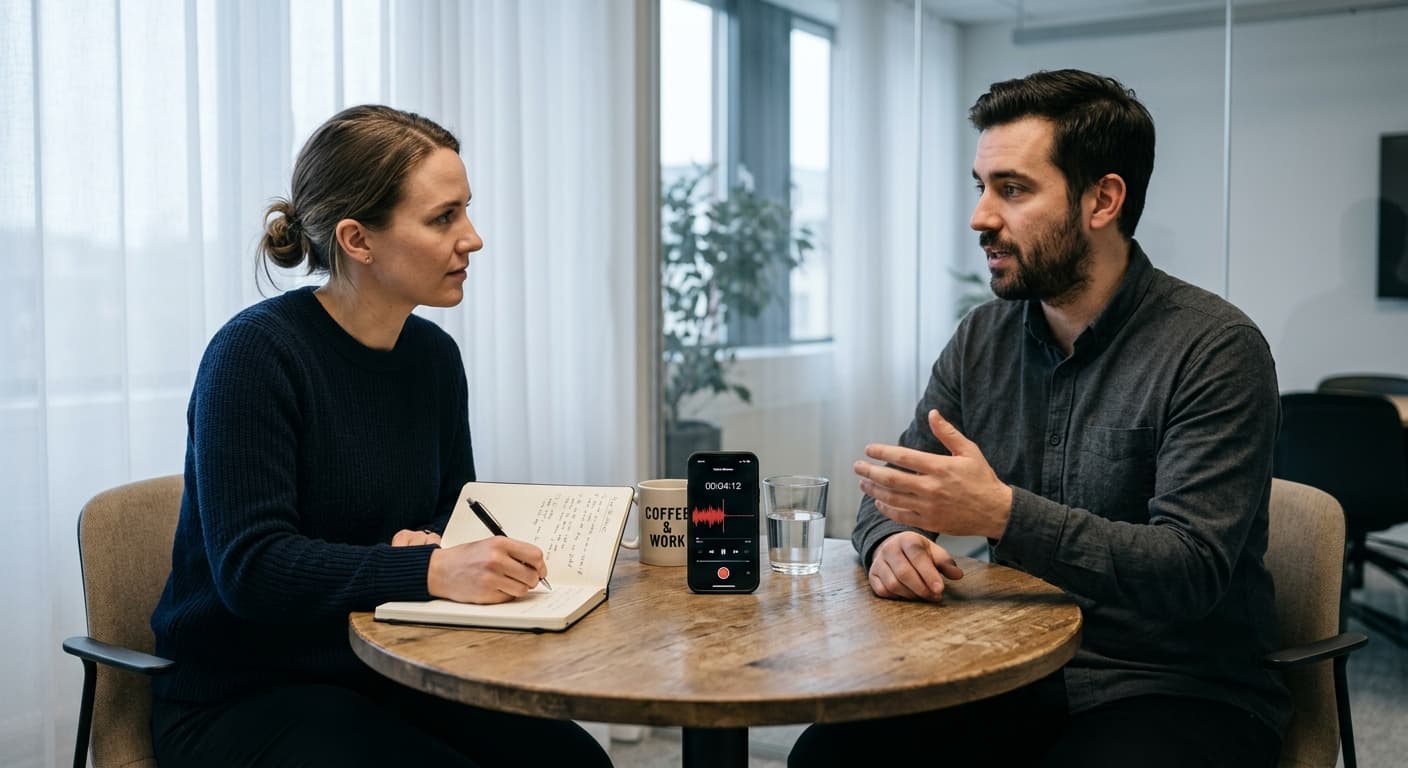
Smart glasses are legal to own and wear in Vermont. Vermont has no wiretapping or eavesdropping statute; the state relies on the federal one-party consent baseline and a line of Vermont Supreme Court decisions establishing strong constitutional privacy protections in the home. That means you can record audio of conversations you are part of in public and semi-public spaces. The legal line is crossed when you secretly record inside a private home, where Vermont statute (13 V.S.A. § 2605(d)) prohibits covert surveillance, and State v. Geraw held that secret police recording of an interview in the home violates the Vermont Constitution.
Are Smart Glasses Legal to Own and Wear in Vermont?
Yes. Vermont has no statute that restricts owning, purchasing, or wearing smart glasses such as Meta Ray-Ban AI glasses. The device is sold freely throughout the state and its possession raises no legal issue under Vermont or federal law.
The legal analysis starts only when the glasses are used to capture audio or video. At that point, the relevant questions are: What is being captured? Where is the recording taking place? Are you a participant in any conversation being recorded?
Vermont is unusual among the fifty states because it has enacted no general wiretapping or eavesdropping criminal statute. Most states mirror or expand on the federal Wiretap Act with their own consent statutes. Vermont has not done so. Instead, Vermont's recording-consent framework rests on two pillars: the federal Wiretap Act's one-party consent baseline, and a line of Vermont Supreme Court decisions construing Article 11 of the Vermont Constitution.
Recording Video in Public vs. Private Spaces
Public spaces
Recording video in a public space is lawful in Vermont under both state and federal law. When a person is in a publicly accessible location (a street, sidewalk, park, retail store, or government building), they have a diminished reasonable expectation of privacy from being seen or filmed.
The federal Wiretap Act defines an "oral communication" as an aural transfer containing the human voice under circumstances justifying a reasonable expectation of privacy against interception. Silent video capture in a public space does not meet that definition. Vermont has no parallel state statute. The result is that smart glasses worn while walking on a Burlington sidewalk, at a farmers market, on a public trail, or in a government building generally do not create legal exposure from video capture alone.
Semi-public and private spaces
The analysis shifts in semi-public or private spaces. A private home, a hotel room, a medical examination room, or a closed-door meeting carries a strong reasonable expectation of privacy. Even spaces that are technically accessible to others (a restaurant booth during a quiet one-on-one conversation, a workplace office, a private gathering) can give rise to a reasonable expectation of privacy in the content of words spoken there.
In his concurring opinion in Katz v. United States, 389 U.S. 347 (1967), Justice Harlan described a two-part requirement: an actual (subjective) expectation of privacy, and an expectation that society is prepared to recognize as reasonable. Vermont courts apply a parallel test under Article 11 of the Vermont Constitution when evaluating whether a space or conversation is private for recording purposes.
Recording inside private residences
Using smart glasses to secretly video-record someone inside a private residence is the scenario where Vermont law creates the clearest prohibition. Vermont's voyeurism statute (13 V.S.A. § 2605(d)) directly prohibits secret surveillance of a person inside a private residence without their knowledge or consent. Vermont courts have also recognized a strong constitutional privacy expectation inside a home under Article 11 (State v. Geraw), a holding the court expressly limited to a police interview in the privacy of the home. Civilian covert in-home recording creates criminal exposure under § 2605 and civil exposure for intrusion upon seclusion.
Recording Audio and Vermont's Judicial Privacy Framework
This is the most distinctive feature of Vermont recording law for smart glasses users, and it requires understanding why Vermont stands apart from every other state.
Vermont has no wiretapping statute
Vermont is the only U.S. state that has not enacted a general wiretapping or eavesdropping criminal statute governing private parties. Most states adopted legislation modeled on the federal Wiretap Act, specifying whether one party's or all parties' consent is required. Vermont lawmakers did not follow that path. Vermont's Electronic Communication Privacy Act (13 V.S.A. §§ 8101-8108) addresses government access to electronic information and law enforcement interception; it governs when police need a warrant to access stored communications or use real-time interception devices. It is not a private-party consent statute and does not define what a civilian may or may not record.
The federal baseline applies by default
Because Vermont has no state wiretap statute, the federal Wiretap Act (18 U.S.C. §§ 2510-2522) and its one-party consent exception (18 U.S.C. § 2511(2)(d)) operate as the default rule for Vermont. Under that exception, it is not unlawful to intercept an oral or electronic communication when the person recording is a party to the communication, provided the recording is not made for the purpose of committing a crime or tortious act. In plain terms: if you are participating in the conversation, you may record it. You do not need to disclose the recording and you do not need the other party's consent.
This is the same rule that applies in federal court and in the 37 one-party consent states that have codified the same standard in their own statutes. Vermont simply arrives at that result through federal law rather than a state statute.
Vermont Supreme Court: constitutional protection in the home
Vermont's courts have recognized that the absence of a state wiretap statute does not mean privacy expectations are unlimited. In State v. Geraw (2002), the Vermont Supreme Court addressed a case in which police detectives secretly tape-recorded a suspect interview at his home kitchen table. The court held that Article 11 of the Vermont Constitution prohibits such covert recording by government actors inside a private home without a warrant. The court's language is widely quoted: any Vermonter sitting around the kitchen table conversing has a reasonable right to expect they are not being secretly monitored or recorded.
Companion decision State v. Brooks (1991) draws the complementary line: a conversation in a public parking lot carried no Article 11 privacy protection, and recording it did not implicate constitutional rights. Together, Geraw and Brooks map the constitutional privacy terrain.
An important scope note: Article 11 of the Vermont Constitution, like the Fourth Amendment, constrains state actors, not private parties directly. Geraw and Brooks bind police and government, not civilians. For a civilian recording inside someone else's home without consent, the applicable restrictions come from three separate sources: (1) 13 V.S.A. § 2605(d), which directly prohibits secret surveillance inside a private residence without the occupant's knowledge or consent; (2) the federal Wiretap Act's tortious-purpose carve-out, which strips the one-party consent privilege when a recording is made for the purpose of committing a tortious act (intrusion upon seclusion being a recognized Vermont tort); and (3) common-law intrusion upon seclusion under Restatement (Second) of Torts § 652B. The practical conclusion is the same: treat covert recording inside any private residence as legally prohibited. The Geraw framework illustrates Vermont's strong protection of privacy in the home, though the court expressly limited its holding to the facts before it: a police interview in the privacy of the home.
What this framework means for smart glasses users
For a smart glasses wearer in Vermont, the practical rules are:
- Recording a conversation you are having in public or a semi-public space (a coffee shop, a business meeting in an office building, a street encounter, a restaurant) is lawful under the federal one-party consent rule. You are a participant, Vermont has no stricter state statute, and the Geraw line protects only the home.
- Recording a conversation inside a private home, whether yours or anyone else's, without the knowledge and consent of those present creates serious legal exposure. Vermont's voyeurism statute (13 V.S.A. § 2605(d)) directly prohibits secret in-home surveillance of a person without their knowledge or consent. The federal tortious-purpose carve-out and common-law intrusion-upon-seclusion provide additional grounds for civil and criminal liability. Treat secret audio or video recording inside any private residence as prohibited under Vermont law.
- Recording a private conversation between two other people that you are not part of requires at least one party's consent under the federal Wiretap Act. Vermont has no separate statute, but the federal prohibition on non-participant interception fully applies.
Federal alignment
The federal Wiretap Act (18 U.S.C. § 2511(2)(d)) provides the one-party consent baseline that governs in Vermont for conversations outside the home. Federal criminal penalties of up to five years imprisonment and civil liability of at least $10,000 in statutory damages apply to unlawful interceptions in Vermont just as in every other state. Recordings made inside a private home without consent can constitute an intentional interception of an oral communication under circumstances where all parties have a reasonable expectation of privacy, triggering federal liability alongside Vermont statutory exposure under 13 V.S.A. § 2605(d) and civil tort liability.
For a full analysis of Vermont's recording-consent framework, see the Vermont Recording Laws page.
Where You Cannot Record: Voyeurism and the Voyeurism Statute
Regardless of consent rules, Vermont law absolutely prohibits recording in locations where a person has a reasonable expectation of privacy from visual observation of their body or intimate conduct. The federal one-party baseline does not override these prohibitions.
13 V.S.A. § 2605: Voyeurism
Vermont's voyeurism statute (13 V.S.A. § 2605) covers multiple distinct forms of non-consensual observation and recording.
Intimate-area recording: The statute prohibits intentionally viewing, photographing, filming, or recording the intimate areas of another person without consent in a place where the person has a reasonable expectation that their intimate areas would not be visible to the public. "Intimate areas" means naked or undergarment-clad genitals, pubic area, buttocks, or female breast.
In-home surveillance: Separately, the statute prohibits secret surveillance of a person inside a private residence without their knowledge or consent. This provision goes beyond intimate-area recording and covers general covert monitoring of a person in their home, which is directly relevant to smart glasses use. Wearing smart glasses and recording inside someone's home without their knowledge falls within this subsection.
Sexual conduct recording: The statute also prohibits recording persons engaged in sexual conduct in private places without consent.
The penalty structure for first and subsequent offenses is:
| Offense | Imprisonment | Fine |
|---|---|---|
| First offense (voyeurism base) | Up to 2 years | Up to $1,000 |
| Second or subsequent offense | Up to 3 years | Up to $5,000 |
| Disclosure/display of recorded images | Up to 5 years | Up to $5,000 |
The covert appearance of smart glasses, which look exactly like ordinary eyewear, does not create any exception to these prohibitions. The hidden nature of the recording can in fact worsen legal exposure because it demonstrates deliberate concealment.
Nonconsensual intimate imagery: 13 V.S.A. § 2606
Vermont's nonconsensual intimate imagery statute (13 V.S.A. § 2606) separately prohibits knowingly sharing or disclosing intimate images (photographs, videos, or digital reproductions showing nudity or sexual conduct) without the depicted person's consent and with intent to harm, harass, intimidate, threaten, or coerce. Penalties reach two years imprisonment and a $2,000 fine for a base violation, and up to five years and $10,000 for disclosure made for financial gain. Civil remedies including injunctive relief are also available.
This statute is relevant to smart glasses users who record intimate content and then share or post it. The recording itself may violate § 2605; the distribution creates separate criminal and civil exposure under § 2606.
Federal floor
Federal law adds a parallel prohibition: 18 U.S.C. § 1801, the Video Voyeurism Prevention Act, prohibits recording a person's private areas on federal property without consent where they have a reasonable expectation of privacy from observation. Vermont's § 2605 extends this rule to all locations throughout the state.
The rule is absolute: no location in Vermont, and no claimed consent from any third party other than the person being filmed in their intimate area, can legalize recording someone's private body in a space where they reasonably expect not to be observed.
Facial Recognition and Biometric Privacy in Vermont
Vermont does not have a standalone biometric privacy statute equivalent to Illinois's Biometric Information Privacy Act (BIPA) or Texas's Capture or Use of Biometric Identifier Act (CUBI). Vermont's consumer protection framework does not currently include a dedicated biometric-data consent law.
Common-law civil exposure
The absence of a biometric statute does not mean smart glasses users who use facial recognition face no legal risk. Vermont recognizes common-law privacy torts, including intrusion upon seclusion under Restatement (Second) of Torts § 652B. A person who intentionally uses smart glasses to scan and identify strangers through a facial-recognition application, capturing their face geometry without knowledge or consent, engages in conduct that could be highly offensive to a reasonable person. Civil liability attaches from the act of covert scanning itself, without any requirement that the footage be published or shared.
The I-XRAY risk
In October 2024, Harvard students demonstrated a system called "I-XRAY" that combined Meta Ray-Ban smart glasses with PimEyes, a reverse facial-recognition search engine, and artificial intelligence to identify strangers in real time and retrieve home addresses and partial Social Security numbers within minutes. The demonstration used third-party software, not Meta's own systems. A Vermont user who replicates this type of integration faces civil tort liability under intrusion upon seclusion regardless of Vermont's lack of a biometric statute. The intentional targeting and identification of individuals without their knowledge, in a manner that would be highly offensive to a reasonable person, satisfies both elements of the tort.
The three biometric states
Illinois (BIPA, 740 ILCS 14), Texas (CUBI, Tex. Bus. & Com. Code § 503.001), and Washington (RCW Chapter 19.375) are the three states with dedicated biometric laws most relevant to smart-glasses facial recognition. If you use your Vermont-purchased smart glasses in Illinois, you are immediately subject to BIPA's requirements, which carry statutory damages of $1,000 to $5,000 per person for capturing face geometry without written consent. Vermont residency provides no exemption when you cross state lines.
Penalties Summary
Because Vermont has no state wiretap or eavesdropping statute, the applicable penalties for unlawful audio recording in Vermont come from the federal Wiretap Act rather than a Vermont criminal code provision. Vermont's own criminal exposure for smart glasses misuse comes primarily from the voyeurism and nonconsensual imaging statutes.
| Offense | Authority | Maximum Penalty |
|---|---|---|
| Non-participant interception of oral communication | 18 U.S.C. § 2511 | 5 years imprisonment; $10,000+ civil damages |
| Voyeurism / intimate-area recording (first offense) | 13 V.S.A. § 2605 | 2 years imprisonment / $1,000 fine |
| Voyeurism / in-home covert surveillance (first offense) | 13 V.S.A. § 2605 | 2 years imprisonment / $1,000 fine |
| Voyeurism (second or subsequent offense) | 13 V.S.A. § 2605 | 3 years imprisonment / $5,000 fine |
| Nonconsensual intimate imagery disclosure | 13 V.S.A. § 2606 | 2 years / $2,000; 5 years / $10,000 (for profit) |
Civil liability under Restatement (Second) of Torts § 652B (intrusion upon seclusion) applies to covert recording in semi-private contexts even without criminal prosecution, and does not require that the footage be published.
Practical Tips for Smart Glasses Users in Vermont
You can record your own conversations outside the home. Vermont's reliance on the federal one-party consent rule means that as long as you are a genuine participant in a conversation taking place in a public or semi-public space, you may record it without disclosing that you are doing so. No Vermont statute requires disclosure or all-party consent.
Treat private homes as a no-recording zone. Vermont's voyeurism statute (13 V.S.A. § 2605(d)) directly prohibits secret surveillance inside a private residence without the occupant's knowledge or consent, and the federal tortious-purpose carve-out strips one-party protection when recording is made for a tortious purpose. The Vermont Supreme Court's Geraw decision additionally signals Vermont's strong constitutional privacy culture around the home. When entering someone's home, either disclose that your glasses have recording capability or disable the camera function entirely.
Keep the capture LED visible. Meta's Ray-Ban AI glasses include a built-in white LED near the right frame that illuminates whenever the camera is actively recording video, taking a photo, or streaming live. Vermont law does not currently mandate a recording indicator for wearable devices, but deliberately covering or obscuring the LED removes the only external signal that recording is occurring. Covering the LED strengthens evidence of intentional concealment in any legal dispute.
Disclose before recording formal or sensitive meetings. Even though Vermont law permits undisclosed participant recording in most non-home settings, disclosing the recording at the outset of any formal meeting (a business negotiation, an employment interview, a medical appointment, a legal consultation) eliminates any ambiguity and fully avoids intrusion-upon-seclusion risk.
Never record in private spaces. The prohibitions under 13 V.S.A. § 2605 on recording intimate areas and conducting in-home surveillance are absolute. Remove or disable the glasses before entering locker rooms, restrooms, fitting rooms, changing areas, or any residence where people have a clear expectation of privacy from visual observation.
Do not record others' private conversations. Vermont's federal-baseline one-party rule protects participants, not bystanders. If two other people are having a private conversation you are not part of, you cannot lawfully record it under the federal Wiretap Act, which applies fully in Vermont.
Facial recognition adds civil risk. Vermont has no standalone biometric statute, but using smart glasses to identify strangers through a facial-recognition application exposes you to common-law tort liability for intrusion upon seclusion. If the person identified resides in Illinois, Texas, or Washington, you may also face liability under those states' dedicated biometric statutes.
Driving. Vermont has no statute as of June 2026 specifically addressing wearable display devices while driving. Vermont's distracted driving law (23 V.S.A. § 1099) restricts handheld electronic device use while driving; smart glasses are not handheld. Navigation use through smart glasses is likely analogous to a mounted GPS device. Using smart glasses for live streaming, video calls, or social media interaction while driving raises the same distracted-driving concerns as any electronic device use, and remains legally unsettled under current Vermont law.
More Vermont Laws
Frequently Asked Questions
Does Vermont have a wiretapping or eavesdropping law?
No. Vermont is the only U.S. state without a general wiretapping or eavesdropping criminal statute governing private parties. The federal Wiretap Act (18 U.S.C. § 2511) and its one-party consent rule supply the operative legal baseline for Vermont. Vermont's own Electronic Communication Privacy Act (13 V.S.A. §§ 8101-8108) governs government access to electronic information, not private-party recording.
Can I record a conversation with my smart glasses in Vermont without telling the other person?
Yes, in most settings outside a private home. Vermont has no state wiretap statute, so the federal one-party consent rule applies: if you are a participant in the conversation, you may record without disclosing it or obtaining the other party's consent. The exception is inside a private residence. Vermont's voyeurism statute (13 V.S.A. § 2605(d)) directly prohibits secret in-home surveillance, and the federal tortious-purpose carve-out strips one-party protection when recording is for a tortious purpose. State v. Geraw (2002), while a government-actor case under Article 11, further illustrates Vermont's strong constitutional home-privacy norm.
What is State v. Geraw and why does it matter for smart glasses?
State v. Geraw (2002) is a Vermont Supreme Court decision in which police secretly tape-recorded a suspect interview at his home kitchen table without a warrant. The court held that Article 11 of the Vermont Constitution prohibits such covert recording by government actors inside a private home. Article 11 binds state actors, not civilians directly, but Geraw illustrates Vermont's strong home-privacy culture. For civilians using smart glasses, the prohibition on covert in-home recording rests on 13 V.S.A. § 2605(d) (secret in-home surveillance statute), the federal tortious-purpose carve-out under 18 U.S.C. § 2511(2)(d), and common-law intrusion-upon-seclusion. The practical rule is the same: do not secretly record inside any private residence.
Can I secretly film someone with my smart glasses in Vermont?
In public spaces, video-only recording is generally lawful because people in public have a reduced expectation of privacy from being seen. Inside private residences, secret recording raises the in-home surveillance and intrusion concerns discussed above; the Geraw line itself addresses police recording in the home. Recording intimate body parts without consent in any private location violates 13 V.S.A. § 2605 (voyeurism), carrying up to two years imprisonment for a first offense.
What are the penalties for illegal recording in Vermont?
Because Vermont has no state wiretap statute, unlawful audio recording of a private conversation you are not part of is punished under the federal Wiretap Act: up to five years imprisonment and at least $10,000 in civil damages per violation. Voyeurism (recording intimate areas or secretly surveilling someone inside a home) under 13 V.S.A. § 2605 carries up to two years for a first offense and up to three years for repeat offenses. Sharing recorded intimate images without consent under 13 V.S.A. § 2606 carries up to two to five years and substantial fines.
Does Vermont have a biometric privacy law that applies to smart glasses?
Vermont has no standalone biometric privacy statute. Unlike Illinois (BIPA), Texas (CUBI), or Washington (RCW Chapter 19.375), Vermont does not require consent before collecting face geometry or other biometric identifiers. However, using smart glasses to identify strangers via facial recognition can still create civil liability under common-law intrusion upon seclusion, and Vermont residents who use their glasses in biometric-law states are immediately subject to those states' requirements.
Are Meta Ray-Ban smart glasses legal in Vermont?
Yes, the device is legal to own and wear in Vermont. The legality of use depends on what you record and where. Recording your own conversations outside a private home is lawful under the federal one-party rule. Recording inside a private home without consent can violate Vermont's constitutional privacy framework. Recording intimate areas without consent in private locations violates Vermont's voyeurism statute. Meta's capture LED provides external notice of recording, and deliberately covering it can be used as evidence of covert recording intent in any dispute.
Can I record a police officer with smart glasses in Vermont?
Yes. Recording police officers performing their duties in a public space is generally protected under the First Amendment. As a participant in any encounter such as a traffic stop or street interaction, the federal one-party consent rule also permits audio recording without disclosure. Vermont has no state statute restricting participant recording of public encounters with law enforcement. You cannot use the glasses to secretly record in private spaces, and you should not physically interfere with law enforcement activity while recording.
Updates
Corrected the description of Katz v. United States to attribute the two-part privacy test to Justice Harlan's concurrence, and clarified that State v. Geraw is limited to police recording of an interview in the home.
Independently fact-checked against the cited primary sources
Independently fact-checked against the cited primary sources; governing law re-checked for recent changes
Reviewed and approved by an editor
The Law Behind This Article
This article rests on the statutory provisions below, held in our own legal record and retrieved from the official source. Tap a section to read the operative text.
Vermont Statutes Annotated, Title 13: Crimes and Criminal Procedure, Chapter 59: Lewdness and Prostitution, Subchapter: LEWD AND INDECENT CONDUCT
§ 2605VoyeurismIn forcecited in 15 of our articles
(a) As used in this section: (1) “Bona fide private investigator or bona fide security guard” means an individual lawfully providing services, whether licensed or unlicensed, pursuant to 26 V.S.A. §§ 3151 and 3151a. (2) “Female breast” means any portion of the female breast below the top of the areola. (3) “Circumstances in which a person has a reasonable expectation of privacy” means circumstances in which a reasonable person would believe that his or her intimate areas would not be visible to the public, regardless of whether that person is in a public or private area. This definition includes circumstances in which a person knowingly disrobes in front of another, but does not expect nor give consent for the other person to photograph, film, or record his or her intimate areas. (4) “Intimate areas” means the naked or undergarment-clad genitals, pubic area, buttocks, or female breast of a person.
Official text (excerpt) · last checked 2026-09-24 · Read the full text in our law library · Verify at legislature.vermont.gov
Cited in 6 court opinions in our collectionLatest citing opinion in our collection: 2022
In the courts (editorial summary, independently checked):In State v. DEVOID (2010) the Vermont Supreme Court reversed an attempted voyeurism conviction under section 2605(b)(1), holding the evidence could not show the defendant, on the ground, was able to see the complainant's intimate areas as the statute defines them, so looking at her window was not an overt act.
Opinions citing this section in our collection:
- State v. DEVOID (Supreme Court of Vermont 2010, 188 Vt. 445)✓A man stared up at a second-floor shower window from the parking lot; a photograph taken inside the bathroom showed the complainant's intimate areas, as the statute defines them, were below the sill, so the court reversed his attempted-voyeurism conviction as unsupported.
- State v. Squiers (Supreme Court of Vermont 2006, 179 Vt. 388)“…r any object into the genital or anal opening of another”); 13 V.S.A. § 2605(a)(4) & (b) (prohibiting the viewing or…”
- State v. Beaudoin (Supreme Court of Vermont 2008, 185 Vt. 164)“…ter 1 includes §§ 2601 and 2602 and a section on voyeurism, 13 V.S.A. § 2605. Section 2601 makes it a felony to enga…”
Identified automatically from the court opinions citing this section — not a ranking of which case controls.
Also relied on in: Vermont Medical Recording Laws, Vermont Laws on Recording in Public, Vermont School Recording Laws
§ 2606Disclosure of sexually explicit images without consentIn forcecited in 10 of our articles
(a) As used in this section: (1) “Disclose” includes transfer, publish, distribute, exhibit, or reproduce. (2) “Harm” means physical injury, financial injury, or serious emotional distress. (3) “Nude” means any one or more of the following uncovered parts of the human body: (A) genitals; (B) pubic area; (C) anus; or (D) post-pubescent female nipple. (4) “Sexual conduct” shall have the same meaning as in section 2821 of this title. (5) “Visual image” includes a photograph, film, videotape, recording, or digital reproduction, including an image created or altered by digitization. (6) “Digitization” means the process of altering an image in a realistic manner utilizing an image or images of a person, including images other than the person depicted, or computer-generated images. (b)(1) A person violates this section if the person knowingly discloses a visual image of an identifiable person who is nude or who is engaged in sexual conduct, without the person’s consent, with the intent to harm, harass, intimidate, threaten, or coerce the person depicted, and the disclosure would cause a reasonable person to suffer harm.
Official text (excerpt) · last checked 2026-08-30 · Read the full text in our law library · Verify at legislature.vermont.gov
Cited in 3 court opinions in our collectionLatest citing opinion in our collection: 2024
Opinions citing this section in our collection:
- State v. Rebekah S. VanBuren (Supreme Court of Vermont 2019, 2018 VT 95)“…s statute banning disclosure of nonconsensual pornography. 13 V.S.A. § 2606. We conclude that the statute is const…”
- Ava Morton v. Mayah Young (Supreme Court of Vermont 2023, 298 A.3d 230)“…ute criminalizing disclosure of nonconsensual pornography, 13 V.S.A. § 2606, did not violate the First Amendment. I…”
- corriveau v. windham (Vermont Superior Court 2024)“…ithout saying that an injunction is an equitable remedy.”); 13 V.S.A. § 2606(e)(2) (explicitly listing “a preliminar…”
Identified automatically from the court opinions citing this section — not a ranking of which case controls.
Also relied on in: Vermont Video Recording Laws, Vermont Recording Laws (2026): No Wiretap Statute, One-Party Default
United States Code Title 18
§ 2511Interception and disclosure of wire, oral, or electronic communications prohibitedIn forcecited in 441 of our articles
Except as otherwise specifically provided in this chapter any person who— intentionally intercepts, endeavors to intercept, or procures any other person to intercept or endeavor to intercept, any wire, oral, or electronic communication; intentionally uses, endeavors to use, or procures any other person to use or endeavor to use any electronic, mechanical, or other device to intercept any oral communication when— such device is affixed to, or otherwise transmits a signal through, a wire, cable, or other like connection used in wire communication; or such device transmits communications by radio, or interferes with the transmission of such communication; or such person knows, or has reason to know, that such device or any component thereof has been sent through the mail or transported in interstate or foreign commerce; or such use or endeavor to use (A) takes place on the premises of any business or other commercial establishment the operations of which affect interstate or foreign commerce; or (B) obtains or is for the purpose of obtaining information relating to the operations of any business or other commercial establishment the operations of which affect interstate or foreign…
Official text (excerpt) · last checked 2026-09-17 · Read the full text in our law library · Verify at uscode.house.gov
Cited in 2,045 court opinions in our collectionLatest citing opinion in our collection: 2026
In the courts (editorial summary, independently checked):Griggs-Ryan v. Smith (1990) applied the Section 2511(2)(d) prior-consent exception, treating a tenant repeatedly told that all incoming calls were taped as having impliedly consented. United States v. United States District Court (1972) read the then-current Section 2511(3) as conferring no presidential surveillance power.
Opinions citing this section in our collection:
- Mitchell v. Forsyth (Supreme Court of the United States 1985, 472 U.S. 511)✓The Attorney General authorized a warrantless 1970 national security wiretap that caught the plaintiff's calls; the Court held the since-repealed Section 2511(3) disclaimer left the tap lawful under Title III, and that Mitchell had qualified immunity.
- United States v. United States District Court for the Eastern District of Michigan (Supreme Court of the United States 1972, 407 U.S. 297)✓The Attorney General approved warrantless wiretaps on members of a domestic group accused of bombing a CIA office; the Court read Section 2511(3) as a congressional disclaimer conferring no surveillance power, then held the Fourth Amendment required prior judicial approval.
- Forsyth v. Barr (Court of Appeals for the Fifth Circuit 1994, 19 F.3d 1527)✓Dallas police used, in an internal affairs probe of an officer, calls private parties allegedly intercepted illegally; assuming that was unlawful, the Fifth Circuit held Section 2517(1) and (2) allowed the disclosure and use, defeating the Section 2511(1)(c) and (d) claims.
Identified automatically from the court opinions citing this section — not a ranking of which case controls.
Also relied on in: Connecticut Recording Laws (2026): Hybrid Consent Rules Explained, Oregon Recording Laws (2026): Hybrid One-Party and All-Party Rules, US Recording Laws by State (2026): All 50 States Explained
§ 2510DefinitionsIn forcecited in 137 of our articles
As used in this chapter— “wire communication” means any aural transfer made in whole or in part through the use of facilities for the transmission of communications by the aid of wire, cable, or other like connection between the point of origin and the point of reception (including the use of such connection in a switching station) furnished or operated by any person engaged in providing or operating such facilities for the transmission of interstate or foreign communications or communications affecting interstate or foreign commerce; “oral communication” means any oral communication uttered by a person exhibiting an expectation that such communication is not subject to interception under circumstances justifying such expectation, but such term does not include any electronic communication; “State” means any State of the United States, the District of Columbia, the Commonwealth of Puerto Rico, and any territory or possession of the United States; “intercept” means the aural or other acquisition of the contents of any wire, electronic, or oral communication through the use of any electronic, mechanical, or other device.1 So in original. The period probably should be a semicolon.
Official text (excerpt) · last checked 2026-07-28 · Read the full text in our law library · Verify at uscode.house.gov
Cited in 2,382 court opinions in our collectionLatest citing opinion in our collection: 2026
In the courts (editorial summary, independently checked):United States v. New York Telephone Co. (1977) held that pen registers fall outside Title III because they do not acquire the contents of a communication as Section 2510(4) and (8) define interception. Forsyth v. Barr (1994) applied the same definitions, treating the defendant officers as law enforcement officers under Section 2510(7).
Opinions citing this section in our collection:
- Forsyth v. Barr (Court of Appeals for the Fifth Circuit 1994, 19 F.3d 1527)✓Neighbors tapped an informant's home line and the overheard charges reached Dallas internal affairs; the Fifth Circuit saw no evidence the police defendants intercepted anything and held they were 2510(7) law enforcement officers, so 2517(1) and (2) allowed their use of it.
- Nixon v. Administrator of General Services (Supreme Court of the United States 1977, 433 U.S. 425)“…of the Omnibus Crime Control and Safe Streets Act of 1968, 18 U. S. C. §§ 2510 et seq. 408 F. Supp., at 363 . We…”
- Gannett Co. v. DePasquale (Supreme Court of the United States 1979, 443 U.S. 368)“…of the Omnibus Crime Control and Safe Streets Act of 1968, 18 U. S. C. § 2510 et seq., be preserved prior to the d…”
Identified automatically from the court opinions citing this section — not a ranking of which case controls.
Also relied on in: Surveillance Camera Laws by State (2026 Guide), Georgia Recording Laws (2026): One-Party Audio, All-Party Video, District of Columbia Recording Laws (2026): One-Party Consent Rules
§ 1801Video voyeurismIn forcecited in 81 of our articles
Whoever, in the special maritime and territorial jurisdiction of the United States, has the intent to capture an image of a private area of an individual without their consent, and knowingly does so under circumstances in which the individual has a reasonable expectation of privacy, shall be fined under this title or imprisoned not more than one year, or both. In this section— the term “capture”, with respect to an image, means to videotape, photograph, film, record by any means, or broadcast; the term “broadcast” means to electronically transmit a visual image with the intent that it be viewed by a person or persons; the term “a private area of the individual” means the naked or undergarment clad genitals, pubic area, buttocks, or female breast of that individual; the term “female breast” means any portion of the female breast below the top of the areola; and the term “under circumstances in which that individual has a reasonable expectation of privacy” means— circumstances in which a reasonable person would believe that he or she could disrobe in privacy, without being concerned that an image of a private area of the individual was being captured; or circumstances in which a…
Official text (excerpt) · last checked 2026-07-28 · Read the full text in our law library · Verify at uscode.house.gov
Cited in 53 court opinions in our collectionLatest citing opinion in our collection: 2026
In the courts (editorial summary, independently checked):Courts have applied 18 U.S.C. 1801 mainly at its edges. United States v. Johnson (2010) read it as Congress's answer to secretly filming nudity on federal property, acquitting on a child exploitation charge instead. EPIC v. Department of Homeland Security (2011) applied the Section 1801(c) law enforcement exception to a TSA scanner claim.
Opinions citing this section in our collection:
- United States v. Anthony Helton (Court of Appeals for the Fourth Circuit 2019, 944 F.3d 198)“…from this list of federal offenses is video voyeurism under 18 U.S.C. § 1801. Rather than list this statute as an enu…”
- United States v. Johnson (District Court, W.D. Missouri 2010, 719 F. Supp. 2d 1059)✓A weightlifting coach hid a camera to film minors weighing in nude; acquitting him under the child exploitation statute, the court called that conduct plain video voyeurism under section 1801, but noted the section reaches only federal maritime and territorial jurisdiction.
- Electronic Privacy Information Center v. United States Department of Homeland Security (Court of Appeals for the D.C. Circuit 2011, 653 F.3d 1)✓Privacy groups challenged TSA body scanners under the Video Voyeurism Prevention Act; the D.C. Circuit held the statute's exception for lawful law enforcement, correctional, or intelligence activity applied to airport screening, so the section 1801 claim failed.
Identified automatically from the court opinions citing this section — not a ranking of which case controls.
Also relied on in: South Dakota Voyeurism Laws, Utah Voyeurism Laws, Is It Illegal to Video Record Someone Without Their Consent? (2026)
Vermont Statutes Annotated, Title 23: Motor Vehicles, Chapter 13: Operation of Vehicles, Subchapter: VIOLATIONS AND PENALTIES
§ 1099Texting prohibitedIn force
(a) As used in this section, “texting” means the reading or the manual composing or sending of electronic communications, including text messages, instant messages, or e-mails, using a portable electronic device as defined in subdivision 4(82) of this title. Use of a global positioning or navigation system shall be governed by section 1095b of this title. (b)(1) An individual shall not engage in texting while operating a moving motor vehicle in a place open temporarily or permanently to public or general circulation of vehicles. (2) In addition, an individual shall not engage in texting while operating a motor vehicle on a public highway in Vermont, including while the vehicle is stationary, unless otherwise provided under this section. As used in this subdivision (b)(2): (A) “Public highway” means a State or municipal highway as defined in 19 V.S.A. § 1(12). (B) “Operating” means operating a motor vehicle on a public highway, including while temporarily stationary because of traffic, a traffic control device, or other temporary delays.
Official text (excerpt) · last checked 2026-08-01 · Read the full text in our law library · Verify at legislature.vermont.gov
Search our full record of US law — 2.1 million sections, every state + federal →
Sources and References
- 13 V.S.A. § 2605 (Voyeurism). Vermont's voyeurism statute. Prohibits intentional recording of intimate areas without consent in private locations, and secret in-home surveillance of persons without knowledge or consent. First offense: up to 2 years / $1,000. Second offense: up to 3 years / $5,000. Disclosure violation: up to 5 years / $5,000.(legislature.vermont.gov)
- 13 V.S.A. § 2606 (Nonconsensual intimate imagery). Vermont's nonconsensual intimate imagery statute. Prohibits knowing disclosure of intimate images without consent with intent to harm, harass, intimidate, threaten, or coerce. Up to 2 years / $2,000 base; up to 5 years / $10,000 for profit motive. Civil remedies including injunctive relief available.(legislature.vermont.gov)
- 13 V.S.A. §§ 8101-8108 (Vermont Electronic Communication Privacy Act). Vermont's law governing government access to electronic communications and law enforcement use of real-time interception devices. This is a government-access statute, not a private-party wiretapping consent law.(legislature.vermont.gov)
- Vermont Constitution, Chapter I, Article 11. Vermont's constitutional protection against unreasonable searches and seizures. The Vermont Supreme Court in State v. Geraw applied Article 11 to hold that secret recording inside a private home violates the constitutional privacy expectation of persons conversing there.(legislature.vermont.gov)
- 18 U.S.C. § 2511 (Federal Wiretap Act). One-party consent exception at § 2511(2)(d). Operates as Vermont's default recording-consent rule because Vermont has no state wiretap statute. Criminal penalty up to 5 years imprisonment; civil liability of at least $10,000 per unlawful interception.(law.cornell.edu)
- 18 U.S.C. § 2510(2) (Definition of 'oral communication'). Basis for the rule that silent video-only recording in public is not a Wiretap Act violation.(law.cornell.edu)
- 18 U.S.C. § 1801 (Federal Video Voyeurism Prevention Act). Prohibits recording private areas of individuals on federal property without consent where there is a reasonable expectation of privacy.(law.cornell.edu)
- Meta Ray-Ban AI Glasses official privacy page. Documents the capture LED notification system and Meta's guidance on lawful use.(meta.com)
- State v. Brooks, 157 Vt. 490 (1991). Vermont Supreme Court held that recording a conversation in a public parking lot did not violate Article 11 of the Vermont Constitution because the defendant had no reasonable expectation of privacy in that location. Establishes the public-space no-privacy baseline complementary to State v. Geraw.(courtlistener.com)