
New Hampshire
New Hampshire Smart Glasses Recording Laws (2026)
Independently fact-checked against primary sources (last audited August 24, 2026). · Reviewed by the RecordingLaw editorial team. · Law checked current as of August 24, 2026. · 10 primary sources cited on this page. How we verify our legal content
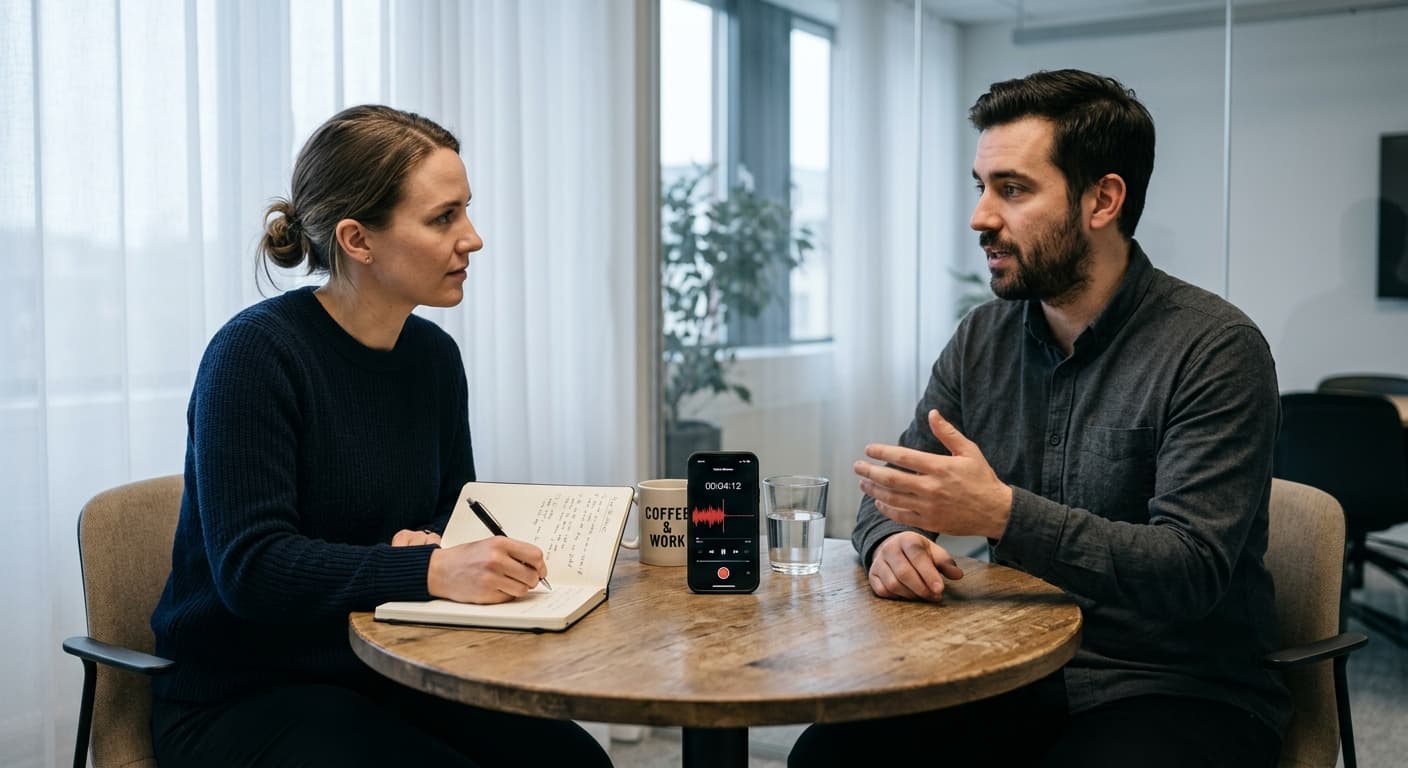
Smart glasses are legal to own and wear in New Hampshire, but the state's all-party consent law under RSA 570-A:2 governs any audio capture. You can record video in public without restriction, but recording the audio of a private conversation without the consent of every participant is a crime: a Class B felony for a third-party eavesdropper and generally a Class B misdemeanor if you are a party to the conversation yourself, although a participant's recording made willfully rather than merely knowingly can be a felony.
Are smart glasses legal to own and wear in New Hampshire?
Yes. New Hampshire has no law that restricts the ownership, sale, or wearing of smart glasses as a category of consumer device. Meta Ray-Ban glasses, Snap Spectacles, and similar wearables are freely available in the state and may be worn in most public and private settings without any registration or permit requirement.
The legality of what you do while wearing them is a separate question entirely. New Hampshire's recording statutes draw a sharp line between the device itself (always legal) and the act of capturing audio without consent (potentially a felony). Understanding that distinction is the whole point of this article.
One hardware note: Meta's Ray-Ban AI glasses include a white capture LED near the right frame that lights up whenever the camera is actively recording video or streaming live. Meta increased the LED's size and brightness following early privacy criticism. According to Meta's official privacy guidance, users should let the LED shine and stop recording if anyone nearby asks them to. The LED is the only external signal that recording is occurring. Because smart glasses look like ordinary eyewear, bystanders who do not see the LED have no way to know they are being filmed or heard.
Recording video in public vs. private spaces
Video-only recording (where the microphone is disabled or the footage captures no audio) sits in a different legal category than audio interception in New Hampshire.
In public spaces (streets, parks, government buildings open to the public, retail stores), there is generally no reasonable expectation of privacy from being observed or filmed. Recording video of people in those spaces with smart glasses is legal under both federal and New Hampshire law, provided no audio of private conversations is captured. The federal Video Voyeurism Prevention Act (18 U.S.C. § 1801) and RSA 570-A apply only where a reasonable expectation of privacy exists or where audio is intercepted; open public spaces do not satisfy those thresholds.
In private spaces (homes, offices, hotel rooms, medical facilities), the analysis shifts. Even silent video recording can expose the wearer to civil liability for intrusion upon seclusion under Restatement (Second) of Torts § 652B if the recording is of a space where the subject has a clear expectation of privacy and the intrusion would be highly offensive to a reasonable person.
Semi-public or hybrid spaces present the most nuance. A quiet corner of a restaurant, a workplace break room, or a one-on-one conversation in a library are technically accessible to others, but participants in those settings often have a reasonable expectation that their words are not being recorded. RSA 570-A:1 defines an "oral communication" as a statement made where the speaker has a reasonable expectation the words will not be intercepted. That definition pulls those quiet conversations into the all-party consent framework the moment a smart glasses wearer starts recording audio.
The safest rule: if in doubt about whether a space is "public" for recording purposes, treat it as private.
Recording audio and New Hampshire's all-party consent law
New Hampshire is an all-party consent state. RSA 570-A:2 makes it unlawful to willfully intercept, attempt to intercept, or procure another person to intercept any wire, electronic, or oral communication. The statute draws on federal Wiretap Act (18 U.S.C. §§ 2510-2522) concepts but imposes a stricter consent standard: federal law requires only one-party consent; New Hampshire requires the consent of every participant.
For a smart glasses wearer, the practical rule is this:
- You are attending a meeting, having a conversation with a colleague, or talking with a neighbor. You want to record it with your glasses. Even though you are part of the conversation, you still need the consent of every other person before the microphone is active. There is no "I'm a party to it" exception for civilians in New Hampshire.
- If you are not part of the conversation at all and you record it anyway (for example, you walk past a private discussion and let your glasses capture the audio), that is third-party interception, the more serious offense.
The consent requirement applies to "private" conversations, meaning those in which participants reasonably expect not to be intercepted. A loud exchange between strangers in a busy intersection that neither party treats as confidential may not qualify. A one-on-one conversation in an office or a dinner table discussion among family members almost certainly does.
For the full legal analysis of how RSA 570-A:2 operates, see the New Hampshire recording laws parent page.
The federal floor does not help here
The federal Wiretap Act allows one participating party to consent on behalf of all parties for non-law-enforcement recordings (18 U.S.C. § 2511(2)(d)). That federal baseline is irrelevant in New Hampshire because RSA 570-A:2 is more restrictive, and more restrictive state laws override the federal floor. Recording your own conversations in New Hampshire without all-party consent is still a crime even if it would be legal under federal law.
How consent works in practice for smart glasses
Smart glasses complicate the consent requirement in a way that traditional recorders do not. A visible phone recorder or a handheld voice recorder signals to others that recording may be occurring. Smart glasses do not. The only notice mechanism is the capture LED, which is small, easy to miss, and easily obscured.
In an all-party consent state like New Hampshire, verbal disclosure is the clearest path to valid consent. Something as simple as "I'm recording this conversation with my glasses, is that OK?" before the audio begins satisfies the consent requirement. Pointing at the LED or relying on others to notice it is not a reliable substitute for verbal disclosure in a criminal context.
Locations where recording is absolutely prohibited
Regardless of consent, there are locations where recording with any device (including smart glasses) is flatly illegal:
- Public restrooms
- Locker rooms and changing areas
- The interior of a private dwelling
- Medical examination rooms and similar spaces
RSA 644:9 prohibits installing or using any device to observe, photograph, or record a person's private body parts (including genitalia, buttocks, or female breasts) or to record activity in a private place where the person has a reasonable expectation of privacy. Using smart glasses in a gym locker room, a swimming pool changing area, or a restroom violates RSA 644:9 regardless of whether any audio is captured and regardless of any claimed consent.
A first offense under RSA 644:9 is a Class A misdemeanor. A second or subsequent conviction on a general violation is a Class B felony. Any first offense where the victim is under 18 years old is also a Class B felony. A second or subsequent offense where the victim is under 18 carries a Class A felony charge.
RSA 644:9-a separately criminalizes the nonconsensual dissemination of intimate images, including synthetic and AI-generated intimate images under an amendment effective January 1, 2025. Using smart glasses to capture intimate imagery and then sharing it constitutes a Class B felony.
The federal Video Voyeurism Prevention Act (18 U.S.C. § 1801) provides an additional federal floor on federal property (federal courthouses, military installations, national parks). State voyeurism law under RSA 644:9 extends the same prohibition to all locations in New Hampshire.
Facial recognition and biometric data
New Hampshire does not have a private-sector biometric privacy statute comparable to Illinois's Biometric Information Privacy Act (740 ILCS 14, "BIPA"), Texas's Capture or Use of Biometric Identifier Act (Tex. Bus. and Com. Code § 503.001, "CUBI"), or Washington's Biometric Identifiers Law (RCW Chapter 19.375). Its biometric statute, RSA Chapter 359-N, applies only to government agencies: it bars state and local agencies from obtaining or retaining a person's biometric data, including facial feature pattern characteristics, except under listed exceptions, and lets a harmed individual recover $2,500 per violation or actual damages if greater, plus attorney fees. It does not reach private individuals or companies, so it does not govern a smart glasses wearer or the apps the wearer uses.
This matters for smart glasses users because the absence of a private-sector biometric law in New Hampshire does not mean facial-recognition use is consequence-free.
If a smart glasses wearer uses a third-party facial-recognition application (for example, integrating with a service that scans face geometry against a database) and that data is stored or processed in Illinois, Illinois BIPA liability can attach regardless of where the capture occurred. BIPA allows a private right of action with statutory damages of $1,000 to $5,000 per person per violation, and recent class actions have resulted in nine-figure settlements. If the app is operated for commercial purposes and the underlying company is a Texas entity, CUBI's $25,000-per-violation civil penalty (enforced by the Texas Attorney General) may also apply.
The October 2024 "I-XRAY" demonstration by Harvard students using Meta Ray-Ban glasses and the PimEyes reverse facial-recognition service illustrated the real-world stakes: the demonstrators were able to identify strangers in real time, retrieve home addresses, and find partial Social Security numbers within minutes of capturing a face. Meta did not provide or enable the facial-recognition capability; the students used third-party software. But the example shows how easily the glasses' camera feed can be routed through an identification pipeline.
Meta's current glasses do not include built-in facial recognition and do not send live video to a face-recognition database by default. Whether the specific apps a wearer installs or connects to do so is a separate question that requires reviewing those apps' privacy policies and terms.
New Hampshire common law adds one more layer. In Hamberger v. Eastman, 106 N.H. 107 (1964), the New Hampshire Supreme Court recognized an invasion-of-privacy tort under state common law when a landlord installed listening devices in a tenant's bedroom. The principle extends: systematic covert identification of individuals via smart glasses in a context where they have a reasonable expectation of not being identified could support an intrusion-upon-seclusion claim under RSA common law even absent a private-sector biometric statute.
Criminal penalties for illegal recording in New Hampshire
RSA 570-A:2 creates two distinct criminal tiers, and which tier applies depends on whether the person recording was a participant in the conversation and, for a participant, on the person's mental state.
Third-party interception (RSA 570-A:2, I): If you are not a party to the conversation and you willfully intercept it, the offense is a Class B felony. New Hampshire Class B felony penalties carry up to 7 years in prison and a fine of up to $4,000.
Participant recording without all-party consent (RSA 570-A:2, I-a): If you are a party to the conversation but you knowingly record it without obtaining consent from every other participant, the default offense is a Class B misdemeanor. Class B misdemeanors in New Hampshire carry no jail time and a maximum fine of $1,200. However, the State may elect to charge the offense as a Class A misdemeanor before arraignment, which raises the maximum to 1 year in jail and a $2,000 fine.
Civil damages (RSA 570-A:11): Any person whose oral communication was illegally intercepted, disclosed, or used may sue in civil court for the greater of $100 per day of the violation or $1,000, plus actual damages if they exceed the liquidated amount, punitive damages, and reasonable attorney fees. A civil action may proceed whether or not a criminal prosecution was brought.
Suppression under RSA 570-A:6: After State v. Clark, 2024 N.H. 64 (N.H. Nov. 13, 2024), suppression of an illegally recorded communication in a criminal case is triggered only by a felony violation of RSA 570-A:2, I, and a participant's own one-party recording can be that felony if made willfully rather than merely knowingly. A participant recording that is only a misdemeanor (the knowing tier) is not suppressed under RSA 570-A:6 and may be admitted as evidence. This distinction has real practical significance: a recording made by a party to a conversation, even if criminally obtained, could be used against that person or others in a subsequent proceeding.
Practical tips for using smart glasses legally in New Hampshire
-
Announce and ask. In any setting where a conversation might qualify as "private" under RSA 570-A:1, verbally disclose that you are recording and obtain agreement from everyone present before the audio starts. "I have my glasses recording this meeting, is everyone OK with that?" is sufficient.
-
Let the LED shine. Do not cover or obstruct the capture LED on Meta Ray-Ban or similar devices. Covering the LED removes the only external notice that recording is occurring, which makes any resulting recording look plainly non-consensual and could support enhanced civil damages.
-
Disable the microphone for video-only use. If you only want to capture video (say, at a public event or in a street photography context), check whether your device allows you to disable audio capture independently of video. A purely silent recording is not an interception under RSA 570-A.
-
Never record in private areas. Restrooms, locker rooms, changing areas, and private homes are off-limits regardless of consent under RSA 644:9. The felony exposure on repeat or minor-victim offenses is severe.
-
Check your apps. Any app that enables facial recognition, voice identification, or biometric matching creates exposure to Illinois BIPA or Texas CUBI liability if it processes face geometry commercially. Review third-party app permissions before connecting them to smart glasses.
-
Out-of-state recordings. In State v. Hersom (No. 2023-0352, N.H. Jan. 24, 2025), where it was disputed whether a covert in-person recording had been made in Maine or in New Hampshire, the trial court excluded it after finding the State had not proved it was made in Maine, and the New Hampshire Supreme Court affirmed without deciding which side bears that burden. The safest approach is to obtain all-party consent for any conversation with a New Hampshire connection.
More New Hampshire Laws
- New Hampshire Data Privacy Laws
- New Hampshire Deepfake Laws
- New Hampshire Drone Laws
- New Hampshire Recording Laws
Frequently Asked Questions
Are smart glasses legal in New Hampshire?
Smart glasses are legal to own and wear in New Hampshire. The device itself is not regulated. What is regulated is what you do with it: recording video in public without audio is generally lawful, but recording the audio of a private conversation without the consent of every participant violates RSA 570-A:2 and can be charged as a misdemeanor or felony depending on whether you were part of the conversation and, if you were, whether you acted knowingly or willfully.
Do I need consent to record audio with smart glasses in New Hampshire?
Yes. New Hampshire is an all-party consent state under RSA 570-A:2. Every person whose voice would be captured must consent before you start recording. There is no exception for participants: even if you are part of the conversation, knowingly recording without all-party consent is a Class B misdemeanor, and a willful participant recording can be a felony. Third-party interception (recording a conversation you are not part of) is a Class B felony.
What is the penalty for recording someone without consent in New Hampshire?
Third-party audio interception carries up to 7 years in prison and a $4,000 fine (Class B felony, RSA 570-A:2, I). Knowing participant recording without all-party consent is a Class B misdemeanor (no jail, max $1,200 fine) by default, but the State may elect to upgrade it to a Class A misdemeanor (up to 1 year and $2,000) before arraignment. Civil liability under RSA 570-A:11 adds $100 per day or $1,000 minimum, plus actual and punitive damages and attorney fees.
Can I record video with smart glasses in public in New Hampshire?
Yes, video-only recording in public spaces is generally lawful in New Hampshire. The all-party consent requirement under RSA 570-A:2 applies to audio interception, not to silent video. If you disable the microphone or the recording captures no spoken conversation, the wiretap statute does not apply. Voyeurism restrictions under RSA 644:9 still prohibit recording private body parts in any location.
Can I wear smart glasses in a gym locker room in New Hampshire?
You may wear them, but any recording (audio or video) in a locker room is prohibited by RSA 644:9. That statute bars using any device to observe or record a person's private body parts in a place where they have a reasonable expectation of privacy, which explicitly includes locker rooms and restrooms. A first offense is a Class A misdemeanor. If the victim is under 18, it is a Class B felony.
Does New Hampshire have a biometric privacy law covering smart glasses facial recognition?
New Hampshire does not have a biometric privacy statute that covers private individuals or companies; RSA 359-N regulates only government agencies. However, using smart glasses with facial-recognition apps that process face geometry commercially can trigger Illinois BIPA liability ($1,000 to $5,000 per person per violation, private right of action) or Texas CUBI liability ($25,000 per violation, AG enforcement) depending on where data is stored or processed.
Can I secretly record a conversation I am part of in New Hampshire?
No. Unlike federal law and the majority of states, New Hampshire requires the consent of every participant, not just one. Knowingly recording your own conversation without all-party consent is a Class B misdemeanor under RSA 570-A:2, I-a, and State v. Clark (2024 N.H. 64) explains that a one-party recording can be a felony if made willfully. After Clark, suppression under RSA 570-A:6 is required only for a felony violation, so a recording that is only a misdemeanor is not suppressed on that basis and could be used as evidence, but the act of making it is still illegal.
What should I say to get valid consent before recording with smart glasses in New Hampshire?
A simple verbal disclosure is sufficient: tell everyone present that you are recording and ask if they consent. For example: 'I am recording this conversation with my glasses, is that OK with everyone?' Wait for verbal agreement before starting the audio. Relying on others to notice the capture LED is not a reliable substitute for verbal disclosure in a state that requires affirmative all-party consent.
Updates
Corrected the descriptions of State v. Clark (a participant's own recording can be a felony if made willfully, and only felony violations require suppression) and State v. Hersom (the court affirmed exclusion of a recording the State had not shown was made in Maine, without announcing a proof rule).
Clarified that New Hampshire does have a biometric data law, RSA 359-N, but it regulates only government agencies, so no New Hampshire statute governs private smart glasses wearers' biometric use.
Independently fact-checked against the cited primary sources; governing law re-checked for recent changes
Reviewed and approved by an editor
The Law Behind This Article
This article rests on the statutory provisions below, held in our own legal record and retrieved from the official source. Tap a section to read the operative text.
New Hampshire Revised Statutes Annotated, TITLE LVIII PUBLIC JUSTICE, CHAPTER 570-A WIRETAPPING AND EAVESDROPPING
§ 570-A:2Interception and Disclosure of Telecommunication or Oral Communications Prohibited.In forcecited in 34 of our articles
I. A person is guilty of a class B felony if, except as otherwise specifically provided in this chapter or without the consent of all parties to the communication, the person: (a) Wilfully intercepts, endeavors to intercept, or procures any other person to intercept or endeavor to intercept, any telecommunication or oral communication; (b) Wilfully uses, endeavors to use, or procures any other person to use or endeavor to use any electronic, mechanical, or other device to intercept any oral communication when: (1) Such device is affixed to, or otherwise transmits a signal through, a wire, cable, or other like connection used in telecommunication, or (2) Such device transmits communications by radio, or interferes with the transmission of such communication, or (3) Such use or endeavor to use (A) takes place on premises of any business or other commercial establishment, or (B) obtains or is for the purpose of obtaining information relating to the operations of any business or other commercial establishment; or (c) Wilfully discloses, or endeavors to disclose, to any other person the contents of any telecommunication or oral communication, knowing or having reason to know that…
Official text (excerpt) · last checked 2026-09-24 · Read the full text in our law library · Verify at gc.nh.gov
Cited in 35 court opinions in our collectionLatest citing opinion in our collection: 2025
In the courts (editorial summary, independently checked):New Hampshire courts read the felony offense in RSA 570-A:2, I as requiring more than intent to record. Fischer v. Hooper (1999) held wilfully means intentional or reckless disregard for the lawfulness of the conduct, so a good faith belief is a defense. State of New Hampshire v. Adam Mueller (2014) reversed on that mens rea.
Opinions citing this section in our collection:
- State v. Kilgus (Supreme Court of New Hampshire 1986, 128 N.H. 577)✓A murder-for-hire middleman agreed to wear a hidden recorder and got the defendant to confirm paying $1,000 to have a man killed; the court held the taping was lawful under RSA 570-A:2, II(d) because one party consented and homicide is an enumerated offense.
- Fischer v. Hooper (Supreme Court of New Hampshire 1999, 143 N.H. 585)✓A father secretly taped his ex-wife's calls with their daughter though a guardian ad litem had said both parents must agree; the court held wilfully in RSA 570-A:2, I requires intentional or reckless disregard for the lawfulness of the conduct, and reversed for a new trial.
- State of New Hampshire v. Adam Mueller (Supreme Court of New Hampshire 2014, 166 N.H. 65)✓A police-accountability activist recorded three phone calls with a police captain and two school officials without telling them; the court held that instructing the jury on purposely rather than the statute's wilfully was plain error and reversed his wiretapping convictions.
Identified automatically from the court opinions citing this section — not a ranking of which case controls.
Also relied on in: New Hampshire Security Camera Laws, New Hampshire Video Recording Laws, New Hampshire Voyeurism Laws
§ 570-A:1Definitions.In forcecited in 13 of our articles
As used in this chapter: I. "Telecommunication" means the transfer of any form of information in whole or in part through the facilities of a communications common carrier. "Telecommunication" does not include any communication made through a tone-only paging system or from a tracking device. II. "Oral communication" means any verbal communication uttered by a person who has a reasonable expectation that the communication is not subject to interception, under circumstances justifying such expectation. III. "Intercept" means the aural or other acquisition of, or the recording of, the contents of any telecommunication or oral communication through the use of any electronic, mechanical, or other device. IV.
Official text (excerpt) · last checked 2026-07-29 · Read the full text in our law library · Verify at gc.nh.gov
Cited in 12 court opinions in our collectionLatest citing opinion in our collection: 2025
Opinions citing this section in our collection:
- State v. Lamontagne (Supreme Court of New Hampshire 1992, 136 N.H. 575)“…State contends that there was no “intercept” as defined by RSA 570-A:1, III (1986 & Supp. 1992), while the def…”
- State v. Lott (Supreme Court of New Hampshire 2005, 152 N.H. 436)“…g.” State v. Townsend, 57 P.3d 255, 260 n.2 (Wash. 2002). RSA 570-A:1, IV states that an intercept is the rec…”
- State v. MacMillan (Supreme Court of New Hampshire 2005, 152 N.H. 67)“…rial court’s ruling that the interception was illegal under RSA 570-A:1 (2001), the only issue before us is whe…”
Identified automatically from the court opinions citing this section — not a ranking of which case controls.
Also relied on in: New Hampshire Audio Recording Laws, New Hampshire Dashcam Laws, New Hampshire Phone Call Recording Laws
§ 570-A:6Prohibition of Use as Evidence of Intercepted Telecommunications or Oral Communications.In forcecited in 19 of our articles
Whenever any telecommunication or oral communication has been intercepted, no part of the contents of such communication and no evidence derived therefrom may be received in evidence in any trial, hearing, or other proceeding in or before any court, grand jury, department, officer, agency, regulatory body, legislative committee, or other authority of the state, or a political subdivision thereof, if the disclosure of that information would be in violation of this chapter.
Official text (excerpt) · last checked 2026-07-29 · Read the full text in our law library · Verify at gc.nh.gov
Cited in 16 court opinions in our collectionLatest citing opinion in our collection: 2025
Opinions citing this section in our collection:
- State v. McLeod (Supreme Court of New Hampshire 2013, 165 N.H. 42)“…dio-recording of a one-party telephonic interception, see RSA 570-A:6 (2001). We reverse in part, vacate in p…”
- State v. MacMillan (Supreme Court of New Hampshire 2005, 152 N.H. 67)“…sion of Detective Warchol’s testimony is not required under RSA 570-A:6 (2001) because the detective’s knowledg…”
- State v. Telles (Supreme Court of New Hampshire 1995, 139 N.H. 344)“…ions that she had overheard. The defendant objected, citing RSA 570-A:6, which prohibits the admission of evide…”
Identified automatically from the court opinions citing this section — not a ranking of which case controls.
Also relied on in: New Hampshire Recording Laws (2026): All-Party Consent Rules, New Hampshire Ring Doorbell Laws: What You Need to Know in 2026, Recordings as Evidence: US Court Rules by State
§ 570-A:11Recovery of Civil Damages Authorized.In forcecited in 16 of our articles
Any person whose telecommunication or oral communication is intercepted, disclosed, or used in violation of this chapter shall have a civil cause of action against any person who intercepts, discloses, or uses, or procures any other person to intercept, disclose or use such communications, and be entitled to recover from any such person: (a) actual damages but not less than liquidated damages computed at the rate of $100 a day for each day of violation or $1,000, whichever is higher; (b) punitive damages; and (c) a reasonable attorney's fee and other litigation costs reasonably incurred. Good faith reliance on a court order or on a representation made by the attorney general, deputy attorney general or a county attorney shall constitute a complete defense to any civil or criminal action brought under this chapter.
Official text (excerpt) · last checked 2026-07-29 · Read the full text in our law library · Verify at gc.nh.gov
Cited in 6 court opinions in our collectionLatest citing opinion in our collection: 2021
In the courts (editorial summary, independently checked):Courts have applied RSA 570-A:11 as the chapter's private damages remedy. Desilets v. Wal-Mart Stores (1997) awarded fees and costs under 570-A:11(c) after a jury found statutory damages for secret workplace recording; Lath v. Manchester PD, et al. (2017) entered judgment for the defendant where no interception was shown.
Opinions citing this section in our collection:
- Karen Warrington, individually, and as m/n/f of J.W. v. P John Edward Warrington (District Court, D. New Hampshire 2021, 2021 DNH 070)✓A father secretly recorded a call with his son at a New Hampshire boarding school and later used it in divorce proceedings; the court dismissed the mother's 570-A:11 damages claim because the complaint never alleged he was in New Hampshire when he recorded.
- Sanjeev Lath v. Oak Brook Condominium Owners’ Association, Gerard Dufresne, and Betty Mullen (District Court, D. New Hampshire 2018, 2018 DNH 013)“…upport dogs. Count 9: an eavesdropping claim under RSA 570-A:11 against Mullen, for installing came…”
- Lath v. Manchester PD, et al. (District Court, D. New Hampshire 2017, 2017 DNH 164)✓A condominium owner claimed a neighbor drilled holes in their shared wall and installed listening devices in his unit; on her unrebutted affidavit denying it, the court granted summary judgment against his 570-A:11 eavesdropping claim.
Identified automatically from the court opinions citing this section — not a ranking of which case controls.
Also relied on in: New Hampshire Landlord-Tenant Recording Laws, New Hampshire Medical Recording Laws, New Hampshire School Recording Laws
New Hampshire Revised Statutes Annotated, TITLE LXII CRIMINAL CODE, CHAPTER 644 BREACHES OF THE PEACE AND RELATED OFFENSES
§ 644:9Violation of Privacy.In forcecited in 17 of our articles
I. A person is guilty of a class A misdemeanor if such person unlawfully and without the consent of the persons entitled to privacy therein, installs or uses: (a) Any device for the purpose of observing, photographing, recording, amplifying, broadcasting, or in any way transmitting images or sounds of the private body parts of a person including the genitalia, buttocks, or female breasts, or a person's body underneath that person's clothing; or (b) In any private place, any device for the purpose of observing, photographing, recording, amplifying or broadcasting, or in any way transmitting images or sounds in such place; or (c) Outside a private place, any device for the purpose of hearing, recording, amplifying, broadcasting, observing, or in any way transmitting images, location, movement, or sounds originating in such place which would not ordinarily be audible, visible, or comprehensible outside such place. II.
Official text (excerpt) · last checked 2026-08-31 · Read the full text in our law library · Verify at gc.nh.gov
Cited in 4 court opinions in our collectionLatest citing opinion in our collection: 2023
Opinions citing this section in our collection:
- State v. McLellan (Supreme Court of New Hampshire 1999, 144 N.H. 602)“…pposite. Finally, we reject the defendant’s argument that RSA 644:9 (1996) supports his claim that he had a…”
- State of New Hampshire v. Justin M. Lamontagne (Supreme Court of New Hampshire 2023)“…assault and a case involving dissemination of an image. See RSA 644:9- a, II(c). We fail to see such a distin…”
- State v. Richard Lucas (Supreme Court of New Hampshire 2018)“…(1) an intent to commit a violation of privacy pursuant to RSA 644:9, III-a or IV (2016) does not satisfy th…”
Identified automatically from the court opinions citing this section — not a ranking of which case controls.
Also relied on in: New Hampshire Laws on Recording in Public, New Hampshire Workplace Recording Laws, New Hampshire Drone Laws: RSA 644:23 & Privacy Rules (2026)
§ 644:9-aNonconsensual Dissemination of Private Sexual Images.In forcecited in 9 of our articles
I. In this section: (a) "Disseminate" means to import, publish, produce, print, manufacture, post or share electronically, sell, lease, exhibit, display, or otherwise distribute. (b) "Image" means a photograph, film, videotape, or digital image or recording. (c) "Intimate parts" means the fully unclothed, partially unclothed, or transparently clothed genitals, pubic area, or anus, or, if the person is female, a partially or fully exposed nipple, including exposure through transparent clothing. (d) "Sexual act" means sexual penetration, masturbation, or sexual activity. (e) "Sexual activity" means any: (1) Knowing touching or fondling by any person, either directly or through clothing, of the sex organs, anus, or breast of that person, or another person, or animal; or (2) Any transfer or transmission of semen upon any part of the clothed or unclothed body of a person; or (3) An act of urination within a sexual context; or (4) Any bondage, fetter, or sadism masochism; or (5) Sadomasochism abuse in any sexual context.
Official text (excerpt) · last checked 2026-07-29 · Read the full text in our law library · Verify at gc.nh.gov
Cited in 2 court opinions in our collectionLatest citing opinion in our collection: 2025
Opinions citing this section in our collection:
- State of New Hampshire v. Justin M. Lamontagne (Supreme Court of New Hampshire 2023)“…f nonconsensual dissemination of private sexual images. See RSA 644:9-a (Supp. 2022). We affirm. I. Backgro…”
- State of New Hampshire v. Bradley Caprarello (Supreme Court of New Hampshire 2025)“…ual dissemination of private sexual images (dissemination), RSA 644:9-a (Supp. 2024).1 On appeal, the defendant…”
Identified automatically from the court opinions citing this section — not a ranking of which case controls.
Also relied on in: New Hampshire Deepfake Laws: AI Images, Voice Cloning & Penalties (2026), New Hampshire Pornography Laws (2026): Obscenity, AV Bill, CSAM, New Hampshire Sexting Laws: Legal Consequences and Penalties
United States Code Title 18
§ 2511Interception and disclosure of wire, oral, or electronic communications prohibitedIn forcecited in 441 of our articles
Except as otherwise specifically provided in this chapter any person who— intentionally intercepts, endeavors to intercept, or procures any other person to intercept or endeavor to intercept, any wire, oral, or electronic communication; intentionally uses, endeavors to use, or procures any other person to use or endeavor to use any electronic, mechanical, or other device to intercept any oral communication when— such device is affixed to, or otherwise transmits a signal through, a wire, cable, or other like connection used in wire communication; or such device transmits communications by radio, or interferes with the transmission of such communication; or such person knows, or has reason to know, that such device or any component thereof has been sent through the mail or transported in interstate or foreign commerce; or such use or endeavor to use (A) takes place on the premises of any business or other commercial establishment the operations of which affect interstate or foreign commerce; or (B) obtains or is for the purpose of obtaining information relating to the operations of any business or other commercial establishment the operations of which affect interstate or foreign…
Official text (excerpt) · last checked 2026-09-17 · Read the full text in our law library · Verify at uscode.house.gov
Cited in 2,045 court opinions in our collectionLatest citing opinion in our collection: 2026
In the courts (editorial summary, independently checked):Griggs-Ryan v. Smith (1990) applied the Section 2511(2)(d) prior-consent exception, treating a tenant repeatedly told that all incoming calls were taped as having impliedly consented. United States v. United States District Court (1972) read the then-current Section 2511(3) as conferring no presidential surveillance power.
Opinions citing this section in our collection:
- Mitchell v. Forsyth (Supreme Court of the United States 1985, 472 U.S. 511)✓The Attorney General authorized a warrantless 1970 national security wiretap that caught the plaintiff's calls; the Court held the since-repealed Section 2511(3) disclaimer left the tap lawful under Title III, and that Mitchell had qualified immunity.
- United States v. United States District Court for the Eastern District of Michigan (Supreme Court of the United States 1972, 407 U.S. 297)✓The Attorney General approved warrantless wiretaps on members of a domestic group accused of bombing a CIA office; the Court read Section 2511(3) as a congressional disclaimer conferring no surveillance power, then held the Fourth Amendment required prior judicial approval.
- Forsyth v. Barr (Court of Appeals for the Fifth Circuit 1994, 19 F.3d 1527)✓Dallas police used, in an internal affairs probe of an officer, calls private parties allegedly intercepted illegally; assuming that was unlawful, the Fifth Circuit held Section 2517(1) and (2) allowed the disclosure and use, defeating the Section 2511(1)(c) and (d) claims.
Identified automatically from the court opinions citing this section — not a ranking of which case controls.
Also relied on in: Connecticut Recording Laws (2026): Hybrid Consent Rules Explained, Oregon Recording Laws (2026): Hybrid One-Party and All-Party Rules, US Recording Laws by State (2026): All 50 States Explained
§ 2510DefinitionsIn forcecited in 137 of our articles
As used in this chapter— “wire communication” means any aural transfer made in whole or in part through the use of facilities for the transmission of communications by the aid of wire, cable, or other like connection between the point of origin and the point of reception (including the use of such connection in a switching station) furnished or operated by any person engaged in providing or operating such facilities for the transmission of interstate or foreign communications or communications affecting interstate or foreign commerce; “oral communication” means any oral communication uttered by a person exhibiting an expectation that such communication is not subject to interception under circumstances justifying such expectation, but such term does not include any electronic communication; “State” means any State of the United States, the District of Columbia, the Commonwealth of Puerto Rico, and any territory or possession of the United States; “intercept” means the aural or other acquisition of the contents of any wire, electronic, or oral communication through the use of any electronic, mechanical, or other device.1 So in original. The period probably should be a semicolon.
Official text (excerpt) · last checked 2026-07-28 · Read the full text in our law library · Verify at uscode.house.gov
Cited in 2,382 court opinions in our collectionLatest citing opinion in our collection: 2026
In the courts (editorial summary, independently checked):United States v. New York Telephone Co. (1977) held that pen registers fall outside Title III because they do not acquire the contents of a communication as Section 2510(4) and (8) define interception. Forsyth v. Barr (1994) applied the same definitions, treating the defendant officers as law enforcement officers under Section 2510(7).
Opinions citing this section in our collection:
- Forsyth v. Barr (Court of Appeals for the Fifth Circuit 1994, 19 F.3d 1527)✓Neighbors tapped an informant's home line and the overheard charges reached Dallas internal affairs; the Fifth Circuit saw no evidence the police defendants intercepted anything and held they were 2510(7) law enforcement officers, so 2517(1) and (2) allowed their use of it.
- Nixon v. Administrator of General Services (Supreme Court of the United States 1977, 433 U.S. 425)“…of the Omnibus Crime Control and Safe Streets Act of 1968, 18 U. S. C. §§ 2510 et seq. 408 F. Supp., at 363 . We…”
- Gannett Co. v. DePasquale (Supreme Court of the United States 1979, 443 U.S. 368)“…of the Omnibus Crime Control and Safe Streets Act of 1968, 18 U. S. C. § 2510 et seq., be preserved prior to the d…”
Identified automatically from the court opinions citing this section — not a ranking of which case controls.
Also relied on in: Surveillance Camera Laws by State (2026 Guide), Georgia Recording Laws (2026): One-Party Audio, All-Party Video, District of Columbia Recording Laws (2026): One-Party Consent Rules
§ 1801Video voyeurismIn forcecited in 81 of our articles
Whoever, in the special maritime and territorial jurisdiction of the United States, has the intent to capture an image of a private area of an individual without their consent, and knowingly does so under circumstances in which the individual has a reasonable expectation of privacy, shall be fined under this title or imprisoned not more than one year, or both. In this section— the term “capture”, with respect to an image, means to videotape, photograph, film, record by any means, or broadcast; the term “broadcast” means to electronically transmit a visual image with the intent that it be viewed by a person or persons; the term “a private area of the individual” means the naked or undergarment clad genitals, pubic area, buttocks, or female breast of that individual; the term “female breast” means any portion of the female breast below the top of the areola; and the term “under circumstances in which that individual has a reasonable expectation of privacy” means— circumstances in which a reasonable person would believe that he or she could disrobe in privacy, without being concerned that an image of a private area of the individual was being captured; or circumstances in which a…
Official text (excerpt) · last checked 2026-07-28 · Read the full text in our law library · Verify at uscode.house.gov
Cited in 53 court opinions in our collectionLatest citing opinion in our collection: 2026
In the courts (editorial summary, independently checked):Courts have applied 18 U.S.C. 1801 mainly at its edges. United States v. Johnson (2010) read it as Congress's answer to secretly filming nudity on federal property, acquitting on a child exploitation charge instead. EPIC v. Department of Homeland Security (2011) applied the Section 1801(c) law enforcement exception to a TSA scanner claim.
Opinions citing this section in our collection:
- United States v. Anthony Helton (Court of Appeals for the Fourth Circuit 2019, 944 F.3d 198)“…from this list of federal offenses is video voyeurism under 18 U.S.C. § 1801. Rather than list this statute as an enu…”
- United States v. Johnson (District Court, W.D. Missouri 2010, 719 F. Supp. 2d 1059)✓A weightlifting coach hid a camera to film minors weighing in nude; acquitting him under the child exploitation statute, the court called that conduct plain video voyeurism under section 1801, but noted the section reaches only federal maritime and territorial jurisdiction.
- Electronic Privacy Information Center v. United States Department of Homeland Security (Court of Appeals for the D.C. Circuit 2011, 653 F.3d 1)✓Privacy groups challenged TSA body scanners under the Video Voyeurism Prevention Act; the D.C. Circuit held the statute's exception for lawful law enforcement, correctional, or intelligence activity applied to airport screening, so the section 1801 claim failed.
Identified automatically from the court opinions citing this section — not a ranking of which case controls.
Also relied on in: South Dakota Voyeurism Laws, Utah Voyeurism Laws, Is It Illegal to Video Record Someone Without Their Consent? (2026)
Search our full record of US law — 2.1 million sections, every state + federal →