
Georgia
Georgia Smart Glasses Recording Laws 2026
Independently fact-checked against primary sources (last audited August 24, 2026). · Reviewed by the RecordingLaw editorial team. · Law checked current as of August 24, 2026. How we verify our legal content
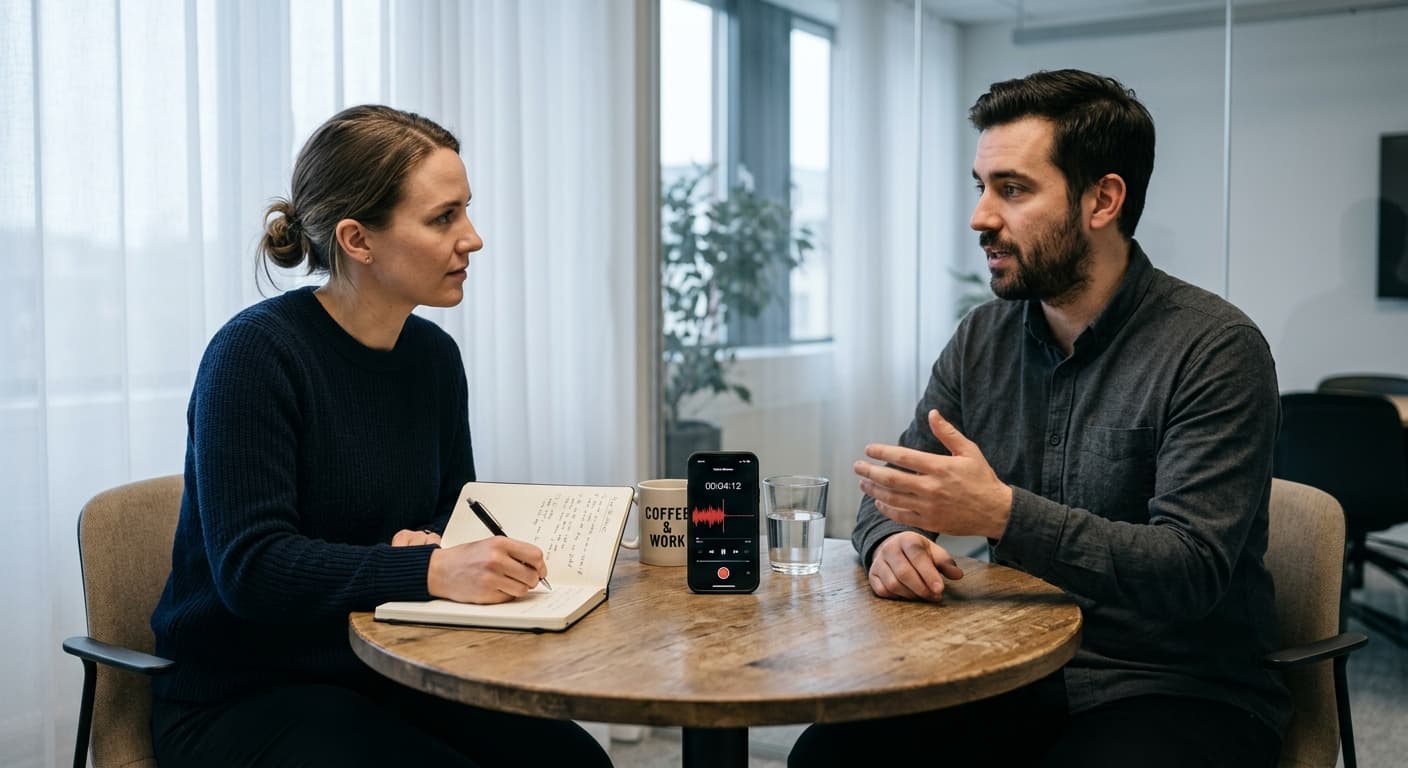
Yes, smart glasses are legal to own and wear in Georgia, but recording with them requires understanding a state-specific split: audio follows a one-party consent rule, while video in a private space requires the consent of all persons observed. That combination makes Georgia's framework stricter than most one-party states the moment the camera points somewhere private.
Are Smart Glasses Legal to Own and Wear in Georgia?
Yes. Georgia has no statute that restricts owning, purchasing, or wearing smart glasses such as Meta Ray-Ban AI glasses. The device is sold freely throughout the state and its possession raises no legal issue under Georgia or federal law.
The legal analysis begins when the glasses are used to capture audio or video, and it depends on the content being recorded, the location, and your relationship to any conversation being captured. Georgia's framework contains a twist that many users miss: the audio and video rules are not the same.
Recording Video in Public vs. Private Spaces
Public spaces
Recording video in a public space, including streets, sidewalks, parks, shopping centers, and other areas generally accessible to the public, is lawful in Georgia under both state and federal law. When a person is in public, they have a diminished reasonable expectation of privacy from being seen or filmed. The federal Wiretap Act's definition of an "oral communication" is limited to communications uttered under circumstances justifying a reasonable expectation against interception; silent video in public does not implicate it. Georgia law applies the same principle.
This means smart glasses worn on a public sidewalk, at an outdoor market, or in a public building generally do not create legal exposure from video capture alone.
Semi-public and private spaces
The analysis changes in semi-public and private spaces. A private home, a medical office, a hotel room, or a closed meeting room carries a strong reasonable expectation of privacy. Even spaces that are technically accessible, such as a restaurant booth during a private conversation or a workplace office, can give rise to a reasonable expectation of privacy in the context of observed conduct.
In Katz v. United States, 389 U.S. 347 (1967), Justice Harlan's concurring opinion described a twofold requirement: that a person have exhibited an actual (subjective) expectation of privacy, and that the expectation be one society is prepared to recognize as reasonable. Georgia courts apply this same framework in evaluating whether a location or communication is "private" within the meaning of the state's surveillance statutes.
The Georgia video-in-private-places rule: O.C.G.A. § 16-11-62(2)
This is the provision that most catches Georgia smart glasses wearers off guard. O.C.G.A. § 16-11-62(2) prohibits observing, photographing, or recording the activities of another person in a private place out of public view without the consent of all persons observed. Unlike the audio rule, this is an all-party standard for video in private spaces.
The statute carves out four exceptions: monitoring of persons incarcerated in a jail or correctional facility; security, crime-prevention, or crime-detection recording by an owner or occupier of real property of persons on the property or an approach to it, in areas where there is no reasonable expectation of privacy; security recording of persons within the curtilage of the recording person's own residence; and a law enforcement officer's use of a device in the lawful performance of official duties. None of those exceptions fits an individual wearing smart glasses to record other people inside a private space.
In practical terms, pointing smart glasses to capture video inside a private home, a hotel room, a medical facility, a private office, or any other space where people reasonably expect not to be observed means you need the consent of every person in the frame. Wearing glasses that look like ordinary eyewear while recording in a private space without that consent is a direct violation of O.C.G.A. § 16-11-62(2).
Recording Audio and Georgia's One-Party Consent Rule
The baseline prohibition
O.C.G.A. § 16-11-62(1) makes it unlawful for any person, in a clandestine manner, intentionally to overhear, transmit, or record (or attempt to) the private conversation of another which originates in any private place. That paragraph contains no consent language of its own. The consent rule comes from a separate section, O.C.G.A. § 16-11-66(a), discussed next.
The one-party consent exception: O.C.G.A. § 16-11-66(a)
Georgia resolves that baseline prohibition through the participant exception in O.C.G.A. § 16-11-66(a). That section provides that it is not unlawful for a person to intercept a wire, oral, or electronic communication where that person is a party to the communication, or where one of the parties to the communication has given prior consent to the interception.
This is the classic one-party consent rule. If you are participating in a conversation, you may record it with smart glasses without notifying or obtaining consent from the other participants. The federal Wiretap Act (18 U.S.C. § 2511(2)(d)) contains the same one-party exception as the federal floor, and Georgia's statute aligns with that floor rather than exceeding it.
What the one-party rule does NOT cover for audio
The one-party rule applies only when you are a genuine participant in the conversation being recorded. It does not permit:
- Recording a private conversation happening between two other people who are not speaking to you.
- Placing glasses on a table or shelf to capture conversations in a room you have left.
- Recording the "private conversation of another" in any context where you are not an active participant.
A person who uses smart glasses to capture a private conversation in which they have no part faces criminal exposure under O.C.G.A. § 16-11-62(1). The one-party exception exists only because the recording party is themselves a party to the communication; remove that participation and the exception disappears.
The minor-recording rule
O.C.G.A. § 16-11-66(b) through (d) creates a separate, narrow mechanism that lets a third party, a private citizen, law enforcement, or a prosecutor, lawfully record and later divulge a minor's calls, but only with a judge's order based on probable cause that a crime has been committed, or by a parent or guardian monitoring their own child's calls on a home extension phone for the child's welfare. It is not a general rule that recording any conversation a minor happens to be part of requires parental or judicial consent. A smart glasses wearer who is genuinely a participant in an ordinary conversation with a minor can still rely on their own one-party consent under O.C.G.A. § 16-11-66(a).
The critical Georgia split in practice
Georgia is one-party for audio in conversations you participate in, and all-party for video in private spaces. A smart glasses wearer in a private home conducting an audio-only recording of a conversation they are part of is within the one-party exception. The same wearer using the glasses to capture video of the people in that same private home needs the consent of all persons observed. Because smart glasses capture both audio and video simultaneously, the video rule governs the video stream regardless of the audio rule's more permissive standard. The two streams are legally distinct, and the more restrictive standard applies to each independently.
For the full Georgia audio consent framework, see the Georgia Recording Laws page.
Where You Cannot Record: Voyeurism and Unlawful Surveillance
Regardless of consent rules, Georgia law absolutely prohibits recording in locations where a person has a reasonable expectation of privacy from visual observation of their body or intimate conduct.
O.C.G.A. § 16-11-62(2) prohibits using any device to observe, photograph, or record the activities of another person in a private place out of public view without the consent of all persons observed. The statute covers restrooms, locker rooms, gym changing areas, fitting rooms, private residences, hotel rooms, and medical examination rooms. The fact that smart glasses look like ordinary eyewear to bystanders does not create any exception. If anything, the covert appearance of the device is directly relevant to the non-consensual nature of the recording.
Federal law reinforces this prohibition. 18 U.S.C. § 1801, the Video Voyeurism Prevention Act, separately prohibits recording a person's private areas on federal property without consent where there is a reasonable expectation of privacy from visual observation.
The rule is absolute: no location in Georgia, and no consent from any third party other than the persons being observed, can legalize recording someone's intimate activities in a space where they reasonably expect privacy.
Facial Recognition and Biometric Privacy
Georgia does not have a dedicated biometric privacy statute equivalent to Illinois's Biometric Information Privacy Act (BIPA), Texas's Capture or Use of Biometric Identifier Act (CUBI), or Washington's biometric identifier law (RCW Chapter 19.375).
Under Georgia state law alone, using a smart glasses facial recognition application to scan and identify strangers does not trigger a standalone biometric statute the way it would in Illinois, where BIPA imposes up to $5,000 per person in statutory damages for capturing face geometry without written consent, or Texas, where CUBI allows civil penalties of up to $25,000 per violation for commercial capture without consent.
Georgia residents and visitors are not without recourse, however. The federal Wiretap Act, common-law privacy torts, and the general principles of intrusion upon seclusion still apply. Under Restatement (Second) of Torts § 652B, intentionally intruding upon the solitude or seclusion of another person in a manner that would be highly offensive to a reasonable person creates civil liability regardless of whether any state biometric statute applies. The act of covert recording itself can create that liability without requiring that the footage be published or shared.
The biometric risk is most acute through third-party software integrations. Meta's Ray-Ban AI glasses provide a camera but do not natively run facial recognition. The legal exposure arises when a user pairs the glasses with a third-party facial recognition application to identify strangers. In October 2024, Harvard students demonstrated the "I-XRAY" system by pairing Meta Ray-Ban glasses with a reverse facial-recognition search engine to identify strangers in real time, retrieving home addresses and partial Social Security numbers within minutes. That demonstration used third-party software, not Meta's own systems. Georgia users who replicate this type of integration face civil tort liability and, if the information is used for harassment or stalking, potential criminal exposure under Georgia's computer fraud and stalking statutes.
Penalties Summary
Violations of Georgia's surveillance and wiretapping statutes are felonies. There are no misdemeanor-only provisions within the core recording prohibitions.
| Offense | Statute | Maximum Penalty |
|---|---|---|
| Intercepting private conversation (non-participant) | O.C.G.A. § 16-11-62(1) | Felony: 1-5 years / up to $10,000 fine |
| Video recording in private place without all-party consent | O.C.G.A. § 16-11-62(2) | Felony: 1-5 years / up to $10,000 fine |
| Distributing unlawfully obtained recordings | O.C.G.A. § 16-11-62(6) | Felony: 1-5 years / up to $10,000 fine |
Beyond criminal penalties, victims of unlawful surveillance or interception may pursue civil remedies under Georgia tort law. Under Restatement (Second) of Torts § 652B (intrusion upon seclusion), a plaintiff can recover for the act of covert recording itself, without needing to show that the footage was ever shared.
At the federal level, the Wiretap Act (18 U.S.C. § 2511) imposes up to 5 years imprisonment for criminal violations and civil liability of at least $10,000 in statutory damages for unlawful interception.
Practical Tips for Smart Glasses Users in Georgia
Remember the audio-video split. Georgia's one-party rule applies to audio. The all-party requirement under O.C.G.A. § 16-11-62(2) applies to video in private spaces. Because smart glasses capture both streams simultaneously, you need to satisfy both standards. When you are in a private space and do not have all-party consent for video, the video stream is off-limits regardless of your audio rights.
Keep the LED active. Meta's Ray-Ban AI glasses include a built-in capture LED near the right frame that illuminates whenever the camera is recording video, taking a photo, or streaming live. Georgia law does not currently mandate recording indicators for wearable devices, but deliberately obscuring the LED removes the one visible signal that recording is occurring. Covering it while recording strengthens evidence of non-consensual covert recording intent in any subsequent civil or criminal proceeding.
Disclose before recording in private settings. Even though the one-party exception technically permits undisclosed audio recording of conversations you are part of, announcing the recording at the outset of any formal meeting in a private space eliminates the all-party video consent issue at the same time. One sentence of disclosure solves both problems simultaneously in Georgia.
Never record in private spaces without consent. Recording in private places without the consent of all persons observed is a felony under O.C.G.A. § 16-11-62(2). Its narrow exceptions cover jail monitoring, property and residential security recording, and law enforcement, and none of them is written for a wearer recording other people. Remove the glasses before entering locker rooms, restrooms, changing rooms, hotel rooms, or other spaces where people have a clear expectation of privacy from observation.
Facial recognition adds risk. Georgia has no biometric statute, but using smart glasses to identify strangers through facial recognition software exposes you to common-law tort liability and potentially to the laws of states where identified persons reside, particularly Illinois, Texas, or Washington residents visiting Georgia.
Driving caution. Georgia's distracted-driving law (O.C.G.A. § 40-6-241) prohibits holding or using a wireless telecommunications device or stand-alone electronic device while driving a motor vehicle on a public road. The holding ban in § 40-6-241(c)(1) is written around physically holding or supporting a device with any part of the body, and no Georgia statute names smart glasses specifically. But the other prohibitions in § 40-6-241(c) do not depend on holding the device: while driving you may not write, send, or read text-based communications (other than voice-to-text and navigation), watch a video other than navigation data, or record or broadcast a video on a wireless telecommunications device or stand-alone electronic device. The statute defines those devices by function, not form factor, so recording or live streaming video through smart glasses while driving falls within the text of § 40-6-241(c)(4). Georgia courts have not yet applied these provisions to smart glasses. Navigation use is expressly carved out of the texting and video-watching prohibitions.
More Georgia Laws
Frequently Asked Questions
Is Georgia a one-party or two-party consent state for recording?
Georgia is a one-party consent state for audio recording under O.C.G.A. § 16-11-66(a): a participant in a conversation may record it without notifying the other parties. However, video recording in a private place requires the consent of all persons observed under O.C.G.A. § 16-11-62(2), making Georgia stricter than a standard one-party state for video captured in private spaces.
Can I record a conversation with my smart glasses in Georgia without telling the other person?
For audio, yes, if you are a participant in the conversation. The one-party consent exception in O.C.G.A. § 16-11-66(a) permits a party to record without disclosure. For video in a private space, no. O.C.G.A. § 16-11-62(2) requires the consent of all persons observed. Because smart glasses capture both streams, you must satisfy both standards.
Can I secretly film someone with smart glasses in Georgia?
In public spaces, video-only recording is generally lawful because people in public have a reduced reasonable expectation of privacy from being seen. In private spaces such as restrooms, locker rooms, hotel rooms, and private residences, recording the activities of others without the consent of all persons observed is a felony under O.C.G.A. § 16-11-62(2). The covert appearance of smart glasses does not create any exception.
What is Georgia's private-place video rule and how does it affect smart glasses?
O.C.G.A. § 16-11-62(2) prohibits observing, photographing, or recording another person in a private place out of public view without the consent of all persons observed. This all-party standard applies to the video stream from smart glasses even though audio recording is one-party consent. In a private setting, you need all-party consent for video regardless of your audio rights.
What are the penalties for illegal recording in Georgia?
Violations of O.C.G.A. § 16-11-62 and related statutes are felonies under O.C.G.A. § 16-11-69: imprisonment of 1 to 5 years and fines up to $10,000, or both. Civil liability for intrusion upon seclusion can exist independently of any criminal prosecution and does not require that the footage be shared.
Does Georgia have a biometric privacy law that applies to smart glasses?
No. Georgia has no dedicated biometric privacy statute comparable to Illinois BIPA, Texas CUBI, or Washington RCW 19.375. Using smart glasses with facial recognition in Georgia does not trigger a state biometric statute, though common-law privacy torts still apply, and you may face liability under the laws of the state where an identified person resides.
Are Meta Ray-Ban smart glasses legal in Georgia?
Yes, the device is legal to own and wear. The legality of use depends on what you record, where, and whether you are a participant in any audio conversation you capture. For video in private spaces, you need all-party consent under O.C.G.A. § 16-11-62(2). Meta's capture LED provides an external recording indicator, but Georgia law does not mandate its use, and deliberately covering it strengthens evidence of covert recording intent.
Can I record a police officer with smart glasses in Georgia?
Recording police officers performing their duties in a public space is generally protected under the First Amendment. As a participant in any encounter such as a traffic stop or street interaction, the one-party consent exception under O.C.G.A. § 16-11-66(a) permits audio recording. Video recording in a public space is also generally lawful. You cannot use the glasses to secretly record in private spaces and should not physically interfere with law enforcement activity during any recording.
Does Georgia's one-party consent rule apply if I record a call involving a child?
Generally, yes. O.C.G.A. § 16-11-66(b) through (d) is a narrow mechanism that lets a third party, such as a parent monitoring their own child's calls on a home extension phone, or a party acting under a judge's order based on probable cause of a crime, lawfully record and divulge a minor's calls. It does not require parental or judicial consent whenever you are personally a genuine participant in a conversation with a minor; the standard one-party exception under O.C.G.A. § 16-11-66(a) still applies to you as a participant.
Updates
Corrected the description of Katz v. United States to attribute the two-part expectation-of-privacy test to Justice Harlan's concurring opinion, where it appears.
Corrected our description of Georgia's eavesdropping statute and its private-place video exceptions and consent standard, and clarified that Georgia's distracted-driving law bars recording or broadcasting video on an electronic device while driving.
Replaced all four Georgia statute citations, which previously pointed at the Georgia legislature's non-functional homepage shell, with working deep links to the actual O.C.G.A. sections on Justia.
Independently fact-checked against the cited primary sources; governing law re-checked for recent changes
Corrected the minor-recording rule: O.C.G.A. § 16-11-66(b)-(d) is a narrow third-party mechanism (judicial order on probable cause, or a parent monitoring their own child's calls), not a blanket override of a genuine participant's one-party consent right whenever a minor is on the call.
Governing law re-checked for recent changes
Reviewed and approved by an editor
The Law Behind This Article
This article rests on the statutory provisions below, held in our own legal record and retrieved from the official source. Tap a section to read the operative text.
Official Code of Georgia Annotated
§ 16-11-62Eavesdropping, surveillance, or intercepting communication which invades privacy of another; divulging private message.In forcecited in 25 of our articles
It shall be unlawful for: (1) Any person in a clandestine manner intentionally to overhear, transmit, or record or attempt to overhear, transmit, or record the private conversation of another which shall originate in any private place; (2) Any person, through the use of any device, without the
Official text (excerpt) · last checked 2026-08-31 · Read the full text in our law library · Verify at legis.ga.gov
Cited in 94 court opinions in our collectionLatest citing opinion in our collection: 2026
In the courts (editorial summary, independently checked):Kelley v. State (1998) held OCGA 16-11-62(2) reached a guardian who photographed a nude 16-year-old in the family bathroom, with no exception for family members. Burgeson v. State (1996) held a conversation recorded in a patrol car was not covered, because no reasonable expectation of privacy existed there.
Opinions citing this section in our collection:
- Burgeson v. State (Supreme Court of Georgia 1996, 267 Ga. 102)✓Police secretly recorded two arrestees talking in the back of a patrol car. The court held a police car is much like a jail cell, with no reasonable expectation of privacy, so intercepting that conversation did not offend OCGA 16-11-62 and the tape was admissible.
- Kelley v. State (Court of Appeals of Georgia 1998, 233 Ga. App. 244)✓A guardian photographed her 16-year-old niece nude and passed out in the family bathtub. The court held OCGA 16-11-62(2) reaches any person with no family exception, that the film need not be developed, and that a jury could find the bathroom a private place.
- Dobbins v. State (Supreme Court of Georgia 1992, 262 Ga. 161)“…th the consent of one of the parties to the conversation. OCGA § 16-11-62 (1) provides that: It shall be unlawf…”
Identified automatically from the court opinions citing this section — not a ranking of which case controls.
Also relied on in: Georgia Data Privacy Laws: Breach Notification & Consumer Rights (2026), Georgia Ring Doorbell Laws: What You Need to Know in 2026, Georgia Surveillance Camera Laws (2026 Guide)
§ 16-11-66Interception of wire, oral, or electronic communication by party thereto; consent requirements for recording and divulging conversations to which child under 18 years is a party; parental exception.In forcecited in 19 of our articles
(a) Nothing in Code Section 16-11-62 shall prohibit a person from intercepting a wire, oral, or electronic communication where such person is a party to the communication or one of the parties to the communication has given prior consent to such interception. (b) After obtaining the consent…
Official text (excerpt) · last checked 2026-08-31 · Read the full text in our law library · Verify at advance.lexis.com
Cited in 43 court opinions in our collectionLatest citing opinion in our collection: 2020
In the courts (editorial summary, independently checked):State v. Cohen (2017) held OCGA 16-11-66(a) reaches only intercepted wire, oral, or electronic communications, so one party's consent does not authorize secretly video recording others in a private place. Bishop v. State (1999) barred vicarious parental consent under the text in force before the 2000 amendment.
Opinions citing this section in our collection:
- Dobbins v. State (Supreme Court of Georgia 1992, 262 Ga. 161)✓An investigator recorded a child's call to the defendant using only her father's consent and no warrant; the Supreme Court held the state had neither an investigation warrant nor valid consent of a party to the call, so the recording and its fruits were inadmissible.
- State v. Cohen (Supreme Court of Georgia 2017, 302 Ga. 616)✓A housekeeper secretly videoed her employer naked at home; the Supreme Court held the one-party-consent rule of OCGA 16-11-66(a) covers only intercepted wire, oral or electronic communications and does not permit video recording without the consent of all observed.
- State v. Madison (Court of Appeals of Georgia 2011, 311 Ga. App. 31)✓A molestation complainant secretly videoed the defendant in his law office; the court read the 16-11-66(a) participant exception to reach section 16-11-62, but found no wire, oral or electronic communication captured, so it affirmed suppression. Cohen overruled that reading.
Identified automatically from the court opinions citing this section — not a ranking of which case controls.
Also relied on in: Georgia Recording Laws (2026): One-Party Audio, All-Party Video, Georgia AI Meeting Recording Laws (2026), Georgia Audio Recording Laws: One-Party Consent Rules and Penalties (2026)
§ 16-11-69Penalty for violations of part.In forcecited in 14 of our articles
Except as otherwise provided in subsection (d) of Code Section 16-11-66.1, any person violating any of the provisions of this part shall be guilty of a felony and, upon conviction thereof, shall be punished by imprisonment for not less than one nor more than five years or a fine not to exceed…
Official text (excerpt) · last checked 2021-08-17 · Read the full text in our law library
Cited in 8 court opinions in our collectionLatest citing opinion in our collection: 2019
Opinions citing this section in our collection:
- Rutter v. Rutter (Court of Appeals of Georgia 2012, 316 Ga. App. 894)“…a penal statute, a violation being punishable as a felony. OCGA § 16-11-69. As such, the rule of lenity is a prope…”
- Prophitt v. the State (Court of Appeals of Georgia 2016, 336 Ga. App. 262)“…The crime of invasion of privacy constitutes a felony, see OCGA § 16-11-69, and this Court has previously held tha…”
- Price v. State (Court of Appeals of Georgia 2013, 320 Ga. App. 85)“…rt order. 2 Because Price was convicted of a felony, see OCGA § 16-11-69, and sentenced to five years of confine…”
Identified automatically from the court opinions citing this section — not a ranking of which case controls.
Also relied on in: Georgia Medical Recording Laws: Patient Rights and HIPAA Rules (2026), Georgia Phone Call Recording Laws: One-Party Consent Rules (2026), Georgia Security Camera Laws: Residential and Business Rules (2026)
§ 40-6-241Distracted driving; restrictions on operation of wireless telecommunications devices and stand-alone electronic devices; penalty; exceptions.In forcecited in 2 of our articles
(a) As used in this Code section, the term: (1) "Stand-alone electronic device" means a device other than a wireless telecommunications device which stores audio or video data files to be retrieved on demand by a user. (2) "Utility services" means and includes electric, natural gas, water,…
Official text (excerpt) · last checked 2021-08-17 · Read the full text in our law library
Cited in 18 court opinions in our collectionLatest citing opinion in our collection: 2026
Opinions citing this section in our collection:
- John McKnight v. Anthony Love (Court of Appeals of Georgia 2023)“…rs while approaching an intersection). 31 See OCGA § 40-6-241 (c) (1) (A)-(B) (“While operating a mot…”
- Lindsey v. Clinch County Glass, Inc. (Court of Appeals of Georgia 2011, 312 Ga. App. 534)“…duty to exercise due care while operating a motor vehicle. OCGA § 40-6-241. Although Holtzclaw admitted that he wa…”
- MAYNARD v. SNAPCHAT, INC (Supreme Court of Georgia 2022, 313 Ga. 533)“…se a driver also breached a duty imposed by law. See, e.g., OCGA § 40-6-241 (c) (Georgia’s hands-free law prohibiti…”
Identified automatically from the court opinions citing this section — not a ranking of which case controls.
Also relied on in: Georgia Windshield Mounting Laws (2026 Guide)
United States Code Title 18
§ 2511Interception and disclosure of wire, oral, or electronic communications prohibitedIn forcecited in 441 of our articles
Except as otherwise specifically provided in this chapter any person who— intentionally intercepts, endeavors to intercept, or procures any other person to intercept or endeavor to intercept, any wire, oral, or electronic communication; intentionally uses, endeavors to use, or procures any other person to use or endeavor to use any electronic, mechanical, or other device to intercept any oral communication when— such device is affixed to, or otherwise transmits a signal through, a wire, cable, or other like connection used in wire communication; or such device transmits communications by radio, or interferes with the transmission of such communication; or such person knows, or has reason to know, that such device or any component thereof has been sent through the mail or transported in interstate or foreign commerce; or such use or endeavor to use (A) takes place on the premises of any business or other commercial establishment the operations of which affect interstate or foreign commerce; or (B) obtains or is for the purpose of obtaining information relating to the operations of any business or other commercial establishment the operations of which affect interstate or foreign…
Official text (excerpt) · last checked 2026-09-17 · Read the full text in our law library · Verify at uscode.house.gov
Cited in 2,045 court opinions in our collectionLatest citing opinion in our collection: 2026
In the courts (editorial summary, independently checked):Griggs-Ryan v. Smith (1990) applied the Section 2511(2)(d) prior-consent exception, treating a tenant repeatedly told that all incoming calls were taped as having impliedly consented. United States v. United States District Court (1972) read the then-current Section 2511(3) as conferring no presidential surveillance power.
Opinions citing this section in our collection:
- Mitchell v. Forsyth (Supreme Court of the United States 1985, 472 U.S. 511)✓The Attorney General authorized a warrantless 1970 national security wiretap that caught the plaintiff's calls; the Court held the since-repealed Section 2511(3) disclaimer left the tap lawful under Title III, and that Mitchell had qualified immunity.
- United States v. United States District Court for the Eastern District of Michigan (Supreme Court of the United States 1972, 407 U.S. 297)✓The Attorney General approved warrantless wiretaps on members of a domestic group accused of bombing a CIA office; the Court read Section 2511(3) as a congressional disclaimer conferring no surveillance power, then held the Fourth Amendment required prior judicial approval.
- Forsyth v. Barr (Court of Appeals for the Fifth Circuit 1994, 19 F.3d 1527)✓Dallas police used, in an internal affairs probe of an officer, calls private parties allegedly intercepted illegally; assuming that was unlawful, the Fifth Circuit held Section 2517(1) and (2) allowed the disclosure and use, defeating the Section 2511(1)(c) and (d) claims.
Identified automatically from the court opinions citing this section — not a ranking of which case controls.
Also relied on in: Connecticut Recording Laws (2026): Hybrid Consent Rules Explained, Oregon Recording Laws (2026): Hybrid One-Party and All-Party Rules, US Recording Laws by State (2026): All 50 States Explained
§ 2510DefinitionsIn forcecited in 137 of our articles
As used in this chapter— “wire communication” means any aural transfer made in whole or in part through the use of facilities for the transmission of communications by the aid of wire, cable, or other like connection between the point of origin and the point of reception (including the use of such connection in a switching station) furnished or operated by any person engaged in providing or operating such facilities for the transmission of interstate or foreign communications or communications affecting interstate or foreign commerce; “oral communication” means any oral communication uttered by a person exhibiting an expectation that such communication is not subject to interception under circumstances justifying such expectation, but such term does not include any electronic communication; “State” means any State of the United States, the District of Columbia, the Commonwealth of Puerto Rico, and any territory or possession of the United States; “intercept” means the aural or other acquisition of the contents of any wire, electronic, or oral communication through the use of any electronic, mechanical, or other device.1 So in original. The period probably should be a semicolon.
Official text (excerpt) · last checked 2026-07-28 · Read the full text in our law library · Verify at uscode.house.gov
Cited in 2,382 court opinions in our collectionLatest citing opinion in our collection: 2026
In the courts (editorial summary, independently checked):United States v. New York Telephone Co. (1977) held that pen registers fall outside Title III because they do not acquire the contents of a communication as Section 2510(4) and (8) define interception. Forsyth v. Barr (1994) applied the same definitions, treating the defendant officers as law enforcement officers under Section 2510(7).
Opinions citing this section in our collection:
- Forsyth v. Barr (Court of Appeals for the Fifth Circuit 1994, 19 F.3d 1527)✓Neighbors tapped an informant's home line and the overheard charges reached Dallas internal affairs; the Fifth Circuit saw no evidence the police defendants intercepted anything and held they were 2510(7) law enforcement officers, so 2517(1) and (2) allowed their use of it.
- Nixon v. Administrator of General Services (Supreme Court of the United States 1977, 433 U.S. 425)“…of the Omnibus Crime Control and Safe Streets Act of 1968, 18 U. S. C. §§ 2510 et seq. 408 F. Supp., at 363 . We…”
- Gannett Co. v. DePasquale (Supreme Court of the United States 1979, 443 U.S. 368)“…of the Omnibus Crime Control and Safe Streets Act of 1968, 18 U. S. C. § 2510 et seq., be preserved prior to the d…”
Identified automatically from the court opinions citing this section — not a ranking of which case controls.
Also relied on in: Surveillance Camera Laws by State (2026 Guide), District of Columbia Recording Laws (2026): One-Party Consent Rules, Kentucky Phone Call Recording Laws: What You Need to Know
§ 1801Video voyeurismIn forcecited in 81 of our articles
Whoever, in the special maritime and territorial jurisdiction of the United States, has the intent to capture an image of a private area of an individual without their consent, and knowingly does so under circumstances in which the individual has a reasonable expectation of privacy, shall be fined under this title or imprisoned not more than one year, or both. In this section— the term “capture”, with respect to an image, means to videotape, photograph, film, record by any means, or broadcast; the term “broadcast” means to electronically transmit a visual image with the intent that it be viewed by a person or persons; the term “a private area of the individual” means the naked or undergarment clad genitals, pubic area, buttocks, or female breast of that individual; the term “female breast” means any portion of the female breast below the top of the areola; and the term “under circumstances in which that individual has a reasonable expectation of privacy” means— circumstances in which a reasonable person would believe that he or she could disrobe in privacy, without being concerned that an image of a private area of the individual was being captured; or circumstances in which a…
Official text (excerpt) · last checked 2026-07-28 · Read the full text in our law library · Verify at uscode.house.gov
Cited in 53 court opinions in our collectionLatest citing opinion in our collection: 2026
In the courts (editorial summary, independently checked):Courts have applied 18 U.S.C. 1801 mainly at its edges. United States v. Johnson (2010) read it as Congress's answer to secretly filming nudity on federal property, acquitting on a child exploitation charge instead. EPIC v. Department of Homeland Security (2011) applied the Section 1801(c) law enforcement exception to a TSA scanner claim.
Opinions citing this section in our collection:
- United States v. Anthony Helton (Court of Appeals for the Fourth Circuit 2019, 944 F.3d 198)“…from this list of federal offenses is video voyeurism under 18 U.S.C. § 1801. Rather than list this statute as an enu…”
- United States v. Johnson (District Court, W.D. Missouri 2010, 719 F. Supp. 2d 1059)✓A weightlifting coach hid a camera to film minors weighing in nude; acquitting him under the child exploitation statute, the court called that conduct plain video voyeurism under section 1801, but noted the section reaches only federal maritime and territorial jurisdiction.
- Electronic Privacy Information Center v. United States Department of Homeland Security (Court of Appeals for the D.C. Circuit 2011, 653 F.3d 1)✓Privacy groups challenged TSA body scanners under the Video Voyeurism Prevention Act; the D.C. Circuit held the statute's exception for lawful law enforcement, correctional, or intelligence activity applied to airport screening, so the section 1801 claim failed.
Identified automatically from the court opinions citing this section — not a ranking of which case controls.
Also relied on in: Georgia Voyeurism and Hidden Camera Laws: Criminal Penalties (2026), South Dakota Voyeurism Laws, Utah Voyeurism Laws
Search our full record of US law — 2.1 million sections, every state + federal →
Sources and References
- O.C.G.A. § 16-11-62: Unlawful eavesdropping or surveillance. Subsection (1) prohibits intercepting private conversations without consent of at least one party. Subsection (2) prohibits video recording in private places without all-party consent. Subsection (6) prohibits distributing recordings of private activities without all-party consent.(law.justia.com)
- O.C.G.A. § 16-11-66(a): One-party consent exception for audio recording. A party to a communication may record it without notifying others.(law.justia.com)
- O.C.G.A. § 16-11-66(b)-(d): Narrow mechanism letting a third party lawfully record and divulge a minor's calls, by judicial order on probable cause of a crime, or by a parent/guardian monitoring their own child's calls on a home extension phone. Does not require parental or judicial consent whenever a minor is merely a party to a call a genuine participant is recording.(law.justia.com)
- O.C.G.A. § 16-11-69: Criminal penalties. Felony: 1 to 5 years imprisonment and fines up to $10,000. Applies to all violations of O.C.G.A. §§ 16-11-62 through 16-11-68.(law.justia.com)
- 18 U.S.C. § 2511: Federal Wiretap Act. One-party consent exception at § 2511(2)(d); up to 5 years imprisonment and civil liability of at least $10,000.(law.cornell.edu)
- 18 U.S.C. § 2510(2): Definition of 'oral communication.' Basis for the rule that silent video-only recording is not a federal Wiretap Act violation.(law.cornell.edu)
- 18 U.S.C. § 1801: Federal Video Voyeurism Prevention Act. Prohibits recording private areas on federal property without consent.(law.cornell.edu)
- Meta Ray-Ban AI Glasses official privacy page. Capture LED documentation and Meta's guidance for responsible use.(meta.com)
- O.C.G.A. § 16-11-62 (Georgia General Assembly legislation record): (1) clandestine recording of private conversations originating in a private place; (2) device recording in private places without consent of all persons observed, with exceptions (A)-(D).(legis.ga.gov)