
Netherlands
Property and Neighbour Disputes in the Netherlands
Independently fact-checked against primary sources (last audited July 21, 2026). · 7 primary sources cited on this page. How we verify our legal content
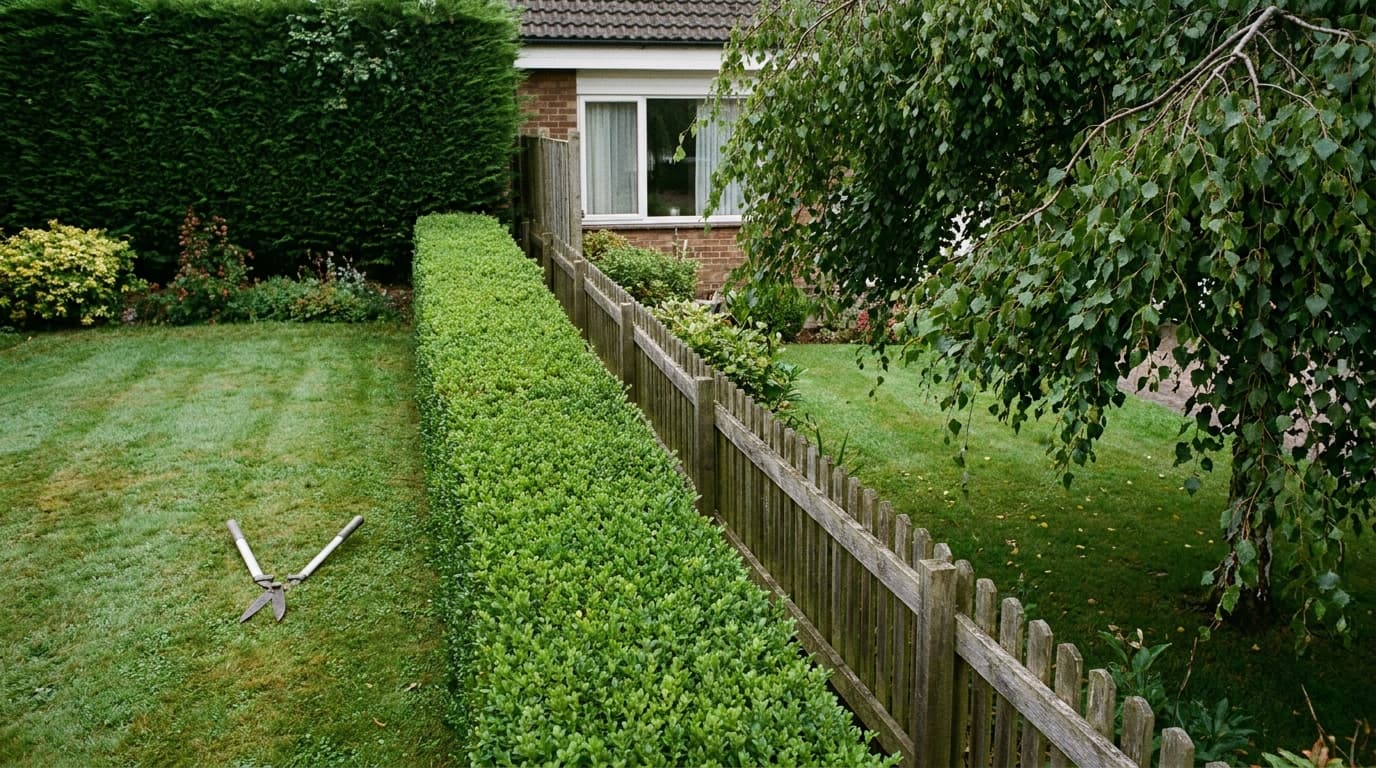
Living next to other people creates friction, and Dutch law has a settled set of rules for it. Neighbour and property disputes, from a noisy upstairs flat to an overgrown hedge or an argument over where the boundary runs, are governed by Dutch neighbour law (burenrecht) in Boek 5 of the civil code (Burgerlijk Wetboek, BW). This section brings the main topics together and sends you to the page that covers each one in full.
The rules are national, so they apply the same way across the country. What changes locally is the municipal layer, the Algemene Plaatselijke Verordening (APV), which a gemeente uses for noise and for some fence and hedge rules. The pages below keep the two levels apart.
Information last verified on 22 July 2026. This page provides general legal information about Netherlands law and does not constitute legal advice in an individual case.
Which body decides what
Different questions go to different places, and matching the problem to the right body saves the most time. The civil court, in practice the rechtbank, decides disputes about nuisance, boundaries, plantings and walls. The Kadaster holds the registered cadastral boundary and can send a surveyor to re-mark it on the ground. The gemeente sets and enforces the local layer through the APV, and the police handle an acute disturbance in the moment.
One point is worth carrying into every page below: most neighbour claims are of undetermined value, so they go to the rechtbank rather than the kantonrechter. Neighbour law does not have the regardless of amount rule that sends tenancy and employment cases to the kantonrechter, so the value of the claim, not its subject, decides the forum.
Noise nuisance
Noise is the most common neighbour complaint. The route runs from a conversation to the gemeente under the APV, to the police for an acute disturbance, and, for renters, to the landlord, before the civil test of unlawful nuisance in the courts.
Read the full guide: noise nuisance.
Neighbour law (burenrecht)
The neighbour-law page is the map of Dutch neighbour law in Boek 5. It names each rule, from nuisance and boundaries to plantings, walls and the outlook rule for windows near the boundary, and points to the page that owns each one.
Read the full guide: Dutch neighbour law.
Property boundaries
Where the line between two plots runs, how it is marked and what happens when it is uncertain are the boundary questions, with the Kadaster holding the registered cadastral boundary and the court available where the line is genuinely disputed.
Read the full guide: property boundaries.
Overhanging branches and roots
A neighbour's branches over your garden, and roots growing across into your land, have their own self-help rules: a written demand is needed before you cut overhanging branches, but roots you may cut without a warning.
Read the full guide: overhanging branches.
Fences and planting
Planting distances, the right to enclose your own plot and the shared dividing wall between neighbours all have rules, while the height and permit limits that actually apply depend on the local APV and an environmental-and-building permit (omgevingsvergunning).
Read the full guide: fences and planting.
Related pages
Where a dispute involves a camera pointed at your property, that is a privacy question rather than a nuisance one: see a neighbour's security cameras. For every other area of Dutch law, start at the Netherlands law hub.
Frequently Asked Questions
What counts as a property or neighbour dispute in the Netherlands?
It covers the everyday conflicts between owners of adjoining plots: noise, boundaries, plantings and hedges, overhanging branches, and fences or dividing walls. These are governed by burenrecht in Boek 5 of the civil code and are national rules.
Where should I start with a neighbour problem?
Usually with a conversation, then the practical route depends on the topic. Noise runs through the gemeente and the police, boundaries through the Kadaster and the court, and branches and fences through the self-help and distance rules. Each page below sets out the steps.
Which court handles neighbour disputes?
Most neighbour claims are of undetermined value and go to the rechtbank rather than the kantonrechter. The kantonrechter's regardless of amount rule covers tenancy and employment cases, not neighbour law, which is routed by value.
Is there a national rule for fence height or noise levels?
No. Fence height and noise limits are set locally in the municipal ordinance (APV) and, for fences, the building rules, so you need to check your own gemeente. The civil code sets the framework rather than the numbers.
Are Dutch neighbour rules the same everywhere in the country?
The civil-code rules of burenrecht are national, so the core rights and duties are the same in every municipality. What varies locally is the municipal layer: the Algemene Plaatselijke Verordening (APV) sets noise rules and some fence and hedge limits, so any hard figure still has to be checked against your own gemeente.
Do I need a lawyer for a neighbour dispute?
Often not at the start. Many neighbour problems are settled by a direct conversation, free neighbourhood mediation (buurtbemiddeling), or the gemeente acting under the APV. Legal help matters more once a dispute is heading for court, and Het Juridisch Loket offers free first-line guidance. Each topic page below sets out the practical steps first.
Updates
Independently fact-checked against the cited primary sources
Sources and References
- Artikel 5:37 BW, onrechtmatige hinder(wetten.overheid.nl).gov
- Artikel 5:44 BW, overhangende beplantingen en doorschietende wortels(wetten.overheid.nl).gov
- Artikel 5:46 BW, afpaling van de grens(wetten.overheid.nl).gov
- Artikel 5:47 BW, bepaling van een onzekere grens door de rechter(wetten.overheid.nl).gov
- Artikel 6:162 BW, onrechtmatige daad(wetten.overheid.nl).gov
- Artikel 93 Rv, bevoegdheid van de kantonrechter(wetten.overheid.nl).gov
- Het Juridisch Loket, Buren (burenrecht en overlast)(juridischloket.nl).gov