
Netherlands
Neighbour Security Cameras in the Netherlands: Camera bij Buren
Independently fact-checked against primary sources (last audited July 21, 2026). · 14 primary sources cited on this page. How we verify our legal content
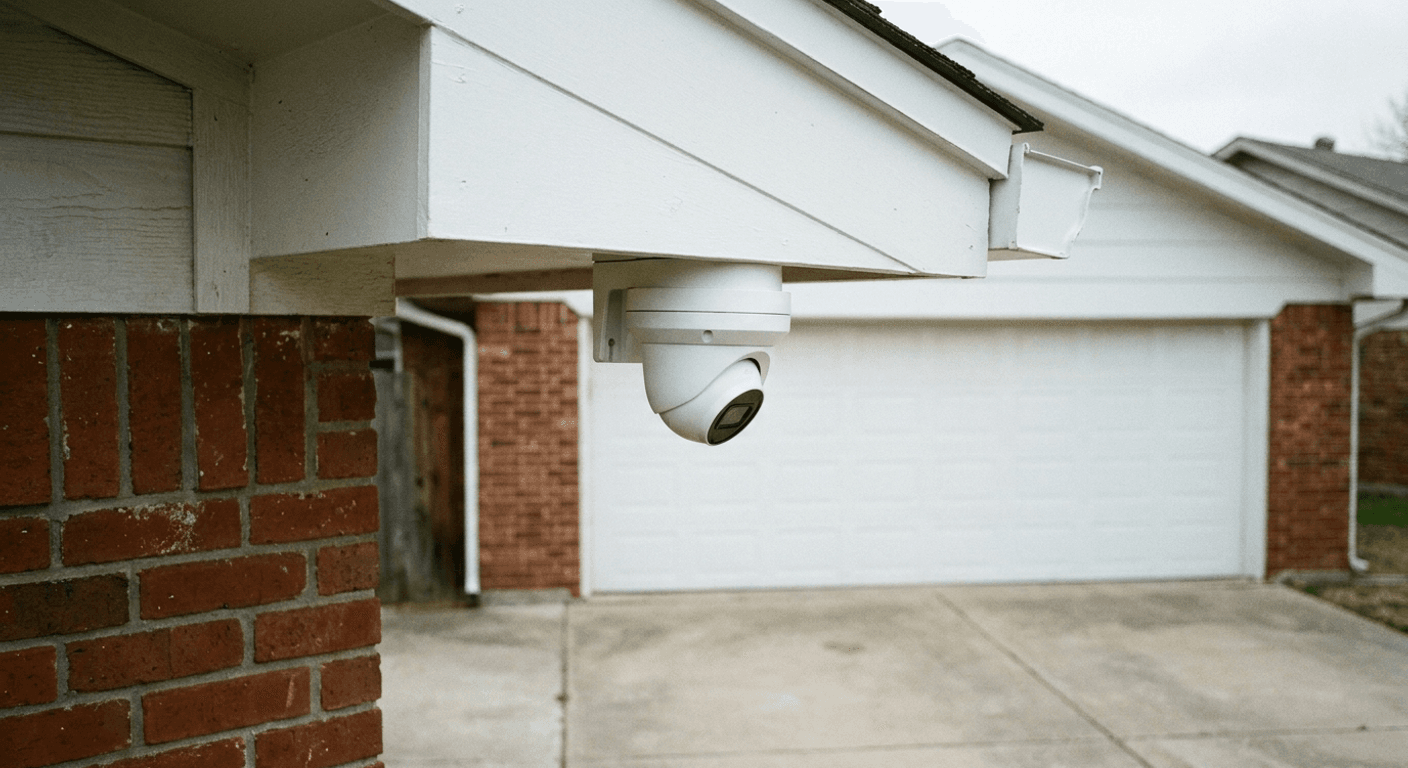
A security camera at a Dutch home is not prohibited as such, and the argument between neighbours almost never turns on that. It turns on where the camera looks, because that single fact decides which body of law governs it.
Aimed at your own front door, your own garden and your own bicycle, a private camera sits outside the privacy statute altogether: the AVG (Algemene verordening gegevensbescherming, the Dutch name for the GDPR) does not apply to a purely personal or household activity.
Aimed past the boundary, at the pavement or at the neighbour's garden, the same camera stops being a household activity. From that point the AVG governs it and the person filming needs a lawful basis for it. That is a change of regime, not a prohibition, and treating the two as the same thing is the most common mistake made about a neighbour's camera (camera bij buren).
Information last verified on 21 July 2026. This page provides general legal information about Netherlands law and does not constitute legal advice in an individual case.
When a home camera is outside the AVG altogether
Artikel 4 lid 2 AVG counts collection and recording as processing, so the AVG engages when the recording is made rather than when it is shared. What removes most private recordings is not the absence of publication but the exemption in artikel 2 lid 2 onder c AVG for a purely personal or household activity.
The exemption is worded narrowly. Artikel 2 lid 2 disapplies the whole regulation to processing by a natural person in the course of a zuiver persoonlijke of huishoudelijke activiteit, and the word zuiver, purely, is doing the work. An activity that is partly personal and partly something else is not covered.
That is why a camera pointed only at your own hallway, your own drive or your own shed raises no AVG question at all. Nothing about storage duration, signage or lawful bases applies to it, because the regulation itself does not reach it.
Ryneš: the case that fixed the boundary
The leading authority is Ryneš, Court of Justice of the European Union, Fourth Chamber, 11 December 2014, C-212/13, ECLI:EU:C:2014:2428. Mr Ryneš had fixed a camera under the eaves of his house, after years of harassment and repeatedly smashed windows, covering his own front door, the public road and the entrance of the house opposite, recording continuously to a hard disk that only he could access.
The Court held that a camera system installed by a private person on his family home to protect the property, health and life of the owners, which also monitors the public space, and which records continuously to a device such as a hard disk, is not processing carried out in the course of a purely personal or household activity. The reasoning is the part that transfers: the exemption applies only where the processing is done for exclusively personal or household purposes, and where the surveillance covers the public space, even partly, it extends beyond the private sphere of the person processing the data.
Three precisions matter and are routinely blurred. Ryneš was decided under artikel 3 lid 2 of the 1995 data protection directive, not under the AVG, whose artikel 2 lid 2 onder c is its successor in the same terms, so it should be described as a directive case carried into the AVG rather than as an AVG judgment. It is about the public space, and it does not literally decide the neighbour's garden; the extension to a neighbour's property is the position of the Autoriteit Persoonsgegevens, which is a regulator's guidance and not a holding of the Court. And what it decides is that the exemption does not apply, which is not the same as deciding that the camera was unlawful.
What changes once the camera films past the boundary
Once a camera films the public road or a neighbour's property, the activity is no longer a purely personal or household one, so the AVG applies and the person filming needs a lawful basis, in practice the gerechtvaardigd belang in artikel 6 lid 1 onder f AVG, together with necessity and a balancing of interests. Falling outside the household exemption does not by itself make the camera unlawful; it means the AVG governs it.
The AP states the practical rule in stronger terms than the case law does. On its guidance page for cameras at your own home, updated on 8 April 2025, the main rule is that your camera may film only your own possessions, so you may not film the property of others such as the house or garden of your neighbours, and in principle you may not film the public road either, such as the pavement or parking spaces.
The AP also puts the aiming of the camera squarely on the owner: where an installation company hangs it, the owner still has to check that it is actually pointed only at their own property.
The seven conditions where filming public road is unavoidable
Sometimes a front door gives directly onto the street and a strip of pavement cannot be kept out of frame. For that situation the AP sets seven requirements, all from the same guidance of 8 April 2025.
- Set the camera up properly. Zoom in on your own possessions and use the privacy masking in the camera settings so that, for example, the neighbour's garden falls outside the frame. The AP's own example is a scooter parked on the street: you may film the piece of street where it stands, not the whole street.
- Inform people about the camera. You must tell people who come onto your land that you are filming them, and the AP's example of how to do that is a sign stating that camera surveillance is in use. For a doorbell camera the AP suggests a sticker, so that someone can choose not to ring the bell if they would rather not be filmed.
- Keep the footage briefly or not at all. Delete it as soon as it is no longer needed, and the AP's stated example of a short period is after 24 hours. It points out that a doorbell camera can often be used for live viewing only, with nothing stored.
- Do not share the footage. Not on the internet and not in a WhatsApp group, unless the people filmed have consented. Sharing footage with the police when reporting a criminal offence is expressly fine, and where the police formally demand the footage there is a duty to cooperate.
- Blur the faces of passers-by, automatically where the camera supports it, so that people in public space are not or are less easily recognisable.
- Secure the footage so the camera cannot be hacked. Set your own password and, where possible, your own username, and never leave the manufacturer's default password in place. The AP notes that local storage on an SD card is better from a privacy point of view than storage in the manufacturer's cloud.
- Respect the privacy rights of the people you film, who have for example the right to view the footage made of them.
Aiming at the neighbour or the street on purpose
Filming beyond your own boundary by accident is one thing. Deliberately pointing a camera at part of the neighbour's land or at public space is another, and the AP treats it as exceptional: only in very exceptional cases is it permitted, for example where there are serious and demonstrable security problems such as frequent burglaries in the area, and only where no other solution is really possible.
The lawful basis a private camera owner has to reach is the gerechtvaardigd belang (legitimate interest) in artikel 6 lid 1 onder f AVG, and the AP breaks its test into three parts.
- A legitimate interest, such as protecting property or persons, for instance because there are many burglaries in the neighbourhood.
- Necessity, which the AP splits in two. The purpose of the camera surveillance has to be in proportion to the intrusion into people's privacy, and its example is filming the whole street where filming part of it would protect the property just as well. And there must be no less intrusive way of achieving the same protection, camera surveillance being part of a package of measures rather than the first step.
- A balancing exercise between the owner's interest in the surveillance and the privacy interest of the people filmed, whose outcome shows the owner's interest weighs more heavily.
The AP's conclusion is short: a camera owner who does not meet those conditions may not aim the camera at the public road. It also states plainly that where a camera does film other people's possessions or the public road while that is not necessary, the privacy statute is being breached.
Separately from the AVG, a camera whose presence has not been made clearly known can engage the criminal provisions on covert images, artikel 139f Sr where the person filmed is in a home or another place not open to the public and artikel 441b Sr where the place is open to the public, which is one reason the Autoriteit Persoonsgegevens tells camera owners to signpost the camera; see recording conversations.
Two things that change nothing
A dummy camera is outside the rules. The AP is explicit that where there is a nepcamera, or a camera that is not switched on, the rules for cameras do not apply because nothing is being filmed. It still advises aiming a dummy at your own property only, since neighbours and passers-by can feel their privacy affected by the sight of a camera pointed at them.
Registering with Camera in Beeld makes no difference. The politie describes Camera in Beeld as a system in which members of the public and businesses voluntarily register their security cameras, so that the police know street by street which cameras exist and can ask those owners for footage when a crime has been committed. The AP states directly that all of the rules above apply just as much once a camera is registered with it.
If it is the neighbour's camera pointing at you
The AP publishes a separate page for the person being filmed, updated on 8 April 2025, and it sets out three steps in order.
Talk to the neighbour first. The AP suggests asking why the camera was installed, saying what you think it films and asking whether that is right, and asking whether you may view the footage. Its point is practical: the camera may not be switched on, or may not film you at all.
Then mediation. Where the gemeente offers buurtbemiddeling, that is the AP's first suggestion; the alternatives it names are asking the wijkagent to mediate and engaging a mediator.
Then legal steps. The AP names three: asking Het Juridisch Loket for help, filing a complaint with the Autoriteit Persoonsgegevens, and going to court. The order matters, because in its complaint guidance the AP says separately that a camera dispute with neighbours is one where it is best to take steps yourself first.
Going to court about a camera
The civil route runs on artikel 6:162 BW. Lid 1 obliges a person who commits an unlawful act (onrechtmatige daad) attributable to them to compensate the resulting loss, and lid 2 counts as an unlawful act both an infringement of a right (inbreuk op een recht) and conduct contrary to a statutory duty or to what unwritten law requires in social intercourse, subject to a ground of justification. An intrusion into private life is pleaded as an infringement of a right under lid 2.
Money is not usually the point of such a claim, and it is not the only remedy: civil proceedings can ask for an order that the camera be removed or repositioned. Where non-pecuniary loss is claimed, artikel 6:106 BW allows compensation set according to fairness (naar billijkheid) where, among other cases, the injured person has been harmed in their honour or good name or has otherwise been affected in their person.
Which court. A claim to remove or reposition a camera is a claim of undetermined value, so the operative limb of artikel 93 Rv is sub b: cases concerning claims of undetermined value go to the subdistrict court (kantonrechter) where there are clear indications that the claim represents no more than EUR 25,000. Where there are no such indications the claim goes to the district court (rechtbank). Sub c, the limb that sends employment, tenancy and consumer-sale cases to the kantonrechter regardless of the amount, does not cover neighbour disputes.
Urgent cases. Artikel 254 lid 1 Rv gives the judge in interim relief proceedings (voorzieningenrechter) power to grant an immediate provisional measure in all urgent matters (spoedeisende zaken) where the interests of the parties require it, and lid 5 adds that in cases which would be decided on the merits by the kantonrechter, the kantonrechter may grant such a measure too. A kort geding produces a provisional order rather than a final ruling on the merits, and whether a particular camera dispute is urgent enough is for the court to judge.
Does neighbour law add anything?
Almost nothing directly, and it is worth saying so, because the two-metre rule people reach for does not fit a camera.
Artikel 5:50 BW provides that, unless the owner of the neighbouring land has consented, it is not permitted to have windows or other wall openings, or balconies or similar works, within two metres of the boundary line so far as these give a view onto that land. A camera is not a venster, a muuropening or a balkon. Lid 2 also provides that the neighbour cannot object in three alternative situations: where the neighbouring land is itself a public road or public water, or where public roads or public waters lie between the two plots, or where the view extends no further than a wall standing within two metres of the opening or the work.
Artikel 5:37 BW is the nuisance provision, and it is expressly measured against artikel 6:162 BW: an owner may not cause neighbours nuisance to a degree or in a manner that is unlawful under that article. Its listed examples are physical nuisances such as noise, vibration, smell, smoke or gases, or the withholding of light or air. A camera is not among them, although the list is introduced by the word zoals and is therefore not exhaustive. Either way, the test comes back to artikel 6:162 BW.
The wider framework, including the role and powers of the Autoriteit Persoonsgegevens, is on the AVG in the Netherlands; a camera in the air is on drone rules; and what existing footage can be used for is on recordings as evidence. The map of which body decides which privacy question is on privacy law in the Netherlands.
Frequently Asked Questions
Is my neighbour allowed to point a camera at my garden?
In principle no. The Autoriteit Persoonsgegevens states that a camera at someone's own home may film only that person's own possessions, and that filming the property of others, such as the house or garden of the neighbours, is not permitted. The AP treats deliberate filming of a neighbour's land as something that is allowed only in very exceptional cases, for example where there are serious and demonstrable security problems and no other solution is possible, and then only where the gerechtvaardigd belang test in artikel 6 lid 1 onder f AVG is satisfied.
Is a camera that films the public road illegal?
No. Filming the public road takes the camera outside the household exemption in artikel 2 lid 2 onder c AVG, which means the AVG governs the camera and the person filming needs a lawful basis for it. That is a different statement from the camera being prohibited. The AP does say that where a camera films other people's possessions or the public road while that is not necessary, the privacy statute is being breached, and that a camera owner who does not meet its conditions may not aim the camera at the public road.
Do the same rules apply to a doorbell camera?
Yes. The AP treats a deurbelcamera as a camera at the home and applies the same guidance to it. It adds two points specific to doorbells: people who want to ring the bell should know they are being filmed, for example through a sticker, so that they can choose not to ring, and a doorbell camera can often be used for live viewing only, with no footage stored at all.
Can I ask to see the footage a neighbour's camera has of me?
The AP puts asking to view the footage among the things to raise in the first conversation with the neighbour, alongside asking why the camera is there and what the neighbour believes it films. It also states, as the last of its seven rules, that the people being filmed have privacy rights, and gives the right to view footage of themselves as its example. Where the camera is a purely personal or household activity the AVG does not apply to it at all, so the answer depends on where the camera is actually looking.
What can I do if talking to the neighbour does not work?
The AP's second step is mediation: buurtbemiddeling where the gemeente offers it, asking the wijkagent to mediate, or engaging a mediator. Its third step is legal action, and it names three options there: asking Het Juridisch Loket for help, filing a complaint with the AP, and going to court. The AP asks people to try the earlier steps first and repeats in its own complaint guidance that a camera dispute with neighbours is one to tackle yourself first.
Is a dummy camera allowed?
The AP is explicit that where there is a nepcamera or a camera that is switched off, the rules for cameras do not apply, because nothing is being filmed. It still advises aiming a dummy only at your own property, since neighbours and passers-by can feel their privacy is affected by the sight of a camera pointed at them, and because that is what a working camera would not be allowed to do anyway.
Which court decides a claim about a neighbour's camera?
A claim to have a camera removed or repositioned is a claim of undetermined value. Under artikel 93 sub b Rv such a claim goes to the subdistrict court (kantonrechter) where there are clear indications that it represents no more than EUR 25,000, and otherwise it goes to the district court (rechtbank). Artikel 254 Rv allows a provisional order in urgent matters from the judge in interim relief proceedings (voorzieningenrechter), and lid 5 adds that where the merits would be heard by the kantonrechter, the kantonrechter may give that provisional order too.
Does the two-metre rule in artikel 5:50 BW apply to cameras?
Not on its wording. Artikel 5:50 BW prohibits having windows or other wall openings, or balconies or similar works, within two metres of the boundary line so far as these give a view onto the neighbouring land. A camera is not a window, a wall opening or a balcony. The neighbour law route runs instead through artikel 5:37 BW, which is expressly measured against artikel 6:162 BW, so the general test for an unlawful act does the work.
Updates
Independently fact-checked against the cited primary sources
Sources and References
- Artikel 2 lid 2 onder c, artikel 4 lid 2 en artikel 6 lid 1 onder f AVG (Algemene verordening gegevensbescherming)(eur-lex.europa.eu).gov
- HvJ EU 11 december 2014, C-212/13 (Ryneš), ECLI:EU:C:2014:2428, over de zuiver persoonlijke of huishoudelijke activiteit(eur-lex.europa.eu).gov
- Autoriteit Persoonsgegevens, Camera's bij het eigen huis (bijgewerkt 8 april 2025)(autoriteitpersoonsgegevens.nl).gov
- Autoriteit Persoonsgegevens, Gefilmd worden door de camera van een ander huis (bijgewerkt 8 april 2025)(autoriteitpersoonsgegevens.nl).gov
- Autoriteit Persoonsgegevens, Een tip of klacht indienen bij de AP(autoriteitpersoonsgegevens.nl).gov
- Politie, Wat is Camera in Beeld?, vrijwillige aanmelding van beveiligingscamera's en het gericht opvragen van beelden(politie.nl).gov
- Artikel 139f Sr, heimelijk vervaardigen van een afbeelding op een niet voor het publiek toegankelijke plaats(wetten.overheid.nl).gov
- Artikel 441b Sr, heimelijk vervaardigen van een afbeelding op een voor het publiek toegankelijke plaats(wetten.overheid.nl).gov
- Artikel 6:162 BW, onrechtmatige daad(wetten.overheid.nl).gov
- Artikel 6:106 BW, vergoeding van nadeel dat niet in vermogensschade bestaat(wetten.overheid.nl).gov
- Artikel 5:37 BW, hinder tussen naburige erven(wetten.overheid.nl).gov
- Artikel 5:50 BW, vensters, muuropeningen en balkons binnen twee meter van de grenslijn(wetten.overheid.nl).gov
- Artikel 93 Rv, bevoegdheid van de kantonrechter, waaronder sub b voor vorderingen van onbepaalde waarde(wetten.overheid.nl).gov
- Artikel 254 Rv, onmiddellijke voorziening bij voorraad in spoedeisende zaken (kort geding)(wetten.overheid.nl).gov