
Netherlands
Recording Conversations in the Netherlands: Gesprek Opnemen
Independently fact-checked against primary sources (last audited July 21, 2026). · 17 primary sources cited on this page. How we verify our legal content
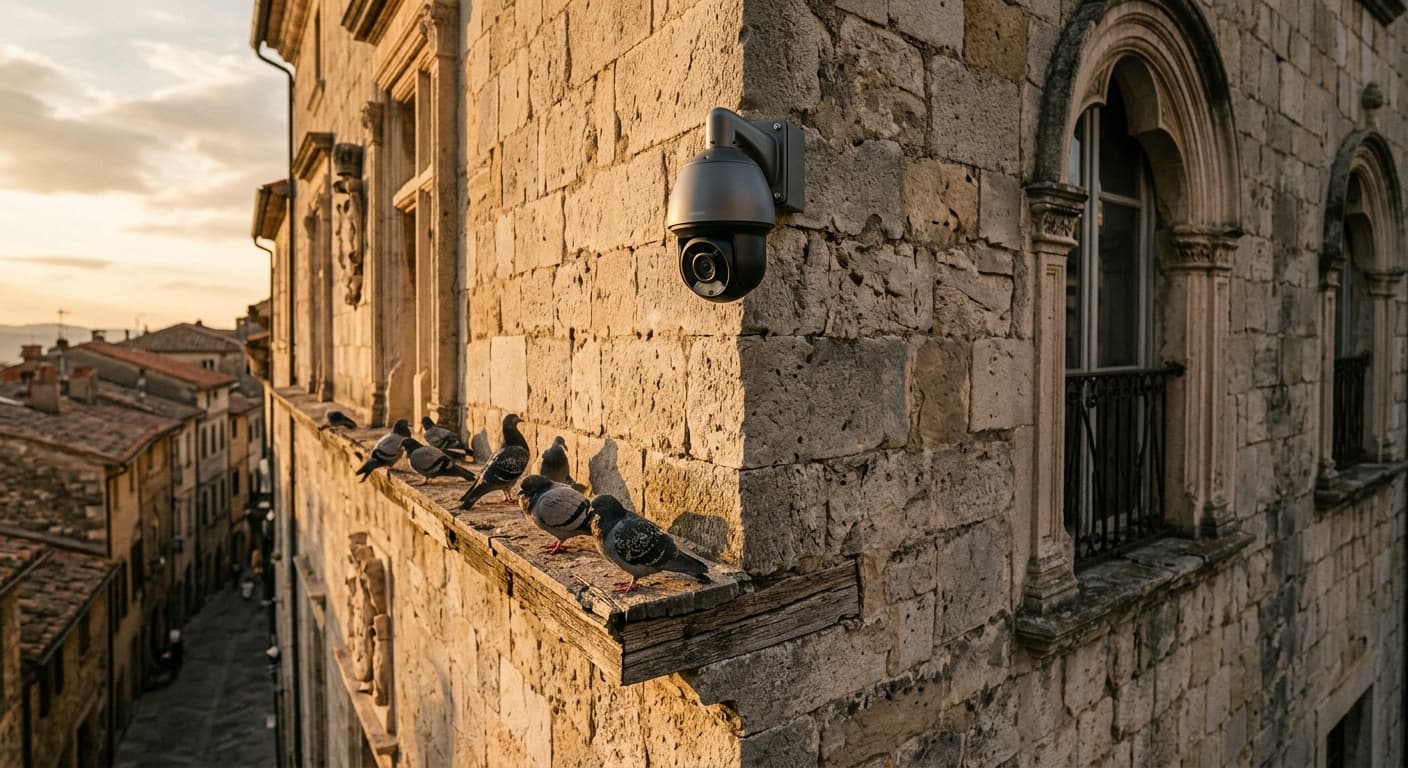
The Dutch rule on recording a conversation (gesprek opnemen) is narrower than most summaries suggest, and the narrowness is the point. The two criminal provisions that govern audio recording, artikel 139a and artikel 139b Sr, each split into two limbs, and only the recording limb is written around a person who is not a participant in the conversation.
So recording a conversation you are yourself taking part in is outside that limb of both offences, while the listening-in limb of each is wider. That is the answer most people are looking for, and on its own it is misleading, because two further rules sit immediately beside it.
The first is that the participant carve-out is about sound. A hidden camera is governed by a different provision that has no participant exception. The second is that making a recording and using it are separate questions decided under different law, and that data protection law engages at the moment of recording rather than at publication.
Information last verified on 21 July 2026. This page provides general legal information about Netherlands law and does not constitute legal advice in an individual case.
The two provisions that govern audio
Both offences live in Titel V of Boek Tweede Sr. They divide the ground by place, and they set different conditions on each side of that line.
Artikel 139a Sr: a home, an enclosed room or a yard
Artikel 139a lid 1 Sr punishes a person who, with a technical device, deliberately does either of two things to a conversation held in a woning, besloten lokaal of erf. Under sub 1 it is an offence to listen in otherwise than on the instruction of a participant in that conversation. Under sub 2 it is an offence to record it without being a participant in it and otherwise than on the instruction of such a participant.
The maximum is six months of imprisonment or a fine of the fourth category. Note the structure of sub 2: the two conditions are cumulative, so recording is an offence only where the person is neither a participant nor acting on a participant's instruction.
The statute does not define besloten lokaal, and the term is read as a room not open to the public, which is capable of covering a private office or a meeting room. Where the line falls in a given room is decided on the facts rather than by a list. Artikel 139a Sr does not require the device to be hidden, which is the main practical difference from artikel 139b Sr.
Artikel 139a lid 2 Sr then carves three situations out of the offence, and its opening words limit all three to recording (het opnemen). Listening in under sub 1 is not carved out by any of them, so afluisteren of a telecommunications conversation held in a woning stays within artikel 139a lid 1 sub 1 Sr:
- recording data processed or transmitted by telecommunications or by an automated system, which is dealt with by artikel 139c Sr instead
- except in a case of manifest abuse (kennelijk misbruik), recording with a technical device that is present openly rather than covertly on the authority of the person occupying the home, room or yard
- recording carried out in the execution of the Wet op de inlichtingen- en veiligheidsdiensten 2017
The second of those is the reason an openly installed device on the occupier's authority is treated differently. It is not an unconditional permission: the opening words behoudens in geval van kennelijk misbruik, except in a case of manifest abuse, keep the exception open to challenge where the device is used abusively.
Artikel 139b Sr: everywhere else, and only covertly
Artikel 139b lid 1 Sr applies to a conversation held somewhere other than a woning, besloten lokaal of erf. It punishes a person who, with the aim of listening to or recording that conversation, does so with a technical device covertly (heimelijk), again either otherwise than on a participant's instruction, or in the case of recording without being a participant and without such an instruction.
The maximum is three months of imprisonment or a fine of the third category, half the custodial maximum of artikel 139a Sr. Covertness is an element of this offence, not an aggravating factor, so a visible device used in an open setting falls outside it.
Artikel 139b lid 2 Sr declares only sub 1 and sub 3 of the artikel 139a lid 2 exceptions applicable. The open-device exception in sub 2 is not carried across. That is consistent with covertness already being an element of the offence itself, but it is what the text says rather than a stated legislative intention.
Why a participant sits outside the recording limb
The wording is doing the work, and it is asymmetric. Artikel 139a lid 1 sub 2 Sr requires that the person recorded zonder deelnemer aan dat gesprek te zijn, that is, without being a participant in that conversation, and additionally anders dan in opdracht van zulk een deelnemer, otherwise than on the instruction of such a participant.
Sub 1 of the same lid, the listening-in limb, carries only the second of those two conditions. Someone who listens in on a conversation held in a woning, besloten lokaal of erf otherwise than on a participant's instruction is within artikel 139a lid 1 sub 1 Sr, and that limb does not ask whether they were a participant. Artikel 139b lid 1 Sr repeats the same split for conversations held elsewhere, subject to its covertness element.
A participant who records therefore does not satisfy the elements of the recording limb, and neither does a person recording on a participant's instruction. That is what makes the Netherlands a participant-consent jurisdiction for audio.
Artikel 139a and artikel 139b Sr impose no requirement to obtain the agreement of the other people in the conversation and no requirement to announce that a recording is being made. That is a statement about those two provisions and about nothing else. The AVG can impose an information duty on the same facts, and it does so from the moment of recording rather than on publication, so an employer, a landlord, a business or an association recording a meeting will generally have to tell the people concerned.
Two further things do not follow. It does not follow that anything may be done with the recording afterwards, and it does not follow that a camera is treated the same way.
Qualifier one: a camera is governed by a different provision
Artikel 139f Sr punishes a person who, using a technical device whose presence has not been made known in a clear manner, deliberately and unlawfully makes an image (afbeelding) of a person present in a home or another place not open to the public. The maximum is one year of imprisonment or a fine of the fourth category, higher than either audio provision.
Read the elements against artikel 139a Sr. There is no reference to a gesprek, no reference to a deelnemer, and no exception for a person who is present or taking part.
The practical consequence is blunt. Recording the sound of a meeting you attend is outside the audio provisions, and hiding a camera in the same room to film the same meeting is capable of satisfying artikel 139f Sr, whether or not you are sitting at the table.
Artikel 441b Sr covers the public-place counterpart. It punishes unlawfully making an image of a person present in a place open to the public using a concealed device installed for that purpose, with a maximum of two months of detention (hechtenis) or a fine of the third category.
Qualifier two: what you do with it runs on other law
Artikel 139e Sr is often cited as though it governed what you may do with any recording. It does not. Each of its three limbs is tied to material obtained by unlawful (wederrechtelijk) listening, interception or recording.
A recording that was lawful to make is therefore not caught by artikel 139e Sr at all. That does not leave the material unregulated; it means the question moves to a different body of law.
Two sources decide it for an audio recording, and a third is added once an image is involved. Artikel 6:162 BW makes an unlawful act, including an intrusion into private life without justification, a basis for damages. The AVG applies as well, but it is not a publication rule: artikel 4 lid 2 AVG counts collection and recording as processing, so it engages when the recording is made and continues through storage, copying and disclosure, unless the activity is a purely personal or household one under artikel 2 lid 2 onder c AVG.
Artikel 21 Auteurswet is the third source, and it is limited to a portret. Where a portrait was made without a commission given by or on behalf of the person portrayed (vervaardigd zonder daartoe strekkende opdracht), publication by the copyright holder is not permitted so far as a reasonable interest of the person portrayed opposes it. An audio-only recording contains no portret, so artikel 21 Auteurswet has nothing to attach to.
The artikel 6:162 BW route is where most disputes actually land, and it is a balancing exercise rather than a rule. The seriousness of the intrusion into private life is weighed against the interests reasonably served by the conduct complained of.
Telephone calls, messages and the device itself
Artikel 139c lid 1 Sr punishes deliberately and unlawfully intercepting or recording, with a technical device, data that are not intended for the person concerned and that are processed or transmitted by telecommunications or by an automated system. The maximum is two years or a fine of the fourth category, higher than either artikel 139a or artikel 139b Sr.
Two elements keep an ordinary participant outside it. The data must be niet voor hem bestemd, not intended for that person, which the content of a call you are a party to is not, and the conduct must be wederrechtelijk.
Artikel 139c lid 2 sub 2 Sr goes further and expressly disapplies the provision to interception or recording by or on the instruction of the person entitled to the connection used for the telecommunication, again except in a case of manifest abuse (kennelijk misbruik).
Those are two different tests and they do not always give the same answer. The person entitled to the connection is the subscriber, which on a company line or a work mobile is normally the employer rather than the employee, so an employee who is a participant in the call relies on the niet voor hem bestemd element of lid 1 rather than on the carve-out in lid 2.
Artikel 139d lid 1 Sr reaches one step earlier, punishing a person who causes a technical device to be present in a particular place with the intent that a conversation or a data transfer be unlawfully listened to, intercepted or recorded. The maximum is two years or a fine of the fourth category, and the offence is complete on the placing, whatever the device then captures.
Leden 2 and 3 extend artikel 139d Sr to making, obtaining, supplying or holding devices and access credentials intended for certain computer offences, with a maximum of four years in the case of lid 3.
The last provision in the block is artikel 139g Sr, which covers acquiring, holding or passing on non-public data known or reasonably suspected to have been obtained by a criminal offence, with a maximum of one year or a fine of the fourth category. Lid 2 exempts a person who could in good faith assume that the public interest required it.
Recording a conversation at work
The question behind most searches on this topic is whether an employee may record a conversation with a manager. The criminal answer follows the general rule: an employee taking part in the meeting is a participant, so artikel 139a and artikel 139b Sr are not engaged.
Three separate points sit alongside that, and none of them is answered by the criminal provisions.
The first is the employment relationship itself. Artikel 7:611 BW obliges an employer and an employee to conduct themselves as a good employer and a good employee, and conduct that is not a criminal offence can still be weighed against that standard depending on the circumstances.
The second is what happens to the recording. Circulating it, posting it or supplying it to a third party is assessed under the AVG and artikel 6:162 BW, and under portretrecht where an image is involved, exactly as set out above, and is not covered by the participant rule.
The third runs the other way. Monitoring by an employer is regulated in its own right, and the Autoriteit Persoonsgegevens sets out the conditions. They are a lawful basis, which the AP says will rarely be consent because staff cannot freely refuse an employer's request, a necessity test, informing staff about what is monitored and why, respect for the right to confidential communication, and a data protection impact assessment for large-scale or systematic monitoring.
One of those conditions is not a balancing exercise at all. Where the organisation has a works council (ondernemingsraad), artikel 27 lid 1 onder l van de Wet op de ondernemingsraden requires its prior consent to any arrangement for monitoring the conduct or performance of staff, and the AP puts the consequence plainly: if the works council does not agree, the employer may not monitor. Covert monitoring of staff is subject to further conditions again.
Nothing on this page is a recommendation to record a colleague, a manager or a counterparty. It sets out where the statutory lines fall so that a reader can see which of them a given situation touches.
The maximum penalties in one place
| Provision | Conduct | Maximum |
|---|---|---|
| artikel 139a Sr | Listening in on or recording a conversation in a woning, besloten lokaal of erf, as a non-participant | 6 months or a category 4 fine |
| artikel 139b Sr | The same elsewhere, and only where the device is used covertly | 3 months or a category 3 fine |
| artikel 139c Sr | Intercepting or recording telecommunications data not intended for the person concerned | 2 years or a category 4 fine |
| artikel 139d Sr | Placing a technical device so that a conversation or data transfer may be unlawfully captured | 2 years or a category 4 fine |
| artikel 139e Sr | Holding, disclosing or supplying unlawfully obtained material | 6 months or a category 4 fine |
| artikel 139f Sr | Making a covert image of a person in a home or other non-public place | 1 year or a category 4 fine |
| artikel 441b Sr | The same in a place open to the public | 2 months of detention or a category 3 fine |
Artikel 23 lid 4 Sr fixes the fine categories, and the amounts are indexed. Its operative text in the consolidation of 1 July 2026 sets the third category at EUR 6,700 and the fourth at EUR 16,750, and carries a redactional note that from 1 January 2026 those ceilings read EUR 11,000 and EUR 27,500. Artikel 23 lid 9 Sr provides for a further adjustment every two years by order in council.
These are statutory maxima for the offence, not tariffs. Artikel 24 Sr requires a court fixing a fine to take account of the means of the person concerned.
Using the recording afterwards
Dutch civil evidence law is open by design, so a recording that was lawful to make is frequently produced in an employment or neighbour dispute. How artikel 152 Rv works, and how the courts have handled a recording that was obtained unlawfully, is set out on recordings as evidence.
The wider map of Dutch recording and surveillance law, including the data protection side, is on the Netherlands recording laws section page, and a shorter country-level summary sits in the Netherlands entry in the world recording survey. Related obligations at work are covered on the Netherlands employment law section page, and the country map on the Netherlands law overview.
Frequently Asked Questions
Can I record a conversation in the Netherlands without telling the other person?
Recording a conversation you are taking part in falls outside the recording limb of artikel 139a and artikel 139b Sr, which is committed only by a person who is not a participant (deelnemer) and is not acting on a participant's instruction. The listening-in limb of the same provisions is wider and asks only whether the person acted otherwise than on a participant's instruction. Two qualifiers travel with that answer. It is about sound, so a hidden camera is governed instead by artikel 139f Sr, which has no participant exception, and the AVG applies to the recording itself from the moment it is made unless the activity is purely personal or household.
Can I record a phone call I am taking part in?
Artikel 139c lid 1 Sr is limited to intercepting or recording data that are not intended for the person doing it, and the words of a call you are a party to are addressed to you. Artikel 139c lid 2 sub 2 Sr goes further and disapplies the provision to interception or recording by or on the instruction of the holder of the connection used for the telecommunication, except in a case of manifest abuse (kennelijk misbruik). Artikel 139a lid 2 sub 1 Sr separately takes the recording of telecommunications data out of artikel 139a Sr, though it does not do the same for the listening-in limb. Note that the holder of the connection on a company line is normally the employer rather than the employee.
Can I record a meeting with my employer?
A recording of a meeting you attend is outside the recording limb of artikel 139a and artikel 139b Sr, since you are a participant in the conversation. That is only the criminal question. Artikel 7:611 BW requires an employee to behave as a good employee, so recording can still be raised as a breach of that obligation depending on the circumstances. Monitoring in the other direction is regulated separately: the Autoriteit Persoonsgegevens requires a lawful basis, necessity, informing staff and, where there is a works council (ondernemingsraad), its prior consent, without which the employer may not monitor.
Is it an offence to record a conversation I am not part of?
That is exactly the situation artikel 139a and artikel 139b Sr are written for. Recording a conversation held in a woning, besloten lokaal of erf without being a participant and without a participant's instruction carries up to six months or a category 4 fine under artikel 139a Sr. The same conduct elsewhere carries up to three months or a category 3 fine under artikel 139b Sr, but only where the device is used covertly.
Can I put a recording of a conversation online?
Publishing is governed by different rules from making the recording. Artikel 139e Sr reaches only material obtained unlawfully, so it does not answer the question for a lawfully made participant recording. Publication is assessed under onrechtmatige daad in artikel 6:162 BW, which weighs the intrusion into private life against the interest served by publishing, and under portretrecht in artikel 21 Auteurswet where a portrait is involved. The AVG applies too and is not confined to publication, because recording an identifiable person is already processing unless the activity is purely personal or household.
Is a hidden camera treated the same as a hidden microphone?
No, and the difference is the most consequential point in Dutch recording law. Artikel 139a and artikel 139b Sr are about a gesprek and turn on whether the person is a participant. Artikel 139f Sr is about an afbeelding of a person present in a home or another non-public place, made with a device whose presence has not been clearly made known, and it contains no participant exception at all, with a maximum of one year or a category 4 fine.
What is the penalty for unlawfully recording a conversation?
Artikel 139a Sr carries a maximum of six months of imprisonment or a category 4 fine, and artikel 139b Sr a maximum of three months or a category 3 fine. Artikel 139c Sr, for telecommunications data, carries up to two years or a category 4 fine, as does artikel 139d Sr for placing a device. The operative text of artikel 23 lid 4 Sr sets the third category at EUR 6,700 and the fourth at EUR 16,750, with a redactional note that from 1 January 2026 the ceilings read EUR 11,000 and EUR 27,500.
Does artikel 139a Sr apply to a recording made in an office?
It depends on whether the room is a besloten lokaal, which is the statutory term alongside woning and erf. An office that is not open to the public will normally fall inside artikel 139a Sr, and a conversation in a street, a park or another open setting falls under artikel 139b Sr instead. The distinction matters, because artikel 139b Sr applies only where the device is used covertly while artikel 139a Sr carries no such requirement.
Updates
Independently fact-checked against the cited primary sources
Sources and References
- Artikel 139a Sr, opnemen van een gesprek in een woning, besloten lokaal of erf(wetten.overheid.nl).gov
- Artikel 139b Sr, heimelijk opnemen van een gesprek elders dan in een woning, besloten lokaal of erf(wetten.overheid.nl).gov
- Artikel 139c Sr, aftappen of opnemen van gegevens die niet voor hem bestemd zijn(wetten.overheid.nl).gov
- Artikel 139d Sr, het aanwezig doen zijn van een technisch hulpmiddel(wetten.overheid.nl).gov
- Artikel 139e Sr, beschikken over of bekendmaken van wederrechtelijk verkregen gegevens(wetten.overheid.nl).gov
- Artikel 139f Sr, heimelijk vervaardigen van een afbeelding op een niet voor het publiek toegankelijke plaats(wetten.overheid.nl).gov
- Artikel 139g Sr, door misdrijf verkregen niet-openbare gegevens(wetten.overheid.nl).gov
- Artikel 441b Sr, heimelijk vervaardigen van een afbeelding op een voor het publiek toegankelijke plaats(wetten.overheid.nl).gov
- Artikel 23 Sr, de zes geldboetecategorieën en hun bedragen(wetten.overheid.nl).gov
- Artikel 21 Auteurswet, portretrecht en het redelijk belang van de geportretteerde(wetten.overheid.nl).gov
- Artikel 6:162 BW, onrechtmatige daad(wetten.overheid.nl).gov
- Artikel 7:611 BW, goed werkgeverschap en goed werknemerschap(wetten.overheid.nl).gov
- Artikel 152 Rv, vrije bewijsleer en vrije bewijswaardering(wetten.overheid.nl).gov
- Autoriteit Persoonsgegevens, voorwaarden voor controle van werknemers(autoriteitpersoonsgegevens.nl).gov
- Verordening (EU) 2016/679 (AVG), artikel 2 lid 2 onder c en artikel 4 lid 2(eur-lex.europa.eu).gov
- Artikel 27 lid 1 onder l Wet op de ondernemingsraden, instemmingsrecht bij een regeling voor controle op gedrag of prestaties(wetten.overheid.nl).gov
- Autoriteit Persoonsgegevens, voorwaarden voor heimelijke controle van werknemers(autoriteitpersoonsgegevens.nl).gov