
Netherlands
Recording and Surveillance Law in the Netherlands: Sr and AVG
Independently fact-checked against primary sources (last audited July 21, 2026). · 17 primary sources cited on this page. How we verify our legal content
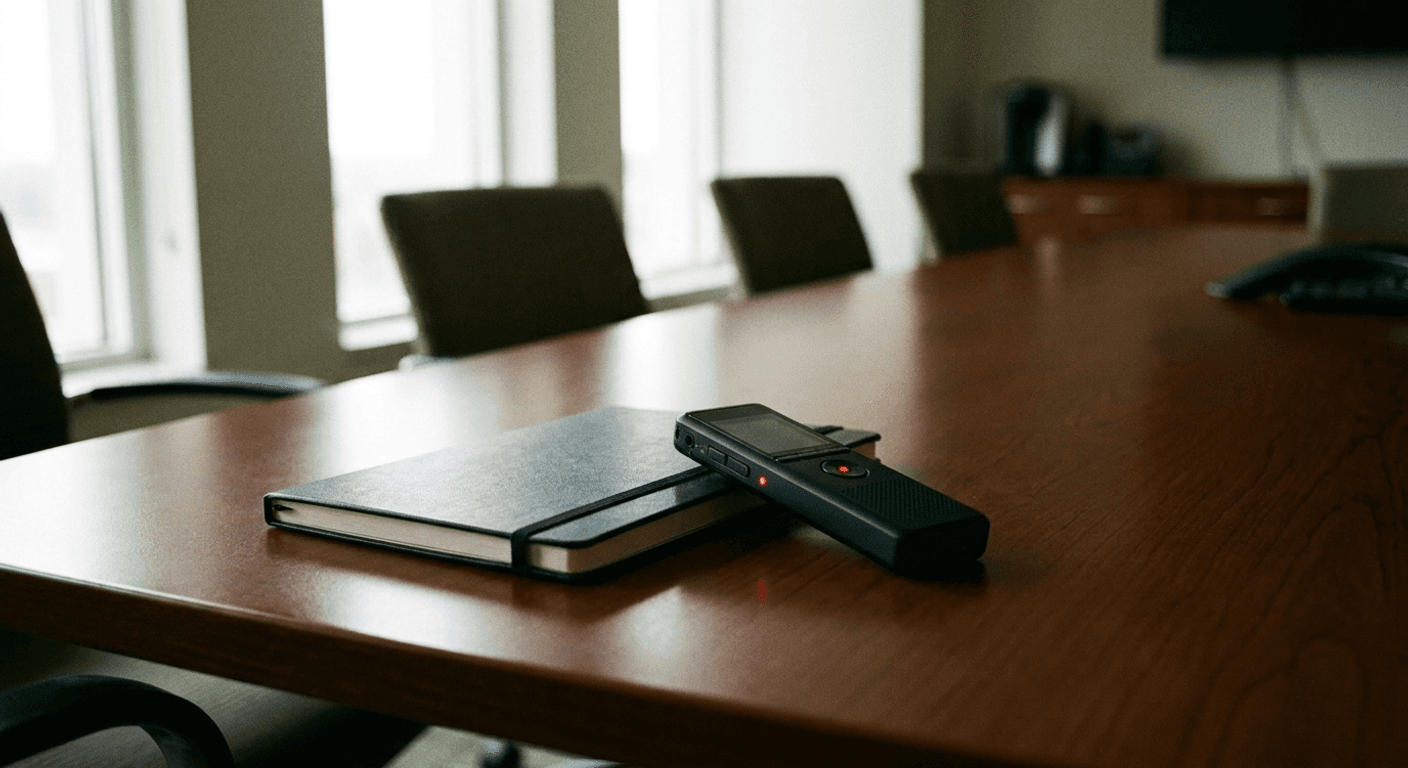
Dutch law on recording and surveillance is not one rule but two bodies of law running side by side. The Wetboek van Strafrecht (Sr) makes certain ways of capturing a conversation (gesprek) or an image (afbeelding) a criminal offence. Data protection law, the AVG as applied in the Netherlands, engages at the moment of recording, because artikel 4 lid 2 AVG counts collection and recording as processing of personal data.
Nearly every real dispute turns on knowing which of the two is in play. What keeps most private recordings out of the AVG is not the absence of publication but the exemption in artikel 2 lid 2 onder c AVG for a purely personal or household activity. A recording can be entirely lawful to make and still be unlawful to publish, and a camera can be acceptable in one position and a criminal offence a metre to the left.
Information last verified on 21 July 2026. This page provides general legal information about Netherlands law and does not constitute legal advice in an individual case.
The criminal side and the data protection side
The criminal provisions sit in Titel V of Boek Tweede Sr, under the heading of offences against public order. They are about the act of capture: listening in, recording, placing a device, making an image, and then holding or passing on material that came from one of those acts.
They are narrow on purpose. Each one has a defined place, a defined technique and a defined actor, and conduct that falls outside those elements is not made criminal by being unpleasant.
Data protection law asks a different question, and it asks it earlier. Artikel 4 lid 2 AVG defines processing to include collection and recording, so capturing an identifiable person is processing from the first second, whether or not anything is ever published. What removes most private recordings is not the absence of publication but artikel 2 lid 2 onder c AVG, which puts a purely personal or household activity outside the regulation altogether. That is why the same doorbell camera can raise no criminal question at all and still be a data protection problem once it covers the pavement.
Above both sits artikel 10 Grondwet, which gives everyone a right to respect for private life subject to limits set by or under statute, and artikel 13 Grondwet, which protects the confidentiality of correspondence and telecommunications.
The three lines that decide every case
Almost every Dutch recording question resolves onto one of three distinctions. The full treatment of each provision, with its elements and its maximum penalty, is on recording conversations.
The first line is sound against image. Artikel 139a and artikel 139b Sr are written around a gesprek, a conversation, while artikel 139f Sr is written around an afbeelding, an image of a person in a place not open to the public, and artikel 441b Sr is its public-place counterpart. Artikel 139f Sr contains no participant exception at all, so being in the room does not take a hidden camera outside it, and treating a camera as though the audio rule applied to it is the single most consequential error in this area.
The second line is participant against non-participant, and it is narrower than it is usually stated. Artikel 139a lid 1 Sr splits in two: sub 1, listening in, is committed by anyone acting otherwise than on the instruction of a participant (deelnemer), while sub 2, recording, requires both that the person is not a participant and that no participant instructed the recording. Artikel 139b lid 1 Sr repeats that split for conversations held elsewhere, but only where the device is used covertly (heimelijk). A participant who records is therefore outside the recording limb, and that is a statement about sound.
The third line is making against using. Artikel 139e and artikel 139g Sr reach only material obtained unlawfully or by a criminal offence, so neither governs a lawfully made recording, and the block of criminal provisions itself runs from artikel 139a to artikel 139g Sr, the provision that once followed it having been repealed with effect from 1 July 2024. The AVG does govern a lawfully made recording, and it does so from the moment of recording rather than from the moment of publication. Image rights (portretrecht) in artikel 21 Auteurswet and unlawful act (onrechtmatige daad) in artikel 6:162 BW sit alongside it.
Artikel 23 lid 4 Sr fixes the fine categories those provisions refer to. Its operative text sets the third category at EUR 6,700 and the fourth at EUR 16,750, and carries a redactional note that from 1 January 2026 the figures read EUR 11,000 and EUR 27,500. Artikel 23 lid 9 Sr provides for the amounts to be adjusted every two years by order in council in line with the consumer price index.
The Autoriteit Persoonsgegevens
Artikel 6 van de Uitvoeringswet AVG (UAVG) establishes the Autoriteit Persoonsgegevens and designates it as the supervisory authority for the purposes of the regulation. It handles complaints, investigates and enforces, and it publishes the practical guidance most people meet first, including guidance on camera use in and around the home, where the purely personal or household exemption is the question that decides most cases.
It is not a court, and it does not award damages. Compensation for a privacy breach is a civil claim under artikel 6:162 BW, brought before the civil court and decided on its own evidence.
Using a recording later
Dutch civil evidence law is deliberately open, which is why a recording is so often produced in an employment or neighbour dispute and why admissibility on its own is rarely the interesting question. How artikel 152 Rv works, and how the courts have treated a recording that was obtained unlawfully, is set out on recordings as evidence.
Where a problem goes
The route depends on the complaint rather than on the subject matter. A data protection complaint about an organisation goes to the Autoriteit Persoonsgegevens, which asks that you contact the organisation first.
A claim for an order to stop, remove or pay compensation is a civil matter. Employment and tenancy disputes go to the subdistrict court (kantonrechter) under artikel 93 sub c Rv regardless of the amount at stake, and other civil claims go to the kantonrechter or the rechtbank depending on the claim.
A suspected criminal offence under one of the provisions above is reported to the police, and the decision whether to prosecute rests with the Openbaar Ministerie.
Guides in this section
Two pages are published:
- Recording conversations, the detailed treatment of artikel 139a to 139g Sr, the participant rule, hidden cameras and the separate law that governs what you do with the recording.
- Recordings as evidence, on artikel 152 Rv, unlawfully obtained evidence in civil proceedings and how the criminal position differs.
For a shorter country-level summary written as part of the worldwide recording survey, see the Netherlands entry in the world recording survey. The wider Dutch legal map is on the Netherlands law overview, workplace obligations on the Netherlands employment law section page, and screening rules on the Netherlands background checks section page.
Frequently Asked Questions
Is it legal to record a conversation in the Netherlands?
Recording a conversation you are taking part in falls outside the recording limb of artikel 139a and artikel 139b Sr, which is committed only by someone who is not a participant (deelnemer) and is not acting on a participant's instruction. The listening-in limb of the same provisions is wider, since it asks only whether the person acted otherwise than on a participant's instruction. That answer is about sound: a covert image is governed by artikel 139f Sr, which contains no participant exception. The AVG runs alongside from the moment of recording, unless the recording is a purely personal or household activity.
What is the penalty for secretly recording someone in the Netherlands?
It depends on which provision applies. Artikel 139a Sr carries up to six months or a category 4 fine, artikel 139b Sr up to three months or a category 3 fine, artikel 139c Sr up to two years or a category 4 fine, and artikel 139f Sr up to one year or a category 4 fine. The operative text of artikel 23 lid 4 Sr sets category 3 at EUR 6,700 and category 4 at EUR 16,750, with a redactional note that from 1 January 2026 the ceilings read EUR 11,000 and EUR 27,500.
Does the participant rule apply to video as well as sound?
No, and this is the most common mistake in the area. Artikel 139a and artikel 139b Sr are about a gesprek, which is sound, while artikel 139f Sr is about an afbeelding of a person in a non-public place made with a device whose presence has not been made clear. Artikel 139f Sr contains no participant exception, so being present in the room does not take a hidden camera outside it.
Which authority handles privacy complaints in the Netherlands?
The Autoriteit Persoonsgegevens, which artikel 6 van de Uitvoeringswet AVG designates as the supervisory authority for the purposes of the AVG. It handles complaints and enforcement about the processing of personal data. It is a supervisory body rather than a court, and it does not decide criminal charges under the Wetboek van Strafrecht.
Can the Autoriteit Persoonsgegevens award compensation?
No. The AP supervises and enforces, but it does not award damages to an individual. A claim for compensation (schadevergoeding) is a civil claim brought before the civil court, and it runs on its own rules rather than on the outcome of a complaint to the AP.
Does the AVG apply as soon as I make a recording?
Yes, in principle. Artikel 4 lid 2 AVG defines processing to include collection and recording, so a recording of an identifiable person is processing from the moment it is made rather than from the moment it is shared. The exemption in artikel 2 lid 2 onder c AVG for a purely personal or household activity is what takes most private recordings outside the regulation, and it is also what an employer, a landlord, a business or an association cannot rely on. The Autoriteit Persoonsgegevens publishes practical guidance for camera use in and around the home.
Updates
Independently fact-checked against the cited primary sources
Sources and References
- Artikel 139a Sr, opnemen van een gesprek in een woning, besloten lokaal of erf(wetten.overheid.nl).gov
- Artikel 139b Sr, heimelijk opnemen van een gesprek elders dan in een woning, besloten lokaal of erf(wetten.overheid.nl).gov
- Artikel 139c Sr, aftappen of opnemen van gegevens die niet voor hem bestemd zijn(wetten.overheid.nl).gov
- Artikel 139e Sr, beschikken over of bekendmaken van wederrechtelijk verkregen gegevens(wetten.overheid.nl).gov
- Artikel 139f Sr, heimelijk vervaardigen van een afbeelding op een niet voor het publiek toegankelijke plaats(wetten.overheid.nl).gov
- Artikel 441b Sr, heimelijk vervaardigen van een afbeelding op een voor het publiek toegankelijke plaats(wetten.overheid.nl).gov
- Artikel 139g Sr, door misdrijf verkregen niet-openbare gegevens(wetten.overheid.nl).gov
- Verordening (EU) 2016/679 (AVG), artikel 2 lid 2 onder c en artikel 4 lid 2(eur-lex.europa.eu).gov
- Artikel 21 Auteurswet, portretrecht en het redelijk belang van de geportretteerde(wetten.overheid.nl).gov
- Artikel 6:162 BW, onrechtmatige daad(wetten.overheid.nl).gov
- Artikel 93 Rv, bevoegdheid van de kantonrechter, waaronder arbeidszaken ongeacht de waarde(wetten.overheid.nl).gov
- Artikel 23 Sr, de zes geldboetecategorieën en hun bedragen(wetten.overheid.nl).gov
- Artikel 10 en artikel 13 Grondwet, persoonlijke levenssfeer en telecommunicatiegeheim(wetten.overheid.nl).gov
- Artikel 6 Uitvoeringswet AVG, de Autoriteit Persoonsgegevens als toezichthoudende autoriteit(wetten.overheid.nl).gov
- Artikel 152 Rv, vrije bewijsleer en vrije bewijswaardering(wetten.overheid.nl).gov
- Autoriteit Persoonsgegevens, cameragebruik in en om het huis(autoriteitpersoonsgegevens.nl).gov
- Autoriteit Persoonsgegevens, een tip of klacht indienen bij de AP(autoriteitpersoonsgegevens.nl).gov