
Netherlands
The Huurcommissie (Rent Tribunal) in the Netherlands 2026
Independently fact-checked against primary sources (last audited July 21, 2026). · 14 primary sources cited on this page. How we verify our legal content
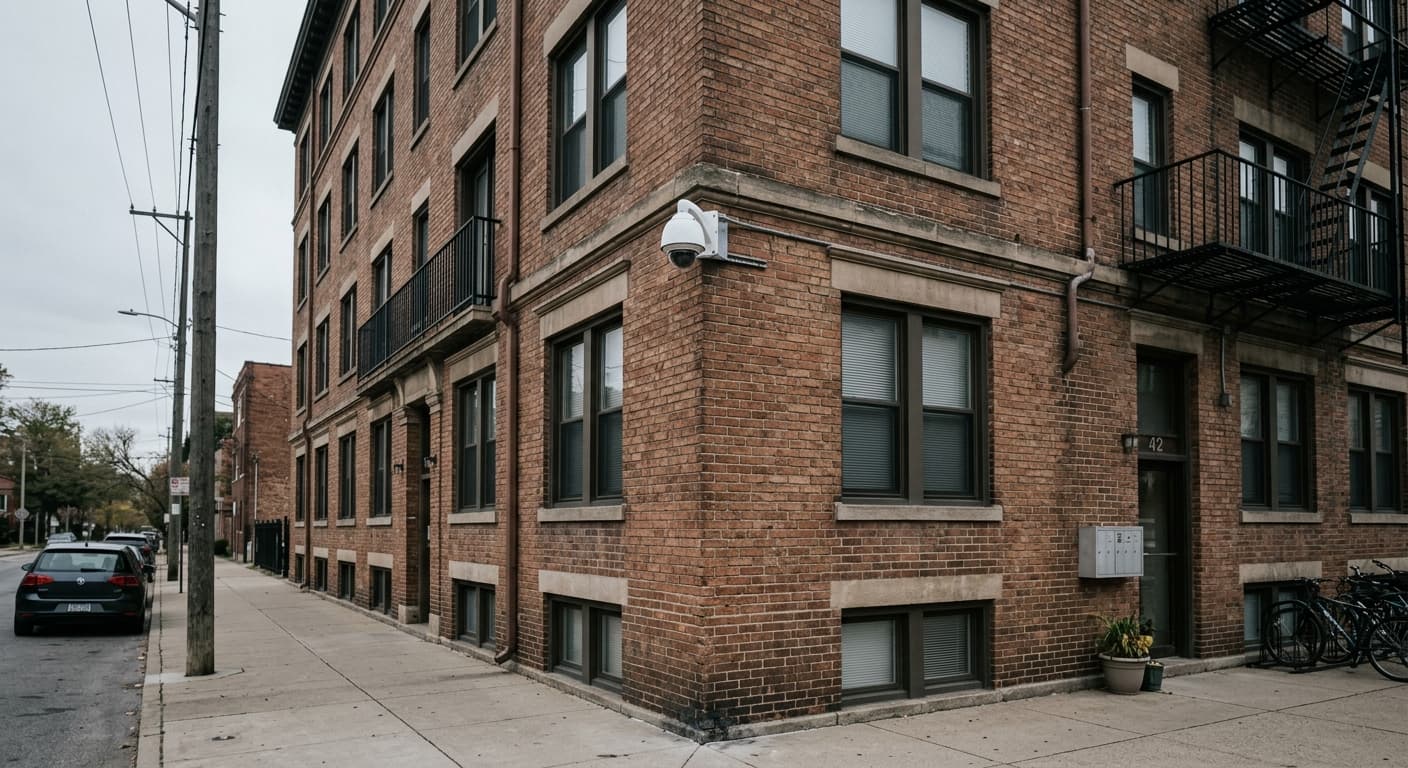
The rent tribunal (huurcommissie) is the body most Dutch tenants and landlords turn to when they disagree about the rent, the service charges or the state of the home. It is a national, independent dispute body, not a court and not the subdistrict court (kantonrechter), and for a tenant it is by far the cheapest way to have a rent tested.
It was set up and given its powers by the Uitvoeringswet huurprijzen woonruimte (Uhw), and it rules on the price of a home, on service charges (servicekosten) and on rent reductions for maintenance defects (gebreken). This page explains what it decides, what a procedure costs in 2026, when its ruling becomes binding, and how the one route of challenge to the kantonrechter works.
Information last verified on 22 July 2026. This page provides general legal information about Netherlands law and does not constitute legal advice in an individual case.
What the huurcommissie is
The huurcommissie is established by the Uitvoeringswet huurprijzen woonruimte (Uhw), the statute that also fixes how it is composed and what it may decide. Its tasks sit in Hoofdstuk II of that Act: one paragraph sets the body up, a second lists the matters it rules on, and a third governs the fee. It is a national body with one uniform competence across the Netherlands, so the answer to a rent question does not change from one gemeente to the next.
It is best understood as a specialist, low-cost alternative to the court for residential rent. A tenant does not need an advocaat to bring a case, the fee is small, and the procedure is written and largely on paper. What the huurcommissie produces is a ruling (uitspraak) that the parties are then deemed to have agreed, which is what gives it teeth without it being a court.
What the huurcommissie decides
Artikel 4 Uhw lists the matters the huurcommissie rules on, and each one is tied to an article of Boek 7 of the civil code (Burgerlijk Wetboek, BW). The reader-facing summary is rent price, service charges and maintenance defects, but the statutory list is more precise than that:
- the reasonableness of the agreed starting rent, under artikel 7:249 BW;
- the reasonableness of a proposed rent increase, under artikel 7:253 BW;
- the reasonableness of the rent itself, the route to a rent reduction, under artikel 7:254 BW;
- an increase after home improvements or renovation, under artikel 7:255 BW;
- a rent reduction for maintenance defects, under artikel 7:257 BW;
- service charges and advance payments for utilities, under artikel 7:258 BW.
The link a tenant most often needs is the first and third of those. A home is scored under the points system (woningwaarderingsstelsel), and it is through the reasonableness of the rent that the huurcommissie compares the actual rent against the maximum the points allow. The points system page sets out how those points are counted, and the rent increase page covers the objection route when a landlord proposes a rise.
When you can use it: regulated versus free sector
The huurcommissie's power over the price of a home depends on which segment the home is in, and the boundary is set by the number of points the home scores.
In 2026 a self-contained home scoring up to 143 points is social housing with a maximum rent of EUR 932.93 per month, a home scoring 144 to 186 points falls in the regulated middenhuur band up to EUR 1,228.07 per month, and only a home scoring 187 points or more is free-sector where the rent is not capped by the points.
The reason the segment matters is in the civil code. Artikel 7:247 BW provides that for a self-contained home whose starting rent is above the liberalisation boundary, most of the price-control articles do not apply, though the reasonableness of the rent and the binding-and-appeal rules still do. Artikel 7:247b BW is the Wet betaalbare huur provision that brought the middenhuur band inside the regulated regime. So a home in the social band (up to 143 points) or the middenhuur band (144 to 186 points) can have its price tested by the huurcommissie, while a genuinely free-sector home, at 187 points or more, largely cannot.
That said, the price is not the only thing the huurcommissie decides. A dispute about service charges or about a rent reduction for maintenance defects reaches the huurcommissie whatever the segment, because those competences are not tied to the liberalisation boundary. A free-sector tenant shut out of a price review can still bring a servicekosten or a gebreken case.
For a new tenant, the most useful single power is the starting-rent test. Artikel 7:249 BW lets a tenant ask the huurcommissie to rule on the reasonableness of the starting rent within six months of the lease first beginning, the aanvangshuurprijstoets. Where the points show the agreed rent is too high, this is the route that brings it down, and the six-month window is firm, so it is worth using early.
What a procedure costs in 2026
A huurcommissie procedure carries a fee (leges) rather than a court fee (griffierecht), and it is small. For 2026 the tenant pays EUR 25 in advance and the landlord pays EUR 500 in advance. These amounts are set administratively and adjusted over time, so they should be read with the year attached.
The fee is not a charge for using the service so much as a stake on the outcome. Under artikel 7 and artikel 8 Uhw the huurcommissie states in its ruling which party owes the fee and up to what amount, and the party that loses (de in het ongelijk gestelde partij) bears it. A party that wins is refunded the advance, and where the result is split each side carries part of it. For a tenant who is right about the rent, the practical cost of the whole procedure is therefore nothing.
A landlord who repeatedly charges too much faces an escalating tariff. Where the huurcommissie has ruled against the same landlord several times within four consecutive calendar years, the landlord fee rises in steps, reported as EUR 700, then EUR 1,400, then EUR 1,750. The top figure is still labelled a 2024 tariff on the huurcommissie's own materials, so treat that specific number as one that may not yet have been re-indexed; the EUR 25 and EUR 500 advance amounts are current for 2026.
Against that, the alternative route through the court is more formal and, for most tenants, dearer in effort if not in fee. A private individual bringing a tenancy matter of undetermined value before the kantonrechter pays around EUR 93 in griffierecht for 2026, and while an advocaat is not required in a kantonzaak, the case is a full civil proceeding. For a straightforward fight about the rent price, the servicekosten or a defect, the huurcommissie is the cheaper and simpler forum.
The ruling binds, and the eight-week route to the court
The single most important procedural fact about a huurcommissie ruling is what happens to it if nobody challenges it.
A huurcommissie ruling binds both parties under artikel 7:262 BW unless one of them asks the kantonrechter for a decision within eight weeks of the ruling being sent, and no further appeal lies against that decision.
Artikel 7:262 lid 1 BW puts it precisely: once the huurcommissie has ruled on a request by the tenant or the landlord, the parties are deemed to have agreed what the ruling fixed, unless one of them, within eight weeks of the ruling being sent, has demanded a decision from the rechter on the point the huurcommissie ruled on. That decision is a fresh look at the same point, and artikel 7:262 lid 2 BW closes the matter after it: no higher appeal lies against the court's decision. A ruling nobody takes to the court in eight weeks is, in effect, the final word.
This is why it is wrong to think of a huurcommissie ruling as something that can be appealed indefinitely. There is exactly one challenge, it has a hard eight-week deadline, and it goes to the kantonrechter. Miss the window and the ruling stands as an agreement between the parties.
There is a separate, shorter deadline that is easy to confuse with this one, and the two are not alternatives for the same decision. A voorzittersuitspraak is a decision taken by a single chair rather than the full huurcommissie, and it can be challenged by verzet brought back to the huurcommissie itself, within three weeks, under artikel 20 Uhw. That three-week verzet reopens the case inside the huurcommissie; the eight-week route under artikel 7:262 BW takes a full ruling out to the court. Keep them apart: one is a challenge to a provisional decision, the other is the route to a judge.
Which court, and why a landlord cannot act alone
When a huurcommissie matter does go to court, or when a tenancy dispute starts in court in the first place, the forum is fixed, and it is not the amount at stake that decides it.
Dutch tenancy cases are heard by the kantonrechter whatever the amount at stake, because artikel 93 sub c Rv assigns huur cases to the kantonrechter regardless of the value of the claim, so the EUR 25,000 threshold that applies to ordinary money claims does not apply here.
So the eight-week challenge under artikel 7:262 BW is heard by the kantonrechter, an eviction claim is a kantonzaak, and a rent-arrears claim of tens of thousands of euro is still a kantonzaak. A tenant does not need to work out a value threshold, because for tenancy there is none: artikel 93 sub c Rv sends every huur case to the same court.
The other half of the picture is that a landlord who is unhappy with a rent, or who wants the tenant out, cannot simply act on it.
A landlord in the Netherlands cannot evict a tenant on their own: under artikel 7:272 BW the lease stays in force until the kantonrechter has ruled, the court fixes the eviction date under artikel 7:273 lid 3 BW, and only a gerechtsdeurwaarder may carry the eviction out.
Cutting off the water, removing a tenant's belongings or changing the locks to force someone out is unlawful self-help (eigenrichting), whatever the landlord believes about the rent or the arrears. Rent is lowered through the huurcommissie or the court, and a lease is ended only through the kantonrechter, with the eviction itself carried out by a gerechtsdeurwaarder. The tenant protection page and the eviction page set out that machinery in full.
How a case is brought
A tenant starts a procedure by asking the huurcommissie to rule, paying the EUR 25 advance, and setting out the point in dispute, whether it is the starting rent, a proposed increase, the service charges or a defect. The procedure is largely written, the huurcommissie may inspect the home where the points are in issue, and it then issues its ruling. From the day that ruling is sent, the eight-week clock under artikel 7:262 BW begins.
For a rent-price case the tenant will usually want to know the point count first, because it is the points that fix the maximum rent. The huurcommissie publishes an official points check (huurprijscheck) on its own website for that purpose, and the points system page explains what goes into a score. The wider map of Dutch tenancy law, including the contract types and the deposit (waarborgsom), sits on the tenancy law page and the tenant rights overview.
Frequently Asked Questions
What does the huurcommissie do?
It is a national, independent dispute body for residential rent, created by the Uitvoeringswet huurprijzen woonruimte. Under artikel 4 Uhw it rules on the reasonableness of the rent, on rent increases, on service charges and on rent reductions for maintenance defects. It is not a court, and a tenant does not need an advocaat to bring a case.
How much does a huurcommissie procedure cost in 2026?
A tenant pays EUR 25 in advance and a landlord pays EUR 500 in advance. The party that loses bears the fee and the party that wins is refunded, so a tenant who is right about the rent effectively pays nothing. A landlord who is ruled against repeatedly within four consecutive years faces an escalating tariff of EUR 700, then EUR 1,400, then EUR 1,750.
Can I still go to the huurcommissie if I rent in the free sector?
For the price of the home, largely no. A fully free-sector home scoring 187 points or more is outside the huurcommissie price review under artikel 7:247 BW. But a free-sector tenant can still bring a dispute about service charges or about a rent reduction for maintenance defects, because those competences are not tied to the segment.
How long do I have to challenge a huurcommissie ruling?
Eight weeks. Under artikel 7:262 BW the ruling binds both parties unless one of them asks the kantonrechter for a decision within eight weeks of the ruling being sent, and no further appeal lies against the court's decision. A separate three-week verzet applies only to a voorzittersuitspraak, a single-chair decision, and that verzet goes back to the huurcommissie rather than to the court.
Can my landlord just evict me over the rent?
No. A landlord cannot evict a tenant on their own: under artikel 7:272 BW the lease stays in force until the kantonrechter has ruled, the court fixes the eviction date, and only a gerechtsdeurwaarder may carry it out. Changing the locks or cutting off utilities is unlawful self-help, whatever the landlord thinks about the rent.
Can I test the rent of a home I have just moved into?
Yes, within six months. Artikel 7:249 BW lets a new tenant ask the huurcommissie to rule on the reasonableness of the starting rent within six months of the lease first beginning. This aanvangshuurprijstoets is the main route to bring an over-set rent down to the maximum the points allow, and the six-month window is firm.
Which court hears a tenancy case, and does the amount matter?
The kantonrechter, whatever the amount at stake. Artikel 93 sub c Rv assigns huur cases to the kantonrechter regardless of the value of the claim, so a high-value rent-arrears or eviction case is not sent to the rechtbank. An advocaat is not mandatory in a kantonzaak, so a tenant may appear in person.
Do I need the points count before I start?
For a rent-price case it helps, because the points fix the maximum rent. The huurcommissie publishes an official points check on its website, and its ruling on the rent turns on the score. For a service-charges or a maintenance-defect case the points are not the issue, so a check is not needed first.
Updates
Independently fact-checked against the cited primary sources
Sources and References
- Artikel 3a Uhw, instelling van de huurcommissie(wetten.overheid.nl).gov
- Artikel 4 Uhw, de taken van de huurcommissie(wetten.overheid.nl).gov
- Artikel 7 Uhw, de aan de Staat verschuldigde vergoeding (leges)(wetten.overheid.nl).gov
- Artikel 8 Uhw, verhoogd tarief voor de verhuurder bij herhaalde uitspraken(wetten.overheid.nl).gov
- Artikel 20 Uhw, de voorzittersuitspraak en het verzet daartegen(wetten.overheid.nl).gov
- Artikel 7:249 BW, toetsing van de aanvangshuurprijs binnen zes maanden(wetten.overheid.nl).gov
- Artikel 7:254 BW, redelijkheid van de huurprijs en huurverlaging(wetten.overheid.nl).gov
- Artikel 7:247 BW, geliberaliseerde woonruimte en de uitzondering op de prijsbescherming(wetten.overheid.nl).gov
- Artikel 7:247b BW, middeldure huur onder de Wet betaalbare huur(wetten.overheid.nl).gov
- Artikel 7:262 BW, de uitspraak bindt de partijen behoudens een beslissing van de rechter binnen acht weken(wetten.overheid.nl).gov
- Artikel 7:272 BW, de huur blijft van kracht totdat de rechter heeft beslist(wetten.overheid.nl).gov
- Artikel 7:273 BW, de rechter stelt het tijdstip van ontruiming vast(wetten.overheid.nl).gov
- Artikel 93 Rv, huurzaken worden door de kantonrechter behandeld ongeacht de waarde(wetten.overheid.nl).gov
- Huurcommissie, wat kost een procedure (leges 2026)(huurcommissie.nl).gov