
France
Dangerous Dogs in France: Categories 1 and 2, Permits and Penalties
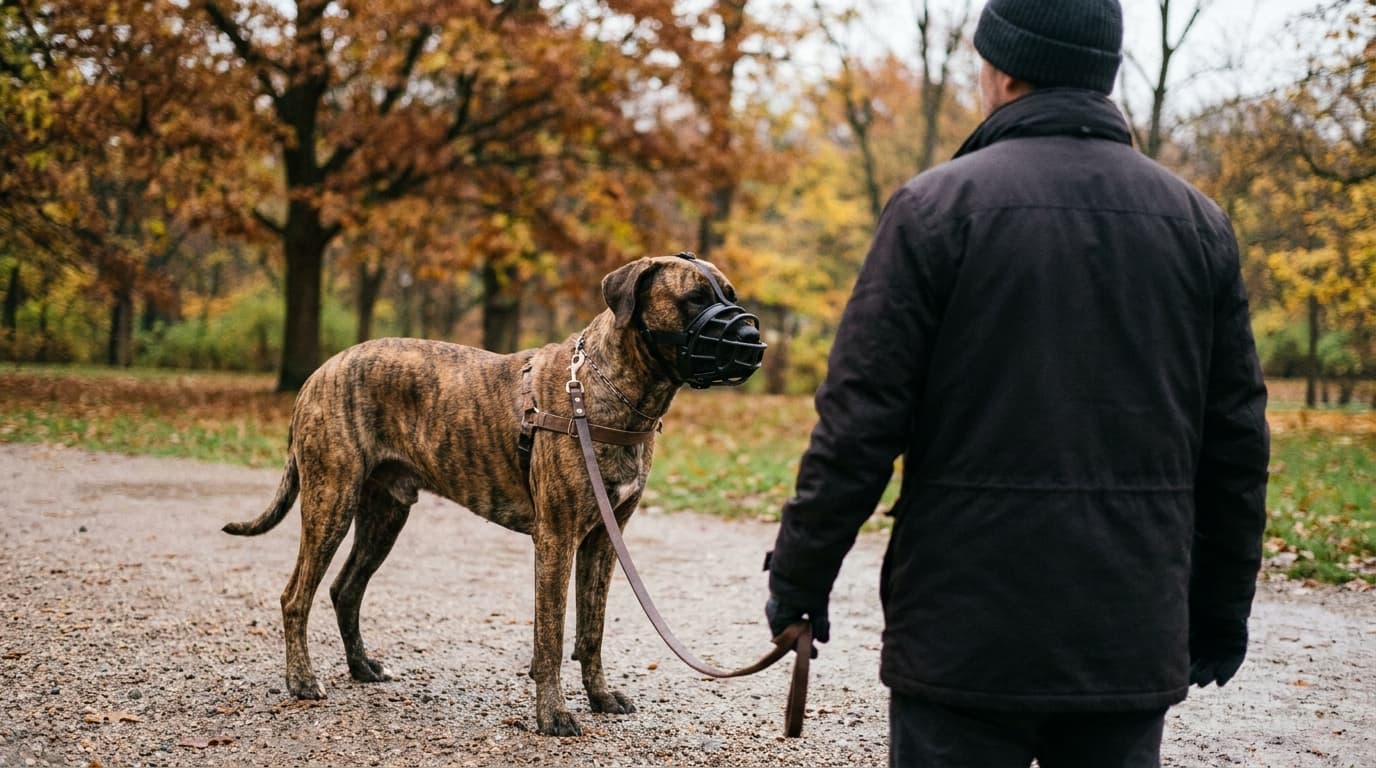
France regulates so-called dangerous dogs (chiens dangereux) through a dedicated regime in the Code rural et de la peche maritime, starting at Article L211-11. The law does not ban ownership outright but wraps it in strict conditions: a permit from the town hall, mandatory owner training, a veterinary behavioural assessment of the animal, insurance, vaccination, and firm rules on muzzling and where the dog may go. The tightest restrictions fall on Category 1, and breaking the core rules is a criminal offence, not a simple ticket.
This guide explains how the two categories are defined, how to obtain the permis de detention (ownership permit) from the mairie, what the muzzle-and-leash and access rules require, which extra prohibitions single out Category 1, and the penalties set out in Articles L215-2 and L215-2-1. It is general information about the national framework; local prefects and mayors can add measures, so always confirm with your own mairie.
Information last verified on 22 July 2026. This page presents general legal information, not legal advice.
The two categories
The Code rural sorts regulated dogs into two categories, and the dividing line is pedigree, not the individual dog's behaviour.
Category 2 covers guard and defence breeds (chiens de garde et de defense) that are registered in the official French pedigree book, the Livre des origines francais (LOF). The classic examples are the American Staffordshire Terrier (Amstaff), the Rottweiler and the Tosa.
Category 1 covers attack-type dogs (chiens d'attaque) that physically resemble those breeds but have no recognised pedigree, the animals commonly described as pit-bull types. Because they are unregistered, they fall into the stricter category and carry the heaviest restrictions. A Rottweiler-looking dog with no LOF papers, for instance, is treated as Category 1.
The permis de detention
Since 1 January 2010, keeping a dog in either category requires a permis de detention issued by the mayor of your commune. It is a personal authorisation, and applying at the mairie is mandatory. To obtain it you must assemble several elements.
First, the owner completes a training course (formation) lasting seven hours that covers dog behaviour, education and accident prevention, and ends with an aptitude certificate (attestation d'aptitude). Second, the dog undergoes a behavioural assessment (evaluation comportementale) carried out by an approved veterinarian when the animal is between 8 months and 1 year old. If the dog is younger than 8 months a provisional permit can be issued, with the definitive permit required before the dog turns one.
You must also hold specific civil-liability insurance covering damage the dog might cause, keep the rabies vaccination current, and have the dog identified by microchip in the national I-CAD registry. Category 1 dogs must additionally be sterilised. Once these conditions are met the mayor issues the permit.
Who cannot own one
The permit is refused to certain people because it is tied to the keeper, not only the animal. It cannot be granted to a minor, to an adult under legal guardianship unless a judge allows it, to a person with certain criminal convictions, or to anyone previously banned from owning a dog after an earlier animal was removed. These bars are part of why the regime is administered as a personal permit through the mairie.
Muzzle, leash and access rules
In every public place, a Category 1 or Category 2 dog must be muzzled and kept on a leash, held by an adult. This applies to both categories without exception on the public highway and in any space open to the public.
Category 1 dogs then face a layer of extra bans that Category 2 dogs do not. A Category 1 dog is forbidden from public places such as parks and squares, from public transport, and from the common areas (parties communes) of apartment buildings. In practice it may only be present on private property or, muzzled and leashed, in transit along the public road. Category 2 dogs may enter public places and use public transport, subject to the muzzle-and-leash rule and any local orders.
The Category 1 acquisition ban
Beyond how they are handled day to day, Category 1 dogs are being phased out by law. Their acquisition, sale, transfer whether free or paid, breeding and import into France are all prohibited. You cannot legally buy, sell, give away, breed or bring in a Category 1 dog, and any Category 1 dog already held must be sterilised. The clear intent is to reduce the Category 1 population over time. Category 2 dogs are not subject to this acquisition ban.
Penalties
The criminal penalties sit in the Code rural. Under Article L215-2, acquiring, transferring or importing a Category 1 dog in breach of the prohibition, or keeping a Category 1 dog without having it sterilised, is punished by 6 months of imprisonment and a 15,000 euro fine. Courts can add complementary penalties, including confiscation of the animal and a ban of up to five years on owning a Category 1 or Category 2 dog.
Separately, Article L215-2-1 targets an owner who has been formally ordered (mise en demeure) to obtain the permis de detention and fails to regularise the situation in the set time: 3 months of imprisonment and a 3,750 euro fine, again with possible confiscation and an ownership ban. Lower fixed fines apply to lesser breaches, such as failing to present the permit during a check.
If a regulated dog injures someone, the owner can face far heavier charges under the general criminal law. Where a dog attack or a keeper's refusal to follow the rules has harmed you, the route to act is a criminal complaint; see how to file a complaint in France and the wider France criminal law hub for related offences. For the full picture of how these topics fit together across French law, start at the France legal information home.
Frequently Asked Questions
What is the difference between a Category 1 and a Category 2 dog?
Category 2 covers guard and defence breeds that are registered in the official French pedigree book, the Livre des origines francais (LOF), such as the American Staffordshire Terrier, the Rottweiler and the Tosa. Category 1 covers attack-type dogs that resemble those breeds but have no recognised pedigree, often called pit-bull types. The absence of a pedigree, not temperament on the day, is what places a dog in the stricter Category 1.
How do I get a permis de detention for a dangerous dog?
You apply at your mairie (town hall). You must first complete a 7-hour owner training that ends in an aptitude certificate, have the dog undergo a behavioural assessment by an approved veterinarian when it is between 8 months and 1 year old, hold civil-liability insurance, keep the rabies vaccination up to date, and have the dog microchipped. The mayor then issues the permit. The requirement has applied since 1 January 2010.
Can a Category 1 dog be walked in a park or taken on the bus?
No. Category 1 dogs are banned from public places such as parks, from public transport, and from the common areas of apartment buildings. They may only be moved between private property and, where allowed, along the public highway, always muzzled and leashed. Category 2 dogs may access public places but must also be muzzled and on a leash held by an adult at all times.
What happens if I keep a dangerous dog without the permit?
If the authority has formally ordered you to obtain the permit and you fail to do so within the deadline, Article L215-2-1 of the Code rural provides 3 months of imprisonment and a 3,750 euro fine, plus possible confiscation of the dog and a ban on owning animals. Separately, illegally acquiring, transferring or importing a Category 1 dog, or failing to sterilise one, is punished more heavily under Article L215-2.
Who is not allowed to own a Category 1 or Category 2 dog?
The permit cannot be issued to minors, to adults under legal guardianship unless a judge authorises it, to people with certain criminal convictions on their record, or to anyone previously banned from owning a dog because a prior animal was taken away. These bars exist because the permit is a personal authorisation tied to the individual keeper, not just to the animal.
Sources and References
- Legifrance, Code rural et de la peche maritime, Article L211-11 (dangerous dogs regime)(legifrance.gouv.fr).gov
- Legifrance, Code rural, Article L215-2 (6 months and 15,000 euro fine for Category 1 offences)(legifrance.gouv.fr).gov
- Legifrance, Code rural, Article L215-2-1 (failure to obtain the permis de detention)(legifrance.gouv.fr).gov
- Service-Public.gouv.fr, Chien dangereux (categories, permit, obligations)(service-public.gouv.fr).gov
- Ministere de l'Agriculture, Les chiens de categorie 1 et 2 dits chiens dangereux(agriculture.gouv.fr).gov
- Service-Public.gouv.fr, Permis de detention d'un chien dangereux(service-public.gouv.fr).gov
- Legifrance, Code rural, Article L211-12 (list of the two categories)(legifrance.gouv.fr).gov
- Ministere de l'Interieur, Detention d'un chien dangereux(interieur.gouv.fr).gov