
Belgium
Belgium Co-ownership and Syndic Law: Rules and Majorities
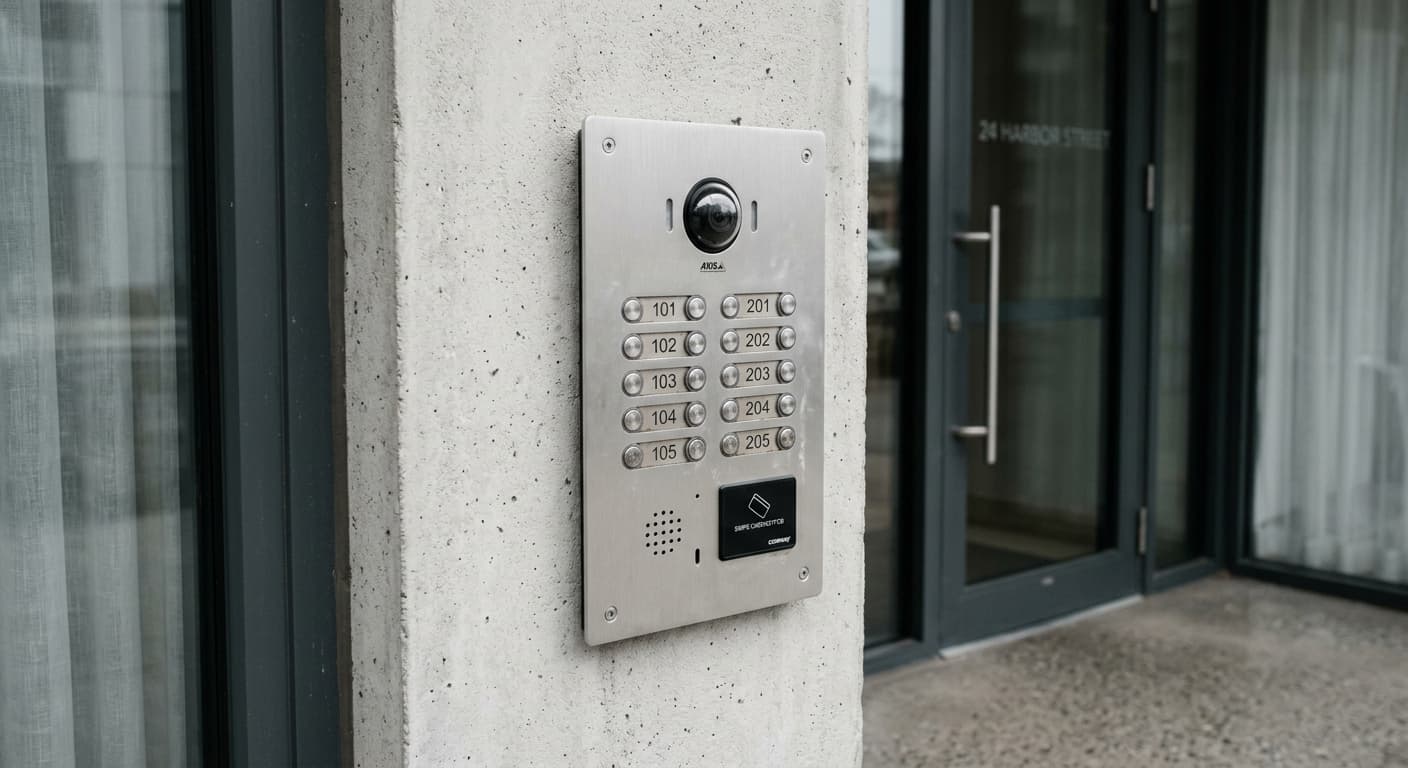
Belgian apartment buildings and other divided properties run on a body of mandatory law called gedwongen mede-eigendom, copropriété forcée in French. When more than one person owns lots in the same building and shares the structure, the roof, the stairwells and the grounds, the law creates a legal framework that decides who manages the building, how decisions are voted, and which court settles a fight. This page explains that framework as it stands in the recodified Belgian Civil Code.
The rules sit in art. 3.84 to 3.100 of the new Burgerlijk Wetboek, the Code civil, in Book 3 on property, which came into force on 1 September 2021 and re-numbered the former art. 577-3 to 577-14 without changing their substance. A separate reform, the Wet 18 juni 2018, had already modernised the regime from 1 January 2019. Together they set out the association of co-owners, its manager, the general assembly and its voting thresholds.
This page is part of the Belgian property disputes section. For conflicts between neighbours rather than co-owners inside one building, see the sibling page on neighbour noise and nuisance.
Information last verified on 22 July 2026. This page provides general legal information and does not constitute legal advice in an individual case.
The VME / ACP and its legal personality
When lots in a building start to belong to different owners and the base deed and rules are transcribed, the law creates a vereniging van mede-eigenaars / association des copropriétaires, abbreviated VME or ACP. Under art. 3.86 this association has its own legal personality: it can hold assets, sue and be sued, and act separately from the individual owners.
The VME must run two funds. The werkkapitaal, the working-capital fund, covers day-to-day running costs. The reservekapitaal, the reserve fund, builds up for larger periodic expenditure; from five years after the provisional acceptance of the building, the annual reserve contribution must be at least five per cent of the previous year's ordinary charges, unless the assembly waives that by a four-fifths vote.
The base deed, the rules and the ROI
The statutes of a co-ownership are the basisakte and the reglement van mede-eigendom, the acte de base and the règlement de copropriété (art. 3.85). These must be drawn up as an authentic notarial deed, and they fix, among other things, each lot's aandelen or quotités, the ownership shares, set by a reasoned report from a notary, a surveyor-expert, an architect or an estate agent according to the net floor area, destination and location of each lot.
Alongside the statutes sits the reglement van interne orde / règlement d'ordre intérieur, the ROI, which has been mandatory since the 2019 reform but may be drawn up under private signature rather than before a notary (art. 3.84). Redistributing the ownership shares requires a unanimous vote, one of only a handful of decisions (alongside dissolving the association and a voluntary full demolition and rebuild) that the law sets that high.
The syndicus / syndic
The syndicus / syndic is the executive organ of the VME. It is designated in the ROI or by the first general assembly, and where none is appointed a judge appoints one (art. 3.89). The mandate is capped at three years and may be renewed only by an express decision of the assembly, never tacitly, and an extract of the appointment is posted at the building entrance within eight days.
Since the 2019 reform the contract must carry an itemised fee schedule, and a service not listed in that schedule cannot be separately charged. The syndicus executes the assembly's decisions, carries out conservation and provisional-management acts, manages the assets of the VME, and represents the association in and out of court.
The syndicus also carries the duties that arise when a lot changes hands (art. 3.94 to 3.95): supplying the buyer with pre-sale information about the building's finances and pending decisions, and confirming any arrears attached to the lot being sold. A prospective buyer should always ask for this documentation before committing.
The general assembly and the majority ladder
The algemene vergadering / assemblée générale is the sovereign decision-making body. Votes are counted by share, not by head. A quorum requires more than half the co-owners, present or represented, holding at least half the shares, or alternatively owners holding more than three-quarters of the shares; if neither is met, a second assembly held after at least fifteen days deliberates regardless of the numbers present (art. 3.87).
The same article governs how a meeting is called and how owners can be represented. The syndicus must send the convocation at least fifteen days before the meeting, and owners holding at least one-fifth of the shares can force a meeting to be called. A proxy holder may in principle carry no more than three proxies, and may exceed that only if the votes it casts in its own name and by proxy together stay at or below ten per cent of the total votes.
Article 3.88 sets the thresholds. The residual default is the volstrekte meerderheid / majorité absolue, an absolute majority of the votes cast, which governs ordinary management, conservation works and provisional-management acts, and the appointment or dismissal of the syndicus, the council and the auditor.
A two-thirds majority is needed for works on the common parts, apart from those legally imposed or covering mere conservation, and for changes to the statutes that only affect the use or management of the common parts.
A four-fifths majority is needed for other changes to the statutes, including any redistribution of the charges, for a change of destination of the building, for acquiring new common immovable property, and for any act of disposal of common immovable property.
Unanimity, eenparigheid / unanimité, is required only to change the distribution of the ownership shares themselves (art. 3.88).
The supervisory council and the auditor
The raad van mede-eigendom / conseil de copropriété is a supervisory body that oversees the syndicus. It is mandatory once the building contains 20 or more lots, counted without cellars, garages and parking spaces, and optional below that threshold (art. 3.90). Its members are elected by absolute majority, it reports annually, and it can be given extra tasks only by a two-thirds vote.

Separately, and regardless of the building's size, the assembly must appoint a commissaris van de rekeningen / commissaire aux comptes, an auditor of the accounts, every single year (art. 3.91). This is a standing annual obligation, not a one-off.
The 20-lot threshold also unlocks deelverenigingen, sub-associations for distinct parts of a larger complex, which may be created so that groups of lots with their own common parts can be managed separately while remaining inside the overall structure (art. 3.84).
Disputes and remedies
The law gives an owner several tools against an abusive or failing association (art. 3.92). Any co-owner who suffers a personal prejudice may ask the judge to annul or amend an assembly decision that is onregelmatig, bedrieglijk or onrechtmatig, irrégulière, frauduleuse or abusive, and that action must be brought within four months of the assembly. Where the syndicus fails to convene the assembly, a co-owner can ask the judge to order it. Where the financial equilibrium of the VME is threatened, owners holding at least one-fifth of the shares can ask for a voorlopig bewindvoerder / administrateur provisoire, a court-appointed provisional administrator.
The court for all of this is the vrederechter / juge de paix, which hears co-ownership disputes regardless of the amount at stake, on the basis of Judicial Code art. 591. Article 3.92 itself routes the challenge to a full demolition and rebuild expressly to the vrederechter / juge de paix.
Related Belgian property pages
For the wider section this page belongs to, see Belgian property disputes. For conflicts with a neighbour outside the co-ownership, see neighbour noise and nuisance.
This page provides general information about Belgian co-ownership and syndic law and does not constitute legal advice for an individual case. Deeds, rules and the exact figures in a particular building can differ, and the law can change; confirm your position with a notaris / notaire or an advocaat / avocat before relying on anything here.
Frequently Asked Questions
Who manages a Belgian apartment building, and can we remove the syndic?
The syndicus / syndic is the organ of the vereniging van mede-eigenaars / association des copropriétaires. The algemene vergadering / assemblée générale appoints and dismisses it by absolute majority. Its mandate is capped at three years and must be expressly renewed, so it cannot continue tacitly (art. 3.89).
What majority do we need for works or a change to the rules?
It depends on the decision (art. 3.88): an absolute majority for conservation works and ordinary management; two-thirds for most works on the common parts; four-fifths for a change of destination, a disposal of common property, or a redistribution of charges; and unanimity to change the ownership shares themselves.
Which court handles a co-ownership dispute?
The vrederechter / juge de paix, regardless of the amount in issue, on the basis of Judicial Code art. 591. Article 3.92 also routes specific co-ownership challenges expressly to that judge.
Can I challenge an unfair general-assembly decision?
Yes. A co-owner who suffers a personal prejudice from a decision that is irregular, fraudulent or unlawful can ask the judge to annul or amend it, but the action must be brought within four months of the assembly (art. 3.92).
Do the base deed and rules have to go through a notary?
The basisakte and reglement van mede-eigendom, the acte de base and règlement de copropriété, are the statutes and must be an authentic notarial deed (art. 3.85). The reglement van interne orde / règlement d'ordre intérieur, mandatory since 2019, may instead be drawn up under private signature (art. 3.84).
Are an auditor and a supervisory council required?
The assembly must appoint a commissaris van de rekeningen / commissaire aux comptes every year (art. 3.91). A raad van mede-eigendom / conseil de copropriété is mandatory once the building has 20 or more lots and optional below that (art. 3.90).
Sources and References
- Burgerlijk Wetboek, Boek 3 Goederen, art. 3.84-3.100 (gedwongen mede-eigendom), geconsolideerde tekst, Justel(ejustice.just.fgov.be).gov
- Code civil, Livre 3 Les biens, art. 3.84-3.100 (copropriété forcée), texte consolidé, Justel(ejustice.just.fgov.be).gov
- Wet van 18 juni 2018 houdende diverse bepalingen inzake burgerlijk recht (hervorming mede-eigendom, Titel 3, i.w.tr. 1 jan. 2019)(ejustice.just.fgov.be).gov
- Gerechtelijk Wetboek / Code judiciaire (bevoegdheid vrederechter, art. 591), geconsolideerde tekst, Justel(ejustice.just.fgov.be).gov