
Australia
Dividing Fences in Western Australia: Notice, Cost and the Magistrates Court
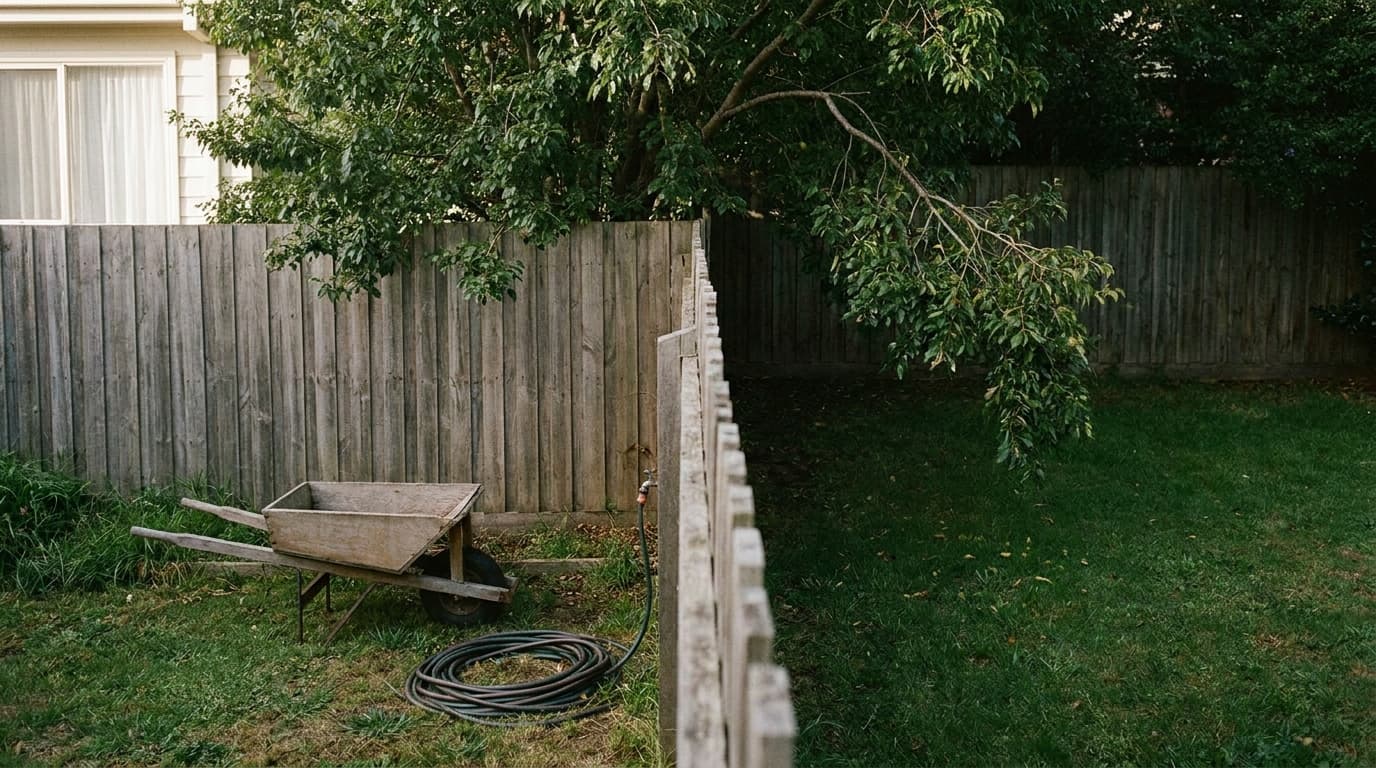
Western Australia’s dividing fences process runs under the Dividing Fences Act 1961 (WA). A fencing notice gives the adjoining owner 21 days to agree; disputes go to the Magistrates Court, and an owner who has already built a sufficient fence can claim half its value.
Information last verified on 21 July 2026 against the primary legislation. This page presents general legal information, not legal advice.
Jurisdiction scope: This page covers dividing fences law in Western Australia only, under the Dividing Fences Act 1961 (WA), verified 21 July 2026. It does not cover other Australian states or territories, each of which has its own Act; see the linked comparison page for those.
Governing law and the Magistrates Court
Dividing fences in Western Australia are governed by the Dividing Fences Act 1961 (WA). Section 5 defines "court" for the purposes of the Act as the Magistrates Court, which is the forum for a fencing dispute in Western Australia, rather than a specialist tribunal such as those used in New South Wales, Queensland or the ACT.

Notice and the 21-day response period
Section 9(1) sets Western Australia’s response period at 21 days. If, within 21 days after the giving of a notice referred to in section 8, the owner who gave the notice and the owner who received it do not agree on the need for the fence, the boundary or line on which it is to be built, or another listed matter, either owner can bring the dispute to the Magistrates Court.
Cost sharing: a distinctive half-value claim
Western Australia’s approach to cost is structurally different from most other states. Section 13 allows an owner who has constructed a sufficient dividing fence, whether or not a notice under section 8 was given first, to claim half of the fence’s value from the owner of the adjoining land. Rather than an up-front equal-contribution agreement negotiated before construction, this lets the fence be built and the cost-sharing claim made afterwards, within the framework the section sets out.
What the Magistrates Court can decide
Where the owners cannot agree, the Magistrates Court can resolve disputes about whether a fence is needed at all, the line on which it should be built, and the type of fence, drawing on the matters identified in section 9(1). The Court’s role, and Western Australia’s single-forum, court-based model, mirrors Victoria and South Australia rather than the tribunal-based states.
Starting the process: the notice to fence
An owner who wants to compel a neighbour to contribute begins with a notice to fence under section 8. The notice must specify the boundary to be fenced, or, where the physical features of the land make fencing directly on the common boundary impracticable, the alternative line proposed, along with a proposal for the fencing itself and the kind of fence proposed. This gives the adjoining owner a clear, specific proposal to respond to within the 21-day window in section 9, rather than a vague request to "sort out the fence," and a well-drafted notice under section 8 is the foundation for everything that follows if the matter later reaches the Magistrates Court.
Repairing an existing fence
The notice and half-value claim provisions described above are mainly concerned with building a fence where none, or an insufficient one, currently exists. Repair is treated separately: section 14 makes owners on either side of a fence in need of repair liable, subject to section 15, to join in or contribute in equal proportions to the repair. This equal-proportions default for repair work is a more conventional, up-front cost-sharing rule than the half-value claim used for constructing a new fence under section 13.
If the adjoining owner cannot be found
Section 11 addresses a situation the standard notice process cannot resolve on its own: what happens where the adjoining owner genuinely cannot be located. If an owner satisfies the Magistrates Court nearest to the proposed fence that they have made reasonable inquiries but have been unable to ascertain the adjoining owner's whereabouts for the purpose of giving a section 8 notice, the Court can proceed ex parte, meaning without the other owner present, and make an order authorising the applicant to construct the fence on the boundary specified. This lets a Western Australian owner move forward with a needed fence even where the neighbour cannot practically be given notice, rather than leaving the fence indefinitely unresolved.
How Western Australia compares
Western Australia is one of only three jurisdictions using a Magistrates Court rather than a tribunal, alongside Victoria and South Australia, and its half-value claim mechanism under section 13 is not replicated elsewhere in Australia. See dividing fences in Australia for the full comparison, and dividing fences in South Australia for another Magistrates Court jurisdiction with a different notice process.
This page is general legal information about neighbour disputes in Australia, verified on 21 July 2026. It is not legal advice, and it does not cover every situation. For advice about your own dispute, consult a legal practitioner admitted in the relevant Australian state or territory.
Frequently Asked Questions
How long does my neighbour have to respond to a fencing notice in Western Australia?
21 days after the notice under section 8. If the owners do not agree within that time on the need for the fence, its line, or its type, either owner can take the matter to the Magistrates Court under section 9(1).
Can I make my neighbour pay for a fence I already built in Western Australia?
Section 13 allows an owner who has built a sufficient dividing fence to claim half its value from the adjoining owner. This is a distinctive feature of the Western Australian Act compared with most other states.
Which court decides a fencing dispute in Western Australia?
The Magistrates Court, as defined in section 5 of the Dividing Fences Act 1961 (WA). Western Australia does not use a specialist tribunal for fencing disputes.
Does Western Australia have a tree-dispute law?
No. Western Australia has no dedicated tree statute. A tree problem there is governed by the general common law of nuisance and the self-help right of abatement.
What can be disputed about a dividing fence in Western Australia?
Section 9(1) covers disagreement about whether a fence is needed at all, the boundary or line it should be built on, and the type of fence to be constructed.
What should a fencing notice in Western Australia include?
Under section 8, it must specify the boundary to be fenced, or an alternative line if fencing the common boundary is impracticable, along with a proposal for the fencing work and the kind of fence proposed.
The Law Behind This Article
This article rests on the statutory provisions below, held in our own legal record and retrieved from the official source. Tap a section to read the operative text.
Dividing Fences Act 1961 (WA)
s 11Cases where owner of adjoining land cannot be foundIn force
(1)Where the owner of land satisfies the court at the place nearest to the place where he proposes to construct a dividing fence, that he has made reasonable inquiries and has been unable to ascertain the whereabouts of the owner of the adjoining land for the purpose of giving a notice as required by section 8, the court may, upon application in the prescribed form by the first‑mentioned owner for an order authorising the construction of a dividing fence as set out in the application, proceed ex parte to make an order authorising the applicant to construct a fence of the kind specified in the order upon the boundary or line specified therein. (2)Where a person constructs a dividing fence in compliance with an order made under subsection (1), if afterwards during the continuance of that fence, the person ascertains the whereabouts of the owner of the adjoining land, whether or not such owner was the owner of the land at the time of the construction of the fence, the person may give to such owner a copy of the order.
Official text (excerpt) · last checked 2026-09-28 · Read the full text in our law library · Verify at legislation.wa.gov.au
s 13Liability to contribute to cost of dividing fenceIn force
(1)When an owner of land has constructed a dividing fence that separates his land from adjoining land if the fence is a sufficient fence, the owner of the adjoining land is liable to pay in accordance with the provisions of this section half of the amount of the value of the fence. (2)When an owner of land has, whether before or after the coming into operation of this Act, without giving a notice pursuant to section 8 or pursuant to any corresponding provision of any Act repealed by this Act, constructed such a dividing fence and has not received from the owner of the adjoining land or any previous owner of it one‑half of the amount of the value of the fence, then if the adjoining owner — (a)has completed or completes, or has caused or causes to be completed the construction of any substantial building or structure on his adjoining land; or (b)has occupied or occupies a building or structure constructed on the adjoining land; or (c)has permitted or permits the lawful occupation by a person of a building or structure erected on the adjoining land, the owner who constructed the fence may give to the owner of the adjoining land a notice claiming the payment of half of
Official text (excerpt) · last checked 2026-09-28 · Read the full text in our law library · Verify at legislation.wa.gov.au
s 14Liability of adjoining owners to repair dividing fenceIn force
When a dividing fence is in need of repair the owners of land on either side of the fence are liable, subject to the provisions of section 15, to join in or contribute in equal proportions to the repair of the fence.
Official text (excerpt) · last checked 2026-09-28 · Read the full text in our law library · Verify at legislation.wa.gov.au
s 5Terms usedIn force
(1)In this Act, unless the contrary intention appears, — court means the Magistrates Court; dividing fence means a fence that separates the lands of different owners whether the fence is on the common boundary of adjoining lands or on a line other than the common boundary; lease includes an original or derivative lease or an under‑lease or an agreement for a lease; owner, in relation to land, includes, subject to subsection (2), every person who — (a)jointly or severally, whether at law or in equity — (i)is entitled to land for any estate of freehold in possession; or (ii)is entitled to receive or is in receipt of or if the land were let to a tenant would be entitled to receive the rents and profits of the land, whether as beneficial owner, trustee, mortgagee in possession, or otherwise; or (b)is the holder of a lease of land the unexpired term of which is not less than 5 years at the time — (i)notice to fence is given by or to him pursuant to section 8; (ii)he makes application to the court under section 11(1); (iii)a copy of an order made pursuant to section 11(2) is given to him; (iv)notice is given by or to him pursuant to section 15, but does
Official text (excerpt) · last checked 2026-09-28 · Read the full text in our law library · Verify at legislation.wa.gov.au
s 8Notice to fence to be givenIn force
An owner of land desiring to compel the owner of adjoining land to join in or contribute to the construction of a dividing fence under this Act may give him a notice which shall — (a)specify the boundary to be fenced, or if on account of the physical features of the adjoining lands it is impracticable to construct a fence on the common boundary of those lands, the line upon which it is proposed to construct the fence; and (b)contain a proposal for fencing the common boundary or other line; and (c)specify the kind of fence proposed to be constructed.
Official text (excerpt) · last checked 2026-09-28 · Read the full text in our law library · Verify at legislation.wa.gov.au
s 9Proceedings in default of agreementIn force
(1)If within 21 days after the giving of a notice referred to in section 8, the owner giving and the owner receiving the notice do not agree as to all or any of the following matters — (a)as to the need for the construction of the dividing fence; or (b)the boundary or line upon which it is proposed to construct the fence; or (c)the kind of dividing fence that is to be constructed, the court at the place nearest to the place where it is proposed to erect the fence, on an application by either of those owners may make an order determining all or any of the following matters on which the owners are not in agreement — (d)as to the need for and the kind of fence to be constructed; and (e)what portion of the fence shall be constructed by each owner; and (f)the time within which the fence shall be constructed, and if the court thinks it is necessary, the court may determine — (g)the boundary or line upon which the dividing fence is to be constructed; and (h)the compensation in the form of an annual payment to be paid by the one owner to the other owner in consideration of loss of occupation of any land.
Official text (excerpt) · last checked 2026-09-28 · Read the full text in our law library · Verify at legislation.wa.gov.au
Search our full record of US law — 2.1 million sections, every state + federal →
Sources and References
- Dividing Fences Act 1961 (WA) s 5, terms used ("court" means the Magistrates Court)(classic.austlii.edu.au).gov
- Dividing Fences Act 1961 (WA) s 8, notice to fence to be given(classic.austlii.edu.au).gov
- Dividing Fences Act 1961 (WA) s 9, proceedings in default of agreement(classic.austlii.edu.au).gov
- Dividing Fences Act 1961 (WA) s 11, cases where owner of adjoining land cannot be found(classic.austlii.edu.au).gov
- Dividing Fences Act 1961 (WA) s 14, liability of adjoining owners to repair dividing fence(classic.austlii.edu.au).gov
- Dividing Fences Act 1961 (WA) s 13, liability to contribute to cost of dividing fence(classic.austlii.edu.au).gov
- Magistrates Court of Western Australia(magistratescourt.wa.gov.au).gov