
Australia
Western Australia Child Car Seat Laws: Fines, Demerit Points and Exemptions
Independently fact-checked against primary sources (last audited August 19, 2026). · 4 primary sources cited on this page. How we verify our legal content
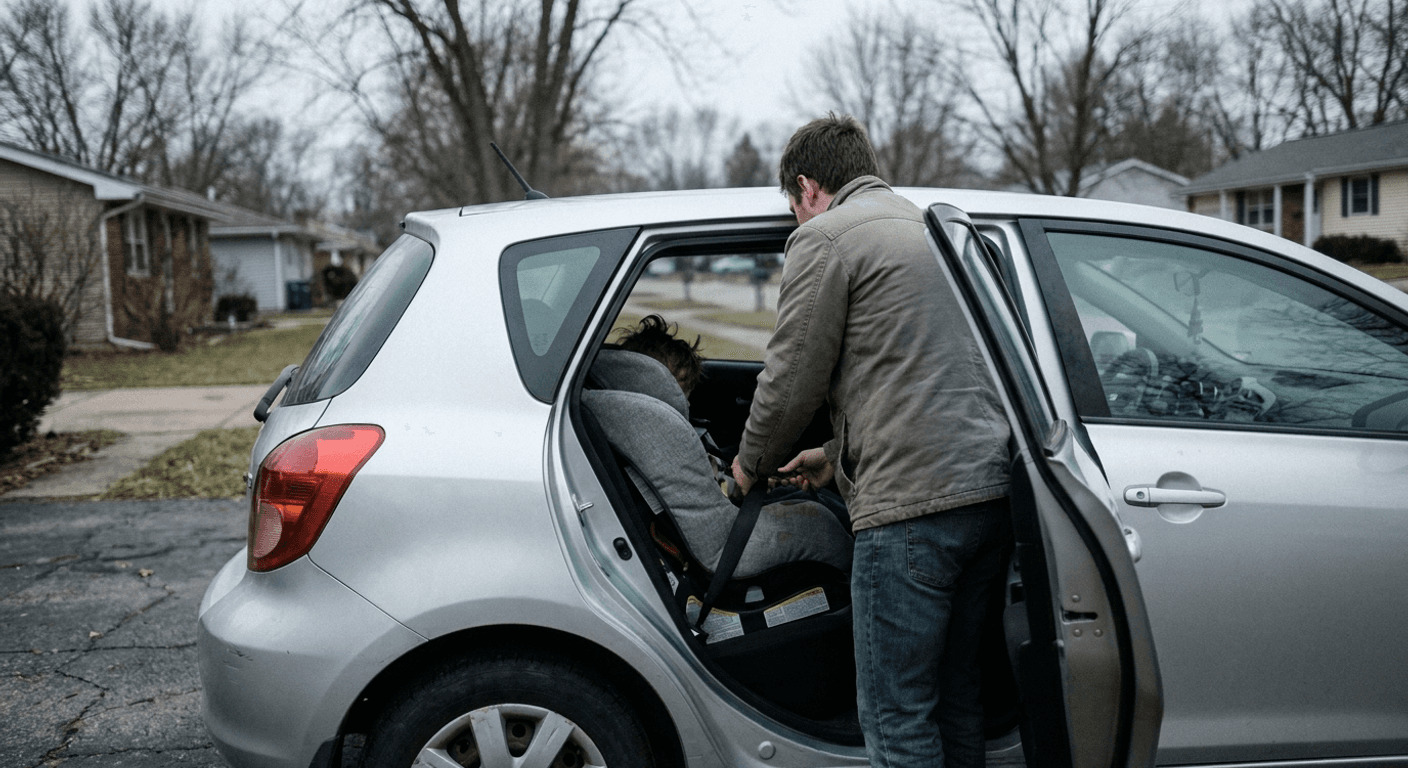
In Western Australia, a driver who lets one child ride without a suitable, properly fitted restraint faces a $550 modified penalty and 4 demerit points, doubling to 8 points during a gazetted holiday period.
Western Australia's Child Restraint Rule and Its New Driver-Liability Offence
Western Australia's child restraint requirements are set out in regulation 234 of the Road Traffic Code 2000 (WA), "Wearing of seatbelts by passengers under 16 years old." The duty to actually ensure compliance sits in a separate, newer provision: regulation 232A, "Driver responsible for passengers," which requires that the driver of a motor vehicle must ensure that each passenger in or on the vehicle complies with the requirements in regulation 233 or 234. Regulation 232A did not exist in this form until SL 2025/36 inserted it, gazetted 5 February 2025 and commencing 6 February 2025 for most of the instrument. The penalty and demerit-point figures for both regulation 232A and regulation 234 offences are set out in a third provision, regulation 235A, "Penalties for seatbelt offences by driver."
Age Bands: What the Law Requires
Western Australia's age and restraint-type bands under regulation 234 follow the same structure used nationally (see the Child car seat laws in Australia hub for the full national age-band table and the standards behind "approved"):

- Under 6 months: a rear-facing approved child restraint.
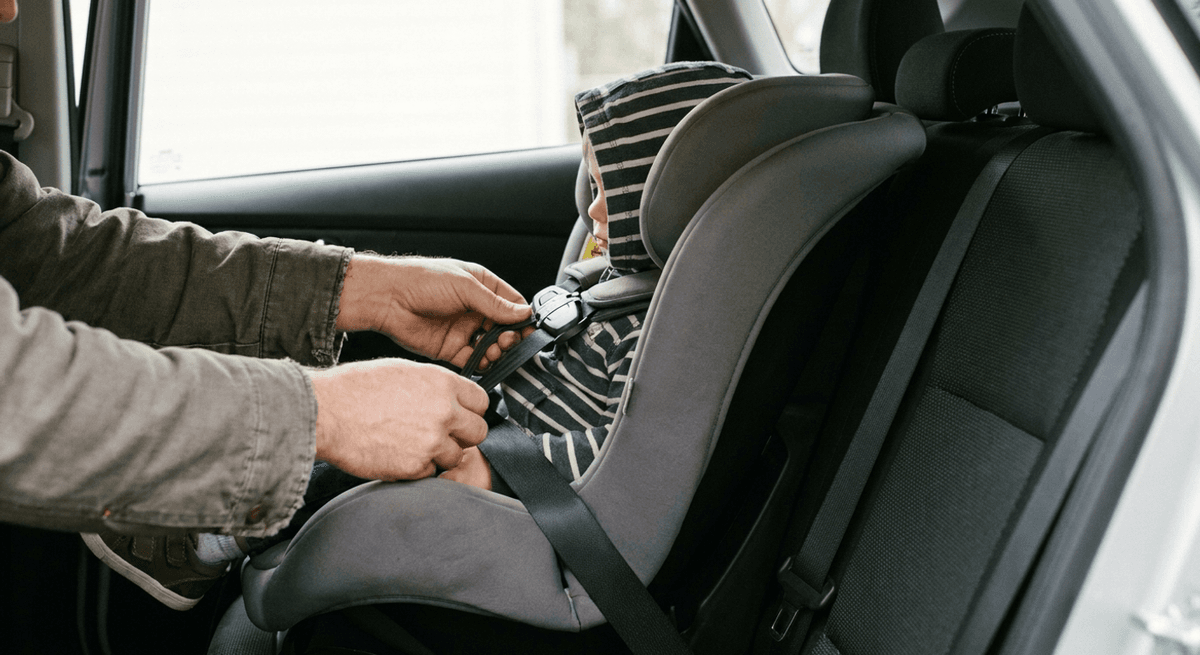
- 6 months to under 4 years: a rear-facing restraint, or a forward-facing restraint with an inbuilt harness. Children in this band must not sit in the front row of a vehicle with 2 or more rows of seats.
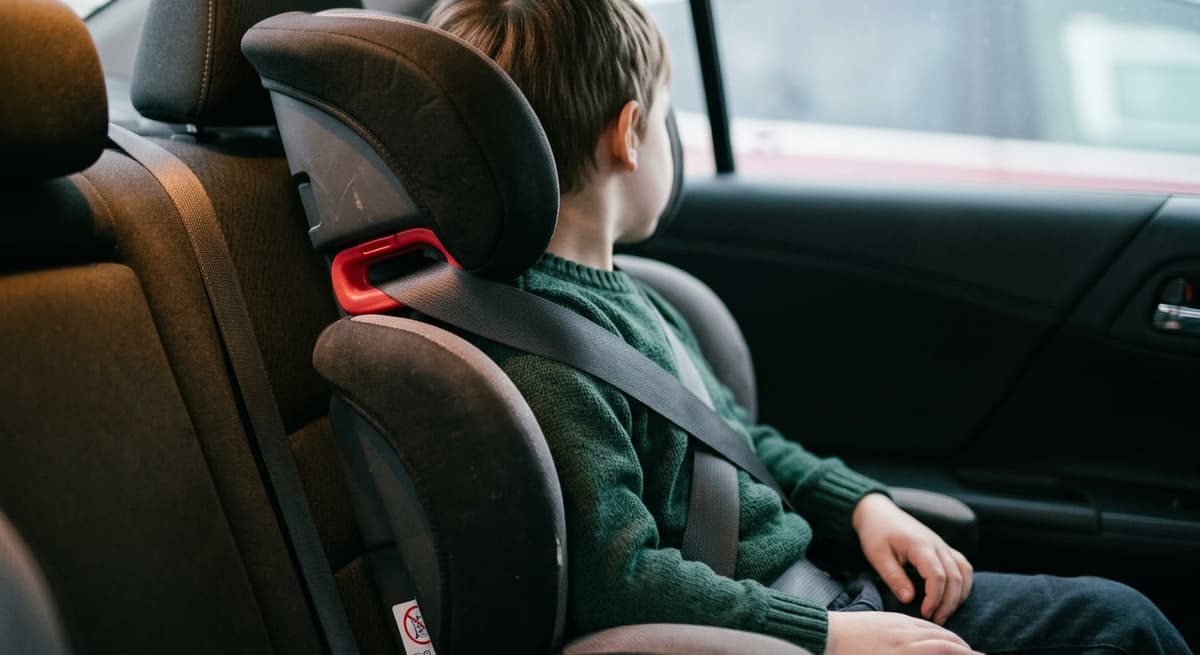
- 4 years to under 7 years: a forward-facing restraint with an inbuilt harness, or an approved booster seat with a correctly fastened lap-and-sash seatbelt or safety harness. The front-row restriction generally continues to apply.
- 7 years to under 16 years: either an approved child restraint or a correctly adjusted and fastened seatbelt.
The Fine: $550 for One Child, More for Multiple
Regulation 235A's penalty table is set in penalty units, not flat dollars - Western Australia's standard rate is $50 per penalty unit under the Road Traffic (Administration) Act 2008. For a driver who is wearing their own seatbelt correctly but has at least one unrestrained child passenger under 16, the modified penalty is:
- 1 unrestrained passenger: 11 penalty units, $550.
- 2 unrestrained passengers: 12 penalty units, $600.
- 3 unrestrained passengers: 14 penalty units, $700.
- 4 or more unrestrained passengers: 16 penalty units, $800.
If the driver is also not wearing their own seatbelt, the combined offence carries a higher schedule of 12, 14, 16 and 18 penalty units for the same passenger counts. These are the modified, on-the-spot infringement penalties a driver actually receives; Western Australia's regulation does not print a separate court-maximum figure for this offence the way some other states' road rules do.
Demerit Points and Holiday-Period Doubling
Each unrestrained-passenger tier in regulation 235A's table carries 4 demerit points outside a holiday period, doubling to 8 demerit points during a gazetted holiday period - Western Australia's standard gazetted holiday periods (WA Police and the Department of Transport publish the exact dates each year, typically covering major long weekends and holiday seasons) double-demerit windows. This doubling applies to the demerit points only. The modified penalty dollar amount, $550, $600, $700 or $800, does not change during a holiday period; only the points attached to the offence double. For how Western Australia's points system works overall, see Western Australia demerit points and demerit points explained across Australia.
Taxi and Rideshare Exemptions
Regulation 234(13) exempts the driver of a "passenger transport vehicle" from the child restraint requirement if no suitable child restraint is available in the vehicle and the child is not seated in the front row of a vehicle with 2 or more rows of seats. Passenger transport vehicle is defined by cross-reference to the Transport (Road Passenger Services) Act 2018 (WA), which splits on-demand passenger transport service into on-demand rank or hail, the traditional taxi model, and on-demand charter passenger transport service, which covers booked, non-hail services such as Uber, Ola and DiDi. Both categories fall under the same passenger transport vehicle definition, so the exemption applies identically to a taxi and a rideshare vehicle under current WA law.
Who Is Liable, and Where to Get Your Child's Seat Fitted
Regulation 232A places the legal duty on the driver of the vehicle, not the child's parent specifically - a grandparent, rideshare driver or family friend behind the wheel carries the same responsibility a parent would. A narrow defence applies only if the passenger has reached 16 and the vehicle was a passenger transport vehicle; it does not cover a child restraint breach. For fitting help, the WA Road Safety Commission directs drivers to their local WALGA RoadWise Committee for a list of Type 1 Child Car Restraint Fitters, and to the Department of Transport for Type 2 Child Restraint Fitting Stations where anchor points can be safely installed. The current standard is AS/NZS 1754, with a separate AS/NZS 4370 pathway available for children with a disability through Department of Transport approval. For the national age-band rules and how every state's fine compares, see the Child car seat laws in Australia hub, or return to the Australia driving laws hub.
Frequently Asked Questions
What is the fine for not using a child car seat in Western Australia?
$550 for one unrestrained child passenger under 16 - 11 penalty units at $50 per unit - rising to $600, $700 or $800 for 2, 3 or 4-or-more unrestrained children. Each offence also carries 4 demerit points, doubling to 8 during a gazetted holiday period.
Do demerit points double for child restraint offences during WA holiday periods?
Yes. The demerit points double from 4 to 8 during a gazetted holiday period, Western Australia's gazetted holiday periods (WA Police and the Department of Transport publish the exact dates each year, typically covering major long weekends and holiday seasons) double-demerit windows, but the modified penalty dollar amount does not change during that period - only the points attached to the offence double.
Who is legally responsible if a child isn't properly restrained in WA - the driver or a parent?
The driver. Regulation 232A, inserted in February 2025 by SL 2025/36, makes the driver of the vehicle responsible for ensuring each passenger complies with the restraint rule in regulation 234, whether or not the driver is the child's parent.
Are taxi and rideshare vehicles exempt from WA's child restraint rule?
Both fall under the same exemption. Regulation 234(13) exempts the driver of a passenger transport vehicle, a term covering rank-or-hail taxis and on-demand charter (rideshare) services under the Transport (Road Passenger Services) Act 2018, from the restraint requirement when no suitable restraint is available and the child is not in the front row.
What changed in WA's child car seat law in 2025?
SL 2025/36, gazetted 5 February 2025, inserted a new regulation 232A that makes the driver explicitly responsible for ensuring passenger compliance with the restraint rule, alongside updates to the regulation 235A penalty table that sets the current fine and demerit-point figures.
Updates
Independently fact-checked against the cited primary sources
The Law Behind This Article
This article rests on the statutory provisions below, held in our own legal record and retrieved from the official source. Tap a section to read the operative text.
Road Traffic (Administration) Act 2008 (WA)
s 7AbbreviationsIn forcecited in 4 of our articles
In provisions of a road law dealing with penalties for offences — (a)these abbreviations are used — Disq for minimum period of disqualification; Max for maximum fine; Min for minimum fine; PU for penalty unit or penalty units; and (b)a reference to a number of PU is a reference to an amount (in dollars) that is that number multiplied by 50.
Official text (excerpt) · last checked 2026-09-28 · Read the full text in our law library · Verify at legislation.wa.gov.au
Also relied on in: Window Tint Laws in Western Australia (2026): VLT Limits, Regulation 260 and Penalties, Driving an Unregistered Car in WA: Penalties and the 15 Day Rule, Unregistered Vehicle Penalties Across Australia: State by State Comparison
Search our full record of US law — 2.1 million sections, every state + federal →
Sources and References
- Road Traffic Code 2000 (WA), consolidated in-force text, regulations 232A, 234 and 235A(legislation.wa.gov.au).gov
- Road Traffic (Administration) Act 2008 (WA), section 7, penalty unit value ($50)(legislation.wa.gov.au).gov
- Transport (Road Passenger Services) Act 2018 (WA), section 4(1), passenger transport vehicle and service definitions(legislation.wa.gov.au).gov
- Parents and carers, Road Safety Commission (child restraint fitting stations and standards)(wa.gov.au).gov