
Australia
Window Tint Laws in Victoria: VLT Limits and the Defect Notice System (2026)
Independently fact-checked against primary sources (last audited August 18, 2026). · 5 primary sources cited on this page. How we verify our legal content
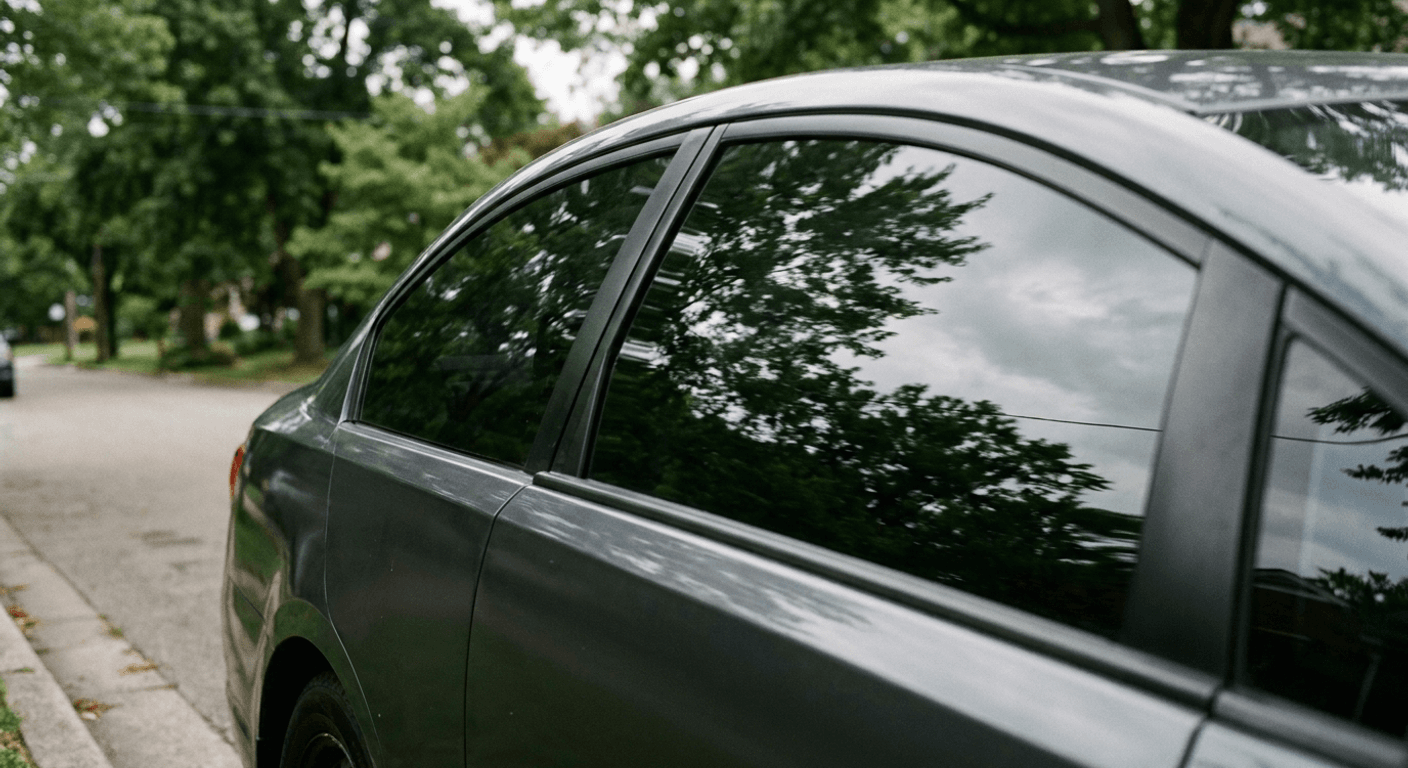
Victoria sets legal window tint limits in clause 44, Schedule 1 of the Road Safety (Vehicles) Regulations 2021, and enforces them through a vehicle defect notice system rather than a fixed on-the-spot fine.
For the national comparison across all eight states and territories, see window tint laws in Australia. This page covers Victoria's own machinery, including a correction to that national comparison.
The Rule and Its Source
Victoria regulates window tint through clause 44, "Window tinting," in Schedule 1 (Vehicle Standards) of the Road Safety (Vehicles) Regulations 2021 (Vic). Regulation 35 of the same instrument requires that any vehicle modification, including applying tint film, either has specific approval from the Department of Transport and Planning or is carried out in line with a published guideline: for tint, that guideline is VSI 2, "Window tinting and films" (VicRoads, October 2021), which states the same figures in plain language and independently corroborates the regulation text. This site's national window tint comparison page previously listed Victoria's VLT figures as unverified. They are settled here, cross-checked against both the regulation text and VicRoads' own guideline, and this page corrects that gap.
VLT Limits by Window Position
| Glazing | Minimum VLT | Condition |
|---|---|---|
| Windscreen | 70 percent | Coating allowed only above the wiper sweep, or in the top 10 percent of the windscreen, whichever is greater |
| Front side windows and any window ahead of the driver | 35 percent | No further condition |
| Rear windows (behind the driver) | 20 percent | Requires a rear-vision mirror fitted to each side of the vehicle |
| Rear windows of a goods vehicle | No floor (0 percent permitted) | Requires mirrors on each side, and either at least 4 wheels, or at least 3 wheels with a gross vehicle mass over 1 tonne |
Reflectance Cap
Clause 44(10) caps the reflectance of any coated glazing at 10 percent. There is no separate numeric rule for mirror-finish film; the reflectance cap is Victoria's functional anti-mirror-tint rule.
Factory Tint
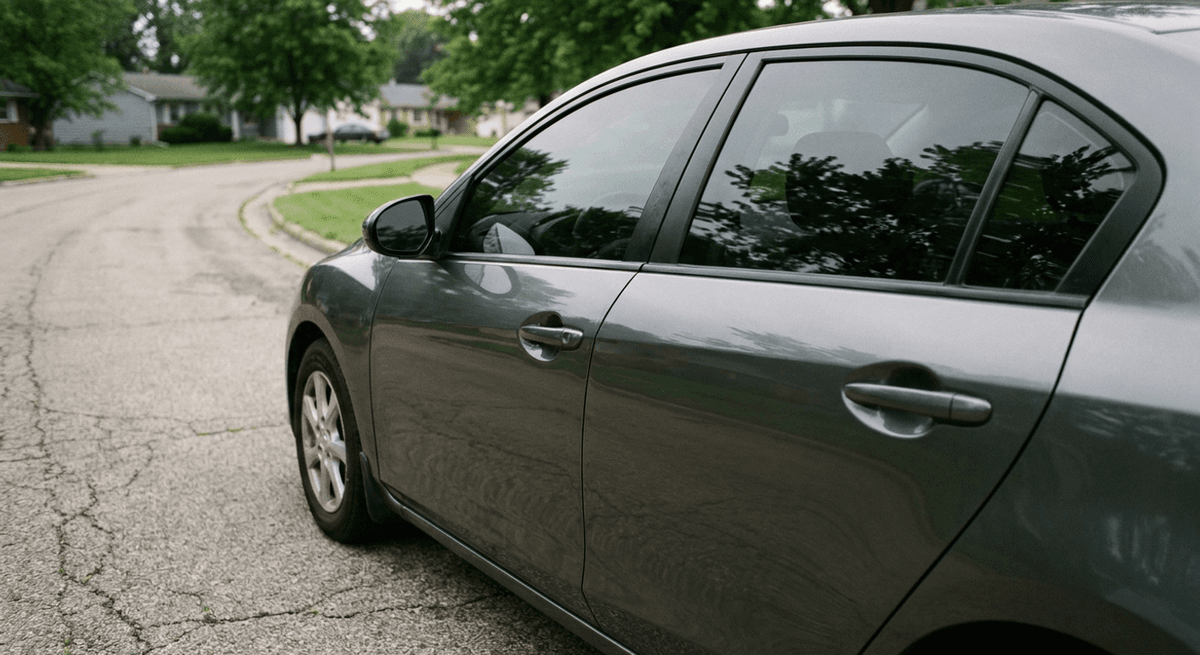
Factory or OEM glazing is treated the same as aftermarket film for compliance: the 70 percent default applies unless legitimately reduced under clauses 44(6) to 44(8). VSI 2 adds the operative rule for stacking film on top of factory tint: if a factory-tinted window already reads below the required VLT for its position, no film may be applied to it at all.
Grandfathering
VSI 2 sets a historic cutoff for windscreens specifically: windscreens fitted to vehicles manufactured before July 1971 must transmit at least 70 percent of visible light, and every other vehicle must meet Australian Design Rule 8 (Safety Glazing Material), which also requires a minimum VLT of 70 percent depending on year of manufacture. In practice both paths land at the same 70 percent floor, so no lower-tint grandfathered allowance was found for older Victorian vehicles on the windscreen. No separate age-based exemption was found for the 35 percent or 20 percent side and rear window minimums; those thresholds appear to apply regardless of the vehicle's age.
Goods Vehicles and the Special-Purpose Exemption
Clause 44(8) is the goods-vehicle carve-out: a vehicle designed primarily for the carriage of goods, with a rear-vision mirror on each side, and either at least 4 wheels or at least 3 wheels with a gross vehicle mass over 1 tonne, may have its rear glazing coated to 0 percent VLT, fully blacked out. That makes fully-tinted rear windows legal on many vans and utes, where a passenger car is capped at 20 percent.
The only other exemption named in VicRoads' guideline is for a vehicle "constructed for a special purpose," which may be granted an exemption from clause 44 by VicRoads. This is a vehicle-based exemption (the kind that might apply to a security or armoured vehicle), not a medical exemption for a driver's health condition. Heavy vehicles over 4.5 tonnes GVM sit outside VSI 2 and clause 44's light-vehicle framework entirely; those are directed to the National Heavy Vehicle Regulator's own Vehicle Standards Guides.
Buying a Used Car with Existing Tint
Victoria's grandfathering is narrower than it might look. The pre-1971 windscreen cutoff only ever matters for the windscreen, and even then it lands at the same 70 percent floor as the modern ADR 8 pathway, so it does not let an older vehicle run a darker windscreen than a newer one. Nothing in clause 44 or VSI 2 exempts a side or rear window from the ordinary 35 percent or 20 percent minimums based on the vehicle's age. In practice, that means a used car with existing dark tint on its side or rear glass is judged by the same limits as a brand-new one; the tint's age, or the car's, does not create an exemption the way it does in some other states.

Enforcement: The Defect Notice System, Not a Fixed Fine
Victoria does not enforce illegal tint through a printed on-the-spot fine attached to clause 44. Clause 44 itself carries no "Penalty" line in the regulation text. The actual mechanism is section 14 of the Road Safety Act 1986 (Vic), "Defective vehicles": a police officer who finds a vehicle that does not comply with the Act or its regulations may issue a warning or a vehicle defect notice, impose conditions on the vehicle's use, or prohibit its use outright, with the notice able to be withdrawn or cleared once the defect is fixed, in accordance with the regulations.
A $296 on-the-spot fine and a "new tint law effective November 2025" circulate across several websites with domain names unrelated to their content, a pattern consistent with programmatic content-farm output rather than genuine reporting. That figure and that effective date could not be found on the Department of Transport and Planning's site, on the Victorian legislation register, in the Victoria Government Gazette, or in any mainstream news report. Do not rely on it. A commonly cited 28-day rectification window for a defect notice is confirmed directly on VicRoads' own "Vehicle defect notice" page. The specific make or model of roadside tint meter used remains unconfirmed against a primary Victorian government document for this page.
Penalty Unit Value
Victoria's penalty unit for the 2026-27 financial year is $209.10, fixed under section 6 of the Monetary Units Act 2004 and published in Victoria Government Gazette Special No. S234 (5 May 2026). Because no specific penalty-unit count was found attached to a tint-specific offence, this figure is background confirmation only: it cannot be turned into a completed dollar penalty for illegal tint the way it can for other Schedule 1 clauses that do carry a stated penalty-unit figure.
Driving in breach of a vehicle defect notice carries demerit points: Schedule 3 to the Road Safety (Drivers) Regulations 2019, applying regulation 240(1) of the Road Safety (Vehicles) Regulations 2021, sets 3 demerit points for contravening a major defect notice condition and 1 for a minor one. Window tint itself carries no demerit points; the points attach only if a defect notice is issued and then breached.
Medical Exemptions
No medical or light-sensitivity exemption pathway for window tint was found in either clause 44 or VicRoads' VSI 2 guideline. The only exemption named in either source is the vehicle-based special-purpose exemption described above. Independent secondary sources describing Victoria's tint rules likewise describe no medical exemption process, consistent with this primary-source silence.
For state penalty context, see demerit points in Victoria and drink driving penalties in Victoria. For related driving offences, see speeding fines in Australia and mobile phone detection cameras in Australia, or return to the Australia driving laws hub.
This article provides general legal information about window tint law in Victoria. It is not legal advice and does not account for an individual vehicle's circumstances. Information was verified against Victorian government and VicRoads sources on 18 August 2026. For advice on a specific situation, contact the Department of Transport and Planning directly or consult a legal practitioner admitted in Victoria.
Frequently Asked Questions
What is the minimum legal window tint (VLT) in Victoria?
At least 70 percent on the windscreen, at least 35 percent on front and non-rear windows, and at least 20 percent on rear windows if the vehicle has a rear-vision mirror fitted to each side, under clause 44 of Schedule 1 to the Road Safety (Vehicles) Regulations 2021.
Is there a $296 fine for illegal window tint in Victoria?
No primary Victorian government source, gazette notice or mainstream report confirms a $296 fine or a new tint law from November 2025. Both claims appear only on low-quality websites and should be treated as unverified and likely fabricated. Victoria's actual mechanism is a vehicle defect notice under section 14 of the Road Safety Act 1986, not a fixed on-the-spot fine.
Can a van or ute have fully blacked-out rear windows in Victoria?
Yes, if it is a goods vehicle under clause 44(8): it needs a rear-vision mirror fitted to each side, and either at least 4 wheels, or at least 3 wheels with a gross vehicle mass over 1 tonne. A passenger car does not qualify and stays capped at 20 percent minimum VLT on rear windows.
Is there a medical exemption for window tint in Victoria?
No. Neither clause 44 of the regulation nor VicRoads' VSI 2 guideline contains a medical or light-sensitivity exemption pathway for an individual driver. The only exemption named in either source is for a vehicle built for a special purpose, granted by VicRoads on a vehicle basis.
What happens if my car's tint fails inspection in Victoria?
Police can issue a warning or a vehicle defect notice under section 14 of the Road Safety Act 1986, impose conditions on the vehicle's continued use, or prohibit its use, until the defect is fixed and the notice is cleared or withdrawn under the regulations.
Updates
Independently fact-checked against the cited primary sources
The Law Behind This Article
This article rests on the statutory provisions below, held in our own legal record and retrieved from the official source. Tap a section to read the operative text.
Road Safety Act 1986 (Vic)
s 14Defective vehiclesIn force
(1) A police officer or a person referred to in section 13(6) may, in accordance with the regulations, on discovering a vehicle that does not comply with this Act or the regulations— (a) issue a warning or a vehicle defect notice; or (b) impose conditions on the use of the vehicle; or (c) prohibit the use of the vehicle. (1A) A police officer or a person referred to in section 13(6) may, in accordance with the regulations, also take any of the actions listed in subsection (1) if he or she reasonably suspects, on the basis of any information derived from a vehicle's engine management system using, in accordance with the regulations, an engine management system reading device specified by the regulations, that the vehicle does not comply with this Act or the regulations. (2) A vehicle defect notice may be withdrawn or cleared in accordance with the regulations.
Official text (excerpt) · last checked 2026-09-28 · Read the full text in our law library · Verify at legislation.vic.gov.au
Search our full record of US law — 2.1 million sections, every state + federal →
Sources and References
- Road Safety (Vehicles) Regulations 2021 (Vic), Schedule 1 (Vehicle Standards), clause 44 'Window tinting'(legislation.vic.gov.au).gov
- Road Safety Act 1986 (Vic), section 14, 'Defective vehicles'(legislation.vic.gov.au).gov
- Victoria Government Gazette Special No. S234 (5 May 2026), penalty unit value for FY2026-27(gazette.vic.gov.au).gov
- Window tinting (road rules and safety guidance), Transport Victoria(transport.vic.gov.au).gov
- Vehicle Standards Information - Window tinting and films, registration and licensing guidance, Transport Victoria(transport.vic.gov.au).gov