
Australia
ACT Child Car Seat Laws: The 2025 Rewrite, Fine and Demerit Points
Independently fact-checked against primary sources (last audited August 19, 2026). · 3 primary sources cited on this page. How we verify our legal content

The ACT rewrote its child restraint law from the ground up on 3 November 2025, and now fines a driver $641, with 3 demerit points that double to 6 during holiday periods, under its own section 265A.
The 30 October 2025 Rewrite
On 30 October 2025 the ACT notified SL2025-23, the Road Transport (Road Rules) Amendment Regulation 2025 (No 1), which commenced 3 November 2025. Before this amendment, the ACT's child restraint rule sat in a single section 266 that tracked the national Australian Road Rules model more closely. SL2025-23 substituted that section and inserted an entire new suite, sections 266 through 266K, under Division 16.3 of the Road Transport (Road Rules) Regulation 2017 (SL2017-43), along with a new operative offence provision, section 265A. The amendment history in the current reprint shows the old section 266 was substituted, not merely amended, while sections 266C through 266K were newly inserted, which is consistent with a genuine structural rewrite rather than a cosmetic renumbering.
The substantive requirements did not change in kind. Sections 266C, 266D and 266E set out the same age bands used nationally: rearward-facing under 6 months, rearward or forward-facing with an inbuilt harness from 6 months to under 4 years, and a forward-facing harness or booster from 4 to under 7 years, with section 266I covering 7 to under 16. What changed is the ACT's own numbering and structure, and the fact that the enforceable duty now sits in section 265A rather than in section 266 itself. Anything on the site or elsewhere describing an ACT 'rule 266' penalty by its pre-November-2025 shape is describing the superseded structure.
The Fine and Demerit Points
Section 265A is the operative offence: it requires a driver of a moving, or stationary but not parked, vehicle to ensure a passenger complies with the seat belt and seating position requirements in section 265 and Division 16.3. The penalty itself is set in a separate instrument, the Road Transport (Offences) Regulation 2005 (SL2005-11). Item 470 of Schedule 1, Part 1.16, covers the section 265A(1) offence and sets a court maximum of 20 penalty units, an infringement (on-the-spot) penalty of $641, and 3 demerit points, flagged as a national-schedule offence.
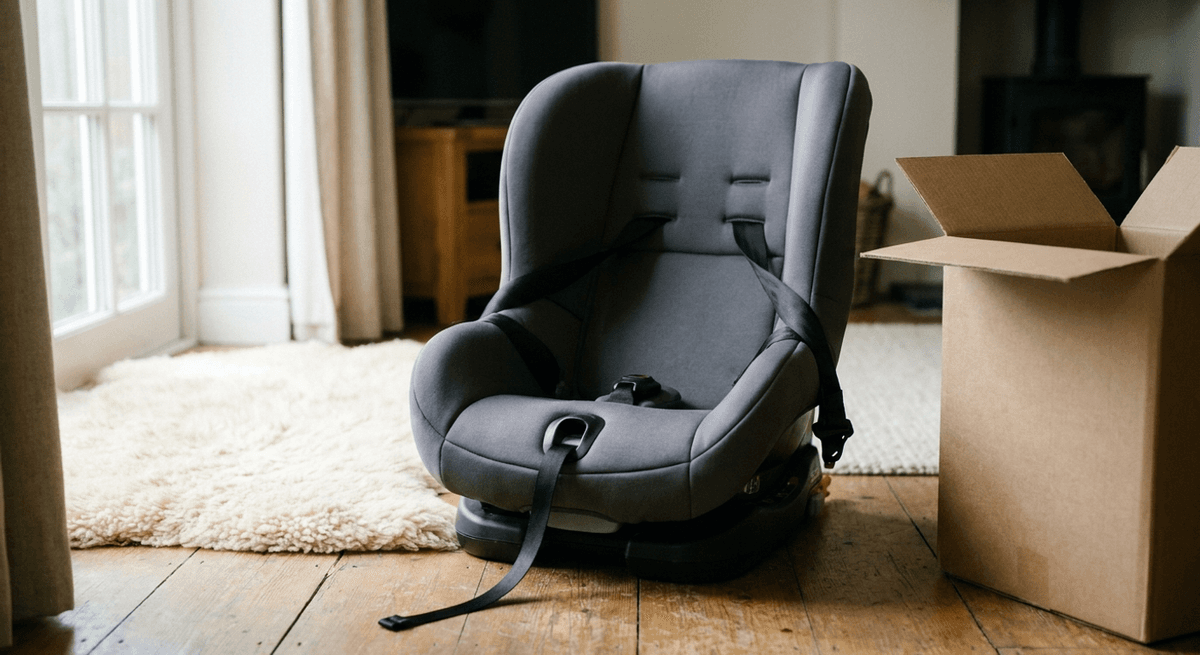
The republication of the Offences Regulation used here is effective 1 August 2026, and states directly that the ACT's penalty unit is currently $160 for an individual. Twenty penalty units at that rate is $3,200, the theoretical court maximum, which is a different and separate figure from the $641 infringement notice amount. Infringement notice amounts are routinely set lower than the court maximum as a matter of drafting practice; the $641 figure is not a discrepancy, and it sits alongside the same figure used for the ACT's other seat belt offences (items 466 to 469), so it is an established, internally consistent figure rather than an isolated one.
Double Demerit Points
The ACT doubles demerit points for a defined list of offences committed during a 'holiday period,' and section 265A, the child restraint driver-duty offence, is explicitly named on that list in section 21(2)(a) of the Offences Regulation, alongside speeding, the driver and adult passenger seat belt offences, unrestrained-body-part offences, motorbike helmets and mobile phone use. A doubled offence under section 265A therefore carries 6 demerit points rather than 3.
'Holiday period' is defined around the Christmas and New Year period, on a formula keyed to which weekday 25 December falls on, plus any ACT public holiday long weekend. The ACT Minister may, by disallowable instrument, declare that doubling does not apply to all or part of a given holiday period, so the doubling described here is the default position rather than an unconditional guarantee for every holiday period without checking for such a declaration.
Taxi and Hire Car Exemptions
Section 266K exempts the driver of a public minibus, taxi or hire car from the age-banded restraint requirements in sections 266C to 266E, where no suitable approved restraint is available in the vehicle and the passenger is not seated in the front row of a vehicle with two or more rows. A narrower exemption for under-1s seated on an adult's lap also extends to tow trucks in specified breakdown or crash circumstances.

'Rideshare vehicle' does not appear on section 266K's list. It is a separately defined term used elsewhere in the same regulation, for example in the mobile phone use rules, and defined by reference to the Road Transport (Public Passenger Services) Act 2001. Because the regulation's drafters use 'rideshare vehicle' as its own defined category elsewhere and chose not to include it in section 266K, the restraint exemption does not appear, on the text, to extend to Uber, Didi or Ola-style rideshare drivers, only to taxis, hire cars and public minibuses. This is a reading of the regulation and its dictionary, not a plain-language ACT Government statement made specifically about rideshare.
Who Is Liable
Section 265A places the duty on the driver: the driver of a moving or stationary-but-not-parked vehicle must ensure a passenger complies with the seat belt and seating position requirements. The driver carries the liability even where a different adult, such as a parent who is not driving, is also in the vehicle.
Getting a Child Restraint Fitted
Kidsafe ACT offers a child restraint installation service, along with car seat and booster hire and modification services. No separate ACT Policing, Transport Canberra and City Services, or Access Canberra fitting-station or checking-day page was located or reachable this session, so confirm current options directly with those agencies before relying on Kidsafe ACT as the only source.
For the national age bands, the fine and demerit comparison across every state, and the standards a restraint needs to meet, see Child Car Seat Laws in Australia. For the ACT's full demerit points scale and licence suspension thresholds, see Australian Capital Territory demerit points and demerit points explained across Australia, or return to the Australia driving laws hub.
Frequently Asked Questions
What changed in ACT child car seat law in 2025?
A wholesale rewrite, SL2025-23, notified 30 October 2025 and commenced 3 November 2025, replaced the ACT's old, single, more Australian-Road-Rules-like child restraint provision with its own granular sections 266 to 266K and a new driver-duty offence provision, section 265A. The age bands stayed substantively the same; what changed is the ACT's own numbering, structure, and the offence provision used to enforce it.
What is the fine for a child car seat offence in the ACT?
$641 on-the-spot, with 3 demerit points, under item 470 of Schedule 1 to the Road Transport (Offences) Regulation 2005 (republication effective 1 August 2026). The Road Transport (Road Rules) Regulation 2017 also states a separate court maximum of 20 penalty units, $3,200 at the ACT's current $160 individual penalty unit value, which applies only if the matter goes to court rather than being dealt with by an infringement notice.
Are child car seat demerit points doubled during holiday periods in the ACT?
Yes. Section 21 of the Road Transport (Offences) Regulation 2005 doubles demerit points, to 6 for this offence, for a defined list of offences committed during a 'holiday period' (broadly, the Christmas and New Year period plus ACT public holiday long weekends), and section 265A, the child restraint driver-duty offence, is explicitly named on that list. The ACT Minister can declare doubling inapplicable to all or part of a specific holiday period, so the doubling is a default rather than an unconditional guarantee.
Does the ACT's taxi exemption cover Uber and other rideshare drivers?
It does not appear to. Section 266K exempts a public minibus, taxi or hire car driver from the age-banded restraint rules in narrow circumstances. 'Rideshare vehicle' is used and defined as a separate category elsewhere in the same regulation, and it is not included in section 266K's list, so on the text the exemption does not reach rideshare drivers. This is a reading of the regulation rather than a plain-language ACT Government statement made specifically about rideshare.
What age does a child need a car seat or booster until in the ACT?
The ACT's own sections 266C to 266I use the same age bands as the national model: rearward-facing under 6 months, rearward or forward-facing with an inbuilt harness from 6 months to under 4 years, a forward-facing harness or booster from 4 to under 7 years, and an approved restraint or properly fitted seat belt from 7 to under 16. See the age-band table on the Child Car Seat Laws in Australia page for the full detail.
Who is legally responsible if a child is not properly restrained in the ACT?
The driver. Section 265A frames the offence as the driver's duty to ensure a passenger complies with the seat belt and seating position requirements, so the driver carries the liability even if a different adult in the vehicle, such as a parent, is not driving.
Updates
Independently fact-checked against the cited primary sources
Sources and References
- Road Transport (Road Rules) Regulation 2017 (ACT) (SL2017-43), republication effective 3 November 2025, sections 265A and 266 to 266K (child restraint requirements and exemptions)(legislation.act.gov.au).gov
- Road Transport (Offences) Regulation 2005 (ACT) (SL2005-11), republication effective 1 August 2026, Schedule 1 Part 1.16 item 470 (fine, penalty unit value, demerit points) and sections 21 to 22 (holiday period demerit point doubling)(legislation.act.gov.au).gov
- ACT Legislation Register, Road Transport (Road Rules) Amendment Regulation 2025 (No 1) (SL2025-23), notified 30 October 2025(legislation.act.gov.au).gov
- Kidsafe ACT, child restraint installation service(kidsafeact.com.au)