
Australia
Drink Driving Penalties in Australia: Comparing Every State and Territory (2026)
Independently fact-checked against primary sources (last audited August 18, 2026). · 7 primary sources cited on this page. How we verify our legal content

Drink driving is regulated entirely by state and territory law in Australia, and while every jurisdiction treats 0.05 as the general licence-holder limit, the fines, disqualification periods, interlock triggers and roadside suspension powers attached to a first offence differ sharply from state to state.
Drink driving is state and territory law, not one national law
There is no Commonwealth drink driving offence for an ordinary driver. Across New South Wales, Victoria, Queensland, Western Australia, South Australia, Tasmania, the Northern Territory and the ACT, the offence-creating instrument is always a state or territory Act: the Road Transport Act 2013 (NSW), the Road Safety Act 1986 (Vic), the Transport Operations (Road Use Management) Act 1995 (Qld), the Road Traffic Act 1974 (WA), the Road Traffic Act 1961 (SA), the Road Safety (Alcohol and Drugs) Act 1970 (Tas), the Traffic Act 1987 (NT) and the Road Transport (Alcohol and Drugs) Act 1977 (ACT). No Commonwealth Act appears anywhere in this comparison as the source of a drink driving offence, penalty or disqualification power, which is consistent with road traffic law remaining a state and territory responsibility.
Where the Commonwealth does appear is coordination and shared data, not offence creation. The Australian Government's Office of Road Safety describes a National Road Safety Strategy under which "Australian governments at all levels are working together with our communities to change the road transport system," a shared strategy document rather than a statute. The National Transport Commission develops model road rules that each state and territory then separately enacts and can vary, the way the ACT's own Road Transport (Road Rules) Regulation 2017 implements a national model as a Territory instrument.
The 0.05 limit: one number, eight separate statutory bases
Every jurisdiction covered here sets 0.05 grams per 100 millilitres of blood, or the breath equivalent, as the general licence-holder limit. The bands built on top of that number, and how each state or territory's zero-tolerance, novice and professional-driver categories work, are covered on the drink driving limits page rather than repeated here.
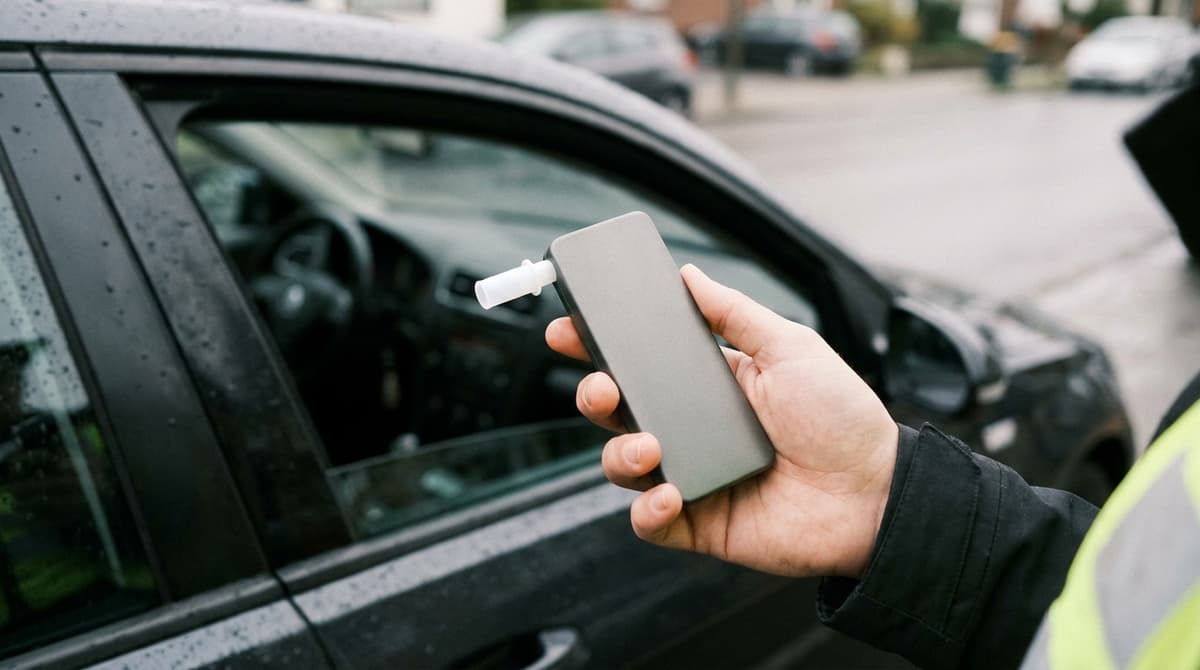
What differs is how each Act fixes the number in its own text. Victoria, South Australia, Tasmania and the ACT each define "the prescribed concentration of alcohol" as an explicit standalone term. Queensland and the Northern Territory instead embed 0.05 as the boundary of a named band, without a single stand-alone "the limit is 0.05" clause. The outcome is the same either way; the drafting style is not, and a page or reader comparing two states' statute sections should not expect the same clause structure.
Comparing the first offence, state by state
The table below lines up the first-offence maximum fine, the first-offence disqualification minimum, whether a genuine first offence triggers mandatory interlock, and the immediate or roadside suspension mechanism, for the lowest general-population BAC tier in each jurisdiction. Every figure is the spoke page's own verified figure; where a spoke's post-research hedge narrows a claim, that hedge is carried into this table rather than smoothed over.
| State or territory | First-offence maximum fine | First-offence disqualification minimum | Mandatory interlock on a first offence | Immediate or roadside suspension |
|---|---|---|---|---|
| New South Wales | $722 on-the-spot penalty notice (a genuine flat dollar figure set in the Regulations), or up to $2,200 if the matter goes to court (20 penalty units at NSW's $110/unit value, not a flat dollar figure) | 3 months (infringement) or 6 months (court range) for low, special or novice range | No, on the entry-tier offence. Mandatory from mid-range, high-range, DUI, repeat and most combined offences | Immediate on-the-spot suspension, 3 months fixed, applies even to a first low-range offence |
| Victoria | 20 penalty units flat, about $4,182 at $209.10 per unit for FY2026-27 (statutory ceiling, not a typical outcome) | As low as 3 months at the bottom of the Schedule 1 0.01 gram ladder | Yes. Mandatory for essentially every current offence, including a genuine first offence | Confirmed roadside power under s85(3): BAC 0.10+ for a full licence holder, 0.07+ for a learner/probationary licence holder; no threshold at all for a refusal or repeat charge |
| Queensland | Up to 14 penalty units, $2,417.80 at $172.70 per unit as at 1 July 2026, for the general or low-range tier | 1 to 9 months, court-set, no automatic minimum stated for this tier | No, on a first low-level general or zero-tolerance conviction | Not on the automatic section 79B list. A first general/low-range offence gets only a separate, shorter 24-hour administrative suspension |
| Western Australia | $1,250 maximum for the 0.05 to under 0.07 band (flat dollar figures converted from penalty units at $50 per unit) | At the court's discretion. No stated minimum for this band on a first offence | No, unless there is a prior alcohol-related conviction within 5 years | Not available. The section 71C roadside disqualification notice does not apply below 0.08 |
| South Australia | $1,100 flat under the Act, but a genuine first offender is issued a $904 expiation notice instead of being charged | None for a genuine first offender who pays the expiation fee. 3 months only if the matter proceeds to court | No. Category 1 offences are excluded from the mandatory scheme entirely | Not available. Category 1 is not on the section 47IAA immediate-suspension offence list |
| Tasmania | 2 to 10 penalty units, $426 to $2,130 at $213 per unit for FY2026-27, for the lowest BAC bands | 3 to 12 months, court-set within that range | No. MAIP is not triggered by a first offence at 0.05 to under 0.15 alone | Only the on-the-spot infringement notice option (BAC under 0.15). The roadside disqualification notice needs 0.15 or above for a full licence holder |
| Northern Territory | Up to 5 penalty units, $970 at $194 per unit for FY2026-27, though most low-range first offences are resolved with a flat $400 Traffic Infringement Notice instead | None mandated. The Act's automatic-cancellation clause for low range only reaches a second or subsequent offence | No. AIL eligibility is drafted exclusively around second-or-subsequent offences; no NT offence triggers it on a genuine first offence | Not available. Low range is an immediate-suspension offence only from a second or subsequent occasion |
| Australian Capital Territory | 25 penalty units, $4,000 at the fixed $160 individual rate, for a level 2 (0.05 to under 0.08) reading | 3 months minimum, 6 months default | No. A first-offence level 2 reading alone does not trigger the mandatory interlock condition | Mandatory, and it reaches a first-offence level 2 reading, a broader trigger than most of the other jurisdictions use for their lowest tier |
Two things stand out. Victoria and the ACT sit at the strict end of the entry tier: Victoria is the only jurisdiction here that makes an interlock condition mandatory from an ordinary first offence, and the ACT is the only one whose immediate roadside suspension power reaches a first-offence reading at its lowest tier. The Northern Territory sits at the opposite end: its low-range first offence carries no automatic minimum disqualification, no immediate roadside suspension, and no interlock pathway of any kind, a genuine gap in the Act's own automatic-cancellation clause rather than an inconsistency in how this comparison was built. South Australia's expiation pathway is its own distinct middle case: a genuine first-time low-range offender pays a fee rather than going to court at all, and so avoids the disqualification that would otherwise apply.
These are entry-tier, first-offence figures only. Every state escalates sharply for a higher BAC reading, a repeat offence, refusal, or an impairment-based charge; the fine caps above are statutory ceilings a court may impose, not what a typical offender is actually ordered to pay, and the on-the-spot infringement figures shown for NSW, Tasmania and the NT are the amounts most entry-tier offenders are actually charged. For the full tier structure, disqualification tables, interlock conditions and licence reinstatement path in any one jurisdiction, see that state or territory's own page linked in the table.
The interlock landscape: from mandatory on a first offence to never on a first offence
Alcohol interlock schemes exist in every jurisdiction in this comparison, but the trigger point for a first offence ranges across the widest gap in this whole comparison. Victoria requires an interlock condition for essentially every current offence category, including an ordinary first PCA offence at almost any measured BAC, following the closure of most pre-2014 exemptions. At the other extreme, the Northern Territory's Alcohol Ignition Lock scheme is drafted exclusively around second-or-subsequent offences: no NT offence, at any severity, gives a genuine first-time offender an AIL pathway under the Act.
Every other jurisdiction sits between those two positions, reserving mandatory interlock for the top BAC tier, an impairment or under-the-influence offence, a refusal, or a repeat offence, rather than an ordinary first-offence reading:
- New South Wales: mandatory from mid-range, high-range, DUI, repeat and most combined offences, not from a first low, special or novice range offence.
- Queensland: a first, low-level general or zero-tolerance conviction does not trigger it, though a driver ordered into the program who does not participate cannot drive for 5 years from the end of their disqualification.
- Western Australia: mandatory for a section 63 conviction or a failure-to-provide-a-sample conviction on a first offence, but the BAC-band offences only trigger it where there is a prior alcohol-related conviction within the preceding 5 years.
- South Australia: excludes category 1 offences, a first category 2 offence, and every drug-only offence, and is capped at 3 years.
- Tasmania: the Mandatory Alcohol Interlock Program applies to a BAC of 0.15 or above, an impairment offence, a refusal, or a subsequent offence, not to a first offence at 0.05 to under 0.15 alone.
- ACT: applies only to a level 4 conviction (the top BAC tier), a combined alcohol-and-drug offence, an alcohol-related refusal or under-the-influence conviction, or a habitual offender, not to a first-offence level 2 or level 3 reading.
A reader moving between Victorian and Northern Territory content in particular needs this framed explicitly. The two pages are not contradicting each other on "when do you need an interlock"; they describe two genuinely opposite statutory designs.
Refusing a test is treated harshly everywhere, but not by the same mechanism
Refusing a breath, oral fluid or blood test is punished severely in every jurisdiction here, but the precise mechanism differs enough that "refusal equals the worst BAC tier" is not a safe generalisation to state once and apply to all eight. The Northern Territory's refusal offences are drafted textually identical to the top BAC tier on fine, imprisonment and disqualification. The ACT goes further: its refusal group is drafted harsher than even the top BAC tier, matching the fault-based under-the-influence offence instead, and exceeding the top tier's own disqualification figures. Queensland splits refusal into two different tiers depending on which stage of testing was refused, with a roadside screening refusal carrying a higher maximum fine but a shorter maximum prison term than the top alcohol tier, while refusing the evidentiary test at a police station is explicitly deemed by the Act to be the top-tier offence itself. Tasmania deems refusal into the identical top penalty tier alongside its impairment offence, by explicit statutory drafting choice. South Australia runs three separate refusal tracks, each carrying its own penalty band, generally at or above the worst substantiated result. Victoria groups refusal with the top BAC tier for disqualification and interlock purposes, but prices the fine itself under a separate, lower-ceiling provision, so treating refusal as equivalent to the top tier there is accurate for licence consequences but overstates the fine. Western Australia's refusal offence is harsher than its own top BAC band on both measures, carrying a higher penalty-unit range and a longer minimum disqualification than a first-offence 0.15-and-above reading.

The underlying intent, that refusal should not be a way to escape the worst penalty, holds across every jurisdiction. The precise mechanism used to achieve that, exact parity, exceeding the top tier, splitting by test stage, or explicit statutory deeming, does not, and a comparison that states one uniform rule for all eight would be wrong for at least half of them.
Why the fines are priced differently, and why a figure you read could already be stale
Three different pricing systems operate side by side. South Australia writes its drink driving fines as flat dollar figures directly into the offence provision, so the number only changes when Parliament amends the Act's own text; it is the only jurisdiction here that does. New South Wales' court-fine maxima look similar at a glance but are actually penalty-unit conversions at NSW's own $110-per-unit value, drafted in the Act as penalty units the same way Victoria, Queensland, Tasmania and the Northern Territory are; only its $722 on-the-spot penalty notice, set separately in the Regulations, is a genuine flat dollar figure. Victoria, Queensland, Tasmania and the Northern Territory price fines in penalty units that stay fixed in the Act while the dollar value behind each unit is updated separately, typically each 1 July: $209.10 for Victoria, $172.70 for Queensland, $213 for Tasmania and $194 for the Northern Territory, all for the FY2026-27 year. The ACT also uses penalty units, at a fixed $160 for an individual, but reviews that figure only once every 4 years at minimum rather than indexing it annually. Western Australia converts its own penalty units to dollars at a flat $50 per unit.
This split is the direct cause of a recurring problem: a secondary source, a law firm blog, a legal-aid factsheet, even a reputable aggregator, can be accurate when written and wrong by the time it is read, simply because the jurisdiction has since moved to its next indexation cycle. Two concrete examples turned up in the course of researching this comparison. Several secondary sources quoted $189 as the Northern Territory's current penalty-unit value; the Attorney-General's Department's own table shows $189 was the FY2025-26 figure, superseded by $194 from 1 July 2026. A South Australian legal-aid factsheet dated November 2025 quoted $875 as the category 1 expiation fee; the current authorised regulation, stamped July 2026, sets it at $904. A Western Australian government fine schedule was itself built from an Act PDF stamped "as at 1 July 2021," nearly five years old relative to when it was checked, though the substantive dollar figures on the state's live public fee page had not actually moved.
The practical takeaway for a reader: treat any dollar figure on this page or any state page as current as of the stated date, and check the jurisdiction's own official penalty-unit or fee page before relying on a specific number for a real matter, particularly for a jurisdiction on the annual 1 July cycle.
Disqualifications cross state lines
A disqualification imposed in one state or territory is designed to prevent a person from lawfully driving anywhere else in Australia, and driving in a different jurisdiction while disqualified is treated as a separate offence there. The shared infrastructure behind this is NEVDIS, the National Exchange of Vehicle and Driver Information System, established in 1998 and owned by Austroads on behalf of the states and territories, which lets one jurisdiction's police or licensing authority see that a driver holds a disqualification recorded elsewhere. NEVDIS is a data-exchange system, not itself a legal recognition mechanism; the actual legal effect in a different state is created by that state's own legislation.
This general pattern was independently confirmed directly in one jurisdiction's Act during this dossier's research: the ACT's Road Transport (General) Act defines an "interstate driver licence" and provides that an immediate suspension notice suspends that person's right to drive in the ACT as well. The same structural pattern, each Act defining its own interstate or external licence category and extending its powers to it, is expected to apply across the other seven jurisdictions, but was only independently re-confirmed end to end for the ACT this session, so this should be read as the general rule rather than eight separately verified confirmations. The Northern Territory carries an additional, narrower layer specific to its tri-border region with South Australia and Western Australia, under the Cross-border Justice Act 2009.
Court hearings versus on-the-spot infringements
Whether a first offence can be resolved without a court appearance also varies. New South Wales, Tasmania and the Northern Territory each offer a genuine on-the-spot infringement or penalty-notice pathway for their lowest tier, and South Australia's expiation pathway achieves a similar result for a genuine first-time category 1 offender, avoiding a court date and the disqualification a court would otherwise be required to impose. Victoria's on-the-spot infringement option is narrower, available only to a full licence holder aged 26 or over in its lowest band, and carries a shorter disqualification than the court alternative, though no confirmed dollar figure for that infringement has been published. Queensland, by contrast, sends every drink and drug driving charge under its offence provisions to a Magistrates Court; none of these offences can be resolved by an on-the-spot notice there. Western Australia and the ACT do not offer an infringement-notice alternative to a court appearance for these offences either.
Most jurisdictions treat disqualification itself as the sanction rather than accumulating demerit points, but three exceptions exist at the lowest tier: the Northern Territory attaches 6 demerit points to its Traffic Infringement Notice offences, South Australia's expiated category 1 offence earns 4 demerit points with no court-ordered disqualification, and Western Australia attaches 3 to 5 demerit points to its lowest-band and zero-BAC infringements.
Frequently Asked Questions
Is there a single national drink driving law in Australia?
No. Drink driving is prosecuted entirely under state and territory Acts. Each of the eight jurisdictions in this comparison relies on its own Road Traffic, Road Safety or Traffic Act, and none of them derives its offences from a Commonwealth statute. National bodies coordinate strategy and share driver data, but they do not create the offence or set the penalty.
Does every state make an alcohol interlock mandatory for a first offence?
No, and the range is wide. Victoria requires an interlock condition for essentially every current offence, including a first PCA offence. Most other jurisdictions reserve mandatory interlock for the top BAC tier, an impairment or refusal offence, or a repeat offence. The Northern Territory does not offer an interlock pathway on any genuine first offence at all.
If I'm disqualified in one state, can I drive in another?
As a general rule, no. Disqualifications are designed to be recognised across Australia, and driving in a different state while disqualified is a separate offence there. This dossier confirmed the specific legal mechanism directly in one jurisdiction's Act (the ACT); the same structural pattern is expected to apply elsewhere but was not independently re-confirmed in all eight Acts.
Why do fine figures for the same offence sometimes look different on different websites?
Most states and territories index their drink driving fines to a penalty-unit value that changes on a schedule, commonly each 1 July. A secondary source written before the latest indexation date can quote last year's figure without being wrong when it was published. Always check the current dollar value against the jurisdiction's own official penalty-unit or fee page before relying on a specific number.
Updates
Independently fact-checked against the cited primary sources
Sources and References
- National Road Safety Strategy 2021-30, Office of Road Safety, Australian Government(roadsafety.gov.au).gov
- NEVDIS (National Exchange of Vehicle and Driver Information System), Austroads(austroads.gov.au)
- Northern Territory Attorney-General's Department, penalty unit value table (FY2026-27 rate of $194, prior FY2025-26 rate of $189)(agd.nt.gov.au).gov
- Road Traffic (Miscellaneous) Regulations 2014 (SA), Schedule 4, expiation fee schedule stamped 2 July 2026(legislation.sa.gov.au).gov
- Victorian Department of Treasury and Finance: Indexation of fees and penalties(dtf.vic.gov.au).gov
- Penalties and Sentences Regulation 2025 (Qld), penalty unit value $172.70(legislation.qld.gov.au).gov
- Department of Justice Tasmania: Penalty units, indexed amounts (financial year 2026-27 value)(justice.tas.gov.au).gov
- WA Road Safety Commission: Drink and drug driving (dollar penalty table, last updated 24 July 2026)(wa.gov.au).gov