
Australia
Western Australia Drink Driving Penalties: Fines, Disqualification & Interlock
Independently fact-checked against primary sources (last audited August 18, 2026). · 6 primary sources cited on this page. How we verify our legal content
Western Australia does not use a five or six-band drink driving structure. Its Road Traffic Act 1974 sets penalties across seven distinct BAC bands, drafted entirely in penalty units rather than flat dollars, and converted to a current dollar figure at $50 per unit.
Which law applies and how the offence is structured
WA's drink and drug driving offence and penalty provisions live in Part V Division 2 of the Road Traffic Act 1974 (WA), sections 59 to 71H. The key offence sections are:
- Section 63: driving under the influence of alcohol, drugs, or alcohol and drugs, an impairment-based offence ("incapable of having proper control of the vehicle"). Section 63(5) is a deeming provision: a driver with a BAC of 0.15 grams or more per 100 millilitres of blood at the time of the alleged offence "must be deemed to have been under the influence of alcohol to such an extent as to be incapable of having proper control of a motor vehicle." This is the actual statutory mechanism behind what is sometimes loosely called "high-range" driving in WA, not just a colloquial label.
- Section 64: driving with a BAC of 0.08 or above, covering the 0.08 to under 0.09, 0.09 to under 0.11, 0.11 to under 0.13 and 0.13 to under 0.15 bands in one table.
- Section 64AA: driving with a BAC of 0.05 or above, covering 0.05 to under 0.08; a first offence is a flat cap across that whole sub-0.08 range, while a second or later offence splits into narrower 0.05 to under 0.07 and 0.07 or above sub-bands.
- Sections 64A and 64AAA: near-zero BAC offences (0.02 to 0.05, and any detectable BAC) for zero-BAC-restricted drivers: novices, extraordinary-licence holders, recently disqualified drivers, and heavy vehicle, dangerous-goods, bus or taxi drivers.
- Section 64AB: driving while impaired by drugs, a distinct offence from section 63's drug limb.
- Section 64AC: driving with a prescribed illicit drug in oral fluid or blood, the pure presence offence.
- Section 64B: driving with a BAC of 0.05 or above combined with a prescribed illicit drug present, a combined drink-and-drug offence.
- Sections 66 and 67: the police power to require a breath or blood sample, and the offence of failing to comply (refusal).
- Sections 71C to 71H: the roadside disqualification-by-police-officer regime.
Two related Acts matter but do not themselves house the offence provisions. The Road Traffic (Authorisation to Drive) Act 2008 (WA) sets out licensing, the alcohol interlock scheme, and the Extraordinary Licence. The Road Traffic (Administration) Act 2008 (WA) handles general administration, and its section 8 is the provision that converts penalty units into dollars: "a reference to a number of PU is a reference to an amount (in dollars) that is that number multiplied by 50." That $50-per-unit rate is the key to reading every fine figure on this page.
For the BAC bands themselves rather than the penalty structure, see Australia's drink driving limits by state.
Seven BAC bands, not five or six
WA's court-penalty schedule for drink driving runs across seven distinct bands for a full-licence driver, more granular than the simple low, mid, high structure used in some other Australian jurisdictions:
- 0.05 to under 0.07 (section 64AA)
- 0.07 to under 0.08 (section 64AA)
- 0.08 to under 0.09 (section 64)
- 0.09 to under 0.11 (section 64)
- 0.11 to under 0.13 (section 64)
- 0.13 to under 0.15 (section 64)
- 0.15 and above, deemed under the influence (section 63)
For infringement (out-of-court, first-offence-only) purposes, the 0.05 to under 0.08 range is further split into three narrower demerit-point bands, all carrying the same $1,000 infringement fine: 0.05 to under 0.06 (3 demerit points), 0.06 to under 0.07 (4 demerit points), and 0.07 to under 0.08 (5 demerit points).
Penalties by band
The dollar figures below are the current, publicly stated values from the Road Safety Commission (page metadata shows a 24 July 2026 last-modified date), and they are consistent with the Road Traffic Act's own penalty unit figures converted at $50 per unit. Treat them as current values converted from penalty units, not as the Act's own wording, since a future change to the $50-per-unit rate would shift every dollar figure without a single word of the Road Traffic Act needing to change.

Drink driving, court penalties, full-licence holder:
| BAC band | First offence | Second offence | Subsequent offence |
|---|---|---|---|
| 0.05 to under 0.07 | $1,250 maximum, disqualification at the court's discretion | $1,250 to $2,000 plus 6 months disqualification minimum | $1,250 to $2,000 plus 8 months disqualification minimum |
| 0.07 to under 0.08 | $1,250 maximum, disqualification at the court's discretion | $1,500 to $2,000 plus 8 months disqualification minimum | $1,500 to $2,000 plus 10 months disqualification minimum |
| 0.08 to under 0.09 | $750 to $2,250 plus 6 months disqualification minimum | $1,600 to $2,250 plus 8 months disqualification minimum | $1,600 to $2,250 plus 10 months disqualification minimum |
| 0.09 to under 0.11 | $850 to $2,250 plus 7 months disqualification minimum | $1,700 to $2,250 plus 10 months disqualification minimum | $1,700 to $2,250 plus 13 months disqualification minimum |
| 0.11 to under 0.13 | $1,000 to $2,250 plus 8 months disqualification minimum | $1,800 to $3,000 plus 14 months disqualification minimum | $1,800 to $3,000 plus 17 months disqualification minimum |
| 0.13 to under 0.15 | $1,150 to $2,250 plus 9 months disqualification minimum | $2,400 to $3,750 plus 18 months disqualification minimum | $2,400 to $4,500 plus 30 months disqualification minimum |
| 0.15 and above, first offence, no priors | $1,700 to $3,750 plus 10 months disqualification minimum | not applicable | not applicable |
| 0.15 and above, first offence, prior 0.08-or-above conviction | $2,400 to $3,750 plus 18 months disqualification minimum | not applicable | not applicable |
| 0.15 and above, first offence, prior polydrug 0.08-or-above conviction | $2,700 to $3,750 plus 27 months disqualification minimum | not applicable | not applicable |
| 0.15 and above, second offence | not applicable | $3,150 to $5,250 (alternative: 9 months imprisonment) plus 30 months disqualification minimum | not applicable |
| 0.15 and above, subsequent offence | not applicable | not applicable | $3,150 to $7,500 (alternative: 18 months imprisonment) plus disqualification for life |
Zero-BAC-restricted drivers (novices, extraordinary-licence holders, recently disqualified drivers, and heavy vehicle, dangerous-goods, bus or taxi drivers): a BAC above 0 and under 0.02 is a $400 infringement plus 3 demerit points, or $400 to $750 through the court. A BAC of 0.02 to under 0.05 is $400 to $750 through the court plus a minimum 3-month disqualification; for a novice driver specifically, the licence is cancelled rather than suspended at this band.
No explicit statement was found on the Road Safety Commission's page of which financial year the dollar figures reflect. The $50-per-unit conversion independently checks out against the Act's own penalty unit table, so the July 2026 dollar figures and the Act's penalty unit figures are mutually consistent as of this page's research date.
Immediate roadside disqualification
WA Police have a statutory power to disqualify a driver immediately at the roadside using a disqualification notice under section 71C of the Road Traffic Act 1974, in force since 1 August 2012.
- Trigger conditions. Reasonable suspicion of an offence against section 63 (the deemed-under-the-influence offence), or driving or attempting to drive with a BAC of 0.08 or above (section 64), or refusing to comply with a breath or blood sample requirement under section 67 or section 67AD(4) or (6). The notice is not available at the lower 0.05 to under 0.08 band.
- Duration. The notice disqualifies the driver for a period starting on receipt of the notice and ending two months later, unless revoked earlier.
- Timing limit. The notice cannot be served more than 10 days after the alleged conduct, or after the blood-sample analysis result is received if that is later.
- Revocation. The notice must be revoked by police if the breath-testing equipment was faulty, if a charge has not been laid within one month of the notice being given, or if the charge is discontinued (section 71E). It can also be revoked by a Magistrates Court order under section 71F. If the person is acquitted or the charge is dismissed, the notice is automatically revoked under section 71G. If the person is convicted, the notice is not revoked - the time already disqualified under it is credited against the court-ordered disqualification instead, under section 71H.
Transport WA's own guidance independently confirms the same two-month period and 1 August 2012 effective date.
Alcohol interlock scheme
WA's mandatory alcohol interlock scheme applies to convictions on or after 24 October 2016, under the regulation-making power in section 5A of the Road Traffic (Authorisation to Drive) Act 2008 (sourced to Transport WA's public guidance; the Act's own text for section 5A was not independently read for this page).
Mandatory-trigger offences, per Transport WA:
- Any conviction under section 63(1)(a) or (c), including deemed 0.15-and-above cases, with no prior needed.
- Dangerous driving causing death or injury while alcohol-impaired, under section 59(1)(a) or (bb), with no prior needed.
- Any conviction under section 67(2), failure to provide a sample, with no prior needed.
- A BAC of 0.08 or above (section 64), 0.05 to 0.07 (section 64AA), or a 0.02 to 0.04 restricted-driver offence (section 64A), but only where there is a prior alcohol-related conviction within the preceding 5 years.
Minimum interlock periods. For a standard licence holder, a continuous 180 days immediately after grant of the interlock-restricted licence. For a disqualified driver with an extraordinary licence, the duration of the extraordinary licence. For a permanently disqualified driver who obtains an extraordinary licence, 3 years.
Reinstatement. Requires completion of the minimum participation period, a demonstrated continuous 180-day period free of any breach event, completion of any required alcohol assessment or treatment, and maintaining zero BAC while driving throughout.
Fee. $231.40 on grant of an interlock-restricted licence. No as-of date was found for this figure, and Department of Transport fees are typically indexed annually on 1 July, so confirm the current fee directly with Transport WA before relying on it.
Drug driving
WA treats drug presence and drug impairment as distinct offences.
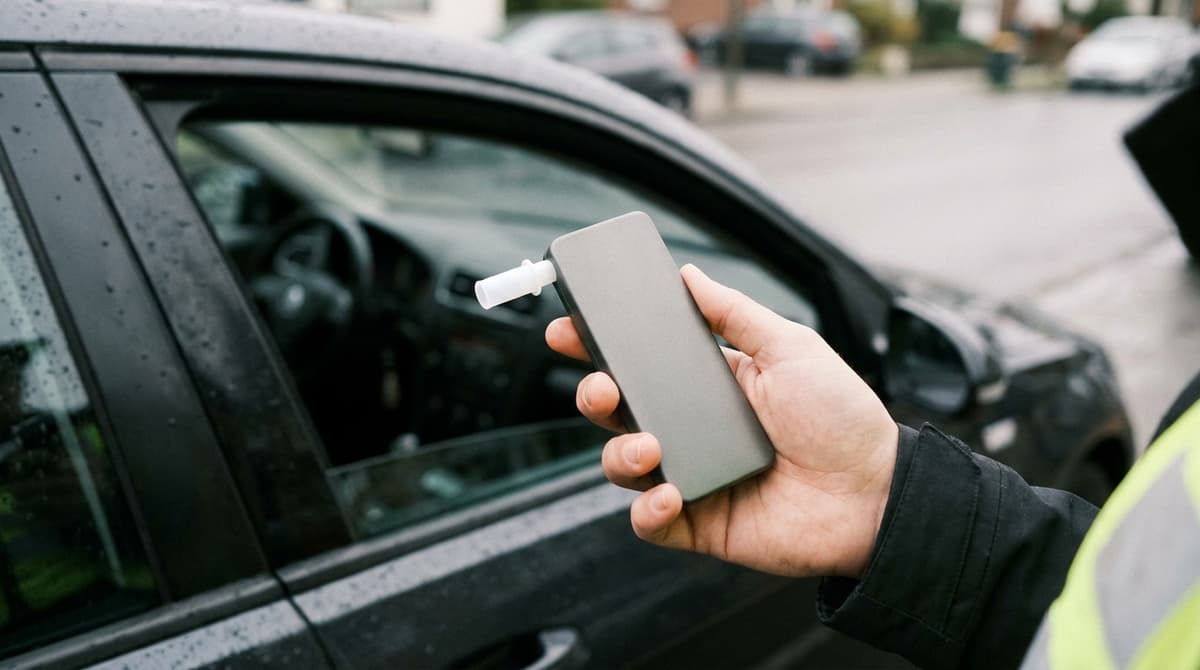
Presence offence (driving with specified drugs in oral fluid, section 64AC). Roadside oral-fluid testing for three specified drugs: cannabis, ecstasy and methamphetamine. No impairment needs to be shown; detection alone is the offence. First offence: $1,250 maximum plus 3 demerit points. Second or subsequent offence: $1,250 to $2,000 plus a minimum 6-month disqualification.
Impairment offence (driving under the influence of drugs). Requires evidence the driver was so impaired, from prescription or illicit drugs, as to be incapable of proper control, triggered by suspicious or erratic driving plus a driver assessment or blood test rather than roadside oral fluid alone. The penalty schedule mirrors the 0.15-and-above alcohol schedule exactly: first offence with no priors, $1,700 to $3,750 plus 10 months disqualification minimum; second offence, $3,150 to $5,250 (alternative: 9 months imprisonment) plus 30 months disqualification minimum; subsequent offence, $3,150 to $7,500 (alternative: 18 months imprisonment) plus disqualification for life. This offence appears to map onto section 63's drug limb and section 64AB, though the precise division of labour between those two provisions was not independently confirmed during research for this page.
Combined drink-and-drug driving (section 64B). A fully separate, harsher schedule than either offence alone. For example, an illicit drug detected together with a BAC of 0.05 to under 0.07 carries a first-offence maximum of $1,900 plus a 3-month disqualification, against $1,250 maximum with discretionary disqualification for alcohol alone at that band. An illicit drug combined with a BAC of 0.13 or above, first offence, carries $1,750 to $3,400 plus 14 months disqualification minimum under section 64B - considerably below the $2,050 to $5,650 plus 15-month minimum that applies to the separate, impairment-based offence of driving under the influence of alcohol AND a drug under section 63(2)(c).
Drug prohibition notice. WA Police can issue a 24-hour driving ban to a driver who tests positive for a specified drug or refuses a roadside drug test. Breaching the prohibition notice is itself an offence, carrying a $600 infringement penalty.
Refusing a test
Refusing to comply with a breath or blood sample requirement under section 67(2) carries a higher penalty than the top BAC band, not merely an equivalent one. For a first offence with no relevant priors, refusal carries 41 to 113 penalty units and a minimum 15-month disqualification, harsher than section 63's first-offence, no-priors penalty of 34 to 75 penalty units plus a 10-month minimum. For a subsequent refusal offence, the Act requires the court to order permanent disqualification. Framing refusal as simply "the highest penalty for the equivalent driving offence" understates the position: refusal is its own, separately numbered offence with a higher ceiling than the top drink-driving band, not a deeming into that band.
Court process and getting your licence back
Contested drink and drug driving matters go to the Magistrates Court of Western Australia.
An Extraordinary Licence, a work-purposes licence available during a disqualification period, exists under the Road Traffic (Authorisation to Drive) Act 2008 (sourced to Transport WA and Magistrates Court guidance; the Act's own text for this Division was not independently read for this page). Eligibility grounds include inability to get urgent medical treatment for the driver or a family member, loss of a principal income source causing undue financial hardship, or no other practicable transport to and from work. It cannot be applied for while a section 71C immediate disqualification notice is in effect; that notice period must run its course, or be revoked, first. An application is made on Form 5 through the eCourts Portal with a compulsory supporting affidavit, and the court sets a hearing at least 14 days out, with a magistrate deciding on public-safety grounds, driving history, the nature of the offence, and post-conviction conduct. Standard conditions include maintaining a zero BAC at all times while driving, keeping a logbook with entries at the start and end of every journey, displaying "E" plates, driving strictly for the permitted purpose, and complying with all road laws.
Waiting periods before an Extraordinary Licence application can be made are set out in section 28 of the Road Traffic (Authorisation to Drive) Act 2008: 21 days by default, 2 months for a second conviction under specific sections, 3 months for a first section 63 offence or a third or later conviction, and 4 months for a second or subsequent section 63 conviction. Time already served under a section 71C immediate disqualification notice is subtracted from the waiting period under section 28(3).
For other WA road law topics, see the Australia driving laws hub and Western Australia's demerit points system.

Frequently Asked Questions
Does WA use low, mid or high range drink driving bands?
No. Western Australia's Road Traffic Act 1974 sets penalties across seven distinct BAC bands for a full-licence driver, from 0.05 to under 0.07 up to 0.15 and above, which is more granular than a simple low, mid, high structure.
What's the fine for drink driving in WA?
It depends on the band. A first offence at 0.05 to under 0.07 caps at $1,250, while a first offence at 0.15 or above with no priors runs $1,700 to $3,750. These are current dollar figures converted from the Act's penalty units at $50 per unit, not the Act's own wording.
Will my licence be suspended immediately if I'm caught drink driving in WA?
Police can issue an immediate roadside disqualification notice under section 71C for a suspected section 63 offence, a BAC of 0.08 or above, or a refusal, disqualifying the driver for two months. This notice is not available at the 0.05 to under 0.08 band.
Is refusing a breath test worse than failing one in WA?
Yes. Refusing a breath or blood sample under section 67(2) carries 41 to 113 penalty units and a minimum 15-month disqualification for a first offence, which is a higher ceiling than the top BAC band's first-offence penalty. A repeat refusal carries mandatory permanent disqualification.
Can I get a licence to drive to work while disqualified in WA?
An Extraordinary Licence exists for work, medical or hardship reasons under the Road Traffic (Authorisation to Drive) Act 2008, but it cannot be applied for while an immediate section 71C disqualification notice is running. Under section 28 of that Act, the waiting period before an application can be made is 21 days by default, 2 months for a second conviction under specific sections, 3 months for a first section 63 offence or a third or later conviction, and 4 months for a second or subsequent section 63 conviction, with time already served under a section 71C notice subtracted.
Does WA have a separate penalty for drug driving?
Yes. A presence offence under section 64AC applies to a drug detected in oral fluid regardless of impairment, while a separate impairment offence carries penalties that mirror the 0.15-and-above alcohol schedule. A combined drink-and-drug offence under section 64B carries its own, harsher schedule again.
Updates
Independently fact-checked against the cited primary sources
Sources and References
- Road Traffic Act 1974 (WA), Version 14-p0-00, as at 1 July 2021(legislation.wa.gov.au).gov
- Road Traffic (Administration) Act 2008 (WA), Version 02-i0-00, as at 15 April 2022(legislation.wa.gov.au).gov
- WA Road Safety Commission: Drink and drug driving(wa.gov.au).gov
- Transport WA: Immediate disqualification(transport.wa.gov.au).gov
- Transport WA: Alcohol interlock scheme(transport.wa.gov.au).gov
- Magistrates Court of Western Australia: Extraordinary driver's licences(magistratescourt.wa.gov.au).gov