
Australia
Window Tint Laws in NSW: VLT Limits, Fines and Defect Notices (2026)
Independently fact-checked against primary sources (last audited August 18, 2026). · 4 primary sources cited on this page. How we verify our legal content
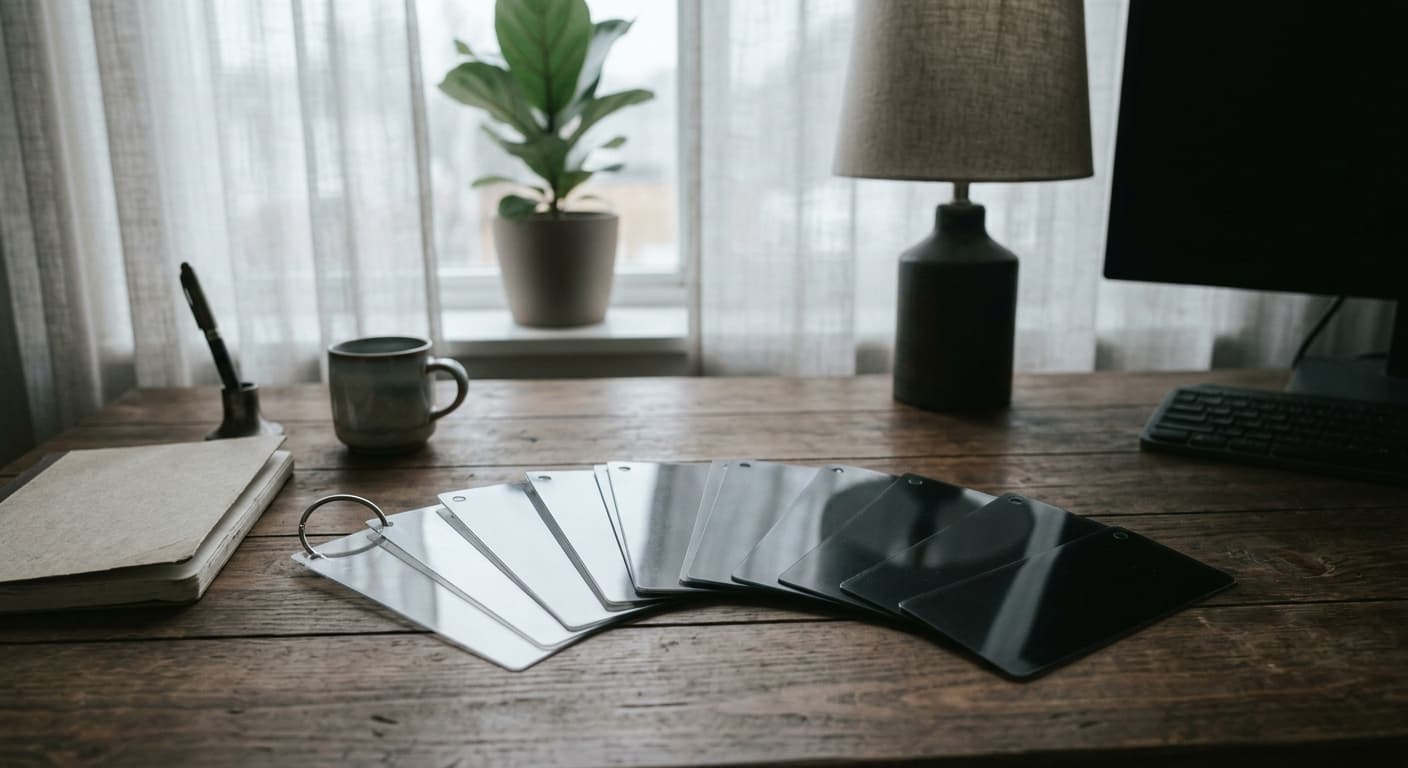
New South Wales sets legal window tint limits under rule 44 of the Light Vehicle Standards Rules, with different minimum light-transmission floors for the windscreen, front windows and rear windows, and the real on-the-spot fine for illegal tint is far lower than the figure that circulates online.
For the national comparison across all eight states and territories, see window tint laws in Australia. This page covers the machinery specific to New South Wales.
The Rule and Its Source
New South Wales regulates window tint through rule 44, "Window tinting," in Schedule 2 (Light Vehicle Standards Rules) of the Road Transport (Vehicle Registration) Regulation 2017 (NSW). The rule sets a luminous transmittance (VLT) floor for every category of glazing, then carves out narrower exceptions for specific window positions and vehicle types. The figures below are cross-verified against a second, independent primary source: Transport for NSW's own "Light Vehicle Safety Check Standards" (the Rules for Authorised Inspection Stations, Rule 105.03), which is issued under the same Regulation and used by inspection stations to test compliance.
VLT Limits by Window Position
| Glazing | Minimum VLT | Condition |
|---|---|---|
| Windscreen | 70 percent | Coating allowed only in the area above the wiper sweep, or the top 10 percent of the windscreen, whichever is greater |
| Front side windows and any window ahead of the driver | 35 percent | No further condition |
| Rear windows | 20 percent | Requires a rear-vision mirror fitted to each side of the vehicle |
| Rear windows, one mirror only | 35 percent | Applies when the vehicle has a driver-side mirror but no passenger-side mirror |
| Rear windows of a goods vehicle | No floor (0 percent permitted) | Requires mirrors on each side, and either at least 4 wheels, or at least 3 wheels with a gross vehicle mass (GVM) over 1 tonne |
Rule 105.03 also builds in a 5 percent measurement tolerance for inspection stations: a windscreen is not failed unless a meter reads below 65 percent, side windows are not failed unless a reading is below 30 percent, and rear windows are not failed unless a reading is below 15 percent (or below 30 percent for the one-mirror 35 percent tier). That tolerance exists to absorb meter variance, not to legalise a lower tint as a matter of right.
Reflectance Cap
Rule 44(8) caps the reflectance of any coated glazing at 10 percent, confirmed against Transport for NSW's own consumer guide, which states plainly that "film on glass must not have a reflectance of more than 10 percent." This is the real content of the informal "no mirror tint" rule: a 10 percent reflectance ceiling, not a named ban on specific colours. No primary NSW source opened for this page separately bans amber, red or blue film by name; that specific claim, repeated on vendor sites, is not confirmed one way or the other.

Factory Tint and Adding Film on Top
Manufacturer-fitted "privacy glass" (glazing darker than rule 44's limits, fitted under the vehicle's federal compliance approval) is exempt from rule 44's transmittance requirement at the point of manufacture. The rule that matters if you then add aftermarket film: the combined VLT of glass plus film must meet the ordinary limit for that window position, and if the factory glazing alone is already below the relevant limit, no film may legally be added to it at all.
Grandfathering for Older Vehicles
Rule 44A sets two separate thresholds, and they are easy to conflate:
- Vehicles first registered before 1 July 1984: glazing, including the windscreen, is fully exempt from rule 44, but only glazing that was fitted to the vehicle on or before its first registration date. Rule 44A(1)(d) ties the exemption to glazing fitted at or before first registration, so tint added later to a pre-1984 vehicle is not covered by this tier. This is the only tier where windscreen tint itself is grandfathered.
- Windows (not the windscreen) first registered before 1 August 1994: they keep whatever transmittance they had immediately before that date, if it was below 35 percent, a frozen historical level, not an unlimited exemption. Windows first registered on or after 1 August 1994 must meet the ordinary rules above.
Goods Vehicles and the No-Floor Rear Window Rule
Rule 44(6B) is the provision that lets a goods vehicle (a van, ute or light truck designed mainly to carry goods) run its rear windows with no VLT floor, down to fully blacked out. It requires all of: a rear-vision mirror on each side, the vehicle being designed primarily for the carriage of goods, and either at least 4 wheels or at least 3 wheels with a GVM over 1 tonne.
Two things worth flagging honestly rather than glossing over. First, the Regulation's text uses GVM (gross vehicle mass) for the greater-than-1-tonne threshold, while Transport for NSW's own inspection-station Rule 105 table uses GCM (gross combination mass) for the same threshold: different measures that usually coincide for a single-unit truck but can diverge for a combination vehicle. The Regulation is the higher-authority legislative text, so GVM should govern, but the inconsistency between NSW's own two documents has not been resolved here. Second, it is not clear from the rule's text what floor applies to the rear windows of a goods vehicle that has a mirror on the driver's side only, since the no-floor relief in (6B) and the 20 percent relief in (6A) both require mirrors on each side; a vehicle without dual mirrors likely falls back to the general 70 percent baseline, but this was not confirmed against the full clause text.
Enforcement: How You Get Caught and What Happens
NSW Police and Transport for NSW-authorised inspection station examiners use handheld light-transmission meters (Rule 105.03) to test tint, both roadside and during registration inspections. A vehicle found non-compliant can be issued a minor defect notice or major defect notice, the two terms used in clause 128(2) of the Road Transport (Vehicle Registration) Regulation 2017. Driving in breach of a minor defect notice carries a $423 fine and 1 demerit point; driving in breach of a major defect notice carries a $562 fine and 3 demerit points, per the current NSW "General driving offences" schedule. The colloquial "yellow sticker" (minor) and "red sticker" (major) description appears constantly in secondary sources but was not confirmed against a primary NSW government document for this page; it is safe to use descriptively, just not as a quote from the Regulation. Clauses 80 and 81 of the same Regulation (issue of defect notices, and their recording, clearance and withdrawal) exist by title, but their full procedural text (exact rectification timeframes and reinspection steps) was not able to be retrieved for this page. The basic consumer process, per Service NSW, is to repair the vehicle by the date on the notice, then attend a Service NSW centre or call 13 77 88 with the notice, proof of ID and an inspection report to have it cleared.
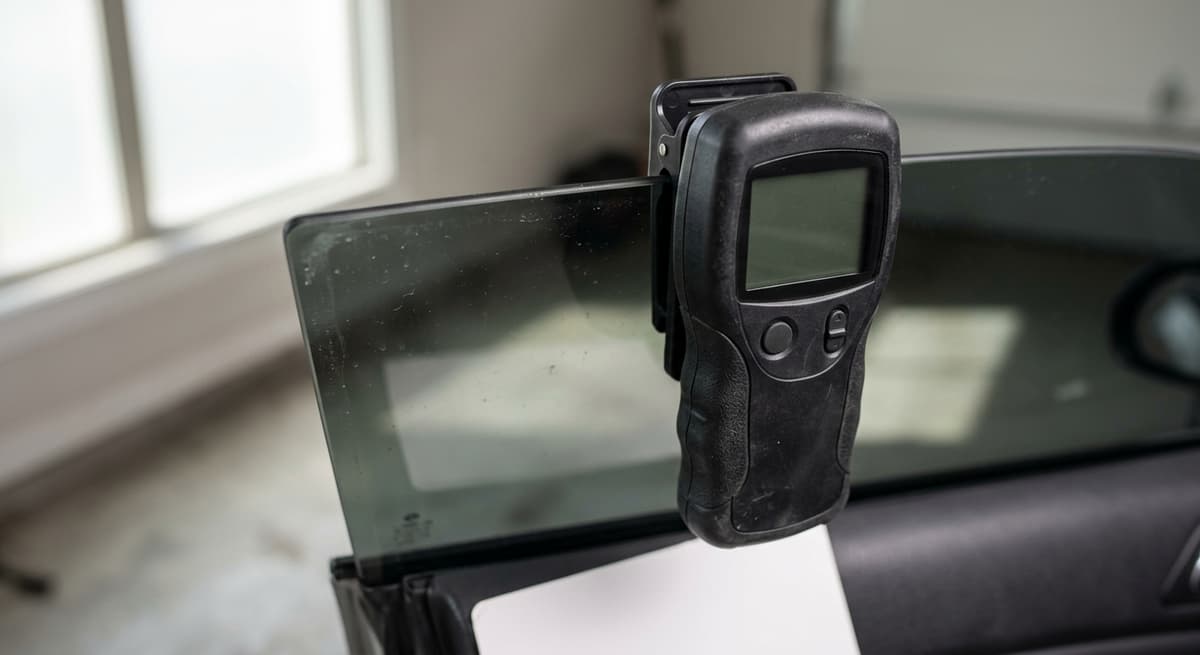
For a driver stopped roadside, the 5 percent measurement tolerance in Rule 105.03 matters practically: a reading a little under the headline percentage is not automatically a fail, because the tolerance is built into the pass threshold itself (a side window is only failed below 30 percent, not below 35 percent). That tolerance exists to absorb normal meter and film-aging variance, not to license running film deliberately close to the line, since film readings also drift darker as it ages.
Buying a Used Car with Existing Tint
Two of the rules above interact in a way that matters for a used-car buyer rather than a first-time installer. If a car was first registered before 1 July 1984, its existing tint, windscreen included, is exempt only if it was fitted to the vehicle on or before that first registration date; tint added later is not covered, however dark it reads today. If it was first registered between 1 July 1984 and 1 August 1994, only the side and rear windows are covered by the frozen pre-1994 level, and only if that level was already below 35 percent; the windscreen still needs to meet the ordinary 70 percent rule. For anything registered from 1 August 1994 onward, none of the grandfathering applies, and the ordinary position-by-position limits above govern regardless of when the tint was fitted. A buyer cannot tell which regime applies just by looking at the glass alone; the vehicle's first registration date, and when the tint itself was fitted, is what controls.
Penalties: The Real Fine, Not the One That Circulates Online
The standard-setting clause is rule 44 itself. The offence clause is different: clause 60(1)(b)(i) of the Road Transport (Vehicle Registration) Regulation 2017 makes it an offence to use a registrable light vehicle that does not comply with the Light Vehicle Standards Rules, with a maximum court penalty of 20 penalty units. That is a statutory ceiling a court could impose, not a figure most drivers ever pay, and converting it into an exact dollar amount requires the current NSW penalty-unit rate, which was not independently confirmed for this page. A widely circulated figure of around $110 per unit should be verified against the Crimes (Sentencing Procedure) Act 1999 or Transport for NSW before being quoted as a hard number.
In practice, most drivers who fail a tint check face an on-the-spot penalty notice, not a court date. Window tint has no line item named "window tint" in NSW's official "General driving offences" schedule (current as at 1 July 2025). By elimination, it falls under the catch-all row "Use light vehicle not comply with standard - other," grouped with similar generic equipment defects (headlights, tail lights, brake lights, steering, dimensions, overhang), all priced at fine level 2, or $140, with no demerit-point figure printed in that column. That is a strong reading of the current schedule, not a certainty. Tint is not spelled out by name, and a person should visually confirm the relevant row of the official PDF before quoting an exact figure. What can be said with confidence: the figures that circulate widely online, "$349 fine plus 3 demerit points" (sometimes quoted as high as $481), do not appear anywhere in the current official schedule and could not be traced to any primary NSW government source. Do not rely on that figure.
Medical Exemptions
No NSW-specific medical or light-sensitivity exemption pathway for window tint was found in any primary source checked for this page: the current Transport for NSW consumer tint guide, the full Vehicle Standards Information bulletin catalogue (the one bulletin that used to cover tinting, VSI 03, is marked withdrawn with no replacement exemption content), and the ABLIS vehicle standards exemption permit, which turned out to be a heavy-vehicle-only scheme administered by the National Heavy Vehicle Regulator and does not apply to a passenger car or a medical circumstance. Several vendor sites describe a medical-certificate application process for conditions such as lupus or photosensitivity, but none cite a primary NSW government source, and no such form could be located directly. Treat this as a genuinely open question rather than a confirmed "no": a driver with a real medical need should contact Transport for NSW Technical Enquiries (technical.enquiries@transport.nsw.gov.au, 1300 137 302) rather than assume an exemption does or does not exist.

For state penalty context, see demerit points in New South Wales and drink driving penalties in NSW. For related driving offences, see speeding fines in Australia and mobile phone detection cameras in Australia, or return to the Australia driving laws hub.
This article provides general legal information about window tint law in New South Wales. It is not legal advice and does not account for an individual vehicle's circumstances. Information was verified against NSW Government and Transport for NSW sources on 18 August 2026. For advice on a specific situation, contact Transport for NSW directly or consult a legal practitioner admitted in New South Wales.
Frequently Asked Questions
What is the minimum legal window tint (VLT) for front windows in NSW?
Front side windows and any window ahead of the driver must let through at least 35 percent of visible light under rule 44(6) of the Light Vehicle Standards Rules. The windscreen has a higher floor of at least 70 percent, with an exception only for the area above the wiper sweep or the top 10 percent of the glass.
Is the $349 fine and 3 demerit points for illegal tint real in NSW?
That figure does not appear in NSW's current official offence schedule and could not be traced to any primary source. The best-supported reading of the official 'General driving offences' schedule (as at 1 July 2025) is a $140 fine with no demerit points, under the catch-all standards-noncompliance item, though window tint is not named specifically in that table, so treat this as strongly supported rather than certain.
Can I have 0 percent tint on the rear windows of my ute or van in NSW?
Yes, if it qualifies as a goods vehicle under rule 44(6B): it needs a rear-vision mirror on each side, and either at least 4 wheels, or at least 3 wheels with a gross vehicle mass over 1 tonne. If it does not meet that test, the ordinary 20 percent rear-window floor applies.
Is my older car's window tint grandfathered under NSW law?
There are two separate thresholds. A vehicle first registered before 1 July 1984 is fully exempt from rule 44, including the windscreen, but only for glazing fitted to the vehicle on or before its first registration date; tint added later is not covered. For a vehicle first registered before 1 August 1994, the side and rear windows (not the windscreen) keep their existing tint level if it was already below 35 percent, but this is a frozen historical level, not an unlimited exemption.
Is there a medical exemption for window tint in NSW?
No NSW-specific medical exemption pathway was found across the current Transport for NSW tint guide, the Vehicle Standards Information bulletin catalogue, or the heavy-vehicle exemption permit system. This is an open question rather than a confirmed no. Contact Transport for NSW Technical Enquiries directly if you have a genuine medical need.
What happens if my car fails a tint check in NSW?
An inspection station or police officer can issue a minor or major defect notice. The exact rectification timeframe was not confirmed for this page, but the general consumer process is to repair the vehicle by the date on the notice, then have it cleared at a Service NSW centre or by calling 13 77 88 with the notice, proof of ID and an inspection report.
Updates
Independently fact-checked against the cited primary sources
Sources and References
- Road Transport (Vehicle Registration) Regulation 2017 (NSW), Schedule 2 (Light Vehicle Standards Rules), rule 44 'Window tinting' and rule 44A (grandfathering)(classic.austlii.edu.au)
- Road Transport (Vehicle Registration) Regulation 2017 (NSW), clause 60(1)(b)(i), 'Registrable vehicles to comply with applicable vehicle standards'(classic.austlii.edu.au)
- Light Vehicle Safety Check Standards (Rules for Authorised Inspection Stations), Rule 105.03, Transport for NSW, March 2025(transport.nsw.gov.au).gov
- How do I know my windows and window tint are legal in NSW?, Transport for NSW consumer guide, May 2025(transport.nsw.gov.au).gov
- General driving offences (fine schedule incl. vehicle standards non-compliance and defect notice breach), as at 1 July 2025, NSW Government(nsw.gov.au).gov
- Get help with vehicle defects, Service NSW(service.nsw.gov.au).gov