
Australia
Window Tint Laws in the Australian Capital Territory (ACT)
Independently fact-checked against primary sources (last audited August 18, 2026). · 5 primary sources cited on this page. How we verify our legal content

The Australian Capital Territory's window tinting regulation sets a single floor of at least 35 percent luminous transmittance for every piece of non-windscreen glazing, front and rear alike, but Access Canberra's own consumer guidance separately describes a lower figure for rear windows, so two official ACT government sources currently disagree.
This page covers the ACT specifically. For how the ACT compares with every other state and territory, see the Australian window tint law comparison on the driving laws hub. Tint-related defect notices sit alongside the ACT demerit points system, covered separately.
The rule and its source
The ACT's window tint standard is set out in the Road Transport (Vehicle Registration) Regulation 2000, Schedule 1, section 1.47, 'Window tinting,' made under the Road Transport (Vehicle Registration) Act 1999. The current republication is dated 5 January 2026.
Section 1.47 requires the windscreen to keep at least 70 percent luminous transmittance, bans any coating that reduces it, and then, separately, allows any glazing other than the windscreen to be coated down to not less than 35 percent, with a reflectance cap of not more than 10 percent on any coated glazing. That 35 percent figure is written once, for all non-windscreen glazing, with no separate lower number for rear windows anywhere in the section.
VLT by glazing position, and where the two official ACT sources disagree
| Glazing position | What the Regulation says | What Access Canberra's guidance says |
|---|---|---|
| Windscreen | at least 70 percent, except the strip above the wiper arc or the top 10 percent | not addressed differently |
| Front side windows | at least 35 percent (section 1.47(5), applies to all non-windscreen glazing) | at least 35 percent |
| Rear side windows and rear window | at least 35 percent (same subsection, no separate figure) | at least 20 percent |
| Reflectance of coated glazing | not more than 10 percent | not addressed differently |
This is worth stating plainly rather than picking one figure. The enacted Regulation was checked in full, including every occurrence of '20%' in its text, and no lower rear-window figure exists in section 1.47 or anywhere else in the instrument. Subsection (7) of section 1.47 also says the 35 percent figure applies 'instead of' whatever the underlying national vehicle design rule would otherwise require, which reads as a deliberate choice of one number for all non-windscreen glazing. Access Canberra's own consumer-facing tinting page, however, separately states that 'rear passenger side windows and rear window must have a LT at least 20%.' No further ACT instrument that creates a legally lower rear-window figure was located. Because the Regulation is the enacted law and Access Canberra's page is agency guidance, this page treats the Regulation's uniform 35 percent floor as the legally controlling figure and reports the Access Canberra 20 percent figure as a genuine discrepancy, not as a safe number to rely on. Anyone relying on 20 percent rear tint in the ACT should be aware that the regulation itself does not support it.
Windscreen tint
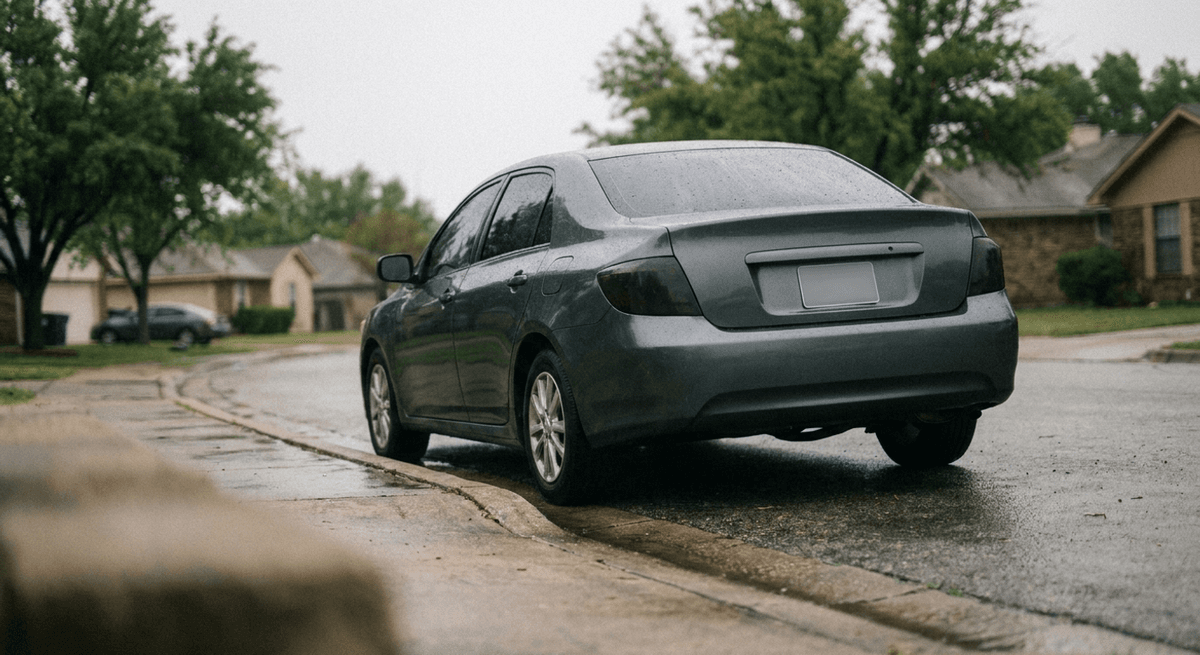
The windscreen must maintain at least 70 percent luminous transmittance and cannot be coated in a way that reduces that figure, except for the greater of two areas: the strip above the highest point swept by the windscreen wiper, or the upper 10 percent of the windscreen. There is no build-year distinction for the ACT windscreen figure, unlike some neighbouring jurisdictions.
Exemptions, and their real scope
Access Canberra's tinting page describes several exemption categories, but none of them appear in the enacted Regulation text itself, so they should be understood as agency administrative guidance rather than confirmed gazetted law. Reading the guidance closely also narrows what each exemption actually covers:
- Goods vehicles: front windows next to the driver and passenger still need at least 35 percent luminous transmittance, the same as any passenger vehicle. There is no minimum for windows behind the driver on a goods-carrying vehicle, and no minimum for windows next to the area of the vehicle designed to carry goods. This is not a blanket exemption for every window on a commercial vehicle.
- Buses, stretch limousines, ambulances, and hearses: there is no limit for windows to the rear of the driver on these vehicle types. Front windows, again, still need at least 35 percent.
- Glazing or coating fitted before 1 October 1996: exempt from limits, but only for glazing behind the rear of the driver's seat, on the same pattern as the other two exemptions.
No specific vehicle-weight threshold was found for the goods vehicle exemption. It is defined by the vehicle's body and glazing layout, not by a gross vehicle mass figure.
Enforcement: defect notices
Non-compliant tint is enforced as a vehicle standards issue rather than through a tint-specific fine at the roadside. Under section 24(1) of the Road Transport (Vehicle Registration) Act 1999, a registrable vehicle that does not comply with a prescribed vehicle standard, which includes section 1.47's tinting requirements, is a 'defective vehicle.' Section 25 gives a police officer or an authorised person the power to inspect a vehicle on a road, and on finding a defective vehicle, to issue a warning or a defect notice, impose conditions on its use, or prohibit its use.
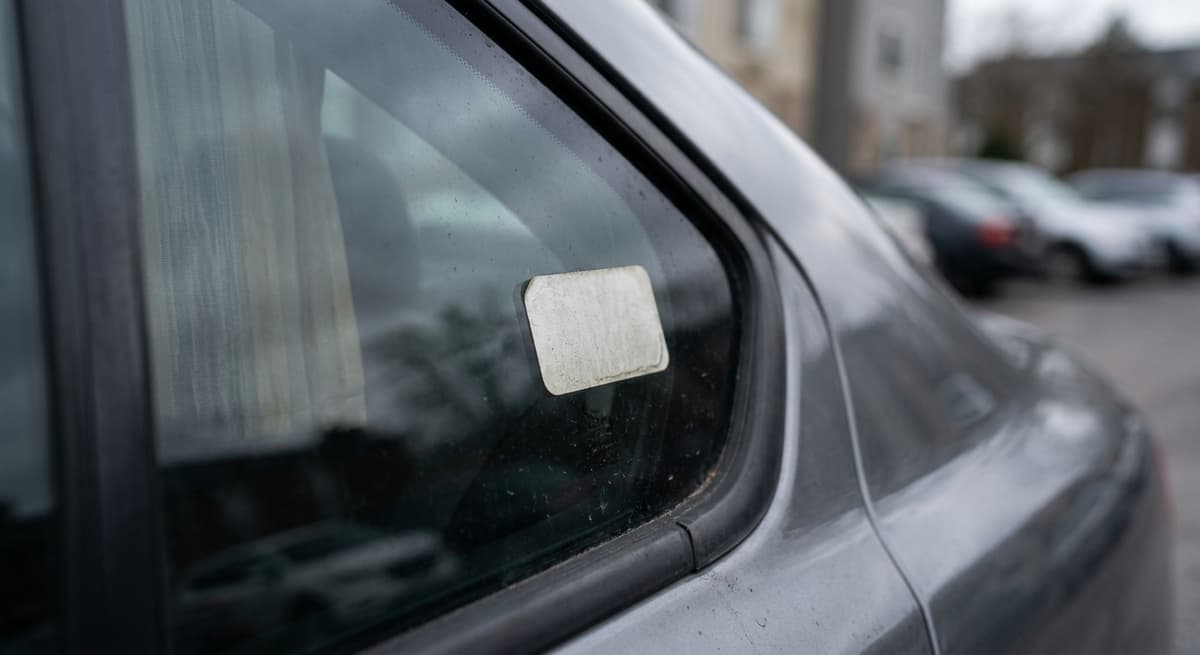
The Regulation's Part 6.5 sets out the mechanics. A defect notice is classed as a major defect notice if continued use would be an imminent and serious safety risk, or a minor defect notice otherwise. The notice must record the defect, whether use is prohibited, the repair requirement, and whether a separate infringement notice under the Road Transport (General) Act 1999 has also been issued for the same defect, which shows that a defect notice and a monetary infringement notice are two distinct instruments that can be issued together or separately. A major defect notice also triggers a defective vehicle label being attached to the car.
Penalties
The Regulation's own front matter confirms the current penalty unit value: $160 for an individual and $810 for a corporation, under section 133 of the Legislation Act 2001. That figure has been stable across the Regulation's recent republications.
A tint or glazing standards breach under sections 1.44 to 1.47 carries a $279 infringement notice (20 penalty units), under Schedule 1, item 66.23 of the Road Transport (Offences) Regulation 2005 (SL2005-11); that same schedule item records demerit points as "-" (none), confirming no demerit points attach to a tint offence. Section 25(3), a separate offence for failing to assist with a vehicle inspection, carries its own maximum penalty of 20 penalty units, which is $3,200 for an individual or $16,200 for a corporation at the current unit value, but that is the inspection-obstruction offence, not a penalty for the tint itself.
Medical exemptions
No medical exemption process for window tint, of the kind some other jurisdictions publish as a dedicated form or permit, appears on Access Canberra's tinting page. This is recorded as a genuine gap in the published material, not as a confirmed absence, since the page does not contain an explicit statement that no medical exemption exists either way. Anyone who needs an exemption on medical grounds should contact Access Canberra directly.
This article provides general legal information about window tint law in the Australian Capital Territory. It is not legal advice and does not account for an individual vehicle's circumstances. Information was verified against ACT legislation and Access Canberra sources on 18 August 2026. For advice on a specific situation, contact Access Canberra directly or consult a legal practitioner admitted in the ACT.
Frequently Asked Questions
Is 20 percent tint legal on rear windows in the ACT?
This is genuinely unclear, because two official ACT sources disagree. The enacted Road Transport (Vehicle Registration) Regulation 2000 sets one floor of at least 35 percent for all non-windscreen glazing, with no separate rear-window figure, while Access Canberra's own consumer guidance states 20 percent for rear windows. The regulation is the legally controlling text, so relying on 20 percent carries risk.
What is the ACT's actual legal window tint limit?
The enacted regulation, section 1.47 of the Road Transport (Vehicle Registration) Regulation 2000, sets at least 70 percent luminous transmittance for the windscreen and at least 35 percent for every other piece of glazing, front or rear, with reflectance capped at not more than 10 percent.
Are ute, truck, or bus windows exempt from ACT tint rules?
Only partially. Access Canberra's guidance removes the minimum for windows behind the driver on goods vehicles, buses, stretch limousines, ambulances, and hearses. Front windows on all of these vehicle types still need at least 35 percent.
Is there a medical exemption for dark window tint in the ACT?
No published medical exemption process was found on Access Canberra's window tinting page. Contact Access Canberra directly if you have a medical reason for darker tint.
What happens if my car's tint fails an ACT vehicle inspection?
A non-compliant vehicle can be classed as a defective vehicle under the Road Transport (Vehicle Registration) Act 1999. Police or an authorised inspector can issue a warning or a defect notice, restrict how the vehicle may be used, or prohibit its use, and a separate infringement notice may also be issued.
Updates
Independently fact-checked against the cited primary sources
Sources and References
- Road Transport (Vehicle Registration) Regulation 2000 (ACT) (SL2000-12), Republication No 62, effective 5 January 2026, Schedule 1 Part 1.5 section 1.47 'Window tinting'.(legislation.act.gov.au).gov
- Road Transport (Vehicle Registration) Regulation 2000 (ACT) (SL2000-12), Chapter 6 Part 6.5, sections 159-160 (defect notices for light vehicles), and the Regulation's own penalty-unit front matter ($160 individual / $810 corporation).(legislation.act.gov.au).gov
- Road Transport (Vehicle Registration) Act 1999 (ACT), republication effective 11 May 2022, Part 4 sections 24-25 (defective vehicles, inspection and defect powers) and section 25(3) (failure to assist with inspection, maximum 20 penalty units).(legislation.act.gov.au).gov
- Access Canberra, 'Vehicle windscreen and window tinting', ACT Government consumer guidance describing the 20 percent rear-window figure and the goods vehicle / bus / limousine / ambulance / hearse / pre-1996 exemptions.(accesscanberra.act.gov.au).gov
- Road Transport (Offences) Regulation 2005 (ACT) (SL2005-11), Schedule 1, item 66.23, infringement notice and demerit points for a window tinting or glazing standards breach (sections 1.44-1.47)(legislation.act.gov.au).gov