
Australia
Window Tint Laws in the Northern Territory (NT)
Independently fact-checked against primary sources (last audited August 18, 2026). · 3 primary sources cited on this page. How we verify our legal content

In the Northern Territory, front side windows and the windscreen follow the same tint limits used across most of Australia, but a standing Motor Vehicles Act exemption allows glazing behind the driver's seat down to 15 percent luminous transmittance instead of the usual 35 percent, and there is no fixed on the spot fine for illegal tint at all.
This page covers the Northern Territory specifically. For how NT compares with every other state and territory, see the Australian window tint law comparison on the driving laws hub. Tint enforcement also feeds into the NT demerit points system, covered separately.
The rule and its source
The Northern Territory's window tint standard sits inside the Australian Vehicle Standards Rules, applied as Schedule 6 to the Motor Vehicles (Standards) Regulations, made under the Motor Vehicles Act 1949. Rule 44, 'Window tinting,' is the operative provision, and it is the same rule structure used in several other Australian jurisdictions.
Rule 44 sets a windscreen luminous transmittance floor, a general glazing floor, and a separate, lower floor for glazing behind the driver's seat, then bans any coating that pushes reflectance above 10 percent. The Territory's genuine outlier does not come from Rule 44's own wording, it comes from a standing exemption layered on top of it under section 135 of the Motor Vehicles Act, covered below.
VLT by glazing position
| Glazing position | Minimum luminous transmittance | Source |
|---|---|---|
| Windscreen, vehicle built after 1971 | at least 75 percent | Rule 44(1)(a) |
| Windscreen, vehicle built in or before 1971 | at least 70 percent | Rule 44(1)(b) |
| Window or interior partition, general | at least 70 percent | Rule 44(4) |
| Front side windows, forward of the rear of the driver's seat | at least 35 percent | Rule 44(6) |
| Glazing behind the rear of the driver's seat, light vehicles, under the standing exemption | at least 15 percent | Gazette Notice G2, section 135 Motor Vehicles Act |
| Glazing behind the rear of the driver's seat, heavy vehicles over 4.5 tonnes GVM | no minimum | Gazette Notice S119, section 135 Motor Vehicles Act |
| Any coated glazing, reflectance | not more than 10 percent | Rule 44(7) |
Windscreen tint
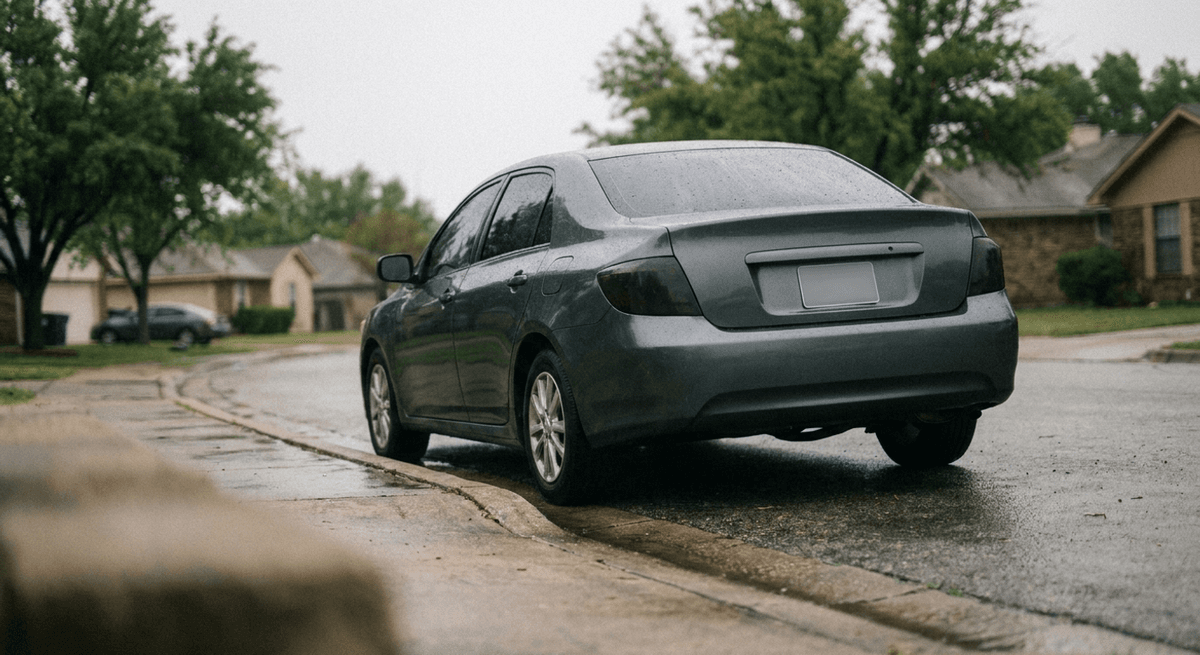
The windscreen itself carries the strictest limit in the Territory. It must keep a luminous transmittance of at least 75 percent if the vehicle was built after 1971, or at least 70 percent for older vehicles, and it cannot be coated in any way that reduces that transmittance. The only carve-out is for the greater of two areas: the strip above the highest point swept by the windscreen wiper, or the upper 10 percent of the windscreen. Neither area may be treated more permissively than that, and there is no separate exemption instrument that changes the windscreen figures the way there is for rear glazing.
The 15 percent rear allowance: an exemption, not an amended rule
This is the Territory's real point of difference from the rest of Australia, and it is worth describing precisely because the mechanism, not just the number, is unusual. Rule 44(5) itself has never been amended. Its text still says that glazing behind the rear of the driver's seat 'may be coated to achieve a luminous transmittance of not less than 35 percent.'
What actually lowers that figure to 15 percent is a separate, standing exemption. The Registrar of Motor Vehicles, using the general exemption power in section 135 of the Motor Vehicles Act, issued Gazette Notice G2 on 6 January 2009, exempting external windows fitted with film or coating rearward of the driver's seat from Rule 44, on the condition that luminous transmittance stays not less than 15 percent. The notice is signed and dated, and it sits alongside the rule rather than rewriting it. In practical terms this means the enforceable rear-window floor for an ordinary light vehicle is 15 percent, even though the rule you would read first says 35 percent.
The 10 percent reflectance cap in Rule 44(7) still applies to any coated rear glazing regardless of this exemption, and a vehicle carrying tint below 70 percent transmittance must have external rear-vision mirrors fitted to both sides.
Heavy vehicle and goods vehicle differences
A second, separate exemption applies to heavy vehicles. Gazette Notice S119, issued under the same section 135 power and dated 25 November 2014, exempts vehicles with a gross vehicle mass over 4.5 tonnes from Rule 44(5) outright. Unlike the light-vehicle exemption, this is not a lower percentage figure, it removes the rear-of-driver luminous transmittance requirement entirely for those vehicles.
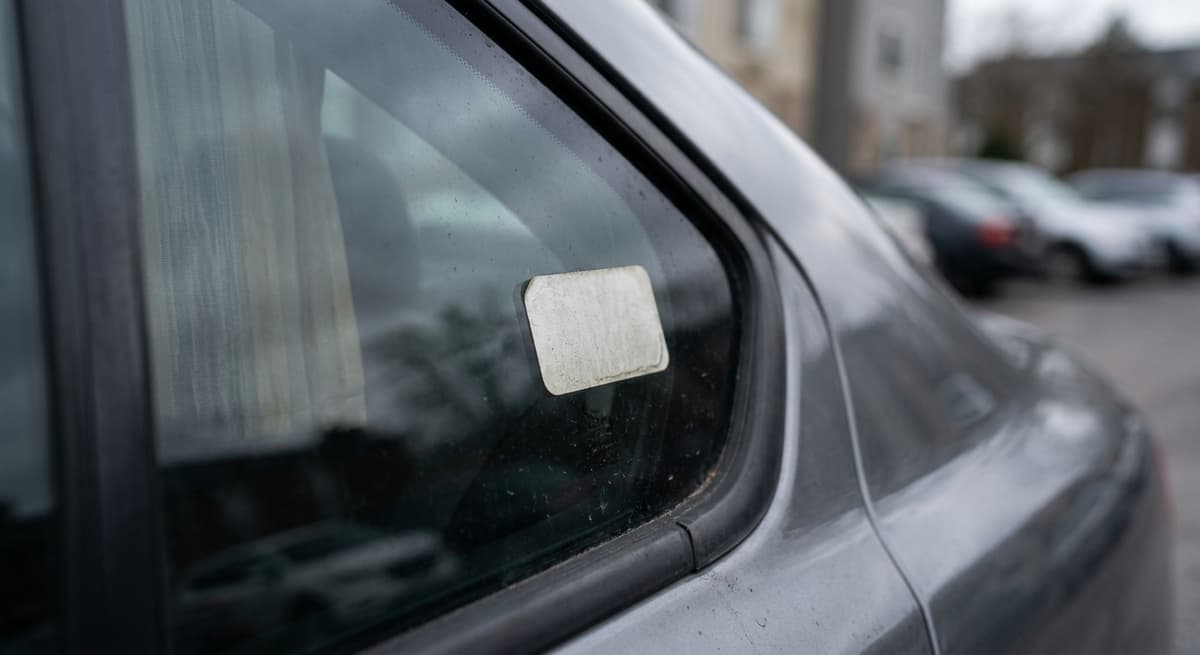
Front side windows on a heavy vehicle still need at least 35 percent under Rule 44(6), the same as any light vehicle, and the 10 percent reflectance cap and the dual-side mirror condition continue to apply. Separately, an in-service goods-carrying vehicle with glass panels fitted in place of solid panels, or a bus with glazing in positions not needed for the driver's vision, may tint those specific panels to any luminous transmittance for operational needs. This is a functional carve-out tied to the vehicle's body and glazing layout, not a blanket exemption for every window on a commercial vehicle.
Enforcement: defect notices, not on-the-spot fines
The Northern Territory does not have a discrete on-the-spot infringement fine for illegal window tint. The Traffic Regulations 1999, which contain the complete Schedule 1 table of infringement-notice offences, list no window, tint, glazing, or Vehicle Standards item anywhere in that schedule.
Instead, non-compliant tint is enforced as a vehicle standards defect under the Motor Vehicles Act. A vehicle with tint that breaches Rule 44 is a 'defective' vehicle under section 128A(17)(a), because it does not comply with the Standards. A police officer or Motor Vehicle Registry inspector who finds a defective vehicle can issue a defect notice directing that it not be driven on a public street, except to travel directly for repair, and must attach a defect label to the vehicle. The owner then has 28 days, or a Registrar-extended period, to have the vehicle re-inspected; re-inspection is not free, and a prescribed fee applies before the check is carried out. If the vehicle is not produced and cleared in time, the Registrar can move to cancel its registration.
Removing, altering, or defacing a defect label without authority is itself an offence, carrying an $80 infringement notice under section 128A(12). That $80 figure is a process penalty for tampering with the label, not a penalty for the tint itself.
Penalties
Because tint is not a listed Schedule 1 infringement item, the only monetary consequence for a tint breach that is actually prosecuted, rather than resolved through a defect notice and repair, is the general default penalty in section 117 of the Motor Vehicles Act. That section applies 'where no other penalty is expressly provided' and sets a maximum of 15 penalty units, or imprisonment for 6 months, for an individual, and 85 penalty units for a body corporate.
The Northern Territory's penalty unit is indexed annually to Darwin CPI. At the current value of $194 per unit, effective from 1 July 2026 to 30 June 2027, the section 117 maximum works out to $2,910 for an individual and $16,490 for a body corporate. Both figures are statutory ceilings that a court may impose after prosecution, not fixed or typical fines, and a court has full discretion to impose less. No demerit points attach to a tint breach, because window tint and vehicle-standards non-compliance are not listed items in the Traffic Regulations demerit-point table at all.
Medical exemptions and grandfathering
No published medical exemption process for window tint was found in the Motor Vehicle Registry's own tinting bulletin or on its website. The bulletin documents only the two class-based gazette exemptions above, both of which apply automatically to any qualifying vehicle rather than through an individual medical application. Because the Territory already allows 15 percent rear tint for every light vehicle, which is more permissive than the medical-exemption thresholds published in several other states, the practical need for a separate medical carve-out is lower here, but front side windows remain capped at 35 percent with no published medical exemption route. Anyone who needs darker front-window tint on medical grounds should contact the Motor Vehicle Registry directly, since an unpublished, case-by-case arrangement under the Registrar's general exemption power cannot be ruled out from the published material alone.
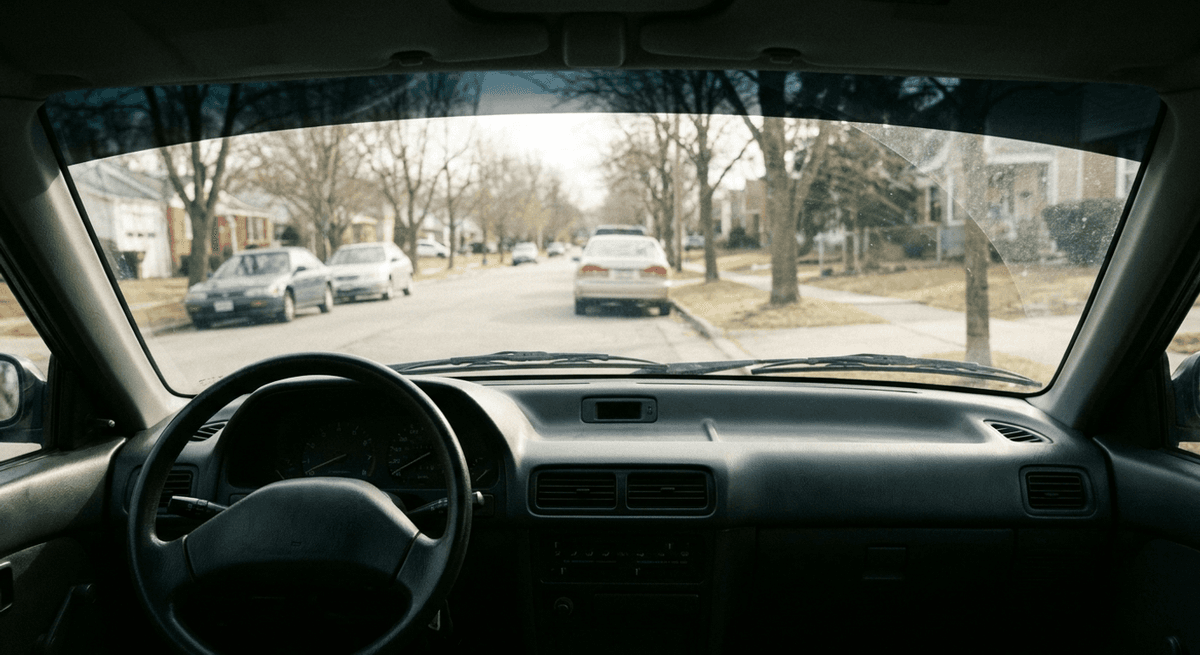
No age-based grandfathering provision, of the kind that exempts vehicles registered before a certain date, was found for ordinary light vehicles. The two gazette exemptions apply by vehicle class, light versus heavy, not by the vehicle's age or registration date. The Territory's exemptions are also not portable: a vehicle registered in the Northern Territory that transfers registration to another state or territory must meet that jurisdiction's own tint rules, and the 15 percent allowance does not travel with it.
This article provides general legal information about window tint law in the Northern Territory. It is not legal advice and does not account for an individual vehicle's circumstances. Information was verified against Northern Territory legislation and government sources on 18 August 2026. For advice on a specific situation, contact the Motor Vehicle Registry directly or consult a legal practitioner admitted in the Northern Territory.
Frequently Asked Questions
Is there really a $300 fine for illegal window tint in the Northern Territory?
No fixed $300 fine could be found in any Northern Territory law. The Traffic Regulations' full infringement-notice table has no tint, window, or glazing item at all, so there is no on-the-spot fine. Non-compliant tint is instead handled as a vehicle defect through a defect notice, and a breach that is actually prosecuted carries a maximum penalty of 15 penalty units for an individual, currently $2,910, under the Motor Vehicles Act's general offence provision. That $300 figure circulates online but does not match any Territory source checked.
What is the real minimum tint darkness allowed on rear windows in the Northern Territory?
Not less than 15 percent luminous transmittance, under a standing Registrar exemption issued in 2009, even though the underlying rule still says 35 percent on its face. Front side windows stay at 35 percent.
Are truck and ute windows treated differently under Northern Territory tint rules?
Yes, for heavy vehicles over 4.5 tonnes gross vehicle mass. A 2014 gazette exemption removes the rear-of-driver luminous transmittance requirement for those vehicles entirely, though front windows still need at least 35 percent, and the reflectance cap and dual mirror condition still apply.
Is there a medical exemption for darker window tint in the Northern Territory?
No published medical exemption process was found in the Motor Vehicle Registry's tinting bulletin or website. Anyone with a medical need for darker front-window tint should contact the Registry directly, since an informal case-by-case arrangement cannot be ruled out.
Does my Northern Territory tint stay legal if I move interstate?
No. The Territory's 15 percent rear-window allowance does not transfer with the vehicle. A vehicle re-registered in another state or territory must meet that jurisdiction's own window tint rules.
Updates
Independently fact-checked against the cited primary sources
Sources and References
- Motor Vehicles Act 1949 (NT), current consolidated text, sections 117 (general penalties), 128A (defective vehicles, defect notices, defect labels), and 135 (exemption power used for Gazette Notices G2 and S119).(legislation.nt.gov.au).gov
- Traffic Regulations 1999 (NT), current consolidated text, Schedule 1 (traffic infringement notice offences) - contains no window tint, glazing, or Vehicle Standards item.(legislation.nt.gov.au).gov
- Northern Territory Attorney-General's Department, penalty unit value table, confirming $194 per penalty unit for the 1 July 2026 to 30 June 2027 financial year.(agd.nt.gov.au).gov
- NT Motor Vehicle Registry, Information Bulletin V51, 'Vehicle Window Tinting' (effective 21 December 2015), reproducing Rule 44 of the Australian Vehicle Standards Rules and both Gazette Notice G2 and Gazette Notice S119 in full, including signature blocks.(tint-chek.com)