
Australia
Australia Driving Laws by State: Demerit Points, BAC Limits and E-Scooter Rules (2026)
Driving law in Australia runs on eight separate state and territory systems, not one national code. Demerit thresholds, blood alcohol limits, mobile phone fines and e-scooter legality all diverge by jurisdiction, and getting New South Wales's e-scooter ban or the Northern Territory's low-power cap wrong can put a reader in front of a fine.
Jurisdiction scope: This hub compares core road-traffic rules, demerit points, blood alcohol limits, mobile phone law and e-scooter law, across all eight Australian states and territories: New South Wales, Victoria, Queensland, Western Australia, South Australia, Tasmania, the Australian Capital Territory and the Northern Territory. It is general legal information, verified 20 July 2026, not legal advice about a specific infringement, licence or court matter. Each jurisdiction runs its own road traffic legislation, and nothing on this hub overrides the specific rules that apply where the driving took place.
Driving Law Is Eight Systems, Not One
Road transport is a state and territory responsibility in Australia, so there is no single national road traffic act. Each of the eight jurisdictions runs its own legislation, its own demerit point scheme, its own penalty schedule indexed against its own penalty unit, and its own approach to newer vehicle categories such as e-scooters. A rule that is true in Sydney can be flatly wrong in Perth or Darwin. Two examples show how far this goes: New South Wales still bans privately owned e-scooters from every public place in the state, while the Northern Territory allows them but caps them at 200 watts and 10 km/h, a limit most commercially sold e-scooters exceed by a wide margin. Treat "Australian driving law" as shorthand for eight parallel regimes rather than one, and always confirm the applicable rule in the specific state or territory where the driving happened, not the state where a reader may have driven before.
The 8-Jurisdiction Comparison Matrix
| Jurisdiction | Full-licence demerit threshold | Novice threshold | Accrual window | General BAC | Mobile phone fine (FY2026-27) | Private e-scooter status |
|---|---|---|---|---|---|---|
| NSW | 13 (14 for eligible professional drivers) | P1: 4, P2: 7 | 3 years | 0.05 (zero for learners/P1) | $434 ($577 school zone) | Illegal in public places |
| Victoria | 12 | Dual test: 5 in 12 months OR 12 in 3 years | 3 years (points held 4 years) | 0.05 | $627 + 4 pts | Legal, permanent since 4 Oct 2024 |
| Queensland | 12 | 4 in 1 year | Open licence 3 yrs, novice 1 yr | 0.05 | $1,295 + 4 pts | Legal; age/speed/BAC rules from 1 Jul 2026, licence-holding rule from 31 Aug 2026 |
| Western Australia | 12 | Type 1 (under 2 yrs experience): 4; Type 2 (2 yrs+): 8 | 3 years | 0.05 (statutory BAC bands) | $500 + 3 pts (call) / $1,000 + 4 pts (text) | Legal statewide since Dec 2021 |
| South Australia | 12 | 4 | 3 years | 0.05 (BAC band x offence number) | approx. $700 incl. Victims of Crime Levy + 3 pts | Legal since 13 Jul 2025 |
| Tasmania | 12 | 4 in 12 months | Full licence 3 yrs, novice 12 months | 0.05 | [unverified, see transport.tas.gov.au] | Legal since 1 Dec 2021 |
| ACT | 12 (legacy pre-2020 learner: 12) | 4 (separate probationary category: 2 pts/6 months) | 3 years | 0.05 (4-level statutory system) | $615 + 3 pts (holding) / $745 + 4 pts (messaging) | Legal; commencement date [unverified] |
| Northern Territory | 12 | 5 | Open licence 3 yrs, novice 12 months | 0.05 (four bands) | $500 + 3 pts flat | Legal, but capped at 200 watts / 10 km/h |
Figures are tagged to the 2026-27 Australian financial year where a fine amount is shown. Every jurisdiction re-indexes at least some penalties on 1 July, so a figure carried into a later financial year should be re-checked against the source.
Demerit Points: Not "12 Points, Except NSW"
The common shorthand that every Australian jurisdiction runs a 12-point demerit scheme except New South Wales, which uses 13, understates how different the systems really are. Novice thresholds diverge far more sharply than full-licence thresholds: NSW splits its provisional category into P1 (4 points) and P2 (7 points), Western Australia splits novice drivers into a Type 1 group under two years' experience (4 points) and a Type 2 group with one to two years remaining (8 points), and the Northern Territory sets a single novice threshold of 5, not 4. Victoria uses a dual test rather than a single number: a probationary driver is suspended on 5 points within 12 months or 12 points within 3 years, whichever comes first. The accrual window itself, not just the threshold, differs by licence class in Queensland, Tasmania and the Northern Territory, where an open licence gets a 3-year window but a novice licence is measured over 12 months. Full detail, including every jurisdiction's suspension mechanics, is in demerit points explained across Australia.
Drink Driving: One BAC Limit, Different Penalty Structures
Every Australian jurisdiction sets its general blood alcohol concentration limit at 0.05, and every jurisdiction applies a zero or reduced limit to learner and provisional drivers. Beyond that shared starting point, the statutory structures diverge. Western Australia and the ACT do not use a three-tier low, medium, high model at all: WA sets five numbered BAC bands from 0.05-0.079 up to 0.13 and above, each carrying its own minimum disqualification and fine, and the ACT's Road Transport (Alcohol and Drugs) Act 1977 defines four numbered offence levels under section 4E. South Australia structures its penalties by BAC category multiplied by whether the reading is a first or subsequent offence within five years, and the Northern Territory uses four bands running from zero tolerance for learner and provisional drivers up to a high-range band at 0.15 and above. Victoria's statutory maximum fines sit in section 49 of the Road Safety Act 1986 as penalty units (a flat 20 units for a first offence over 0.05, currently about $4,182 at the FY2026-27 rate of $209.10 per unit), with escalation for a first offence carried by the disqualification schedule rather than the fine. Full detail on the limits themselves is in drink driving limits across Australia, and the offence tiers, fines, disqualification periods, interlock rules and immediate-suspension powers for every jurisdiction are in drink driving penalties across Australia, with state pages for New South Wales, Victoria, Queensland, Western Australia, South Australia, Tasmania, the Northern Territory and the ACT.
E-Scooters: The Biggest Trap in the Cluster
E-scooter legality is the least uniform rule in this entire hub, and the two extremes sit at opposite ends of the spectrum. In New South Wales, riding a privately owned e-scooter in any public place remains illegal; the only lawful e-scooter riding is on a shared operator's device inside a designated trial site, and a 2026 legalisation proposal has been announced but has not commenced. In the Northern Territory, private e-scooters are legal, but the device itself must not exceed 200 watts of power or 10 km/h, a specification far below the 25 km/h most retail e-scooters are built and sold to reach; a device that exceeds either figure is treated as an unregistered, uninsured motor vehicle. Every other jurisdiction, Victoria, Queensland, Western Australia, South Australia, Tasmania and the ACT, permits private e-scooters under a 25 km/h device cap, but each sets its own age, helmet and path rules, and in Queensland a rider has also needed at least a learner driver licence since 31 August 2026, a rule that covers e-bikes too. Full detail, including every jurisdiction's speed and path rules, is in e-scooter laws in Australia. E-bikes follow separate power and pedalling rules, set out in e-bike laws in Australia.
Driving a vehicle whose registration has expired is an offence in every state and territory, usually with a separate uninsured-driving offence and different grace rules: see driving an unregistered vehicle in Australia.
- Driving an unregistered vehicle in New South Wales
- Driving an unregistered vehicle in Victoria
- Driving an unregistered vehicle in Queensland
- Driving an unregistered vehicle in Western Australia
- Driving an unregistered vehicle in South Australia
- Driving an unregistered vehicle in Tasmania
- Driving an unregistered vehicle in the Northern Territory
- Driving an unregistered vehicle in the ACT
Mobile Phones and Detection Cameras
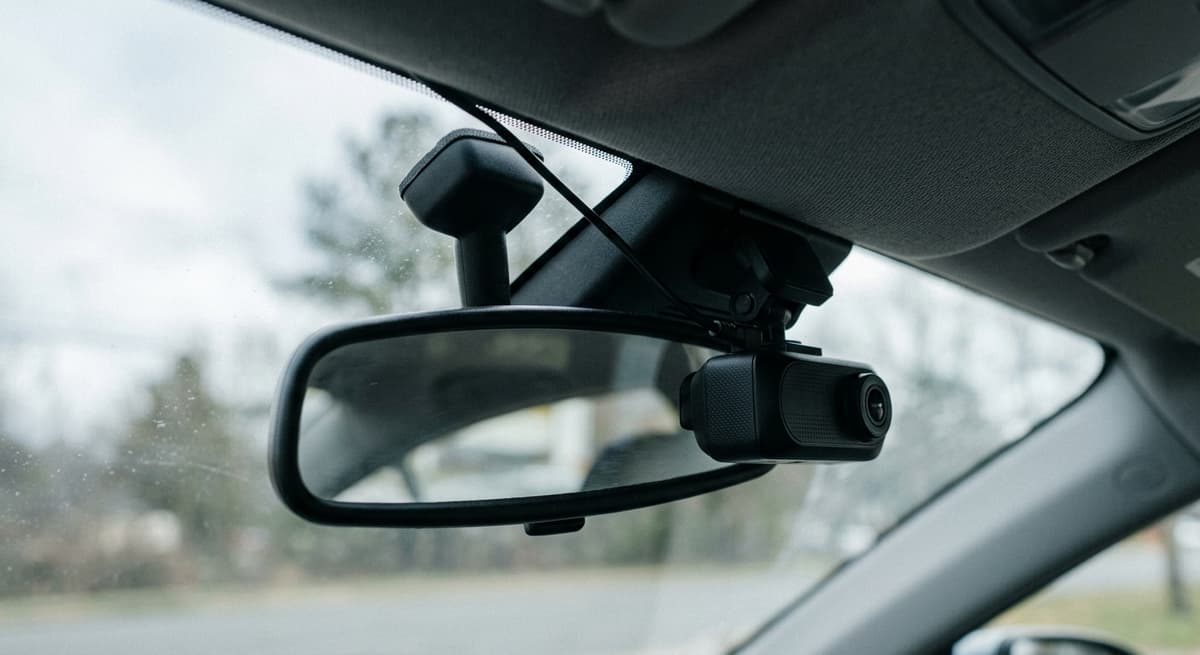
Every jurisdiction bans hand-held mobile phone use while driving, and every jurisdiction now enforces that ban partly through camera-based detection technology, except one. The Northern Territory is the only Australian jurisdiction that operates no mobile phone detection cameras at all; enforcement there relies on police observation. NSW pioneered the technology nationally, Victoria's cameras have operated since April 2023, Queensland's since around 2021, South Australia's since June 2024, Tasmania uses Sensys Gatso units since 2022, the ACT operates both fixed and portable units, and Western Australia moved from a caution-only phase from 26 January 2025 into full enforcement from 8 October 2025. Fine amounts and demerit points for a hand-held mobile phone offence vary by jurisdiction and, in Queensland, Western Australia and the NT, by exactly what the driver was doing with the device. Full detail is in mobile phone detection cameras in Australia.
Speeding Fines and Window Tint
Speeding penalties scale with how far over the limit a driver was travelling, and every jurisdiction's dollar bands and demerit points are its own; Queensland's top band reaches $1,986 and 8 points for driving more than 40 km/h over the limit, while Western Australia's equivalent top band is $1,200 and 7 points for more than 40 km/h over. Full state-by-state bands are in speeding fines in Australia. Window tint law is set by a minimum visible light transmission percentage for the front side windows, rear windows and windscreen of a vehicle, and while most jurisdictions converge on 35% front and 20% rear, the Northern Territory permits a genuinely different 15% rear minimum, traced to a 2009 regulatory exemption rather than an error in reporting. Full detail, including the correct current Western Australian regulation, is in window tint laws in Australia.
Child Car Seats: One National Rule, Eight Fines
Every jurisdiction applies the national road rule 266 age bands (rear-facing under 6 months, a harness or booster to under 7), but the fine a driver actually receives, the demerit points and whether they double on holiday weekends are set state by state, from a flat 50 in Tasmania to ,295 in Queensland for FY2026-27, and several Road Rules texts print a much higher court maximum that is not the on-the-spot figure. The comparison and each state's own rule numbering, including New South Wales's 2024 renumbering and the ACT's October 2025 rewrite, are in child car seat laws in Australia, with state guides for New South Wales, Victoria, Queensland, Western Australia, South Australia, Tasmania, the Northern Territory and the ACT.
Demerit Points by State and Territory
Each jurisdiction's demerit scheme has its own thresholds, accrual windows and suspension mechanics, covered in full on its own page.
- New South Wales demerit points, the only jurisdiction with a 13-point full-licence threshold and a split P1/P2 novice system.
- Victoria demerit points, the only jurisdiction using a dual 5-in-12-months or 12-in-3-years novice test.
- Queensland demerit points, where the accrual window itself shortens to 1 year for a provisional licence.
- Western Australia demerit points, with a two-tier novice threshold of 4 or 8 points depending on experience.
- South Australia demerit points, where a provisional driver at 4 points can choose a Safer Driver Agreement instead of disqualification.
- Tasmania demerit points, with a 12-month novice accrual window against a 3-year full-licence window.
- Australian Capital Territory demerit points, with a legacy 12-point threshold for learner licences issued before 1 January 2020.
- Northern Territory demerit points, the only jurisdiction with a 5-point, rather than 4-point, novice threshold.
Free calculators
- Australia demerit points lookup: shows how close a licence's current point total is to the suspension threshold for a chosen state or territory and licence class.
This hub provides general legal information about driving and road traffic law across Australia, verified 20 July 2026. It is not legal advice, and how the law applies depends on the state or territory where the driving took place and on the specific facts of the matter. For advice about a specific fine, licence suspension or charge, consult a legal practitioner admitted in the relevant Australian state or territory, or the transport authority or police service in that jurisdiction.
Frequently Asked Questions
Is there one national driving law for Australia?
No. Each of the eight states and territories runs its own road traffic legislation, its own demerit point scheme and its own penalty schedule. There is no single Australia-wide road traffic act.
Are private e-scooters legal in NSW?
No. It is currently illegal to ride a privately owned e-scooter in any NSW public place. The only lawful e-scooter riding in NSW is on a shared operator's device inside a designated trial site. Legalisation has been announced but has not commenced.
Can I ride a normal e-scooter in the Northern Territory?
Only if it is limited to 200 watts and 10 km/h. Most e-scooters sold at retail exceed this, making them illegal to ride in any NT public space and exposing the rider to unregistered or uninsured vehicle penalties.
Is the demerit threshold 12 points in every state except NSW?
That is only true for full, unrestricted licences, and even then NSW's threshold is 13, not a departure from 12. Novice thresholds diverge far more: NSW splits into 4 (P1) and 7 (P2), WA splits into 4 or 8 by experience, and the Northern Territory's novice threshold is 5, not 4.
Is the drink-driving limit 0.05 in every Australian jurisdiction?
Yes, as the general limit for a full, unrestricted licence holder. Every jurisdiction also applies a zero or reduced limit to learner and provisional drivers, and the way penalties are structured above 0.05 differs significantly by jurisdiction.
Which Australian jurisdiction has no mobile phone detection cameras?
The Northern Territory. Every other state and territory now operates mobile phone detection cameras in some form, though the technology, coverage and whether locations are published all vary.
Are Queensland's new e-scooter licence rules already in force?
Only partly. The age-16 rule and the speed, helmet and BAC rules commenced 1 July 2026. The requirement to hold at least a driver's learner permit to ride an e-scooter does not start until 31 August 2026.
Why does the Northern Territory allow 15% rear window tint when most states require 20%?
It is a genuine, traceable regulatory exemption, not a reporting error. A Registrar of Motor Vehicles exemption under Gazette Notice G2 of 14 January 2009, made under section 135 of the Motor Vehicles Act, amended the applicable schedule to permit 15% rather than the higher figure used elsewhere.
Does this hub tell me the outcome of my own speeding fine, licence suspension or drink-driving charge?
No. It compares the rules across jurisdictions to help identify the correct state or territory page. For advice about a specific fine, notice or charge, contact a legal practitioner admitted in the relevant Australian state or territory, or the transport authority in that jurisdiction.
Updates
Updated the e-scooter summary for Queensland's licence rule (in force from 31 August 2026) and added a link to our new e-bike laws guide.
Sources and References
- NSW Government: Riding electric scooters in NSW(nsw.gov.au).gov
- NT Government: Electric scooters and bikes(nt.gov.au).gov
- Premier of Victoria: Permanent E-Scooter Rules In Place Across The State(premier.vic.gov.au).gov
- Queensland Government Ministerial Media Statement: Nation-leading e-Mobility Laws to make Queensland safer(statements.qld.gov.au).gov
- WA Road Safety Commission: eRideables(wa.gov.au).gov
- SA Department for Infrastructure and Transport: Street legal, e-scooters can be driven on SA roads from July(dit.sa.gov.au).gov
- Transport Tasmania: Personal mobility devices(transport.tas.gov.au).gov
- Transport Canberra: E-scooters and mobility devices(transport.act.gov.au).gov
- NSW Government: Learner and provisional driver demerit points(nsw.gov.au).gov
- Transport Victoria: Demerit points(transport.vic.gov.au).gov
- Queensland Government: Provisional licence demerit points(qld.gov.au).gov
- Transport WA: Demerit points(transport.wa.gov.au).gov
- NT Government: Demerit points(nt.gov.au).gov
- WA Road Safety Commission: Drink and drug driving(wa.gov.au).gov
- Road Transport (Alcohol and Drugs) Act 1977 (ACT)(legislation.act.gov.au).gov
- NT Government: Alcohol, drugs and driving(nt.gov.au).gov
- NT Department of Logistics and Infrastructure: Information Bulletin V51, Vehicle window tinting(nt.gov.au).gov