
Australia
Western Australia Demerit Points: Why Your Threshold Depends on Experience, Not Your Licence Type (2026)

Western Australia's demerit point system is administered by the Department of Transport (DoT WA) under the Road Traffic Act 1974 (WA), and it caps drivers at 12, 8 or 4 points depending on how long they have actually held a licence, not what their plates say.
How Western Australia's demerit point system works
Western Australia's demerit point system is administered by the Department of Transport (DoT WA) under the Road Traffic Act 1974 (WA) and the demerit-point provisions of the Road Traffic (Authorisation to Drive) Regulations 2014 (WA). Every time a driver is convicted of a designated offence, whether by paying an infringement, having a Final Demand for Payment registered with the Fines Enforcement Registry, or being found guilty in court, DoT WA adds the matching points to that driver's record, generally within 48 hours of the conviction or the same day following a court hearing. Points accumulate on a rolling three-year window measured from the date of the offence, not the date it was recorded. Once a driver's running total inside that window reaches the threshold that applies to their licence, DoT WA issues an Excessive Demerit Points Notice (EDPN) and the driver faces a demerit-point licence suspension or disqualification.
The 12-point threshold for a full WA licence
A driver who holds a full Western Australian driver's licence, meaning they have held any driver's licence, including a learner's permit, for two years or more, can accrue up to 12 demerit points within the rolling three-year window before DoT WA acts. Reaching or exceeding 12 points triggers an Excessive Demerit Points Notice and, subject to the Double or Nothing election described below, a licence suspension. Points that are not overtaken by a new EDPN expire automatically three years after the offence date, with no need to apply for removal. Twelve points is not a low ceiling in absolute terms, since most single offences carry only one to seven points, but a driver who collects several infringements inside the same three-year window, particularly during a doubled-demerit period, can reach it faster than the raw numbers suggest.

Type 1 and Type 2: WA's experience-based novice structure
Western Australia is one of the few states where the demerit threshold turns on how long a driver has actually held a licence, not on their licence label, whether that is a learner's permit, P1, P2 or full. DoT WA calls this driving experience, and it splits novice drivers into two bands under the Road Traffic (Authorisation to Drive) Regulations 2014 (WA). A Novice Driver Type 1, someone who has held any driver's licence, including a learner's permit, for less than one year, faces suspension or disqualification at 4 or more demerit points. A Novice Driver Type 2, someone who has held a licence for at least one year but less than two years, faces the same outcome at 8 or more points. Once a driver passes the two-year mark, the standard 12-point threshold applies, regardless of whether their plates still display a P. For example, a driver issued a provisional licence 14 months ago is a Type 2 novice at the 8-point threshold, even though the plate itself does not change to show that. To check where a specific point total sits against the 4, 8 or 12-point threshold, use the Western Australia demerit points lookup.
Western Australia demerit points at a glance
| Category | Demerit threshold | Accrual window | Double or Nothing available? |
|---|---|---|---|
| Full licence (2+ years held) | 12 points | 3 years | Yes, if eligible |
| Novice Driver Type 2 (1-2 years held) | 8 points | 3 years | No |
| Novice Driver Type 1 (under 1 year held) | 4 points | 3 years | No |
| FY2026-27 mobile phone fine | $500 + 3 pts (call) / $1,000 + 4 pts (text, social, email) | n/a | n/a |
The Double or Nothing election, and why novice drivers are excluded
A driver who is not a novice and who receives an Excessive Demerit Points Notice in Western Australia can apply for a Good Behaviour Period election, commonly called Double or Nothing, within 21 days of being personally served the notice. The election lets the driver keep driving instead of serving the suspension immediately, on condition that they commit to a 12-month good behaviour period starting 28 days after service. During that period, the driver must not accrue more than one further demerit point and must not commit an offence carrying a mandatory court-ordered disqualification. If the driver breaches the good behaviour period, DoT WA suspends the licence for double the length of the original disqualification. Critically, Double or Nothing is not available to a driver who holds a provisional licence, which means Novice Driver Type 1 and Type 2 drivers cannot elect it. A novice who reaches the 4 or 8-point threshold serves the resulting suspension or disqualification outright.
Double demerits during WA's holiday periods
Western Australia doubles demerit points for seven offence categories, speeding, drink or drug driving, failing to wear a seatbelt or child restraint, running a red light, illegal mobile phone use, and operating a device to evade or attempting to evade speed camera detection (the last two carry 14 points when doubled), during declared holiday periods. The Road Safety Commission publishes the exact dates each year; the recurring pattern covers New Year's, Australia Day, Labour Day, Easter, Anzac Day, Western Australia Day, the King's Birthday long weekend (excluding the Karratha and Port Hedland areas) and the Christmas/Boxing Day period. Because a Type 1 or Type 2 novice driver's threshold sits at just 4 or 8 points, a single doubled-demerit offence during one of these periods can be enough on its own to trigger an Excessive Demerit Points Notice. Readers should always confirm the Road Safety Commission's current dates rather than assuming a given long weekend is doubled.
FY2026-27 fines: mobile phones and the speeding band table
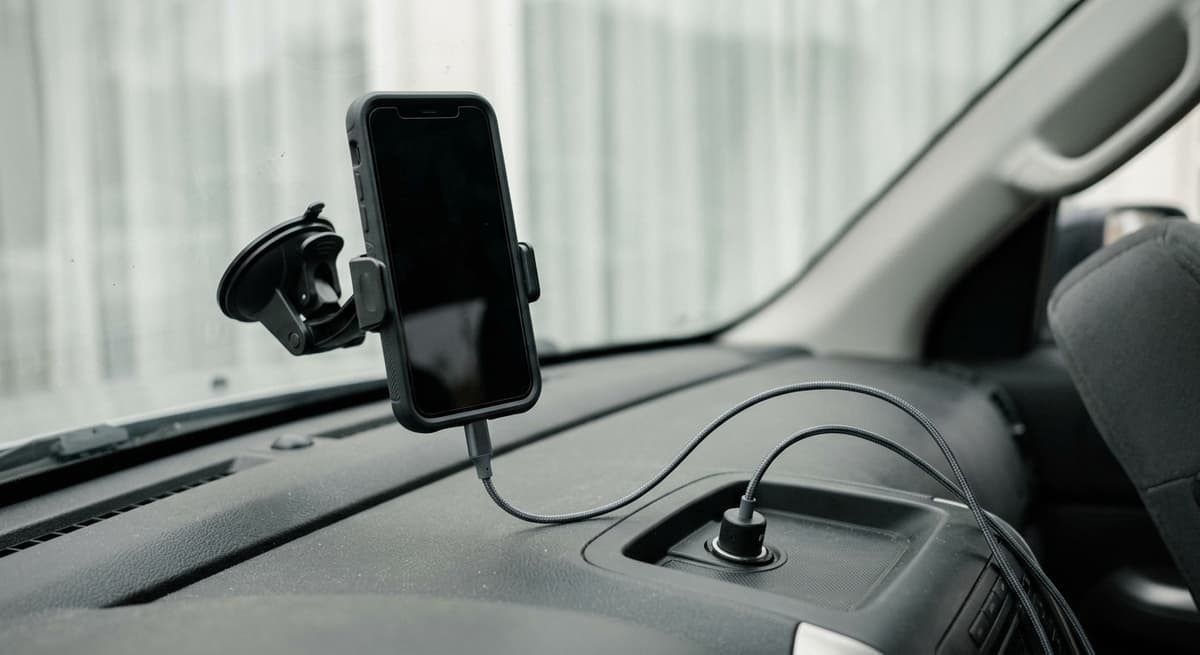
For the 2026-27 financial year, DoT WA's published penalty schedule sets the mobile phone fine at $500 and 3 demerit points for holding or touching a phone to make, receive or end a voice call, rising to $1,000 and 4 demerit points for creating, sending or viewing content such as text, email, social media or video. Both mobile phone penalties double during the holiday periods described above. The speeding schedule is banded by how far over the limit a driver is detected: $100 and 0 points up to 9 km/h over the limit, $200 and 2 points for more than 9 up to 19 km/h over, $400 and 3 points for more than 19 up to 29 km/h over, $800 and 6 points for more than 29 up to 40 km/h over, and $1,200 and 7 points for more than 40 km/h over. WA's penalty unit is $50 and, unlike some other Australian jurisdictions, does not appear to auto-index every 1 July, so these figures can hold steady across financial years until DoT WA revises them directly.
WA's BAC bands, and how WA compares to other states
Western Australia does not use the low-range, mid-range, high-range labelling that some other states apply to drink driving. Instead, the Road Traffic (Administration) Act 2008 (WA) and its penalty schedules define a series of blood alcohol concentration bands, broadly 0.05-0.079, 0.08-0.089, 0.09-0.109, 0.11-0.129 and 0.13 and above, each carrying its own escalating minimum disqualification period, so a small increase in recorded BAC can move a driver into a materially longer mandatory disqualification. WA's demerit threshold model is also a genuine outlier next to its neighbours. Queensland runs a flat 4-points-in-1-year threshold for every learner and provisional driver regardless of how long they have held a licence, so a reader used to Queensland's rule cannot assume WA works the same way. New South Wales sets its full-licence threshold at 13 (14 for professional drivers who opt in) with separate P1 and P2 tiers of 4 and 7 points, while Victoria uses a dual test for its novice drivers, 5 points in 12 months or 12 points in 3 years, whichever comes first. None of these mirror WA's experience-based Type 1/Type 2 split, so a driver who moves between states should not assume their previous threshold still applies.

For the full national picture, including how every Australian state and territory sets its own thresholds, see the Australia driving laws hub and demerit points explained across Australia. Drink driving frameworks also diverge by state; see drink driving limits across Australia for the national picture. For direct comparisons, see New South Wales demerit points, Victoria demerit points and Queensland demerit points.
This article provides general legal information about Western Australia's driving and demerit point laws under the Road Traffic Act 1974 (WA) and the Road Traffic (Authorisation to Drive) Regulations 2014 (WA). It is not legal advice and does not account for your specific circumstances. Demerit thresholds, fines and holiday-period dates can change. Information verified 20 July 2026. For advice on a specific infringement or licence issue, consult a legal practitioner admitted in Western Australia or another relevant Australian state or territory, or contact the Department of Transport (DoT WA) directly.
Frequently Asked Questions
How many demerit points before I lose my licence in WA?
It depends on your driving experience, not your licence label. A full licence holder (2 or more years licensed) can reach 12 demerit points in a rolling three-year window before DoT WA issues an Excessive Demerit Points Notice. A Novice Driver Type 2, someone who has held a licence for 1 to 2 years, is capped at 8 points, and a Novice Driver Type 1, someone who has held a licence for under 1 year, is capped at 4 points.
How long do demerit points last in WA?
Demerit points remain active for three years from the date of the offence, then expire automatically with no need to apply for their removal. If the running total inside that three-year window reaches your applicable threshold before the oldest points expire, DoT WA still acts on it.
What is the difference between a Type 1 and Type 2 novice driver in WA?
A Novice Driver Type 1 has held a driver's licence, including a learner's permit, for less than one year and faces a 4-point threshold. A Novice Driver Type 2 has held a licence for at least one year but less than two years and faces an 8-point threshold. Both are novices under the Road Traffic (Authorisation to Drive) Regulations 2014 (WA) until they pass the two-year mark, when the standard 12-point threshold applies.
Can a P-plate driver do Double or Nothing in WA?
No. The Good Behaviour Period election, commonly called Double or Nothing, is not available to a driver who holds a provisional licence. Novice Driver Type 1 and Type 2 drivers who reach their applicable threshold serve the resulting suspension or disqualification outright rather than electing a 12-month good behaviour period.
When do double demerits apply in WA?
WA doubles points for offences including speeding, drink or drug driving, seatbelt and child-restraint offences, running red lights, illegal mobile phone use, and evading speed cameras, during declared holiday periods the Road Safety Commission publishes each year, including Christmas/Boxing Day, Easter, Australia Day, Labour Day, Anzac Day, Western Australia Day and the King's Birthday long weekend.
How much is a mobile phone fine in WA?
For FY2026-27, holding or touching a phone to make, receive or end a call carries a $500 fine and 3 demerit points. Creating, sending or viewing content such as text, email, social media or video carries a $1,000 fine and 4 demerit points. Both figures double during WA's declared holiday periods.
Does WA use low, medium and high range drink driving like other states?
No. WA does not use that three-tier label. It defines its own blood alcohol concentration bands under the Road Traffic (Administration) Act 2008 (WA), with disqualification periods that scale upward as the recorded BAC moves through each band, rather than sorting offences into three named ranges.
How is WA's demerit system different from Queensland's or New South Wales's?
Queensland applies a flat 4-points-in-1-year threshold to every learner and provisional driver, regardless of how long they have held a licence, unlike WA's two-tier, experience-based Type 1/Type 2 split. New South Wales sets a 13-point full-licence threshold (14 for opted-in professional drivers) with separate P1 (4-point) and P2 (7-point) tiers, and Victoria uses a dual test of 5 points in 12 months or 12 points in 3 years for its novice drivers. None of these mirror WA's experience-based model.
Sources and References
- Transport WA: Demerit points(transport.wa.gov.au).gov
- Road Traffic Act 1974 (WA), Western Australian Legislation(legislation.wa.gov.au).gov
- Road Traffic (Authorisation to Drive) Regulations 2014 (WA), Western Australian Legislation(legislation.wa.gov.au).gov
- Transport WA: Driving offences (speeding, alcohol and traffic), FY2026-27 fines(transport.wa.gov.au).gov
- Transport WA: Good behaviour period election (Double or Nothing)(transport.wa.gov.au).gov
- WA Road Safety Commission: Double demerits(wa.gov.au).gov
- WA Road Safety Commission: Drink and drug driving(wa.gov.au).gov