
Australia
Court Records in Western Australia: How to Search Court Files and Judgments
Independently fact-checked against primary sources (last audited August 19, 2026). · 8 primary sources cited on this page. How we verify our legal content

Western Australia's eCourts Portal is both the state's eLodgment system and the Supreme Court's own judgments host, and a non-party asking to inspect a Supreme Court document applies under Order 67B of the Rules of the Supreme Court 1971, not Order 67.
Which Western Australian court holds a case
This page covers Western Australia's own layer of the wider Court Records in Australia picture, including what is public by default and what is not. The Magistrates Court of Western Australia is the entry point for civil claims up to $75,000 (minor cases up to $10,000) and for all adult criminal proceedings, including indictable matters that are later committed up to the District or Supreme Court. It includes specialist Drug Courts and a Family Violence List. The District Court has civil jurisdiction up to $750,000, and no upper limit for personal injury damages, plus criminal jurisdiction over serious assaults, sexual assaults, serious fraud and burglary, and it hears appeals from the Magistrates Court's civil decisions. The Supreme Court is split into a General Division, hearing original civil and criminal matters and appeals from the District Court, and the Court of Appeal, Western Australia's final appellate court short of the High Court of Australia.
Two further bodies sit alongside this structure. The State Administrative Tribunal reviews administrative decisions across a wide range of legislation and is not part of the court hierarchy. The Coroner's Court of Western Australia inquires into reportable deaths and fires. The Children's Court of Western Australia and the Family Court of Western Australia are covered in their own sections below.
Searching online: the eCourts Portal of Western Australia
The eCourts Portal of Western Australia is the shared electronic platform behind the Magistrates, District, Supreme and Family Courts. Its main public-facing jobs are electronic lodgment and filing of court documents, and a Quick Matter Search for parties and practitioners with logins. It also handles fines searches through the Fines Enforcement Registry. The portal is only supported on Chrome, according to the Magistrates Court's own guidance.
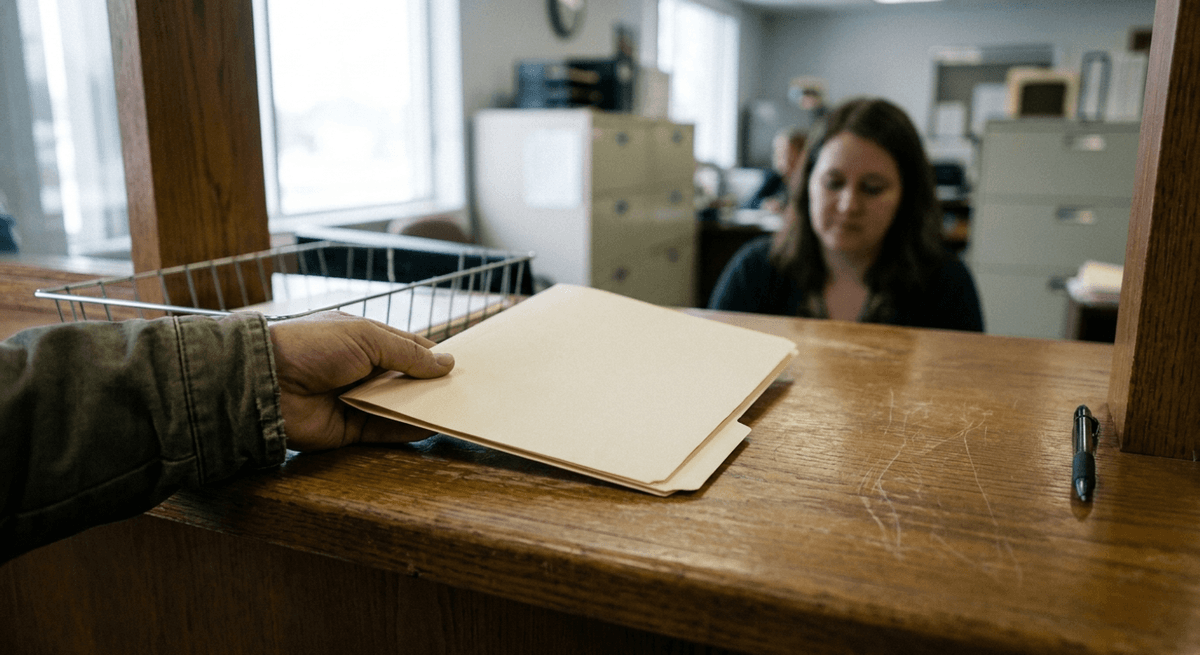
What makes the portal distinctive in Western Australia is its second role. The Supreme Court does not publish its own judgments on its own website. Instead, its judgments page tells visitors that clicking through will take them to the eCourts Portal, which the court's own page describes as hosting the court's decisions. So the same system that handles eLodgment for practitioners is also the public's route to Supreme Court judgments, rather than there being two separate systems the way there are in some other states.
It was not confirmed for this page whether the eCourts Portal itself charges a distinct search fee separate from lodgment fees, or whether the Supreme Court's own search and copy fees, described below, are collected inside the portal or over the counter through the Principal Registrar's office.
Requesting a court file: Order 67B, who may inspect, and the fee
Order 67 of the Rules of the Supreme Court 1971 is titled Central Office, officers, and covers administrative matters such as the custody of filed documents and the court's seals. It is not the access provision. Public and non-party access instead sits in Order 67B, Access to information and things held by the Court. Rule 6 gives every person automatic access to copies of filed documents that are not restricted documents, plus access to public judgments and orders. Rule 7 gives parties to the proceeding broader entitlements than a non-party gets. Rules 8 to 10 cover access to material beyond that automatic entitlement, which needs the court's permission, including a specific channel where a media manager can grant permission.
The Supreme Court's own guidance describes the practical process: a request goes by letter to the Principal Registrar, naming the document sought, the reason for the request, the Supreme Court reference number, and whether the applicant is media. Eligible document types include writs, Corporations Act 2001 originating applications, Court of Appeal notices, and a judgment or order made in court. Consolidated Practice Direction PD 3.3 holds the detailed eligibility criteria for this process, though this page did not open that practice direction directly. A separate product, a party or litigant name search, is also available through its own request form.
As of 1 July 2026, the Supreme Court's fee schedule charges $68.00 for most searches (a narrower recognised service search costs less, at $2.70 to $3.00 depending on the division) and $2.80 a page to copy a document, with a possible concession rate of $0.85 a page for eligible individuals whose exact eligibility criteria were not confirmed for this page. The District Court and Magistrates Court have their own separate fee regulations, which were not confirmed here and may differ from these Supreme Court figures.
Judgments and case law
As described above, the Supreme Court's own judgments are published through the eCourts Portal rather than on the court's own website. On the neutral-citation databases, Supreme Court of Western Australia General Division decisions are cited as WASC and Court of Appeal decisions as WASCA, both available on AustLII. University law-library research guides note that older, unreported Supreme Court judgments from 1958 to 1990 exist only in print at the Beasley Law Library, with some issues missing, which implies AustLII's own digital coverage does not reach that far back, though the exact digital start year was not independently confirmed for this page. Whether the District Court and Magistrates Court separately publish their own judgments or sentencing remarks was also not confirmed here.
Suppression and non-publication in Western Australia
Western Australia has no dedicated suppression-orders Act comparable to New South Wales' Court Suppression and Non-publication Orders Act 2010 or Victoria's Open Courts Act 2013. A general suppression or non-publication order instead rests on the Supreme Court's inherent jurisdiction as a superior court, a discretionary, judge-made power rather than a statutory one.
One specific, statutory identification ban does exist. Section 36C of the Evidence Act 1906 makes it an offence to publish or broadcast anything likely to identify a sexual-offence complainant, once a person has been accused of the offence, without the court's leave. It covers identifying details, including a child complainant's school, with exceptions for law-report-style publication within limits and where an adult complainant has given prior written authorisation. The penalty on summary conviction is a fixed $5,000 for an individual or $25,000 for a body corporate, with no imprisonment term. Two narrower, related provisions in the same Act, section 11A and section 27, restrict publishing certain evidence or disallowed cross-examination questions, enforced as contempt of court with a penalty at the court's discretion rather than a fixed figure.
Records closed by default: children, family law and adoption
The Children's Court of Western Australia defines a court record broadly, covering reports, recordings, exhibits, documents, transcripts and letters the court holds in relation to a matter. Access requires a Request for access to a court record form submitted to the court that heard the matter, stating the case name and date, the specific material sought, and the reason. Anyone granted access must then comply with confidentiality obligations under the Young Offenders Act 1994 and the Children and Community Services Act 2004, keeping the record secure and not passing it on without further court approval. Transcript fees are tiered by turnaround time, with a 75 percent deposit required on submission, and fee waivers can be requested.
Family law is where Western Australia genuinely differs from every other state and territory. Elsewhere in Australia, divorce, parenting and property matters run entirely through the federal Federal Circuit and Family Court of Australia, and a reader is simply pointed to that federal process. Western Australia instead has its own state court, the Family Court of Western Australia, established in 1976 under the state's own Family Court Act 1975. It is cross-vested with federal jurisdiction, so it hears ordinary divorce and parenting matters just as the federal court does elsewhere, but it also retains a distinctive state jurisdiction over ex-nuptial, meaning unmarried couples', property disputes, a category that in every other state and territory goes through the federal court instead, because Western Australia never referred that particular power to the Commonwealth. A Western Australian looking for family court records should go to the Family Court of Western Australia rather than assuming the federal court applies, and see Family Court Process in Australia for how the federal process works in the rest of the country.
Adoption records sit under the Adoption Act 1994. This page did not independently verify that Act's specific confidentiality or records-access provisions, so anyone with an adoption records question should contact the relevant Western Australian agency directly. The Coroner's Court of Western Australia is a further separate registry, and its own access rules for inquest material were not confirmed here.
On Freedom of Information, the Freedom of Information Act 1992 treats a court as an agency in general, but its own definitions carve documents connected with a court's judicial functions out of the Act's reach, rather than listing courts as a blanket exempt agency. The exact clause wording was not confirmed for this page, but the outcome matches Western Australia's own public guidance, which tells applicants seeking a court transcript or a document of a judicial nature to contact the relevant court directly instead of lodging an FOI request.
What a Western Australia court record is not
A court file is not the same thing as a criminal history. A National Police Certificate is compiled by WA Police and the national checking system, not held in a court registry. See Police Check in Western Australia, Spent Convictions in Western Australia and National Police Checks in Australia for that separate system, including the Spent Convictions Act 1988, which governs when an older conviction stops needing to be disclosed.

A court record is also not a birth, death or marriage certificate. Those are held by Western Australia's registry of births, deaths and marriages, covered on Vital Records in Australia, not by a court.
Frequently Asked Questions
Can I search a Western Australia court file online myself?
The eCourts Portal's Quick Matter Search is mainly for parties and practitioners with logins. A non-party requests a document by letter to the Principal Registrar under Order 67B of the Rules of the Supreme Court 1971.
What is Order 67B?
It is the rule of the Rules of the Supreme Court 1971 that governs who may inspect or copy documents and judgments held by the court. Order 67, by contrast, is a separate, purely administrative provision and does not deal with public access.
How much does a Western Australia court file search or copy cost?
As of 1 July 2026, the Supreme Court charges $68.00 for most searches and $2.80 a page to copy a document. The District Court and Magistrates Court set their own separate fees, which were not confirmed for this page.
Does Western Australia have its own Family Court?
Yes, uniquely among the states and territories. The Family Court of Western Australia hears both the state's own ex-nuptial property matters and, through cross-vesting, ordinary divorce and parenting cases, rather than everything routing through the federal court as it does elsewhere.
Is there a general suppression order law in Western Australia?
No dedicated Act. General suppression power rests on the Supreme Court's inherent jurisdiction. Only identifying a sexual-offence complainant carries a fixed statutory penalty, under section 36C of the Evidence Act 1906.
Can I look up someone's violence restraining order in Western Australia?
Western Australia calls this a violence restraining order rather than an AVO. For how these protection orders work generally and what shows on a record, see [AVO Laws in Australia](/australia/avo-laws/).
Updates
Independently fact-checked against the cited primary sources
The Law Behind This Article
This article rests on the statutory provisions below, held in our own legal record and retrieved from the official source. Tap a section to read the operative text.
Evidence Act 1906 (WA)
s 36CNames of complainants not to be publishedIn force
(1)Subject to subsections (5) and (6) after a person is accused of a sexual offence no matter likely to lead members of the public to identify the complainant and, in the case of a complainant who is attending a school, no matter likely to lead members of the public to identify the school which the complainant attends, in relation to that accusation shall be published in a written publication available to the public or be broadcast, except by leave of the court which has or may have jurisdiction to try the person accused for that offence. (2)If any matter is published or broadcast in contravention of subsection (1), the following persons, namely — (a)in the case of a publication in a newspaper or periodical, any proprietor, any editor and any publisher of the newspaper or periodical; and (b)in the case of any other publication, the person who publishes it; and (c)in the case of a broadcast, any body corporate which transmits or provides the programme in which the broadcast is made and any person having functions in relation to the programme corresponding to those of an editor of a newspaper, shall be guilty of an offence and liable on summary conviction to a fine of, in t
Official text (excerpt) · last checked 2026-09-28 · Read the full text in our law library · Verify at legislation.wa.gov.au
Cited in 1 court opinions in our collectionLatest citing opinion in our collection: 2011
Opinions citing this section in our collection:
- Hogan v Hinch (High Court of Australia 2011, [2011] HCA 4)
Identified automatically from the court opinions citing this section — not a ranking of which case controls.
Search our full record of US law — 2.1 million sections, every state + federal →
Sources and References
- Supreme Court of Western Australia, Court System in Western Australia: court hierarchy and monetary jurisdiction(supremecourt.wa.gov.au).gov
- Rules of the Supreme Court 1971 (WA), Order 67B: access to information and things held by the court, rules 6 to 10(legislation.wa.gov.au).gov
- Supreme Court of Western Australia, Obtaining Court Documents: the Order 67B request process through the Principal Registrar(supremecourt.wa.gov.au).gov
- Supreme Court (Fees) Regulations 2002 (WA), Schedule 1: search fee of $68.00 and document copy fee of $2.80 a page, current from 1 July 2026(legislation.wa.gov.au).gov
- Evidence Act 1906 (WA) s36C: publication ban on identifying a sexual-offence complainant, penalty of $5,000 or $25,000(legislation.wa.gov.au).gov
- Supreme Court of Western Australia, Judgments: the eCourts Portal as the court's own judgments host(supremecourt.wa.gov.au).gov
- Children's Court of Western Australia, Court records and transcripts: the record request process and confidentiality obligations(childrenscourt.wa.gov.au).gov
- Freedom of Information Act 1992 (WA): the judicial-function carve-out for court documents(legislation.wa.gov.au).gov