
Australia
Court Records in Australia: How to Find Judgments, Court Lists and Case Files in Every State
Independently fact-checked against primary sources (last audited August 19, 2026). · 9 primary sources cited on this page. How we verify our legal content

Australia has no single national court-records website: each state and territory runs its own registries, its own online case-search system where one exists, and its own non-party access rule, so finding a court file or a judgment starts with identifying the specific court and jurisdiction that actually holds it.
This hub covers how to find a court record in Australia: the hierarchy of courts in each state and territory, what is publicly searchable by default and what is restricted, where to find a judgment once one has been handed down, and how to request access to an ongoing case file at the registry that holds it. It is written for researchers, journalists, parties to a case, and for a reader trying to look up someone else's case, not only litigants.
Court fees, portal names and rule numbers change, and several of the figures in this hub carry a specific as-of date because they reset on a financial-year cycle. Open the linked state or territory page for a jurisdiction, or the court's own current fee schedule, before relying on a fee figure for anything more than orientation.
Australia's Court Hierarchy, and Why There Is No One Court-Records Website
Every state and territory runs its own general-jurisdiction court hierarchy, and its own registry for each tier of it. Most follow a similar shape: a Local or Magistrates Court for summary and lower-value matters, a District or County Court for intermediate matters in most states, a Supreme Court for the most serious criminal trials and highest-value civil claims, and a Court of Appeal (sometimes a division of the Supreme Court rather than a separate body) above that. The Australian Capital Territory and Tasmania each run only two tiers, Magistrates or Supreme, with no separate District or County Court; the Northern Territory is similarly a two-tier structure. Specialist courts, such as a Children's Court and a Coroners Court, generally sit alongside the ordinary hierarchy as their own separate bodies with their own rules, not as a division of it.
Each state and territory administers its own online case-search or e-filing system, where one exists at all, and its own registry access process where it does not. A login for the NSW Online Registry does nothing at Western Australia's eCourts Portal, and South Australia's CourtSA is a separate system again. Two states, Tasmania and the Northern Territory, have no public case-search portal at all. That fragmentation, not any single defect in one state's system, is the reason there is no shortcut: a reader has to identify the specific court and jurisdiction before anything else is useful.
Federal courts, principally the Federal Court of Australia, the Federal Circuit and Family Court of Australia (FCFCOA), and the High Court of Australia, run a parallel system with their own registries and their own access rules, separate from every state hierarchy described above. This hub does not cover federal court access generally; the one federal topic covered in depth here is family law, because it is the federal jurisdiction a state court-records reader is most likely to encounter, and because it is restricted rather than open by default.
What's Public by Default, and What Isn't
Most Australian courts run on an open-justice default for civil proceedings: pleadings, orders, and similar non-evidentiary documents filed in a case can usually be searched and copied by any member of the public on payment of a fee. A narrower set of documents, commonly affidavits not yet read in open court, subpoenaed material, and discovery lists, typically needs the leave of the court or the registrar before a non-party can see them. Criminal-file access is generally narrower again, and often limited to the trial record once a matter is finalised. The exact line differs by state and by court, which is why the comparison table below points to each jurisdiction's specific rule rather than a single description.
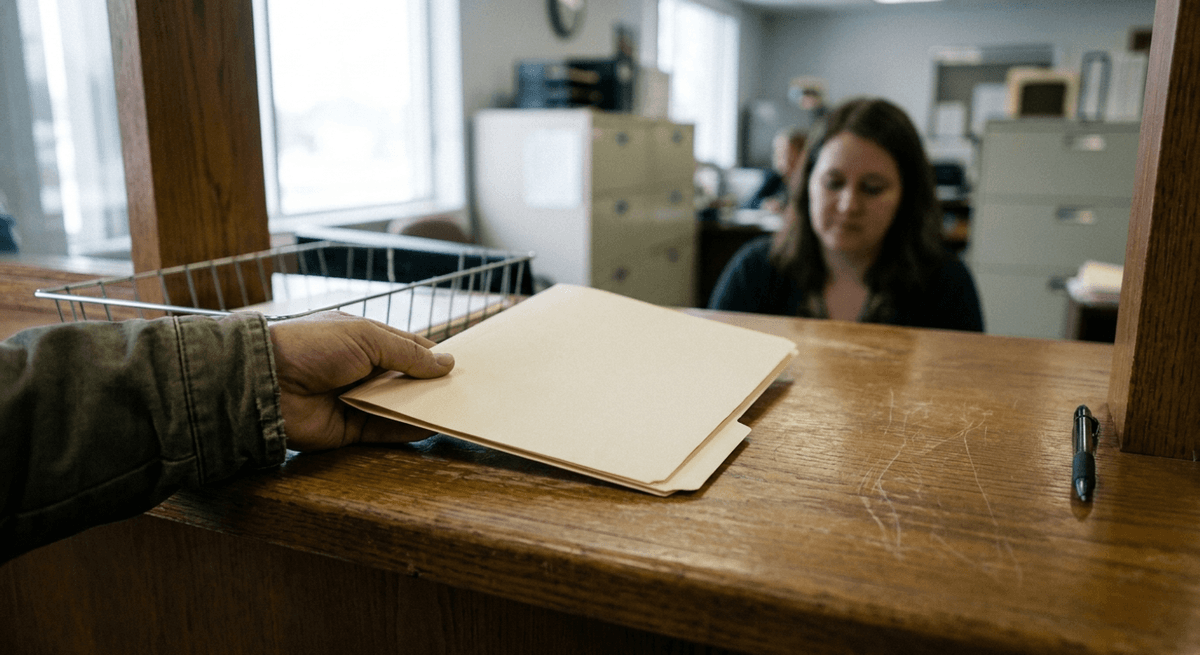
That open default flips for several categories, restricted or handled outside the ordinary registry in every jurisdiction covered here:
- Family law, federal. Proceedings in the Federal Circuit and Family Court of Australia are governed by Family Law Act 1975 (Cth) Part XIVB, sections 114N to 114T. Communicating to the public an account of the proceedings, or a list of proceedings, that identifies a party or anyone else concerned in the matter is an indictable offence under sections 114Q and 114R, with a penalty of imprisonment for 1 year, and prosecution requires the consent of the Director of Public Prosecutions under section 114T. This replaced the old section 121 of the same Act, which has been repealed; do not cite section 121 as current law.
- Youth and children's court proceedings. Restricted or identity-protected by default in every state and territory, under jurisdiction-specific children's, young offenders or family and community services legislation. South Australia's restriction, for example, sits in the Young Offenders Act 1993 (SA) section 13, not the separate Youth Court Act.
- Sexual-offence complainants. Identity is restricted by a dedicated statute or court rule in every jurisdiction, separate from the general suppression regime.
- Adoption. Adoption proceedings and records are restricted, generally requiring the court's own leave for anyone outside the parties to see them.
- Coronial records. Inquests run under each state's own Coroners Act and Coroners Court, a separate structure from the ordinary civil and criminal registry, with its own access and publication rules.
Freedom of information law does not offer a way around any of this. The Commonwealth Freedom of Information Act 1982 section 5 deems a court a prescribed authority only for documents that relate to matters of an administrative nature, and separately provides that a judicial officer, in that capacity, is not a prescribed authority at all; a court registry performing judicial-administration work is treated as part of the court for this purpose, not a separately FOI-coverable body. New South Wales' Government Information (Public Access) Act 2009 lists a court's judicial functions as excluded information in Schedule 2, conclusively presumed under Schedule 1 to carry an overriding public interest against disclosure. Victoria's Freedom of Information Act 1982 section 6 removes courts, judicial officers and court registries from the Act's coverage for their judicial functions, with a further named exemption at section 29B covering Court Services Victoria documents that relate to a judicial or quasi-judicial function. The ACT's Freedom of Information Act 2016, Schedule 1 item 1.1A, exempts information held by a court or tribunal unless it is administrative in nature. Those four, the Commonwealth, NSW, Victoria and the ACT, are the equivalents actually verified for this hub. Queensland, South Australia, Western Australia, Tasmania and the Northern Territory each run their own freedom of information or right-to-information equivalent, and each has a comparable judicial-function carve-out: Queensland's Right to Information Act 2009 s17 and Schedule 2, South Australia's Freedom of Information Act 1991 s6 and Schedule 1, Western Australia's Freedom of Information Act 1992 Glossary, Tasmania's Right to Information Act 2009 s6 and the Northern Territory's Information Act 2002 s5(5). See the state page for that jurisdiction's specific provision. For how each freedom of information regime itself works, including fees, deadlines and review rights, see freedom of information in Australia.
Finding a Judgment That Has Already Been Handed Down
AustLII is a free, publicly searchable database of Australian case law and legislation. It is not a court, does not issue rulings, and republishes judgments supplied to it by the courts themselves. JADE (jade.io, run by BarNet) is a comparable judgments database, describing itself as covering recent Australian legal decisions for legal professionals. Both are useful, widely used finding aids for a decision that has already been published.

New South Wales runs its own official government judgments service on top of that, NSW Caselaw, administered by the NSW Department of Communities and Justice, publishing decisions from nine courts and several tribunals, including NCAT and the Dust Diseases Tribunal, with the earliest material dating to the 1980s. It is a first-party alternative to the third-party republishers, and the more authoritative source for an NSW judgment where one is available. Victoria's Supreme Court points its own case-summary pages to AustLII as the full-text venue for its judgments; the ACT's own courts website separately hosts full-text ACT Court of Appeal and Supreme Court judgments from 2002 onward directly, generally within a few days of a decision being handed down.
None of AustLII, JADE, or a court's own judgments page is a substitute for a certified copy, a transcript, or access to an exhibit or affidavit still before the court. Treat them as free finding aids for a decision that is already public, not a channel for the case-file material described in the sections above and the table below.
Comparing the Eight Registries
The table below summarises each state and territory's case-search system where one exists, the rule that governs non-party access to a filed civil document, and the current search or copy fee this hub could confirm from the court's own schedule. Several of the fee figures are partial line items rather than a single all-in search fee, and Queensland's is set in fee units rather than published as a dollar figure at all. Almost every fee resets on 1 July each year. Open the linked jurisdiction page, or the court's own current fee schedule, before relying on any figure below for an actual filing.
| Jurisdiction | Case-search system | Non-party access rule | Search or copy fee |
|---|---|---|---|
| New South Wales | NSW Online Registry | Uniform Civil Procedure Rules 2005 r36.12 and Practice Note SC Gen 2 | Local Court: $16.00 plus $9.00 per 10 pages (as at 1 July 2026). Supreme and District Court fees sit on a separate schedule not captured here |
| Victoria | RedCrest-Search (Supreme Court); CITEC Confirm (County Court, a separate system) | Supreme Court (General Civil Procedure) Rules 2025 r28.05 and Practice Note SC GEN 20 | $84.60 per request (corporate rate; $41.40 standard, $20.70 concession) for a court file or record search, and the same for a subpoenaed-record search, on the Prothonotary's 1 July 2026 to 30 June 2027 schedule |
| Queensland | eCourts, parties-only for civil matters; no public self-serve case lookup | Uniform Civil Procedure Rules 1999 rr975G to 975I and Practice Direction 7 of 2025 | Set in fee units under the Uniform Civil Procedure (Fees) Regulation 2019; the current fee-unit value is $1.133, but a single dollar figure for a search was not published in one place |
| Western Australia | eCourts Portal, which also hosts the Supreme Court's own judgments | Rules of the Supreme Court 1971 (WA) Order 67B rr6 to 10 | $68.00 for an "other search," plus $2.80 per page for a document copy (Supreme Court (Fees) Regulations 2002, as at 1 July 2026) |
| South Australia | CourtSA; whether the basic case-list search is free without an account is not confirmed | Uniform Civil Rules 2020 (SA) r13.10 and Supreme Court Act 1935 (SA) s131 | $30.75 (Supreme Court General Fees, as at 1 July 2026) |
| Tasmania | No public case-search portal; judgments are not published on the Supreme Court's own site | Supreme Court Rules 2000 (Tas) r33(4) | $50.96, being 26 fee units (Supreme Court (Fees) Rules 2017 Sch 1, as at 1 July 2026) |
| Northern Territory | No public case-search portal; a static daily-list PDF is the only online list | Supreme Court Rules 1987 (NT) rr28.05 and 81A.09; Local Court Act 2015 (NT) ss29 to 30 | Local Court: $32.00. Supreme Court general registry: around $37 (both as at 1 July 2026) |
| Australian Capital Territory | No distinct public case-search portal confirmed; judgments are published on the court's own site | Court Procedures Rules 2006 (ACT) r2903 (civil) and r4053 (criminal) | $51.00 for document preparation, or $3.00 plus $1.60 per page for a photocopy (Court Procedures (Fees) Determination 2026) |
A Court Record Is Not a Criminal History Check
A court file, the pleadings, orders, transcripts and judgment in a specific proceeding, held by a court registry or a judgments database, is a different object from a criminal history or police check, a summary record held by police of a person's overall conviction history. Spent-convictions law, the Commonwealth's Crimes Act 1914 Part VIIC and each state's own Spent Convictions Act, governs what a police check may disclose about a person's history going forward. It does not retroactively seal, remove or expunge the original court judgment or file, from the court's own registry, from a published law report, or generally from a judgments database like AustLII that already republished it.

If the actual goal is a person's overall criminal history rather than the record of one specific proceeding, the background-checks hub is the right destination, covering national police checks and spent convictions state by state, along with the eight working with children and vulnerable people schemes. See background checks in Australia for the full picture.
A court file is also not a birth, death or marriage certificate. Those are civil registration records held by each state's Births, Deaths and Marriages registry, a different agency again from any court, covered on vital records in Australia.
Family Law Records Are Federal, With One State Exception
Because the Federal Circuit and Family Court of Australia (FCFCOA) is a Commonwealth court exercising jurisdiction under the Family Law Act 1975 (Cth), a divorce, parenting or property proceeding is not part of any state's ordinary court-records system, and none of the state rules or fees in the table above apply to it. Publication restrictions on family law proceedings sit in Part XIVB of the Act, described above; the practical destination for anyone researching the court process itself is family court process in Australia, not a state court registry.

Western Australia is the one genuine exception. The Family Court of Western Australia is a separate, WA-specific court with its own registry and its own judicial officers, distinct in name and web presence from the federal FCFCOA. It historically exercised jurisdiction over family-law matters governed by state legislation alongside the FCFCOA's federal jurisdiction, under a cross-vesting arrangement, though the precise current administrative split following the 2021 federal court restructure is a detail worth checking against the current court before relying on it for anything more than orientation. No other state or territory runs a comparable state-level family court; family law elsewhere is exclusively federal.
Frequently Asked Questions
Can I look up someone's AVO or other protection order on a court-records website?
There is no single national lookup for apprehended violence orders or other protection orders. An order made in family violence or personal safety proceedings sits with the court that made it, and is generally subject to the same restricted-access rules as any other court file, often narrower given the safety issues involved; police, rather than the court registry, hold the operative record most readers actually want for enforcement purposes. See [AVO and protection order laws in Australia](/australia/avo-laws/) for how these orders work state by state.
Where do I find a copy of a judgment that has already been handed down?
Start with AustLII or JADE, both free finding aids that republish judgments the courts have already supplied. For New South Wales, the official NSW Caselaw service is a more authoritative first-party alternative. The ACT publishes its own Supreme Court and Court of Appeal judgments directly on its own site from 2002 onward.
Can I search a current court case online for free?
It depends on the state. Some systems, like Western Australia's eCourts Portal or South Australia's CourtSA, offer online search, though whether the most basic case-list lookup is free without an account is not confirmed everywhere. Tasmania and the Northern Territory have no public case-search portal at all. Check the linked jurisdiction page for the specific system that applies.
Does a spent conviction get erased from a court's own file?
No. Spent-convictions law affects what shows up on a police check going forward. It does not seal, remove or amend the court's own record of the proceeding, a published judgment, or a judgments database that already republished it.
Can I access a family law court file through a state court registry?
Generally no. Family law proceedings are heard by the federal Federal Circuit and Family Court of Australia, not a state court, and identifying a party in a published account of the proceedings is an offence under Family Law Act 1975 (Cth) sections 114Q and 114R. Western Australia is the one state that also runs its own state-level Family Court.
Is a coronial inquest file the same as an ordinary court file?
No. Coronial inquests are handled under each state's own Coroners Act and Coroners Court, a separate structure from the ordinary civil and criminal registry, with its own access and publication rules distinct from the ones described on this hub.
Do all Australian courts charge a fee to search or copy a filed document?
In practice, yes, essentially always. Every jurisdiction covered on this hub charges a search or copy fee, and several also require leave of the court or the registrar for documents beyond the basic pleadings. Fees vary widely by jurisdiction and court level and reset on 1 July in most places; see the comparison table for the current figures this hub could confirm.
Updates
Independently fact-checked against the cited primary sources
The Law Behind This Article
This article rests on the statutory provisions below, held in our own legal record and retrieved from the official source. Tap a section to read the operative text.
Family Law Act 1975
s 114NSimplified outline of this PartIn force
It is an offence to communicate an account of proceedings under this Act to the public, if the account identifies certain people involved in the proceedings. It is an offence to communicate a list of proceedings that are to be dealt with under this Act to the public, and that are identified by reference to the names of the parties to those proceedings. A communication is not made to the public if the communication is made to a person with a significant and legitimate interest in the subject matter of the communication that is greater than the interest of members of the public generally.
Official text (excerpt) · last checked 2026-09-28 · Read the full text in our law library · Verify at legislation.gov.au
Cited in 1 court opinions in our collectionLatest citing opinion in our collection: 2024
Opinions citing this section in our collection:
- [2024] NSWSC 1193 (Supreme Court of New South Wales 2024, [2024] NSWSC 1193)
Identified automatically from the court opinions citing this section — not a ranking of which case controls.
Freedom of Information Act 1982
s 5Act to apply to courts in respect of administrative mattersIn forcecited in 2 of our articles
Courts other than courts of Norfolk Island—general (1) For the purposes of this Act: (a) a court (other than a court of Norfolk Island) shall be deemed to be a prescribed authority; (b) the holder of a judicial office (other than a judicial office in a court of Norfolk Island) or other office pertaining to a court (other than a court of Norfolk Island) in his or her capacity as the holder of that office, being an office established by the legislation establishing the court, shall be deemed not to be a prescribed authority and shall not be included in a Department; and (c) a registry or other office of a court (other than a court of Norfolk Island), and the staff of such a registry or other office when acting in a capacity as members of that staff, shall be taken as a part of the court; but this Act does not apply to any request for access to a document of the court unless the document relates to matters of an administrative nature.
Official text (excerpt) · last checked 2026-09-28 · Read the full text in our law library · Verify at legislation.gov.au
Also relied on in: Freedom of Information in Australia: How to Request Government Records in Every State
Search our full record of US law — 2.1 million sections, every state + federal →
Sources and References
- Family Law Act 1975 (Cth), Part XIVB ss114N-114T, Compilation No. 101 (current, registered 10/06/2025)(legislation.gov.au).gov
- Freedom of Information Act 1982 (Cth) s5, Compilation No. 121 (current 1 January 2026)(legislation.gov.au).gov
- Government Information (Public Access) Act 2009 (NSW), Schedule 2 item 1 (Judicial and prosecutorial information)(legislation.nsw.gov.au).gov
- NSW Caselaw, About NSW Caselaw(caselaw.nsw.gov.au).gov
- Office of the Victorian Information Commissioner, FOI Guidelines Part I, Section 6 (Act not to apply to courts etc.)(ovic.vic.gov.au).gov
- Rules of the Supreme Court 1971 (WA) Order 67B and Supreme Court (Fees) Regulations 2002 (WA), current consolidated text(legislation.wa.gov.au).gov
- Courts Administration Authority of South Australia, Supreme Court General Fees schedule(courts.sa.gov.au).gov
- Supreme Court of Tasmania, Filing Fees (as at 1 July 2026)(supremecourt.tas.gov.au).gov
- Court Procedures (Fees) Determination 2026 (ACT), DI2026-112(legislation.act.gov.au).gov