
Australia
Freedom of Information in Australia: How to Request Government Records in Every State
Independently fact-checked against primary sources (last audited August 20, 2026). · 10 primary sources cited on this page. How we verify our legal content

Freedom of information law in Australia is nine separate regimes, one Commonwealth Act plus eight state and territory Acts, and a request made to the federal government does not reach a state agency, so the first step is always identifying which government actually holds the document.
Freedom of information law gives members of the public a right to ask a government agency for documents it holds. In Australia, that right does not exist as a single national scheme. It exists nine times over: once in the Commonwealth's own Freedom of Information Act 1982, and once again in a separate Act passed by each state and territory parliament. The Office of the Australian Information Commissioner (OAIC), which administers the Commonwealth Act, states this directly on its own site: "Each state and territory also has a freedom of information law that covers the agencies of the state or territory." The Commonwealth Act's own definition of "agency" confirms the boundary from the other direction, covering only a Department, a prescribed authority, or a Norfolk Island authority. A Commonwealth FOI request does not reach a state hospital, a local council, a state police force, or any other state or territory body. A reader has to work out which government actually holds the document, Commonwealth or one of the eight states and territories, before applying anywhere.
That split also produces two different naming conventions. The Commonwealth, Victoria, Western Australia, South Australia and the ACT all call their Act a Freedom of Information Act, and the ACT's current version is actually its second FOI Act, the Freedom of Information Act 2016, which replaced a 1989 Act. New South Wales calls its law the Government Information (Public Access) Act 2009, generally known as GIPA. Queensland and Tasmania both call theirs the Right to Information Act 2009, generally known as RTI. Each of those three reforms is described by its own commissioner or ombudsman as a deliberate shift toward "push" rather than "pull" disclosure, meaning agencies are expected to publish information proactively rather than wait for a formal application. That description comes from the regulators' own marketing of the reform, not from a formal statutory category that distinguishes an RTI or GIPA Act from an FOI Act in a legally operative way; every Act covered here, including the ones still called FOI, contains some form of proactive publication obligation, covered further below.
How Making a Request Works, in Every Jurisdiction
A few things hold true across all nine regimes, even though the specific numbers differ.
The agency decides, not the commissioner or ombudsman. A request goes to the government body that holds the document, whether that is a Commonwealth department, a state department, a local council, a public authority, or in several jurisdictions a court's own administrative registry. The information commissioner or ombudsman in each jurisdiction is a review body a request can escalate to later, never the first point of contact. New South Wales' Information and Privacy Commission states this to applicants explicitly: "Your application must be lodged with the agency that holds the information you are seeking, NOT with the IPC."
A valid application generally needs to be in writing, identify the documents sought, and give an address for the agency's response. Beyond that baseline, the nine Acts diverge on the details. Western Australia and South Australia require the application fee to accompany the request as a condition of validity; the ACT's application section contains no fee requirement at all, because the ACT Act has none. Queensland and the ACT write an evidence-of-identity requirement for a personal-information application into the Act itself (RTI Act s24(2)(d); FOI Act 2016 s30(3)). In some other jurisdictions, including South Australia, agencies ask for identity evidence as a matter of practice rather than under a specific numbered section. The Commonwealth Act imposes a duty on the agency to help an applicant fix a request that does not yet comply, and most of the state and territory Acts carry an equivalent duty.
Personal information is usually treated differently from other information, but not in the same way twice. A request limited to your own personal information is entirely fee-free under the Commonwealth Act, the ACT Act (no application fee applies to anyone), Western Australia's Act, and the Northern Territory's Act. Queensland waives only the application fee for a personal-information-only request, not the processing charge, which the RTI Act separately declares can never apply to personal information either. New South Wales gives a personal-information applicant the first 20 hours of processing time free, on top of the standard $30 application fee, rather than waiving the fee itself. Victoria keeps the $34.50 application fee in place for everyone but waives most processing and access charges for a request limited to the applicant's own personal affairs. Tasmania is the outlier: its Right to Information Act sets one flat fee regardless of whether the request is for personal or other information, with no personal-information carve-out at all. South Australia gives a personal-affairs applicant the first two hours of processing free, not a full waiver. This is not a rule that generalises cleanly across the country, and a reader should check the specific jurisdiction rather than assume free access to their own file everywhere.
Every jurisdiction has some form of "ask first" pathway before a formal application. NSW's GIPA Act structures this most explicitly, ranking mandatory proactive release, authorised proactive release, informal release, and formal access applications in that order, and its regulator's own guidance recommends informal release first. The Commonwealth Act's section 3A preserves an agency's discretion to release informally outside the formal process, and OAIC's own guidance tells the public to "try contacting the agency first," citing the ATO and Centrelink as examples that routinely hand over records informally. Tasmania's Right to Information Act names four separate disclosure types and states in its own text that a formal ("assessed") application "is the method of disclosure of last resort." Western Australia, South Australia and the Northern Territory have a more general permissive provision allowing informal release at the agency's discretion, without the same named four-tier structure.
Comparing the Nine Regimes
Every cell below comes from the Act, the current fee regulation or notice, or the jurisdiction's own commissioner or ombudsman page for that jurisdiction, each read directly for this hub. Fee figures carry the financial year they apply to, because most reset on 1 July. Open the linked jurisdiction page before relying on a fee or deadline figure for an actual request.

| Jurisdiction | Act (current) | First decision-maker | Application fee | Statutory decision period | External review |
|---|---|---|---|---|---|
| Commonwealth | Freedom of Information Act 1982 | The agency or minister | None. Processing charges only apply after the first 5 free hours of decision-making time | 30 days (s15(5)) | Information Commissioner (60 days to apply for a refusal; 30 days for third-party access grants), then the Administrative Review Tribunal (28 days) |
| New South Wales | Government Information (Public Access) Act 2009 | The agency | $30 (s41(1)(c)) | 20 working days (s57(1)) | Internal review ($40, optional) or NSW Information Commissioner (40 working days to apply, free), then NCAT |
| Victoria | Freedom of Information Act 1982 (Vic) | The agency or minister | $34.50 for 2026-27, being 2 fee units at $17.27 (s17(2A)) | 30 days, +15 for consultation (s21) | No internal review step. OVIC (28 days to lodge, 30 days to decide), then VCAT (60 days) |
| Queensland | Right to Information Act 2009 | The agency or minister | $59.60 for 2026-27 (RTI Regulation 2025 s6); free for a personal-information-only request | 25 business days (s18(1)(a)) | Internal review (optional), then the Office of the Information Commissioner (20 business days to apply), then QCAT on a question of law only |
| Western Australia | Freedom of Information Act 1992 | The agency | $30 for non-personal information; free for a personal-information-only request | 45 days (s13(3)) | Internal review (free, 30 days), then a complaint to the Information Commissioner (60 days access applicant / 30 days third party), then the Supreme Court on a question of law only |
| South Australia | Freedom of Information Act 1991 | An accredited FOI officer of the agency | $44.70 (Freedom of Information (Fees) Notice 2026) | 30 days (s14(2)) | Internal review ($44.70, refunded on success), then a choice: the Ombudsman or SACAT (30 days either way; picking one generally forecloses the other) |
| Tasmania | Right to Information Act 2009 (Tas) | The public authority or minister | $49.00 for 2026-27, being 25 fee units (s16(1)); no personal-information discount | 20 working days (s15(1)) | Internal review (20 working days), then the Ombudsman only. No tribunal exists in this Act |
| Northern Territory | Information Act 2002 | The public sector organisation | $30 for non-personal information; nil for personal information (Information Regulations 2003 reg 5) | 30 days (s19(1)) | Internal review (30 days), then the Information Commissioner (90 days), mandatory mediation, then NTCAT, then the Supreme Court on a question of law only (60 days) |
| Australian Capital Territory | Freedom of Information Act 2016 | The agency or minister | None (s104(2)(b) bars any charge based on time spent; a $0.35 per page charge applies past the first 50 free pages) | 30 working days (s40(1)) | No internal review step. Ombudsman review (20 working days to apply; the Ombudsman then has 30 working days to decide), then ACAT (20 working days after the Ombudsman decision) |
What Freedom of Information Does Not Get You
FOI, RTI and GIPA all give a right to documents held by government agencies. They are not the route into several categories of record that a reader commonly confuses with them.
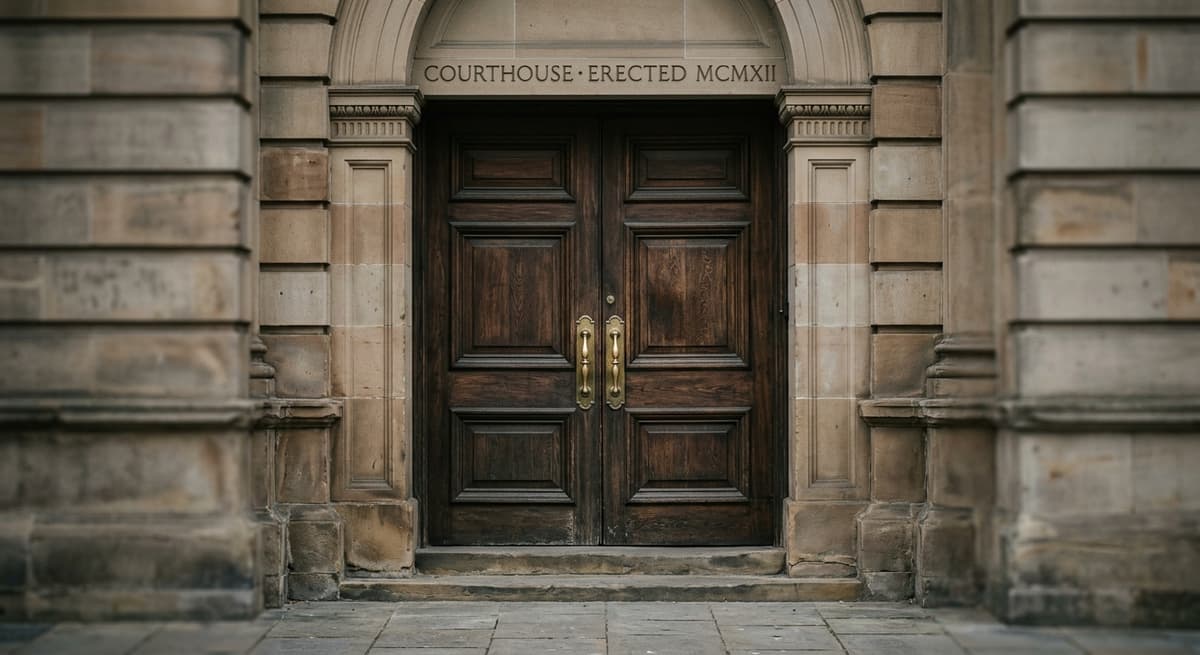
A court's own judicial records. Every Act covered here excludes a court's judicial functions from its coverage, though each does it with a different mechanism. The Commonwealth Act deems a court a prescribed authority only for documents relating to matters of an administrative nature (s5). NSW's GIPA Act defines a court's judicial functions as excluded information under Schedule 2, clause 1, conclusively presumed against disclosure via Schedule 1, clause 6. Queensland's RTI Act reaches the same result through Schedule 2, Part 2, which excludes a court and its registry staff in relation to judicial functions, and extends the same carve-out to tribunals and other quasi-judicial entities. Victoria's Act (s6) excludes a court or judicial officer in relation to judicial functions from being a prescribed authority at all. South Australia goes further, excluding a court or tribunal from being an "agency" in the first place (s6), with a separate document-level exemption for judicial-function material held elsewhere (Schedule 1, clause 11). Western Australia treats a court as an agency but carves out any document that does not relate to matters of an administrative nature. Tasmania's RTI Act and the Northern Territory's Information Act each name courts, tribunals and judicial officers directly in their exclusion lists, with the administrative-records exception preserved in each. The ACT's Freedom of Information Act 2016 exempts information held by a court or tribunal under Schedule 1, item 1.1A, unless it is administrative in nature. None of these gives FOI a path to an actual case file, a transcript, or a judgment still before a court. See court records in Australia for how to actually get that material.
Your own medical file at a public hospital. A Commonwealth agency holding a person's own personal information can generally be accessed informally, through the FOI Act's own access and amendment rights, or through the Privacy Act 1988, and OAIC's guidance confirms both routes exist for the same information. But a public hospital is a state-run body, so a request for a person's own hospital record runs through that state's own FOI, RTI or GIPA regime, not the Commonwealth Act, and often overlaps with a dedicated health-records statute in that state. See medical records in Australia for the health-records side of this.
A police check or your own criminal history. FOI can theoretically reach a police record an agency holds, but it is a slow, application-by-application way to get something that has a dedicated, purpose-built process everywhere in Australia. See background checks in Australia for national police checks and spent-convictions law.
A land title. Property ownership records sit in each state's land titles registry, a searchable public register outside the FOI system entirely, not something requested through an access application. See property records in Australia for how land title search actually works state by state.
Correcting Your Own Records
Every jurisdiction gives a person some right to have their own personal information corrected if it is inaccurate, incomplete, out of date or misleading, but the right does not always live in the FOI Act itself. The Commonwealth Act carries its own amendment provisions at ss48-51. Victoria's FOI Act has an equivalent at Part V. Queensland folded its personal-information amendment right into the RTI Act itself from 1 July 2025, at Chapter 3A (ss78E onward), replacing a separate track that used to sit in the Information Privacy Act. Western Australia's amendment right sits at Part 3 of its FOI Act, South Australia's at Part 4, and the ACT's directly inside its FOI Act at Part 6 (ss59-63). The Northern Territory folds correction into the same Information Act as access, at Part 3, Division 3.

Two jurisdictions route amendment through a different Act entirely. New South Wales' GIPA Act has no correction mechanism of its own; the right instead sits in the Privacy and Personal Information Protection Act 1998, section 15. Tasmania's Right to Information Act likewise contains no amendment provision; correction instead runs through the Personal Information Protection Act 2004, Part 3A. A reader looking to correct a personal record in either state should not expect to find that right inside the GIPA or RTI Act itself.
- Commonwealth FOI: How to Request Federal Government Documents
- GIPA: How to Access NSW Government Information
- Freedom of Information in Victoria
- Right to Information in Queensland
- Freedom of Information in Western Australia
- Freedom of Information in South Australia
- Right to Information in Tasmania
- Freedom of Information in the Northern Territory
- Freedom of Information in the ACT
Frequently Asked Questions
Can I use the Commonwealth FOI Act to get records from a state government agency?
No. The Commonwealth Freedom of Information Act 1982 only reaches Australian Government agencies and ministers. The Office of the Australian Information Commissioner confirms each state and territory has its own separate FOI, RTI or GIPA law that covers that jurisdiction's own agencies. A request for a state agency's records has to go to that state's own regime, not the Commonwealth.
What is the difference between FOI, RTI and GIPA?
They are the same underlying right, a request to a government agency for its documents, under different Act names. New South Wales calls its Act the Government Information (Public Access) Act, generally shortened to GIPA. Queensland and Tasmania each call theirs the Right to Information Act, generally shortened to RTI. The Commonwealth, Victoria, Western Australia, South Australia and the ACT all use the name Freedom of Information Act. The RTI and GIPA jurisdictions are described by their own regulators as reform Acts that push agencies toward proactive publication, but that is the regulators' own framing rather than a distinct statutory category.
Do I have to pay to make a freedom of information request in Australia?
It depends entirely on the jurisdiction. The Commonwealth and the ACT charge no application fee at all. Queensland's application fee is $59.60 and can never be waived, though it does not apply to a personal-information-only request. NSW is $30, Victoria $34.50 for 2026-27, South Australia $44.70, and Tasmania $49.00 with no personal-information discount. Western Australia and the Northern Territory charge $30 for non-personal information but nothing for a request limited to the applicant's own personal information.
How long does an agency have to respond to a freedom of information request?
The statutory decision period ranges from 20 working days (NSW, Tasmania) to 45 days (Western Australia, the longest in the country). The Commonwealth, Victoria, South Australia and the Northern Territory all use 30 days; Queensland uses 25 business days; the ACT uses 30 working days. Every jurisdiction also allows an extension for third-party consultation or a large or complex request.
What happens if I disagree with an agency's decision to refuse my request?
Every jurisdiction has a review process, but the ladder is not the same shape twice. Most states offer an internal review by the agency itself before an external review by a commissioner or ombudsman, but Victoria and the ACT skip internal review entirely and go straight to external review. Western Australia and the Northern Territory allow a further appeal to the Supreme Court, on a question of law only, rather than a specialist tribunal. South Australia gives applicants a choice between the Ombudsman and SACAT rather than a fixed sequence. Check the specific jurisdiction page for the exact ladder and deadlines that apply.
Can freedom of information law get me a copy of a court file or a judgment?
Not through the FOI, RTI or GIPA regime. Every Australian FOI-equivalent Act excludes a court's judicial functions from its coverage, using a different mechanism in each jurisdiction. A court file, a transcript or a judgment is requested from the court itself, not through a freedom of information application. See court records in Australia for how that process actually works.
Updates
Independently fact-checked against the cited primary sources
The Law Behind This Article
This article rests on the statutory provisions below, held in our own legal record and retrieved from the official source. Tap a section to read the operative text.
Freedom of Information Act 2016 (ACT)
s 40Deciding access—time to decideIn force
(1) A respondent to an access application must decide the application not later than 30 working days after the day of receiving the application. (2) The period under subsection (1) is extended by— (a) if the respondent consults with a relevant third party under section 38—15 working days; or (b) if the respondent makes a clarification request under section 34 (3)—the number of working days the applicant takes to respond to the clarification request; or (c) if the respondent gives notice to the applicant under section 46 (1) (a)—the consultation period under section 46 (4) for the application; or (d) if the respondent contacts the applicant under section 106 (2)—the number of working days the applicant takes to confirm or vary the application; or (e) if the applicant makes an application to the agency or Minister to waive a fee under section 107—the number of working days the agency or Minister takes to decide the waiver application; or (f) if the period includes 1 or more Christmas shutdown days—the number of Christmas shutdown days. Example—par (b) The respondent receives an access application on 1 February.
Official text (excerpt) · last checked 2026-09-28 · Read the full text in our law library · Verify at legislation.act.gov.au
s 84Review of decisions by ACATIn force
(1) If the ombudsman makes a decision under section 82 (2) on an ombudsman review, an entity that was a participant in the review may apply to the ACAT for review of the decision. (2) The application must be made within— (a) 20 working days after the day the ombudsman’s decision was published under section 82 (7); or (b) any longer period allowed by the ACAT. Note The ACAT may extend the period even if it has ended (see Legislation Act , s 151C). (3) For the review, the ACAT must be constituted by 3 members as follows: (a) at least 1 member must be a presidential member; (b) any other member must be a senior member. Note The tribunal may join a person as a new party to the application if the person has an interest in the application (see ACT Civil and Administrative Tribunal Act 2008, s 29).
Official text (excerpt) · last checked 2026-09-28 · Read the full text in our law library · Verify at legislation.act.gov.au
Government Information (Public Access) Act 2009 (NSW)
s 41How to make an access applicationIn forcecited in 2 of our articles
(1) An application or other request for government information is not a valid access application unless it complies with the following requirements (the formal requirements) for access applications—(a) it must be in writing sent by post to or lodged at an office of the agency concerned or made in the manner approved by the agency under subsection (2), (b) it must clearly indicate that it is an access application made under this Act, (c) it must be accompanied by a fee of $30, (d) it must state the name of the applicant and a postal or email address as the address for correspondence in connection with the application, (e) it must include such information as is reasonably necessary to enable the government information applied for to be identified. Note. See section 51A concerning the effect of a waiver, reduction or refund of the fee for an access application. See also section 52 (3) concerning assistance to be afforded by an agency to an access applicant. (1A) If the applicant has applied at any time to another agency for substantially the same information, an application must also include the name of the other agency.
Official text (excerpt) · last checked 2026-09-28 · Read the full text in our law library · Verify at legislation.nsw.gov.au
Also relied on in: GIPA: How to Access NSW Government Information (Application, Fees, Review)
s 57Required period for deciding applicationIn forcecited in 2 of our articles
(1) An agency must decide an access application and give the applicant notice of the agency’s decision within 20 working days (the decision period) after the agency receives the application. (2) The decision period can be extended by up to 10 working days for either or both of the following reasons (with a maximum extension under this subsection of 15 working days for any particular access application)—(a) consultation with another person is required under a provision of this Act, (b) records are required to be retrieved from a records archive. Note. The decision period can only be extended to allow for mandatory consultation, not just consultation that the agency chooses to do. (3) The regulations can also provide for the extension (and further extension) of the decision period. (4) The decision period can also be extended (and further extended) by agreement with the applicant.Note. A decision by an agency to refuse to agree to extending the decision period is not a reviewable decision.
Official text (excerpt) · last checked 2026-09-28 · Read the full text in our law library · Verify at legislation.nsw.gov.au
Information Act 2002 (NT)
s 129Appeal to Supreme CourtIn force
(1) A person aggrieved by an appealable decision may appeal to the Supreme Court on a question of law only. (1A) An appeal must be made within 60 days after the appealable decision is made. (2) On an appeal, the Supreme Court may: (a) confirm or vary the decision in whole or in part; or (b) revoke the decision in whole or in part and substitute another decision that would have been available to the Commissioner or Tribunal, as the case requires; or (c) remit the matter to the Commissioner or Tribunal, as the case requires, for further consideration; or (d) dismiss the appeal; and, for that purpose, may make the orders and give the directions that the Court considers appropriate. (3) Section 141 of the Northern Territory Civil and Administrative Tribunal Act 2014 does not apply to a decision of the Tribunal that is an appealable decision. (4) In this section: appealable decision means: (a) a decision of the Commissioner under this Act; or (b) a decision of the Tribunal in the jurisdiction conferred by section 113A(1). Part 9 Records and archives management Division 1 Preliminary
Official text (excerpt) · last checked 2026-09-28 · Read the full text in our law library · Verify at legislation.nt.gov.au
s 19Response to applicationIn force
(1) Within 30 days after receiving an application in accordance with section 18, a public sector organisation must: (a) consider the application and make a decision about it in accordance with this Division; and (b) notify the applicant in writing of that decision. (2) The notice under subsection (1)(b) is to be in accordance with section 20. (3) If the applicant is not notified in accordance with this section within 30 days after making the application, the public sector organisation is taken to have refused access to the information. (4) The kinds of decisions the public sector organisation may make about the application are set out in Subdivision 2 (What decisions may be made in relation to an application?). (5) The public sector organisation is not required to consider or make a decision about an application made by a person declared under section 42 to be a vexatious applicant in relation to the organisation other than in accordance with the declaration.
Official text (excerpt) · last checked 2026-09-28 · Read the full text in our law library · Verify at legislation.nt.gov.au
Right to Information Act 2009 (Qld)
s 18Meaning of processing periodIn force
(1) The processing period , for an access or amendment application to an agency or Minister, is the total of— (a) a period of 25 business days from the valid application day for the application; and (b) each additional period mentioned in column 2 of the following table for a circumstance mentioned in column 1 applying to the application. Column 1 Circumstance Column 2 Additional period the application is transferred to the agency or Minister the lesser of the following— (a) the period starting on the day the application is received by the agency or Minister who transfers the application and ending on the day the application is transferred; (b) 10 business days the applicant is given a notice under section 42 (1) (a) or 78O (1) (a) the prescribed consultation period under section 42 or 78O the only address to be sent notices the applicant gives the agency or Minister by the valid application day is a postal address 5 business days for an access application—the applicant is given a charges estimate notice under section 36 , other than a charges estimate notice stating the agency’s or Minister’s decision that charges will be waived under chapter 3 , part 6 , division 3 the period sta
Official text (excerpt) · last checked 2026-09-28 · Read the full text in our law library · Verify at legislation.qld.gov.au
s 24Making access applicationIn force
(1) A person who wishes to be given access to a document of an agency or a document of a Minister under this Act may apply to the agency or Minister for access to the document. Notes— 1 Minister is defined to include an Assistant Minister—see schedule 5 . 2 Section 25 provides for access applications by parents for children and section 190 clarifies the powers of those acting for others. 3 For an application made for a person, the person (and not the agent) is the applicant—see schedule 5 , definition applicant . This may be particularly relevant for section 66 (Applicant under financial hardship). (2) The application must— (a) be in writing and be accompanied by the application fee; and (b) give sufficient information concerning the document to enable the agency or Minister to identify the document; and (c) state an address to which notices under this Act may be sent to the applicant; and (d) for an application for access to a document containing personal information of the applicant, be accompanied by— (i) evidence of identity for the applicant; and (ii) if an agent is acting for the applicant—evidence of the agent’s authorisation.
Official text (excerpt) · last checked 2026-09-28 · Read the full text in our law library · Verify at legislation.qld.gov.au
s 6Relationship with other Acts prohibiting disclosure of informationIn force
This Act overrides the provisions of other Acts prohibiting the disclosure of information (however described). Notes— 1 The Parliament considers that, unless the information is personal information of the applicant, information the disclosure of which is prohibited under a provision of an Act mentioned in schedule 3 , section 12 is information the disclosure of which would, on balance, be contrary to the public interest—see section 44 (2) (a) and schedule 3 , section 12 . 2 This information is called exempt information and, under section 47 (3) (a) , an agency or Minister may refuse access to a document to the extent the document comprises exempt information. 3 However, an agency or Minister may give access to a document even if this Act provides that access to the document may be refused—see section 48 (3) .
Official text (excerpt) · last checked 2026-09-28 · Read the full text in our law library · Verify at legislation.qld.gov.au
Right to Information Act 2009 (Tas)
s 15Time within which applications for assessed disclosure of information are to be decidedIn forcecited in 2 of our articles
(1) A public authority or Minister must take all reasonable steps to enable an applicant to be notified of a decision on an application for an assessed disclosure of information as soon as practicable but in any case not later than 20 working days after the acceptance of the application. (2) Where negotiations are entered into under section 13(7) , the negotiations are to be completed expeditiously and in any case not later than 10 working days after the receipt of the application. (3) Subject to section 16(3) , an application for an assessed disclosure is taken to be accepted by a public authority or Minister for the purposes of subsection (1) – (a) on the day the application is received by the public authority or Minister; or (b) if negotiations are entered into under section 13(7) , on completion of the period for negotiations under subsection (2) .
Official text (excerpt) · last checked 2026-09-28 · Read the full text in our law library · Verify at legislation.tas.gov.au
Also relied on in: Accessing Medical Records in Tasmania: PIPA, RTI and APP 12
s 16Charges for informationIn force
(1) All applications for assessed disclosure of information must be accompanied by an application fee of 25 fee units. (2) The application fee may be waived if – (a) the applicant is impecunious; or (b) the applicant is a Member of Parliament acting in connection with his or her official duty; or (ba) [Section 16 Subsection (2) amended by No. 26 of 2019, s. 5, Applied:18 Sep 2019] the applicant is a journalist acting in connection with their professional duties; or (c) the applicant is able to show that he or she intends to use the information for a purpose that is of general public interest or benefit. (3) Before an application is accepted by a public authority or a Minister, the application fee must be paid or a decision to waive the fee under subsection (2) must be made.
Official text (excerpt) · last checked 2026-09-28 · Read the full text in our law library · Verify at legislation.tas.gov.au
s 7Right to informationIn forcecited in 2 of our articles
A person has a legally enforceable right to be provided, in accordance with this Act, with information in the possession of a public authority or a Minister unless the information is exempt information.
Official text (excerpt) · last checked 2026-09-28 · Read the full text in our law library · Verify at legislation.tas.gov.au
Also relied on in: Right to Information in Tasmania: RTI Applications, Fees and the Ombudsman Review
Freedom of Information Act 1992 (WA)
s 13Agency’s duties as to access application etc.In force
(1)Subject to this Division, the agency has to deal with the access application as soon as is practicable (and, in any event, before the end of the permitted period) by — (a)considering the application and deciding — (i)whether to give or refuse access to the requested documents; and (ii)any charge payable for dealing with the application; and (b)giving the applicant written notice of the decision in the form required by section 30. (2)If the applicant does not receive notice under subsection (1)(b) within the permitted period the agency is taken to have refused, at the end of that period, to give access to the documents and the applicant is taken to have received written notice of that refusal on the day on which that period ended. (3)For the purposes of this section the permitted period is 45 days after the access application is received or such other period as is agreed between the agency and the applicant or allowed by the Information Commissioner under subsection (4) or (5). (4)On the application of the applicant, the Information Commissioner may reduce the time allowed to the agency to comply with subsection (1).
Official text (excerpt) · last checked 2026-09-28 · Read the full text in our law library · Verify at legislation.wa.gov.au
s 85What may be appealed etc.In forcecited in 2 of our articles
(1)An appeal lies to the Supreme Court on any question of law arising out of any decision of the Information Commissioner on a complaint relating to an access application. (2)An appeal lies to the Supreme Court from a decision — (a)of the Information Commissioner refusing or failing to make a decision of the kind mentioned in section 77(3); and (b)by the Premier confirming an exemption certificate pursuant to section 77(4). (3)There is no appeal under subsection (1) in relation to a decision of the Information Commissioner as to — (a)the deferral of the giving of access to a document; (b)the charges to be imposed for dealing with the access application; (c)the payment of a deposit under section 18. (4)An appeal lies to the Supreme Court on any question of law arising out of a decision of the Information Commissioner on a complaint relating to an application for amendment of personal information if the effect of the decision is that information is not to be amended in accordance with the application.
Official text (excerpt) · last checked 2026-09-28 · Read the full text in our law library · Verify at legislation.wa.gov.au
Also relied on in: Freedom of Information in Western Australia: How to Request Government Records
Freedom of Information Act 1982
s 11Right of accessIn forcecited in 2 of our articles
(1) Subject to this Act, every person has a legally enforceable right to obtain access in accordance with this Act to: (a) a document of an agency, other than an exempt document; or (b) an official document of a Minister, other than an exempt document. (2) Subject to this Act, a person’s right of access is not affected by: (a) any reasons the person gives for seeking access; or (b) the agency’s or Minister’s belief as to what are his or her reasons for seeking access.
Official text (excerpt) · last checked 2026-09-28 · Read the full text in our law library · Verify at legislation.gov.au
Also relied on in: Commonwealth FOI: How to Request Federal Government Documents
s 4InterpretationIn force
(1) In this Act, unless the contrary intention appears: access grant decision has the meaning given by section 53B. access refusal decision has the meaning given by section 53A. ACT enactment means an enactment as defined by section 3 of the Australian Capital Territory (Self‑Government) Act 1988. action, if the action is taken by a person or agency, has the same meaning as in the Ombudsman Act 1976. Note: See subsections 3(2) to (7) of the Ombudsman Act 1976. affected third party has the meaning given by section 53C. agency means a Department, a prescribed authority or a Norfolk Island authority. applicant means a person who has made a request. Australian Geospatial‑Intelligence Organisation means that part of the Department of Defence known as the Australian Geospatial‑Intelligence Organisation. authorised person has the meaning given by section 77. Cabinet includes a committee of the Cabinet.
Official text (excerpt) · last checked 2026-09-28 · Read the full text in our law library · Verify at legislation.gov.au
s 5Act to apply to courts in respect of administrative mattersIn forcecited in 2 of our articles
Courts other than courts of Norfolk Island—general (1) For the purposes of this Act: (a) a court (other than a court of Norfolk Island) shall be deemed to be a prescribed authority; (b) the holder of a judicial office (other than a judicial office in a court of Norfolk Island) or other office pertaining to a court (other than a court of Norfolk Island) in his or her capacity as the holder of that office, being an office established by the legislation establishing the court, shall be deemed not to be a prescribed authority and shall not be included in a Department; and (c) a registry or other office of a court (other than a court of Norfolk Island), and the staff of such a registry or other office when acting in a capacity as members of that staff, shall be taken as a part of the court; but this Act does not apply to any request for access to a document of the court unless the document relates to matters of an administrative nature.
Official text (excerpt) · last checked 2026-09-28 · Read the full text in our law library · Verify at legislation.gov.au
Also relied on in: Court Records in Australia: How to Find Judgments, Court Lists and Case Files in Every State
Search our full record of US law — 2.1 million sections, every state + federal →
Sources and References
- Freedom of Information Act 1982 (Cth) s4(1) 'agency', s5(1) court carve-out, s11(1) right of access, Compilation No. 121 (current 1 January 2026)(legislation.gov.au).gov
- Office of the Australian Information Commissioner, 'What is freedom of information?' (nine separate regimes; Commonwealth agencies/ministers only)(oaic.gov.au).gov
- Government Information (Public Access) Act 2009 (NSW) s41(1)(c) application fee, s57(1) decision period, Schedule 2 cl 1 excluded judicial information(legislation.nsw.gov.au).gov
- Freedom of Information Act 1982 (Vic) s17(2A) application fee, s21(1) decision period, s52(1) VCAT 60-day window, Authorised Version No. 114(legislation.vic.gov.au).gov
- Right to Information Act 2009 (Qld) s18(1)(a) 25-business-day decision period, s24(4)-(5) application fee rules; Right to Information Regulation 2025 (Qld) s6 fee = 52.60 fee units(legislation.qld.gov.au).gov
- Freedom of Information Act 1992 (WA) s13(3) 45-day decision period, s85(1) Supreme Court appeal on a question of law only(legislation.wa.gov.au).gov
- Freedom of Information (Fees) Notice 2026 (SA), South Australian Government Gazette No. 27, 14 May 2026, application fee $44.70 effective 1 July 2026(governmentgazette.sa.gov.au).gov
- Right to Information Act 2009 (Tas) s7 legally enforceable right, s15(1) 20-working-day decision period, s16(1) 25-fee-unit application fee(legislation.tas.gov.au).gov
- Information Act 2002 (NT) s19(1) 30-day decision period, s129 60-day Supreme Court appeal on a question of law; Information Regulations 2003 (NT) reg 5 application fee(legislation.nt.gov.au).gov
- Freedom of Information Act 2016 (ACT) s40(1) 30-working-day decision period, s84(1) ACAT gated on a prior Ombudsman decision, Republication No. 16(legislation.act.gov.au).gov