
Australia
Court Records in Tasmania: How to Search, Inspect and Access Court Files
Independently fact-checked against primary sources (last audited August 19, 2026). · 11 primary sources cited on this page. How we verify our legal content
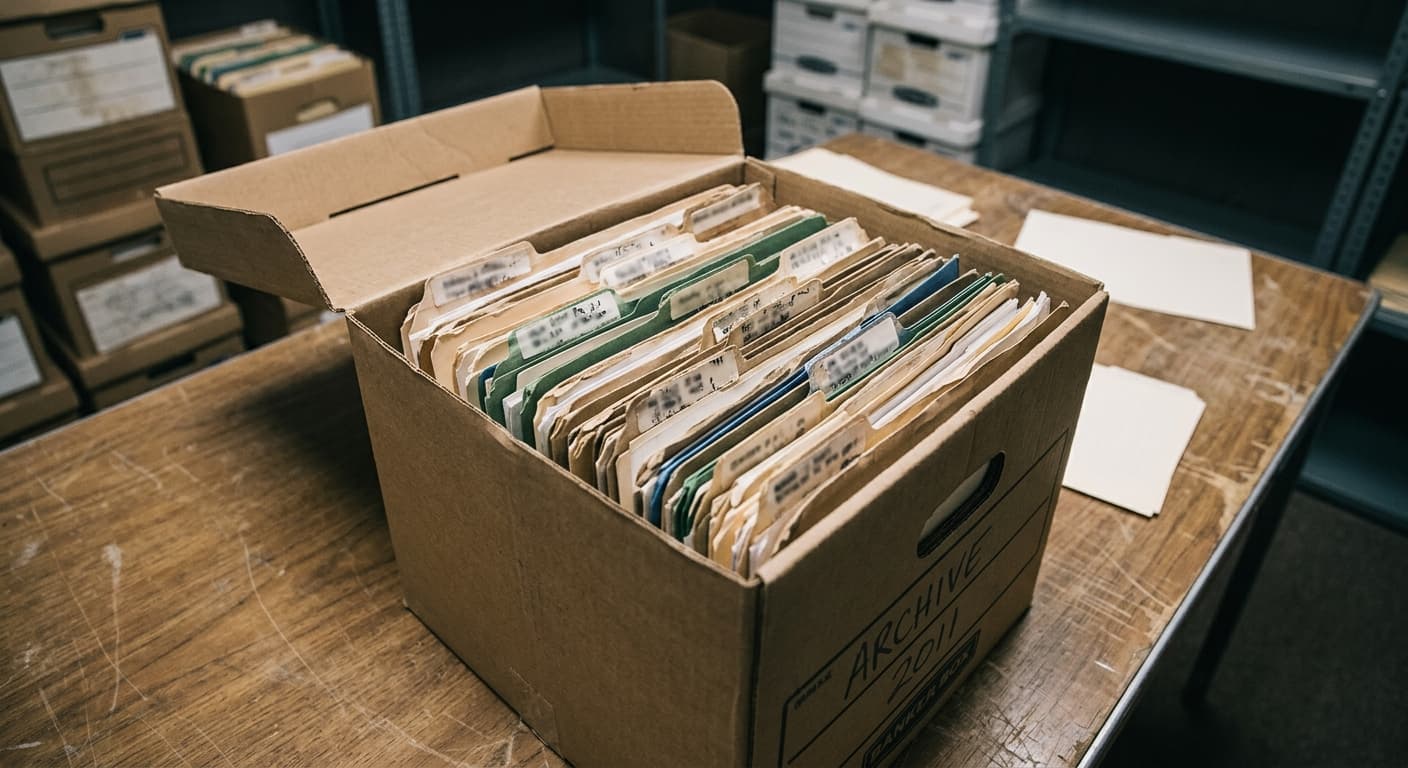
Tasmania has no public online case-search portal at all; a non-party needs the Registrar's certificate and, for most documents, the Court's leave under Supreme Court Rules 2000 rule 33(4), at a current cost of $50.96.
Which Court Holds What
For an overview of how court records access works across every state and territory, see court records in Australia.
Tasmania has only two levels in its state court hierarchy, the Magistrates Court and the Supreme Court. Unlike most other Australian states, there is no separate District or County Court in between. The Magistrates Court sits at numerous locations across the state and handles civil claims up to $50,000 (with a $15,000 sub-limit for minor civil claims), summary offences, and the preliminary and committal hearings that feed matters into the Supreme Court. The Supreme Court has unlimited civil jurisdiction under Tasmanian law, exclusive state criminal jurisdiction, and non-exclusive federal jurisdiction, with its own civil, criminal and probate registries.
The Tasmanian Civil and Administrative Tribunal, TASCAT, formed in November 2021 from the merger of several former tribunals and boards, including the Anti-Discrimination Tribunal, the Guardianship and Administration Board and the Workers Rehabilitation and Compensation Tribunal, is a separate body from the two courts above. There is no free-standing Coroners Court with its own registry; the Magistrates Court's own site publishes coronial inquest listings alongside its criminal and civil daily lists, consistent with the standard pattern of magistrates sitting as coroners.
Searching Online: No Case-Search Portal
Tasmania has no public online case-search or e-filing portal comparable to NSW's Online Registry or Victoria's RedCrest. The only self-service lookup on offer is a litigation search, a certificate confirming whether a named person or entity is or has been a party to civil proceedings, requested by email directly to the Supreme Court's litigation searches address and billed at the Court's standard fee. It covers civil proceedings only.

Daily court lists, unlike case files, are published directly. The Supreme Court publishes its own daily law lists with a subscribe option per registry, and the Magistrates Court publishes separate criminal and civil lists, plus coronial inquest listings, for each of its registries.
Inspecting a Court File: The Rule and the Fee
Non-party access to a Supreme Court file is governed by rule 33 of the Supreme Court Rules 2000, headed Searches. Anyone may ask the Registrar, in writing and with the prescribed fee, to search an index or register, and the Registrar issues a certificate of the result. But rule 33(4) is the operative restriction: except with the leave of the Court or a judge, a person who is not a party to a proceeding may not search for or inspect a chambers judgment, order or transcript; an affidavit, interrogatories, discovery material, admissions, depositions or a subpoena; or any document the Registrar considers ought to stay confidential to the parties. A narrow exception exists for reporting to the Council of Law Reporting for Tasmania, though the exact wording of that exception was not fully captured in researching this page.
The current fee for a search or inspection under rule 33 is $50.96, calculated as 26 fee units at $1.96 each, as at 1 July 2026. A copy of a document costs one fee unit a page, $1.96.
Judgments and Daily Lists
The Supreme Court says plainly that it does not publish its own judgments on its own website, and directs readers to AustLII instead, which has held unreported Tasmanian Supreme Court judgments from 1985 to the present. The Court describes AustLII's coverage as aiming for completeness rather than guaranteeing it, noting an acknowledged backlog of decisions still being checked for identity issues before they can be sent through. From 1 January 2010, appeal judgments carry their own citations, TASFC for the Full Court and TASCCA for the Court of Criminal Appeal. Judgments are also available through Jade, a free alert service, and through LexisNexis and Thomson Reuters on a paid subscription basis. No Magistrates Court judgments-publication page was found; Magistrates Court decisions appear far less systematically published than the Supreme Court's.
Suppression and Non-Publication
Tasmania has no dedicated suppression-orders Act, unlike Victoria's Open Courts Act 2013 or NSW's Court Suppression and Non-publication Orders Act 2010. The Supreme Court's power to suppress a proceeding comes from its own inherent jurisdiction rather than a statute, and the Court backs that power with a public register listing every suppression or non-publication order it has made since 2014.

Alongside that general power sit several specific statutory publication restrictions. Evidence Act 2001 section 194K bans publishing identifying particulars of a complainant or witness in specified rape, sexual-offence and family-violence proceedings, carrying a maximum penalty of 400 penalty units for a body corporate or 60 penalty units, up to 12 months' imprisonment, or both, for an individual; at the current $213 penalty-unit value, that is up to $85,200 for a body corporate or $12,780 for an individual. The Court's own media guidance also lists sections 194L, 194M and 195 of the same Act as further reporting restrictions, alongside section 31 of the Youth Justice Act 1997, covered below; the full text of sections 194L, 194M and 195 was not checked for this page. Preliminary and committal proceedings before the Magistrates Court are automatically closed to the public and publication-restricted, independent of any order, under sections 64 and 69A of the Justices Act 1959.
Records Closed by Default
A young person's identity in proceedings before the Youth Justice division is protected by the Youth Justice Act 1997 section 31, which bans publishing information that identifies, or may lead to the identification of, a youth who is the subject of or a witness in the proceedings, unless the Court has granted permission. The maximum penalty is 100 penalty units, up to $21,300 at the current rate, or two years' imprisonment, or both.
Sexual-offence complainant identification is covered above, under Evidence Act 2001 section 194K.
Family law matters are federal jurisdiction, heard by the Federal Circuit and Family Court of Australia rather than any Tasmanian court; the Supreme Court's own materials note that before the Family Court of Australia was created in 1975, these matters were dealt with by the Supreme Court itself. See family court process in Australia for how the federal process works.
The Right to Information Act 2009 excludes a court, a tribunal, a judge, an associate judge and a magistrate from the Act entirely, unless the information relates to that body's own administration rather than its judicial work. Right to information law is not a channel for reaching a Tasmanian court file.
What a Tasmanian Court Record Is Not
A court record is not a criminal history check. Tasmania's own spent-convictions scheme, the Annulled Convictions Act 2003, and its Registration to Work with Vulnerable People check are covered on the background checks hub, not here. See the background checks hub and police check in Tasmania for that separate process.
A court record is also not a birth, death or marriage certificate; those sit with Tasmania's registry of Births, Deaths and Marriages, covered on the vital records hub.
Frequently Asked Questions
Can I search Tasmanian court records online?
No. Tasmania has no public case-search portal. The only self-service option is a litigation search, a certificate of civil-proceedings involvement requested by email from the Supreme Court Registry.
Where can I find a Tasmanian court judgment?
Not on the Supreme Court's own website; it says directly that it does not publish judgments there. AustLII holds unreported Supreme Court judgments from 1985 to the present, and Jade and paid legal-research services also carry them.
How much does it cost to inspect a Supreme Court file in Tasmania?
$50.96, calculated as 26 fee units at $1.96 each, as at 1 July 2026, for a search or inspection request made under rule 33 of the Supreme Court Rules 2000.
Is there a suppression orders Act in Tasmania?
No. Tasmania has no dedicated suppression-orders statute. The Supreme Court suppresses proceedings under its own inherent jurisdiction and keeps a public register of every order made since 2014.
Can I find out about a young person's case in Tasmania?
No. Youth Justice Act 1997 section 31 bans publishing information that identifies a youth in proceedings before the Youth Justice division without the Court's permission.
Is a Tasmanian court record the same as a criminal record check?
No. A court record is a specific case file held by the court; a criminal record check is a police-held summary of someone's conviction history. See the background checks hub for that separate process.
Updates
Independently fact-checked against the cited primary sources
The Law Behind This Article
This article rests on the statutory provisions below, held in our own legal record and retrieved from the official source. Tap a section to read the operative text.
Right to Information Act 2009 (Tas)
s 6Exclusions of certain persons or bodiesIn force
(1) This Act does not apply to information in the possession of the following persons or public authorities, or in the possession of a person whose services are provided or procured for the purposes of assisting the person or public authority, unless the information relates to the administration of the relevant public authority:(a) the Governor; (b) a court; (c) a tribunal; (d) the Integrity Commission; (e) a judge; (f) an associate judge; (g) a magistrate; (h) the Solicitor-General; (i) the Director of Public Prosecutions; (ia) [Section 6 Subsection (1) amended by No. 7 of 2024, s. 17, Applied:30 Aug 2024] the State Litigator; (j) the Ombudsman; (ja) [Section 6 Subsection (1) amended by No. 30 of 2016, Sched. 2, Applied:16 Nov 2016] the Custodial Inspector; (k) the Auditor-General; (ka) [Section 6 Subsection (1) amended by No. 68 of 2013, s. 34, Applied:01 Jan 2014] the Legal Profession Board of Tasmania; (l) [Section 6 Subsection (1) amended by No. 1 of 2016, Sched. 1, Applied:08 Apr 2016] . . . . . . . . (la) [Section 6 Subsection (1) amended by No. 38 of 2015, s.
Official text (excerpt) · last checked 2026-09-28 · Read the full text in our law library · Verify at legislation.tas.gov.au
Search our full record of US law — 2.1 million sections, every state + federal →
Sources and References
- Supreme Court of Tasmania, About The Court (two-tier hierarchy)(supremecourt.tas.gov.au).gov
- Supreme Court of Tasmania, Judgments page (not published on the Court's own site)(supremecourt.tas.gov.au).gov
- Supreme Court Rules 2000 (Tas), rule 33 Searches(legislation.tas.gov.au).gov
- Supreme Court of Tasmania, Filing Fees (as at 1 July 2026)(supremecourt.tas.gov.au).gov
- Supreme Court of Tasmania, Litigation Searches(supremecourt.tas.gov.au).gov
- Evidence Act 2001 (Tas), section 194K Publication of certain identifying particulars prohibited(legislation.tas.gov.au).gov
- Youth Justice Act 1997 (Tas), section 31 Restrictions on reporting proceedings(legislation.tas.gov.au).gov
- Right to Information Act 2009 (Tas), section 6 Exclusions of certain persons or bodies(legislation.tas.gov.au).gov
- Office of the Director of Public Prosecutions (Tas), Prosecution Guideline 26: Suppression orders(dpp.tas.gov.au).gov
- Supreme Court of Tasmania, register of suppression and non-publication orders(supremecourt.tas.gov.au).gov
- Tasmanian Department of Justice, penalty units and indexed amounts(justice.tas.gov.au).gov