
Australia
Court Records in the ACT: Registry Access, Fees and the Suppression Gap
Independently fact-checked against primary sources (last audited August 19, 2026). · 7 primary sources cited on this page. How we verify our legal content

The ACT's Magistrates Court and Supreme Court both run a default-open registry-inspection rule, Court Procedures Rules 2006 r2903 for civil files and r4053 for criminal files, a $51.00 document-preparation fee, and a first-party judgments database going back to 2002, but the territory has no general suppression-and-non-publication-orders Act.
This page covers the state layer specific to the ACT. For the national picture, judgment databases, and what is restricted by default everywhere in Australia, see the Australia court records hub.
Which Court Holds What
The ACT runs a two-tier general court system, with no separate District or County Court. The Magistrates Court of the ACT is the territory's court of summary jurisdiction and houses several specialist divisions under one umbrella: the Coroners Court, the Childrens Court, the Industrial Court, the Galambany Court (circle sentencing for First Nations defendants), and the Family Violence Court. The Supreme Court of the ACT is the superior court of record, handling indictable criminal trials and major civil claims, and it includes the ACT Court of Appeal as part of the same court rather than as a separate body. ACAT, the ACT Civil and Administrative Tribunal, is a separate statutory tribunal, not a court, and handles matters such as tenancy disputes, discrimination complaints, and guardianship applications.
Searching Online: Judgments and Daily Lists
The Supreme Court publishes full-text ACT Court of Appeal and Supreme Court judgments from 2002 to the present directly on its own website, generally within a few days of a decision being handed down, though sentencing remarks can take longer to appear. That is a genuine first-party judgments database, not a third-party republisher. A parallel pathway for Magistrates Court decisions also exists on the same site, though this research did not independently verify its coverage depth. For hearing dates, the Supreme Court runs a live, calendar-based daily list, and a parallel Magistrates Court hearing-dates tool exists per the site's own navigation, again not independently opened for this page. This research did not locate a distinct online case-search-by-party-name or e-filing consumer portal for either court, so finding whether a specific matter is listed generally means checking the daily list or asking the registry directly, not searching by name.

Inspecting or Copying a Filed Document
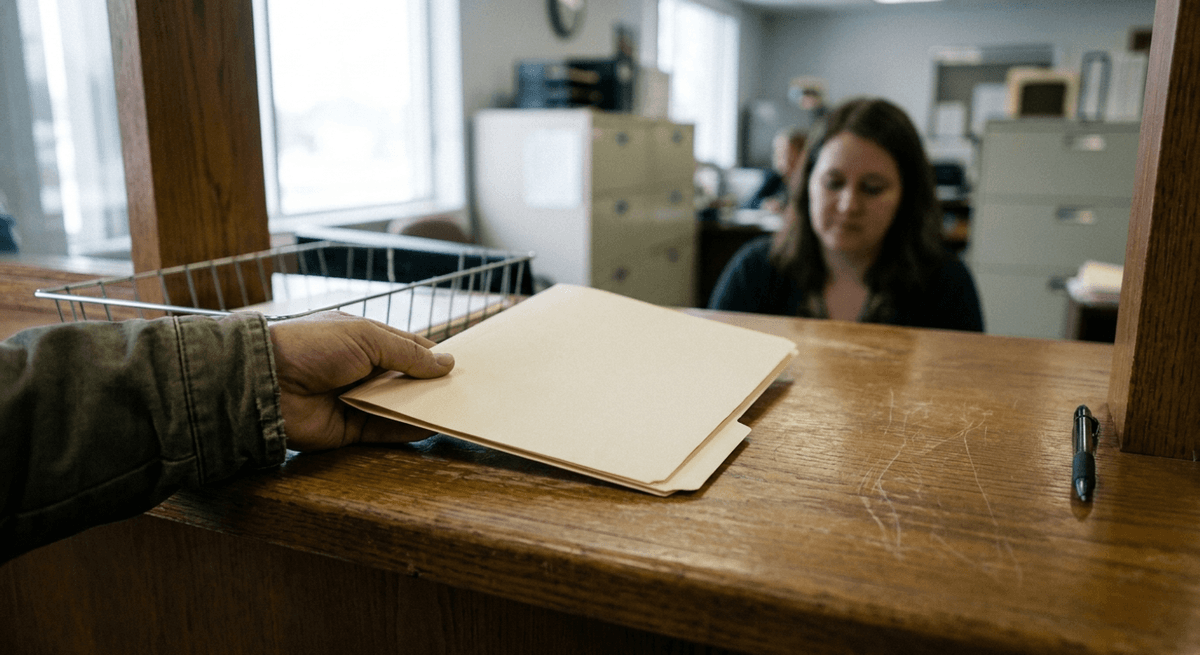
Court Procedures Rules 2006 (ACT) r2903, "Inspection of registry files," sets a default-open rule for civil proceedings: anyone may search the registry for, inspect, or copy a filed document. The registrar must refuse a non-party access to specific categories unless the person shows sufficient interest or the court gives leave, including an order the court has directed be kept confidential, an affidavit not yet read in court, an inadmissible part of an affidavit, an unadmitted interrogatory or admission, a discovery list, a subpoena, a document about a child's adoption, custody or guardianship, a document filed in a Family Law Act 1975 (Cwlth) proceeding, and certain probate-jurisdiction filings. Rule 4053 mirrors this structure for criminal proceedings.
Fee, under Part E (registry fees for the Magistrates Court, Supreme Court and Court of Appeal) of the current Court Procedures (Fees) Determination 2026: item 1300, provision of a document that requires preparation, is $51.00; item 1303, a photocopy or certified copy of an existing document, is $3.00 per application plus $1.60 per page; and item 1304 charges $223.00 per hour for an inspection of, or a search in relation to, a record of a court. The ACT Civil and Administrative Tribunal has its own parallel schedule in the same instrument (items 1009 to 1011) at identical dollar figures. Confirm current fees on the ACT Legislation Register before relying on them, since ACT court fees typically reset around 1 July each year.
Suppression and Non-Publication: A Genuine Gap
Unlike NSW's Court Suppression and Non-publication Orders Act 2010 or Victoria's Open Courts Act 2013, the ACT has no general suppression-orders statute. A full-text search of both the Court Procedures Act 2004 and the Court Procedures Rules 2006 found no general suppression-order regime in either, and the Supreme Court Act 1933 does not contain one either. The one confirmed, standing statutory publication restriction is Evidence (Miscellaneous Provisions) Act 1991 (ACT) s74, "Prohibition of publication of complainant's identity," which bars publishing a sexual-offence complainant's identifying particulars, carrying a maximum penalty of 50 penalty units, $8,000 for an individual at the current penalty-unit value, or 6 months imprisonment or both, as a strict liability offence with a defence where the complainant consented to publication in advance. Beyond s74, the Act gives courts narrower, scenario-specific powers to close a courtroom or restrict particular evidence, rather than one freestanding order-making power over anything a party wants kept confidential. A reader should not expect a single general ACT "suppression Act" the way NSW and Victoria have one.
Records Closed by Default
Family law. Family law matters are federal jurisdiction, heard by the Federal Circuit and Family Court of Australia rather than the ACT Magistrates or Supreme Court. Rule 2903(2)(j) itself carves a Family Law Act 1975 (Cwlth) proceeding document out of non-party registry access, consistent with that split. See family court process in Australia.
Adoption, custody and guardianship. Rule 2903(2)(i) excludes a document about a child's adoption, custody or guardianship from non-party registry access without leave.
Sexual-offence complainants. Covered above under Evidence (Miscellaneous Provisions) Act 1991 s74.
Childrens Court. The Childrens Court sits as a division of the Magistrates Court under the Children and Young People Act 2008 (ACT). This research did not confirm the exact publication-restriction provision for Childrens Court proceedings within that Act, so no specific section is cited here; treat that Act as the governing framework and confirm the current provision before relying on one.
What a Court Record Is Not
A court file is not the same thing as a criminal history check. A police check or Working with Vulnerable People registration in the ACT is a separate product handled outside the court system. See police check in ACT and the national police check overview, and spent convictions in the ACT for the Spent Convictions Act 2000 (ACT), a mechanism this page does not re-derive.
It is also not a birth, death or marriage certificate. See the Australia vital records hub for that separate system, or a family violence order, which runs through its own application and record-keeping process. See family violence orders in the ACT.
Finally, the ACT's Freedom of Information Act 2016, Schedule 1 item 1.1A, exempts information held by a court or tribunal unless it is administrative in nature. FOI is not the route to a court file in the ACT; the registry-inspection rules above are.
Frequently Asked Questions
Can I search ACT court cases online by name?
Not through a confirmed public portal. The Supreme Court publishes its own judgments from 2002 onward and a daily list, but this research did not locate a distinct case-search-by-party-name or e-filing lookup tool for either court.
What does it cost to get a copy of a court document in the ACT?
The standard fee for a document that requires preparation is $51.00. A straightforward photocopy or certified copy costs $3.00 plus $1.60 per page, under the current Court Procedures (Fees) Determination.
Does the ACT have a general court suppression law?
No. Unlike NSW or Victoria, the ACT has no standalone suppression-orders Act. The one confirmed mechanism is Evidence (Miscellaneous Provisions) Act 1991 s74, which prohibits publishing a sexual-offence complainant's identity; broader confidentiality relies on narrower, scenario-specific court powers rather than one general Act.
Can I look up someone's family violence order in the ACT?
That runs through its own application and record process, separate from ordinary court-file access, and it is not a public name search. This site's ACT family violence order page covers how they work and who can find out about one.
Is a criminal record check the same as a court record?
No. A police check or Working with Vulnerable People registration is a separate product from a court file. See national police check overview and police check in ACT.
Updates
Independently fact-checked against the cited primary sources
Sources and References
- Court Procedures Rules 2006 (ACT), r2903 (civil) and r4053 (criminal), inspection of registry files(legislation.act.gov.au).gov
- Court Procedures (Fees) Determination 2026 (ACT), DI2026-112, Part E items 1300, 1303 and 1304 (court registry fees; ACAT items 1009-1011 are the parallel tribunal schedule)(legislation.act.gov.au).gov
- Evidence (Miscellaneous Provisions) Act 1991 (ACT), s74, prohibition of publication of complainant's identity(legislation.act.gov.au).gov
- Freedom of Information Act 2016 (ACT), Schedule 1, item 1.1A, information in the possession of a court or tribunal unless administrative in nature(legislation.act.gov.au).gov
- Supreme Court of the ACT, judgments and sentences(courts.act.gov.au).gov
- Supreme Court of the ACT, daily court list(courts.act.gov.au).gov
- Spent Convictions Act 2000 (ACT), A2000-48, register entry(legislation.act.gov.au).gov