
Australia
E-Bike Laws in Australia: 250W Pedelec Standard, NSW 500W Rule Explained (2026)
Independently fact-checked against primary sources (last audited September 28, 2026). · 16 primary sources cited on this page. How we verify our legal content
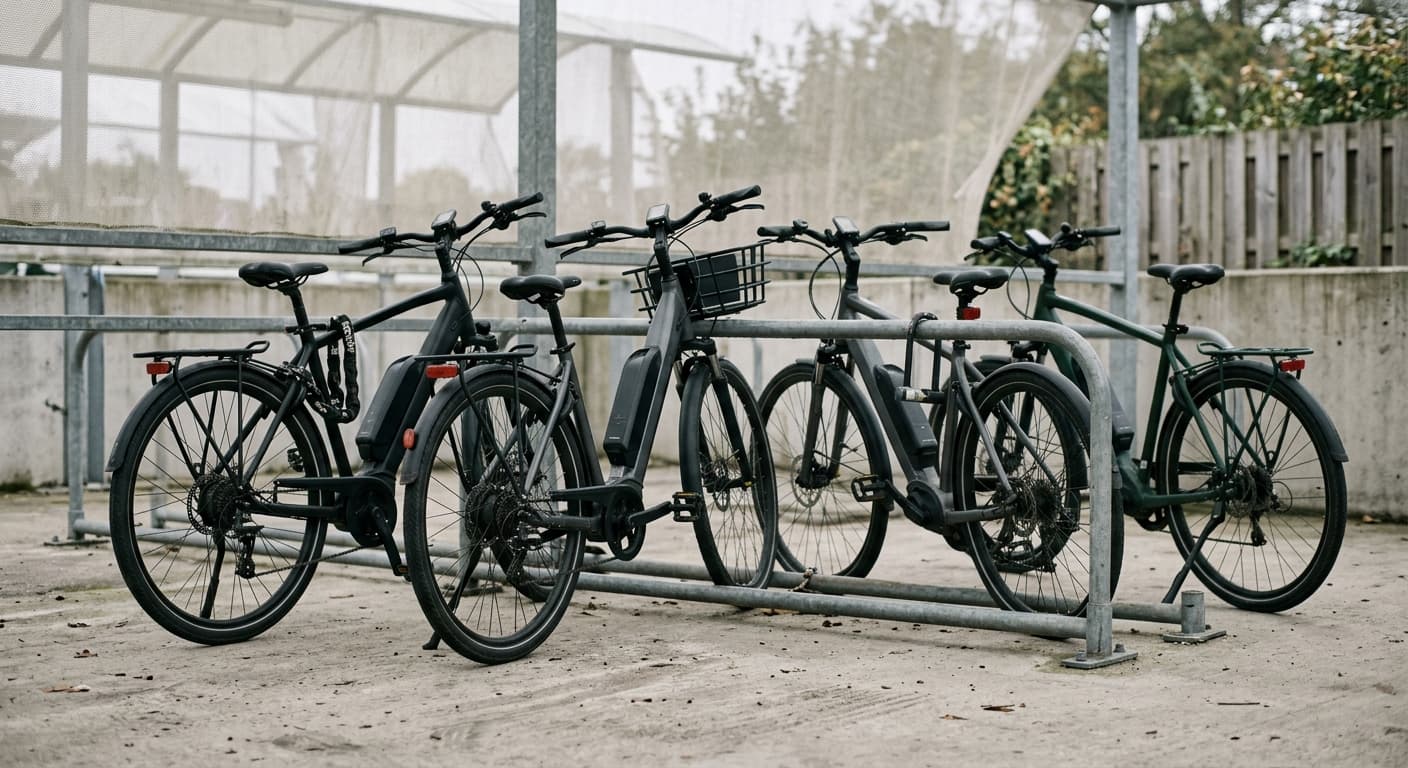
In most Australian states, an e-bike can be ridden without a driver's licence or registration only if it fits one of two national power definitions: a pedal-assist "pedelec" built to the European EN 15194 standard, capped at 250 watts and cutting out at 25 km/h, or a lower-powered "power-assisted pedal cycle" capped at 200 watts. New South Wales is still transitioning off a higher limit, currently permitting up to 500 watts until a 250-watt, EN 15194-only rule takes effect on 1 March 2029, and Queensland now requires EN 15194 compliance and, for most riders, a driver's licence.
Information last verified 28 September 2026 against each state and territory transport authority's own e-bike page.
This article covers privately owned e-bikes, the pedal-assist and power-assisted bicycles most Australians ride, across all eight states and territories. E-scooters, e-skateboards, unicycles and other non-pedal devices follow a different set of rules; see the e-scooter laws in Australia guide for that comparison.
The National Standard: Pedelec at 250 Watts, Power-Assisted Pedal Cycle at 200 Watts
Victoria, Western Australia, South Australia, Tasmania, the Northern Territory and the ACT recognise the same two lawful categories. New South Wales uses a single, higher 500-watt definition until 2029, and Queensland since 1 July 2026 accepts only EN 15194 e-bikes (plus older bikes under a transition). An electrically power-assisted cycle, or EPAC, sometimes called a "pedelec," has a motor with a maximum continuous rated power of 250 watts, only assists while the rider is pedalling, and must cut off that assistance once the bike reaches 25 km/h. A pedelec may also have a throttle-only "walk mode" that works without pedalling, but only up to 6 km/h; a throttle that works above 6 km/h without pedalling makes the bike illegal. Compliance with the European standard EN 15194 is the way manufacturers and riders demonstrate a pedelec meets these limits.
The second lawful category, generally called a power-assisted pedal cycle, is a bike propelled mainly by pedalling, with one or more motors adding a combined maximum power output of up to 200 watts. South Australia and the ACT state expressly that this type of bike needs pedalling to move. These lower-powered bikes are less common in the Australian market than 250-watt pedelecs.
A bike outside both definitions, because it has no working pedals, a motor over the wattage cap, a throttle that works above 6 km/h without pedalling, or a toggle switch or other tampering that overrides the legal limits, is not treated as a bicycle in any jurisdiction checked. It is treated as a motor vehicle, and every state that addresses this directly treats riding one on a public road or path the same way it treats an unregistered, uninsured or unlicensed car. Petrol engines are handled differently: Victoria, Queensland and the ACT ban petrol-engined bikes outright, while Western Australia and Tasmania still allow a petrol motor of up to 200 watts on a bike propelled mainly by pedalling.
New South Wales is the exception to the 250-watt pedelec figure, not because it uses a different standard, but because it has not yet moved to it. A federal push toward nationally consistent e-bike safety standards is also underway: in May 2026 the Australian Government announced funding for the Australian Competition and Consumer Commission to develop nationally consistent safety standards for e-micromobility devices, with e-bikes the first focus, and the ACCC began investigating regulatory options in June 2026. The ACCC expects to start consultation on proposed policy options by late 2026, before recommending to the Minister whether to make a mandatory standard; an exact consultation date has not been announced.
New South Wales: 500 Watts Until 2029, Then 250
New South Wales currently allows a higher-powered e-bike than the rest of the country: up to 500 watts of continuous motor power, with the motor cutting out at 25 km/h and a throttle-only walk mode capped at 6 km/h, the same speed cutoffs used elsewhere. Transport for NSW is explicit that this is a transitional arrangement: from 1 March 2029, only EN 15194-certified e-bikes, capped at 250 watts, will be allowed on NSW roads, bringing the state into line with the national pedelec standard. An e-bike that exceeds the current 500-watt, 25 km/h or 6 km/h limits is illegal even if an app or a switch can restrict its power or speed, and hacking or tampering with those settings can itself make a bike illegal.
Riders must wear an approved helmet, and riders 16 and over may not ride on a footpath unless they are supervising a child under 16 who is riding. Separately from the wattage rules, new police and authorised-officer powers to seize and dispose of illegal e-bikes took effect on 21 August 2026, giving NSW Police the ability to seize a non-compliant e-bike used on a road or road-related area and, per Transport for NSW, "efficiently dispose of" it rather than simply issuing a fine.
Queensland: EN 15194 Compliance, a Transition Scheme, and a New Licence Rule
Queensland's e-bike rules changed through two separate reforms that both took effect during 2026. From 1 July 2026, an e-bike must meet the EN 15194 pedelec standard, 250 watts of continuous rated power, a 6 km/h throttle-only cutoff, and full motor cutoff at 25 km/h, and must carry a compliance label. An e-bike that does not meet EN 15194 may still be ridden until 28 February 2027, the same date Queensland set for its parallel e-scooter device transition, if its motor is no more than 250 watts and assistance stops at 25 km/h. From 1 March 2027, such a bike needs a verification label under Queensland's E-Bike Assurance Scheme, which will cover bikes manufactured before 1 July 2026 and is proposed to start in November 2026, with more detail promised by mid-October 2026. From 1 July 2026, police can also seize and destroy an illegal e-bike, and a parent or guardian can be fined for allowing a child to ride one.
Queensland is also the first Australian jurisdiction to require a driver's licence to ride an e-bike. From 31 August 2026, a rider of an e-bike, e-scooter, e-skateboard, e-unicycle or Segway must be at least 16 and hold at least a learner driver licence. That is a genuine departure from every other state checked for this page, none of which requires any licence to ride a compliant e-bike. Queensland's rules provide a supervision exemption for a rider aged 12 to 17 who does not yet hold a licence to keep riding under the direct supervision of a parent, grandparent or legal guardian, and a separate medical or disability exemption process for a rider 16 or older who cannot hold a driver licence. A place exemption also lets riders of any age ride without a licence in designated recreational areas such as rail trails and mountain bike trails. On footpaths, Queensland e-bike riders must keep to 12 km/h, and on shared paths they must slow to 12 km/h when passing a pedestrian.
Victoria: The Same Two Categories, With Fines Over $1,000 for a Non-Compliant Bike
Victoria uses the identical national definitions: an EPAC at up to 250 watts, pedalling-only assistance, a 25 km/h motor cutoff and a 6 km/h throttle-only walk mode, or a power-assisted pedal cycle at up to 200 watts. A compliant e-bike, whether bought new or converted from a standard pedal bike, needs no registration or licence in Victoria. Transport Victoria is direct about the consequence of exceeding those limits: an e-bike with no functional pedals, tampering that overrides its power or wattage limits, a motor assist above 25 km/h, more than 250 watts of combined continuous power, an internal combustion engine, or an electric-powered dirt bike with no working pedals cannot be ridden on a Victorian public road or road-related area at all. It is an unregistered motor vehicle, and Transport Victoria states that "significant fines of over $1,000 apply" to a rider caught using one on a road, bike path or shared path. Converted e-bikes, standard pedal bikes retrofitted with a motor, controller and battery, are also banned outright from Victorian trains and station ticketing areas, because of a higher fire risk from DIY battery installations.
Western Australia: The Same Two Categories, and a Separate Legal Category From E-Scooters
Western Australia recognises the same two e-bike categories as the eastern states: a power-assisted pedal cycle capped at 200 watts, and a pedelec, complying with EN 15194, capped at 250 watts with power assistance cutting out at 25 km/h. The Department of Transport is explicit that e-bikes are not "eRideables," the WA legal category that covers e-scooters, e-skateboards, e-unicycles and hoverboards and is regulated under separate legislation; a compliant e-bike is instead treated as a type of bicycle. Like Tasmania, and unlike Victoria, Queensland and the ACT, Western Australia allows the 200-watt category to use a petrol or electric motor. Riders must be at least 16 to ride an e-bike with its power assistance engaged (Road Traffic Code 2000 r 228), and the bike must not be ridden using the motor alone. Helmets are compulsory for all bike riders in Western Australia, which extends to e-bike riders, and cyclists can generally ride on a WA footpath unless it is signed otherwise. The Road Safety Commission states that a non-compliant e-bike is an unlicensed motor vehicle, may be seized and disposed of by police, and may attract a $500 fine.
South Australia: Two Categories, and a Rules Review That Also Covers E-Bikes
South Australia recognises two categories: a 200-watt power-assisted pedal cycle whose motor cannot operate without pedalling, and a 250-watt EPAC whose motor assistance stops at 25 km/h, with throttle-only operation limited to 6 km/h to start moving. A compliant e-bike may be ridden on roads where bicycles are permitted, and the road's maximum speed limit applies. An e-bike outside those limits is not legal on South Australian roads and paths, and penalties apply, including for riding unlicensed or riding an unregistered and uninsured motor vehicle. The Department for Infrastructure and Transport opened a formal review of South Australia's personal mobility device rules in 2026 that explicitly also covers the state's separately regulated e-bike rules, in response to safety concerns about illegal, over-powered e-bikes. Public consultation through the YourSAy survey ran from 26 June 2026 and closed 16 August 2026. As of this page's verification date, the department has not published an outcome or any rule change, so the two categories above remain the current South Australian rule.
Tasmania: A Power-Assisted Bicycle at 200 Watts, or an EPAC That Fades Out by 25 km/h
Tasmania's Transport Services division sets out two lawful e-bike categories. A power-assisted bicycle must be primarily propelled by pedalling, with an auxiliary motor of no more than 200 watts. An EPAC, an electrically power-assisted cycle, instead has its power assistance progressively reduced as the bike's speed increases above 6 km/h, cutting off completely once the bike reaches 25 km/h, or when the rider is not pedalling and the bike is travelling above 6 km/h. A petrol-powered bicycle is permitted only if it is primarily propelled by pedalling and the motor does not exceed 200 watts, and Tasmania's guidance flags petrol conversion kits as likely to exceed that 200-watt limit.
Northern Territory: Two E-Bike Categories, Alongside a Much Lower E-Scooter Cap
The Northern Territory defines the same EPAC category used elsewhere, an EN 15194-compliant e-bike at up to 250 watts with a 25 km/h cutoff, alongside a "power-assisted bicycle" category at up to 200 watts, for which the Northern Territory Government's own page does not give a separate speed figure. This is a different, and much higher, set of limits than the Territory allows for a private e-scooter, which is capped at just 200 watts and 10 km/h under the "motorised scooter" category of the Australian Road Rules. An e-bike that exceeds its category's limits becomes a non-complying motor vehicle in the Northern Territory, exposing the rider to fines for an unregistered, uninsured or unlicensed motor vehicle, demerit points and possible licence cancellation, unless the Registrar of Motor Vehicles has granted an exemption for the specific device.
The Australian Capital Territory: The Same Two Categories, and No Engines
Transport Canberra states that two categories of e-bike meet the ACT's standards. A power-assisted pedal cycle has a motor of up to 200 watts, needs pedalling to move at any speed, and must also have an adjustable seat and weigh less than 50 kg including the battery. An EPAC has a motor of up to 250 watts that cuts off at 25 km/h while pedalling, or at 6 km/h without pedalling. A bike with an engine is not a legal e-bike in the ACT, and petrol-powered bikes and minibikes are banned from all ACT roads and road-related areas, including footpaths and shared paths.
A legal e-bike may be ridden on roads, on-road bike lanes, shared paths and footpaths, and riders must wear an approved helmet. A device that exceeds the power limits or otherwise does not meet ACT requirements may be classified as a motor vehicle and be subject to registration, licensing and other requirements; if it cannot be registered, it may only be used on private property.
What Makes an E-Bike an Illegal Motor Vehicle
The same pattern holds in every state examined for this page: an e-bike that stays within its category's wattage cap, speed cutoff and throttle limit is treated as a bicycle, needing no registration or third-party insurance and, outside Queensland, no licence. An e-bike that exceeds those limits, has no working pedals, or carries a tampered controller or toggle switch that overrides its power or speed limits, stops being a bicycle and is treated as a motor vehicle instead. Riding one on a public road, bike path or shared path exposes the rider to the same offences that apply to driving an unregistered, uninsured or unlicensed car, on top of a state's own e-bike-specific penalties. Victoria describes fines of over $1,000 for this, and Western Australia a $500 fine; New South Wales and Queensland have gone further in 2026, giving police (and, in New South Wales, authorised officers) powers to physically seize and destroy an illegal e-bike, from 21 August 2026 in New South Wales and 1 July 2026 in Queensland, and Western Australia's police may seize and dispose of a non-compliant e-bike. Dollar penalty figures for a non-compliant e-bike in New South Wales, Queensland, South Australia, Tasmania, the Northern Territory and the ACT were not confirmed against a primary source for this page and are not stated here; a rider should check current fine amounts with that jurisdiction's own transport authority.
Compare this against e-scooters, which follow a different, far less uniform set of state rules, on the e-scooter laws in Australia page, and see the Australia driving laws hub for related road rule guides.
The 8-Jurisdiction E-Bike Comparison
| Jurisdiction | Power limit / pedelec rule | Throttle rule | Where you can ride | Helmet | Minimum age | Licence | Penalties (as of) |
|---|---|---|---|---|---|---|---|
| New South Wales | 500W until 1 Mar 2029, then 250W EN 15194 only | Walk mode to 6 km/h | As a bicycle; no footpath riding at 16+ unless supervising a child under 16 who is riding | Mandatory | None stated | Not required | Significant penalties; seizure/crushing powers from 21 Aug 2026 (28 Sept 2026) |
| Queensland | 250W EN 15194 from 1 Jul 2026 (non-EN 250W bikes allowed to 28 Feb 2027; verification label from 1 Mar 2027) | Walk mode to 6 km/h | As a bicycle; 12 km/h on footpaths and when passing pedestrians on shared paths | Mandatory | 16, with supervision exemption 12 to 17 | Learner licence required from 31 Aug 2026 | Seizure/destruction powers from 1 Jul 2026; parent/guardian fine for a child's illegal device (28 Sept 2026) |
| Victoria | 250W EPAC or 200W power-assisted pedal cycle | Walk mode to 6 km/h | As a bicycle | Mandatory | None stated | Not required | Over $1,000 for a non-compliant e-bike, per Transport Victoria (28 Sept 2026) |
| Western Australia | 250W pedelec (EN 15194) or 200W power-assisted pedal cycle (petrol or electric) | Motor-only riding not permitted | As a bicycle; footpaths generally permitted unless signed | Mandatory | 16 (power assistance may not be used under 16) | Not required | Unlicensed motor vehicle; possible seizure and disposal by police; $500 fine (28 Sept 2026) |
| South Australia | 250W EPAC (assist to 25 km/h) or 200W PAPC | Walk mode to 6 km/h (EPAC) | As a bicycle, at the road's posted limit | Mandatory | None stated | Not required | Unlicensed / unregistered / uninsured vehicle offences; rules review (also covering e-bikes) closed 16 Aug 2026, outcome pending (28 Sept 2026) |
| Tasmania | 200W power-assisted bicycle, or EPAC fading to 25 km/h | Progressive reduction above 6 km/h (EPAC) | As a bicycle | Mandatory | None stated | Not required | Not stated; petrol conversion kits flagged as likely to exceed the 200-watt limit (28 Sept 2026) |
| Northern Territory | 250W EPAC (25 km/h), or 200W power-assisted bicycle (no stated speed figure) | Not confirmed this session | As a bicycle | Required on roads, and everywhere for riders 17 and under; adults may ride without one on footpaths and shared paths | None stated | Not required | Non-complying motor vehicle fines, demerit points, possible licence cancellation (28 Sept 2026) |
| Australian Capital Territory | 250W EPAC or 200W PAPC; no engines | EPAC motor cuts off at 6 km/h without pedalling | Roads, on-road bike lanes, shared paths and footpaths | Mandatory | None stated | Not required | Non-compliant device may be treated as a motor vehicle needing registration and licence (28 Sept 2026) |
Frequently Asked Questions
What is the maximum wattage for a legal e-bike in Australia?
Most states cap a compliant e-bike at 250 watts under the EN 15194 pedelec standard, with the motor cutting off at 25 km/h and any throttle-only walk mode limited to 6 km/h. A lower-powered, 200-watt power-assisted pedal cycle category also exists in most states. New South Wales is the exception, currently allowing up to 500 watts until 1 March 2029.
Do I need a licence to ride an e-bike in Australia?
In every state except Queensland, no licence is required to ride a compliant e-bike. Queensland is the first state to require one: from 31 August 2026, an e-bike rider must be at least 16 and hold at least a learner driver licence, with a supervision exemption for riders aged 12 to 17 who do not yet hold a licence, and a place exemption for designated recreational areas such as rail trails and mountain bike trails. Separately, Western Australia requires e-bike riders to be at least 16 to use the power assistance, though no licence is needed.
Is it legal to ride a 500W e-bike in NSW?
Yes, for now. New South Wales currently permits e-bikes up to 500 watts of continuous power, with the motor cutting out at 25 km/h. That allowance ends on 1 March 2029, when NSW moves to the 250-watt, EN 15194-only standard used elsewhere in Australia.
What happens if my e-bike is over the legal power limit?
An e-bike that exceeds its state's wattage or speed cutoff, or has been tampered with to override those limits, is treated as a motor vehicle rather than a bicycle. Riding it on a public road or path can bring unregistered, uninsured or unlicensed vehicle offences; Victoria's transport authority describes fines of over $1,000 for this. New South Wales and Queensland can also seize and destroy an illegal e-bike, and Western Australia's police may seize and dispose of a non-compliant e-bike, with a $500 fine.
Can I ride an e-bike on the footpath?
In most states a compliant e-bike is treated as a bicycle for footpath access, following that state's ordinary bicycle rules. New South Wales bans footpath riding for riders aged 16 and over unless they are supervising a child under 16 who is riding, and Queensland limits e-bikes to 12 km/h on footpaths. Confirm the current footpath rule with your state or territory transport authority.
Is a converted e-bike, a regular bike with a motor added, legal?
It can be, if the finished bike meets the same wattage, speed-cutoff and throttle limits as a factory-built e-bike. Victoria's transport authority treats a converted e-bike that exceeds those limits the same as any other non-compliant e-bike, and separately bans converted e-bikes from trains and station ticketing areas because of a higher battery fire risk.
Does South Australia's e-scooter and e-bike rules review affect e-bikes now?
Not yet. The review, which explicitly covers South Australia's separately regulated e-bike rules alongside its personal mobility device rules, ran public consultation from 26 June 2026 to 16 August 2026. As of this page's verification date no outcome has been published, so South Australia's current two categories, a 200-watt power-assisted pedal cycle and a 250-watt EPAC whose assistance stops at 25 km/h, still apply.
Is there a national e-bike safety standard coming?
Possibly. In May 2026 the Australian Government announced funding for the Australian Competition and Consumer Commission to develop nationally consistent safety standards for e-micromobility devices, with e-bikes the first focus. The ACCC began investigating regulatory options in June 2026 and expects to start consultation on proposed policy options by late 2026, then will recommend to the Minister whether to make a mandatory standard. An exact consultation date has not been announced.
Updates
Independently fact-checked against the cited primary sources
Sources and References
- Transport for NSW: E-bikes(transport.nsw.gov.au).gov
- Queensland Government: Electric bicycle rules(qld.gov.au).gov
- Queensland Government: Rules for personal mobility devices(qld.gov.au).gov
- Queensland Government Ministerial Media Statement: Nation-leading e-Mobility Laws to make Queensland safer(statements.qld.gov.au).gov
- Transport Victoria: Electric bikes(transport.vic.gov.au).gov
- Transport WA: Riding, walking and wheeling FAQs(transport.wa.gov.au).gov
- SA Department for Infrastructure and Transport: Review of e-scooter laws commences(dit.sa.gov.au).gov
- Transport Tasmania: Power-assisted bicycles (e-bikes)(transport.tas.gov.au).gov
- NT Government: Electric scooters and bikes(nt.gov.au).gov
- Product Safety Australia (ACCC): E-bikes, e-scooters and other e-micromobility devices(productsafety.gov.au).gov
- Road Safety Commission WA: Bicycle riders (eBikes)(wa.gov.au).gov
- Queensland Government: E-bike Assurance Scheme(qld.gov.au).gov
- YourSAy (SA Government): Personal mobility device and e-bike rules review(yoursay.sa.gov.au).gov
- NT Government: Bicycle safety(nt.gov.au).gov
- Transport Canberra: Cycling(transport.act.gov.au).gov
- Transport Canberra: How to share roads and paths(transport.act.gov.au).gov