
Australia
Northern Territory Child Car Seat Laws: Fine, Demerit Points and Exemptions
Independently fact-checked against primary sources (last audited August 19, 2026). · 4 primary sources cited on this page. How we verify our legal content
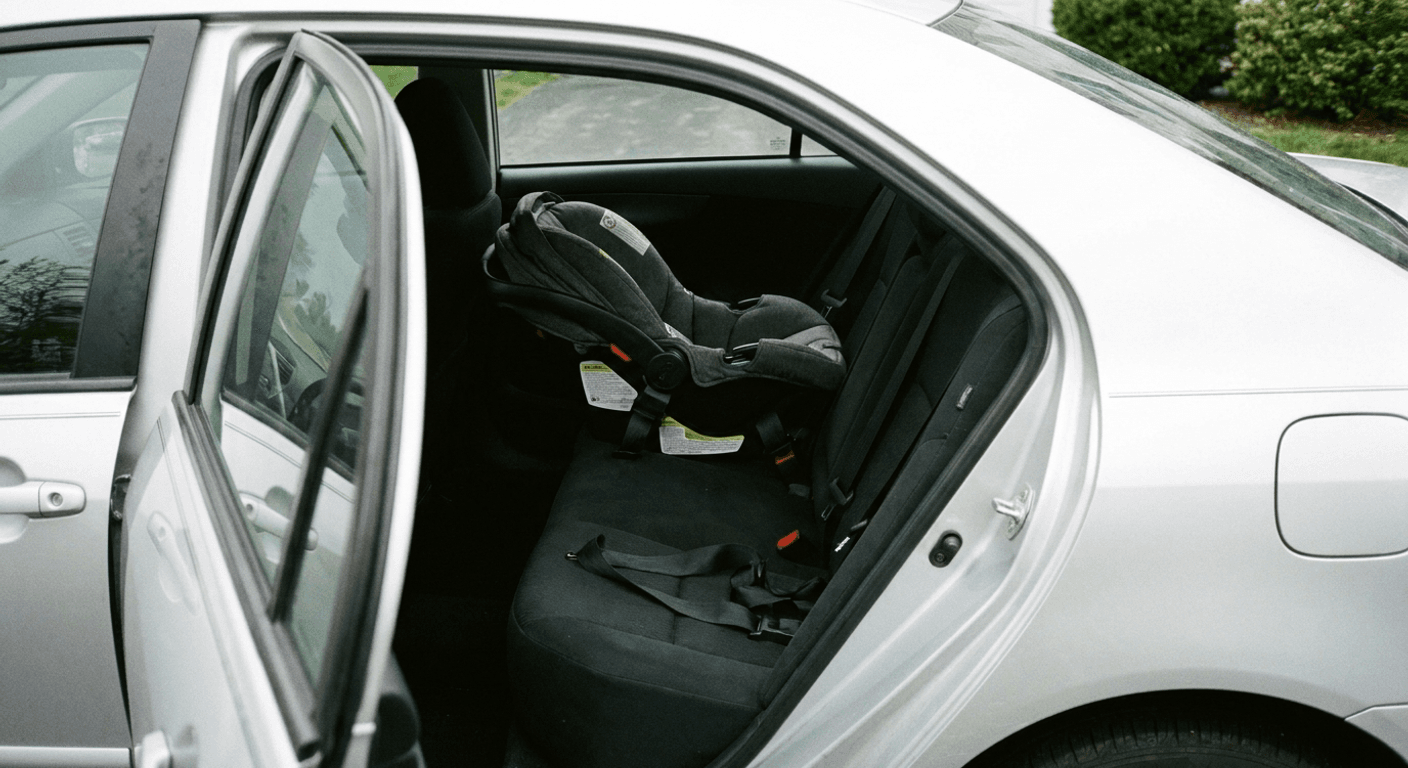
The Northern Territory fines a driver a flat $500, with 3 demerit points, for not properly restraining a child passenger, applying the national Australian Road Rule directly rather than rewriting it in Territory law.
How the Northern Territory Applies the Child Restraint Rule
Unlike most other states, the Northern Territory does not rewrite the child restraint rule in its own words. The Traffic Regulations 1999 (NT) adopt the Australian Road Rules directly, so the substantive offence is Australian Road Rule 266(1) itself, applied as Territory law. The Territory's own regulation steps in only at the margins.
Regulation 86A of the Traffic Regulations 1999 supplies the Northern Territory's meaning of an approved restraint for the purposes of Rule 266(7): a booster seat, child restraint or child safety harness is approved in the Territory if it complies with AS/NZS 1754:2004, or is of a type approved by the Registrar of Motor Vehicles. A full search of the current reprint (as in force 28 May 2026) found no other Northern Territory provision touching the substance of the restraint rule, and no Territory-specific offence number separate from Rule 266(1).
Because the substantive rule is the national one, the age bands work the same way as described on the Child Car Seat Laws in Australia page: rearward-facing under 6 months, rearward or forward-facing with an inbuilt harness from 6 months to under 4, a forward-facing harness or booster from 4 to under 7, and an approved restraint or seat belt from 7 to under 16.
The Fine and Demerit Points
The Traffic Regulations 1999, Schedule 1 ("Traffic infringement notice offences"), lists the child restraint offence in these terms: a driver who fails to ensure a child or young person wears the required seat belt or restraint, under Rule 266(1), faces a $500 fine and 3 demerit points.
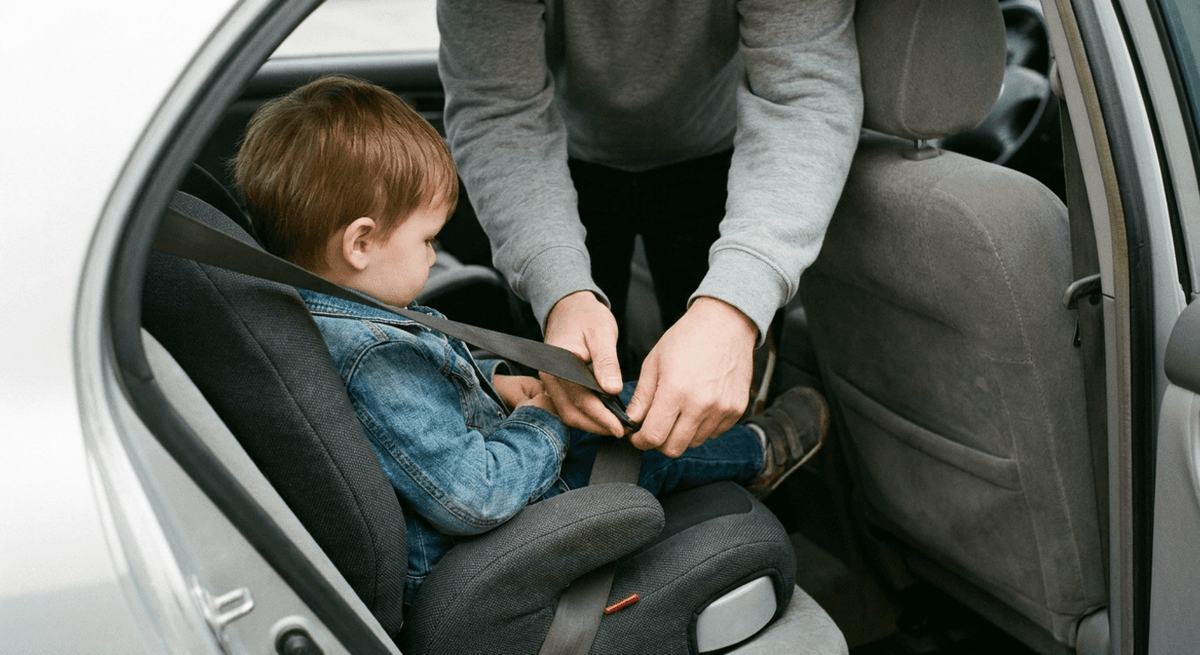
That $500 is a flat dollar figure fixed directly in Schedule 1, not a multiple of the Northern Territory's penalty unit. Most of the rest of Schedule 1 works the same way, with speeding tiers set at $150, $300, $600 and $1,000 and the adult seat belt offence also set at $500, so a plain dollar amount is Schedule 1's normal drafting style rather than an exception. This is a genuinely current figure: the Territory's own reprint used for this page is dated as in force 28 May 2026, and the child restraint row in Schedule 1 was last touched by a routine, sitewide update (the Transport Legislation Amendment Regulations 2024) rather than any change specific to child restraints.
The Northern Territory's current penalty unit value for FY2026-27 could not be confirmed this session (the Territory's own current-value page returned a blocked response on every attempt). That gap does not affect the child restraint fine itself, since Schedule 1 fixes it as a flat dollar amount rather than a unit multiple.
Double Demerit Points
No double demerit scheme was found for this offence, or for any offence, in the Northern Territory. A full search of the current Traffic Regulations 1999 reprint for demerit-related provisions found only the ordinary demerit points part and the Schedule 1 to 3 column headers, with no double demerit language anywhere. A Wayback Machine capture of the Territory's own consumer-facing demerit points page (captured 15 December 2025, since the live page could not be reached directly this session) explains suspension thresholds for open, learner, provisional, interstate and overseas licences without mentioning a double demerit period. Treat this as the Northern Territory's position unless a more recent, directly-fetched source says otherwise.
Taxi and Rideshare Exemptions
The national Road Rules exempt the driver of a taxi or public minibus from the child restraint rule in narrow circumstances, mainly where no suitable restraint is available in the vehicle. The Northern Territory ties the undefined term 'taxi' in the Road Rules to its own Commercial Passenger (Road) Transport Act 1991, which defines 'taxi' as a metered vehicle that stands or plies for hire, separately from 'private hire car,' which covers vehicles used for pre-booked journeys at a pre-arranged fare.
Because the exemption is tied to the narrower 'taxi' definition, and rideshare services such as Uber, Didi and Ola operate in the Territory as private hire cars rather than taxis, the exemption does not appear, on the statute's own terms, to extend to rideshare drivers. This is a reading of the two Acts together, not a Northern Territory Government statement made in plain language, and no Territory guidance addressing rideshare and child restraints specifically was found or reachable this session.
Who Is Liable
Schedule 1 frames the offence as a driver's failure to ensure the child wears the required restraint or seat belt, so the driver is the liable party, even where a different adult, such as a parent who is not driving, is also in the vehicle.
Getting a Child Restraint Fitted
Kidsafe NT operates a restraint hire, fit and check service in Darwin, along with community education programs. No separate Northern Territory Police or Department of Infrastructure, Planning and Logistics fitting-station network page was located this session.
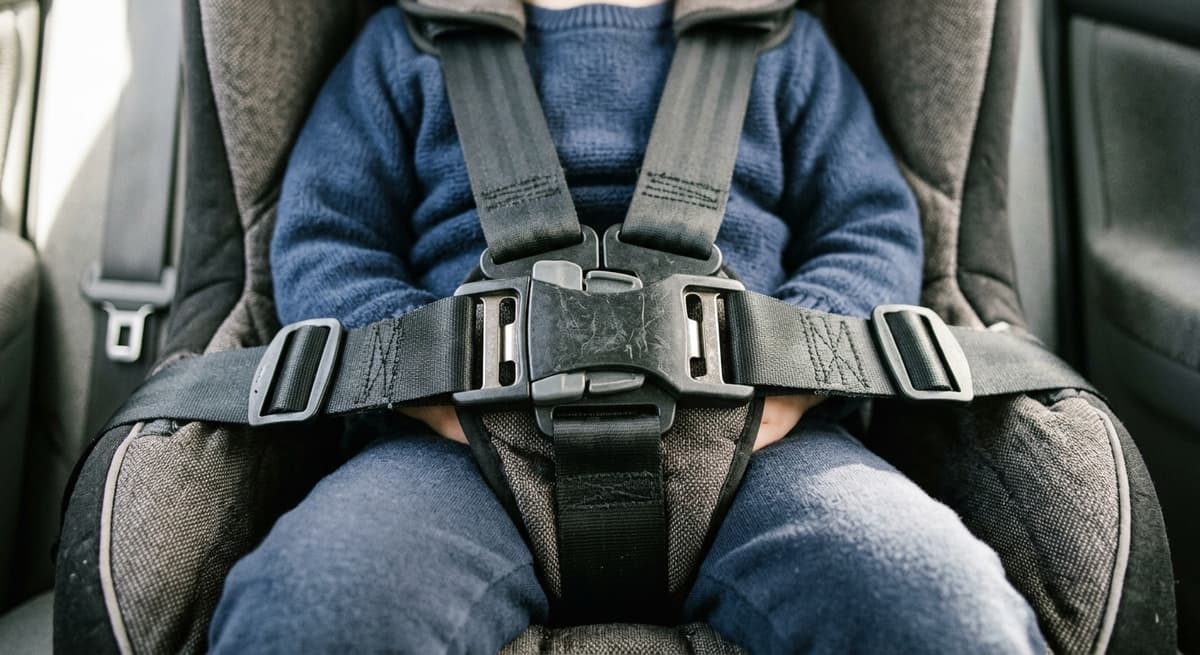
For the national age bands, the fine and demerit comparison across every state, and the standards a restraint needs to meet, see Child Car Seat Laws in Australia. For the Territory's full demerit points scale and licence suspension thresholds, see Northern Territory demerit points and demerit points explained across Australia, or return to the Australia driving laws hub.
Frequently Asked Questions
What is the fine for not using a child car seat correctly in the Northern Territory?
A flat $500, with 3 demerit points, under Schedule 1 of the Traffic Regulations 1999 (as in force 28 May 2026), for a driver's failure to ensure a child under 16 wears the seat belt or restraint required by Australian Road Rule 266(1).
Does the Northern Territory double demerit points for child restraint offences?
No scheme of this kind was found. A full search of the current Traffic Regulations 1999 reprint turned up no 'double demerit' provision, and an archived copy of the Territory's own demerit points page (captured 15 December 2025, since nt.gov.au could not be reached directly this session) does not mention one either.
Does the taxi exemption cover Uber and other rideshare drivers in the Northern Territory?
It appears not to. Northern Territory law defines 'taxi' as a metered vehicle under the Commercial Passenger (Road) Transport Act 1991, separately from 'private hire car,' which covers pre-booked, pre-arranged-fare services such as rideshare. Because the Road Rules exemption is tied to the Act's narrower 'taxi' definition, it does not, on the text, reach private hire cars. No Northern Territory Government guidance stating this directly was found this session, so treat it as a reading of the statute rather than a confirmed government position.
What age does a child need a car seat or booster until in the Northern Territory?
The Northern Territory applies the national Australian Road Rules age bands directly: rearward-facing under 6 months, a rearward-facing or forward-facing restraint with an inbuilt harness from 6 months to under 4 years, a forward-facing harness or booster seat from 4 to under 7 years, and an approved restraint or properly fitted seat belt from 7 to under 16. See the age-band table on the Child Car Seat Laws in Australia page for the full detail.
Who is legally responsible if a child is not properly restrained in the Northern Territory?
The driver. Schedule 1 of the Traffic Regulations 1999 frames the offence as the driver's failure to ensure the child wears the required restraint or seat belt, so the driver carries the liability even if a different adult, such as a parent, is also in the vehicle.
Where can a car seat be fitted or checked in the Northern Territory?
Kidsafe NT runs a restraint hire, fit and check service in Darwin. No separate Northern Territory Police or Department of Infrastructure, Planning and Logistics fitting-station network was located this session.
Updates
Independently fact-checked against the cited primary sources
Sources and References
- Traffic Regulations 1999 (NT), as in force 28 May 2026, reg 86A ('Approved child safety items') and Schedule 1 (child restraint fine and demerit points row)(legislation.nt.gov.au).gov
- Commercial Passenger (Road) Transport Act 1991 (NT), definitions of 'taxi' and 'private hire car'(legislation.nt.gov.au).gov
- Penalty Units Act 2009 (NT), formula and penalty unit value (as in force 1 July 2022; used here only to confirm Schedule 1's flat-dollar drafting convention, not for the child restraint fine itself)(legislation.nt.gov.au).gov
- Northern Territory Government, 'Demerit points' (nt.gov.au), Wayback Machine capture dated 15 December 2025(nt.gov.au).gov
- Kidsafe NT, child car restraint fitting services(kidsafent.com.au)