
Australia
Knife Laws in Australia: New South Wales and Victoria (2026)
Independently fact-checked against primary sources (last audited October 26, 2026). · 4 primary sources cited on this page. How we verify our legal content
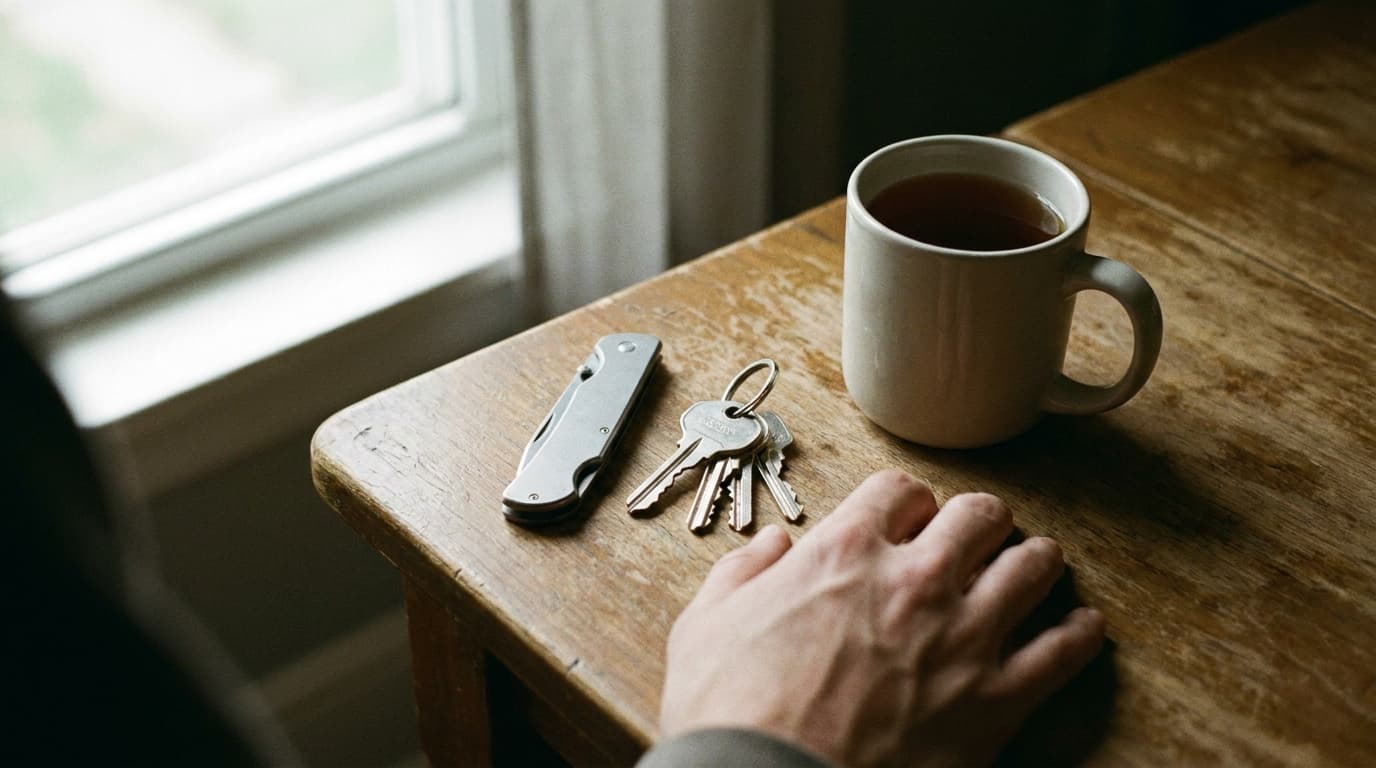
Carrying a knife in public without a reasonable or lawful excuse is a criminal offence in both New South Wales and Victoria. In NSW the person carrying it must prove the excuse; in Victoria the person must point to evidence suggesting a lawful excuse, which the prosecution must then disprove. This page covers what has been verified against the current legislation in these two states.
Jurisdiction scope: This page addresses knife-carrying and knife-sale law in New South Wales and Victoria only, verified 25 October 2026. Every Australian state and territory has its own separate weapons or summary offences legislation covering knives, and this page does not describe, and should not be read as describing, the law in any jurisdiction other than these two. It is general legal information, not legal advice, and it does not tell a reader that carrying a specific knife in specific circumstances is lawful.
New South Wales: Custody of a Knife Under Crimes Act Section 93IB
Crimes Act 1900 (NSW) s 93IB makes it an offence to have custody of a knife in a public place or a school. The maximum penalty is 40 penalty units ($4,400 at the $110 NSW penalty unit value as at October 2026) or imprisonment for 4 years, or both. It is a defence if the accused person proves they had a reasonable excuse, so the onus is on the person, not on the prosecution to disprove it. A folding knife carried habitually, without a reasonable excuse for having it in that place at that time, can fall within this offence even where the knife itself is an otherwise ordinary tool.
Section 93IB(3) says a reasonable excuse includes having the knife because it is reasonably necessary for the lawful pursuit of the person's occupation, education or training; the preparation or consumption of food or drink; participation in a lawful entertainment, recreation or sport; the exhibition of knives for retail or other trade purposes; an organised exhibition by knife collectors; the wearing of an official uniform; or genuine religious purposes. It also covers travel to or from, or incidental to, any of those activities, and circumstances prescribed by the regulations. Section 93IB(4) states that having a knife for self-defence, or for the defence of another person, is not a reasonable excuse.
NSW previously had this knife offence at s 11C of the Summary Offences Act 1988. Section 11C was repealed in 2023, and the knife offence now sits in the Crimes Act at s 93IB, inserted by the same 2023 amending Act.
Separately, Summary Offences Act 1988 (NSW) s 11B makes it an offence to have, without reasonable excuse, "custody" of an offensive implement in a public place or a school. The maximum penalty is 50 penalty units or imprisonment for 2 years, and the onus is on the person in possession to prove the excuse. Section 11B(3) defines "offensive implement" as "(a) anything made or adapted for use for causing injury to a person, or (b) anything intended, by the person having custody of the thing, to be used to injure or menace a person or damage property." The general lawful-authority defence in s 12 of the same Act applies to that offence.
NSW also regulates the sale of knives to minors. It is an offence under s 11F to sell a knife to a child under 16. A separate, narrower offence applies to selling a knife to a 16 or 17 year old, subject to a limited reasonable-excuse defence covering things like a lawful occupation or a course of education or training that requires the knife.
Victoria: Controlled Weapon Under Section 6
Control of Weapons Act 1990 (Vic) s 6(1) makes it an offence to possess, carry or use a controlled weapon without lawful excuse. Under s 3(1) a controlled weapon includes any knife other than a knife that is a prohibited weapon. The penalty is 120 penalty units or imprisonment for 1 year, rising to 240 penalty units or 2 years under s 6(1A) if the person is in or near licensed premises. Section 6(3) sets out what counts as a lawful excuse: the pursuit of a lawful occupation, duty or activity; participation in a lawful sport, recreation or entertainment; and the legitimate collection, display or exhibition of weapons. It then states expressly that lawful excuse "does not include for the purpose of self-defence." Section 6(2) separately requires that even a weapon carried for a genuine lawful excuse must be carried in a safe and secure manner consistent with that excuse.
Since 1 September 2025 a machete is a prohibited weapon under s 3(1), not a controlled weapon. Under s 5AA a person must not possess, use or carry a prohibited weapon without an exemption under s 8B or an approval under s 8C, with a penalty of 240 penalty units or imprisonment for 2 years, so the s 6(3) lawful excuses do not apply to machetes.
Victoria also makes it an offence to sell a controlled weapon to another person knowing that person is a child (s 6(1AB)), and for a child to purchase one (s 6(1AA)), with a flat under-18 threshold rather than the NSW-style split between under-16 and 16-17 year olds. For these two sale and purchase offences only, a disposable knife made of plastic, bamboo or wood and designed for eating is not a controlled weapon (s 6(1AC)).
What the Two States Have in Common
Despite different statutory language, NSW and Victoria share the same underlying structure: possession of a knife in public is not automatically an offence, but it becomes one the moment the person cannot point to a specific, genuine reason for having it in that place at that time, but the burden differs. In NSW the person must prove a reasonable excuse (Crimes Act s 93IB(2)). In Victoria the person only has to present or point to evidence suggesting a reasonable possibility of a lawful excuse, an evidential burden under Criminal Procedure Act 2009 (Vic) s 72, after which the prosecution must disprove it. Neither state accepts "I might need it" or "for protection" as an excuse: NSW s 93IB(4) rules out self-defence and defence of another person expressly, and Victoria's s 6(3) rules self-defence out expressly. This page does not, and cannot, tell a reader that carrying a specific knife in specific circumstances falls within either state's lawful excuse; that assessment depends on the exact facts and is ultimately a matter for a court if the person is charged.
See how police can search for weapons like knives without a warrant in police wanding powers in Australia, and how items are classified as prohibited weapons more generally in prohibited weapons in Australia. For the full cluster, see the Australia weapons law hub.
This page provides general legal information about knife-carrying and knife-sale law in New South Wales and Victoria, verified 25 October 2026. It does not address any other Australian jurisdiction, and it is not legal advice about whether carrying a specific knife in specific circumstances is lawful. For advice about a specific item or charge, consult a legal practitioner admitted in the relevant Australian state or territory, or contact the police service in that jurisdiction.
Frequently Asked Questions
Is it legal to carry a pocket knife in NSW?
Only if the person has a reasonable excuse for having it in the specific public place or school at the time, and the onus is on the person to prove that excuse under Crimes Act 1900 (NSW) s 93IB. Self-defence is not a reasonable excuse under s 93IB(4). Habitual carrying without a specific reasonable excuse for that occasion can fall within the offence.
Does NSW still have a separate law just for knives?
Yes. The former knife provision in the Summary Offences Act, s 11C, was repealed in 2023, but the knife offence moved to Crimes Act 1900 (NSW) s 93IB. It prohibits having custody of a knife in a public place or school unless the person proves a reasonable excuse, and it lists knife-specific reasonable excuses. The general offensive implement offence in Summary Offences Act s 11B also still applies.
Can I carry a knife in Victoria for self-defence?
No. Control of Weapons Act 1990 (Vic) s 6(3) expressly states that a lawful excuse for carrying a controlled weapon, which includes most knives, does not include self-defence. Machetes are prohibited weapons in Victoria and cannot be carried at all without an exemption or approval.
What age can you legally buy a knife in Victoria?
18. Control of Weapons Act 1990 (Vic) s 6(1AA)-(1AB) prohibits both a child under 18 from purchasing a controlled weapon and a person from selling one to someone they know is a child, with a flat under-18 threshold.
What age can you legally buy a knife in NSW?
Selling a knife to a child under 16 is an offence under Summary Offences Act 1988 (NSW) s 11F. A separate, narrower offence applies to selling to a 16 or 17 year old, subject to a limited reasonable-excuse defence for things like a lawful occupation or education and training that requires the knife.
Does this page cover knife laws in Queensland, WA or other states?
No. This page addresses New South Wales and Victoria only. Every Australian jurisdiction has its own separate knife and weapons legislation, and the specific rules in other states and territories are not described here.
Who has to prove a reasonable or lawful excuse for carrying a knife, me or the prosecution?
It differs. In NSW the person must prove a reasonable excuse (Crimes Act 1900 s 93IB(2)). In Victoria the person only has to present or point to evidence suggesting a reasonable possibility of a lawful excuse (Criminal Procedure Act 2009 s 72), and the prosecution must then disprove it.
Updates
Corrected the NSW knife law to the Crimes Act 1900 s 93IB knife offence (with its excuses and self-defence exclusion), fixed who must prove an excuse in Victoria, and added that machetes have been prohibited weapons in Victoria since 1 September 2025.
Independently fact-checked against the cited primary sources
The Law Behind This Article
This article rests on the statutory provisions below, held in our own legal record and retrieved from the official source. Tap a section to read the operative text.
Summary Offences Act 1988 (NSW)
s 11BCustody of offensive implementIn force
(1) A person shall not, without reasonable excuse (proof of which lies on the person), have in his or her custody an offensive implement in a public place or a school.Maximum penalty—50 penalty units or imprisonment for 2 years. (2) If a person is convicted of an offence under this section, the court may, in addition to any penalty it may impose, make an order that the offensive implement be forfeited to the Crown, and the implement is forfeited accordingly. (3) In this section—offensive implement means—(a) anything made or adapted for use for causing injury to a person, or (b) anything intended, by the person having custody of the thing, to be used to injure or menace a person or damage property.
Official text (excerpt) · last checked 2026-09-28 · Read the full text in our law library · Verify at legislation.nsw.gov.au
s 12DefenceIn force
It is a sufficient defence to a prosecution for an offence under any of the provisions of this Part if the defendant satisfies the court that the act complained of in the information for the offence was done with lawful authority.
Official text (excerpt) · last checked 2026-09-28 · Read the full text in our law library · Verify at legislation.nsw.gov.au
Control of Weapons Act 1990 (Vic)
s 6Control of controlled weaponsIn forcecited in 5 of our articles
(1) A person must not possess, carry or use a controlled weapon without lawful excuse. 120 penalty units or imprisonment for 1 year. (1AA) A child must not purchase a controlled weapon. 12 penalty units. (1AB) A person must not sell a controlled weapon to another person knowing that the other person is a child. 20 penalty units. (1AC) For the purposes of subsections (1AA) and (1AB), a controlled weapon does not include a disposable knife made of plastic, bamboo or wood and designed for eating purposes. (1A) A person who is in licensed premises or in a public place that is in the immediate vicinity of licensed premises must not possess, carry or use a controlled weapon without lawful excuse. 240 penalty units or imprisonment for 2 years. (1B) If a person is convicted or found guilty of an offence against subsection (1A) in respect of an act or omission that person is not liable to be convicted or found guilty of an offence against subsection (1) in respect of the same act or omission. (2) A person must not carry a controlled weapon unless it is carried in a safe and secure manner consistent with the lawful excuse for which it is possessed or is carried or is to be used.
Official text (excerpt) · last checked 2026-09-28 · Read the full text in our law library · Verify at legislation.vic.gov.au
Also relied on in: Weapons Law in Australia by State: Firearms, Self-Defence Items and Prohibited Weapons (2026), Why Self-Defence Is Never a "Genuine Reason" for a Firearms Licence in Australia, Firearms Licensing in Victoria: Categories, Genuine Reasons and Storage (2026)
Sources and References
- Summary Offences Act 1988 (NSW) s 11B, Custody of offensive implement(austlii.edu.au)
- Summary Offences Act 1988 (NSW), Part 2, Division 2 (s 11F, sale of knives to children)(austlii.edu.au)
- Summary Offences Act 1988 (NSW) s 12, Defence (lawful authority)(austlii.edu.au)
- Control of Weapons Act 1990 (Vic) s 6, Control of controlled weapons(austlii.edu.au)
- Crimes Act 1900 (NSW) s 93IB, Custody of knives in public places or schools(legislation.nsw.gov.au).gov
- Crimes (Sentencing Procedure) Act 1999 (NSW) s 17, Penalty units(legislation.nsw.gov.au).gov
- Control of Weapons Act 1990 (Vic), current authorised version (ss 3, 5AA and 6)(legislation.vic.gov.au).gov
- Criminal Procedure Act 2009 (Vic) s 72, Evidential burden on accused for exceptions(legislation.vic.gov.au).gov