
Australia
Tree Disputes in Tasmania: A Dedicated Statute Few Expect
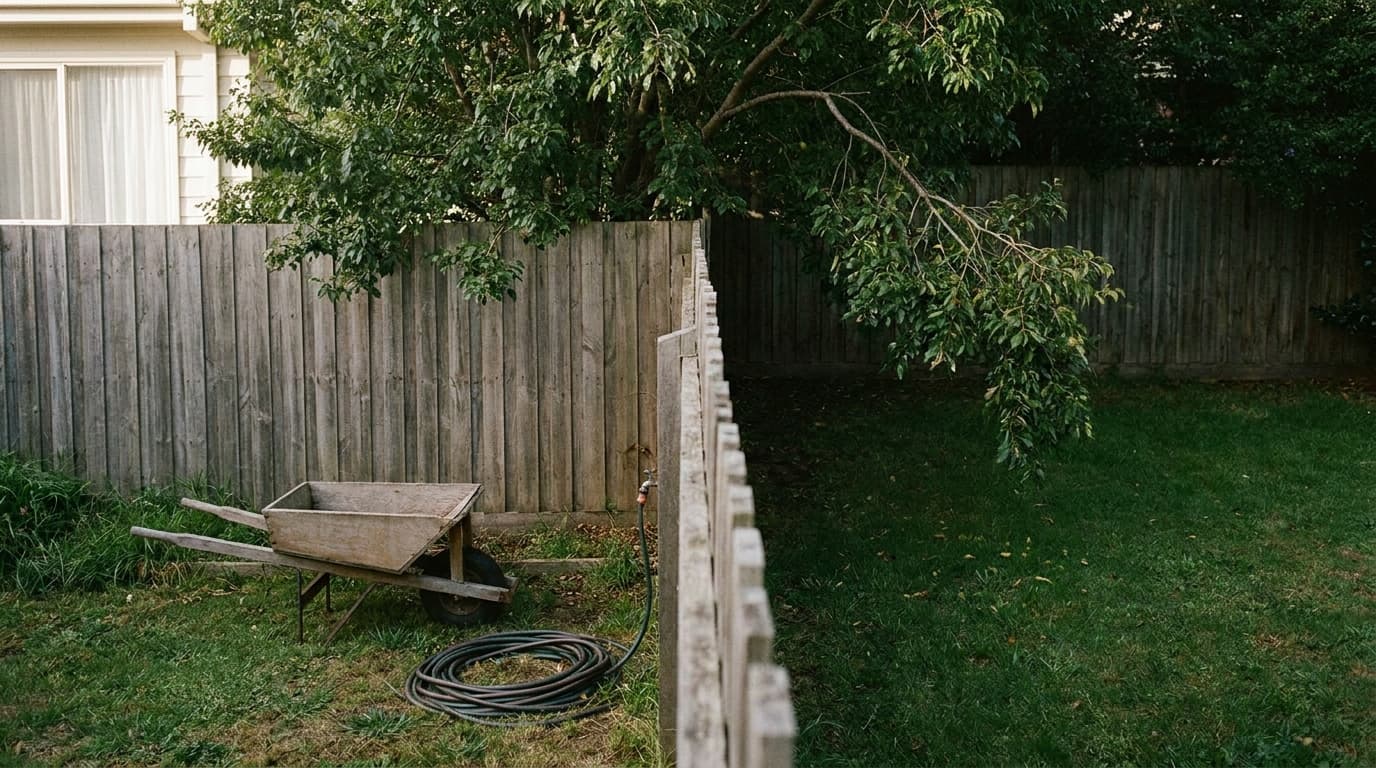
Tasmania has its own dedicated tree-dispute statute, the Neighbourhood Disputes About Plants Act 2017, heard by the Appeal Tribunal within TASCAT. It is one of only three Australian jurisdictions with a purpose-built tree law, alongside New South Wales and Queensland.
Information last verified on 21 July 2026 against the primary legislation. This page presents general legal information, not legal advice.
Jurisdiction scope: This page covers tree disputes in Tasmania only, under the Neighbourhood Disputes About Plants Act 2017 (Tas), verified 21 July 2026 directly against the current AustLII text of sections 12, 13, 19 and 20. It does not cover Tasmania’s separate dividing fences Act; see the linked fencing page for that.
A dedicated tree statute, easy to overlook
Many summaries of Australian tree law mention only New South Wales and Queensland as having a dedicated statute. Tasmania has one too: the Neighbourhood Disputes About Plants Act 2017 (Tas), a purpose-built Act covering plant-related disputes between neighbours, heard by the Appeal Tribunal within the Tasmanian Civil and Administrative Tribunal (TASCAT) under Part 4 of the Act.

The right of abatement, and the return-of-plant-material myth
Section 12(1) confirms the Act does not affect the common law right of abatement, except as the Act itself provides. Section 12(2) is the key provision correcting a common misconception: "A person who exercises the common law right of abatement by removing a part of a plant may, but is not required to, return the part of the plant to the landholder of the land on which the plant is situated." Nothing in Tasmanian law requires offering the trimmings back. Doing so can be a reasonable, neighbourly gesture, particularly for fruit, but it carries no legal weight either way.
Entering land: notice required
Section 13 allows a person to enter land owned by another person to deal with a plant dispute, but only where authorised under the Act and, in most circumstances, only after giving at least 7 days’ written notice to the landholder, and to any lessee the person believes is on the land, specifying the intended day of entry. This notice requirement does not apply to entry under a branch-removal notice permission or an interim Appeal Tribunal order, which have their own, separate authorisation. Entering a neighbour's land without this kind of authorisation is not something the Act, or this article, supports.
Attempting to resolve the dispute first
Section 19 places a mutual obligation on both the affected landholder and the plant owner: each must make reasonable attempts to prevent the affected land being affected by the plant, or to minimise the degree to which it is affected, before the dispute escalates further. This reflects Part 3 of the Act, headed "Informal Dispute Resolution," which sits ahead of Part 4’s formal Appeal Tribunal process.
The Appeal Tribunal checks for genuine negotiation first
Section 26 gives the Appeal Tribunal a specific gatekeeping role before it even hears an application. Before the hearing, the Tribunal must consider whether the parties have made reasonable attempts to resolve the matter, and if it is not satisfied that they have, it may direct the parties to attempt to resolve the matter before proceeding further. This builds directly on the section 19 obligation described above; where informal resolution has not genuinely been attempted, the Appeal Tribunal itself can pause a formal application and send the parties back to try again, rather than deciding the dispute outright.
General responsibilities of a landholder
Separately from the notice and abatement provisions, section 10 sets out an underlying responsibility every landholder has towards their neighbours: severing and removing branches that overhang another area of land, and ensuring the plant does not cause serious injury, serious damage, or substantial, ongoing and unreasonable interference with the use and enjoyment of another area of land. Section 10(3) makes clear this responsibility does not itself create a civil cause of action; it is a statement of the standard the Act's actual mechanisms, informal resolution, the branch-removal notice, abatement and the Appeal Tribunal process, are built around.
The branch-removal notice
Where informal resolution does not work, section 20 lets an affected landholder give the plant’s owner a formal branch-removal notice, covering branches extending at least 50 centimetres onto the affected land and sitting no more than 2.5 metres above ground level. The notice must specify a removal day at least 30 days after it is given, and can request the owner to identify who will do the work and grant permission for that person to enter the affected land, between 8 am and 5 pm on the specified day, to sever and remove the branches. Section 21 sets out what action can follow if the notice is not complied with, and applications that cannot be resolved this way proceed to the Appeal Tribunal under Part 4.
This page is general legal information about neighbour disputes in Australia, verified on 21 July 2026. It is not legal advice, and it does not cover every situation. For advice about your own dispute, consult a legal practitioner admitted in the relevant Australian state or territory.
Frequently Asked Questions
Does Tasmania have a law about trees and neighbours?
Yes. The Neighbourhood Disputes About Plants Act 2017 (Tas) is a dedicated tree statute, one of only three in Australia alongside New South Wales and Queensland, heard by the Appeal Tribunal within TASCAT.
Do I have to return branches I cut back in Tasmania?
No. Section 12(2) of the Act states a person exercising the right of abatement "may, but is not required to" return the removed plant material to the landholder. It is a courtesy, not a legal requirement.
Can I enter my neighbour's land to deal with an overhanging branch in Tasmania?
Only in limited, authorised circumstances, generally after giving at least 7 days’ written notice under section 13. A branch-removal notice under section 20 can separately grant entry permission for a specified day.
What is a branch-removal notice in Tasmania?
A formal notice under section 20 that an affected landholder can give a plant’s owner, covering branches extending at least 50 centimetres onto the affected land and no more than 2.5 metres above ground, requiring removal within at least 30 days.
Do neighbours have to try to resolve a tree dispute before applying to TASCAT in Tasmania?
Yes. Section 19 requires both the affected landholder and the plant’s owner to make reasonable attempts to resolve or minimise the problem before the dispute proceeds to a formal Appeal Tribunal application under Part 4.
Which body hears a tree dispute in Tasmania?
The Appeal Tribunal within the Tasmanian Civil and Administrative Tribunal (TASCAT), under Part 4 of the Neighbourhood Disputes About Plants Act 2017 (Tas).
The Law Behind This Article
This article rests on the statutory provisions below, held in our own legal record and retrieved from the official source. Tap a section to read the operative text.
Neighbourhood Disputes About Plants Act 2017 (Tas)
s 10Responsibilities in relation to plantsIn force
(1) An owner of land on which a plant is situated is responsible for severing and removing any branches of the plant that overhang another area of land. (2) An owner of land on which a plant is situated is responsible for ensuring that the plant does not cause – (a) serious injury to a person on another area of land; or (b) serious damage to another area of land or any property on another area of land; or (c) substantial, ongoing and unreasonable interference with the use and enjoyment of another area of land. (3) This section does not create a civil cause of action based on breach of a responsibility referred to in this section.
Official text (excerpt) · last checked 2026-09-28 · Read the full text in our law library · Verify at legislation.tas.gov.au
s 12Common law right of abatementIn forcecited in 3 of our articles
(1) This Act does not affect the common law right of abatement in relation to a plant other than as provided under subsection (2) . (2) A person who exercises the common law right of abatement by removing a part of a plant may, but is not required to, return the part of the plant to the landholder of the land on which the plant is situated.
Official text (excerpt) · last checked 2026-09-28 · Read the full text in our law library · Verify at legislation.tas.gov.au
Also relied on in: Tree and Overhanging Branch Disputes in Australia by State, Neighbour Disputes in Australia: Fences, Trees and Noise Law
s 13Right to enter landIn force
(1) A person may enter land owned by another person if – (a) the person is authorised under subsection (3) to enter the land; and (b) [Section 13 Subsection (1) amended by No. 29 of 2020, s. 4, Applied:17 Nov 2020] the person has, at least 7 days before the entry – (i) given notice in writing to the other person; and (ii) if the person believes there is a lessee in relation to the land, given notice in writing to the lessee – that the person is intending to enter the land on a day specified in the notice. (2) [Section 13 Subsection (2) substituted by No. 29 of 2020, s. 4, Applied:17 Nov 2020] Subsection (1)(b) does not apply in relation to an entry in accordance with – (a) a notice given for the purposes of section 20(2)(b) ; or (b) an interim order made under section 33(4) .
Official text (excerpt) · last checked 2026-09-28 · Read the full text in our law library · Verify at legislation.tas.gov.au
s 20Branch removal notice may be givenIn force
(1) A landholder of affected land over which extends, from other land, a branch, from a plant, that – (a) is 2.5 metres or less above the ground level of the affected land; and (b) extends at least 50 centimetres from the boundary of the affected land with the other land – may give to the owner of the other land a notice in writing (a branch removal notice). (2) A branch removal notice from an affected landholder to an owner of other land on which a plant with overhanging branches is situated must – (a) specify a day by which the owner is required to ensure that the overhanging branches are removed from the affected land; and (b) ask the owner to give to the affected landholder a notice for the purposes of this paragraph; and (c) give the owner, and any person, acting on the owner's behalf, who is specified in a notice given under paragraph (b) , permission to enter the affected land between 8 a.m. and 5 p.m. on the day, specified in that notice in accordance with subsection (4)(b) , to sever and remove the branches.
Official text (excerpt) · last checked 2026-09-28 · Read the full text in our law library · Verify at legislation.tas.gov.au
s 26Attempts to resolve dispute to be made before hearing of applicationIn force
(1) Before hearing an application, the Appeal Tribunal – (a) must consider whether reasonable attempts to resolve the matter to which the application relates have been made by the parties; and (b) if the Appeal Tribunal is not satisfied that reasonable attempts to resolve the matter to which the application relates have been made by the parties, may direct the parties to an application to attempt to resolve the matter to which the application relates. (2) For the purposes of determining whether reasonable attempts to resolve a matter have been made, the Appeal Tribunal may take into account – (a) whether a request under section 19(1) has been made, or a branch removal notice under section 20(1) or a notice under section 22(1) has been given, in relation to the matter; and (b) whether the owner of the land on which a plant is situated has refused to carry out work in relation to the plant because the owner reasonably believes that the work may affect – (i) the health or structural stability of the plant; and (ii) [Section 26 Subsection (2) amended by No. 29 of 2020, s.
Official text (excerpt) · last checked 2026-09-28 · Read the full text in our law library · Verify at legislation.tas.gov.au
Search our full record of US law — 2.1 million sections, every state + federal →
Sources and References
- Neighbourhood Disputes About Plants Act 2017 (Tas) s 12, common law right of abatement(classic.austlii.edu.au).gov
- Neighbourhood Disputes About Plants Act 2017 (Tas) s 13, right to enter land(classic.austlii.edu.au).gov
- Neighbourhood Disputes About Plants Act 2017 (Tas) s 20, branch removal notice may be given(classic.austlii.edu.au).gov
- Neighbourhood Disputes About Plants Act 2017 (Tas) s 26, attempts to resolve dispute to be made before hearing of application(classic.austlii.edu.au).gov
- Neighbourhood Disputes About Plants Act 2017 (Tas) s 10, responsibilities in relation to plants(classic.austlii.edu.au).gov
- Tasmanian Civil and Administrative Tribunal (TASCAT)(tascat.tas.gov.au).gov