
Australia
Dividing Fences in Victoria: Notice, Cost and the Magistrates’ Court
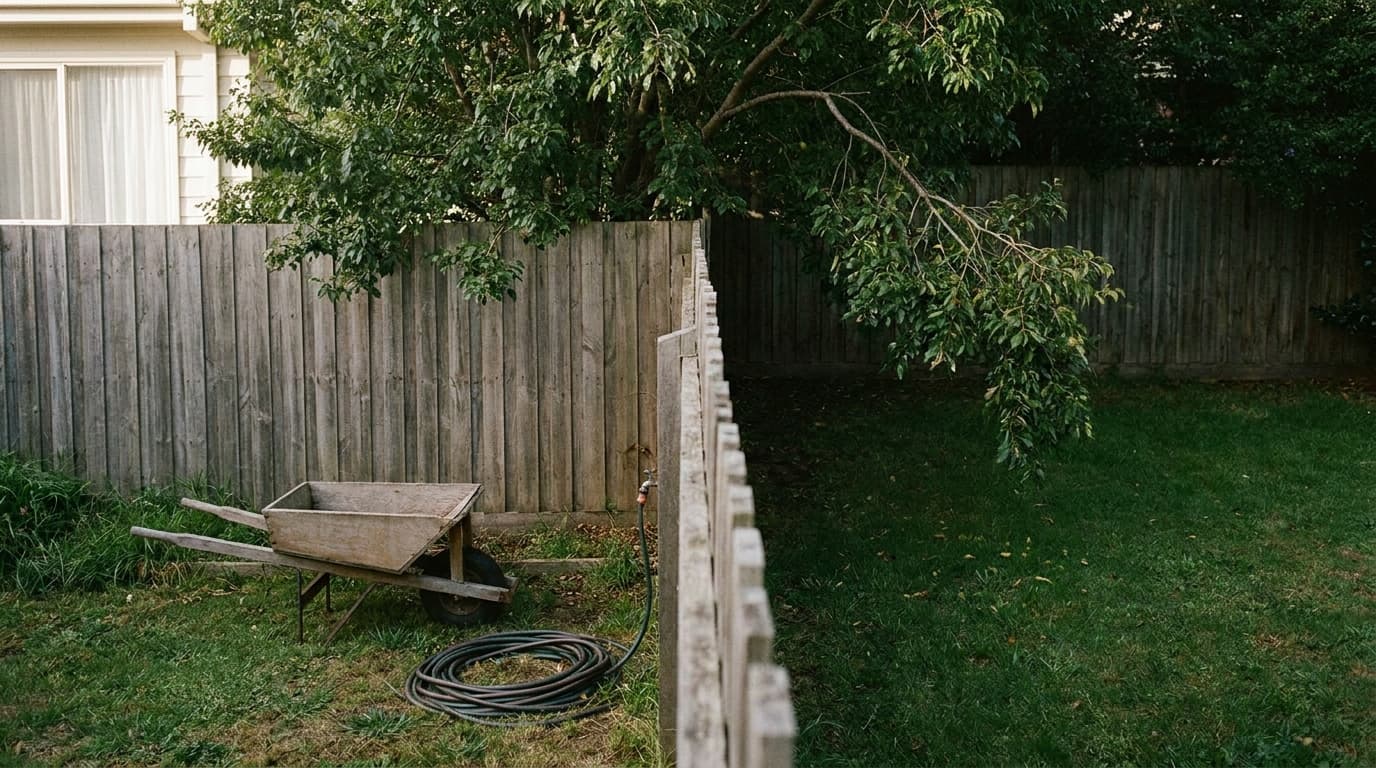
Victoria’s dividing fences process runs under the Fences Act 1968 (Vic). A fencing notice gives the adjoining owner 30 days to agree; if they do not, either owner can file a complaint in the Magistrates’ Court for an order.
Information last verified on 21 July 2026 against the primary legislation. This page presents general legal information, not legal advice.
Jurisdiction scope: This page covers dividing fences law in Victoria only, under the Fences Act 1968 (Vic), verified 21 July 2026. It does not cover other Australian states or territories, each of which has its own Act; see the linked comparison page for those.
Governing law and the Magistrates’ Court
Dividing fences in Victoria are governed by the Fences Act 1968 (Vic). Unlike New South Wales, Queensland or the ACT, Victoria sends fencing disputes to the Magistrates’ Court rather than to a specialist civil tribunal. An owner applies by filing a complaint under section 17, which the Court then determines by making an order under section 30C.

Notice and the 30-day response period
An owner who wants fencing work carried out serves a fencing notice on the adjoining owner. Section 17 provides that if the adjoining owner responds to the notice within 30 days, but after that 30 days the owners have still not agreed on one or more of the matters in the notice, either owner may then seek a Magistrates’ Court order under section 30C by filing a complaint. The Act was amended in 2014 (Act No. 30/2014) to insert this current version of the notice-and-response procedure.
Cost sharing: equal for a sufficient fence
Section 7 sets Victoria’s default: where there is no dividing fence, or where the existing fence needs work to become a sufficient dividing fence, the adjoining owners are liable to contribute in equal proportions to that fencing work. This mirrors the equal-contribution default used in New South Wales, Queensland and the Northern Territory.
What the Magistrates’ Court can order
Once a complaint is filed under section 17, the Magistrates’ Court can make an order under section 30C determining matters such as the standard, type and location of the fence, and each owner’s contribution to its cost. This gives Victoria a binding, enforceable outcome in the same way the tribunal-based states do, through a court process instead.
Urgent fencing works after damage
Section 23 lets an owner carry out fencing works without a fencing notice and without the adjoining owner's agreement where the work needs to be done urgently, a dividing fence has been damaged or destroyed, and it is impracticable to give a fencing notice in the circumstances. Section 24 then lets the owner who carried out the urgent work require the adjoining owner to contribute once it is complete. This urgent-works pathway, echoed in South Australia's equivalent section 16, means storm damage or similar sudden destruction does not leave a Victorian owner waiting through the standard 30-day notice process before restoring a boundary fence.
If your neighbour does not respond or cannot be located
Section 19 lets an owner proceed with fencing works without the adjoining owner's agreement in two situations: the adjoining owner was given a fencing notice and did not respond within 30 days, or, after reasonable inquiries, the adjoining owner simply cannot be located. This means an unresponsive or absent neighbour does not permanently block a needed fence from being built; section 21 then allows the owner who carried out the work to recover a contribution from the adjoining owner afterwards.
Damage caused deliberately or negligently
Section 9 shifts the usual equal-contribution position where a dividing fence is damaged or destroyed by a negligent or deliberate act. If the owner themselves, or a person who entered the land with that owner's express or implied consent, negligently or deliberately damages or destroys the fence, that owner is liable for the entire cost of repairing or replacing it, not just their usual equal share. This is a meaningful exception: an owner is not required to split the cost of fixing damage that their own negligence or a deliberate act by someone they allowed onto the property actually caused.
When the boundary itself is not straightforward
Section 16 deals with a situation the equal-contribution rule does not directly cover: adjoining owners can agree to build the fence on a line other than the true common boundary, where a waterway or another natural or manmade obstruction sits on or forms that boundary and makes fencing directly on it impracticable. This is a useful provision where a creek, drain or similar feature runs along a property line, and it confirms that Victorian owners are not locked into fencing exactly on the surveyed boundary if that line is genuinely impracticable to fence.
Before you file a complaint
Because Victoria’s process runs through the Magistrates’ Court rather than a low-cost tribunal, it is worth treating the 30-day response window as a genuine opportunity to reach agreement rather than a formality. Keeping the fencing notice, any response, and a record of attempts to negotiate in writing puts either owner in a stronger position if a complaint under section 17 does become necessary, and a filed complaint is a more significant, and more costly, step than an application to a tribunal in a state such as New South Wales or Queensland.
How Victoria compares
Victoria’s equal-contribution default and its 30-day response period sit close to South Australia and the ACT, though each state’s forum differs: Victoria and South Australia both use the Magistrates Court, while the ACT uses ACAT. See dividing fences in Australia for the full comparison, and dividing fences in South Australia for another Magistrates Court jurisdiction.
This page is general legal information about neighbour disputes in Australia, verified on 21 July 2026. It is not legal advice, and it does not cover every situation. For advice about your own dispute, consult a legal practitioner admitted in the relevant Australian state or territory.
Frequently Asked Questions
How long does my neighbour have to respond to a fencing notice in Victoria?
If they respond within 30 days of the notice but the owners still do not agree, either owner can then apply to the Magistrates’ Court under section 17 of the Fences Act 1968 (Vic).
Do I have to pay half the cost of a dividing fence in Victoria?
Generally, yes, for a sufficient dividing fence, under the equal-contribution default in section 7. Extra cost for a higher standard than a sufficient fence is generally the requesting owner’s responsibility.
Which court decides a fencing dispute in Victoria?
The Magistrates’ Court. Victoria does not use a specialist tribunal for dividing fences disputes, unlike New South Wales, Queensland or the ACT.
What order can the Magistrates’ Court make about a Victorian fence?
An order under section 30C, which can determine the standard, type and location of the fence and the contribution each owner must make.
Does Victoria have a law about trees blocking my view or sunlight?
No. Victoria has no dedicated tree-dispute statute. A tree problem there is governed by the general common law of nuisance and the self-help right of abatement; see tree disputes in Australia for how that works.
The Law Behind This Article
This article rests on the statutory provisions below, held in our own legal record and retrieved from the official source. Tap a section to read the operative text.
Fences Act 1968 (Vic)
s 17Procedure if adjoining owner responds but owners do not agreeIn forcecited in 2 of our articles
If an adjoining owner responds to a notifying owner within 30 days of a fencing notice being given, but, after that 30 days, the owners have not agreed about any one or more of the matters specified in the notice, either owner may seek an order under section 30C by filing a complaint in the Magistrates' Court.
Official text (excerpt) · last checked 2026-09-28 · Read the full text in our law library · Verify at legislation.vic.gov.au
Also relied on in: Dividing Fences Law in Australia: State by State Comparison
s 19Procedure if adjoining owner has not responded or cannot be locatedIn force
An owner of land may commence fencing works and any subsidiary works without agreement from the owner of the adjoining land if— (a) the owner gives the owner of the adjoining land a fencing notice and the owner of the adjoining land has not responded within 30 days from the day the fencing notice was given; or (b) after making reasonable inquiries, the owner of the adjoining land is unable to be located.
Official text (excerpt) · last checked 2026-09-28 · Read the full text in our law library · Verify at legislation.vic.gov.au
s 23Urgent fencing works may be carried outIn force
(1) Without giving a fencing notice and without the agreement of the owner of the adjoining land (adjoining owner), an owner of land may carry out fencing works and any subsidiary works if— (a) the fencing works and any subsidiary works need to be carried out urgently; and (b) a dividing fence on the land has been damaged or destroyed; and (c) it is impracticable to give a fencing notice to the adjoining owner. (2) This section has effect subject to— (a) the operation of— (i) the Residential Tenancies Act 1997 in relation to urgent repairs; or (ii) the Retail Leases Act 2003 in relation to urgent repairs; or (b) a lease agreement that makes provision for urgent repairs.
Official text (excerpt) · last checked 2026-09-28 · Read the full text in our law library · Verify at legislation.vic.gov.au
s 7General principle—owners are liable to contribute in equal proportions to a sufficient dividing fenceIn force
(1) If there is no dividing fence between adjoining lands, the owners of the adjoining lands are liable to contribute in equal proportions to fencing works and any subsidiary works for the construction of a sufficient dividing fence for the adjoining lands. (2) If there is a dividing fence between adjoining lands for which fencing works and any subsidiary works are required so that the dividing fence would be a sufficient dividing fence, the owners of the adjoining lands are liable to contribute in equal proportions to the fencing works and any subsidiary works for a sufficient dividing fence. (3) Nothing in this section prevents owners agreeing to contribute in other proportions to the fencing works and any subsidiary works for a sufficient dividing fence.
Official text (excerpt) · last checked 2026-09-28 · Read the full text in our law library · Verify at legislation.vic.gov.au
s 9Owners who damage or destroy a dividing fenceIn force
(1) An owner of land is liable for the entire cost of fencing works and any subsidiary works to repair or replace a dividing fence that separates the land and the adjoining land if the dividing fence is damaged or destroyed by a negligent or deliberate act by— (a) the owner; or (b) a person who has entered the land with the express or implied consent of the owner. (2) Subsection (1) does not apply to the damage or destruction caused in the course of authorised fencing works. (3) To avoid doubt, the damage or destruction of a fence by a negligent or deliberate act includes the damage or destruction of a dividing fence that occurs in the course of developing land. (4) To avoid doubt, subsection (1) does not affect any rights of an owner of land who is liable under that subsection against the person who caused the damage or destruction of the dividing fence.
Official text (excerpt) · last checked 2026-09-28 · Read the full text in our law library · Verify at legislation.vic.gov.au
Search our full record of US law — 2.1 million sections, every state + federal →
Sources and References
- Fences Act 1968 (Vic) s 7, general principle: equal contribution to a sufficient dividing fence(classic.austlii.edu.au).gov
- Fences Act 1968 (Vic) s 17, procedure if adjoining owner responds but owners do not agree(classic.austlii.edu.au).gov
- Fences Act 1968 (Vic) s 23, urgent fencing works may be carried out(classic.austlii.edu.au).gov
- Fences Act 1968 (Vic) s 19, procedure if adjoining owner has not responded or cannot be located(classic.austlii.edu.au).gov
- Fences Act 1968 (Vic) s 9, owners who damage or destroy a dividing fence(classic.austlii.edu.au).gov
- Magistrates’ Court of Victoria(mcv.vic.gov.au).gov
- Consumer Affairs Victoria(consumer.vic.gov.au).gov